Categories
Uncategorized

Splitting the world in two: the 525th anniversary of the Treaty of Tordesillas

Fascinating and important too….

europeancollections's avatarLanguages across Borders

Tordesillas1 P. 1 of the Spanish version held at BNP (click to see enlarged)

The 7th June marks the 525th anniversary of the signing of the Treaty of Tordesillas. The treaty was named for the Castilian town near Valladolid where it was signed by the Catholic Kings (Isabella I of Castile and Ferdinand II of Aragon) and John II, King of Portugal. The signing of this treaty divided those parts of the world newly “discovered” by Spain and Portugal between the empires of the two kingdoms along an imaginary meridian 370 leagues west of the Cape Verde islands. The lands to the east of this line corresponded to Portugal and those to the west to Spain.

The Treaty of Tordesillas had a precedent, the Treaty of Alcáçovas (1479), that followed the War of Castillan Succession, and already marked the division of the Atlantic into two spheres of influence, one…

View original post 1,321 more words
Categories
Uncategorized

Oddballs of English Philosophy: Witcraft: The Invention of Philosophy in English by Jonathan Rée

Sounds like an interesting read. Philosophy does seem to have different connotations in different languages/cultures.

Feral Philosophy's avatarFeral Philosophy

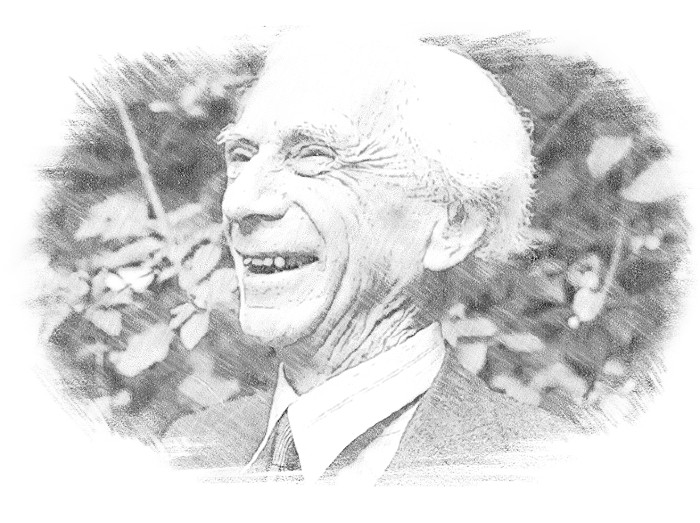
“Despite the disarming glee of this intellectual romp, [Jonathan] Rée doesn’t quite banish the thought that, for the English, philosophy is what history was to Henry Ford, bunk — a notion clinched by T.S. Eliot’s portrait of Bertrand Russell as Mr Apollinax, wittering incomprehensibly and laughing like an irresponsible foetus at his own wit.”

From “Oddballs of English Philosophy” a Book Review by Stuart Jeffries in The Spectator.

View original post

Categories
Uncategorized

Medium Well Done: 8 Crayons, oil pastels, and more

hoakley's avatarThe Eclectic Light Company

Professional painters have long used brushes to apply paint for their finished work, but many used hand-held sticks of pigment only when sketching in preparation. Charcoal was widely used at first, with metal wire in silverpoint an alternative. In the sixteenth century, large deposits of graphite were discovered in Cumbria, England, following which graphite sticks and sheathed pencils became enormously popular among both amateurs and professionals.

Although it’s impossible to make any clear distinction between drawing and painting, those stick-based media are simple compared with oil paints, for instance, and seldom used in works comparable in their aims or sophistication to professional oil or watercolour painting.

The first changes in practice occurred as a result of the French Revolution and Napoleonic Wars at the turn of the eighteenth to nineteenth centuries. Graphite was a strategic product, as it was used as a refractory in the manufacture of cannonballs, and supplies…

View original post 1,861 more words

Categories
Uncategorized

La communication impossible dans les films de Jean Luc Godard

Julien-James Vachon's avatarDirect-Actu.fr le blogzine de la culture pop et alternative

Le film «À bout de souffle» illustre parfaitement ce communication difficile, où l’homme demande à une femme si elle l’aime et elle répond pas maintenant. Comme une opposition au «Mépris» où c’est la femme qui demande à l’homme si il l’aime.

«Souris-moi, tu es lâche dommage» 

Godard illustre dans beaucoup de ces films les soucis de la communication, dans «Pierrot le fou» ce manque de compatibilité étouffe le héros qui meurt tragiquement. Ces personnages du quotidien tentent de vivre ensemble, mais jamais rien ne fonctionne. Le film «A bout de souffle» illustre le temps qui passe et l’incompréhension du désir de l’autre. Fonctionnant sur une iconographie et une époque, Jean Luc Godard filme le réel et livre une vérité où chacun par son intention va donner du sens. Les corps des acteurs et actrices deviennent des écrans où se projettent les pulsions et inquiétudes des spectateurs.

View original post

Categories
Uncategorized

“Refuge:The Art of Belonging” at Abbot Hall

ms6282's avatarDown by the Dougie

“No one leaves home unless/home is the mouth of a shark.” (From Home by Warsan Shire)

The world’s a pretty depressing place at the moment. War and poverty has led to waves of migration – people fleeing to the more prosperous parts of the world, seeking safety, a better life, or both. Sadly, the response of many people has been xenophobia, fear and a lack of compassion. A mood whipped up by the right wing press and populist politicians.

We’ve been here before, many times. Over the centuries migrants who have settled here and contributed to our culture and prosperity, but who were initially greeted with the same reaction. The 1930’s are an example when Jews and other “undesirables” had to flee Nazi repression and death camps. The reaction then, from the usual suspects, was the same as we see today.

Despite the hysteria of the likes of the Mail…

View original post 808 more words

Categories
Uncategorized

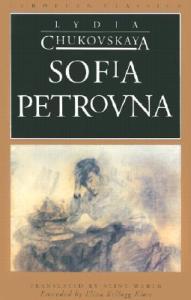
Sofia Petrovna, by Lydia Chukovskaya, translated by Aline Worth

Reminds me of what I have read about Osip and Nadezhda Mandelstam. Helen Dunmore has written along these lines as well. Thanks for posting.

Lisa Hill's avatarANZ LitLovers LitBlog

I bought Sofia Petrovna after reading Judith Armstrong’s article ‘Hidden Women of History: Lydia Chukovskaya, editor, writer, heroic friend’ in The Guardian, and I’ve read it now for the 1965 Club hosted by Stuck in a Book and Kaggsy’s Bookish Ramblings.  Although the novella is a rare – possibly unique – example of fiction written about Stalin’s Great Purge (1936-1938) when it was actually happening, it was of course not published at the time.  Chukovskaya (1907-1996) kept it hidden until after Krushchev’s Thaw in 1956 when the story was first circulated in Samizdat (manuscript form). Official publication faltered, however, in 1963 when it was decided that the book contained ‘ideological distortions’.  An unauthorised copy in English was published in Paris in 1965 (which makes the book eligible for the 1965 club) but there were changes made without the author’s permission and the title The Deserted House was absurd, given…
View original post 1,023 more words

Categories
Uncategorized

Circus: Spectacle

hoakley's avatarThe Eclectic Light Company

Each Spring, travelling circuses around the world break out of their winter quarters and migrate to cities to bring entertainment to their masses. Much-changed now from their form in their heyday in the nineteenth and early twentieth centuries, they were among the earliest forms of mass entertainment, long before movies.

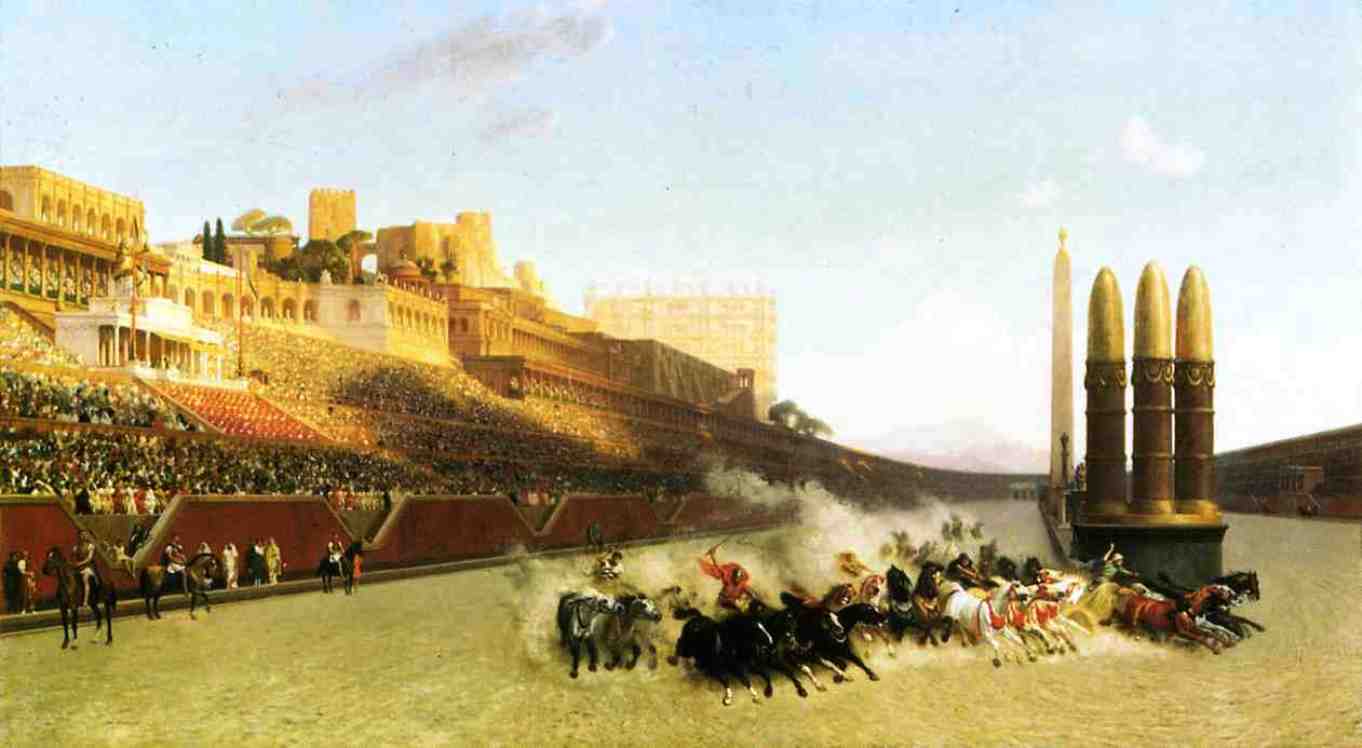
geromecircusmaximus Jean-Léon Gérôme (1824–1904), Circus Maximus (1876), oil on panel, 86.5 x 155 cm, Art Institute of Chicago, Chicago, IL. The Athenaeum.

It was the Romans who not only coined the name, but transformed older and purer athletic events into spectacle soaked with sweat and blood, as recreated by Jean-Léon Gérôme in his Circus Maximus of 1876. This shows four-horse chariot racing taking place in the largest of all the stadiums in Rome, capable of holding a crowd of over 150,000.

These lived on in fairs throughout the Middle Ages and later, but it wasn’t until the late eighteenth century that…

View original post 980 more words

Categories
Uncategorized

Max Aub: a Spanish intellectual in Mexico

europeancollections's avatarLanguages across Borders

Researchers of the life and work of Max Aub (Paris, 1903- Mexico City, 1972) will be pleased to hear about a recent donation from the family of Aub’s daughter María Luísa, affectionately called Mimin by family and friends.

View original post 539 more words

Categories
Uncategorized

Czech Republic photo gallery

Categories
Uncategorized

The Radetzky March Readalong: Part One

Roth is great reading as is his journalism and guidebook to Berlin. He is a main character as is his supporter, Stefan Zweig in Volker Weidermann’s “Ostend- The Summer before the Dark”.

Jonathan's avatarIntermittencies of the Mind


When Caroline, at Beauty is a Sleeping Cat, and Lizzy, at Lizzy’s Literary Life, announced that they were hosting a ‘Radetzy March Readalong’ I knew I’d have to join in. The Radetzky March is comprised of three parts and Caroline and Lizzy have asked those of us taking part to consider questions related to each part. Here are my answers to the questions on Part One.

What enticed you to readalong with us?
I have read a few books by Joseph Roth and have enjoyed them all but I hadn’t read his most famous novel, The Radetzky March, which is the only book by Roth to be included in Boxall’s list 1001 Books You Must Read Before You Die. The books by Roth that I have read are Hotel Savoy, The String of Pearls, The Hundred Days and, one of my favourite books, The…

View original post 1,394 more words