Categories
Uncategorized

Radical Views: Egon Schiele 3, 1914-15

Another stunning posting. Love Schiele’s palette and his feeling for structure;both anatomical and architectural.

hoakley's avatarThe Eclectic Light Company

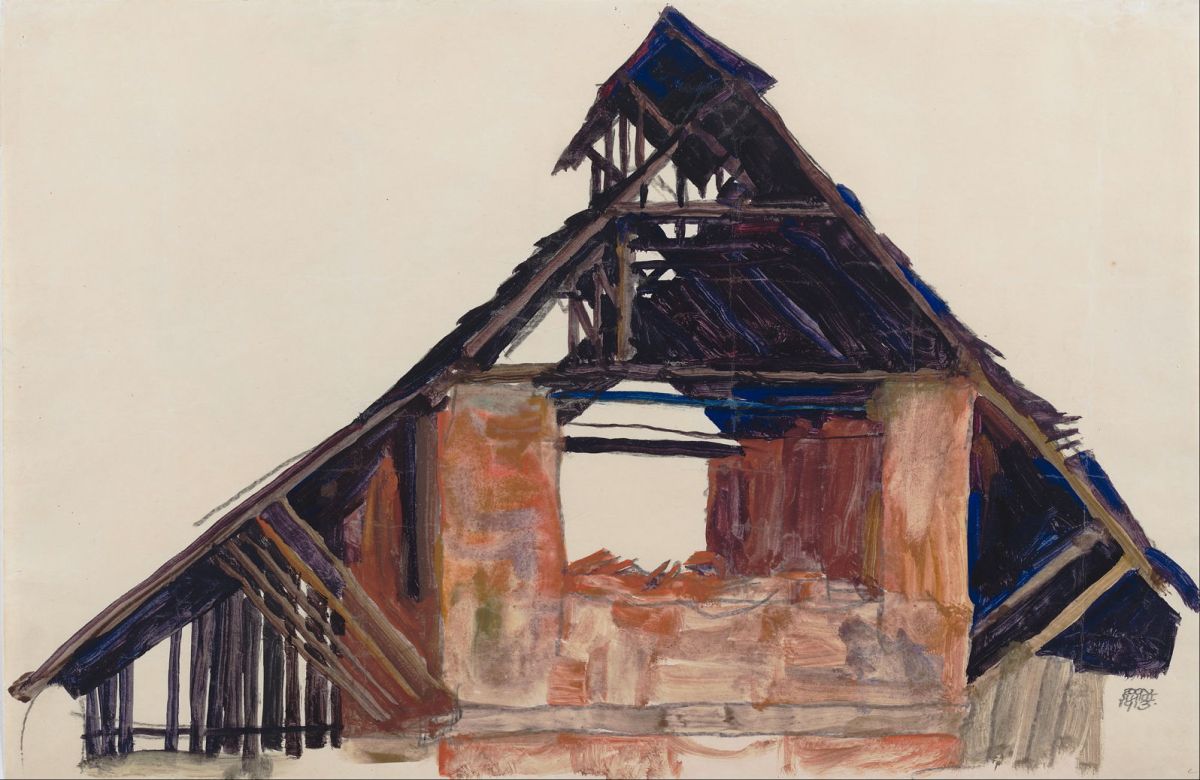
In 1914, Egon Schiele’s works were exhibited around Germany as part of the travelling Werkbund Exhibition, and in Rome, Brussels and Paris. In the summer, he started making drypoint etchings.
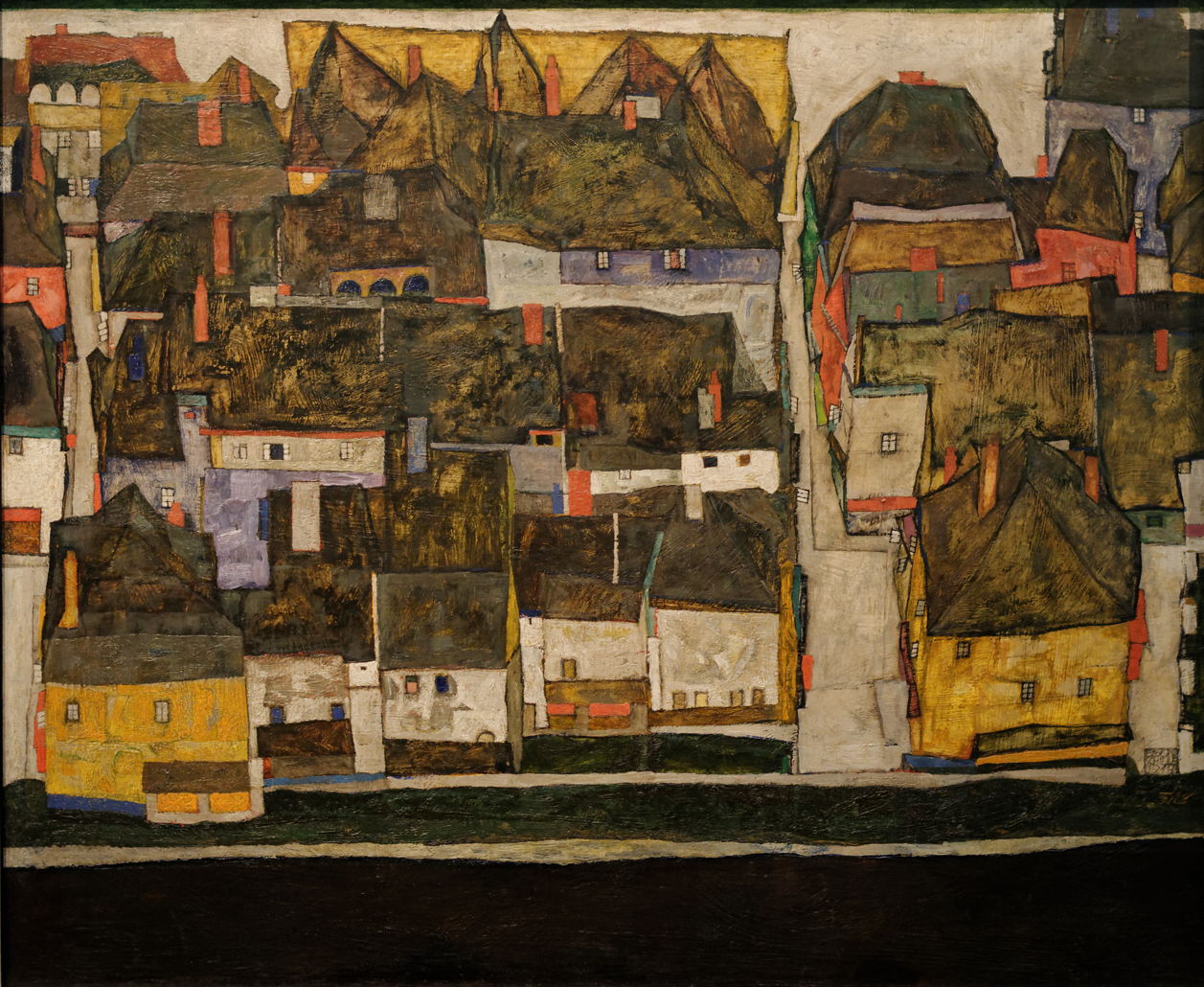
schielesmalltown4 Egon Schiele (1890–1918), Krumau an der Moldau (The Small Town III) (1913-14), oil and black chalk on canvas, 99.5 x 120.5 cm, Die Sammlung Leopold, Vienna, Austria. Image by Yelkrokoyade, via Wikimedia Commons.

Krumau an der Moldau (The Small Town III) (1913-14) is based on a view over the town of Krumau from Castle Hill, which is on the opposite bank of the river. Comparison with photographs reveals how faithful this painting is, but Schiele replaced a more modern block of flats at the lower right with a building which appears more in keeping with the mediaeval town.

Although Schiele has continued to remove much of the depth from his view, its buildings still retain some degree of perspective, as…

View original post 799 more words
Categories
Uncategorized

Genever

apolla13's avatarNames Throughout the Ages

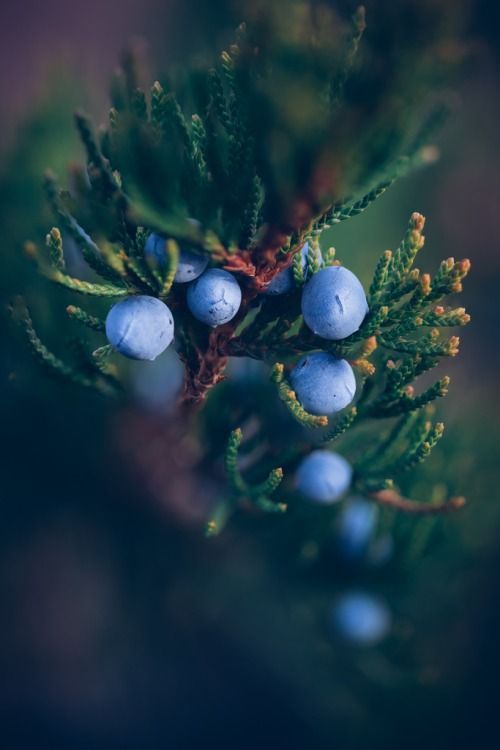
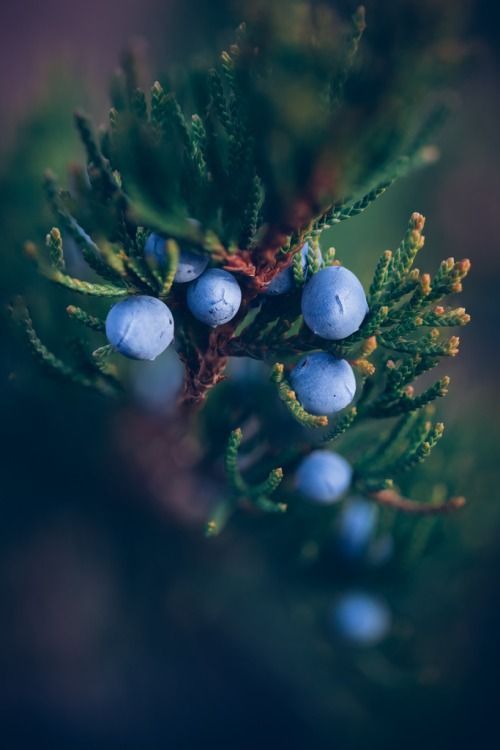
Genever is a variant spelling of Jenever, the Dutch form of Juniper, referring to a shrub or tree with dark-blue berry-like cones that can be used for flavoring gin and has some medicinal use; Jenever is the name of a Dutch wine flavored with juniper. It comes from Latin iuniperus (juniper tree), of uncertain origin though it’s been linked to Latin iuncus (rush, reed) derived from a PIE source. It sounds similar to Jennifer but the two are not related in any way.

Origin: Latin, Proto-Indo-European

5ee14b11045bfb1cca93a68a2e0779fcPinterest

Variants:

  • Jenever (Dutch, English)
  • Genievre (French)
  • Genièvre (French)

View original post

Categories
Uncategorized

Impressions of Thessaloniki

ms6282's avatarDown by the Dougie

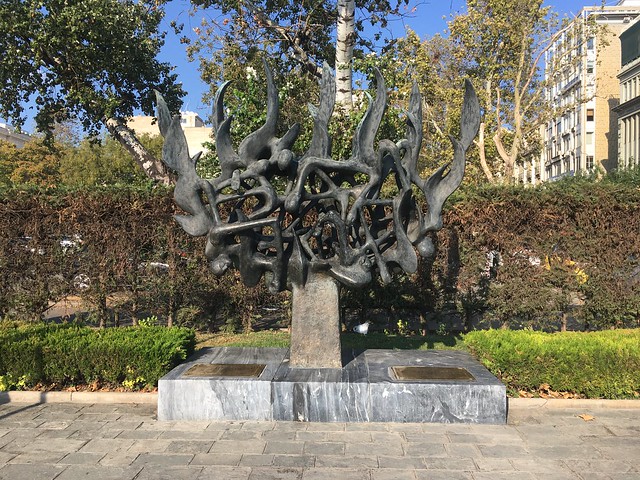
DSC05087.JPG

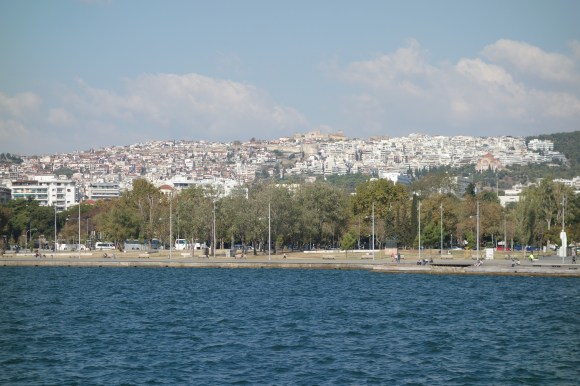
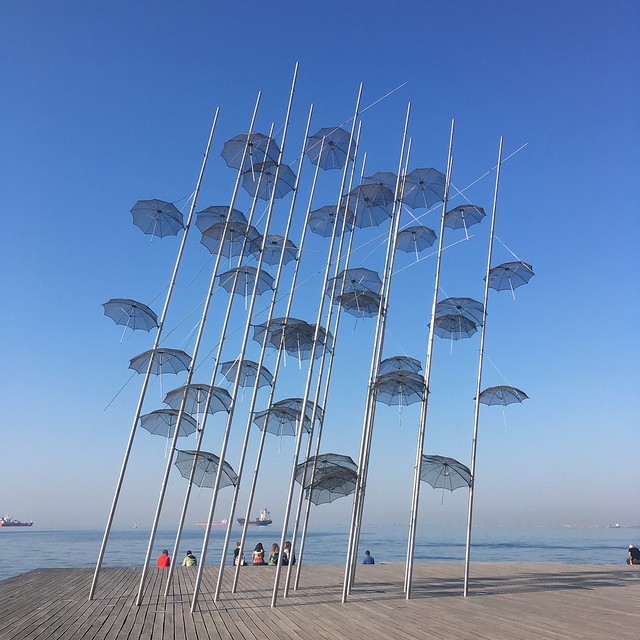
Last week we had a short break in Thessaloniki, Greece’s second largest city, in the north of the country in the province of Macedonia. I had a particular reason for wanting to go there, it’s been on my bucket list for a while, and this was our first ever trip to Greece. I don’t think it will be our last!

Untitled

Untitled

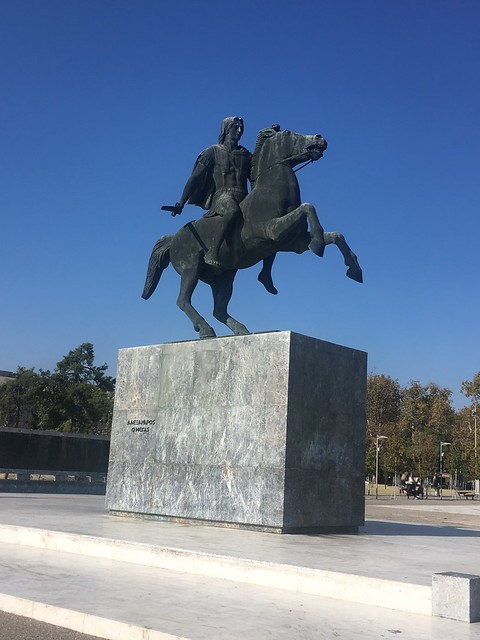
The city, formerly known as Salonica, has a fascinating history – founded by the ancient Macedonians (although after the death of Alexander the Great) it’s been ruled by the Romans, the Byzantine Empire, the Ottomans and, finally the modern Greek State. Under the Ottomans it became a cosmopolitan city, populated by Christians, Muslims and Jews, the latter emigrating here when exiled from Spain and Portugal and becoming the largest ethnic group until they were deported and murdered by the Nazis.

Untitled

Flying out from Manchester we spent 4 days in the…

View original post 555 more words

Categories
Uncategorized

Es kommt die Zeit…

Wolfregen & Constanze's avatarDas poetische Zimmer

Foto: ©Constanze

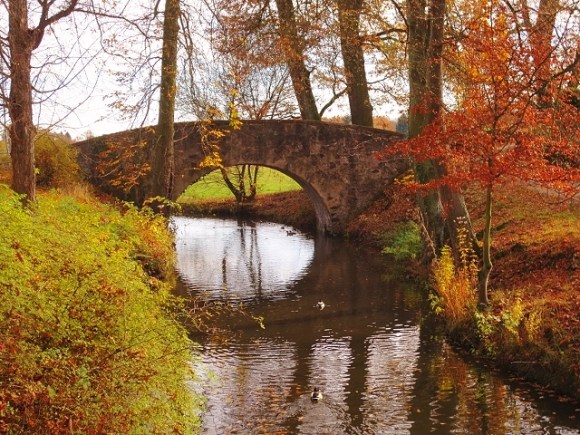
„Die Blätter fallen, fallen wie von weit,
als welkten in den Himmeln ferne Gärten…“

(Aus: „Herbst“ von Rainer Maria Rilke)

~ Wenn Blätter fallen… ~

Es kommt die Zeit, wo jeder Baum sich neigt
und müd sich wendet jedes welke Blatt,
weh dem, der dann nichts Lichtes in sich hat
und etwas Leichtes, das ihn sacht erhebt
wie eine Feder, die im Sinken schwebt
aus Flügeln eines Engels, die sanft schwingen
und mächtig rauschen, wenn sie sich entfalten
in einem Überschwang, der stets neu trägt,
und nachts den Schimmer klarer Sterne halten
am weiten Himmel, dem sie still entfallen… –
sieh, diese Hand, die in der Erde gräbt
und in die Tiefen geht, bedächtig schweigt,
sie weiß, dass Lieder trostlos nur verhallen
an feinen Harfen, die zu schwer erklingen,
sie schmückt, in Liebe ewig gottgesandt,
so endlos nah und fern zugleich an Regung
der Schönheit Gärten mit des…

View original post 10 more words

Categories
Uncategorized

Paintings of Autumn 1: 1573-1895

A gorgeous selection!

hoakley's avatarThe Eclectic Light Company

For those of us who live beyond the Tropics, I look on autumn/fall as being compensation in advance for what we’re about to suffer in the winter, and Spring as our reward for getting through. In this and the next article, I’d like to celebrate over three centuries of magnificent paintings of the spectacle which we enjoy during the autumn. I will keep my commentary to a minimum, and just let you enjoy these marvellous paintings.

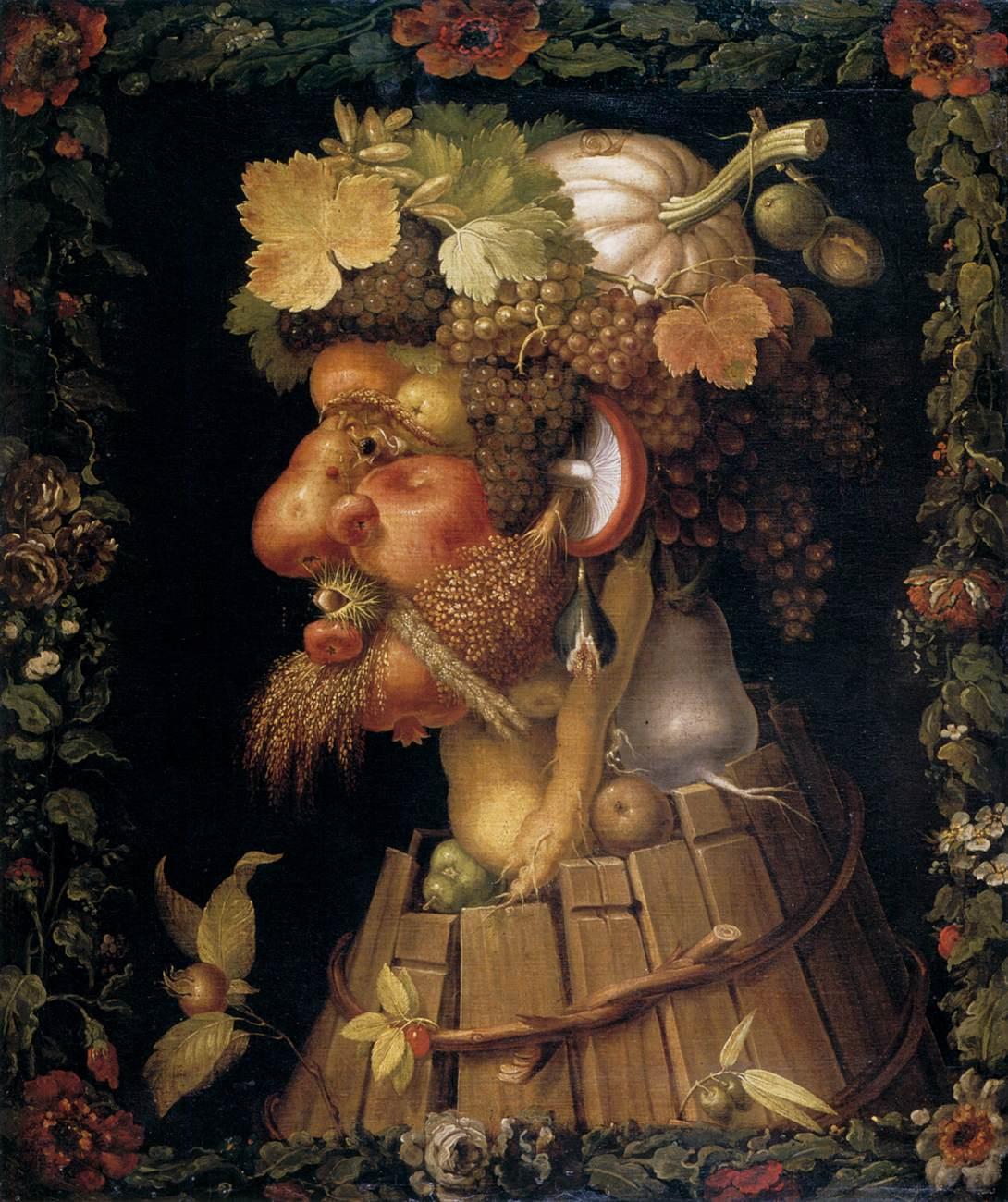
arcimboldoautumn Giuseppe Arcimboldo (1526/7–1593), Autumn (1573), oil on canvas, 76 x 64 cm, Musée du Louvre, Paris. Wikimedia Commons.

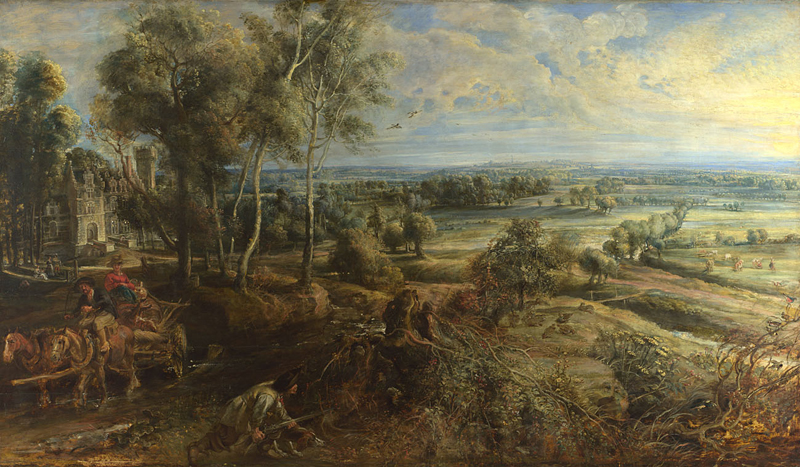
rubenshetsteenearlymorning Peter Paul Rubens (1577–1640), An Autumn Landscape with a View of Het Steen in the Early Morning (c 1636), oil on oak, 131.2 x 229.2 cm, The National Gallery (Sir George Beaumont Gift, 1823/8), London. Courtesy of and © The National Gallery, London.

One of Rubens’ last paintings, made during his ‘retirement’ and probably within five…

View original post 822 more words

Categories
Uncategorized

The enduring appeal of Struwwelpeter

I wonder what Melanie Klein would have made of him?

europeancollections's avatarLanguages across Borders

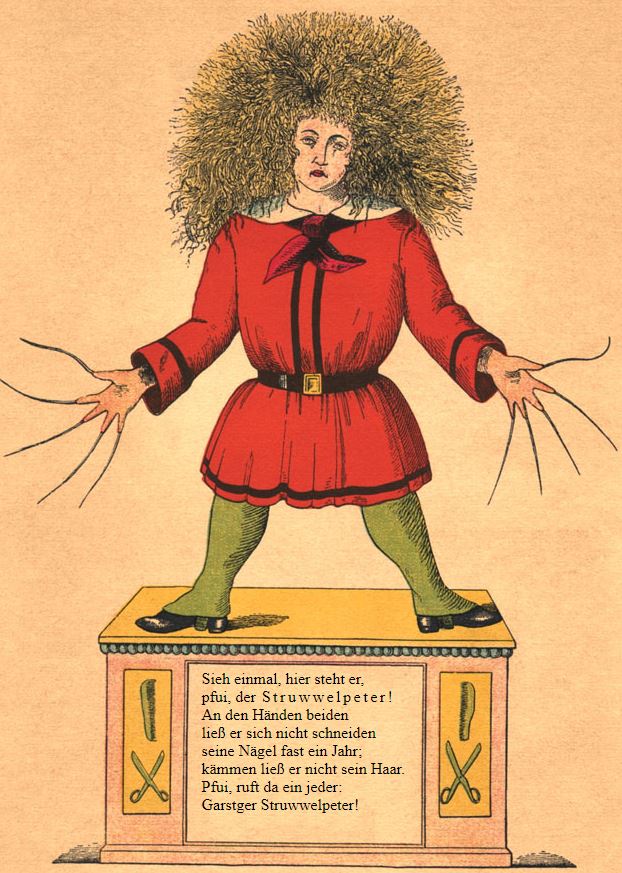
In 1844 a German doctor (and later psychiatrist at a psychiatric hospital in Frankfurt) was looking for a book to give his three year old son for Christmas but couldn’t find anything suitable, considering the books on sale to be too long and moralising. He decided to create something himself instead, being accustomed to sketching pictures to pacify child patients. This was Heinrich Hoffmann and his creation was Struwwelpeter, a short illustrated collection of cautionary tales which graphically demonstrated what would happen to children who misbehaved or disobeyed their parents. His bestselling book is one of the most well-known works for children in Germany, running to more than 700 editions, translated into more than 40 languages and with many imitations and parodies. There is even a museum dedicated to Struwwelpeter and Hoffmann in Frankfurt am Main. In this blog post we explore in more detail the original book and…

View original post 906 more words

Categories
Uncategorized

Radical Views: Egon Schiele 2, 1912-13

hoakley's avatarThe Eclectic Light Company

At the start of 1912, Egon Schiele was living with his model Wally Neuzil in the town of Neulengbach, to the west of Vienna. Even there, his lifestyle attracted attention, and local kids started hanging about his studio. In April, this led to an allegation that he had seduced a girl who was under the age of consent, and he was arrested and held in custody during the investigation.

While he was in prison, his studio was searched, and his drawings and paintings of nude figures were discovered, and some confiscated. The charges were therefore extended to include the exhibition of erotic images in a place where children could see them. It was of that, rather than seduction of a minor, for which he was eventually found guilty. He served a further three days in prison as his sentence, and worse still the judge burned one of his drawings in…

View original post 1,095 more words

Categories
Uncategorized

Between Klimt, Mucha, and Hodler: The art of Kolo Moser 2, 1899-1910

hoakley's avatarThe Eclectic Light Company

Between 1897-1907, although primarily trained as a painter, Kolo Moser (1868–1918) was one of the foremost designers in central Europe. He was first a teacher then a professor at the Vienna School of Applied Arts, holding the latter post until his death. His friend, the architect and designer Josef Hoffmann, designed the Jugendstil house that Moser moved into, and Moser himself designed its furniture.

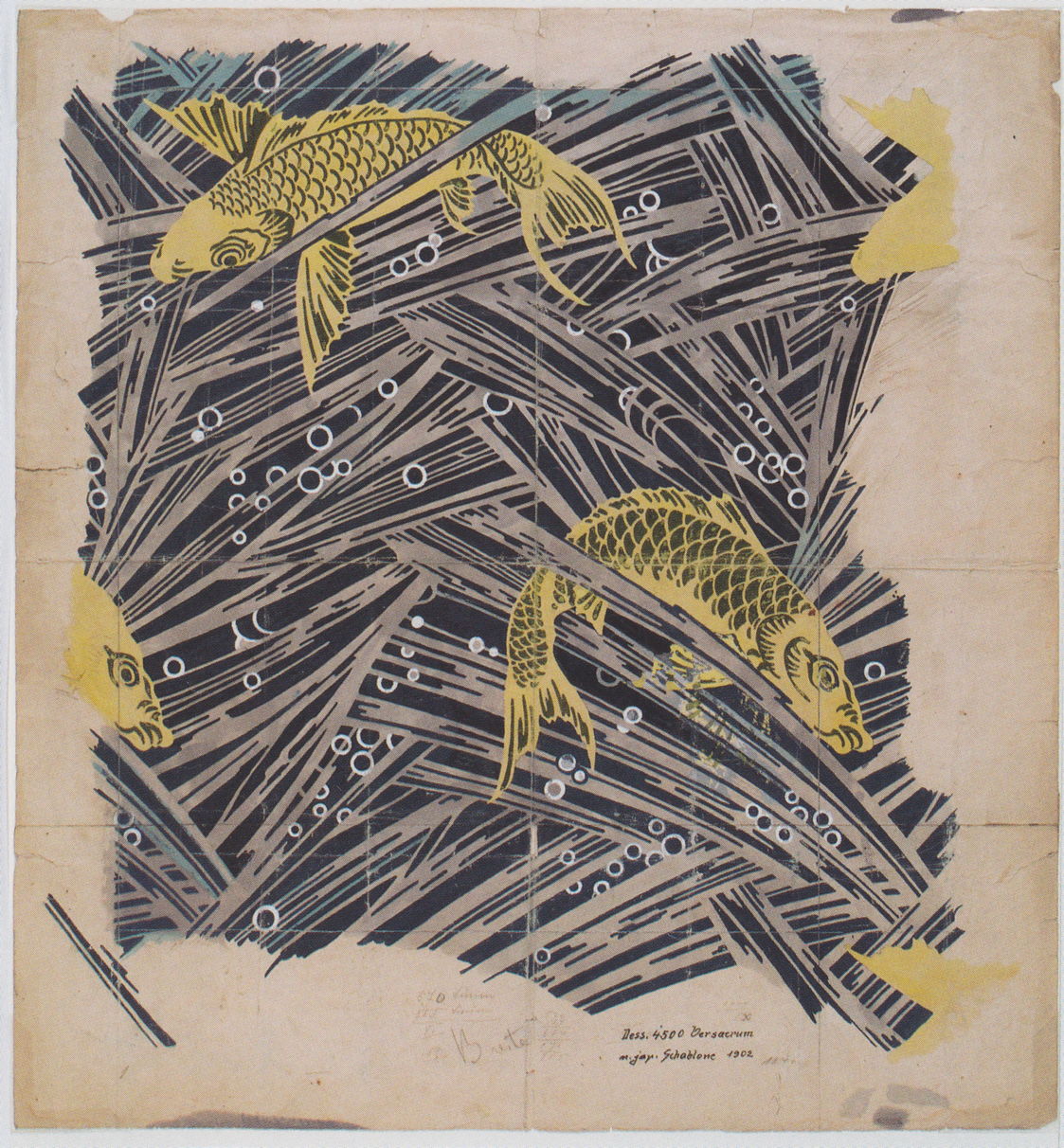
mosertroutfabric1899 Koloman Moser (1868–1918), Trout Swimming (1899), design for fabric, watercolour and pencil on paper, 44 x 38 cm, Private collection. Wikimedia Commons.

Among the many products which Moser designed were fabrics manufactured by Backhausen, for whom he produced this drawing of Trout Swimming in 1899. This coincided with a phase in Klimt’s work in which fish, air bubbles, and water appeared, for example in his Fish Blood (1898), published in the Secession’s magazine Ver Sacrum, and Mermaids (Silverfish) (c 1899): see this article.

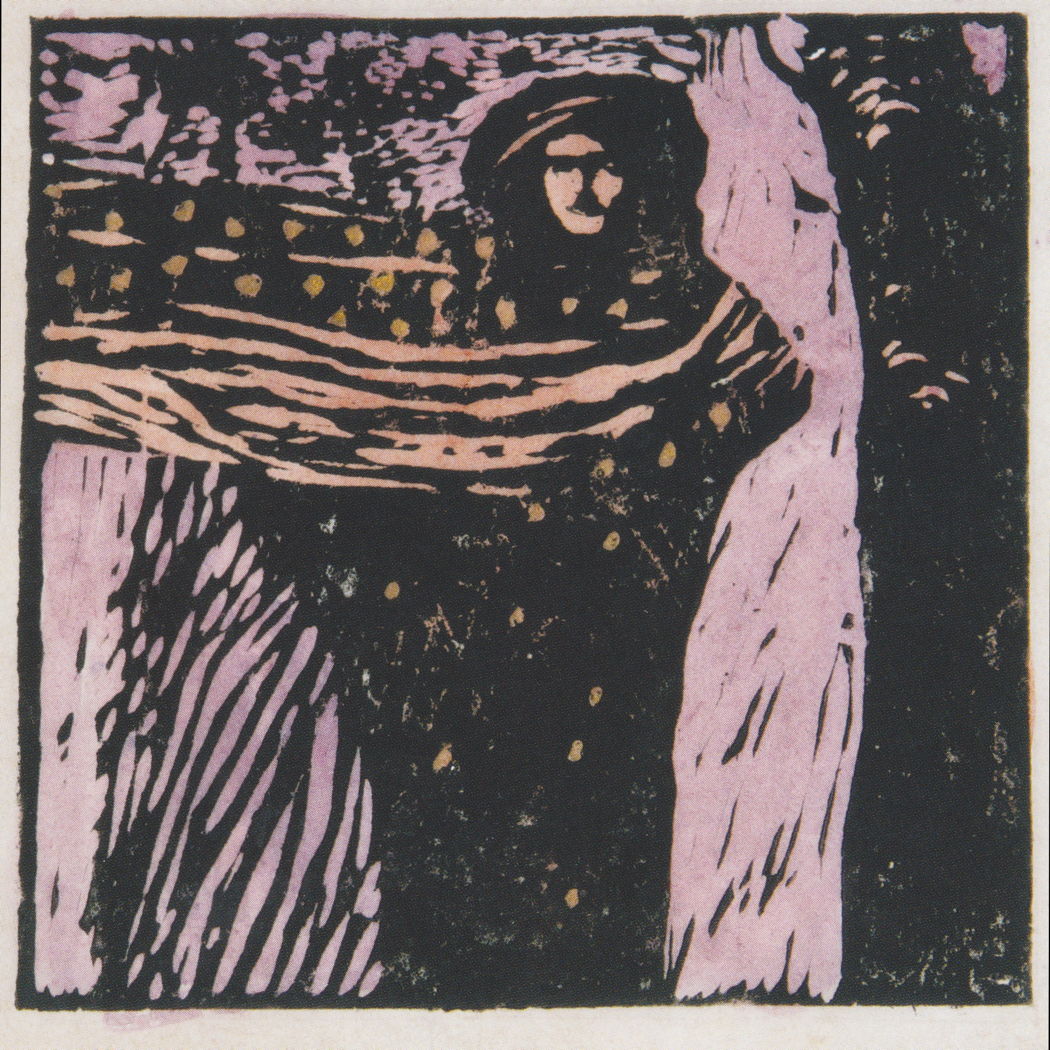
moserloneliness1902 Koloman…

View original post 738 more words

Categories
Uncategorized

RISEN FROM RUINS, SUNK IN THE PAST: EAST GERMAN NATIONAL ANTHEM

Unknown's avatarKREUZBERGED - BERLIN COMPANION

Regardless of political views and personal sentiments many people would openly admit that in terms of their national anthem, the former German Democratic Republic definitely managed to do something right.

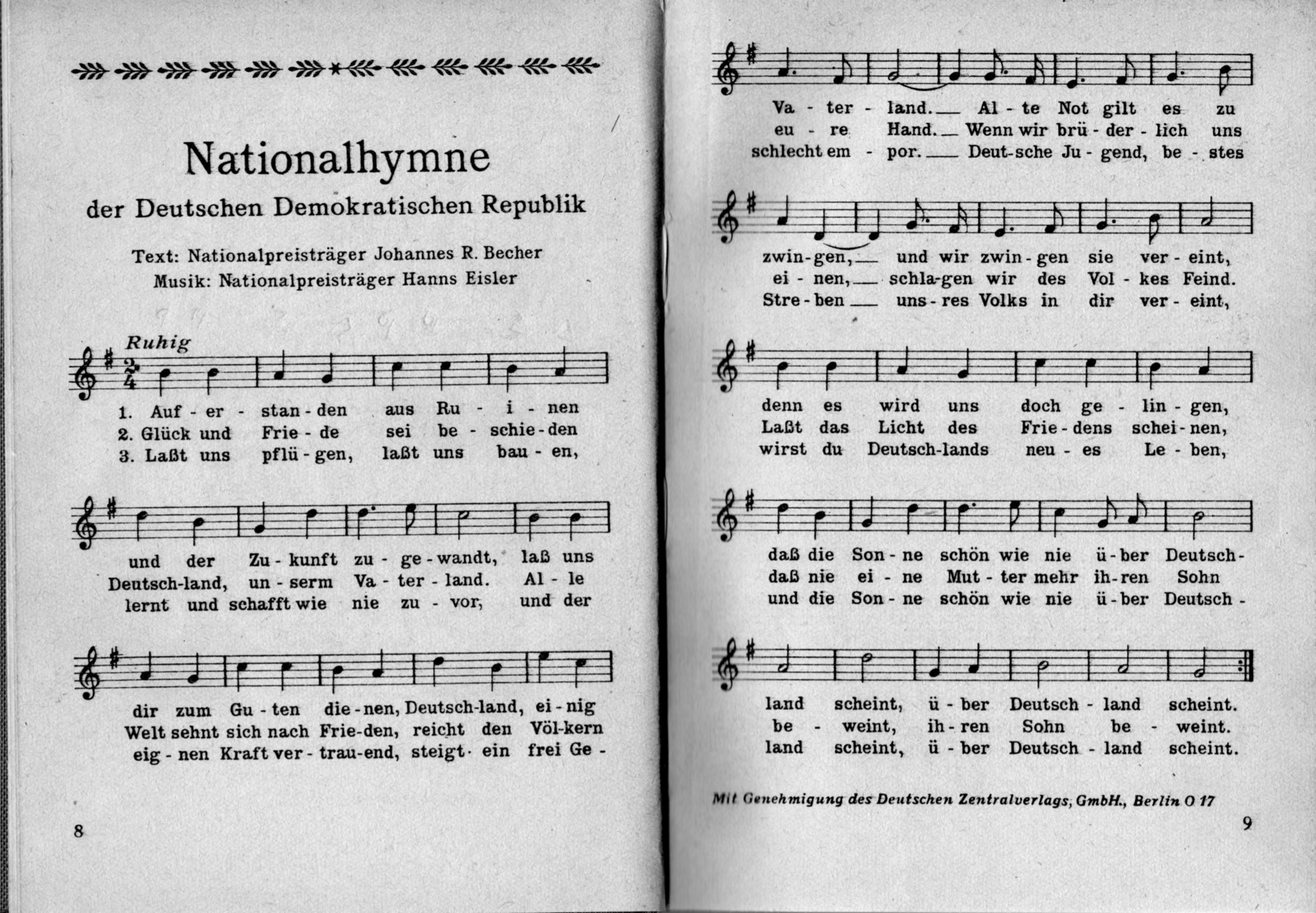
Auferstanden aus Ruinen – “Risen from Ruins” – had a gripping melody and an intensely moving text. The song became the official national anthem of the GDR on November 5, 1949.

Nationalhymne_der_DDR

On that day the new state’s (the GDR itself was born only in October that year) chief executive body, the Council of Ministers of the GDR, announced its decision concerning the choice of the national anthem. With music written by Hanns Eisler (in a record time of three weeks!) and the lyrics by a poet Johannes Robert Becher who later became the East German Minister of Culture, the song was melodious without being too difficult, poignant without being overwhelming and focused on the most burning issue in German politics at the…

View original post 848 more words

Categories
Uncategorized

Doreen

apolla13's avatarNames Throughout the Ages

Doreen is an English female name, a combination of Dora with the -een suffix. Dora is often used as a short name with names beginning or ending with it such as Theodora, Dorotheaetc. Dora comes from Ancient Greek doron meaning “gift” derived from a PIE word. Doreen could also be the anglicized form of Irish Dáireann which I’ve seen listed as either meaning “sullen, tempestuous” or “fertile”; if it’s the latter than that makes it a variant of Dáire (also anglicized as Dara). Dáireann is a figure in Irish mythology.

Origin: Proto-Indo-European

Variants:

  • Dorine (English)
  • Dorean (English)
  • Dora (English, Italian, Spanish, Greek, Croatian, Serbian, Dutch)
  • Dorinda (English)
  • Doretta (English, Italian)
  • Dorita (Spanish, English)
  • Dory (English)
  • Dorie (English)
  • Dori (English)
  • Doria (English)
  • Dorina (Hungarian, Romanian)
  • Dóra (Hungarian, Icelandic)
  • Dáireann (Irish)
  • Doireann (Irish)
  • Doirend (Irish)


View original post