Avignon. Irma, qui ne trouve plus sa place dans le monde, croise sur sa route Dolorès, une femme libre et décomplexée missionnée pour rédiger un guide touristique gay-friendly sur un coin de Provence oublié. L’improbable duo se lance sur les routes. Au lieu de la Provence pittoresque et sexy recherchée, elles découvrent un monde plus complexe et une humanité chaleureuse qui lutte pour exister. Pour chacune d’elle, c’est un voyage initiatique.
Bruno is a male given name which derives from a Germanic source, either from Old High German brun meaning “brown” which derives from a PIE root word; or it comes from Proto-Germanic *brunjǭ meaning “breastplate; armor, protection”. Bruno is an Italian and Portuguese word meaning “brown” as well as also being an Italian and Portuguese surname derived from the given name, or originating as a nickname for someone with brown hair or a dark-brown complexion.
Contrary to popular belief, the border between East and West Berlin did not run directly along the western face of the Berlin Wall. In fact, the westernmost edge of the Wall was built entirely inside DDR territory 1.98 m away from the official border.
Photo taken by a Berlin photographer, Willy Pragher, on the corner of Luckauer Straße and Sebastianstraße on June 9, 1965. Notice the sign informing that the pavement is part of the Soviet territory. (image via Landesarchiv Baden-Württemberg, Staatsarchiv Freiburg)
The reasoning was simple: by constructing the wall inside the Soviet sector, the DDR authorities made it impossible for the Western Allies to remove it. Any attempts to take down the wall would have involved moving Western forces into Soviet territory and thus been considered a declaration of war. In practical terms, however, the two metre strip between the wall and the west led to a curious…
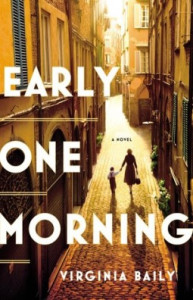
(Still making space on the B-shelf and reading this one at night while I tackle Nicola Barker’s 800+ page Darkmans by day…)
I came across Virginia Baily’s Early One Morning via the Readings catalogue back in 2015, and was intrigued by the blurb. It’s about an Italian woman who rescues a child from the Nazi round-up of Jews, and what happens afterwards.
It’s not really a book about war or about the Holocaust, but more about how it is much harder to work with traumatised children than it seems and about how the urge to find out about parents and forebears isn’t always a quest with a happy ending. But it’s not a grim book: it is surprisingly humorous in places, with some splendid self-deprecating female central characters undercutting any pretensions to heroism or self-pity. It is also a book centred on female preoccupations: the perspectives of the male characters have to…
The painting is called the Panorama of Raclawice and depicts the battle of 4th Apr 1794 between Poland and Russia. The painting is 15 metres high and 115 metres long and is shown in the round. This was the most famous episode of the Kościuszko Insurrection and the man himself is shown on horseback in the above image.
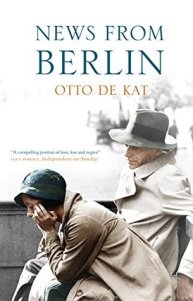
I love it when a book that’s on my wishlist waves at me from the new books shelves at the library! There it was, News from Berlin which Grant at 1st Reading had so enticingly reviewed, so of course I brought it home. And read it straight away because it’s only just over 200 pages long and I couldn’t put it down.
Otto de Kat is the pen name of Dutch author, publisher, critic and poet Jan Geurt Gaarlandt. The book jacket tells me that his award-winning novels have been widely published throughout Europe and Man on the Move (2009) was the winner of Holland’s Halewijn Literature Prize. News from Berlin is translated by Ina Rilke who also translated two books by noted Dutch author Hella Haase that I have read, so I knew the translation would be good.
And it is. The translation is excellent. News from Berlin is…
Loss is waiting everywhere,
Because I’ve felt the shape it makes
I try to lose it in the crowd,
Taking shortcuts down alleyways,
Wearing black and changing my hair.
I relish the rain because it covers everything,
Only stopping to linger in a stranger’s stare,
I try to keep all my pages blank, then perhaps
Loss will not know that I’m still there.
Leave –a sonnet
Another coast, some late hour, my feet bare.
Someone loved this place,
there are colours everywhere.
I am drifting in a shipwrecked bed,
an exposed room, a worn wooden floor.
The light fell in, still and unbroken, a silent day,
except for the footsteps, that stopped at the door,
now turning, now walking quietly away.
Once my body knew a rough song,
the sound of our staggered breaths.
Since I sighed a hundred little deaths,
rootless, I went the way of the birds.
Empty places I have known, what could’ve been,
once wound tight, an unravelling dream.
Way back around 1960 I went to a course at Oxford at Ruskin College- a conference where I learnt about the flexibility of the labour force; that many people would have to take many jobs in a lifetime. I went on to teach Physics for some 37 years. I went on for a further week in Cambridge where in Heffers I discovered a fascinating book about the life and work of Albert Einstein. (I had previously read snippets from his own “The World as I see it” borrowed from the library of the local Methodist minister.) I recall the book as being full of photographs and diagrams which gave me some insight into aspects of General Relativity.A short seach has revealed this to be Albert Einstein, The Man and his theories by Hilaire Cluny This
ground has been covered on the brilliant DVD, Einstein and Eddington published by the BBC with Andy Serkis and David Tennant taking the leading parts.
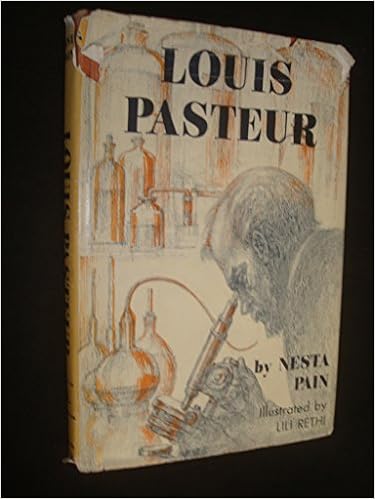
Reflecting on this I think that my biographical interest in Science was much influenced by the television series on Louis Pasteur by the brilliant writer/director Nesta Pain. The importance of consistent and painstaking research in the laboratory seemed to be one theme I would have been wise to have retained from this brilliant series which I must have seen around 1958.
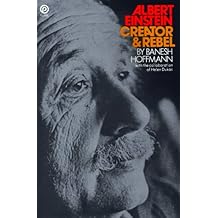
Two excellent biographers are George Gamow and Banesh Hoffmann. The latter’s biography of Albert Einstein-Creator and Rebel was written with the assistance of Helen Dukas who was Einstein’s secretary from 1928 and one of his literary trustees.
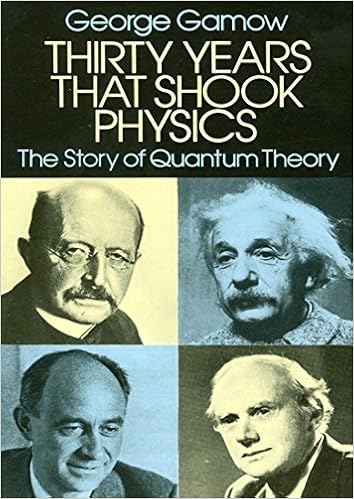
George Gamow was born in Odessa in 1904 and worked with Neils Bohr in Copenhagen and with Ernest Rutherford at the Cavendish Laboratory. His expositions are very clear and Thirty Years that Shook Physics covers the development of the Quantum Theory with chapters on the following:- Planck, Bohr, Pauli, De Broglie, Heisenburg, Dirac and Fermi. It closes with an exposition on Yukawa and Mesons.
These books may now be considered somewhat dated but they remain clear on the state of Physics up to around 1950. One physicist who always stands out as particularly exciting for both his work and unconventional personality is Richard Feynman. I can still recall his safe cracking amusements which are so well described in Brighter than a Thousand Suns on the Manhatten Project.
There are many books on Feynman including an engaging comic book but the classic biography is Genius, Richard Feynman and modern physics by James Gleick.
Finally, I would like to commend this recent historical account-
Faust In Copenhagen: A Struggle for the Soul of Physics and the Birth of the Nuclearby Gino Segrè




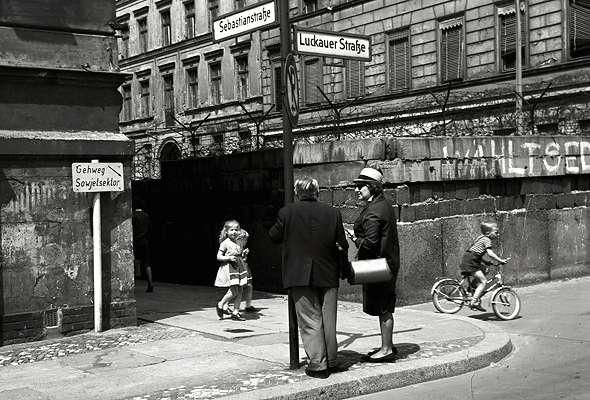

 Photo taken by a Berlin photographer, Willy Pragher, on the corner of Luckauer Straße and Sebastianstraße on June 9, 1965. Notice the sign informing that the pavement is part of the Soviet territory. (image via Landesarchiv Baden-Württemberg, Staatsarchiv Freiburg)
 (Still making space on the B-shelf and reading this one at night while I tackle Nicola Barker’s 800+ page Darkmans by day…)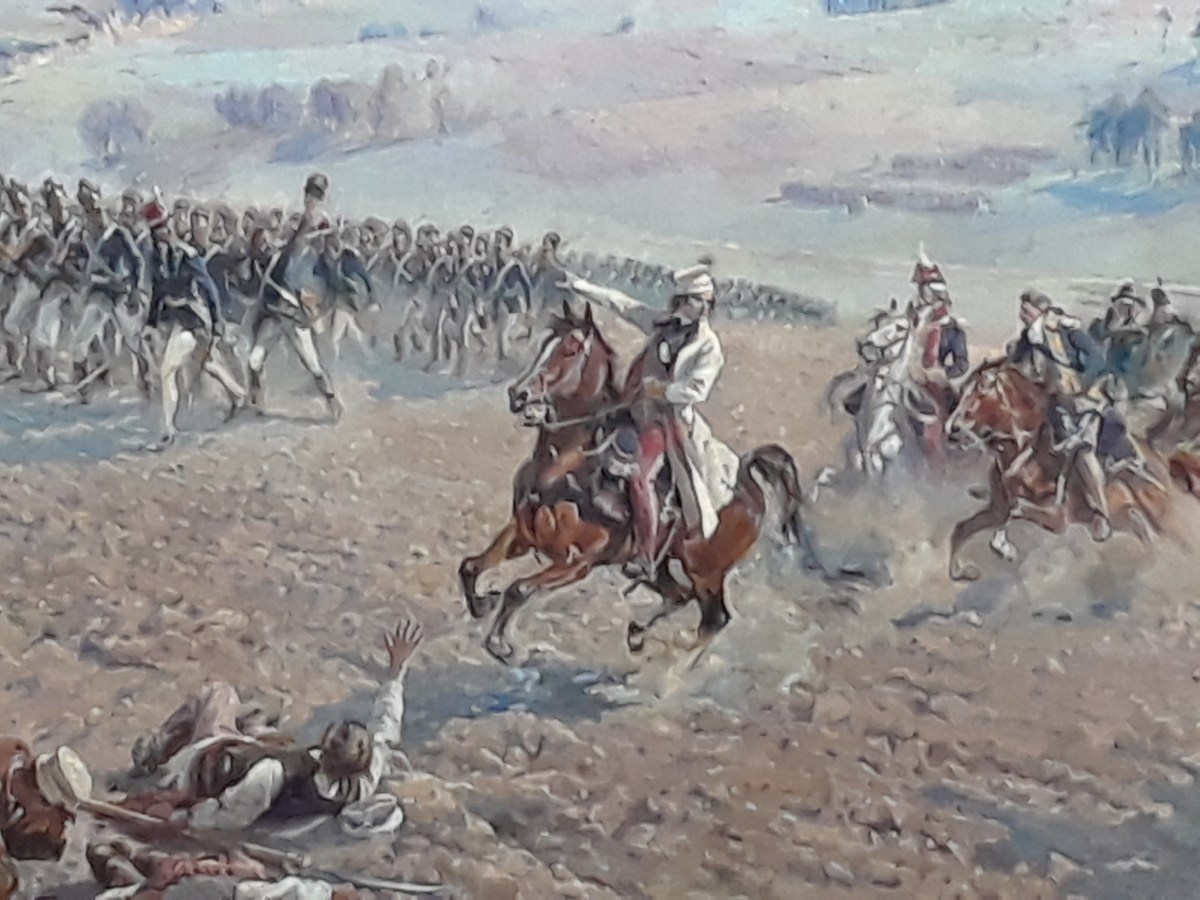

 I love it when a book that’s on my wishlist waves at me from the new books shelves at the library! There it was, News from Berlin which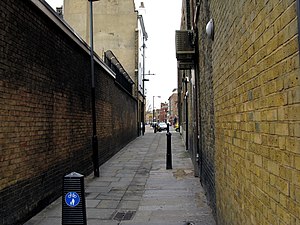

![Einstein And Eddington [DVD] [2008]](https://images-na.ssl-images-amazon.com/images/I/51NETdwGTgL._SY445_.jpg)
 penwithlit