Deine Seele, die die meine liebet,
Ist verwirkt mit ihr im Teppichtibet.Strahl in Strahl, verliebte Farben,
Sterne, die sich himmellang umwarben.Unsere Füße ruhen auf der Kostbarkeit,
Maschentausendabertausendweit.Süßer Lamasohn auf Moschuspflanzenthron,
Wie lange küßt dein Mund den meinen wohl
Und Wang die Wange buntgeknüpfte Zeiten schon?
Nighthawks After Edward Hopper’s Painting – Wolf Wondratschek
It is night and the city is deserted. The lucky ones are at home, or more likely there are none left.
In Hopper’s painting, four people remain the usual cast, so-to-speak: the man behind the counter, two men and a woman. Art lovers, you can stone me but I know this situation pretty well.
Two men and one woman as if this were mere chance. You admire the painting’s composition but what grabs me is the erotic pleasure of complete emptiness.
They don’t say a word, and why should they? Both of them smoking, but there is no smoke. I bet she wrote him a letter. whatever it said, he’s no longer the man who’d read her letters twice.
The radio is broken. The air conditioner hums. I hear a police siren wail.
Picture the crowded atelier of the renowned sculptor, Rodin or perhaps the dimly lit corridor’s of Lord Grimthorpe’s mansion. Perhaps you might prefer to frequent the brightly lit splendour of the balconies of the coastal villa at Cimbrione above the magnificent Gulf of Salerno. The inhabitants of such places led their tangled lives, sometimes enduring painful losses or by contrast, energetically inspired to passionate love affairs. In these stimulating environments we catch glimpses of the famous, like E.M.Forster, Virginia Woolf, sometimes accompanied by her close confidante, Vita Sackville West and then there was that tempestuous iconoclast, D.H.Lawrence. Many such lives were inspired by both landscape and lust, fashioned by each other’s creative energies and endowed with artistic talents of all kinds. Here we learn of talents and beauty that inspires artistic endeavour, like the many charms of Eve Fairfax. She, who after brief affairs was gradually forced into a stoic suspension which she recorded with thoughts from her friends in the pages of annotated diaries which became “A Book of Secrets”.
Michael Holroyd
The Becketts were Yorkshire bankers and MPs who over several generations owned a series of estates and Gothic brickwork mansions. Ernest William, the second Lord Grimthorpe, was sent to Eton and by nature appears to have been, as Holroyd ironically remarks, a schoolboy that in some ways never quite grew up, though he did arrive at TrinityCollege, Cambridge in May 1875. Much about him is surrounded in mystery but his prowess with women soon became almost notorious soon after he reached London, a fact recorded by the writer George Moore describing him as ‘London’s greatest lover’. Ernest was to take the tours customary for young gentlemen around Europe on which he pursued in succession Eve Fairfax who was briefly his fiancée and then met his wife, Luie, a rich American whose story forms an intriguing digression, in Rome. After her most unfortunate death in childbirth, Ernest Beckett was to end up in the arms of Alice Keppel who was to embark upon a dalliance, as is well known, with the Prince of Wales. Besides these, there was a voluptuous Spanish American lady in Rome whom Ernest conveniently installed in Bayswater.
It was the melancholy beauty of the classical features of Eve Fairfax that also sent Auguste Rodin into raptures. Seeing her bronze head in the V&A, actually cast in 1909, first inspired Michael Holroyd to write this book, “The Book of Secrets”, referring to the elaborate memoir which Eve kept throughout her later life whilst attempting to come to terms with her past. In this she recorded her thoughts on mortality, occasional verses whilst frequently pondering the significance of those earlier amorous encounters with Ernest Beckett. Holroyd deploys his fluent elegant prose in describing Eve, her friends and this Edwardian tome, an eclectic and unique personal calendar, and also the letters which she received from various and unsuitable admirers. These appear to have included Rupert, Ernest’s younger brother, hence she concluded ‘All Becketts make bad husbands’.
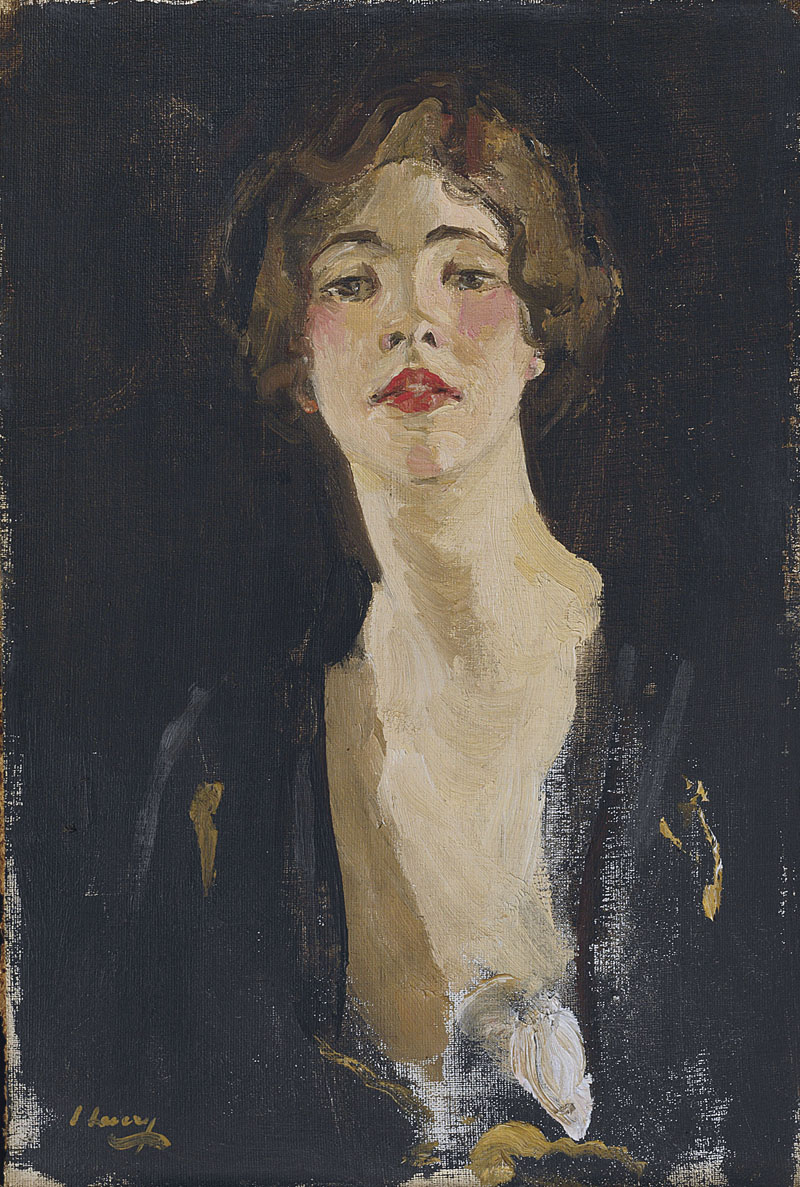
Portrait of Violet Trefussis by Sir John Lavery 1919
Following through complex family trees, helpfully supplied, Michael Holroyd arrives at the passionate love affair between Alice Keppel’s daughter, who later became Violet Trefussis and Harold Nicholson’s wife, Vita Sackville West. Both had severe, imposing mothers and as children chased together around the corridors of Knole. Vita loved this place with its grand towers, high battlements and long gallery surrounded by spacious parks. Vita then came to stay at Violet’s castle at Duntreath in Stirlingshire. Vita was proud, independent, bi-sexual and fascinated by gardening; Violet appears more naïve, wayward and focussed strongly on her ruthless pursuit of Vita, the latter having had several lovers and relationships which were to include Virginia Woolf. These passions inspired Woolf to write of pageant and androgyny in ”Orlando.” From a literary viewpoint, both Vita and Violet were highly productive. Vita wrote ”The Edwardians”, ”All Passion Spent”and ”Challenge”. Violet wrote around a dozen works, several in French; she loved Paris. Holroyd talks about rediscovering these works and he shares this interest with Violet’s young Italian biographer, Tiziana at Cimbrone who charms Michael and so becomes an important figure in this layered narrative. Along with his description of the supportive care of Holroyd’s wife, Margaret Drabble, the author brings the reader into the present. The biography becomes a heart-felt personal memoir.
The Guardian reported recently, “Biography is a genre in crisis, according to perhaps Britain’s best-known biographer, the author of highly acclaimed works on Lytton Strachey, Augustus John and George Bernard Shaw.” In particular literary biography, he feels has been superseded by the myriad forms of the internet and other popular entertainments.
Vita Sackville-West 1924
Holroyd says that this is his last book. However, here he is once again energised by the whole process of searching archives and reconstructs the cultivated, privileged and mostly civilised society back to the early Edwardians. In measured, wry and sympathetic tones he takes the reader into the luxuriant and variegated gardens of the past. He finds time to discuss the role of imagination in the art of biography. In this finely written book he carefully spreads enlightenment as he carefully distinguishes between guesswork, probability and established facts.
There is a related posting at http://nttreasurehunt.wordpress.com/2011/03/07/vita-and-violet/
“Whoever controls Berlin controls Germany and whoever controls Germany controls Europe” is a remark which attributed to Lenin. Until November 1989, the Berlin Wall, DieBerliner Mauer, bisected the historic city and divided its citizens from each other. Berlin was occupied, militarised and yet its people carried on with their daily lives amongst the ruins. Cees Nooteboom, a distinguished Dutch travel writer personally knew well something of the devastation of the past. He is old enough to have experienced, and at impressionable age, the Nazi Blitzkreig and occupation of Holland. A sensitive and susceptible person, he meditates upon the various strata of meaning, history, heroism and time itself. The result is a prose poem on a unique city that is condemned to be constantly developing, becoming rather than just being. As the art critic, Karl Scheffler, perceived in 1910, “Berlin ist eine Stadt, verdammt dazu, ewig zu werden, niemals zu sein”
Nooteboom’s account starts in 1963, progressing through the events surrounding the fall of the Wall at the end of 1989, and finishing with a reassessment of the situation today. The text is liberally interspersed with black and white photographs. This evocative structure is somewhat reminiscent of the writings of W.G.Sebald with whom he shares an interest in nostalgia, memory and the past. Roads to Berlin is more than a travelogue, although he visits many German cities. A central concern is his response, as an onlooker to the tectonic political changes which resulted from the Velvet Revolution. Under continuous surveillance the author describes his feelings about driving along the autobahn through East Germany to reach the city. He captures the drabness of the surroundings and the tense atmosphere beside the wintry waters of the River Spree and the lonely bridges where escapees were fired upon. These call to mind Pinter’s film The Quiller Memorandum (1966), suppressed violence, the doleful constant scrutiny of the border guards of Ulbricht’s republic.
In 1989, returning to his lonely flat in the Western sector, close to the Wall, Nooteboom contemplates on television the start of the thaw. The broadcast comes from the tall aerial towering over the populace on the East. He studies the numbing images of political assemblies where a retinue of faceless men, the Politburo, shuffle behind the ailing Erich Honecker. Light falls on Gorbacev’s face whilst he delivers an official kiss to the GDR leader, everyone in the audience too are watching, struggling to understand what is about to happen. There are seismic changes elsewhere as thousands of East Germans are allowed to pass out of Hungary into Austria. Then Dubcek reappears with Havel on a balcony above Wenceslas Square in Prague and indicating that the whole edifice has collapsed. Nooteboom emerges from his flat and joins the celebrations in the Potsdamer Platz and crosses through the checkpoint, which is still occupied by uneasy guards as numerous Trebants travel west, he strolls down the Unter den Linden above which a platform totters that barely supports people rejoicing. He also manages to attend galleries, plays and poetry recitals. These political changes are intermingled in his thoughts as he surveys the art and the mixed ironies of the fate of Mitteleuropa in an exhibition at the Walter Gropius Bau.
Nooteboom’s discursive approach is interesting and often reads as an eloquent memoir or diary. In places, because of his considerable interest in architecture, sculptures and ruins he sounds like a modern day Gibbon. The author of “Decline and Fall” has written of how he decided to embark on that great work as he mused amongst the ruins of the Capitol while barefoot friars were intoning Vespers. Nooteboom, brought up as a Catholic is sensitive to the chimes of the Angelus and writes evocatively about the empty dilapidated rally grounds at Nuremberg and discerns, “One voice screaming………, and all those ancient voices screaming back, an ancient chorus with a limited script.” He ventures to the Tuetoburg Forest, refreshed with Christmas Glühwein where he seeks out the towering statue of Hermann towering above his gigantic pedestal. The traveller, no mean historian, takes to task the mad classicist who erroneously named Hermann. He was in fact Armenius, who wiped out three Roman legions in A.D. 9 led by the wimpish Publius Varius.
Cees Nooteboom’s work, which includes fiction, has been widely acclaimed and he has received numerous awards on the continent and whispered for a possible Nobel Prize. His discursive style demonstrates an erudite knowledge of cultural and philosophical references. Ranging from Goethe, von Moltke and Bismark to that controversial figure Heidegger he assumes considerable background knowledge. He does, however provide a useful glossary of writers and politicians. This cannot have been an easy book for Laura Watkinson to translate and as she commented recently,” I am translating a Dutch book about Germany, sitting at a computer in Berlin, turning Dutch words about Germany into English words about Germany. “The resulting text is demanding, thorough and quite invaluable to those who want the opportunity to inform themselves before contemplating what the future holds Central and Eastern Europe. Doubtless, this too has considerable bearing on our own lives.
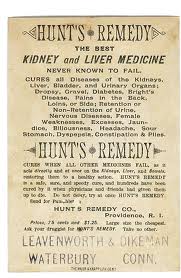
Ben Batten and Mary Quick have both referred to various home remedies used when calling the doctor might have been expensive. For many purposes a kaolin poultice was a frequent resort, as was various sorts of herbal tea or for sore throats honey and lemon was a simple palliative. Looking through copies of The Cornishman from the late 1920s an impressive number of remedies were advertised as being on offer:-
1) Women who are tired out
-How to regain lost vitality for women who feel tired out, nervy and overwrought, and suffers from headaches and backaches.
Try Dr Williams’ pink pills –of all chemists 3/- a box
2) Clarke’s Blood Mixture
“Just as good for abscesses, ulcers, bad legs, inflamed wounds, swollen glands, haemorrhoids, also rheumatism and gout- all of which are signs of blood impurities.
3) Swan’s Oxygen Therapy, Alperton, Penzance
Inhalation therapy for asthma, tuberculosis and pneumonia
Each copy of the newspaper would carry around five of such adverts, some large but few efficacious.
Had medical science a great deal to offer? As the CountyMOH report of 1933 shows the Women’s Hospital in Redruth was busy-some due to unsanitary home conditions- and some areas of the county, like Sennen, had no midwife coverage of any kind. Puerperal fever as it was termed had not been eradicated although the work of Oliver Wendell Holmes, the Boston Physician with literary leanings, as far back as 1843 had shown the risk of physicians carrying infections from one infected patient to others. Whilst this was recognised, effective treatment for the condition depended upon the development of antibiotics. It was only in 1936 that Colebrook’s research was reported in the Lancet about the effectiveness of sulfa drug on a condition that was more lethal than pneumonia. They also worked on meningococcal meningitis so that the death rates for such conditions started to fall after 1940.
Eric Kemp mentions in ‘We want to speak of Schooldays’, that because his mother lost a sister, who died soon after she was born in St Ives, he comments, “…they decided that when I came along, they’d go up to London, and be born in a proper hospital.”
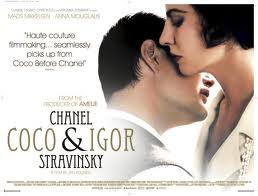
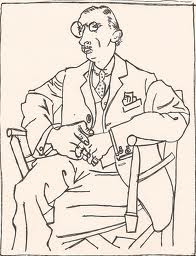
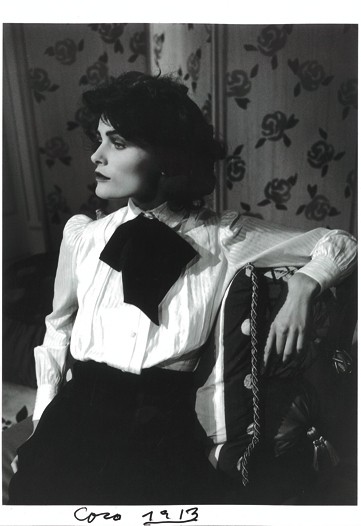
This film is stylishly shot in muted tones of blue and brown. This in itself adds emphasis to the black and white elegance of Coco’s dresses and the Art Deco interior of her grand villa just outside of Paris. This biopic tells the story of a passionate affair between the exiled Russian composer and the modernist fashion designer. The sound track is richly steeped in Stravinsky’s music, by turns lyrical and harshly cacophonic, together with snippets of Twenties jazz.
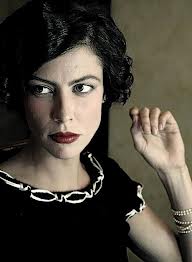
It commences, after some intriguing kaleidoscopic graphics with the riotous reception given to the strange ballet, “The Rite of Spring” in Paris in 1913. Audience tension builds with the staccato cutting and editing as the frantic music impacts. The bourgeois audience is soon shocked by the frenzied dancing. However, this does not include Coco who on the surface remains cool, aloof yet mysteriously, she is deeply moved. Anna Mouglalis, playing Chanel, charmingly conveys the broken hearted businesswoman whose heart has been shattered when she loses her young lover in a car accident. These incidents were also covered in the very different film, directed by Anne Fontaine in Coco before Chanel with Audrey Tautou in the female lead.
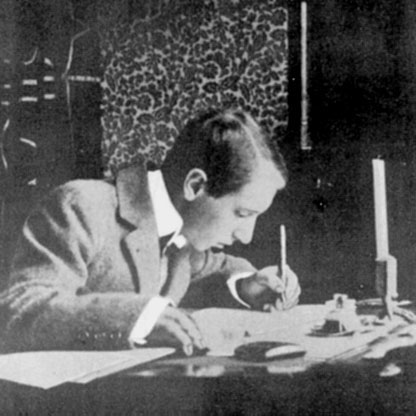
The modernist Russian composer and pianist, Igor Stravinsky, played by rising Danish star, Mads Mikkelson although vulnerableand racked with doubt –as well as exiled by the Bolshevik Revolution- nevertheless becomes the absolute epitome of artistic determination. After the couple are introduced by Diaghalev, they wander together among the dinosaur bones in the Jardin des Plantes and Coco, by now rich and successful offers the Stravinsky family refuge in her wonderful grand villa. Reluctantly Catherine, Stravinsky’s wife and also his musical mentor agrees to this arrangement. In this grand and luxurious setting the Stravinsky family, children and animals settle with differing degrees of comfort. Coco enjoys his music and dances with obvious enjoyment at the arrival of the new household.
Coco learns to trill on the piano and is soon sowing buttons back on to the composer’s worn suit. It is not long before the innovative composer succumbs to the refined charms of his hostess. This gives rise to the desperate heartache for Stravinsky’s wife, Catherine –already suffering from consumption and frequent pregnancies. This part is played with great emotion by Elena Morozova. There then ensues a battle between chic and chagrin. Stravinsky is at first inspired to write music of erotic charm. However, there is some other tussle emerging when Igor fails to recognise or respect Coco’s estimate of her own work as ranking with the artistry of his own work. The children are starting to notice and Madame Stravinsky withdraws and the music echoes these volcanic rifts as the man is torn between the love of his family and the independent and alluring Coco. She becomes preoccupied with another sort of chemistry, that which leads her to develop Chanel No.5. This is an evocative and intriguing film, exploring the fractures in personality and the lingering fragrance of an exquisite perfume.
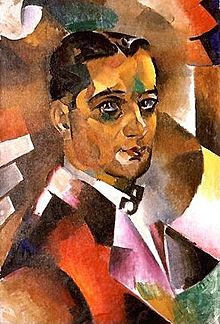
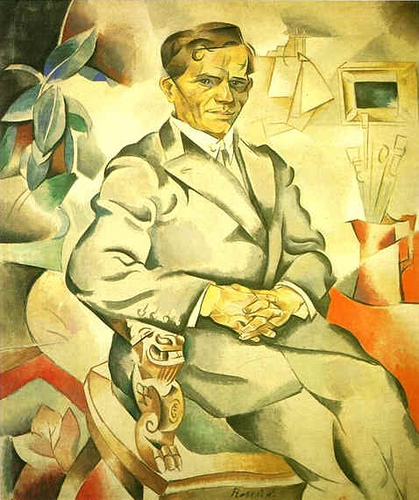
This portrait by Vladimir Baranoff-Rossine (1888–1944) was completed in St Petersburg and it shows a cubist influence, the dynamism associated with futurism as well as a colourful lyricism. The palette is already not dissimilar from Sonia Delaunay with whom he was later to co-operate in Paris in the development of Orphism. They were both Jewish emigrants from Ukraine anduntil 1914 he was a resident in the artist’s colony La Ruche. This was an old three-storey circular structure- hence its name which is French for ‘ The Beehive’- situated in the 15th Arrondissement on the Left Bank and originally designed by Gustave Eiffell as a temporary building in the decidedly colourful area called the Passage Dantzig.
Oil on canvas, 75×50 cm. Private collection, Paris.
According to the Oxford Art On-Line, “His proximity in the mid-1900s to the artists of the nascent avant-garde, especially David Burlyuk and Vladimir Burlyuk, was of decisive importance to his stylistic development. Contributing to The Link (Kiev, 1908) and their other exhibitions in Moscow, Kiev and St Petersburg, he supported their stand against Realism and the Academy, favouring a brightly coloured post-Impressionism reminiscent of Georges Seurat and Louis Valtat.”
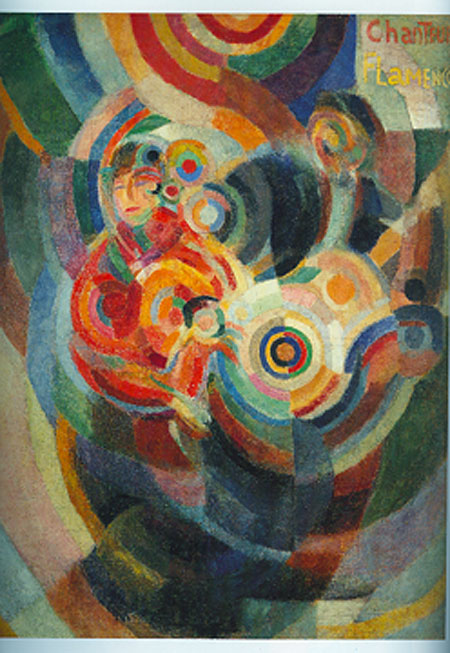
Flamenco-singer-Sonia Delaunay-1916
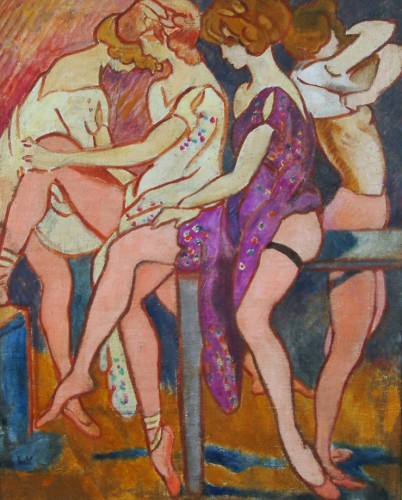
Amongst those considered as key figures in the development of painting before Matisse is the painter and print maker, Louis Valtat. He was a close friend of the Nabis. The latter used simple areas of pure colour and along with Gaugin, these influenced Valtat towards the purity of form, line and colour known as synthetism. His later work is also considered by some, notably Natalie Henderson Lee as proto-Fauvist. This was no doubt due to the time he later spent near the Mediterranean which intensified his use of colour.
Louis Valltat
Because Vladimir Baranoff-Rossine was fond of a bright coloured palatte it was said that he was influenced by the post-impressionism of both Seurat and Valtat. It is interesting how much information seems to have been flowing between Paris and St Petersburg in the mid 1900s partly due to the influence of art magazines. It was also supported by the influence of the members of the group The Link (Zveno) the Burliuks organized an avant-garde exhibition in Kiev.
Nathan Altman The Ziger Macher (the watch mender-1914)
Rossine’s self portrait was painted when he was just nineteen. The work already shows his movement towards a orphic style although his palette is not that far away from the colours employed by Nathan Altman in his The Ziger Macher (the watch mender). The notes from Hammersite.com suggest that this particular portrait was painted about 1914 and go on to say,” The painting is from the period Altman exhibited with The Jack of Diamonds group and attempted to express Jewish national identity utilizing a contemporary style. “
1919 Portrait of the painter Kolesnikov
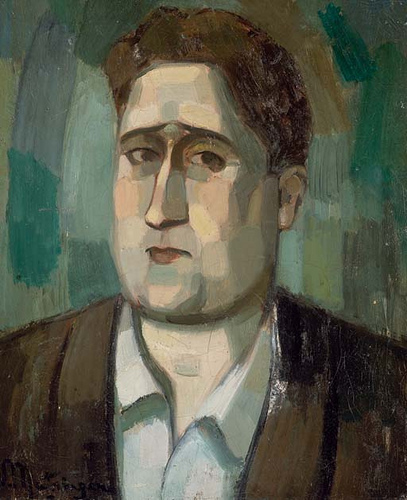
When Rossine moved to Paris in 1910, he will have come into a situation where critics such as Apollinaire, Gleizes and Vauxcelles were developing and defining the Cubist project. In addition he was already associated with the rather more expressionist style from the Russian cities such as the Burluik brothers. It must have been a period of quite frenzied excitement leading to the many innovative works.The crescendo came in Paris by 1913. (See The Essay at http://www.bbc.co.uk/programmes/b01pt70h) Other interesting figures within this general ambit include Jean Metzinger, František Kupka, a Czech painter, David Sheterenberg and the Ukrainian Avant-Garde Sculptor, Alexander Archipenko. The latter possibly an influence on Rossine’s own sculptural work.
More Rossine paintings can be viewed at http://www.flickriver.com/photos/tags/Rossine/interesting/
David Shterenberg 1925Guillaume Apollinaire by Metzinger 1910








 penwithlit