This looks amusing….
Categories
This looks amusing….
Interesting connections with St Ives and Talland House….
Interesting read this!

Only 7 days to go to the 2012 German (language) Literature Month. Are you joining us? If so, would you please sign-up in comments below. The reason I ask this is so that I can add your blog – should you have one – to my google reader. That way I ensure that I don’t miss any of your posts while I compile the author index during the month. Remember how phenomenal last year’s index was? I suspect this year’s list will be just as breathtaking.
My German-lit TBR is certainly taking my breathe away at the moment ….

I’d feel a bit easier if I’d made a final decision about what I will actually read but I want to keep it whimsical and surprise myself! I will stick to the genre guidelines of the first 3 weeks and I have promised myself that I will read something in…
View original post 80 more words

Wort an Wort
Wir wohnen
Wort an Wort
Sag mir
dein liebstes
Freund
meines heißt
DU
Kirsten Krick-Aigner of the Jewish Women’s Archive writes of Rose Ausländer, “a German-speaking Jewish poet from Czernowitz/Bukovina who spent much of her life in exile in the United States and Germany, wrote that her true home was the word itself.”
There is a very useful biography at http://jwa.org/encyclopedia/article/auslander-rose. Her poems are short, aphoristic and beautiful. There is some more about her life at http://www.tierradenadie.de/archivo6/rosebiographie.htm and also in German at http://www.ursulahomann.de/RoseAuslaender/ and in considerable detail at http://www.literaturepochen.at/exil/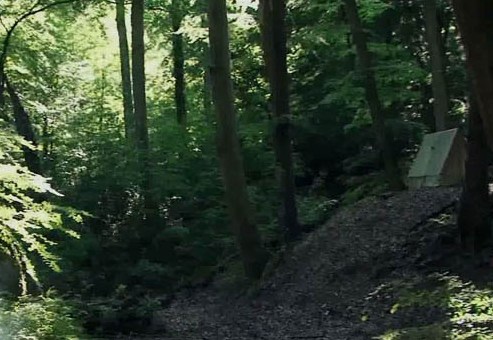
Das Schönste
Ich flüchte
in dein Zauberzelt
Liebe
Im atmenden Wald
wo Grasspitzen
sich verneigen
weil
es nichts Schöneres gibt
Which might be very freely translated thus:-
The very best thing
I seek the protection of your magic tent my love,
Beneath the whispering forest,
Where the springy grass bows under us;
Nothing is more beautiful……
Regenwörter
Regenwörter
überfluten mich
Von Tropfen aufgesogen
in die Wolken geschwemmt
ich regne
in den offenen
Scharlachmund
des Mohns
Rain-words
Are overwhelming me
So that absorbed into droplets
into the floating clouds
I rain
into the open mouth of the scarlet poppy 
It is worth pausing at this point to view some old postcards of the elegant, fascinating city of Czernowitz, Rose’s home city and also that of the celebrated poet Paul Celan. These are on You Tube at http://www.youtube.com/watch?v=AkR7JGthjwk&list=HL1352998582&feature=mh_lolz
Czernowitz before the Second World War
Peaceful hill town
encircled by beech woods
Willows along the Pruth
rafts and swimmers
Maytime profusion of lilac
About the lanterns
May bugs dance
their death
Four languages
Speak to each other
enrich the air
The town
breathed happily
till bombs fell
Rose Ausländer translated by Vincent Homolka
Czernowitz vor dem Zweiten Weltkrieg
Friedliche Hügelstadt
von Buchenwäldern umschlossen
Weiden entlang dem Pruth
Flösse und Schwimmer
Maifliederfülle
um die Lanterner
tanzen Maikäfer
ihren Tod
Vier Sprachen
verständigen sich
verwöhnen die Luft
Bis Bomben fielen
atmete glücklich
die Stadt
This translation comes from a Poetry in Translation website where there are further engaging comments on Rose Ausländer at http://poetryintranslation.org/category/german/
Manchmal spricht ein Baum …
Manchmal spricht ein Baum
durch das Fenster mir Mut zu
Manchmal leuchtet ein Buch
als Stern auf meinem Himmel
manchmal ein Mensch,
den ich nicht kenne,
der meine Worte erkennt.
Sometimes a tree speaks…….
Sometimes a tree speaks
to me through the window courage which
Sometimes lights a book
like a star in my sky, and
Sometimes a person
whom I do not know,
recognises my words.

Loneliness I
My pores suck it up
until it’s evenly distributed
throughout my body
Days ceaselessly tattoo
lines upon my cheeks
signs none but the sibyl
can interpret
My friends are sewn up
their breath inaccessible
upon their lips there hangs a colourless flag:
a frosty smile
When I turn around
I see footprints
trailing away in the sand
The windmill on the horizon
moves its sails in time
to a lullaby
It’s time
to put an end to solitude
with bed and sleep
Rose Ausländer (translation by Vincent Homolka)

Einsamkeit I
Die Poren saugen sie auf
bis sie im ganzen Körper
gleichmäßig verteilt ist
Tage tätowieren
unablässig Linien
in die Wange
Zeichen die nur die Sibylle
deuten kann
Die Freunde sind zugenäht
man kommt nicht heran an ihren Atem
auf ihren Lippen hängt eine farblose Fahne:
frostiges Lächeln
Wenn man sich umwendet
sieht man Fußspuren die
sich verlaufen im Sand
Die Mühle am Horizont
bewegt die Arme nach dem Pulsschlag eines
Wiegenlieds
Es ist Zeit
dem Alleinsein ein Ende zu bereiten
und schlafen zu gehn
Czernowitz is situated in the area known as Bukovnia and its complex history is quite remarkable; once part of Poland-Lithuania, as Galicia, Moldavia it has an extremely varied population. For example, at http://en.wikipedia.org/wiki/Bukovina we read that in the late Eighteenth Century,” The Austrian Empire occupied Bukovina in October 1774. Following the first partition of Poland in 1772, the Austrians claimed that they needed it for a road between Galicia and Transylvania. Bukovina was formally annexed in January 1775. On 2 July 1776, at Palamutka, Austrians and Ottomans signed a border convention, Austrians giving back 59 of the previously occupied villages, and remaining with 278 villages.”
 Tensions over identity, unsurprisingly, following the difficult history remain:-
“The fact that Romanians and Moldovans were presented as separate categories in the census results, has been criticized by the Romanian Community of Ukraine – Interregional Union, which complains that this old Soviet-era practice, results in the Romanian population being undercounted, as being divided between Romanians and Moldovans.”
Mit fremden Augen
Mit fremden Augen
kommt der Morgen
mit den vertrauten Augen
der Fremde
kommt der Mittag
mächtig sein Licht
die Fremde mächtig
morgens mittags
und abends
melden sich Stimmen
mit dunklem Klang
der Fremde
altbekanntem Klang
Der Mond lodert rot
auf den Lippen
des Fiebernden
Hörst nachts
das Echo
wenn deine Stimme schläft
erkennst den Körper
die schwarze Wange
aus blauen Poren
fremd vertraut
 The eye-catching, penetrating splendour of Matti Braun’s lyrical paintings and creations are as unusual asthey are inspiring. Braun was born in 1968, trained at the State Academy of Fine Arts in Berlin and also in Frankfurt, he works in Cologne and has had several major exhibitions in Germany, France and Italy. His work can be seen currently at the Arnolfini Gallery in Bristol until the 6th Jan 2013. Further details may be found here at http://www.madeingermanyzwei.de/Kuenstler/Matti-Braun This current exhibition consists of an installation constructed from sections through a Douglas Fir tree obtained from Westonbirt Arboretum. These are surrounded by a lake of water creating a placid, contemplative effect. Filling the tank in which they are enclosed, gave the Bristol fire brigade a useful opportunity for them to practise and develop their skills. Further information can be read on http://www.arnolfini.org.uk/whatson/exhibitions/details/1409 and photographs of the operation at http://www.bbc.co.uk/news/uk-england-bristol-19862898 and http://www.bbc.co.uk/news/uk-england-bristol-19747232 The work was apparently inspired by a film, later abandoned, by the renowned Bengali filmmaker Satyajit Ray. It was entitled ‘The Alien’.
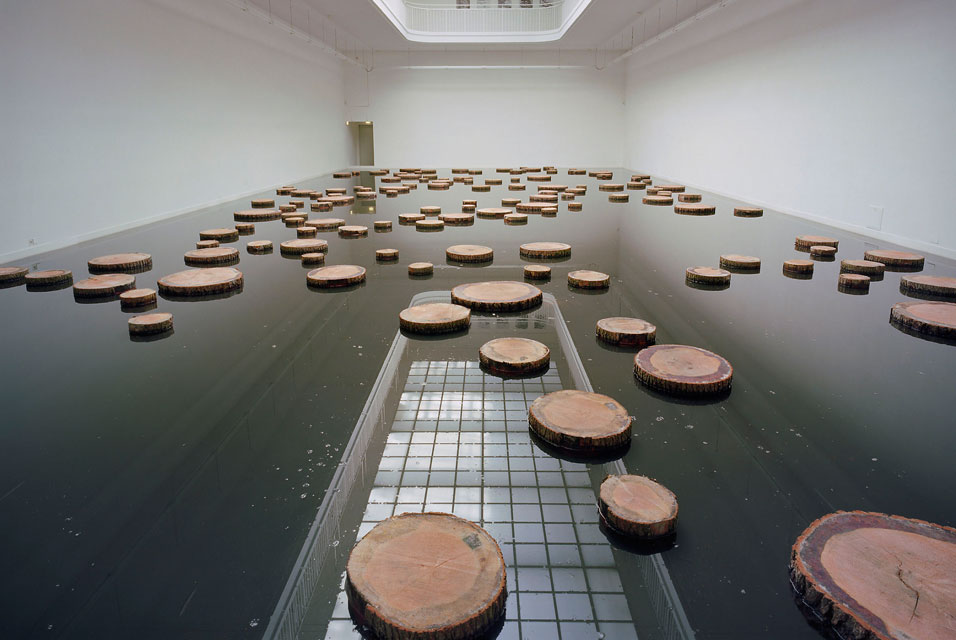
Braun’s oeuvre includes photographs, installations, sculptures as well as paintings. Some of the latter were displayed in a large exhibition in Rome in 2011 and can be discerned in a You Tube movie at http://www.youtube.com/watch?v=cTmTE-SHD60 and there is a book by Friedemann Malsch et al available on Amazon at http://www.amazon.co.uk/Matti-Braun-Kola-Friedemann-Malsch/dp/3865605966/ref=sr_1_2?s=books&ie=UTF8&qid=1351434791&sr=1-2
In some respects Braun’s compositions are a little reminiscent of the rainbow effects in the colour field paintings of Morris Louis- which the critic Clement Greenberg has termed post-painterly abstraction. There is also the possible influence of Mark Rothko. His paintings in acrylic, silk and cold-rolled steel bring to mind the evocative inks of a Rorschach test. Certainly, they invite the viewer’s personal response or interpretation.
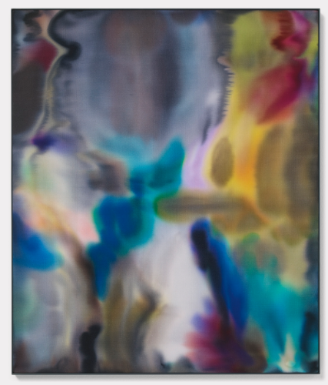
Braun is gifted and prolific. His thought provoking and exciting conceptions will repay further attention in forthcoming years. On a personal basis they remind me of a garden hedge clustered in Mesembryanthemums in full sunlight. Set against a dark background they might suggest the delicate fronds of various luminescent underwater sea coral.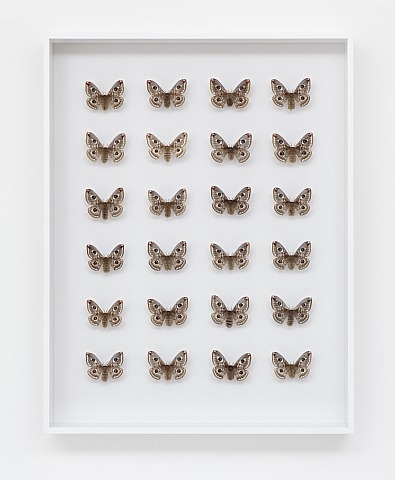
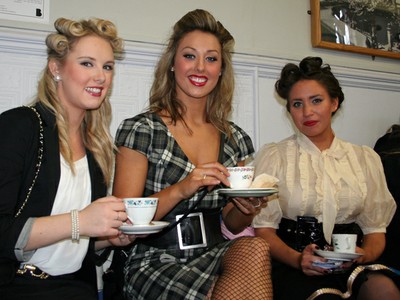
Popular in the interwar period, if not before, the tea dance must have been a gentle affair that offered an opportunity to relax with friends and with the possibility of meeting new partners. The recreational space around an outdoor bandstand had afforded a similar opportunity in the Edwardian era. This is discussed in People’s Parks by Hazel Conway and in a review by Susan Hill in the LRB she commented, ” At the same time, forms of design and architecture peculiar to the parks grew up – bandstands, pagodas and winter gardens, floral clocks and tea houses were the popular art of the parks.” There is a website that specialises in images of bandstands at http://www.satiche.org.uk/bandstands/bs-uk.htm


The indoor space of the tea dance was more intimate than the park and it is interesting to note that the spectacle apparently evolved from the French colonisation of Morocco, hence the correct term, thé dansant.. Morocco became a protectorate of France in 1912 after the Agadir crisis. In any event the tea dance had reached England by 1880 and appears to have become popular in the suburbs rather than London, in garrison towns and no doubt was popular amongst with the ascendancy of the Raj as well. Tea dances frequently followed upon afternoon summer garden parties. More details are to be found on http://www.teamuse.com/article_010702.html in an article by Jane Pettigrew.

Tea dances must have become more popular in the Jazz era and dances like the Tango and the Charleston would have added extra fun; the invention of the gramophone although records could easily be scratched might have added variety if a dance band was not available or affordable. It also seems that as well as the event itself, tea dance dresses too have once again become popular.

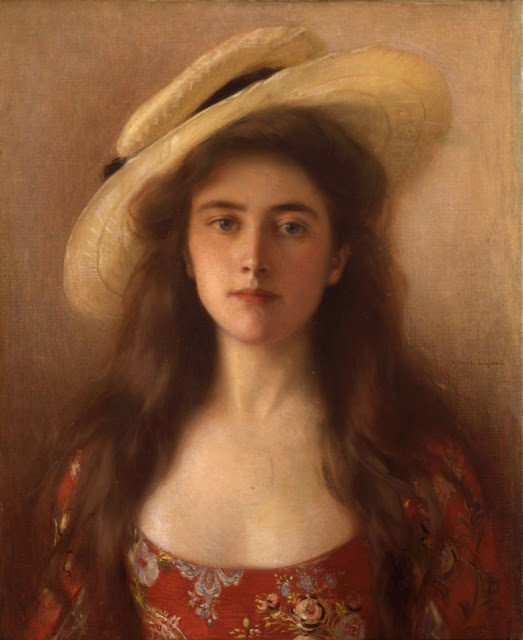
There is a very entertaining and informative website at http://bjws.blogspot.co.uk/search/label/Teawhich has paintings by the Peruvian artist, Albert Lynch 1851-1912 and the English Artist Mabel Frances Laying, 1881-1937. In addition there are some beautiful teapots and details of eighteenth century coffee houses and the splendid Baltimore Tea Gardens. For some recent interpretations try:-https://www.youtube.com/watch?v=GpwbyggIFuo


There has been a renewed interest in works of British Surrealism in recent years. In summing up an exhibition in The Independent on the 26th May 2008 at The Middlesborough Institute of Modern Art- http://www.independent.co.uk/arts-entertainment/art/features/british-surrealists-minor-league-but-major-players-834236.html -Tom Lubbock wrote,” People have said that Britain was Surrealism’s original native land Alice’s Adventures in Wonderland, William Blake, the gothic novel, Gulliver’s Travels etc. Perhaps we didn’t need the whole movement-and-manifesto thing. But it produced, slightly by accident, a group of very interesting pictures that ought to have a wider showing, and which the Sherwin Collection is willing to lend.” Clearly symbolism and surrealism have obvious links in mythology and archetypes and such matters were thrown into the generally creative and tempestuous furore which grasped interest in the period between the wars.This climaxed in in the organisation of the International Surrealist Exhibition in London in 1936. There is some evidence of these issues in the paintings displayed in the current exhibition, mostly on loan in Falmouth from the Southampton Gallery. The artists on show include PAUL NASH,CECIL COLLINS, CERI RICHARDS, ROLAND PENROSE, JOHN TUNNARD, EILEEN AGAR &ITHELL COLQHOUN.
Some idea of the range of the Exhibition may be gained from the images to be found at this website, http://www.thisiscornwall.co.uk/pictures/Photos-British-Surrealists-Falmouth-Art-Gallery/pictures-16910494-detail/pictures.html

However, the most exuberant and baroque piece was a comparatively recent work by David Kemp – entitled “The Hanging Gardens of Basildon”. On his blog, Kemp comments, “It is one of a series of a dozen large plant forms, all influenced by “THE GARDEN OF EARTHLY DELIGHTS” an enigmatic painting by the great Hieronymus Bosch, which explored many aspects of medieval life, many of which might still be seen as relevant to the human condition, in our modern world?” This comment on the fantastic botanical forms and the connection with Bosch is reminiscent of the work of the VienneseSchool of Fantastic Realism as explified by Arik Brauer whose interest in Bosch he derived from his own tutor, Albert Paris von Gütersloh.

No visitor can possibly fail to be impressed by the peculiar botanical drawing, named “Prophylactic sea-mouth” by Edith Rimmington. The haunting form appears as some kind of elongated mutation of a dogfish egg-case with a coiling eel like flagellum.

However, for those interested in the development of the work of Paul Nash, his oil painting, “The Archer” will doubtless attract attention both for its muted complementary colours and the charmingly odd bucolic setting. A friend comments in a personal communication, “The Nash is one of his complex compositions worked on for years with bits from all over the place. There is a letter by Nash about it in Tate Archives. The central ‘archer’ feature was a structure he made from an old toy boat, glass tube, twig, seaweed etc. I don’t think it exists anymore other than as a photo. It looks more compelling in the photo with strong echoes of surrealist sculptures by Giacometti, Man Ray etc. He constructed (like Lanyon), collected and photographed sculptural objects from which he derived elements of his paintings.

The ‘target’ is from Men-An-Tol of course + mirrors etc; the shadow of the girl bottom right, sampled from De Chirico etc.etc. All very sexual with the ineffective arrow being merely the shadow of the archer….. I’m not convinced that he managed to get it to cohere as an image. I wish he had left the landscape dominant as with ‘Landscape at Iden’ http://www.tate.org.uk/art/artworks/nash-landscape-at-iden-n05047 where the symbolic elements infuse the composition naturally.”
Those interested in Roland Penrose’s work can consult http://www.rolandpenrose.co.uk/works.aspx
BomberCounty is, of course, Lincolnshire where squadrons of Beaufighters, Wellingtons, Halifaxes and Lancasters were huddled in hangars for combined raids against enemy targets in German occupied Europe. As the war progressed the targets escalated, from attacks against the German Fleet, the industrial complex of the Ruhr and later, with the aim of breaking enemy morale, the targets included the cities-including Hamburg, Berlin, Dresden and Cologne. Night after night, crews already warmly dressed in jerseys and thick woollen socks zipped themselves into flying suits and made their way towards the enemy coast. Conditions were cramped and the temperatures plummeted as they gained altitude flying by the light of the moon to their appointed destinations.

Later in the War, navigators were able to use the hazy reflected signals of H2S to guide them over the changing relief of the land towards enemy territory. Ack-ack batteries, enemy nightfighters and heavy flax over the target took a heavy toll on crews. This book relates the loss of one pilot, James Eric Swift of 83 Squadron on a raid on Munster, early in June 1943. His body was later discovered washed up on a beach in Holland. In this multi-layered book Daniel Swift, his grandson, sensitively retells this family story. He is further inspired to explore a range of related issues from poetry and literature to the morality of the bombing campaign as it was conducted later in the War.
The cover of this handsomely produced volume depicts the distorted perspective of aerial warfare as depicted by Paul Nash; it shows that visual arts produced effective responses to combat. The contrasting situation in poetry is examined throughout the book in counterpoint to the narrative. From classical times Virgil declared Arma virumque cano ( I sing of arms and man) in The Aeneid but this kind of warfare has weaponry that operates at speed and men have little time for reflection unlike the poets of The Great War; Owen, Rosenberg and Sassoon. Daniel Swift refers to the dirge like rhythms of Dylan Thomas’s A Refusal to Mourn the Death, by Fire, of a child in Londonwhich despite the title, is a deeply moving elegy. The author also has much to say of interest on TS Eliot and Virginia Woolf’s responses to the Luftwaffe’s raids.
Swift makes mention of a small number of poems written by pilots like those encouraged by C Day Lewis. There is an exhilaration in flight which has been memorably captured by the lyrical French writer Antoine de St Expurey. Poetry is also inspired by heroism and myths such as that of Ovid’s Daedulus and Icarus, Such matters prompt Swift to tender family reflections and musings on the writings of Auden and Isherwood. These considerations make this an unusual memoir for his Squadron Leader Grandfather about whom Swift has thoroughly researched the archives.
Poetry was very popular during the Blitz, however, it sits awkwardly with mass bombing and firestorming and its effect on civilian populations. Swift who teaches English Literature at SkidmoreCollege in upstate New York is aware of the arguments concerning the morality of debates on such issues which continue to rage on and indeed intensify in relation to more recent conflicts. Arguments and emotions proposed and expressed by Orwell, Churchill and the ethical arguments on the effect of such destructiveness by AC Grayling and other philosophers are briefly outlined.

Did the barbarism of the Nazis justify the adoption of the ruthless means of waging war that led to Slaughterhouse V? The poetry falters as we consider events that ended that conflict; the use of Nuclear Weapons and the emerging political doctrine of Mutual Assured Destruction. Swift examines and acknowledges many of the issues including the guilt about delivering death at a distance –especially in relation to the poetic recollections of James Dickey; a poet to thank the author for here introducing to a wider audience.
This interesting, informative and hybrid book should remind us all that the poetry as Wilfred Owen stated, lies in the pity. This pity must eventually bring reconciliation. However, UN estimates on August 10th, less than a month ago, quoted in the Guardian of that date; show the number of child casualities in Afghanistan has soared by 55%, despite strict rules on the use of airpower by NATO troops. This heartfelt first book reminds us that the best memorial to lost grandparents is to earnestly strive for peace for our grandchilldren
Give me excess of it, that, surfeiting,
The appetite may sicken, and so die.
That strain again! it had a dying fall:
O, it came o’er my ear like the sweet sound,
That breathes upon a bank of violets,
Stealing and giving odour!,,,,,,,,
If you were paying attention, you may have noted Konstantin Korovin’s painting of a woman holding a guitar in a post from about a week ago. It appears that lots of artists have been attracted to this theme, and many of them are Russian. There are also other great names – notably Renoir and Matisse and Botero and Braque. In fact, Vermeer also painted a guitar-playing woman, and she bears a strange resemblance to Alanis Morissette – at least to my eye.
I’ll tell you what I’ll do. I stick the images of the Russian (and I hope you recall that when I say ‘Russian’ I continue to mean ‘of the erstwhile Russian / Soviet empires / diaspora / modern Russia / post-Soviet republics’) artworks first, and then point you to a few links for the depictions of women with guitars from the rest of the planet. How about that?
View original post 282 more words
Love these sketches-


 penwithlit