Categories
Book Reviews Uncategorized

House of Exile by Evelyn Juers

Heinrick Mann and Nelly Kröger-Mann were in a constant state of hazardous exile after the rise of fascism inGermanyin 1933. He became like Zola, his favourite author, a socially committed novelist and political activist and fierce critic of militarism. He was convivial, having a wide circle of friends that contained many creative artists, playwrights, socialists. He seemed drawn to the bohemians and the demi-monde. This elegant and sometimes formal gentleman came from the Hanseatic town ofLubeckwhere his father belonged to a renowned grain merchant family. These might be described as the haute-bourgeoise. There was an unusual degree of sibling rivalry between him and his less robust brother, the famous author of “The magic Mountain, Thomas Mann, Hendrick possessed a sensual nature and fell passionately and easily in love with a number of women. Of these his relationship with the Nelly, a fascinating woman, a seamstress and nightclub hostess, as full of contradictions as himself, was the most successful and long lasting. She followed him on the long painful journey into exile at first in Nice and later to theUnited States.

The Mann Family

This is an unusual book which is termed by its author a collective memoir and portrays the attempts of a generation of writers and poets to continue their work in dark and terrifying times. Exile placed a severe stress on the community of authors acrossEurope, their dispersed families and friends. Jews and political activists, amongst others were to be viciously and systematically persecuted, tortured and executed by the Nazis and the heart-braking news appeared a tunnel of night to those exiled men and women who escaped from one country to another. Escapees were to be faced with the further eruption of civil war inSpainwhich lay in the path of their escape. Some were forcibly returned to their persecutors. The news of Stalin’s tergiversations and show trials made the formation of a United Front harder still. Sensibilities of women, like those of Virginia Woolf or like gentle Nelly, who had early in her life suffered the traumatic loss of a child, were strained to the limits of their endurance.

Heinrich and Nelly Mann

The first part of ‘’House of Exile’’ contains many moving and poetic passages. The writing, which has been compared with W.G.Sebald, is quietly dazzling and also reminiscent of the American novelist, Andrea Barrett.  A lyrical chapter concerns Heinrich’s sister, Carla, of whom he was deeply fond. This darkly romantic actress encounters some Scandinavian biologists whilst transporting a skull in which she has concealed cyanide. Mention is made of nasturtiums which glow at dusk and we are given an exposition on Goethe who read Linneaus, as well as his beloved Shakespeare and Spinoza. The writing thus appeals on two levels as prose poetry and simultaneously this illumines the literary and philosophical background. Goethe propounds the concept of Anschauung which maintains the importance of intuition as well as observation and can be expressed in English as the notion of the Gaze. Juers here is also exploring how the imagination works in reconstructing the past.

These were indeed dark times and although Heinrich and Nelly found a temporary refuge in the South of France, the pressure of events mounted on both a personal and political level. Heinrich takes Veronal, an unreliable barbiturate to calm his nerves. Juers reminds us that despite these pressures he manages to keep working on his biography of Henry IV. There are interesting parallels between his difficult relationship with his brother, which is mirrored by Virginia Woolf, stoically sticking at her novels between headaches which forced her to take refuge in her bed and rather envying her artist sister, Vanessa having her children. Family festivities maintain morale with copious quantities of champagne and Baumkukhen even as troops march, dictators thunder, air raids threaten as does the internment of those unable to escape the gathering storm.

Evelyn Juers’s fascinating work

Although Freud and the stream of consciousness and historical novels are major themes in this work it is difficult to tell if Evelyn Juers consciously intends the jump cuts in the later section to conveys the fractionated experience of these writers. The author has spent ten years in research. The result is an excellent introduction to intellectuals as varied as Joyce, Woolf and in particularly the Germans; Brecht, Döblin, Kafka, Walter Benjamin, Karl Schwitters and many, many others. It also describes the horrific realities of anti-semitism, mass aerial bombardment and consequent individual trauma. Juers is at her most moving in her depiction of the day to day harshness of life for women in exile and the personal cruelties dealt by fate and also men’s unkindness to poor Nelly Kroeger-Mann. She lost a child, her lover steals her story and destroys her manuscript and yet she transports him over mountains to escape, scrapes and scrimps to ensure their survival and is harassed by the FBI just as she was the brown-shirts. Finally she is constantly subjected to the snobbery of her brother-in-law. Little wonder she resorted to drink.

The Author

Exile literature is, of course ancient;’’ By the rivers of Babylon, there we sat down, yea, we wept, when we remembered Zion’’. (Psalm 137). Classical authors such as Cicero and Ovid were subject to exile and the latter sang evocatively in the ‘’Tristia’’ in elegiac couplets. Evelyn Juers approach to imaginatively exploring this dark period of the European zeitgeist is striking; her innovative book, in its intensive exploration of the literary links of the German dissident writers from 1933 to 1945, known as exilliteratur contributes a new dimension to the understanding of post-war, post-modern consciousness – the state of loneliness, isolation and apprehensiveness in the face of political and military forces that threaten the individual and those he loves.

Categories
Book Reviews Uncategorized West Cornwall (and local history)

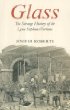
Glass, The Strange History of- by Lyne Stephens Fortune

In this panoramic view of two Cornish families spanning two centuries all sorts of characters make an appearance. Not only are we educated in the ambience of English Merchants in Portugal but people as diverse as Southey, William M.Thackery, John Lemon and Canning, to mention but a few, all make an appearance. It begins by relating the making of a fortune by William Stephens, grandson of the Vicar of Menheniott and an enterprising genius. Her is the story of a merchant who becomes a manufacturer of glass.

William was educated at Exeter Free Grammar School, having left the area near Saltash, where he grew up. He went on to serve on the Lisbon packets upon arrival in Portugal became involved with the intrigues of Carvahlo, the Marquis of Pombal. He was next to witness the destruction of Lisbon by the great earthquake in 1755. As Jenifer Roberts interestingly points out, high waves from the latter were still above 8 foot when they made boats in St Ives rise more than eight feet. Then William opened a glass factory in Marinha Grande and securing exemption from taxes, charmed princes and queens so as to build a fabulous fortune.

The profits from the Stephens fortune passed also into the hands of their Lyne relations also living in both Portugal and Cornwall. The author outlines the family history, which involves wars and rebellions and diverting interludes. Eventually some of the fortune ends up in the hands of a feisty French ballerina and into the hands of various lawyers settling claims upon it. This is a splendid tale, well written and for those who find truth stranger than fiction, a great historical and biographical account.

Glass-
The Strange History of the
Lyne Stephens Fortune


Categories
Book Reviews Penwith Poetry Uncategorized

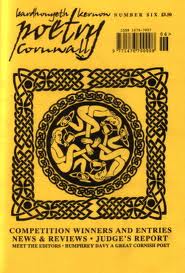
Bardhonyeth Kernow,Poetry Cornwall (Volume 27)

Bardhonyeth Kernow

This issue contains a wide variety of contributions from over sixty poets from Scotland(which also provides the lichen encrusted wheel arch cover image from Callander) to Germany, from Wales to Spain. Naturally the emphasis are on Cornish poems and it is the landscape of Kernow which provides the inspiration for many of these verses in dialect and Kenewek with a translation and interpretation section carefully chosen by Grand Bard, Mick Paynter. It is good to see the enthusiasm for good poetry in the Duchy from such various sources as French, Scots Gaelic and even the Romany language of Gurbet. This is a collection which is not afraid to approach the edge, like Sam Harcombe, who at Warren Cliff approached, ignoring stakes and danger signals:-

Hoping to catch sight of seal,

I wanted to look closer at the inlet far below, but

riddled with rabbit holes and

cracks it was obviously dangerous.

I went a few steps past the stakes

And still saw not enough

Bernard Jackson prefers the sylvan safety of the Sunlit Leaves as the sun sinks and he wanders entranced by the magic of a slow watered stream:-

Eternal is the flame that ne’er consumes,

Yet blazons leaves, nor shall one instant fade.

From woodland reign that readily assumes

This seasoned garb, immortally arrayed.

In traceries where sunlight shines between,

God’s glory is a miracle of green.

Bardhonyeth Kernow’s Editor Les Merton

Besides such nature poems form Perranuthnoe to Predannack, there are some moving poems inspired by the cheerful and encouraging words from the nursing staff on Geevor Ward which as Donald Rawe puts it “Restore humanity to the clinical desolation”. There are sad, human reflections on Casualty and Geriatric Wards. There are too the lifting memories of repairing with his father My Pink Bicycle by Graham Rippon:-

“Paint it any colour you like”

But the only colour we had was Pink

This little collection is a gem and a tribute to the current interest in poetry in our Duchy.

Categories
Book Reviews Literature Uncategorized

Disputed Land by Tim Pears

Amazon link: http://www.amazon.co.uk/Disputed-Land-Tim-Pears/dp/0434020818/ref=sr_1_7?s=books&ie=UTF8&qid=1298808607&sr=1-7

Genre: Literary Fiction

In this engaging novel, Tim Pears tackles many challenging themes: sibling rivalry, time and change in the countryside, facing terminal illness, reflections on the isolation of academic life and undertaking risky financial investment. This is not a portrayal of a rural idyll although much of the most lyrical writing concerns the colours of the Shropshire countryside and this is strengthened by reference to the layers of the archaic past that underlies this disputed borderland territory. In attempting such a multi-layered narrative in a relatively short novel, it is not surprising that for instance, the traumatic shocks in the epic tale are diminished by random, experimental shifts in the tone of the narrative.

‘’Disputed Land’’ is seen through the eyes of thoughtful young Theo who is taken by his parents, both Oxford Academics back to Rodney’s, his father’s family home in the Welsh Marshes for Christmas holiday. This is not the relaxing Christmas to which they might be looking forward. Leonard and Rosemary, Theo’s grandparents have been considering their foreshortened future and tasked not only Rodney, but also his younger materialistic and brutish brother Johnny, and his preoccupied sister Gwen with the division of the family goods.  Theo’s arrival is made more challenging again by Baz and Xan, two feckless and brazen twelve year olds, just one year his junior, the offspring of the philistine Johnny and his attractive, zippy South American wife, Lorna.

Much of the most engaging writing concerns Theo’s burgeoning adolescent sexuality. Firstly, from an admiring distance in relation to his Aunt Lorna whose trim figure undertaking early morning jogs through the countryside thrills him with ecstatic admiration of her athletic charms. Secondly, his fellow feeling for his tomboyish cousin Holly, about Theo’s age, leads him into a sympathetic relationship and subsequently, some maturity. This is despite being in the midst of the many conflicts and pressures by which he himself, Holly and her older sister,Sydney-divorced Gwen’s children -are surrounded.

As Christmas progresses the warm relationship between Theo and his grandfather, Leonard is strengthened in activities in and around the ancient farmhouse. Pears evokes the bucolic smells beneath the eaves of the stables, in Theo’s untidy workshop in the Coach house, and wandering around the variegated woods with Leonard’s lolloping  dogs and listening to his grandfather’s tales of ancient divided loyalties. Theo’s granddad is an ardent enthusiast for every aspect of local history such as tribal incursions across the border hills and the stanch affiliations of the Civil War. Leonard too encourages Theo’s interest in husbandry, forestry and ornithology.

It is Leonard’s practical enterprise that won the hand of Rosemary, Theo’s grandmother, who was born into the parochial gentry, and an accomplished horsewoman. Unfortunately, her imperious manner and disposition to frankly speak her mind causes pain particularly to Auntie Gwen’s partner, Melony. Her energetic advocacy of green issues including views on population, are so vigorously expressed that it reduces the latter to tears after Gwen proudly announces her partner’s surrogate pregnancy has reached 12 weeks. However, further catastrophic shocks occur on the discovery that in fact Rosemary is not just being just her usual difficult self. Her disproportionate railing is exacerbated by the incursions of a terrible illness.

Some of the difficulty in the flow of Pears’s prose is due to the fact that the novel is written in reflection from a time some fifty years in the future, by the middle-aged Theo. When occasionally reminded of this, the otherwise absorbing story is momentarily disturbed and the flow unpleasantly disrupted. Fortunately, this does not happen often. Pears indulges himself in bouts of strange mysticism, which may appeal to some readers since it adds a dynamic of menace and mystery. Others may just find it somewhat silly.

Fortunately, there are other constituents which make this a very worthwhile read. Tim Pears has imaginatively reconstructed the past, invoking such treasures as the splendid library of Leofric, Bishop of Exeter and the mossy redoubts of the Norman knights, the Marcher Lords. The poetic atmosphere is heightened with descriptions of the altering winter sunlight on the crimson mountainsides and the song of a solitary woodpecker. Pears, too has been a filmmaker and excels at sculpting figures, interiors and props, like the kitchen where the difficult, dominating Grandmother lays her hand upon the Aga, from where she conjures recipes and dominates the set. Then there is control of pacing, producing convincing drama. The dark and poignant quarrels and losses are heightened by their contrast with the hilarious descriptions of a football match that highlights, and for a moment, reconciles the loopy idiosyncrasies of this odd family.

Langland, not far away to the south on the Malvern borderland once wrote in ‘Piers Plowman’, ‘’And with Mammon’s money he hath made him friends’’. Tim Pears in ‘’Disputed Land’’ has written with a similar urgent exhortation, to slay the false gods of growth and greed; to show how issues around grasping and grabbing can tear a family apart.


Categories
Art and Photographic History Poetry Uncategorized

Yeats and Yeats; The lake at Coole Park and the River Liffey in Dublin

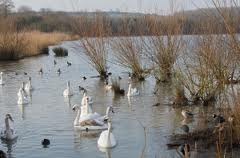
The Wild Swans at Coole by W.B.Yeats 1917

Wild Swans

The trees are in their autumn beauty,

The woodland paths are dry,

Under the October twilight the water

Mirrors a still sky;

Upon the brimming water among the stones

Are nine-and-fifty swans.

The nineteenth autumn has come upon me

Since I first made my count;

I saw, before I had well finished,

All suddenly mount

And scatter wheeling in great broken rings

Upon their clamorous wings.

I have looked upon those brilliant creatures,

And now my heart is sore.

All’s changed since I, hearing at twilight,

The first time on this shore,

The bell-beat of their wings above my head,

Trod with a lighter tread.

Unwearied still, lover by lover,

They paddle in the cold

Companionable streams or climb the air;

Their hearts have not grown old;

Passion or conquest, wander where they will,

Attend upon them still.

But now they drift on the still water,

Mysterious, beautiful;

Among what rushes will they build,

By what lake’s edge or pool

Delight men’s eyes when I awake some day

To find they have flown away?

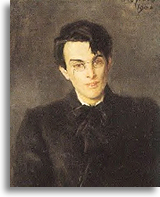
The portrait of the poet above is by his brother Jack Butler Yeats. An interesting analysis  and exposition of this poem may be found at cercles.com/occasional/ops2009/noirard.pdf

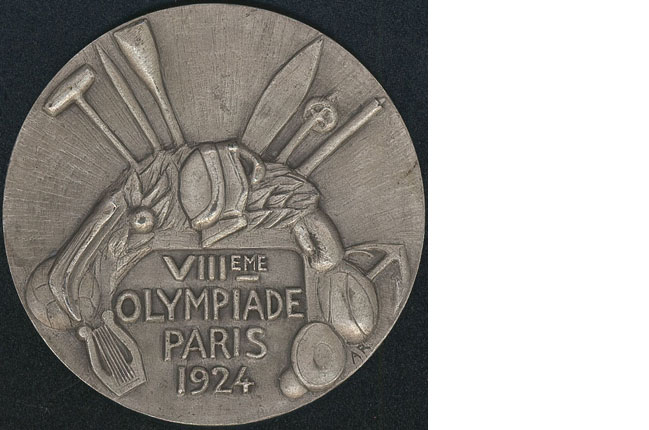
With Olympics in the news at present it is interesting to read about the Silver Olympic Medal awarded to Jack Yeats. He thus became the first Irishman to win an Olympic Medal.

Silver Olympic Medal received by Jack B. Yeats
1924

which can be found on the National Gallery, Dublin website at http://www.nationalgallery.ie/en/Research/Library_and_Archives/Libraries%20and%20Archives%20highlights/Jack%20B%20Yeats%20Olympic%20Medal%201924.aspx Here it mentions, “Jack B. Yeats (1871–1957) won this silver olympic medal for his painting ‘The Liffey Swim’  (NGI 941) in 1924.  Art competitions formed part of the modern Olympic Games during its early years, from 1912 to 1948 and medals were awarded for works of art inspired by sport.  Works were divided into five categories: architecture, literature, music, painting, and sculpture.  The medals for the 1924 Olympic Games were designed by French medal artist André Adolphe Rivaud, (1892 – unknown).”

Jack Butler Yeats was strongly influenced by expressionism and was a friend of Samuel Beckett, J.M.Synge and the Austrian painter Oskar Kokoschka. He was a magnificent painter of horses and Dublin life in general.like the Liffey Swim (See http://en.wikipedia.org/wiki/The_Liffey_Swim). There is also an engaging video at http://www.youtube.com/watch?v=pGnbLXru-qw Here are just three paintings by Jack Yates:-

Baggot Street Bridge

Title:The Liffey Swim by Jack B. Yeats (1871-1957)
Sketch of WBYeats
Categories
Book Reviews Uncategorized

‘’A Senseless Squalid War”

The reappearance of ‘’A Senseless, Squalid War’’ in paperback will afford wider access to the balanced and detailed scholarship of Prof Norman Rose. This is a sad story of the Palestinian Mandate is retold through the viewpoints of politicians and proponents; Arab, Jewish, British, French, German and American. It energetically conveys an understanding of the character of figures as disparate as David Ben Gurion, Richard Crossman, Haj Amin and David Lloyd George. Organisations, conferences and sticking points are deftly expounded. It does not lose sight the overarching motives and machinations of International Politics.

In 1915, Herbert Samuel, later Viscount Samuel, the first member of the British cabinet to retain his membership of the Jewish community, put forward a memorandum which proposed the possibility of a British mandate over Palestine. This became the famous Balfour Declaration. The response from the Prime Minister, Asquith-who like him had been at Balliol-was that Samuel’s suggestions were ‘’dithyrambic’’.  A classicist’s way of saying they were Dionysian, even drunken ramblings.

Asquith, himself known to his opponents as ‘‘squiffy’’, went on to say, in his memoirs, that the carving-up of the Turk’s dominions would lead to the scattered Jews of the diaspora swarming back to claim Home Rule. He proceeded to disparaging remarks about his younger rival Lloyd George, whose motives Asquith put down to jealous rivalry for control ofPalestineby the atheistic, agnostic French. Scarcely two years later when World War broke out,Palestinewas occupied and theOttoman Empiredismembered in the defence of the British oil supplies and the passage toIndia. The French gotSyria.Lawrencehelped prepare the Arabs to attack theHejazrailway supplying the German’s Turkish allies.

Norman Rose’s lucid and masterly history chronicles the rise of Zionism, the Palestinian Arab response and the bloody consequences which were soon to follow. This was indeed destined to become a senseless and squalid struggle;Britain’s last act of imperial aggrandisement, despite the fact that the mandate was approved in 1922 by theLeague of Nations.

Control was not consistent. Indeed, much depended upon the character of individual High Commissioners of the Mandated territories. Prof Rose in a few concise paragraphs sheds light upon appointments such as that of General Sir Arthur Wauchope, whom Ramsey Macdonald somewhat fecklessly,  assured Ben Gurion is ‘ a good man, a fellow Scot’ and indeed has a passion for music which guarantees that he entertains more Jewish guests. However, this was at a time when Palestinian Arabs feel threatened by the huge influx of Russian and European Jews. Sadly, when the Nazi persecutions multiply after ‘’Kristallnacht’’, the British policy had reversed and as war approached, later governors some of whom were brutish, authoritarian and overtly anti-semitic  limited Jewish settlement at the very time when a safe haven was not just necessary but crucial.

Pace is maintained and attention engaged by the description of eccentrics like Orde Wingate whose fanatical zeal for Zionism inspired him to develop techniques of guerrilla warfare that would become adopted by the strike forces of the ‘’Palmach’’. After the war, as the levels of desperation rise, such military prowess would later be devastatingly employed in the insurgency against the British.

The narrative leaves the reader with a series of clear, memorable and often bitter images. There is the sadness of the conditions on the ships where Jews from every part ofEuropesought refuge and were faced with further persecution again just after the Holocaust. Escaping ill-nourished families crowded beneath decks whilst a lone singer sang and rocked to a heart rending Hebrew song. Their immediate fate was to be transferred to a grim old small, dark and dank freighter, the ‘’Akbel II’’. Eventually they were arrested as ‘’illegals’’ by the Navy.

Another impression retained is that of patient wisdom epitomised by Chaim Weizmann who was destined to become the first President of Eritz Israel. Unforgettable too are the often impatient figures on both sides who advocated violence. Mohammad Amin al-Husayni, for instance, having encouraged riots went on to seek support for his version of the pan-Arabist cause from fascist Italyand finally settled for a while in Hitler’s Germany. The text is loaded with enduring facts about the numbers of divisions deployed by the British by 1938 in Palestine. This was severely to restrict support to the French in the event of Nazi attack. Then too there was the dubiously illustrious ‘’gloire’’ of the last cavalry charge led by the future General Sir John Winthrop Hackett into the Beisan valley ancient home to the Mizrahi Jews. Later and most indelible was the counter insurgency of hardliner General Barker which became known as Black Sabbath which was quickly followed in the bloody response left in the smoking ruins of theKingDavidHotel.

This graphic narrative has three essential features of quality historical writing. Firstly, subtitled ‘’Voices from Palestine (1890-1948)’’,it draws upon striking remarks, letters and diaries by major proponents and eyewitnesses. Secondly, it constitutes a pacey but clear exposition of the principal features of Zionism, Pan-Arabism with central concepts like partition elucidated. Indeed, it includes a useful glossary and ample notes for further research. Finally, it illustrates the woefully sad ironies of human folly. Not fully thinking through the consequences of an action in pursuit of an objective defeated both able administrators and astute politicians. The local population suffered. Sadly such mistakes have since been repeated over and again in theMiddle East since 1948.

Voices from Palestine 1890s-1948. A clear history of the troubles in the Promised Land from Herzl’s development of Zionism to partition and civil war.
Categories
Art Exhibition Reviews Book Reviews Uncategorized

Hugh Stoneman –The Master’s Master

Available from your local bookseller

“Hugh Stoneman inspired a renaissance in fine print making in Britain and the artistic scene in Cornwall”, according to Fiona MacCarthy in The Guardian and looking through the splendid 144 pages of this book, you can see just why this is the case. The 99 works illustrated include those of Sandra Blow, John Hoyland, Martin Leman and Sir Terry Frost. Many techniques-from woodcuts to photographs, linocuts to carborundum –silicon carbide grit mixed with acrylic binders- are employed. As well as an introduction, showing photographs at work in the seclusion of his purpose built house in the tree lined valley below Madron, there is a biography and a useful and instructive glossary of print terms.

The works illustrated  now belong to the Art Fund Collective and were on display at the Falmouth Art Gallery. The text indicates,”Hugh’s links withCornwall, were always strong . He was first based at Dod Proctor’s previous studio and later he bought Orchard Flower Farm, Madron in the early 1980s with his second wife Linda, which was to become the family home –Hugh commuting toLondonto his studio inLondonevery week”. Hugh was also deeply involved in an endeavour which is about to reach fruition in St Ives, the renovation of the Porthmeor Studios.

More details at http://www.breon-ocasey.co.uk/biography.php

Among the attractive variety of prints in this volume there are several which are of striking interest. There is the darkly mauve, purple and black image from Patrick Heron’s Brushworks Series, an etching made in his last year.  This is printed alongside the contrasting botanical, Spring 1957 by Dame Barbara Hepworth. Among the prints by Breon O’Casey, the vibrant simplicity of Four Circles 2003 stands out as does, for quite different reasons, the unusual vibrant simplicity of Little Girl on a Lion by Andrew Murray. This is an inspiring collection worthy of extended perusal; the fruit of many years of work by this masterful print maker.

Details of the Stoneman Gallery in Chapel Street, Penzance may be found at http://www.stonemanpublications.co.uk/

Categories
Literature Poetry Uncategorized

“The poet’s business is not to save the soul of man but to make it worth saving.” James Elroy Flecker 1884-1915

Undated photograph of Flecker

“O friend unseen, unborn, unknown,
Student of our sweet
English tongue,
Read out my words at night, alone:
I was a poet, I was young.” To a Poet a Thousand Years Hence

Flecker is often said to have been influenced by the Parnassians about whom Wikipedia comments:-

The Parnassians were influenced by Théophile Gautier and his doctrine of “art for art’s sake”. As a reaction to the less disciplined types of romantic poetry, and what they considered the excessive sentimentality and undue social and political activism of Romantic works, the Parnassians strove for exact and faultless workmanship, selecting exotic and classical subjects which they treated with rigidity of form and emotional detachment. Elements of this detachment were derived from the philosophical work of Arthur Schopenhauer.

These poets were French and were published in an anthology that was first issued during 1866, then again during 1869 and 1876, including poems by Charles Leconte de Lisle, Théodore de Banville, Sully Prudhomme, Stéphane Mallarmé, Paul Verlaine, François Coppée and José María de Heredia. The general style was influenced by the author Théophile Gautier as well as the philosophical work of Arthur Schopenhauer.

The Ballad Of Camden Town

I walked with Maisie long years back
The streets of Camden Town,
I splendid in my suit of black,
And she divine in brown.
Hers was a proud and noble face,
A secret heart, and eyes
Like water in a lonely place
Beneath unclouded skies.
A bed, a chest, a faded mat,
And broken chairs a few,
Were all we had to grace our flat
In Hazel Avenue.
But I could walk to Hampstead Heath,
And crown her head with daisies,
And watch the streaming world beneath,
And men with other Maisies.
When I was ill and she was pale
And empty stood our store,
She left the latchkey on its nail,
And saw me nevermore.
Perhaps she cast herself away
Lest both of us should drown:
Perhaps she feared to die, as they
Who die in Camden Town.
What came of her? The bitter nights
Destroy the rose and lily,
And souls are lost among the lights
Of painted Piccadilly.
What came of her? The river flows
So deep and wide and stilly,
And waits to catch the fallen rose
And clasp the broken lily.
I dream she dwells in London still
And breathes the evening air,
And often walk to Primrose Hill,
And hope to meet her there.
Once more together we will live,
For I will find her yet:
I have so little to forgive;
So much, I can’t forget.

Ballad of the Londoner


Evening falls on the smoky walls,
And the railings drip with rain,
And I will cross the old river
To see my girl again.
The great and solemn-gliding tram,
Love’s still-mysterious car,
Has many a light of gold and white,
And a single dark red star.

I know a garden in a street
Which no one ever knew;
I know a rose beyond the Thames,
Where flowers are pale and few.

A first attempt at translating into German

Ballade des Londoners

Die Glättung fällt auf die rauchigen Wände,
und das Geländer tropfen mit Regen,
und ich ueberquere den alten Fluss
Um mein Maedchen wiederzusehen..
Die grosse, ernstgleitende Strassenbahn,
Der ruhige geheimnisvolle Wagen der Liebe
Hat  viel  Licht des Goldes und weiß
und einen einzelnen dunkelroten Stern.

Ich kenne einen Garten in einer Straße
Den niemand je kannte überhaupt wussten;
Ich kenne eine Rose jenseits der Themse,
Wo Blumen bleich und wenige sind..

Categories
Art and Photographic History Poetry Uncategorized

The Parisian Paintings of Jean-Louis Forain (23 October 1852 – 11 July 1931)

la lettre et labsinthe vers-1885

With Maupassant’s new version of Bel Ami portraying the belle époque, having recently been released in the UK, Forain is certainly of current interest. The trailer may be found at http://www.imdb.com/title/tt1440732/ Of course the well-known previous version was released by director, Willi Forst inGermany in 1939.

Forain was a French Impressionist painter, lithographer, watercolorist and etcher and has recently been the subject of some interesting and charming exhibitions. About his drawing the Spaightwood gallery, Upton MA ( http://www.spaightwoodgalleries.com/Pages/Forain2.html) says,”A participant in the Impressionist exhibitions of 1879, 1880, 1881, and 1886 and a close friend of Manet and Degas, Forain was considered one of the most important artists of the first few decades of the twentieth century, frequently compared to Rembrandt for his emotional power as an etcher. His drawings were regularly reproduced just as Daumier’s had been in the mid-19th century, but Forain’s not only ridiculed follies but sympathisize with the poor and the unfortunate. He was one of Ambroise Vollard’s stable of artists along with Renoir, Rouault, Chagall, Dufy, and many others.”

Forain was strongly influenced by both Daumier and Degas, the latter was a friend of some fifty years and acknowledged the closeness of their styles when he said, “He paints with his hands in my pockets”. Additionally Forain attended the famous heated debates which took place Édouard Manet and Edgar Degas at the Café de la Nouvelle Athènes. There is a particularly relevant and interesting discussion on the social history of such cafés and the development of the modernist movement at http://etd.lsu.edu/docs/available/etd-0903102-153114/unrestricted/Dees_thesis.pdf

Au café circa 1872 Watercolour 19.5 x 19 cm

Certainly, Forain was an assiduous painter of the café scene as may be discerned from the early watercolour sketch “Au Café” circa 1872. The engaging atmosphere and general bonhomie of the scene, perhaps in Spring depicts clerks and businessmen taking a breather at lunchtime, lovers meeting and the overarching foliage providing the shelter to bavarder over a glass of wine. The poise indicated by the extended legs of the figure seated at the table completes the mood. The influence of Daumier is certainly present; Forain was about 22 or 23 years old.

As is well known, Jean-Louis Forain had a ready wit and was the associate of Rimbaud, Verlaine and in particular Joris-Karl Huysmans. It was Arthur Rimbaud who wrote in a fragment,” Le haut étang fume continuellement. Quelle sorcière va se dresser sur le couchant blanc? Quelles violettes frondaisons vont descendre ?” Which has been translated as.”The upland pond smokes continuously. What witch will rise against the white west sky? What violet frondescence fall?” This is reminiscent of a lovely painting by Forain entitled Young woman standing on a balcony contemplating the Paris Rooftops, 1890.It was completed in Watercolour with black Conté crayons, red chalk and brush on paper and is to be found in theVancouver Art Gallery. It is appears as an early prototype of the bandes dessinées and the woman’s left profile stance resembles the figure in Seurat’s roughly contemporaneous Sunday Afternoon on the Island of La Grand Jatte,1884–1886.

An idea of the range of Forain’s work may be obtained from a suitable search such as http://www.flickr.com/search/show/?q=Jean+Louis+Forain&z=e

Seurat fragment fom La Grande Jatte
Young woman contemplating the rooftops of Paris
Categories
Book Reviews Poetry Uncategorized

Heidegger Reframed By Barbara Bolt


Martin Heidegger (September 26, 1889– May 26, 1976is renowned for the complexity and subtlety with which his thoughts on the philosophy of being (ontology) is expressed. His ideas are inspired by numerous sources from the pre-Socratics, Plato, Aristotle and much of his thought dependent upon his early training as a Jesuit. He read and imbibed St Augustineand Duns Scotus. He trained under the phenomenologist, Edmund Husserl at Freiburgand his approach is deeply engaged with German philosophers like Kant, Schopenhauer and Nietzsche. He also read Kierkegaard with close attention.

His ideas about the nature of being are in stark contrast with those of Descartes which involve a split between consciousness and the external world. This Cartesian framework or dualism is embedded in modern science and Western thought generally. One result of Descartes philosophy is that Nature is subject by the mind to measurement and calculation and also to manipulation. This borders on what is termed instrumentalism and indeed the consequent exploitation of the environment. This, Heidegger with his alternative view of the direction of philosophy, he deeply and radically opposed. The implication of Heidegger’s thought for the creative artist and the making and meaning of art forms the thrust of Barbara Bolt’s text. His project is illustrated with specific reference to international artists like Sophie Calle, Anish Kapoor and Anselm Kiefer.

Generally considered as a great classic of Twentieth Century philosophy Sein und Zeit, 1927 is not an easy book to read even if you are thoroughly fluent in German. Concerned with existence and the nature of being, it is equally interested in associated questions about time. This central text focuses on the nature of reality and the being-right-there of existence for which Heidegger uses the term Dasein. Part of the difficulty of understanding this central work is that language almost seems to break down under the pressure of difficulty in communicating the awesome nature of human existence, which many would see as essentially spiritual. Barbara Bolt provides a thoroughly useful glossary to such terms in support of her guide.

This glossary contains some eighty terms; it is relatively clear but illustrates some of the difficulties in expounding Heidegger’s collected work, Gesamtausgabe, which itself runs to more than eighty volumes. Barbara Bolt explains in her early chapters concepts associated with Dasein which involve care for the self and other beings, Sorge, and in the face of personal and certain knowledge of death, the termination of existence on Earth, anxiety or Angst. For Heidegger there are two possibilities, it seems either falling into immersion in the day to day, which he terms ontic existence or striving with resoluteness for authenticity. This bears upon artistic endeavour in several ways; the acceptance of strife when faced with unsettling artworks, the necessity of praxis in art education and research which hopefully produces a practical and respectful understanding of materials by a heuristic approach. Bolt is interesting and thought-provoking in her exposition on this.

A perhaps greater difficulty in appreciating Heidegger, which Bolt mentions, perhaps too briefly, continues in current debate. This was his active involvement with Nazism and his eulogy of Hitler involving praise for his moral regeneration of the Fatherland. This has been, not surprisingly, a sticking point in the appreciation of the Heidegger canon. A discussion of this may be found in Inauthenticity: Theory and Practice, contained in JP Stern’s essays on literature and ideology, The Heart of Europe. There is particular concern over his treatment of his German-Jewish teacher, a Christian convert and former colleague, the proponent of phenomenology Husserl, to whom Sein und Zeit had initially been dedicated. He also took a renowned student, Hannah Arendt as his mistress and she it was who later to testified on his behalf at a denazification hearing in opposition to Karl Jaspers.

In a key chapter, Barbara Bolt uses two central concepts of Heidegger to evaluate particular art works. These are ‘enframing’ (Gestellung) and ‘poiesis’-a Greek term for making from which the word poetry is derived. Enframing, according to Heidegger, has negative connotations and is applied to methods like those of modern technology which treats nature solely as a means to an end and shows Heidegger to be an early proponent of environmentalism and certainly a critic of agribusiness. This seems to be echoed by concerns about the manner in which the business of art has been cheapened and debased by commercialisation and celebrity culture. There is, she explains an unholy alliance developing between advertising in late capitalism as evidenced, for instance, by Tracey Emin selling Bombay Sapphire Gin. Enframement also appears to include a criticism of managerialism; disapproval of the manner in which humans are treated often with statistical techniques as mere available resources. Before examining the concept of ‘poesis’, it is worth noting that this book is actually entitled ‘Heidegger Reframed’ and is one in a general series. This tends to give framing a different, presumably positive connotation that sits uneasily with the particular use of the term by Heidegger. Unfortunately, there appears to be no general series editor that could add guidance and cohesion to this demanding project of applying the thought of modern philosophers to art.

Bolt sometimes writes convoluted sentences in a somewhat orotund style which may be an understandable effect of propounding the concepts of this demanding, intriguing philosopher. Nevertheless, the style invites the reader to question some of the propositions expounded. There is no doubt that Heidegger had a particular view about the dominance of the scientific method as he conceives it. Also mathematics seems deemed uncongenial, whereas language, and also history with its different conception of time and certainly etymology are viewed by Heidegger as more relevant to his project. It is interesting to speculate how much he might have responded to philosophers of science like Thomas Kuhn whose views on paradigm shift, and those too of Paul Karl Feyerabend, might have influenced him had he been fully aware of them. Heisenburg, a contemporary and also a controversial figure, might have influenced Heidegger on his notion of how preconceived theories operate in science.

Heidegger as Bolt explains was inspired by poetry and must have been sensitive to its lyricism. This makes the reader question his apparent failure to respond to the beauty of mathematics which is in a sense a universal language. In general he was at pains to oppose certain notions of aesthetics associated particularly with the Enlightenment and Romanticism and the artist as an inflated, self-dramatising subject. In his conception of poesis, Heidegger approaches another mode of artistic appreciation and indeed gratitude which is guided by sympathy. The term, as Bolt makes clear is Greek in origin and involves openness to the bringing-forth or unconcealment of being. It is, for example, the sense of wonder when a butterfly emerges from a chrysalis or in the transformation when a flower blossoms from a bud. Heidegger spent a year in 1942 lecturing on Hölderlin’s Hymn “The Ister” which relates to theDanubeand examined the limitations of a metaphysical interpretation of art and appears to argue the case for spiritual values in art together with a feeling for place attained by intimate journeying. George Steiner emphasises elsewhere how Heidegger’s titles are those of peregrination and comments, “He has been an indefatigable walker in unlit places”.

Barbara Bolt has written an interesting book on a difficult topic. The publishers might have supported her with somewhat better illustrations than the few disappointing images provided. However, she has shown how Heidegger can illuminate the work of prominent international artists. She has provided an introduction to a highly influential and controversial thinker supported with a sound biography. This work encourages the reader to bravely question art and promote radically innovative ways of observing and researching related issues.