Categories
Book Reviews Poetry Uncategorized

Heidegger Reframed By Barbara Bolt


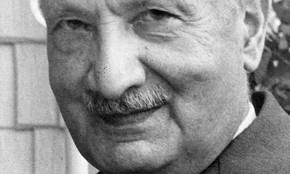
Martin Heidegger (September 26, 1889– May 26, 1976is renowned for the complexity and subtlety with which his thoughts on the philosophy of being (ontology) is expressed. His ideas are inspired by numerous sources from the pre-Socratics, Plato, Aristotle and much of his thought dependent upon his early training as a Jesuit. He read and imbibed St Augustineand Duns Scotus. He trained under the phenomenologist, Edmund Husserl at Freiburgand his approach is deeply engaged with German philosophers like Kant, Schopenhauer and Nietzsche. He also read Kierkegaard with close attention.
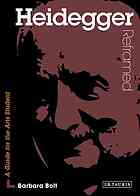
His ideas about the nature of being are in stark contrast with those of Descartes which involve a split between consciousness and the external world. This Cartesian framework or dualism is embedded in modern science and Western thought generally. One result of Descartes philosophy is that Nature is subject by the mind to measurement and calculation and also to manipulation. This borders on what is termed instrumentalism and indeed the consequent exploitation of the environment. This, Heidegger with his alternative view of the direction of philosophy, he deeply and radically opposed. The implication of Heidegger’s thought for the creative artist and the making and meaning of art forms the thrust of Barbara Bolt’s text. His project is illustrated with specific reference to international artists like Sophie Calle, Anish Kapoor and Anselm Kiefer.

Generally considered as a great classic of Twentieth Century philosophy Sein und Zeit, 1927 is not an easy book to read even if you are thoroughly fluent in German. Concerned with existence and the nature of being, it is equally interested in associated questions about time. This central text focuses on the nature of reality and the being-right-there of existence for which Heidegger uses the term Dasein. Part of the difficulty of understanding this central work is that language almost seems to break down under the pressure of difficulty in communicating the awesome nature of human existence, which many would see as essentially spiritual. Barbara Bolt provides a thoroughly useful glossary to such terms in support of her guide.

This glossary contains some eighty terms; it is relatively clear but illustrates some of the difficulties in expounding Heidegger’s collected work, Gesamtausgabe, which itself runs to more than eighty volumes. Barbara Bolt explains in her early chapters concepts associated with Dasein which involve care for the self and other beings, Sorge, and in the face of personal and certain knowledge of death, the termination of existence on Earth, anxiety or Angst. For Heidegger there are two possibilities, it seems either falling into immersion in the day to day, which he terms ontic existence or striving with resoluteness for authenticity. This bears upon artistic endeavour in several ways; the acceptance of strife when faced with unsettling artworks, the necessity of praxis in art education and research which hopefully produces a practical and respectful understanding of materials by a heuristic approach. Bolt is interesting and thought-provoking in her exposition on this.

A perhaps greater difficulty in appreciating Heidegger, which Bolt mentions, perhaps too briefly, continues in current debate. This was his active involvement with Nazism and his eulogy of Hitler involving praise for his moral regeneration of the Fatherland. This has been, not surprisingly, a sticking point in the appreciation of the Heidegger canon. A discussion of this may be found in Inauthenticity: Theory and Practice, contained in JP Stern’s essays on literature and ideology, The Heart of Europe. There is particular concern over his treatment of his German-Jewish teacher, a Christian convert and former colleague, the proponent of phenomenology Husserl, to whom Sein und Zeit had initially been dedicated. He also took a renowned student, Hannah Arendt as his mistress and she it was who later to testified on his behalf at a denazification hearing in opposition to Karl Jaspers.

In a key chapter, Barbara Bolt uses two central concepts of Heidegger to evaluate particular art works. These are ‘enframing’ (Gestellung) and ‘poiesis’-a Greek term for making from which the word poetry is derived. Enframing, according to Heidegger, has negative connotations and is applied to methods like those of modern technology which treats nature solely as a means to an end and shows Heidegger to be an early proponent of environmentalism and certainly a critic of agribusiness. This seems to be echoed by concerns about the manner in which the business of art has been cheapened and debased by commercialisation and celebrity culture. There is, she explains an unholy alliance developing between advertising in late capitalism as evidenced, for instance, by Tracey Emin selling Bombay Sapphire Gin. Enframement also appears to include a criticism of managerialism; disapproval of the manner in which humans are treated often with statistical techniques as mere available resources. Before examining the concept of ‘poesis’, it is worth noting that this book is actually entitled ‘Heidegger Reframed’ and is one in a general series. This tends to give framing a different, presumably positive connotation that sits uneasily with the particular use of the term by Heidegger. Unfortunately, there appears to be no general series editor that could add guidance and cohesion to this demanding project of applying the thought of modern philosophers to art.

Bolt sometimes writes convoluted sentences in a somewhat orotund style which may be an understandable effect of propounding the concepts of this demanding, intriguing philosopher. Nevertheless, the style invites the reader to question some of the propositions expounded. There is no doubt that Heidegger had a particular view about the dominance of the scientific method as he conceives it. Also mathematics seems deemed uncongenial, whereas language, and also history with its different conception of time and certainly etymology are viewed by Heidegger as more relevant to his project. It is interesting to speculate how much he might have responded to philosophers of science like Thomas Kuhn whose views on paradigm shift, and those too of Paul Karl Feyerabend, might have influenced him had he been fully aware of them. Heisenburg, a contemporary and also a controversial figure, might have influenced Heidegger on his notion of how preconceived theories operate in science.

Heidegger as Bolt explains was inspired by poetry and must have been sensitive to its lyricism. This makes the reader question his apparent failure to respond to the beauty of mathematics which is in a sense a universal language. In general he was at pains to oppose certain notions of aesthetics associated particularly with the Enlightenment and Romanticism and the artist as an inflated, self-dramatising subject. In his conception of poesis, Heidegger approaches another mode of artistic appreciation and indeed gratitude which is guided by sympathy. The term, as Bolt makes clear is Greek in origin and involves openness to the bringing-forth or unconcealment of being. It is, for example, the sense of wonder when a butterfly emerges from a chrysalis or in the transformation when a flower blossoms from a bud. Heidegger spent a year in 1942 lecturing on Hölderlin’s Hymn “The Ister” which relates to theDanubeand examined the limitations of a metaphysical interpretation of art and appears to argue the case for spiritual values in art together with a feeling for place attained by intimate journeying. George Steiner emphasises elsewhere how Heidegger’s titles are those of peregrination and comments, “He has been an indefatigable walker in unlit places”.

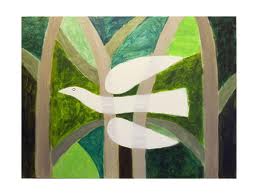
Barbara Bolt has written an interesting book on a difficult topic. The publishers might have supported her with somewhat better illustrations than the few disappointing images provided. However, she has shown how Heidegger can illuminate the work of prominent international artists. She has provided an introduction to a highly influential and controversial thinker supported with a sound biography. This work encourages the reader to bravely question art and promote radically innovative ways of observing and researching related issues.

Categories
Uncategorized West Cornwall (and local history)

Lute Music in C17 Cornwall

lutesandguitars.co.uk

Lute players were highly prized musicians in this period. Their significance is perhaps illustrated by the fact that ”Il Divino”, a Lute player at the French Court, was the second highest paid member of the French Court. The French court itself often employed instrumentalists who were familiar with innovations currently being made in Italy. Players of the lute, harpsichord and violin were all highly prized for their services at weddings, festivals and feasts. Besides this type of popular music, which was often the subject of adaptation and improvisation, a more aesthetic variety of what might be termed art music was performed in the richer, grander houses of Lanhydrock, Trerice and Cothele.

Lutenists who developed their skills in Cornwall, like Charles Farneby, were drawn to London as is evidenced by the fact that they were, at the end of their days, buried there. It appears that children acquired knowledge of the lute, an expensive instrument which included its strings made from the small intestine of sheep, shipped from Venice, either at school or from private tutors. Their instruction was frequently passed on to children who in turn instructed servants so that they might entertain on a regular basis.

In 1978 a book of lute music was discovered at Lanhydrock which Brian had photocopied at a local solicitor’s office and has now been published as the Robartes Lute Book, 1654-1668 and contains pieces for the French lute in D minor tuning / with an introductory study by Robert Spencer. In general early C17 pieces were extravert in style. Later in the century the French influence of Queen Henrietta Maria showed itself in a livelier, more elegant manner as was illustrated by the performance of “La Maribelle”, a piece which gave some insight into the ambience of courtly refinement. A French painting of James Robartes, shows him fashionably depicted with his Lute at Lanhydrock. As the century moved forwards, the taste for the more complex and plangent tones of Dowland and pieces like “Merry Melancholy”, which Brian performed became more prevalent.

Categories
Art and Photographic History Uncategorized

Another interesting resource and paintings by Ferdinand Hodler (1853-1918)

The useful resource is http://www.flickr.com/photos/32357038@N08/collections/

It contains many paintings, portraits and sketches easily categorised under countries and covering the period from the early medieval but focuses strongly on recent times. It is very good on European art around 1900. There is a folder on Eastern European artists which itself contains some 6 folders with hundreds of images in each folder. In relation to Friedrich Hodler there is an amusing blog,”Bearded Blokes of the Belle Epoque” containing many Hodler self-portraits looking as the blog-author states, “His work had a clarity of light, color and structure that made his work both modern and timeless. He produced a series of uncompromising self portraits throughout his long career. Over the years Hodler’s strong weathered features seemed to peer stoically into the future.”

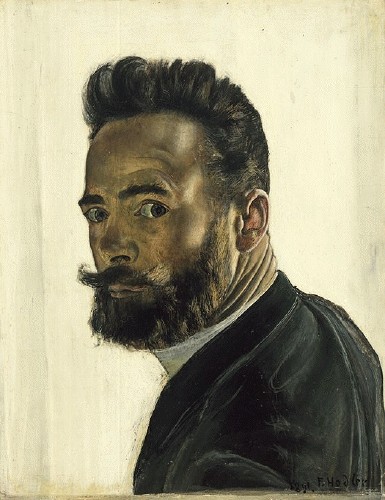
Hodler is an interesting figure and a prominent Swiss artist, born in Basle. One incidental fact is that his son Hector, as Wikipedia mentions,” was born in 1887, and founded the World Esperanto Association in 1908.” His worked traversed a number of changes from Symbolism and Art Nouveau in the 1890s to Expressionism by the time this self-portrait was painted in 1916. Ras Murley interestingly notes on his Flickr page that,” The latter works present firmly drawn nudes who express Hodler’s mystical philosophy through grave, ritualized gestures.”

Landscapes by Hodler may be seen at http://www.artinconnu.com/2008/06/landscapes-by-ferdinand-hodler-1853.html and some more images here http://www.artic.edu/aic/collections/artwork/artist/960

An early portrait- prefiguring Dali?

A later composition

Categories
Art and Photographic History Uncategorized

Self Portraits 1900-1912 (4) Stanisław Wyspiański

Self-portrait, 1902

“Stanisław Wyspiański (Polish pronunciation: [staˈɲiswaf vɨˈspjaɲskʲi]; 15 January 1869 – 28 November 1907) was a Polish playwright, painter and poet, as well as interior and furniture designer. A patriotic writer, he created a series of symbolic, national dramaswithin the artistic philosophy of the Young Poland Movement. Wyspiański was one of the most outstanding and multifaceted artists of his time in Europe. He successfully joined the trends of modernism with themes of the Polish folk tradition and Romantic history.” This is how Wikipedia introduces the man who is referred to as being the fourth Polish Bard; this must refer to Wyspiański’s literary skills since the other three are poets. The self-portrait that accompanies the article shows Wyspiański at the age of 33 in 1902. Why is this such an interesting portrait?

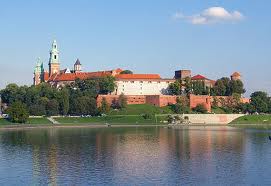
The Wawel on the left bank of the Vistula River in Kraków

It is executed in pastels and measures just 35cm by 35cm. It makes fine use of the whiteness of the paper to produce a crystalline, pellucid effect. This is clearly a symbolist work and shows his constant predisposition to add elaborate and striking floral designs. The self-portrait is to be found in the National Museum, Warsaw. However,he only visited Warsaw once.As is quite well-known, Stanisław Wyspiański came from Kraków, in whose general history and culture Wyspiański was deeply immersed. He was responsible for the design of furniture and interiors, and the development of Wawel, the astonishingly beautiful palace on a limestone hill overlooking the Vistula. In 1904 just before the emperor Franz Joseph I of Austria, gave the order to withdraw troops from Wawel, Wyspiański and the architect Władysław Ekielski worked on plans to develop the Warwel Akropolis. This is a location that he knew well.” His father, Franciszek, a sculptor, had an atelier at the foot of the Wawel hill, home to a cathedral rich with evidence of the strength of the former Polish state, and to a royal castle, by then an Austrian army barracks.” (http://www.culture.pl/web/english/resources-visual-arts-full-page/-/eo_event_asset_publisher/eAN5/content/stanislaw-wyspianski)

  Stanisław Wyspiański is associated with the movement which was referred to as “The Young Poland Movement”. It appears that some of its members attended the St Anne’s Secondary School in Kraków. Here the students were the pupils were taught in Polish-something which was unusual since the area was under Austrian domination and German used by the dominating power. Lectures were delivered upon Polish history and thus a counter-culture was inculcated.

A lovely presentation with a Chopin track can be found at http://www.youtube.com/watch?v=VpxtIs_aQhw


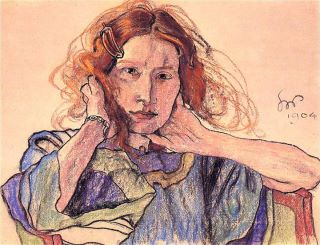
Portrait of Ireny Solskiej.1904. Pastel. 48 x 62 cm. Muzeum Narodowe, Poznań.
Categories
Book Reviews Uncategorized

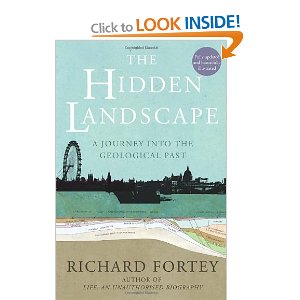
The Hidden Landscape

The purpose of this book is to explore the connection between the landscape and the geology underlying it, which in one of many vivid similes Fortey  compares, the surface personality with the workings of the unconscious mind beneath. He starts by describing a journey he once made from Paddington Station to Haverford West, a market town in Pembrokeshire and with it a passage back into the plutonic depths of geological aeons, indicated by the large 60cm monster trilobites that have been found in the Cambrian rocks near St David’s. Fortey describes the magnificence of the Cathedral constructed from the local purple sandstone and mottled with moisture loving lichens. He contrasts this with the anonymous character of a nearby brightly coloured service station, anonymous and synthetic, an invader cheaply built and out of context.

Fortey’s tour begins with the ancient Lewisian Gneiss of theNorth-WestHighlandsand the formation in their complex metamorphic variety. He explains how these were penetrated by dark dykes of igneous Scourie, the action of glaciers and how in places the Gneiss has been overlaid by the local mountains which are masses of sediment. These latter layers are called Torridonian. They are some 1000 million years old and contain single-celled algae. Whilst describing the full complexity of this ancient scene, Fortey provides a useful glossary of key The Hidden Landscape by Richard Forteydefinitions which reassure the reader wanting to understand this full detail. He proceeds to explain the fundamental divide of theIapetusOcean. (Illustrated also in the accompanying photographs.) This once separated northern from southernBritainsome 500 million years ago, the closure of which created the magnificent Caledonian mountains.

The reader is swiftly conveyed through the Caledonian landscape which is economically characterised, ”This is where population density plummets, and where the Gaelic language lingers in patches. This is the country where metamorphism rules.” Crossing the MidlandValley, he is brought to the Southern Uplands- attract of land which sweeps across through the Irish Seato Down and Armagh. Here the rocks are dark sedimentary shales, paler grits and green mudstones. What makes the account engaging to the reader, is the digression into the fascinating history of geology where Fortey takes us back to the discontinuities in the rock, specifically at Siccar Point, which led to the discoveries of Hutton in the mid-Eighteenth Century of the processes of folding and overlaying with later Devonian sediments. We are shown with clarity how the early discoveries were made and the modern comprehension of geology as a subject derived. Fortey writes about the fascinating early episodes of making geology with the same skill as Roger Osborne in his excellent book, ‘’The Floating Egg’’

In the softer rocks and slates ofWales, the fossil trilobites are altered in shape in a manner which gives evidence of the deformations to which the rock has been subjected. In brief and characteristically diverting remarks, the connection between the geology of with Avalonia (Newfoundland),Canadaand theAppalachiansare mentioned. Additionally, Fortey notes that Cambria-Roman Wales, the Ordivicians, the tribes whom the Romans conquered and the barbarian Silures have all given there names to the internationally recognised geological divisions of the Lower Paleozoic. Fortey writes with poetic feeling for that land which also inspired Dylan Thomas to write:-

The heavenly music over the sand

Sounds with the grains as they hurry

Hiding the golden mountains and mansions

Of the grave, gay seaside land

‘’’The Hidden Landscape’’’ conducts the reader on an extensive tour that joins the primeval geology with the soil and the lie of the land as it now exists today. The flora, fauna, the occupations and lifestyle of recent generations are explored in detail. So in a later chapter the reader is introduced to the gentler morphology of the Weald. Even, the taste of the waters in Spa towns like Tunbridge Wells depends upon the sensitivity of human taste to very small amounts of iron salts. Water from ferruginous beds and the ions it contains gives it a medicinal taste- the reason the wells were established there in 1606. InKentthere are cretaceous chalks, sands and the blue Weald clay that forms the vale to the west of Romney Marsh.

This intriguing book finishes with a chapter encouraging respect for the visible landscape. ‘Texture is bequeathed by time’, Fortey urges attention to the local building materials that contribute to the individuality of vernacular architecture. He praises the use of these resources by traditional craftsmen. This beguiling book finishes with praises for the campaigns of Natural England, for protection of Sites of Scientific Interest and congratulates the hard working volunteers of Regionally Important Geological Sites, in their endeavours to preserve the variety nature has produced in the countryside over aeons. Well written and pleasingly presented this is a grand introduction to a popular subject.

Categories
Uncategorized

Another Ukranian Self Portrait from 1908 by Kazimir Severinovich Malevich (Russian: Казимир Северинович Малевич)-

Self-portrait 1908

Kazmir Malevich is an interesting figure in so many different ways and stands on the brink of so much change both cultural and political. He painted in a wide variety of styles and created many masterpieces in a comparatively short period of time. For more detailed information on this extraordinary Ukrainian/Polish artist it is worth referring to http://www.theartstory.org/artist-malevich-kasimir.htm

He is most well-known for the invention of “Suprematism (RussianСупрематизм) was an art movement focused on fundamental geometric forms (in particular the square and circle) which formed in Russia in 1915-1916. ” However, his earlier work is very attractive and appealing. His self-portrait 1908 already shows a simplicity of form, intensity and dramatic  use of colour and composition. If that appeals then there is a pleasing You-tube accompanied by Bruch’s “Violin Concerto No.1 in G minor, Op. 26 at http://www.youtube.com/watch?v=JTkLh8NTXHA and another at http://www.youtube.com/watch?v=pP31bqFiy6s which is rather short. At MOMA there is another useful introduction,supposedly for children at http://www.moma.org/explore/multimedia/audios/1/2168

Head of a Peasant Girl
Self-portrait in 1933

A later self-portrait shows the influence of Stalinist art but retains a strong feeling of renaissance influence and a notably defiant expression and added his signature the picture with a tiny black-over-white square (the suprematist painting for which he is most famous).

Categories
Book Reviews Uncategorized

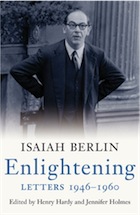
Enlightening -Isaiah Berlin’s Letters from 1846-1960

A stenographer unscrambles taped musings of the polymath

Isaiah Berlin wrote in tribute to the memory of Dorothy de Rothschild of her personality, ”…..overwhelming charm, great dignity, a very lively sense of humour, pleasure in the oddities of life, an unconquerable vitality and a kind of eternal youth and an eager responsiveness to all that passed…” Reading this second volume of letters, now available in paperback, covering Berlin’s most creative period, these same characteristics might be aptly applied to Sir Isaiah himself. However, as this most self-aware of intellectuals recognised, his loquacity and compulsive socialising were driven by a persistent need to escape a sense of unreality, an inner void. In these letters he writes, ‘’my quest for gaiety is a perpetual defence against the extreme sense of the abyss by which I have been affected ever since I can remember myself…’’

He is at his clearest when actually writing rather than using the Dictaphone. His use of this device adds interest to the resulting text, transcribed by a sometimes confused stenographer. Here he is writing from Harvard to another editor of letters, in what he elsewhere termed his wretched Colefax-like hand,’’…my blindness to Mrs W’s true character makes you think of me as gazing through a telescope at remote, dimly distinguishable, dwarves round whom I construct mythologies which sometimes fit & sometimes don’t but always smother the subjects: I do that a little: I like rounded vignettes:& I cling to my hypotheses: it is the only sense I attach to understanding about people as opposed to moment-to-moment reactions to, or impressions of them…”

Berlin’s tendency to construct an overarching, grand scale view of people is interesting, indeed notable. When it comes to political philosophy it is the construction of universal systems, Marxism and Monism, theories he later studied and to coin the term, the ‘’counter-enlightenment’’, which overarching theories Berlin most deplores. The hesitancy and multiple qualifications in his communication, often results in a diffuse and difficult prose style. However, the thick impasto and layering of shades of meaning can also reflect, like some sort of rich expressionist painting, the intention of conveying a lasting and deep impression. If you can tolerate very lengthy sentences, laced with subordinate clauses, which are richly punctuated with colons and semi-colons; then memorable and multifaceted observations on the people, politics and those interesting times, emerge.

These were indeed both interesting and difficult times.The move from diplomatic service in the States to the daily grind of teaching and lecturing in post-war Oxford, Berlin found particularly irksome. Advising Chaim Weizmann and defending the newly found state of Israel in the period after the King David Hotel attack was a duty on which he focussed his considerable abilities and influence. Later he was to meet and to like Ben Gurion. However, as his interest turned once again to Herzen and Russian intellectual history, he was careful not to get side tracked. He was involved in Paris with the setting up the Marshall plan and frankly admitted his limitations when it came to discussions on economic practicalities. Yet he began to translate his beloved Turgenev and still found opportunities to advise government propagandists on what he saw as the dangers of mentioning Hegel and the imperative of countering Russian territorial ambitions. In addition to this involvement with high level politics he was pleased to be consulted by Churchill on his memoirs. When it came to making predictions, he agreed with his fellow don, Trevor-Roper on the accuracy of those proposed by that interesting Swiss cultural historian Joseph Burkhardt based on his study of the Italian renaissance.

At Oxford his coterie included brilliant talkers that included his mentor, Maurice Bowra, the witty Warden of Wadham; here described as having felt jaded in Greece, found Athens heavenly, full of jolly poets, and himself adored there. Sir Isaiah found a warm spot for that ‘’loveable scamp’’ Bob Boothby, talking over appeasement with which he recalled All Souls to be more than a little complicit. Then there was the scintillating company at lunch of the novelist Elisabeth Bowen. He entertains with the witty and erudite Lord David Cecil at New College, the renowned conversationalist and author of the brilliant biography of Lord Melbourne. We have only just begun the alphabet of Berlin’s extensive and amusing friends which extended far beyond the University to journalists, politicians, policy wonks (as they are termed in a less deferential age ), diplomats and heads of state. One of the pleasures of reading these letters lies in this investigation of this, the social hinterland of this philosopher of secular pluralism.

A supplementary reason for reading these letters is the insight they afford into Berlin’s relationship with women and otherchanging social attitudes. In 1956, he married Aline Halban, an exile from Russia, at the relatively late age of 46. There are indications of a developing maturity but there are also lapses into donnish backbiting, for instance A.L.Rowse is repeatedly characterised as a Malvolio in the fractious atmosphere of All Souls. This kind of gossiping is ultimately a sign of inanition and unworthy of an esteemed philosopher. However, it was a feature of the academic ambience at the time and Leslie, as Rowse is known amongst his Cornish friends, would probably have relished Berlin’s further remarks about his open emotionalism, ‘’Curious. In a way better than the stiff English upper lip, & stoicism, hypocrisy and inner rages..’’

Reading ‘’’Enlightening’’’ is no substitute for the study of Berlin’s works if you are interested in his approach to the history of ideas. On the other hand, given the range of his achievements, from founding Wolfson College to his friendship with Pasternak(he smuggled out ‘’Dr Zhivago’’ to the West) and also with the great poet Anna Akhmatova, these letters shine an interesting light on the author’s effervescent persona. In this splendid tome, his peculiar sort of Englishness, his fondness for vigorous debate and his concern to counter and defeat the monster of totalitarianism are sparklingly displayed.

Categories
Art and Photographic History Uncategorized

Puvis De Chevannes The Poor Fisherman – Oil on canvas, 155 x 192.5 cm (5′ 1″ x 6′ 3 3/4″); Musee d’Orsay, Paris

The Poor Fisherman - Oil on canvas, 155 x 192.5 cm (5' 1

According to the Web Museum in Paris,”He had only modest success early in his career (when a private income enabled him to work for little payment), but he went on to achieve an enormous reputation, and he was universally respected even by artists of very different aims and outlook from his own. Gauguin, Seurat, and Toulouse-Lautrec were among his professed admirers. His reputation has since declined, his idealized depictions of antiquity or allegorical representations of abstract themes now often seeming rather anaemic. He remains important, however, because of his influence on younger artists.

His simplified forms, respect for the flatness of the picture surface, rhythmic line, and use of non-naturalistic color to evoke the mood of the painting appealed to both the Post-Impressionists and the Symbolists.”

Categories
Uncategorized

The influence of Jan Mateyko in Kraków; (June 24 1838 – November 1, 1893)

An influence upon Stanislaw Wyspianski (1869-1907) whose self portraits and  literary works were produced in Kraków, Jan Mateyko focused  on major themes in Polish history. As Wikipedia says,”Stanisław was adopted by his aunt Joanna Stankiewiczowa and her husband Kazimierz. The Stankiewicz family belonged to a bourgeois and intellectual class. In their house Wyspiański became acquainted with painter Jan Matejko, who was a frequent visitor. Matejko soon recognized that the boy had artistic talent and gave him the first artistic guidance.”…….It continues,” As far as literature was concerned, Wyspiański created a dramatic interpretation of Matejko’s painting Stefan Batory pod Pskowem (Bathory at Pskov).”

Stefan Batory pod Pskowem 1872 (Matteyko)

Image

Again Wikipedia comments,”During the Livonian War (1578-1582), between Ivan the Terrible of Russia and Stefan Batory of the Polish-Lithuanian Commonwealth, the city was besieged by Polish forces. Poland failed to capture the city, but forced Russia to return other territories and gained Livonia. The siege was the setting of this painting. The siege of Pskovfrom the Polish perspective: Batory at Pskov, 1579. Painting by Jan Matejko in 1872. Matejko’s allegoric painting illustrates the concept of romantic nationalism: the Muscovites are represented doing homage to the Polish king, which appear victorious, although in reality Pskov never fell to the Poles, as the conflict ended with negotiationsbefore the siege was concluded.”

An impression of Wyspianski’s work may be found at http://www.youtube.com/watch?v=yc_jSeibnUE and with the accompaniment of Chopin at http://www.youtube.com/watch?v=KQQC-H7lXFc&list=FLoIY4Tgwcvs1qr51MdHS5Zg&index=3&feature=plpp_video. Enjoy!

Two other influences on Wyspianski in France were Gaugin and Pierre Puvis de Chavannes.

Copernicus, in Conversation with God, (1872) by Jan Mateyko
Image

Categories
Art and Photographic History Uncategorized

Self-Portraits 1900-1912 (3) Zinaida Serebryakova

This portrait, At the Dressing Table was painted in 1909 and is remarkable for the dynamism of its composition; it also looks thoroughly modern as does Zinaida, who having been born in 1884, was then just 25. The sweep of the hair which extends from the mirror behind, combined with the arms adds to the energy and sense of novelty in the portrait. The hat pins in the foreground are splayed and are perhaps a reminder that this is a painting that according to the fashions, is indeed some hundred years old. This is a candid and charming, beguiling portrait. The lightness of the colours, the contrast and the surrounding items all engage the attention as does the intimacy and immediacy of the artist herself.

At the Dressing Table 1909

Zinadia Serebryakova was born on  December 10, 1884into what is now the Ukraine, on the estate of Neskuchnoye near Kharkov. Her maiden name was Lanceray. She was born into the cultured and artistic family known as the Benois – a fascinating family of architects, musicians, painters and sculptors. Her name in Ukranian is Зінаїда Євгенівна Серебрякова; and the Benois were the descendants of the French confectioner Louis Jules Benois, who came to Russia in 1794 after the French Revolution. More information can be easily found  about the talented Benois at http://en.wikipedia.org/wiki/Benois_family. There is also a moving piece about her on another wordpress blog at http://01varvara.wordpress.com/tag/zinaida-serebyakova/

Self-portrait 1921

In 1901, Zinadia studied painting under the famous Russian artist, Ilya Yefimovich Repin, also a Ukranian artist perhaps most famous for the grandeur of his panoramic realistic paintings like the “Religious Procession in Kursk Province“, 1880–83. He also painted an interesting portrait of Tolstoy and the chemist, Dmitry Mendeleyev, who made the discoveries which led to the Periodic Table. After studying under other portrait painters, Serebryakova, went to Paris in 1905 after visits to Italy. It was the year in which she married her first cousin, Boris who became a railway engineer.

Maxim Gorky reading in “The Penates” his drama Children of the Sun. Compressed charcoal and sanguine on paper. 28 × 49.5 см.(1905)
Medeleeff by Ilya Repin

She must have felt stimulated and perhaps at home in Paris, where she was later to return and forced to stay when exiled in 1924. In the intervening period she was to experience the full force of the repression following the October Revolution. Her husband died in a Bolshevik jail in 1919. However, the period of 1906 to 1916 were happy and productive. She lived in St Petersburg and Moscow  as well as upon her country estate. She was a wonderful painter of the countryside and of children, especially her own. Having been widowed and with the family estate plundered she was sadly left responsible for raising her four children and caring for her mother at a time of penury and impinging civil strife.

On the terrace in Kharkov-1919

In fact what is remarkable about Serebryakova’s work is its variety and its elegant peacefulness. It would seem that her work has become much more recognised in Russia with more frequent exhibitions. She lived in Paris without seeing her older two children for some 36 years and only achieved recognition in the Soviet Union in 1966. However, her innate zest for life and her inner serenity shines through her work and in the treatment of her sitters. An awesome selection of 411 of her works may be seen as a slideshow at http://www.wikipaintings.org/en/zinaida-serebriakova.Another interesting website in French may be found at http://femmes-russes.russian-women.net/femmes-russes/Zinaida-Serebriakova.shtml. There is also an intriguing short photographic sequence in colour circa 1910 at http://www.youtube.com/watch?v=DJ8VRxS4nkE.There is a very useful and detailed link at http://artoftherussias.wordpress.com/category/ukraine/zinaida-serebriakova/-enjoy!There is also a short new You Tube Clip at http://www.youtube.com/watch?NR=1&feature=endscreen&v=Wo8v6EWrUmk If you are interested in her ballet paintings and want to improve your Russian there is also http://www.youtube.com/watch?v=Ot17l5na1Zw

Portrait of Katya the Artist
Soviet Union Stamp 1988

Sketch of Anna Akhmatova