Categories
Uncategorized

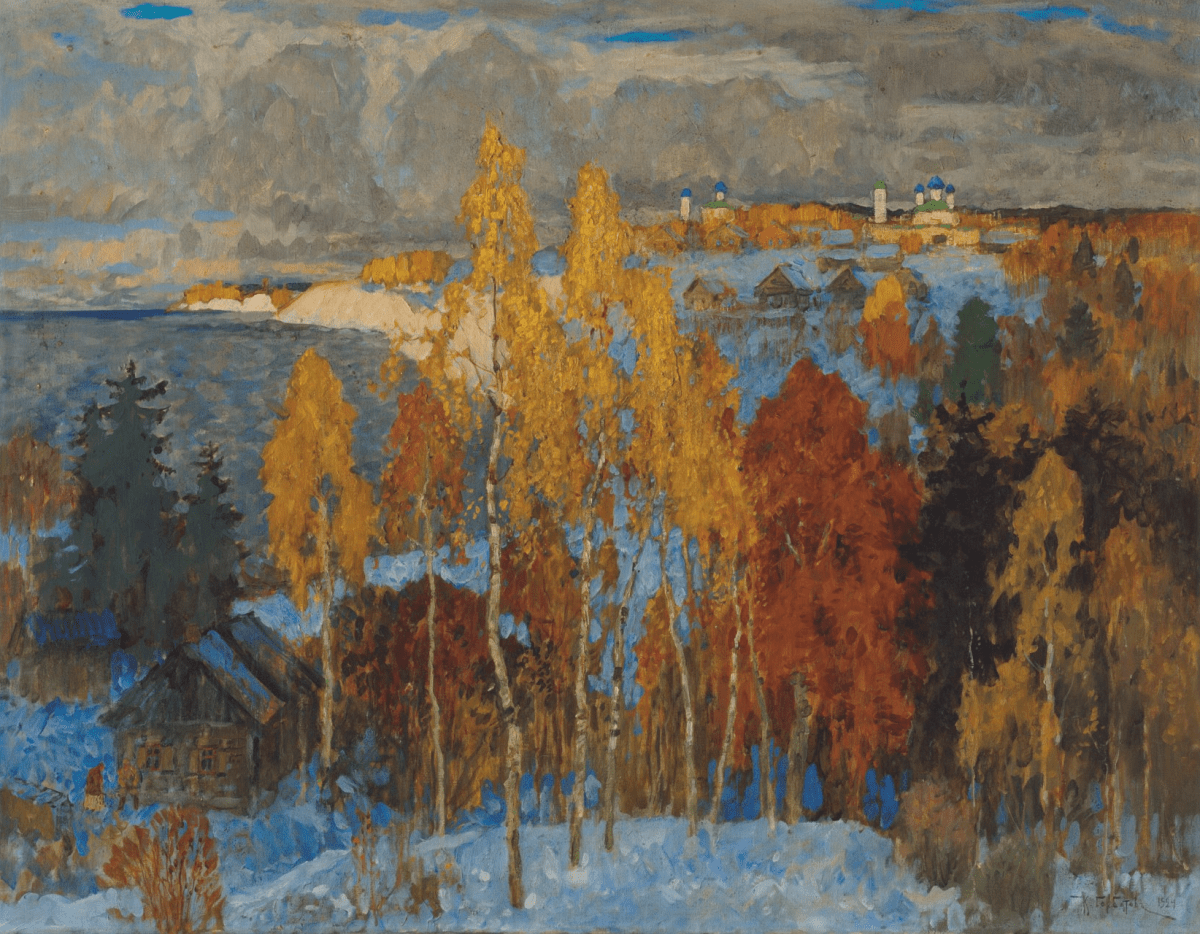
Konstantin Gorbatov: Golden Autumn (1924)

Highly seasonal

At Sunnyside - Where Truth and Beauty Meet's avatarAt Sunnyside - Where Truth and Beauty Meet

KONSTANTIN GORBATOV (1876-1945), Golden autumn, signed in Cyrillic and dated ‘K. Gorbatov. 1924’ (lower right), oil on canvas, 28 ¾ x 36 5/8 in. (73 x 93 cm.), Image Source: Christie’s

“Painted in 1924, two years after Gorbatov emigrated, Golden autumn is an evocative depiction of rural Russia, with its overwhelming natural beauty and tranquillity. At the height of his success abroad and participating regularly in international art exhibitions, including those at the Hague in 1924 and in Pittsburgh in 1925, Gorbatov achieved both popularity and acclaim for his almost architectural landscapes that were masterfully constructed with key elements, most recognisably the spindly, curved trunks of native birches, topped with fiery heads of gold.”

Christie’s

Read More

Konstantin Gorbatov at wikiwand

Konstantin Ivanovich Gorbatov | Artnet

See More

Konstantin Gorbatov at wikimedia

Tag: Konstantin Gorbatov At Sunnyside

Thanks for Visiting 🙂

~Sunnyside

View original post

Categories
Uncategorized

Autumn Walkway, Poland

Categories
Uncategorized

#NonFicNov 2022 Week 1

A jolly useful list!

Categories
Uncategorized

Playing with words – A Wislawa Szymborska poem

Stimulating- even in translation.

richinaword's avatarmy word in your ear

The Three Oddest Words

When I pronounce the word Future,
the first syllable already belongs to the past.

When I pronounce the word Silence,
I destroy it.

When I pronounce the word Nothing,
I make something no non-being can hold. 

Wisława Szymborska (1923 - 2012)
Translated by S. Baranczak & C. Cavanagh

Poets do like playing with words. And the choice of words is always a consideration. And so too the way they will present themselves when pronounced. An example is HIS, a wonderful word to be used when talking about a snake in a poem. So, if you are considering creating a poem about a snake make it masculine.

Looking at the three words in the above. Future is a two-syllable word. It is really a past/present word when split into syllables and pronounced. And so does that make all one-syllable words present, well until you release pronunciation of…

View original post 253 more words

Categories
Uncategorized

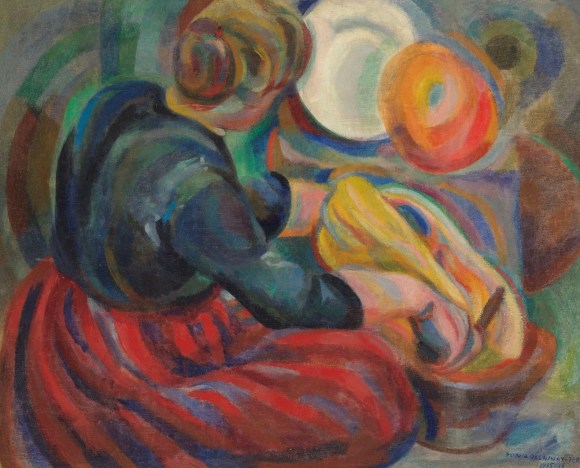
Sonia Delaunay: Portugaise assise (1915-16)

Beautiful rainbow colours!!

At Sunnyside - Where Truth and Beauty Meet's avatarAt Sunnyside - Where Truth and Beauty Meet

SONIA DELAUNAY (1885-1979), Portugaise assise (Seated Portuguese), signed and dated ‘SONIA DELAUNAY-TERK 1915-16’ (lower right), oil on canvas 30 5/8 x 37 ¾ in. (77.6 x 96 cm.), Painted in Portugal in 1915-1916, Image Source: Christie’s

“The artist’s main purpose in Portugaise assise is not simply to represent a local woman, at her work, but to study light – the particularly warm and clear light of northern Portugal, which Delaunay has divided and recomposed into a riotous cacophony of colour and movement that immerses the viewer in the raucous, sensual atmosphere of the sun-drenched Portuguese marketplace.

In Portugaise assise, the artist places abstract moving coloured discs around the sitter, generating movement and depth to create spaces and enhance the dynamic arrangement of colour. The overall tone is warm, with reds, oranges and yellows. The greens and blues are loaded with yellow and there is an interplay of…

View original post 129 more words

Categories
Uncategorized

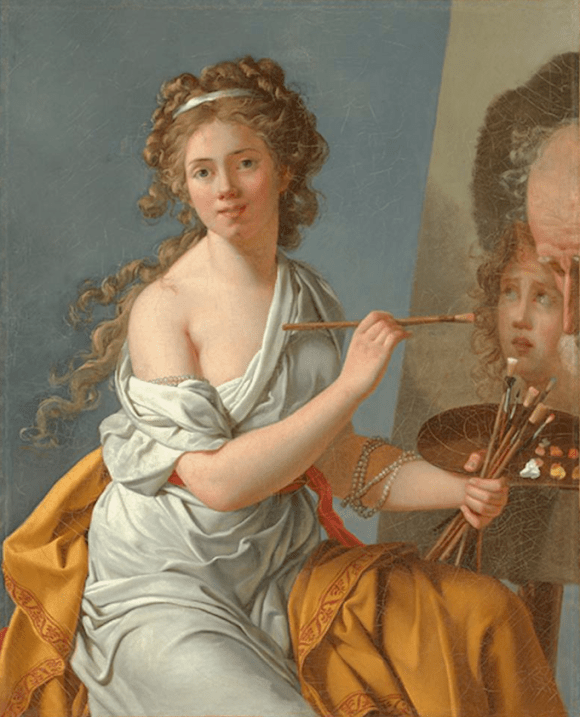
Autoportrait Day 277~ Marie Guilhelmine Benoist

Categories
Uncategorized

Winter Steps Warsaw, Poland

Categories
Uncategorized

Forest Carnival, Romania

Categories
Uncategorized

Autoportrait Day 276~ Susan Chen

Categories
Uncategorized

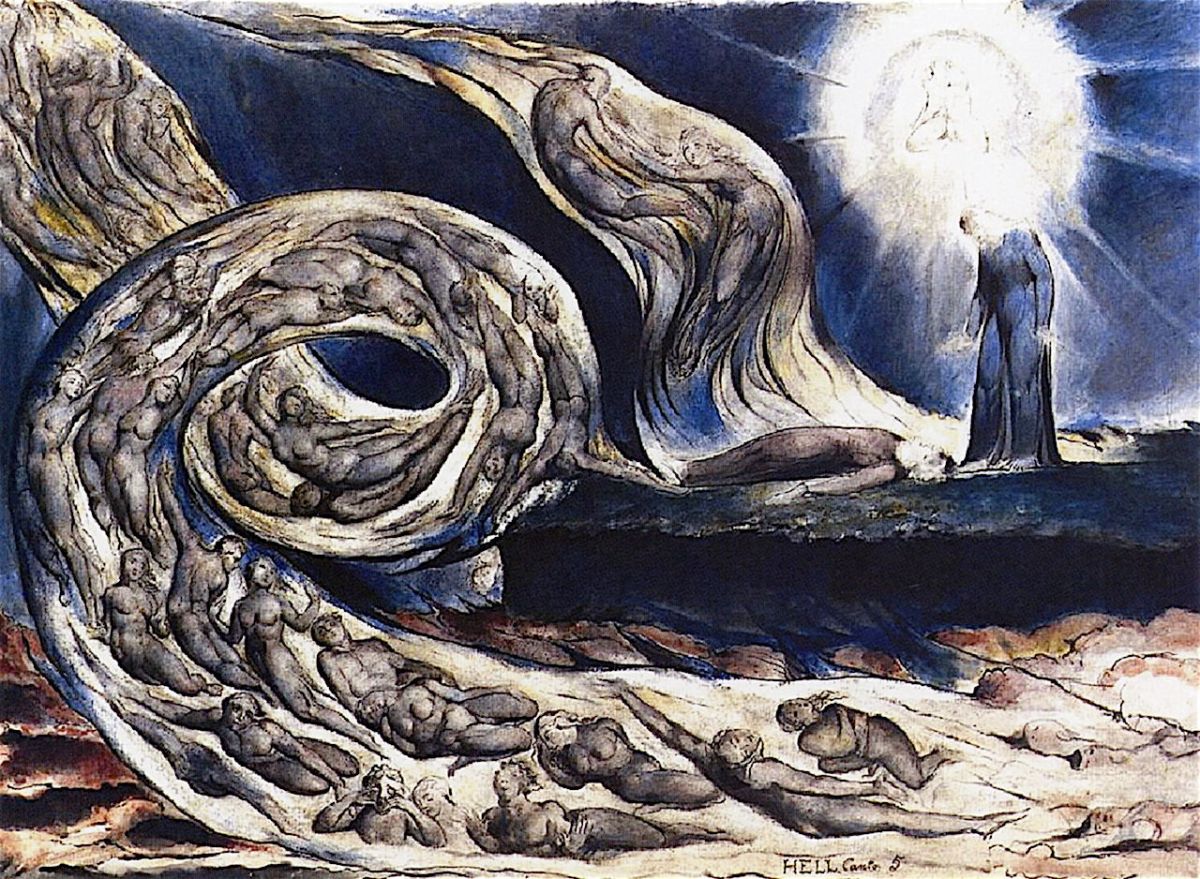
Painted Stories in Britain 9: William Blake

Blake – magnificent

hoakley's avatarThe Eclectic Light Company

One of the factors I previously identified as causes of the failure of British narrative painting was lack of formal academic training, which was rectified with the formation of the Royal Academy Schools in London in 1769, when they had their first intake of 77 pupils. A decade later, they enrolled one of their most famous artists, William Blake (1757–1827).

Blake had been born in what is now Broadwick Street, Soho, London, and started as a pupil at a drawing school in The Strand in 1767 or 1768. In 1772, as Hogarth did fifty years before, he started a seven-year apprenticeship with James Basire as an engraver. Basire was a traditional line engraver on copper, and Blake would have gained a sound and practical understanding of that craft. Among the tasks which he undertook was to make copies of the royal tombs in Westminster Abbey for the Society of Antiquaries…

View original post 2,518 more words