Es hat etwas gedauert, aber nun geht es weiter mit dem nächsten teil des Nachberichtes von meiner Reise nach Warschau.
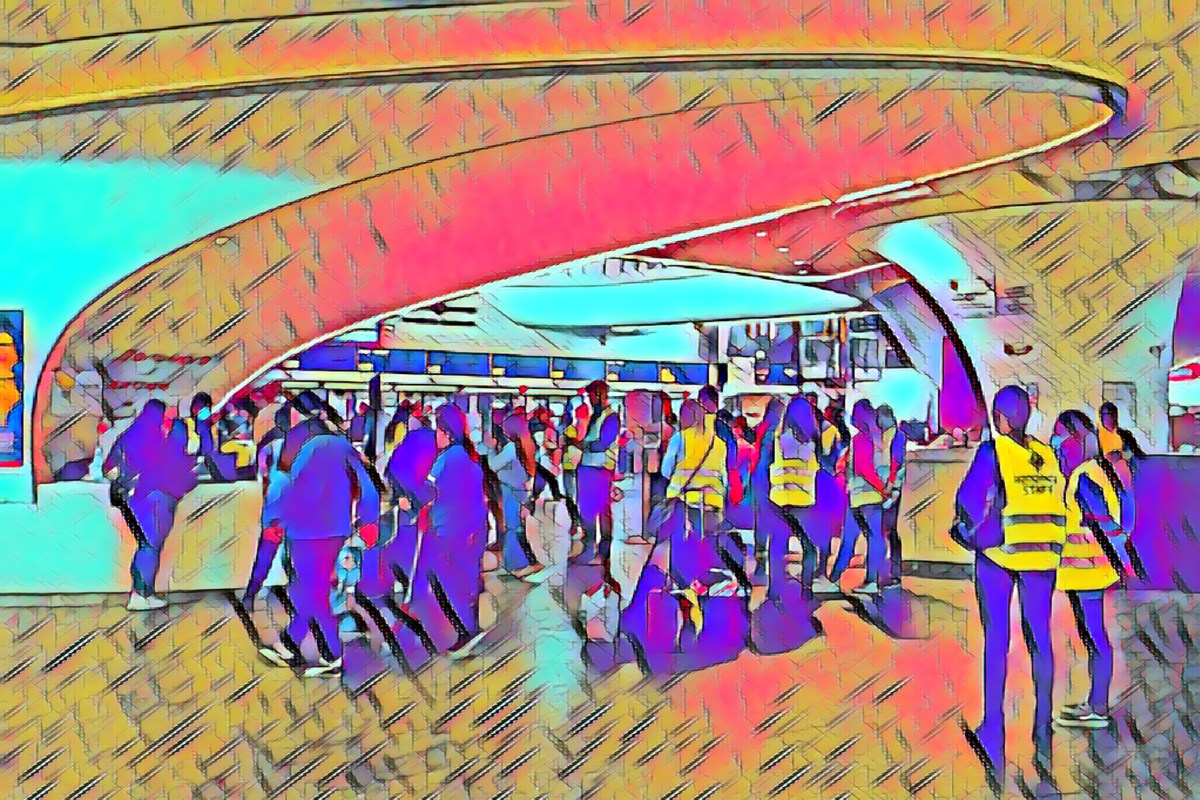
Im Bahnhofsinnern war es weitaus weniger tumultig als ich angenommen hatte, aber dennoch gut gefüllt. Auch dort drin waren Pavillions als Informationsstelle für Flüchtende und Helfer aufgebaut. Zunächst gingen wir eine Runde durch das komplette Gebäude. Durch die Sprachbarriere und das Durcheinander war es zunächst nicht einfach herauszufinden, wo eine geeignete Anlaufstelle für uns war. Irgendwann sprachen wir einfach jemand an und bekamen einige Infos. Er fragte ab, wer wir sind und welche Möglichkeiten zu helfen wir haben, gab uns letztlich aber bloß eine Telefonnummer, die wir später oder am nächsten Tag anrufen sollten. Das war nicht sehr zufrieden stellend. Am nächsten Stand ging es dagegen wie im Taubenschlag zu. Wir stellten uns in einer Reihe an und als war dran waren, zückte der Helfer Stift…
An excellent way to study countries and makes me realise how much I miss London. (Not to mention Paris, Berlin, Munich or Vienna) Apparently Georgian poetry is very good too!!
As part of my monthly exploration of different countries, I’m trying to sample a menu from each country, and I happened to find myself in local Georgian restaurant Kartuli with two of my closest gal pals.
The restaurant was very busy on a Thursday night, just two weeks after Russia’s invasion of Ukraine, and the service was good, even if they did initially charge us for a bottle of wine we didn’t order (soon rectified).
We had some Georgian Shoti bread to accompany a sharing platter of Pkhali dishes, which are cold starters from the western Georgian regions of Imereti and Guria, based around beetroot, pinto beans, carrot and spinach (the pinto bean starter was my personal favourite).
I followed this up with a vegetarian main, a sort of hearty ratatouille-esque stew called Ajapsandali, described on the menu as a “vibrant dish cooked with aubergines, green beans, red and yellow…
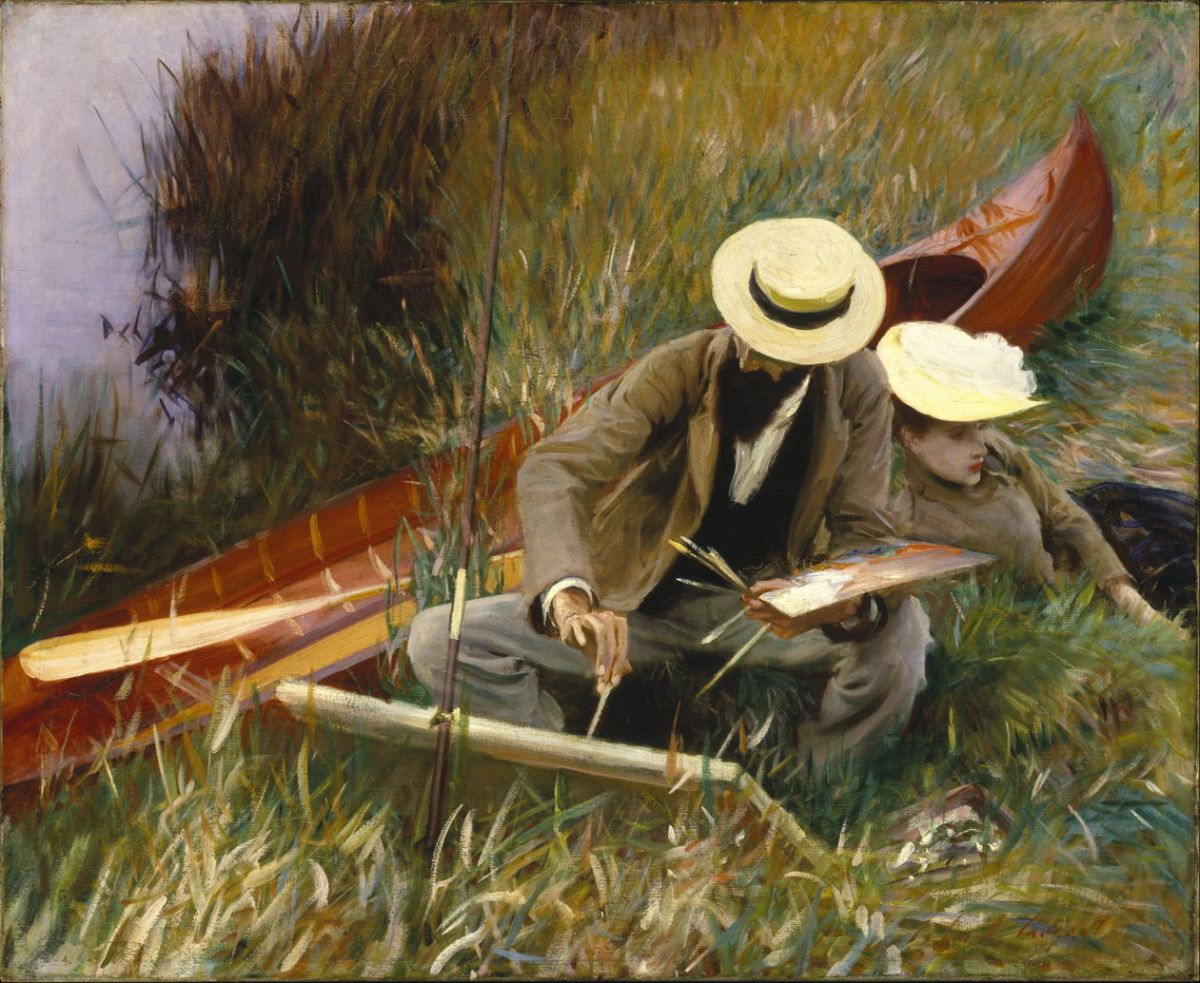
At its best, introspective art can amaze: the almost eight-minute long opening shot of Robert Altman’s The Player (1992) is an example I still love to return to. Introspective painting also has the eternal value of historical record, so this weekend I look at two painters who painted painters painting, John Singer Sargent today, and Louis Béroud tomorrow.
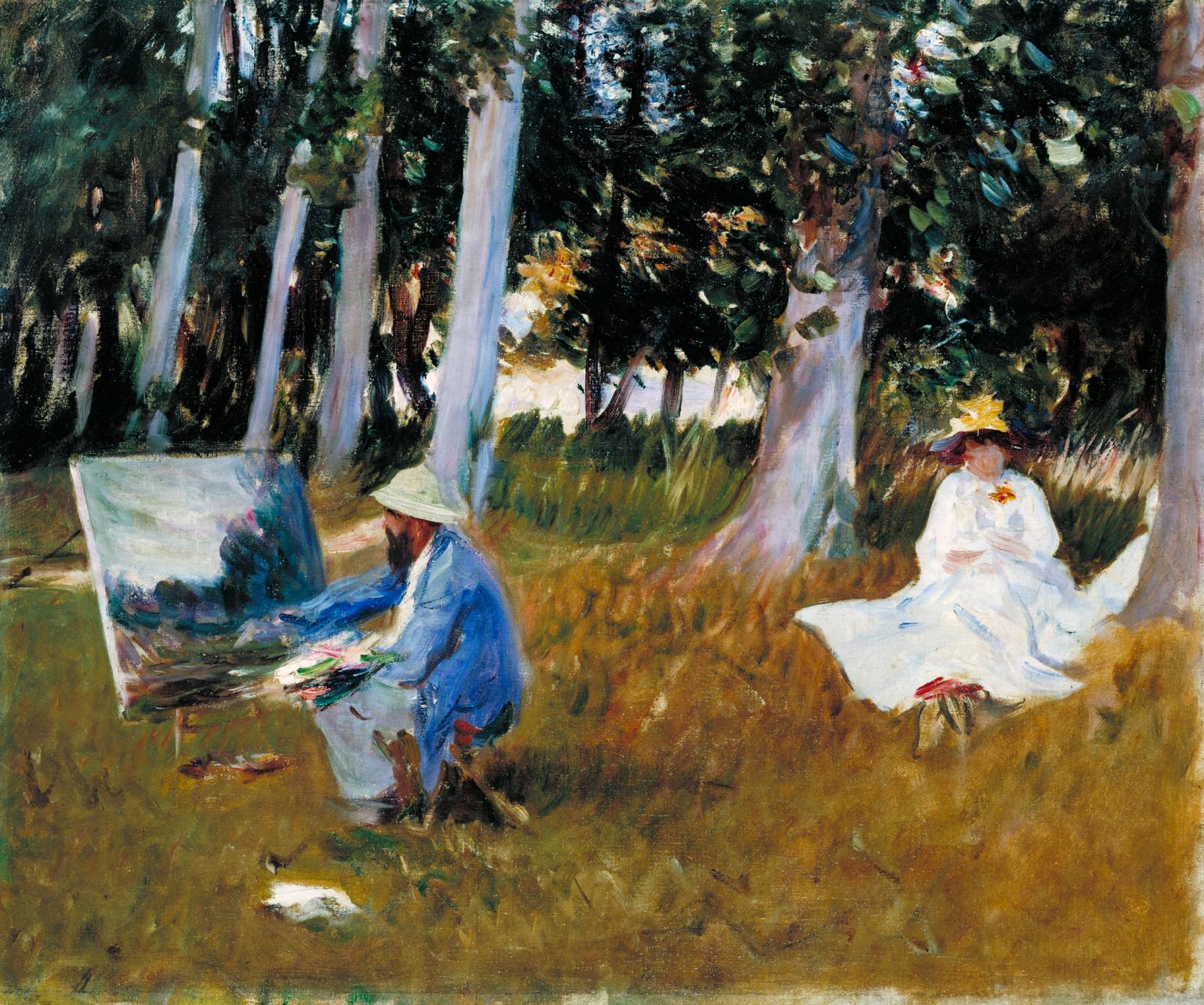
Even when he was ‘off duty’ as a portrait painter, Sargent (1856–1925) couldn’t resist painting people. An extremely sociable person who spent much of his career at the height of his profession, he had many friends who were painters, and more than anyone liked to paint those artists at work in the open air.
John Singer Sargent (1856–1925), Claude Monet Painting by the Edge of a Wood (c 1885), oil on canvas, 54 x 64.8 cm, The Tate Gallery (Presented by Miss Emily Sargent and Mrs Ormond through the Art Fund 1925)…
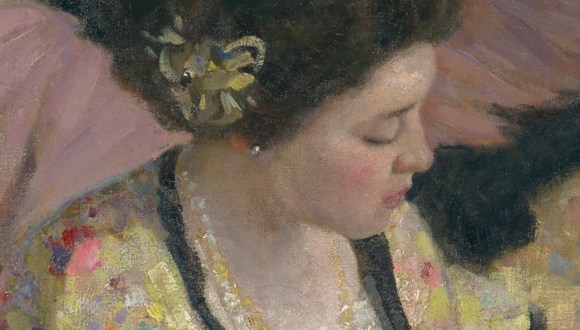
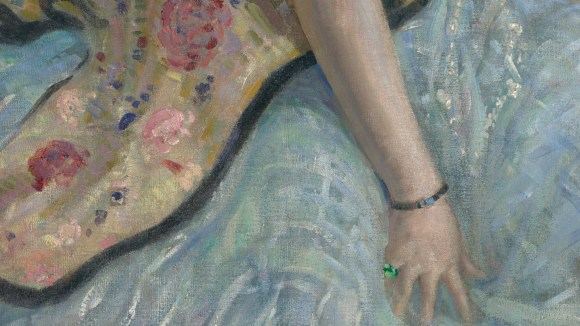
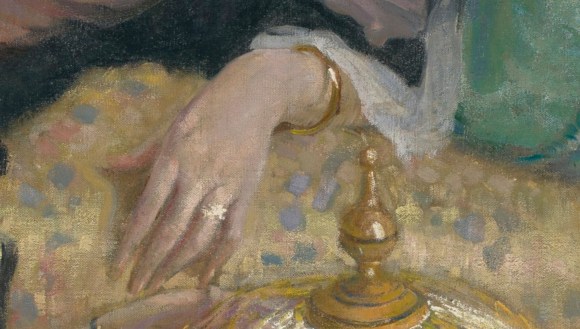
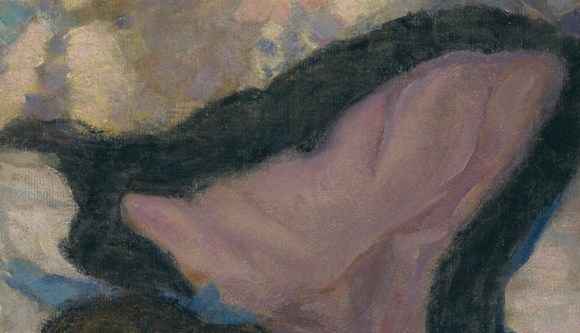
FREDERICK CARL FRIESEKE (1874-1939), The Parrots, signed ‘F.C. Frieseke-‘ (lower right), oil on canvas, 63 ½ x 51 in. (161.3 x 129.5 cm.), Painted circa 1910, Image Source: Christie’s
I have read for the second time now an article in the TLS by someone who goes by the name of Docx. This curious appellation reminds me somehow of XTrapnell, a strange character in Antony Powell’s “Dance to the Music of Time”. In this article, a book review, Docx pins down the theatrical absurdity of Johnson’s manipulation of Parliament and reiterates the latter’s motivation in his illegal prorogation of Parliament. He touches on the psychology of Boris, recently referred to as delusional by the Leader of the opposition and quotes D.W.Winnicott’s notion of the False Self to underline the splits in the man’s psyche. Johnson avoids guilt and the expectation is that paranoia features as his acting becomes increasingly absurd.
This acting resembles the theatre of the absurd which once was called Pataphysics. The loss of meaning which we see in the plays of Beckett and Ionesco is acted out on the floor of the House of Commons. The audience of Conservative MPs are complicit in the act and the opposition, though more in touch with compassion, find it difficult to bring the charade to a meaningful conclusion.
I have just finished reading the most remarkable life story of Richard Brinley Sheridan which is written by the outstanding Irish writer and political commentator, Fintan O’Toole. It is called A Traitor’s Kiss. There are many reasons for recommending this book so I shall confine myself to just three. Firstly, because it so closely illustrates this connection between politics and the theatre. Sheridan’s father, with whom he had a particularly interesting oedipal conflict, taught rhetoric so that Sheridan imbibed and used the power of heightened speech in his drama and in his political speeches. One only need consider the figure of Mrs Malaprop in The Rivals to grasp his power over language. Secondly, O’Toole’s explanation of the basic integrity of Sheridan’s love for Ireland, democracy and far sighted anti-imperialist radicalism is thoroughly illuminating with respect to Eighteenth Century political shenanigans. Thirdly, the biography is imbued with a real feeling for the duelling, the striving for status, the struggle against poverty, the wenching and resulting illegitimacies pursued in the chaotic Regency times. The reader comes away with some understanding of the complexities of both Whig factions and the decide lack of safety considerations within the candlelit Drury Lane theatre.
The article which underlined for me this connection between politics and the theatre was an edited version of a lecture given on behalf of the Voltaire Association in the Sheldonian Theatre in Oxford on March 17th. It was given by the Harvard Professor, Robert Darnton and entitled Despotism Centre Stage- Theatricality and violence in Paris on the eve of revolution. It appeared in the March 25th, 2022 copy of the Literary Supplement and so very fascinating that I have read it several times to appreciate just how the masses in the streets of Paris, the Parlement and the Chatelet Court all became embroiled in a political carnival in which magistrates acted out their remonstrances (a forcefully reproachful protests) with speeches and gestures so that Paris itself became a free for all vaudeville. with the aristocracy and the monarchy as the players caught in a tragedy. Here is a small example of the scenes on the streets leading up to the Revolution:-
For anyone who wishes to hear the lecture itself:-
The drama acted out in those few days goes some way towards understanding the current conflict in the Ukraine; Putin’s response to Gorbachev’s reforms over 30 years ago.
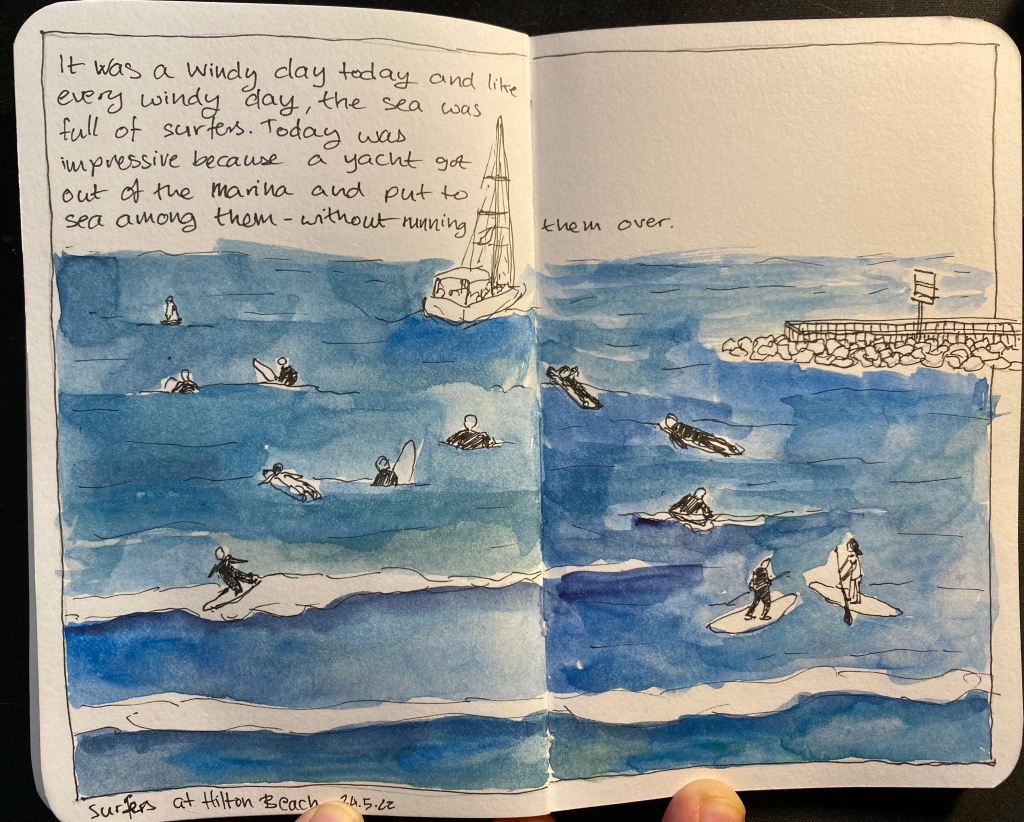
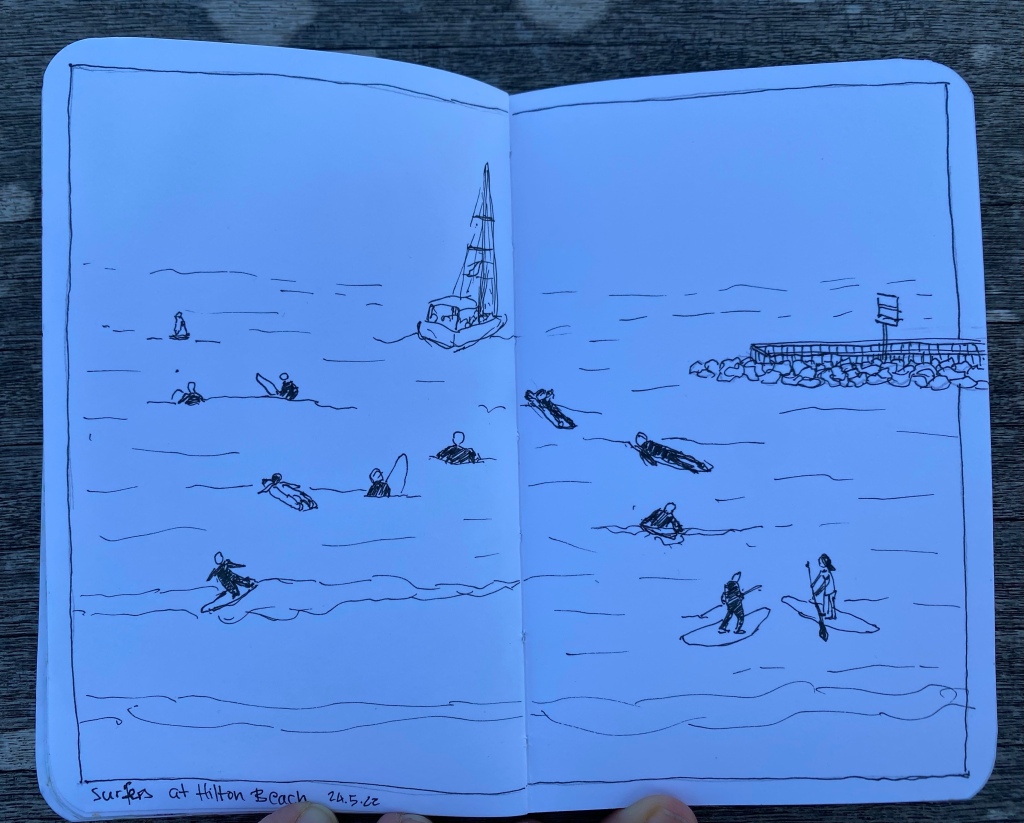
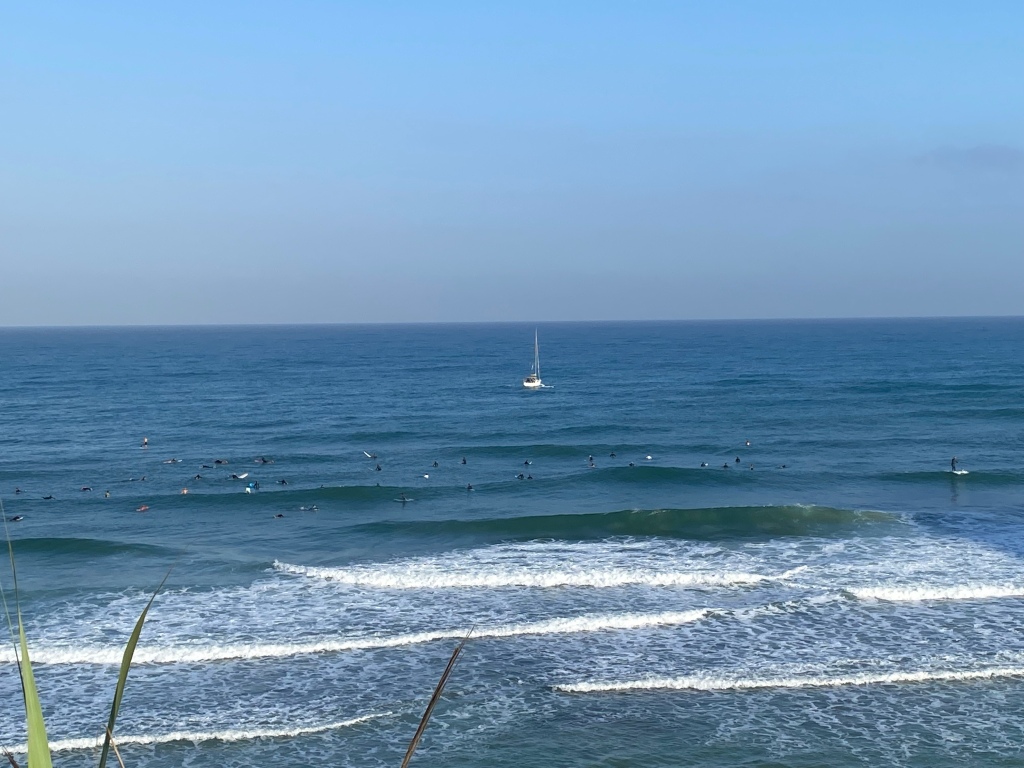
I went on a walk this morning, and as the wind was up, the surfers were out in full force. I decided to take a quick break and sketch them in my pocket Stillman & Birn Alpha sketchbook, and I used a Staedler 0.05 fineliner for a change. I used to love the 0.05 for the fine line it gave, but I haven’t used it for years, and while my neuropathy was bad I couldn’t have used it. As my neuropathy is improving with the weather, I decided to give the 0.05 a spin. This was sketched on location and painted later on.
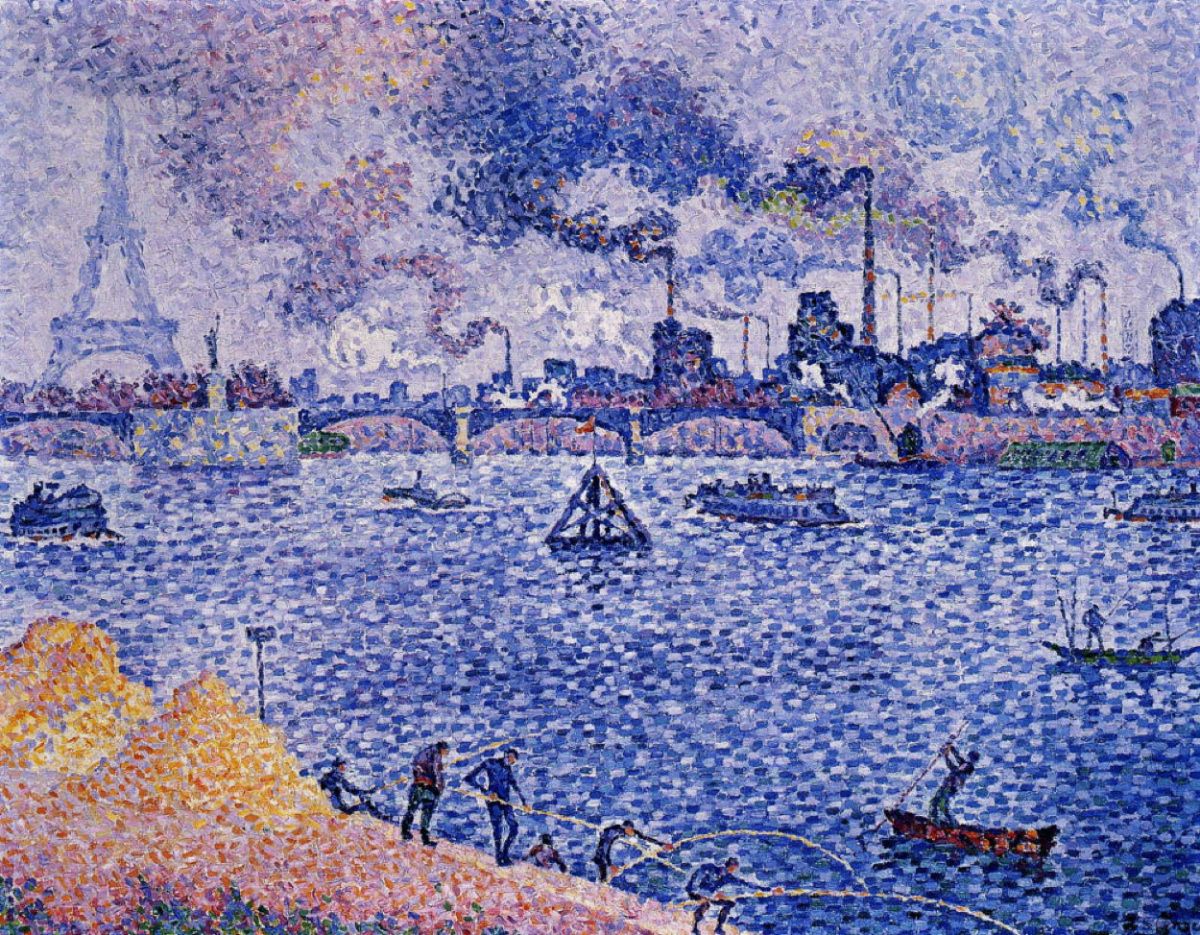
Just before the end of 1895, Siegfried Bing opened his gallery l’Art Nouveau in Paris. Its first exhibition included paintings by Cross, Van Rysselberghe and Paul Signac (1863-1935). In the New Year, Signac made his annual visit to Brussels, after which he and Van Rysselberghe toured the Netherlands together. In the Spring, it was time once again for the Salon des Indépendants, followed by the summer spent at Saint-Tropez, with the Van Rysselberghes as guests. Signac started preliminary work for The Demolisher (1897-9, see later) by way of a lithograph, which was published in an anarchist review.
During the winter of 1896-97, Signac continued to develop his etching and lithography with the aid of Théo van Rysselberghe. His itinerary in 1897 omitted the winter visit to Belgium, replacing it with a couple of weeks sketching and painting Mont-Saint-Michel, the famous tidal island on the Normandy coast. Before the annual Salon…
For those of you interested, here is the abstract:
Lacan states that the rim of the drive is involved in the initiation and preservation of the relationship between the body and language. In the study of autism, a major hypothesis states that the rim of the drive is foreclosed for the autistic subject. This foreclosure causes the drive circuit to short-circuit, thus jeopardizing the preservation of the relationship between the body and language. This paper puts forward the idea that autistic subjects supplement this privation through the construction of secondary rims that enable the “delimitation” of jouissance, giving rise to a…
Middlemarch isn’t an easy read. I stumbled over the speech of Casaubon until I realised that was partly the point. I partially glimpsed that the novel works on several levels and encapsulated the individual with the social. F.R.Leavis would applaude our efforts!!
“I have made up my mind to take Middlemarch as it comes, and shall be much obliged if the town will take me in the same way” – (the all too fallible) Dr Lydgate
I tried to read Middlemarch in January, but my poor addled brain refused to decipher the text or concentrate on the storyline. Have I spend so much time scrolling through Instagram that I can no longer focus on huge, dry Victorian tomes?
Finally, determined to see this through, I switched to the audio book. It was nearly 40 hours long and it took me three months to get through. My kids would wander into the kitchen (listening was usually an accompaniment to domestic tasks) and marvel: “are you STILL really listening to that?”.
It’d odd that I was quite so compelled to persist with Middlemarch, given my longstanding aversion to Eliot’s Silas Marner













 penwithlit