Categories
Uncategorized

Returning to a coffee shop

He doesn’t look too happy does he? But at least, although somewhat contorted in posture and attracting the attention of others, he has his coffee strong and black. He invokes a strong feeling of nostalgia for a seemingly lost world. In this case the mittel europa of the 1920s. He may even have a croissant at his elbow. I particularly like the evocation of the blue-violet-brown of the enclosing satin draping. This work is by the little known Croatian artist -Young Man in a Cafe, c.1923 by Marijan Trepše (1897 – l964). Born into the latter days of the Austro-Hungarian Empire, you may read more about this artist and how he travelled to Prague via Paris at https://en.wikipedia.org/wiki/Marijan_Trep%C5%A1e

It is unsurprising, looking at this painting, to read that this expressionist later became a significant set designer.

Image result for zagreb 1900

Using the magical utility of a reverse image search. There is a very useful such device a TinEye. I happened upon the following:-

Image result for Almada-Negreiros
Self-portrait in a group 1925 by Almada Negreiros

A larger version by this intriguing Portuguese artist may be found at https://www.dailyartmagazine.com/almada-negreiros-artworks/

Much as I miss the congenial and convivial ambience of just sitting around and chatting away with friends, these characters do not exactly look very warm types. Their faces are mask like and reminiscent of harlequins. We certainly have had enough of face-masks. It is interesting how the hands link across the table but touch perhaps slightly. There seems something of considerable interest off-frame to the right. Nevertheless, something of considerable artistic import is being discussed. The juxtaposition of the feet seems a little more cosy and relaxed. It is the combination of tones such as the contrast between the brown of one gent and the blue of the artist which I find attractive.

It is interesting to compare and contrast these two painters who might well have met up over un petit café noir in Montmartre in the 1920s. They would certainly have much to talk about if they could converse easily.

Categories
Uncategorized

Un petit café noir: A small black coffee

Missing out on my coffee in company at the moment!!

vronlacroix's avatar Between Two Tides.

Rose glow of ambience, turned faces recognise, smiles and greetings made. Hands reach out, cheek to cheek kisses, “Bonjour” and “Ça va” spoken. “Un petit café noir, si’l vous plait”. “A small black coffee please”.

A chair is offered, news exchanged, dialogue and dispute, advice and acrimony. Journal passed in turn, maybe a game of Belotte (cards). Another round of coffees, morning ritual slowly ends. “A demain matin”, “See you tomorrow morning”.

GEDSC DIGITAL CAMERA

In Le Monseg’ Jean Mi drinks his coffee

When Jean Louis joins him feeling lucky

He takes out his card

And scratches it hard

Youpy, won a euro on the lottery.

GEDSC DIGITAL CAMERA

View original post

Categories
Uncategorized

About #usktalks on YouTube

Very interesting and dynamic. Most of my recent sketches seem to be view from windows etc.etc.

Categories
Uncategorized

February 2021 TBR

Which is the Stefan Zweig? A great writer imho! Hope you had a great Birthday and you prompted my memories for Vermouth which I seem to remember was a favourite tipple of W.H.Auden!

imogen's avatarImogen is Reading and Watching the World: On Books, Film, Art & More

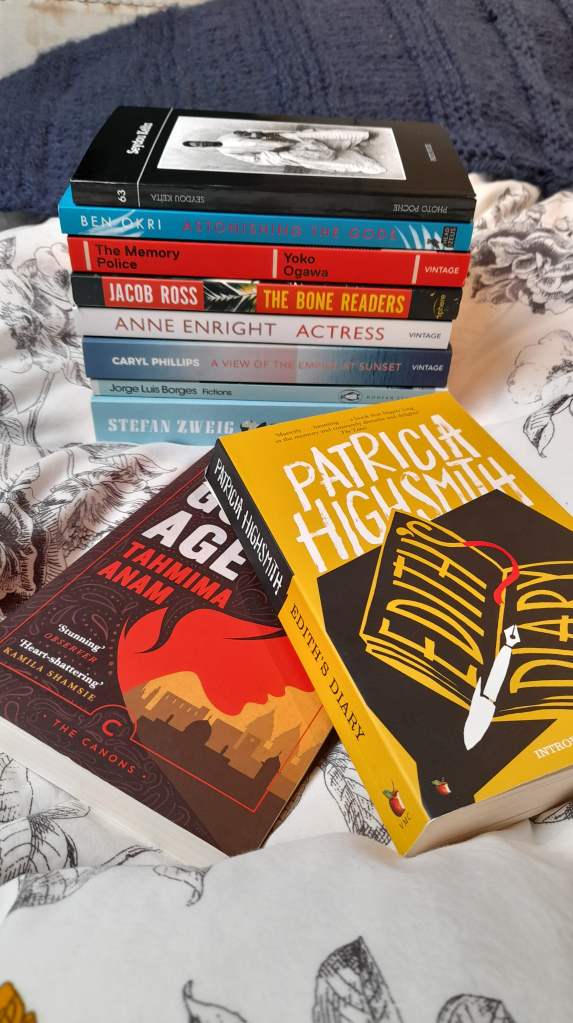
I had a birthday this week, so my TBR pile, officially already out of control, has become even more so.

Four books arrived from my parents, I unwrapped a book each from my son and my youngest daughter, and a pal dropped off a book, so my new pile looks like this (including the two books at the front that I was already reading):

I’m expecting to review the French TV series Call My Agent for the blog this month, plus Tahmima Anam’s first novel ‘A Golden Age’, set in Bangladesh, and Jacob Ross’s Caribbean crime novel ‘The Bone Readers’. I’ll also be looking at the work of Malian photographer Seydou Keita and reviewing a heart-warming romantic movie from Niger.

Meanwhile, in a little extra birthday news, my eldest daughter made me a fab frog cake, and I have some daffodils blooming in my little kitchen. Enjoying some simple…

View original post 31 more words

Categories
Uncategorized

COUNTING THE CHICKENS – SCENE FROM BERLIN OF THE WEIMAR REPUBLIC

Berlin Companion's avatarKREUZBERGED - BERLIN COMPANION

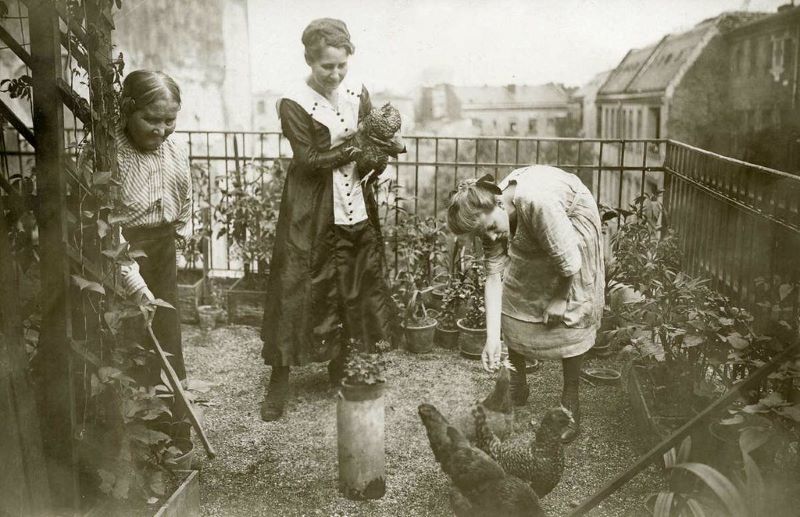
foto uit Spaarnestadarchief, tijdschrift Het leven kleiner Image from a Dutch magazine “Het Leven” (via Spaarnestadt Archive).
Here is a typical Berlin Balkonia, little man’s and woman’s green paradise, in its rooftop edition: as a small garden and a chicken-pen.
This model example of self-sufficiency was necessary to survive dire food-shortages of the First World War – shortages which were particularly acute in the capital and led to long periods of starvation not only among the poorest. Many Berlin children did not survive those and if they did, they often suffered their consequences – mentally and health-wise – for the rest of their lives.
This idyllic image is a witness to a very bitter truth: that unless you were able to provide your own food yourself, your family was in danger. And that in 99% of the cases this responsibility had to be shouldered by women – whose children were at great risk.

View original post

Categories
Uncategorized

Colonnades and Balconies

When I read Cyril Connolly’s collection “The Evening Colonnade” some considerable time ago, I was as impressed by the writings but also the cover, the title having been derived from a poem of Pope on Lady Mary Wortley Montagu:-

“What are the gay parterre, the chequer’d shade

The morning bower, the ev’ning colonnade

But soft recesses of uneasy minds

To sigh unheard in, to the passing winds?”

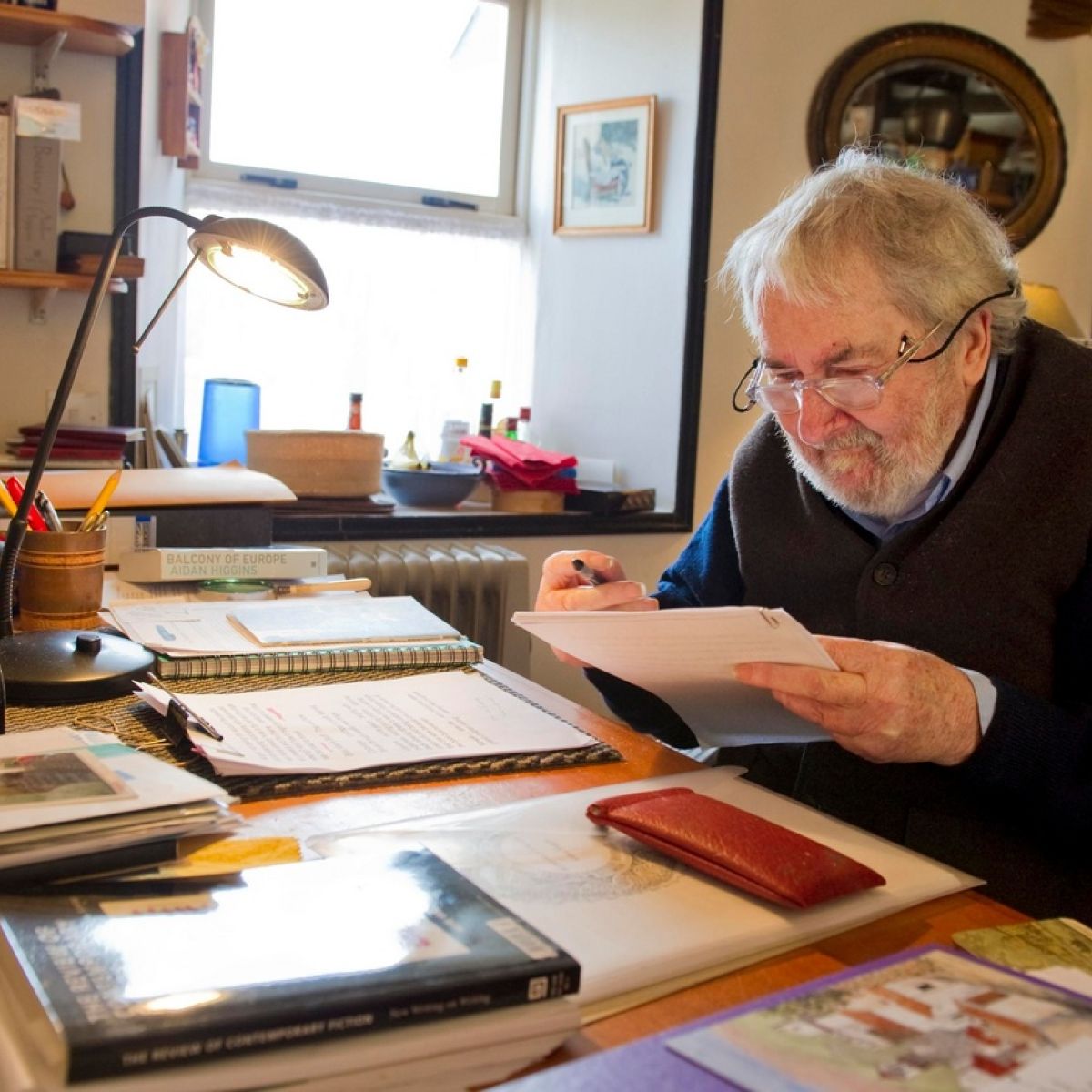
I imagine that many a his moment feel a sense of isolation and confinement that make an impact on our uneasy minds. So in a sense of splendid and slightly superior sense of looking down on events I came across a very interesting poem by Derek Mahon in his New Selected Poems (page 108) called Balcony of Europe. It is dedicated to Aidan and Alannah Higgins. So this is a poem about a novel with the title written to the author and his wife. There is a new imprint of the original book which is about Spain as discussed in the Irish Times, some two years ago. https://www.irishtimes.com/culture/books/life-as-story-told-1.633867

However, when I first read the poem the view I conjured up was of some Eastern European Country after the fall of some dictator. The first stanza reads:-

The dictator’s portrait dominated the airport

in those days, the first thing you noticed

after the cold police; his arms, a vivid

fistful of forked lightning, blazed

on the bus station and the road north-east

to the olive hills where the novelist lived.

The kitchen tap gave only a dry cough;

it was pitch black up there with the light off.

This short poem has underlying classical themes and moves from the darkness under the dictator to light and liberation. it is a metamorphosis in which not only does time move on but also seeing a youngster on the beach the poet from a bar filled with music invokes a somewhat scary but idyllic antiquity.

when she wasn’t just a girl but a creature

of myth, a Phoenician king’s abducted daughter

with a white bull between her knees,

borne out to a sun-white sea shaking with fear

and exhilaration, far from her shocked sisters,

gripping the horns, clutching the curly hair,

et tremulae sinuantur flamine vestes

(‘her floaty garments fluttering in the breeze’)

In praise of Aidan Higgins: six Irish writers and his publisher pay tribute
Aidan Higgins from The Irish Times

Tto mere is a very useful Open University site on classical links to modern poetry, and for the above poem see

http://www.open.ac.uk/arts/research/greekplays/poetry/derek-mahon/derek-mahon-poems-classical-referents/balcony-europe

Categories
Uncategorized

Sunday 10 January

Interesting and detailed posting here. Thank goodness for Channel 4 and The Guardian; huge split between BBC announcements and dire situation on the front line hospitals etc.

therapistinlockdown's avatarPolitics and mental health - the missing link?

Not for the first time, I’m reminded of the Lenin quote which this blog began with in April: ‘There are decades where nothing happens; and there are weeks where decades happen’. So much has occurred this week that recent events such as the 18th government U-turn (the third national lockdown announcement), and Trump’s shocking attack on American democracy dwarf other important development earlier in the week, such as the 17th U-turn, changing policy to not reopen schools after all. This, when some schools had already been made to admit pupils for one day, leading to anger and confusion for teachers, parents and children, not to mention a likely rise in cases.

Education Minister Gavin Williamson came in for much opprobrium, most eloquently and succinctly expressed by Rafael Behr in the Guardian. ‘Not much is constant about Britain’s handling of the pandemic, but one rule applies throughout: there is…

View original post 3,092 more words

Categories
Uncategorized

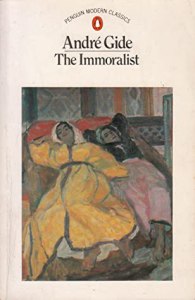
The Immoralist, by André Gide, translated by Dorothy Bussy

An important book I think raising issues which were of interest at the time. The question of attaining authenticity without hurting others is surely, however, still with us. Certain themes about boredom, ennui in French certainly occupied others at the time from Flaubert, Baudelaire and on to Camus. Thanks for posting!

Lisa Hill's avatarANZ LitLovers LitBlog

1001 Books begins its summary of The Immoralist like this:
A thought-provoking book that still has the power to challenge complacent attitudes and unfounded cultural assumptions, The Immoralist recounts a young Parisian man’s attempt to overcome social and sexual conformity. (1001 Books You Must Read Before You Die, ABC Books 2006, p.241)

The novella is prefaced by an attempt to explain that the ‘problem’ of the book existed before it was written.  It is then book-ended at the beginning by a pseudo-letter to the Prime Minister that asks what role in society a young man like the hero might have… and completed by that same friend’s awkward conclusion after the hero’s story has been told.  That story is narrated by Michel, who starts out as an austere young scholar and ends up as a defiant hedonist.

The translation, by Dorothy Bussy, uses the term ‘hero’ in the preface.  But it…

View original post 1,347 more words

Categories
Uncategorized

Born January 14~ Berthe Morisot

Loving Berthe Morisot at the moment. Elegant era; her innovative independent style deserves more recognition. Wonderful artistry.

Christy's avatarThe Misty Miss Christy

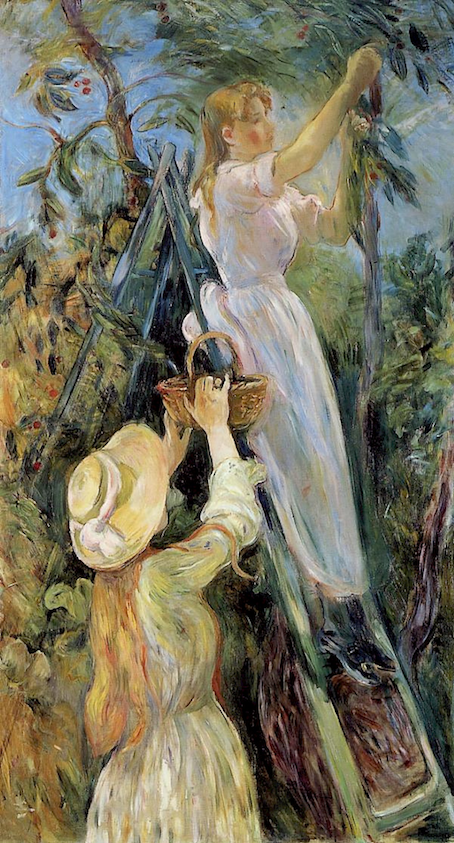
Berthe Marie Pauline Morisot (January 14, 1841-March 2, 1895) was a French Impressionist painter.
Biography on Wikipedia: https://en.wikipedia.org/wiki/Berthe_Morisot

Le Cerisier by Berthe Morisot
1891 / Oil on canvas / 60 3/5″x33″ / Musée Marmottan Monet, Paris, FR

Berthe Morisot on WikiArt: https://www.wikiart.org/en/berthe-morisot

Further reading:
https://nmwa.org/art/artists/berthe-morisot/
https://mymodernmet.com/berthe-morisot-biography/
https://blog.bridgemanimages.com/berthe-morisot-portrait-of-an-artist/

View original post

Categories
Uncategorized

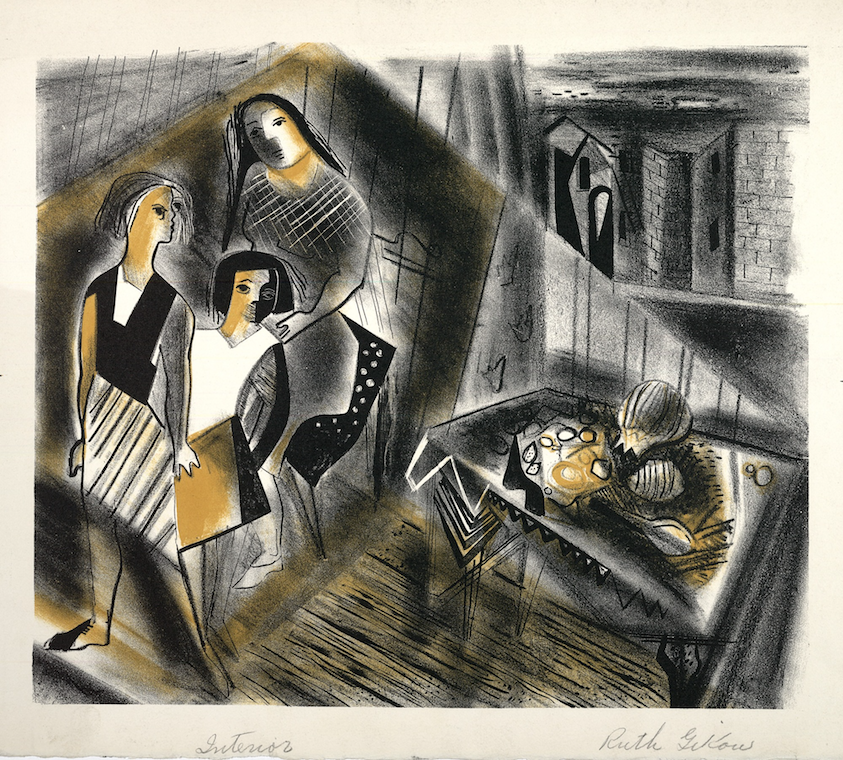
Born January 6~ Ruth Gikow