From the interesting poem from https://saetzeundschaetze.com/2017/04/02/lili-gruen-maedchenhimmel-2014/ by the Viennese poet Lili Grün.

Elegie to a cup Mocha (extract)
“My last boyfriend was a lawyer.
I am since that time against lawyers.
Lawyers are all false, heartless and wicked,
I can not hear this word, it makes me nervous.
Therefore I want for myself another admirer
For example, an elementary school teacher. “
Elegie bei einer Tasse Mokka (Auszug)
“Mein letzter Freund war ein Jurist.
Ich bin seit dieser Zeit gegen Juristen.
Juristen sind alle falsch, herzlos und bös,
Ich kann dieses Wort gar nicht hören, es macht mich nervös.
Darum wünsch` ich mir zum nächsten Verehrer
Beispielsweise einen Volksschullehrer.“
Now for something later in the day from a Latvian Romani Poet from http://poemsintranslation.blogspot.co.uk/2017/04/leksa-manush-to-wine-from-latvian-romani.html?utm_source=feedburner&utm_medium=email&utm_campaign=Feed:+PoemsFoundInTranslation+(Poems+Found+in+Translation)
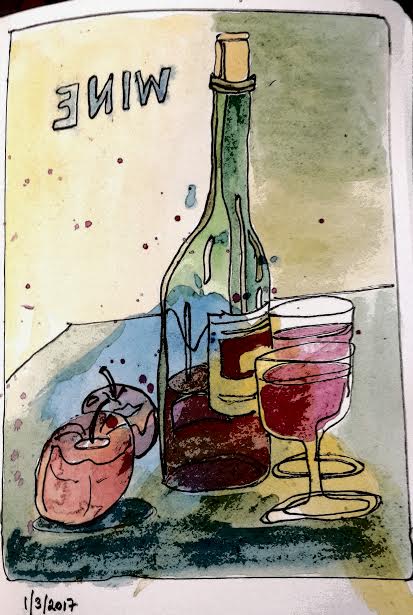
To Wine
Leksa Manush
Translated by A.Z. Foreman
A cup of wine does anything you will:
It gives a manly courage to shy men,
And to the weakest man a strength of will.
Wine knocks strong men out cold beyond their ken.
And wine bonds strangers unknown to each other.
They sit as friends, and each one drinks his fill.
With song, wine calls them up to dance together.
A good life, lived with wine, is better still.
Sons and daughters of the sun and earth!
The grape born of the vine has given birth
To wine, to make us happy and at home.
May vineyards never empty of the vine
And may the jug forever fill with wine
To the happiness and health of every Rom.
Or in Latvian-
| Моляке Лекса МанушТахтай моляса, со камэс, кэрэл: Ладжякунэскэ дэл о муршипэн, Конэскэ зор нанэ, зоралипэн, Кон зорало сас — мол лэс пэравэл. Пхандэл ёй кхэтанэ бипинджярдэн, Кхамэски и пхувьяки чяёри, Мэ на чючёл дракхэнги барори! |
Moljáke Leksa ManušTaxtaj moljása, so kames, kērel: Lādžakuneske del o muršipen, Koneske zor nane, zoralipen, Kon zoralo sas — mol les pēravel. Phandel joj khetane bipindžarden, Khameski i phuvjáki čhajōrí, Me na čučol drakhéngi bārōri! |
 penwithlit