More literary criticism ought to be like this. Ann Pasternak Slater understands the genre Waugh writes in and judges his work according to what it was trying to achieve. She pays meticulous attention to the structuring and patterning of his novels, demonstrating how his themes and arguments are built up through the careful choice of words and motifs. The section on Gilbert Pinfold is especially entertaining. Did you know Waugh mixed his chloral and phenobarbital with creme de menthe to make it taste better? There’s also a brilliant footnote about tricolon diminuens where Slater quotes Waugh being dismissive of Churchill’s ‘sham-Augustan prose’.
The best analysis is of Brideshead, where Slater makes a compelling defence of the famous scene when Charles ‘takes possession’ of Julia’s loins. The word possession is frequently repeated in the book, and an attentive reading shows that Waugh is as unimpressed with Charles’ chauvinism as we…
L’exposition « Léonard de Vinci » a attiré près de 1,1 millions de visiteurs, « un record absolu pour le musée du Louvre. » Le musée parisien a enregistré un record absolu de fréquentation pour cet événement qui s’est terminé le 24 février et réunissait quelque 150 œuvres du maître et de ses proches ou élèves.
I have previously posted about Red Vienna – the time in the 1930s when an attempt was made to establish a form of social security system in the elegant city and when worker’s flats were built to ease the conditions of poorer citizens. Notoriously, they were shelled by nationalists in the dark period leading up to the Anschluss when the Austria was annexed to Nazi Germany. https://jacobinmag.com/2017/02/red-vienna-austria-housing-urban-planning
Karl Polanyi wrote: “Vienna achieved one of the most spectacular cultural triumphs of Western history … an unexampled moral and intellectual rise in the condition of a highly developed industrial working class which, protected by the Vienna system, withstood the degrading effects of grave economic dislocation and achieved a level never reached before by the masses of the people in any industrial society.”
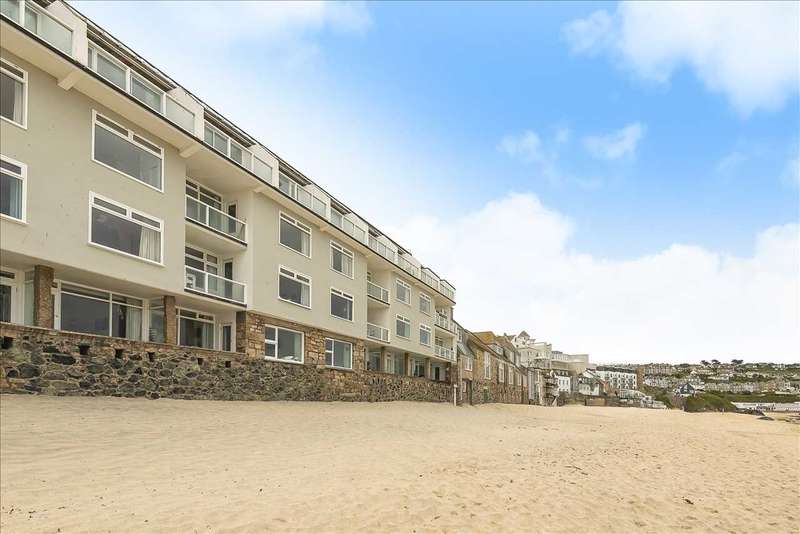
In my personal psychogeography towns and cities remind me of St Ives where I spent many years of my early life. After the gas works was deconstructed and I think, before the Tate arrived many of the fisherman’s lofts and artist studios next to Porthmeor Beach were replaced by the Barnaloft and then the Piazza flats. They seemed to stand out as a statement of the modernism with which the town had been associated. The interior courtyard of the latter had an interesting Hepworth sculpture. They were not by any means worker’s flats but were frequently occupied by what has since been called champagne socialists.
Before the flats were constructed there was the beach cafe occupied by the Val Baker family. This was a homely venue offering a superb view of the sea and marvellous sunsets over it to the West. Little was seen of Denys himself whom I assumed was upstairs with leonine head bent over the typewriter. Denys may be somewhat forgotten but represented the spirit of bohemian values to the locals. He had been active in promoting the celtic culture as a Welshman intrigued by Cornwall and St Ives in particular. He and his wife were committed to pacifism and had been active in the committee of 100. https://www.rainydaygallery.co.uk/denysvalbaker.html
The Foot family has been long associated with St Ives. Issac Foot, bibliophile and liberal politician as well as a staunch Methodist stood in the town for Parliament. That by-election was rather interesting in the troubled atmosphere of 1937 and very narrow indeed. Isaac Foot went on to become Mayor of Plymouth.
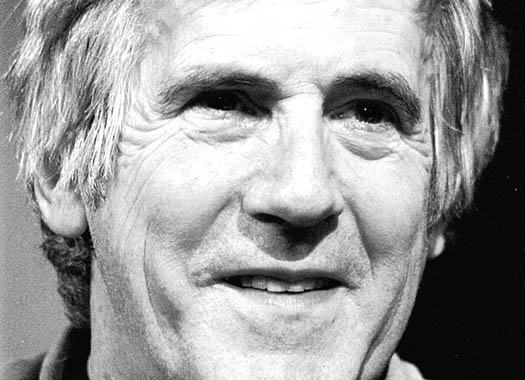
Paul Foot his grandson and active contributor to Private Eye was often to be seen around the town. He was an active and intelligent member of the Socialist Worker’s Party as well as a campaigning journalist with a splendid sense of humour. He died rather young and was a notable loss to radical progress in this country. His book on Red Shelley is a moving introduction to that committed poet. https://en.wikipedia.org/wiki/Paul_Foot_(journalist)
Also some years ago spontaneous outdoor performances were given by another group associated with the Foot family-The Footsbarn Theatre Group. These were jolly and musical. Particularly memorable was a performance in St Ives Guildhall of Around the World in Eighty Days with a scence at the Old Bore’s Club which was gloriously funny -a tour de force.
Which leaves us with the intriguing figure of Peter Shore. Any Freudian would not be surprised that given his name he might have been strongly attracted by the glorious beach at Porthmeor. I used to see him taking his morning beverage be-shorted high above the sands at Barnaloft. These buildings were designed by the St Ives Architect, Cyril Gilbert- a shy charming gentleman who later ran the superb Wills Street Gallery near the Police Station. I digress- Shore was a fascinating figure who it seems travelled from the intellectual left of the party to total opposition to what was then called the Common Market. He was for some time an active M.P. for Stepney. Apparently he acted in a sort of Alistair Campbell role in that he advised on media promotion. I well remember how he responded when interviewed later in his career by someone like Robin Day or Brian Walden. He would begin by rephrasing the question and pointing out the precise strength of the case to which he was opposed. It was about then to be devastated by the power of his retort. However, in the questioning this just didn’t happen due to the interviewer’s interruption. You were left with the impression of his honesty and rather sad disappointment. And yet now I feel a little more straight honesty in political matters is crucial- a Balm of Gilead.
Sometimes it is salutary to hear what the opposite case – this clip exudes English chauvinism which is deeply misguided.
The impact of Mexico’s revolution (1910-20), the last of the great peasant revolts and the first major revolution of the twentieth century was felt on much of the literary production of the country throughout the first two-thirds of the last century.
- ‘The Contemporary Spanish-American Novel: Bolaño and After’ Edited by Will H. Corral, Juan E De Castro and Nicholas Birns
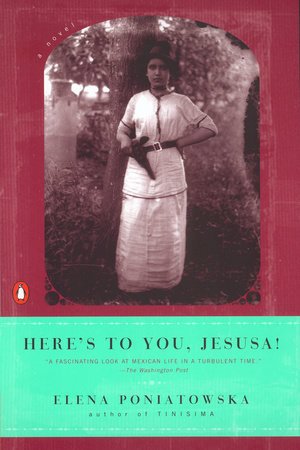
The Mexican Revolution, a field rich with characters, narrative, metaphors, and stories. Not only a political turning point but a pivot in Mexican literature’s history. Whilst there are numerous titles using the Revolution as a setting or indirectly referring to the fallout and subsequent events, I have chosen ten books, written by Mexican writers, that have been translated into English and although some may be obscure, they are available as I have only recently filled my shelves with a number of these titles.
Atelieransicht, Herbst, Asyl im Paradies, Gemälde von Susanne Haun (c) VG Bild-Kunst, Bonn 2020
“Dieses Gemälde von Susanne Haun ist sehr persönlich. Während die Künstlerin das Bild malte, hörte sie die Musik von der Band Silly speziel das Lied “Asyl im Paradies”. Die Sängerin Tamara Danz wusste zu der Zeit als sie das Lied sang schon, dass ihr Tod nahte. Den Text hörend weinte die Künstlerin beim Erstellen des Bildes. Die Tränen übertrugen sich sinnbildlich in die auf dem Bild laufende sepiafarbende Tusche.”
steht es in der Objektbeschreibung der Pariser Galerie Singulart (-> Klick)
Noch heute kann ich das Lied von Tamara Danz nicht hören, ohne zu weinen und zu trauern. Hier könnt ihr das Lied auf youtube hören (-> klick)
Vor kurzem habe ich in der Augsburger Allgemeine Zeitung einen Artikel über die Performance Künstlerin Marina Abramovic gelesen.
Interesting to see you tackling your old exam papers! When I was learning the algebra of conic sections and Fitzgerald was writing her her amazing novels!
I was trying to get into Eva Ibbotson’s “The Dragonfly Pool”. It is actually quite good and suitable for regression. Maybe because the current situation seems to require hyper-vigilance or some other reason, I am reading it somewhat slowly. I know she has written interestingly about Vienna but this is set in Dartington in the pre-war era. The school is not called Dartington- but Delderton Hall in the book is clearly there. Incidentally this reminds me of an Edward Crispin crime novel about a cathedral which was set in the same area but a slightly later era.
Robert Lowell has much been in the news currently- I believe his letters were recently reviewed in the LRB or perhaps the TLS. The poem of his that I liked most was “Sailing Home from Rapallo” –
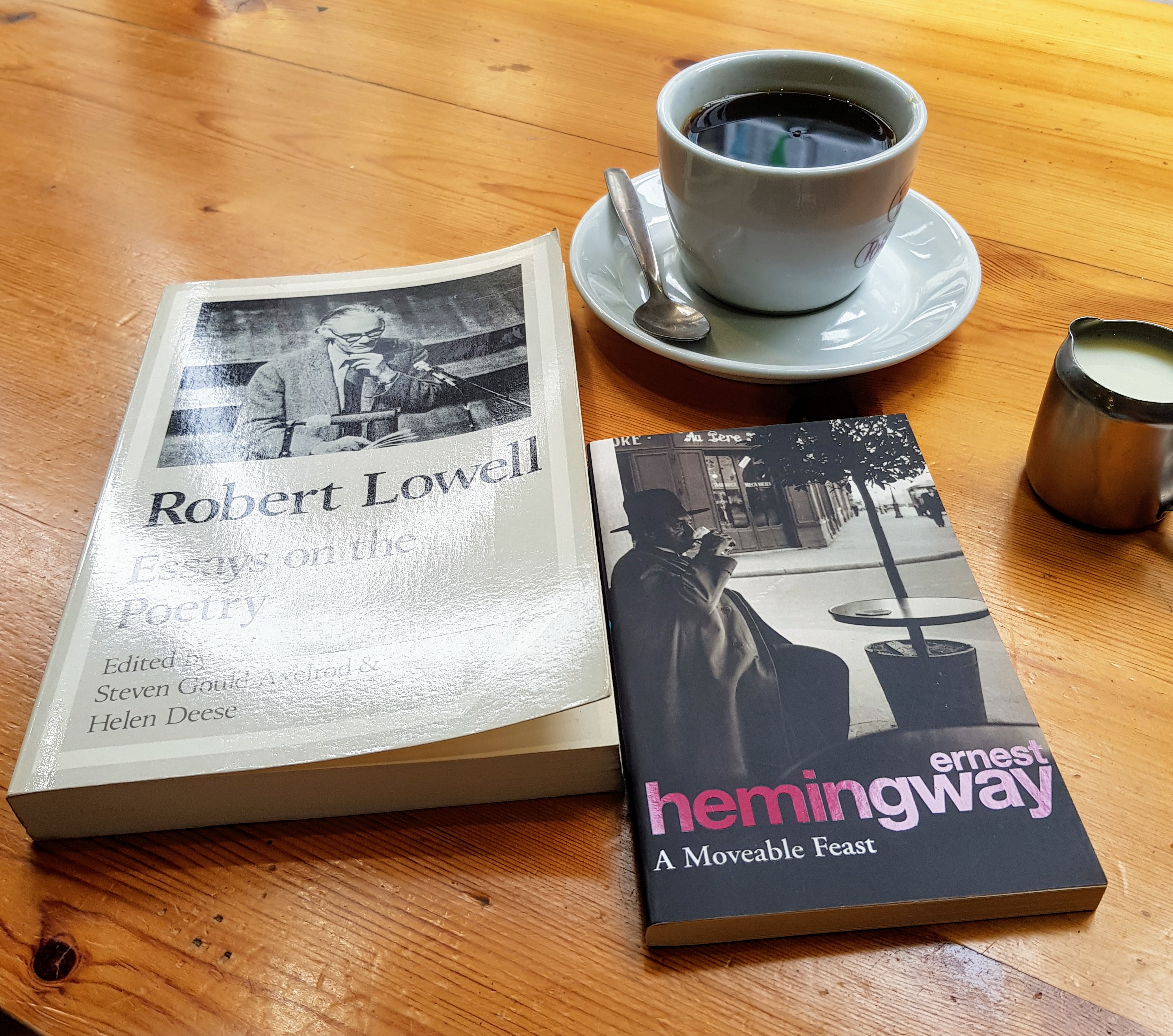
In any case my reading about his friendship with John Berryman was enough to tempt me to part with £2-99 for the collection of essays about Lowell from the charity shop. Thumbing through this volume in a nearby coffee shop I discovered an essay explaining how Lowell and Berryman were in a tradition stretching back to Baudelaire- poète maudit. Outsiders responding to the new criticism of a special few like Allen Tate and Randall Jarrel. They were living in the era of the Cold War and also living life at an extreme pace, devoted to literature and studying its classical roots.
The Hemingway begins with a kind of prose poem to a particularly downtrodden and louche venue seen through the approach of autumnal mists- the Cafe des Amateurs. It no longer exists. It develops into a surreal story which Hemingway sounds lyrical and slightly sozzled!







 penwithlit