The Chadwyck-Healey Liberation Collection (1944-46) consists mainly of books, but also contains a number of French and English songs and music scores, some with striking illustrations. They appear either in individual leaflets or in larger compilations, including the lyrics and in some cases notated music. On the 70th anniversary of VE Day (Victory in Europe), on 8 May 1945, we would like to shed light on two illustrated covers for songs of the Liberation that we displayed on the occasion of the 2019 Liberation lecture (Normandy ’44 by James Holland).
Le chant de la libération : le chant des partisans, paroles de Maurice Druon et Joseph Kessel, musique de Anna Marly. Paris : Éditions Raoul Breton, 1945. Liberation.a.104
Many of us, when we think of Memphis, Tennessee, connect it to Dr. Martin Luther King, Jr.—it is the town where he was assassinated, on April 4, 1968, as he stood on the balcony of the Lorraine Motel. King was in Memphis to support the Sanitation Workers’ strike. The Lorraine Motel is now a National Civil Rights Museum. It covers more than just King’s assassination—the story of civil rights from the early days of slavery.
Apart from holding an important position in American political history, Memphis has been a noteworthy centre of entertainment—having produced or nurtured several famous figures and movements. Justin Timberlake, Kathy Bates, Morgan Freeman, Shannon Doherty, B.B. King, Michael Oher, Memphis Minnie, Otis Redding, and Craig Brewer are just a few celebrities from the area.
Memphis has been the home of several famous “sounds.” One of the best-known places in the city is Beale Street, where…
Row after row with strict impunity
The headstones yield their names to the element,
The wind whirs without recollection;
In the riven troughs the splayed leaves
Pile up, of nature the casual sacrament
To the seasonal eternity of death;
Then driven by the fierce scrutiny
Of heaven to their election in the vast breath,
They sough the rumour of mortality.
Autumn is desolation in the plot
Of a thousand acres where these memories grow
From the inexhaustible bodies that are not
Dead, but feed the grass row after rich row.
Think of the autumns that have come and gone!—
Ambitious November with the humors of the year,
With a particular zeal for every slab,
Staining the uncomfortable angels that rot
On the slabs, a wing chipped here, an arm there:
The brute curiosity of an angel’s stare
Turns you, like them, to stone,
Transforms the heaving air
Till plunged to a heavier world below
You shift your sea-space blindly
Heaving, turning like the blind crab.
Dazed by the wind, only the wind
The leaves flying, plunge
You know who have waited by the wall
The twilight certainty of an animal,
Those midnight restitutions of the blood
You know—the immitigable pines, the smoky frieze
Of the sky, the sudden call: you know the rage,
The cold pool left by the mounting flood,
Of muted Zeno and Parmenides.
You who have waited for the angry resolution
Of those desires that should be yours tomorrow,
You know the unimportant shrift of death
And praise the vision
And praise the arrogant circumstance
Of those who fall
Rank upon rank, hurried beyond decision—
Here by the sagging gate, stopped by the wall.
Seeing, seeing only the leaves
Flying, plunge and expire
Turn your eyes to the immoderate past,
Turn to the inscrutable infantry rising
Demons out of the earth—they will not last.
Stonewall, Stonewall, and the sunken fields of hemp.
Shiloh, Antietam, Malvern Hill, Bull Run.
Lost in that orient of the thick-and-fast
You will curse the setting sun.
Cursing only the leaves crying
Like an old man in a storm
You hear the shout, the crazy hemlocks point
With troubled fingers to the silence which
Smothers you, a mummy, in time.
The hound bitch
Toothless and dying, in a musty cellar
Hears the wind only.
Now that the salt of their blood
Stiffens the saltier oblivion of the sea,
Seals the malignant purity of the flood,
What shall we who count our days and bow
Our heads with a commemorial woe
In the ribboned coats of grim felicity,
What shall we say of the bones, unclean,
Whose verdurous anonymity will grow?
The ragged arms, the ragged heads and eyes
Lost in these acres of the insane green?
The gray lean spiders come, they come and go;
In a tangle of willows without light
The singular screech-owl’s tight
Invisible lyric seeds the mind
With the furious murmur of their chivalry.
We shall say only the leaves
Flying, plunge and expire
We shall say only the leaves whispering
In the improbable mist of nightfall
That flies on multiple wing;
Night is the beginning and the end
And in between the ends of distraction
Waits mute speculation, the patient curse
That stones the eyes, or like the jaguar leaps
For his own image in a jungle pool, his victim.
What shall we say who have knowledge
Carried to the heart? Shall we take the act
To the grave? Shall we, more hopeful, set up the grave
In the house? The ravenous grave?
Leave now
The shut gate and the decomposing wall:
The gentle serpent, green in the mulberry bush,
Riots with his tongue through the hush—
Sentinel of the grave who counts us all!
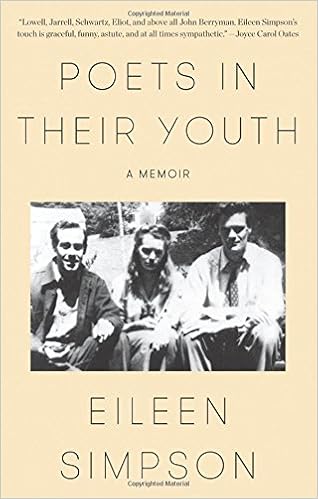
Someone told me once that the English spoken in the Southern States was close to the way in which Shakespeare language was spoken back in the day he wrote his plays. I am unsure of the evidence for that but Tate’s voice adds an extra dimension to the You Tube reading. I first came across reading about him in Eileen Simpson’s fascinating memoir “Poets in their Youth” where he appears as an elegant, imposing and somewhat reactionary figure. There is an interesting account of a recent biography of Tate’s life at https://www.lrb.co.uk/the-paper/v23/n10/ian-hamilton/i-intend-to-support-white-rule.
This poem has been preoccupying me for a day or two. Firstly, because I recall that some long time ago I used to watch a series on television called O Henry’s Playhouse and watching it again recently I came across this clip from 1957, It was not at all bad television and the following episode is tangentially related to the Confederacy.
However, in the present Covid-19 isolation, many of the lines seem to have extra meaning. During constitutional walks, I cannot help noticing that the side gate of the nearby cemetery has been left permanently open. The fact that it is about 250m from the local hospital is a reminder of the crisis and the daily toll which it is exacting. There is also the feeling that we might have done more to protect the NHS politically by a better defence against the reactionary clutches of the current admonistration. Not to mention policies of Brexiteers who have driven nurses and doctors out of the country.
What shall we say who have knowledge Carried to the heart? Shall we take the act To the grave? Shall we, more hopeful, set up the grave In the house? The ravenous grave?
Inzwischen ist es schon drei Jahre her, dass ich die Collagen für das Buch Landtiere im Eichhörnchenverlag zeichnete.
Zwei der Collagen arbeitete ich mit einem Foto von Ninas Pferd.
Beide Collagen von Ninas Pferd sind heute im Buch Landtiere zu finden. Das Buch Landtiere entstand unter dem Aspekt, den kleinsten Kindern die Tierwelt künsterlisch näher zu bringen. Drei Jahre später kann ich sagen, dass viele meiner “großen” Fans das Buch für sich gekauft haben.
Bevor ich näher auf das Pappbilderbuch eingehe, möchte ich euch empfehlen, den Film “Kunst, die glücklich macht: Das Pferd mit Pferd im Pferd” anzusehen.
Auf der Verlagsseite des Eichhörnchenverlags stehen folgende Erläuterungen zum Buch:
Das Bilderbuch LANDTIERE hat sich eines Klassikers unter den Bilderbuchthemen angenommen.
Die bewusst nicht retuschierten Fotografien in Verbindung mit leuchtenden Tuschezeichnungen vermitteln die natürliche Schönheit der Tiere und ihrer Umgebung.
Mit seinen starken Farben und klaren Formen richtet sich das Bilderbuch an…
Man and Wife, Robert Lowell, ‘blossoms on our magnolia ignite/the morning with their murderous five days’ white’. (Lowell was a master of the three-part-line)
What is there to say, Jack Gilbert, ‘there is this stubborn provincial singing in me’
The Muse, Anna Akhmatova, ‘When in the night I await her coming/my life seems stopped.’
Psalm 143, King James Version, ‘Quicken me, O Lord, for thy name’s sake: for thy righteousness’ sake bring my soul out of trouble.’ (Purcell, ‘Thy Word is a Lantern’)
Sonnet, Robert Hass, ‘Outside, white,/patient animals, and tangled vines, and rain.’
The Eve of St Agnes, John Keats, ‘A casement high and triple-arch’d there was,/ All garlanded with carven imag’ries/ Of fruits, and flowers, and bunches of knot-grass,/ And diamonded with panes of quaint device…’
The toome road, Seamus Heaney, ‘O charioteers, above your dormant guns,/It…
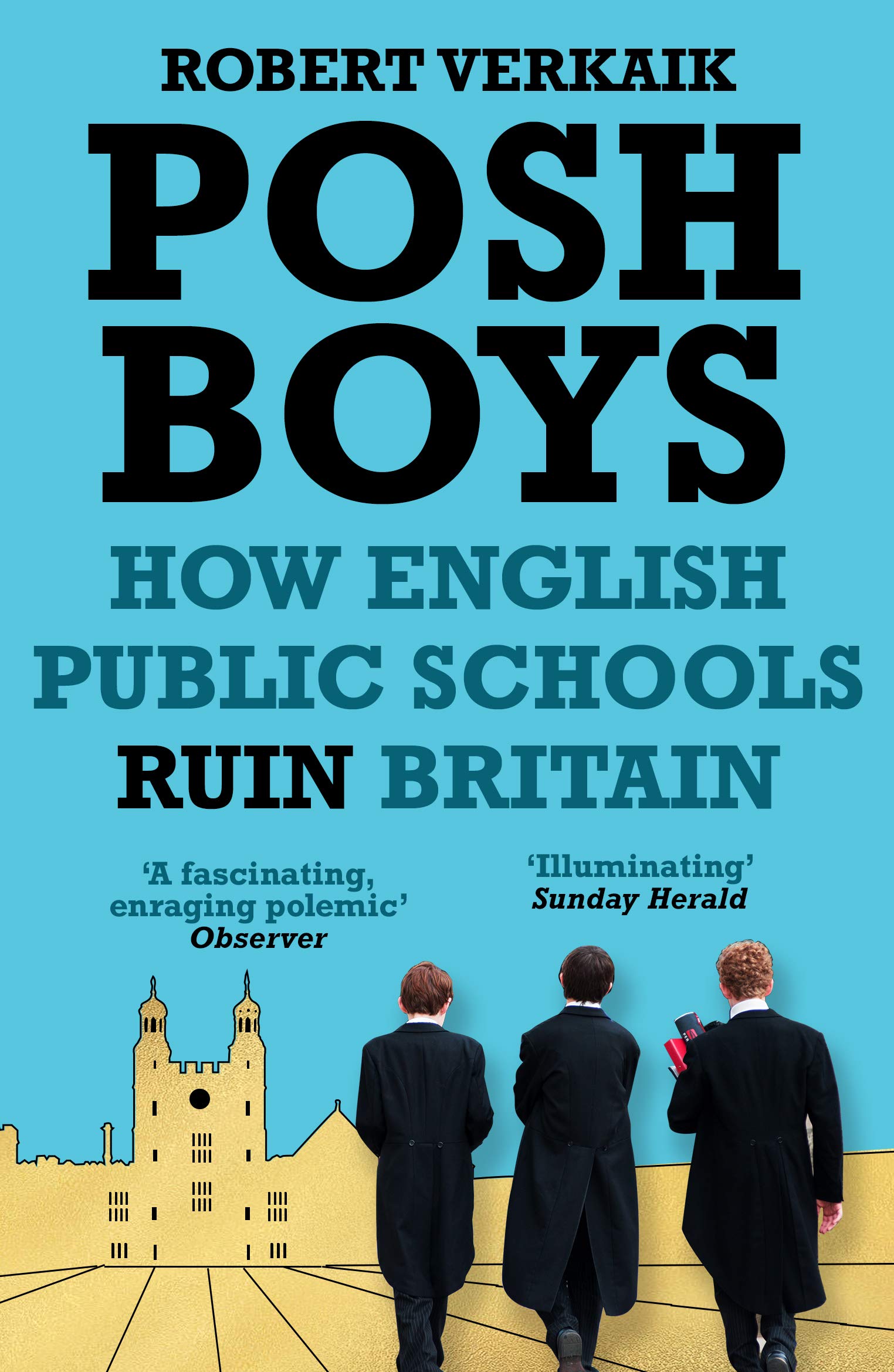
Arte is a brilliant source of great programmes on various topics, many of which are cultural or historical, in French and in German. Here is one in French in which it is possible to hear the absurd inequalities of the English class system spoken in French. This naturally has the effect of being somewhat amusing. The voyeuristic pleasure which the lower orders are supposed to derive from the spectacle is supposed to distract from other concerns- like properly funded public services.
The French and German subtitles are useful too, Here is another view of one aspect of English education by a great teacher, novelist and poet.
The Oxford Voice by D.H. Lawrence
When you hear it languishing
and hooing and cooing, and sidling through the front teeth,
the Oxford voice
or worse still
the would-be Oxford voice
you don’t even laugh any more, you can’t.
For every blooming bird is an Oxford cuckoo nowadays,
you can’t sit on a bus nor in the tube
but it breathes gently and languishingly in the back of
your neck.
And oh, so seductively superior, so seductively
self-effacingly
deprecatingly
superior.
We wouldn’t insist on it for a moment
but we are
we are
you admit we are
superior.
A more gentle and highly amusing perspective on a smaller scale perhaps is the radio series Plum House. It is a Comedy about the eccentric and inept staff at Plum House, former country home of minor 18th-century poet George Pudding. Written by Ben Cottam and Paul Mckenna. It may be found at https://www.bbc.co.uk/programmes/b07hk30x

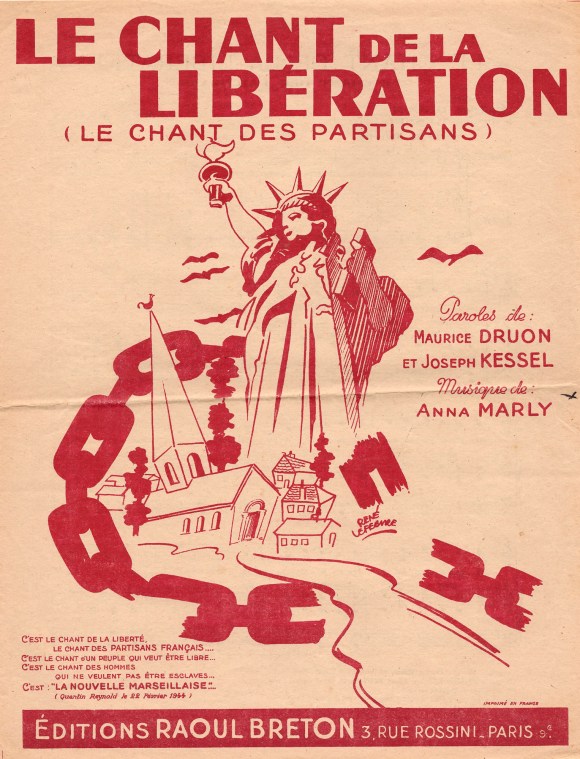 Le chant de la libération : le chant des partisans, paroles de Maurice Druon et Joseph Kessel, musique de Anna Marly. Paris : Éditions Raoul Breton, 1945. Liberation.a.104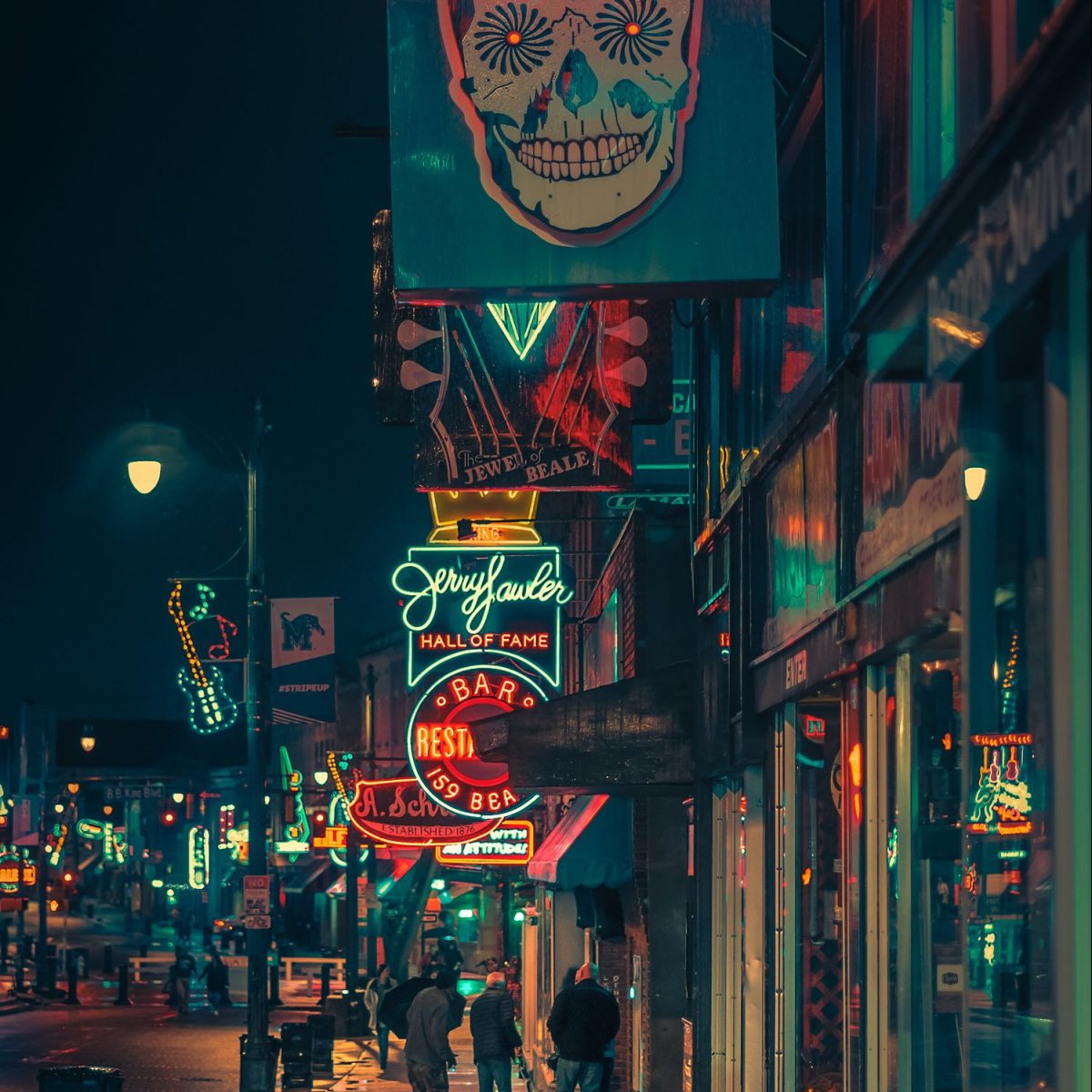



 penwithlit