Lovely sonnet!
Author: penwithlit
Freelance writer and radio presenter

Last August’s Slavonic blog post looked at new literature from Ukraine. A year on, particularly with the centenary this month of the foundation of the Vernadsky National Library of Ukraine, it feels appropriate to look at some of this summer’s most recent Ukrainian-language arrivals.
Links to iDiscover records: book on left — middle book — book on right
View original post 352 more words
Categories
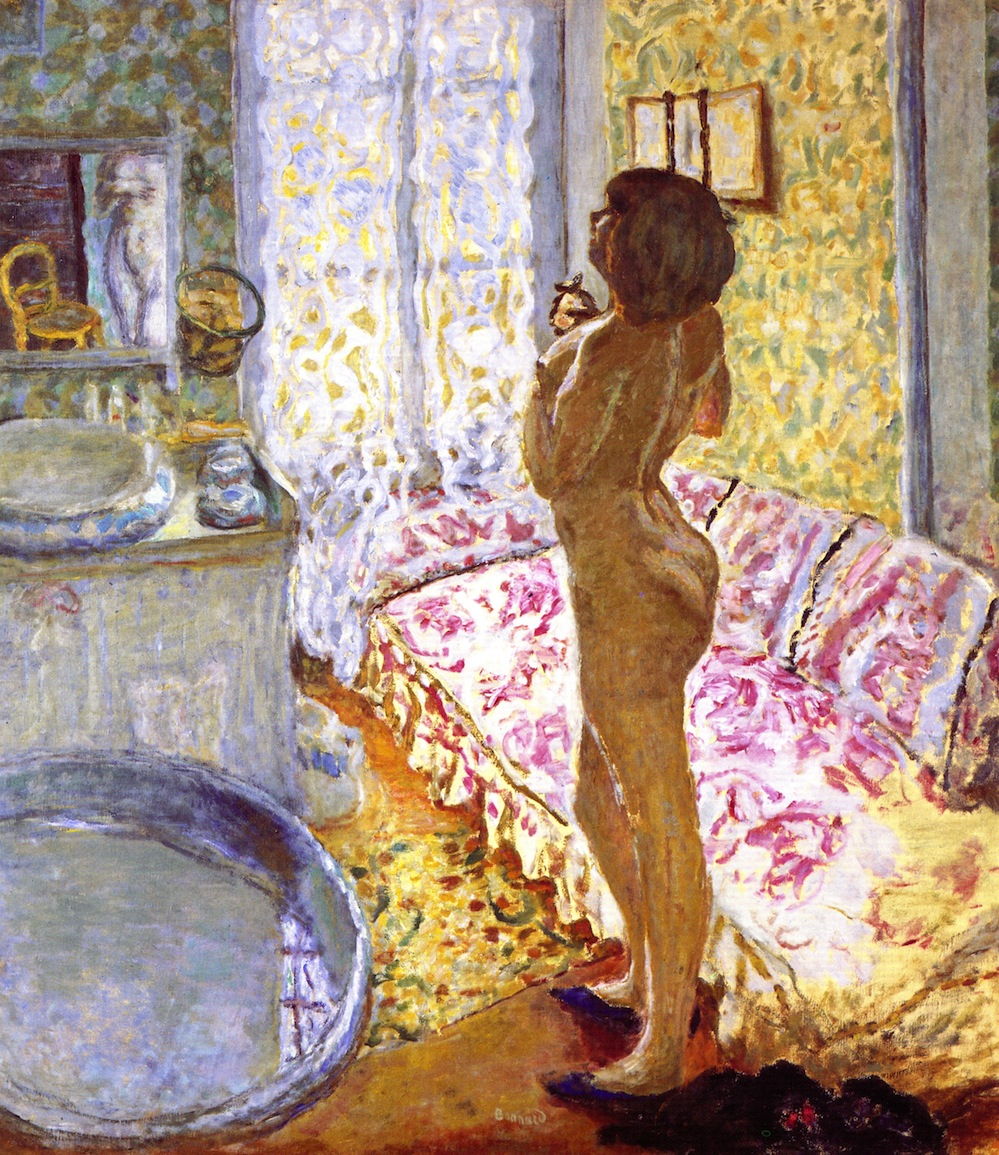
Pierre Bonnard: Marthe
Beautiful palatte-wonderful paintings-thanks indeed.

Pierre Bonnard (1867-1947) lived with Marthe Bonnard (1869-1942) for almost fifty years. Their relationship spanned the great majority of his professional career, and is reflected in a high proportion of his paintings and drawings. Here is a small selection which may help you trace their relationship as well as his artistic development. As this consists of over thirty paintings (for which I make no apology), I will keep my comments to a minimum.
Pierre and Marthe met in Montmartre, Paris in 1893. Her real name was Maria Boursin, but she lived under the name of Marthe de Méligny. She claimed to be sixteen when they met, but if the year of her birth is correct, she would have been ten years older.
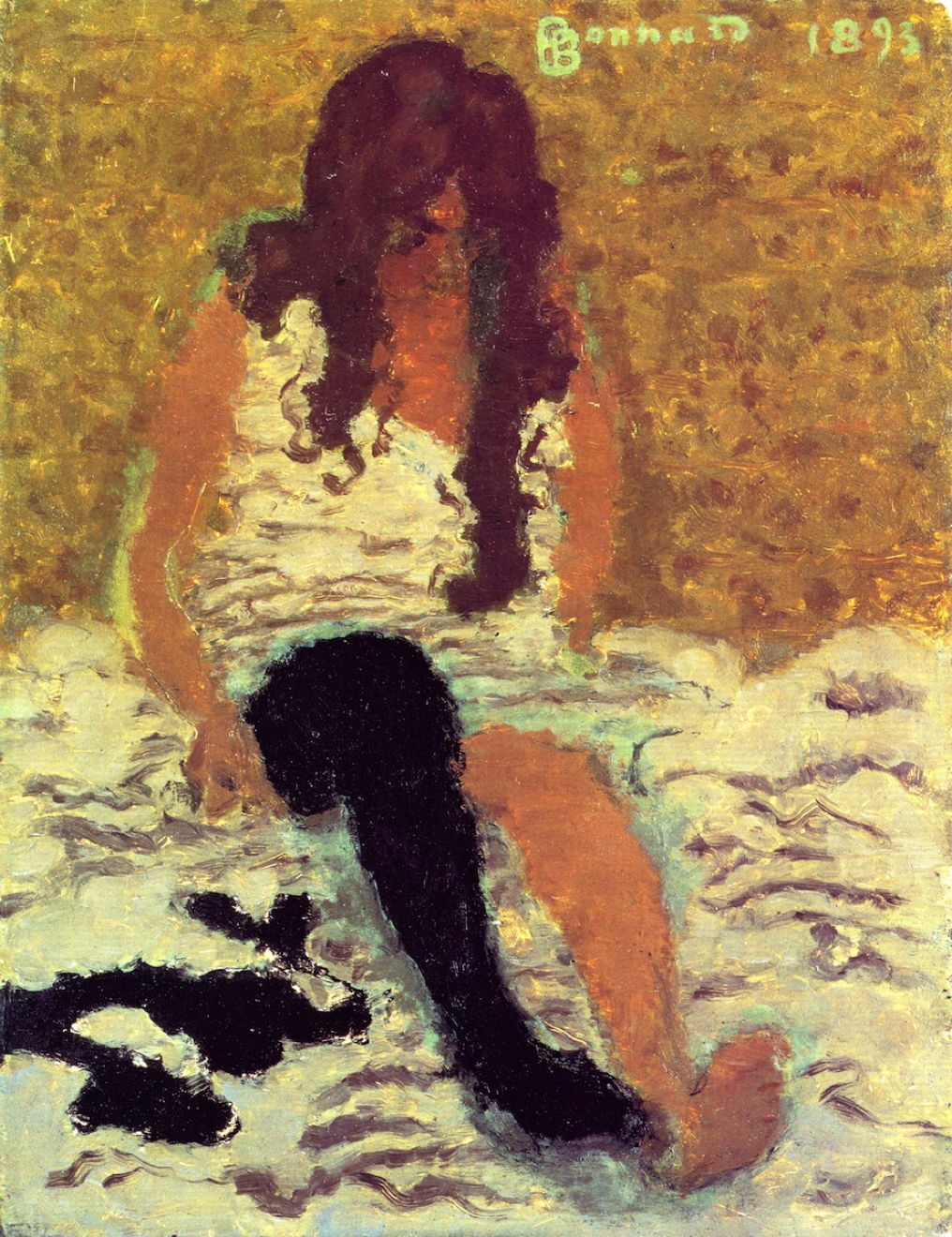 Pierre Bonnard (1867-1947), Woman Pulling on her Stockings (1893), oil on board, 35.2 x 27 cm, Private collection. The Athenaeum.
Woman Pulling on her Stockings (1893), probably one…
View original post 1,305 more words


MARY SHELLEY raconte l’histoire de Mary Wollstonecraft Godwin (Elle Fanning) – auteure de l’un des romans gothiques les plus célèbres au monde, Frankenstein – et de sa relation enflammée avec le célèbre poète romantique Percy Bysshe Shelley (Douglas Booth). des étrangers limités par une société polie mais liés par une chimie naturelle et des idées progressistes qui dépassent les limites de leur âge et de leur époque. Mary et Percy déclarent leur amour l’un pour l’autre et beaucoup d’horreur pour sa famille. Ils se sont enfuis ensemble, rejoints par la demi-soeur de Mary, Claire (Bel Powley). Au milieu de tensions croissantes pendant leur séjour chez Lord Byron (Tom Sturridge ) Maison du lac Léman, l’idée de Frankenstein est conçue quand un défi est lancé à tous les invités de maison pour qu’ils écrivent une histoire de fantôme. Un personnage incroyable est créé, qui occupera une place importante dans la culture…
View original post 4,883 more words

Here is my Mother’s Aunt Vera
as though for a test on the screen
like a Hollywood Star, pure smile;
happy, serene, genteel like a heroine-
war survivor, positively engaged
with the future a dream.
Turning the page where a collection
of ladies, mostly hatted with one man
wait on the wharf for Crimson Tours to bring the charabanc.
One lady, in control, in the centre
banters with the photographer, another
has her back turned as the shutter clicks.

The next, a street party, circa 1960
or before, all festive with my mother
looking happy serving a group of pensioners
who look like they are reliving a Sunday School band-tea.
Everyone wears hats and there is a lovely bunch of flowers,
one lady glowers, a man has his customary
goofy smile and there are delivered milk in bottles
unlikely to be stolen on the step behind.

By 1970 the future seems to be arriving more suddenly,
when standing with camera on the end of the quay,
and almost unbelievably four or five
ducks carry a squadron of marines
into the harbour. What have we done
to be thus invaded? History approaches
us on a stormy day and I bury my chin
into my duffel coat.


Categories
Enya

Mount Enya definitely sounds less threatening!!

Enya is the anglicized form of Eithne, an Irish female name meaning “kernel, grain” (though it’s also been anglicized as Edna and Etna). However, some sources cite it as a feminine form of Aidan,which comes from Old Irish áed with the diminutive suffix -an meaning “little fire” or “little fiery one” although it seems to be a stretch; and it could be related to Old Irish aiten meaning “furze, gorse”. In Irish mythology, Eithne is the daughter of the Fomorian leader Balor and the mother of Lugh, who becomes an important god in Irish mythology.
Origin: Irish
 Variants:
- Eithne (Irish, Scottish)
- Aithne (Irish)
- Ethna (Irish)
- Ethne (Irish)
- Etna (Irish)
- Ethniu (Old Irish)
This month, we were delighted to welcome our new French specialist, Dr Irène Fabry-Tehranchi. Irène will focus on current Francophone collection development but will also work with French special collections, chief among them the Chadwyck-Healey Liberation Collection. This post looks at the latest Liberation addition: a book signed by Tristan Tzara and Henri Matisse. Le signe de vie, which featured in Sir Charles Chadwyck Healey’s talk ‘The power of the image in liberated France, 1944-46’ earlier this year, was printed in Paris in 1946 and contains poems by Tzara with illustrations by Matisse.
Matisse’s signature; Tzara’s signature below the tirage description; dedication to Rita Kernn-Larsen by Tzara
View original post 513 more words
Turning the key into the archive reveals the four or five rows of “London Illustrated News” as the familiar damp smell assaults the nasal passages. The volumes are bandaged with a loop that reminds me of the tie on school lab aprons years ago. Slipping the loop off the 1950 volume, I try to give the cover support with a terry roll that the bookbinders have in piles on the large desk. The early pages are filled with diagrams and details of the unfortunate sinking of the submarine H.M.S. Truculent. As described in Wikipedia, “The British submarine Truculent collided with the Swedish oil tanker Divina in the Thames Estuary and sank, killing 64 people. Only 15 crewmen were able to escape. All of them had been in the conning tower of the sub, which had been cruising on the surface of the Thames.”
On January 11th the Prime Minister announced forthcoming elections. the next month and there is a fine page depicting the various poses of Herbert Morrison. One suspects that the low tech electioneering was compensated by the quality of oratory if this series of photographs is anything by which to judge.. Morrison was an impressive figure- on the right of the party but not perhaps in the manner we have seen in recent years. He is possibly now most remembered for the so called Morrison Shelter. http://spartacus-educational.com/2WWmorrisonshelter.htm
After the photos of Mussolini and Hitler in absurd poses and repeated images such were popular in the Post and other magazines, I wonder if there was not a hinted subtext here- especially as an election was approaching. Certainly, Morrison was an important figure being both deputy leader and soon to become Foreign Secretary- not a happy time in his career. His grandson, of course, is Peter Mandelson.
Some articles portray the sexism current at the time. BOAC air stewards being taught by what looks like patronising men, how to walk down a rocking board with a tray. An article on Japan praises the docile and considerate womenfolk who are prepared to give neck massages to male members of the family.
1950 opens with the trial of Klaus Fuchs, the atom spy. Christopher Fry’s plays are popular in London. India having been given independence so rapidly is left with conflicts between Pakistan and India particularly over Kashmir. Grand murals of Stalin appear above the grand Moscow underground- the great transport leader comrade! Then Nationalists Chinese are inflamed by the recognition of Communist mainland China by the British.
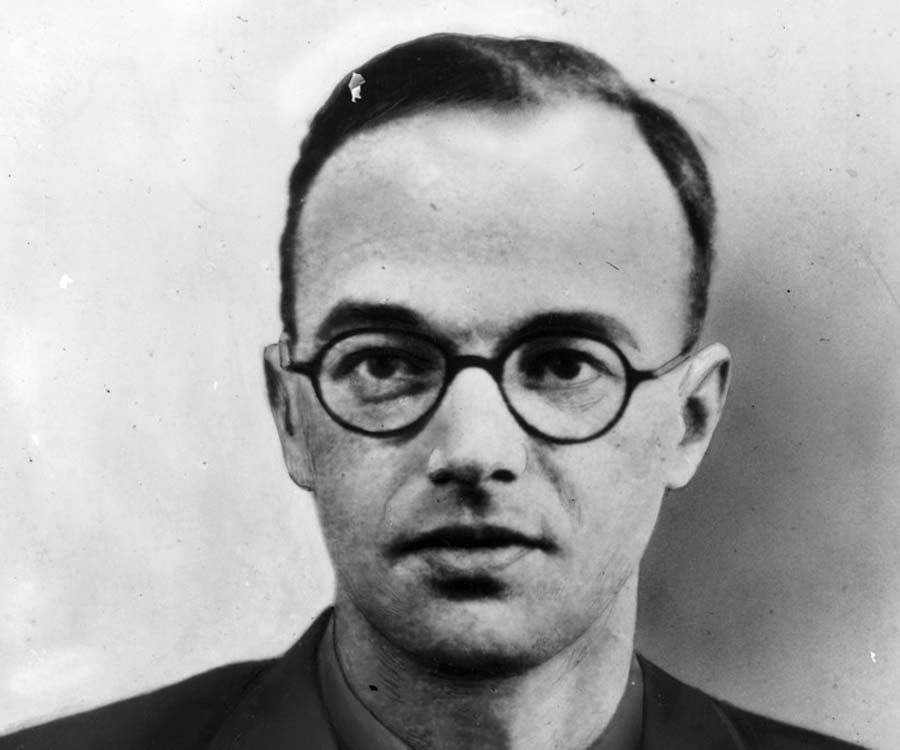
Klaus Fuchs who had been at Los Alamos voluntarily confesses to having been a spy.
The graphic artist most in evidence at this stage was Bryan de Grineau who had been a war artist and made sketches at this time of the war wounded being rehabilitated at University ollege Hospital, St Pancras. More information may be found at http://www.grandprixhistory.org/grineau.htm


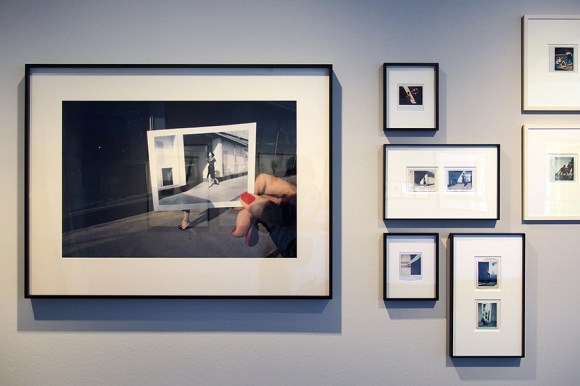


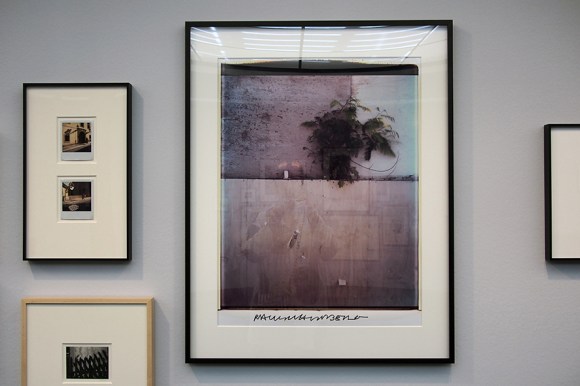


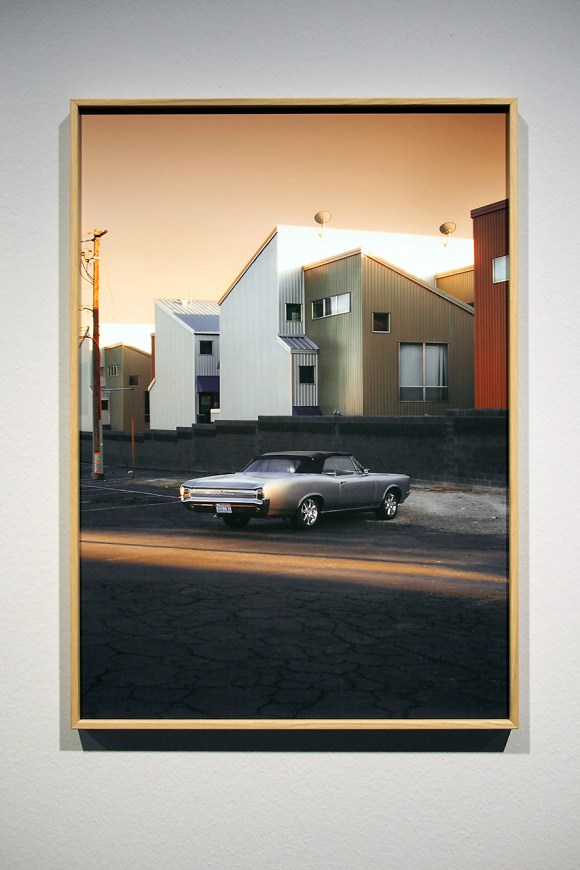


Here some impressions from my stroll through the fantastic C/O Berlin Foundation and The Polaroid Project exhibition and then some snaps from the C/O Talent Award: Stefanie Moshammer.

I think this is an interesting introduction to psychoanalytical thinking too. Just finished “Unforbidden Pleasures” by Adam Philips in a similar vein.

When should you read this book? On a peaceful Sunday morning, while you contemplate your life’s meaning.
The interpretation of illness
I should start this review by saying that I am fascinated by psychoanalysis and the idea that you can talk yourself out of some ailments of the mind.
It’s a bonkers idea that the mind can both make itself unwell and heal itself through the power of thought.
Some people believe that psychoanalysis has meaningful applications in real life and others don’t, but you can’t question the effect the idea of being able to interpret your thoughts and dreams into messages from your subconscious is powerful. And that it’s influenced loads of brilliant literature.
In ‘The Examined Life’, psychoanalyst Stephen Grosz takes us into his therapy room as he speaks to several of his real-life patients, explaining how he uses psychoanalysis to help them bring themselves out of the…
View original post 412 more words
 penwithlit