Categories
Art and Photographic History Art Exhibition Reviews Uncategorized

Moody girls with shiny noses……..and…..Jazz!

“Inesvigo” (Inconsequential) on YouTube is a constant source of pleasure. The combination of paintings with a musical backing gives a short journey into the imagination and concerns of each artist that he chooses to portray. For instance, I have just discovered the bohemian, metropolitan world of Milt Kobayashi.
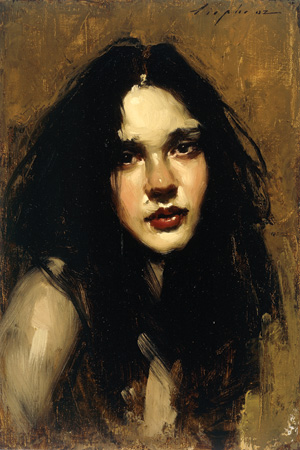
Image result for Milt Kobayashi.

These paintings by Kobayashi give a glimpse of what I assume to be New York and perhaps Hawaii. They are interesting as a documentation of a historical and social context which is as vivid of the era as, for instance, Christian Schad is of the Weimar Period. The execution is quite different however and very expressive and not dissimilar from the Plymouth painter, Robert Lenkiewicz. https://en.wikipedia.org/wiki/Robert_Lenkiewicz 

It is clear that his work is much influenced by the famous French Painters like Degas, Lautrec and Manet. Perhaps indeed some were painted in Paris as the bottles and tablecloths seem to intimate. Often the subjects, treated with moving sympathy seem filled with melancholy -that the Germans call “Wehmutig”.

This is what Inesvigo writes:-“He was born in New York but soon moved to Oahu, Hawaii with his family. At age eight he went to Los Angeles. After graduating from the University of California in 1970, he began working as an illustrator. In 1977 he returned to New York and when he visited the Metropolitan Museum his artistic career changed when he saw a portrait of Velazquez’s Juan de Pareja. He began to study the work of Whistler, Chase and Sargent, who had Velazquez’s influence. Then he studied Japanese painting of the sixteenth and seventeenth centuries. The perspective of Japanese art provided harmony in color, composition and drawing – Kobayashi has received two important awards: the National Academy of Design’s Ranger Purchased Award and the Allied Arts Silver Medal. His work has appeared in the magazines Forbes, Fortune and Reader’s Digest”

Categories
Uncategorized

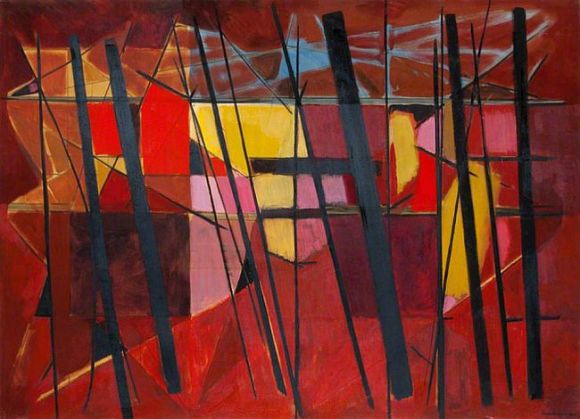
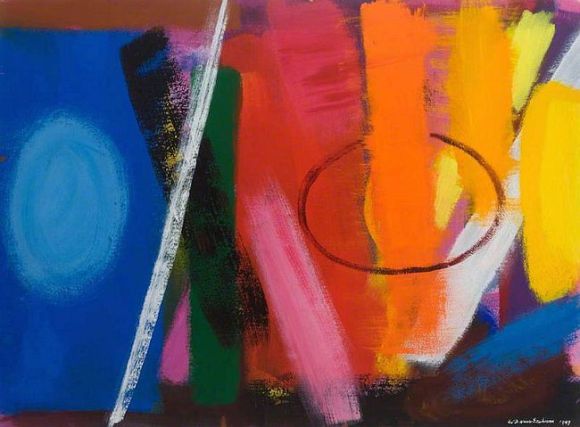
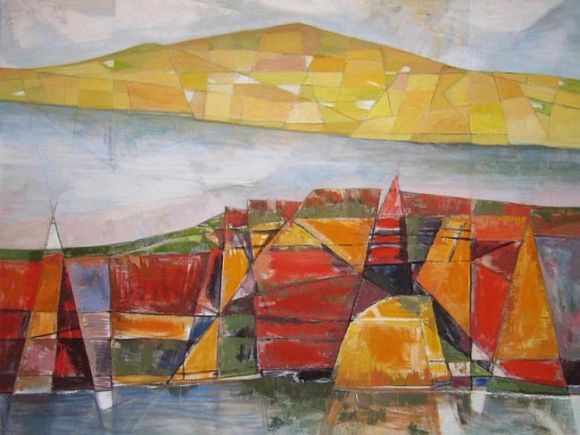
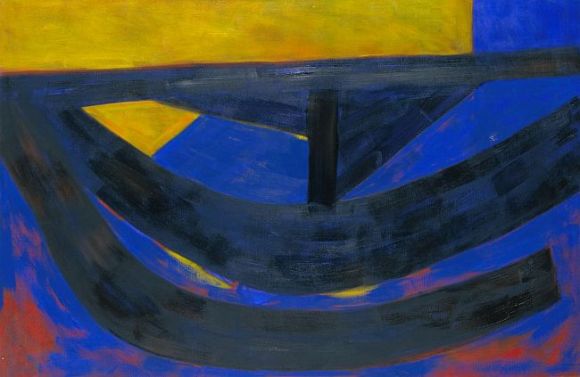
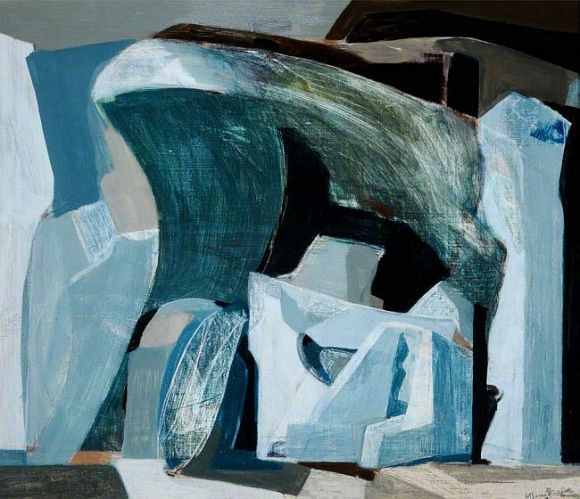
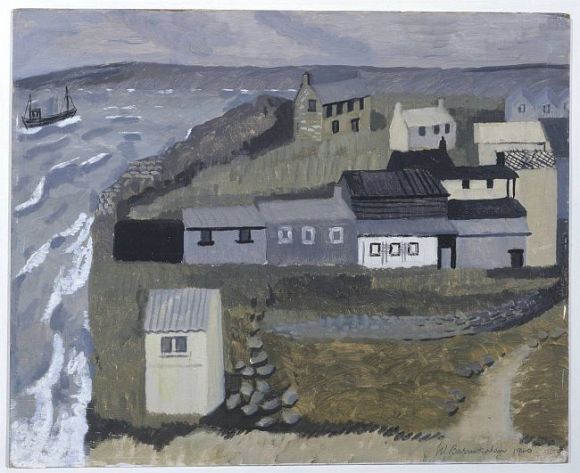
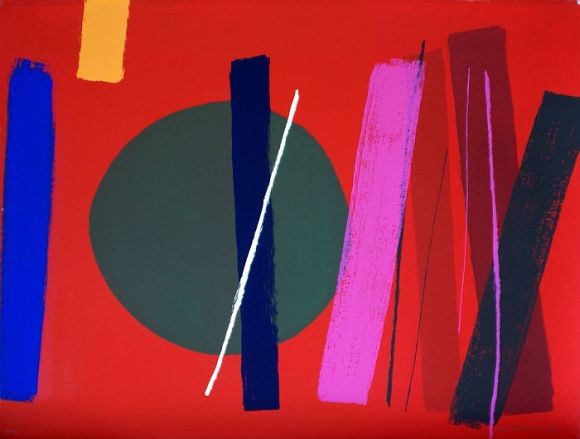
WILHELMINA BARNS-GRAHAM

An exhibition recently in Penlee House showed how varied her work was.

beautybellezzabeaute's avatarBeauty Bellezza Beauté

Wilhelmina Barns-Graham (1912-2004).

Wilhelmina Barns-Graham1Wilhelmina Barns-Graham2Wilhelmina Barns-Graham3Wilhelmina Barns-Graham4Wilhelmina Barns-Graham5Wilhelmina Barns-Graham6Wilhelmina Barns-Graham7Wilhelmina Barns-Graham8Wilhelmina Barns-Graham90Wilhelmina Barns-Graham9Wilhelmina Barns-Graham91

View original post

Categories
Uncategorized

THE LAST MEETING OF THE TSAR, THE KING AND THE KAISER

Berlin Companion's avatarKREUZBERGED - BERLIN COMPANION

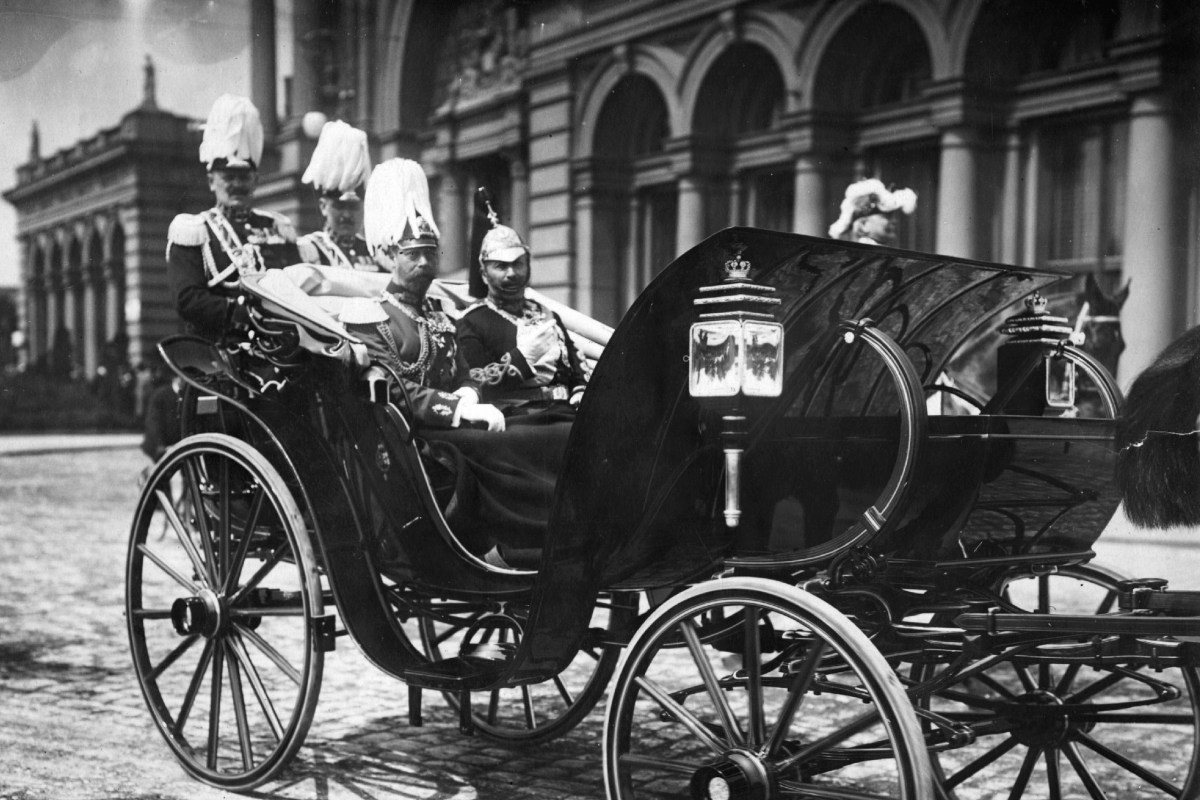
The no longer exisiting Anhalter Bahnhof, whose crippled front entrance still holds eerie sway over Stresemannstrasse (former Königgratzer Strasse and then Saarlandstrasse) – looking quite Harry Potter-esque, as if magic trains were still chugging in there in moonglow, -was witness to many a historic event.

One of them took place on May 24, 1913 and marked another beginning of another end. It was to become the very last gathering for the three mightiest people in Europe who would soon send their troops to slaughter each other on the battlefields of the continent. And on those sunny days in May the King, the Kaiser and the Tsar could already sense that something was brewing in the European cauldron and that the cauldron could blow up one day – as it did in Sarajevo only 13 months later.

But for weddings and for funerals all animosities are best forgotten. And…

View original post 862 more words

Categories
Uncategorized

Aus einem Foto – England / Bathampton – Zeichnungen von Susanne Haun

Susanne Haun's avatarSusanne Haun

2016 waren wir in Bath, England.


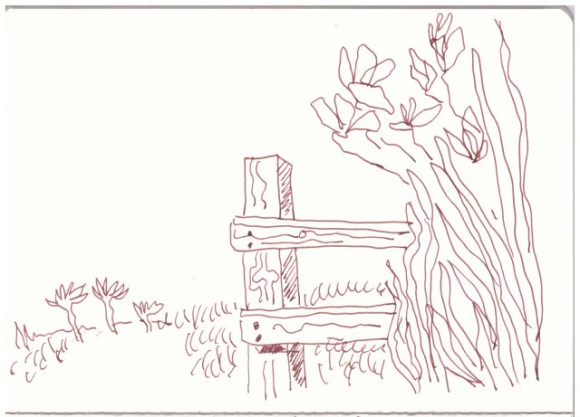
Ich denke gerne an die schöne Landschaft Englands zurück. Da ich mich im Moment kunsthistorisch mit dem Typus Landschaft in der Romantik beschäftige, hatte ich das Bedürfnis, mir zu überlegen, wie ich am besten eine Landschaft darstelle.

Dazu habe ich mir aus den vielen Fotos aus Bathampton ein unspektakuläres herausgesucht und auf Grund des Fotos vier Landschaftsszenarien entworfen. Es hat mir Spaß gemacht und ich war erstaunt, wie vielseitig ich das doch so einfache Foto auswerten konnte.

Bathampton (c) Zeichnung von Susanne HaunEngland, Bathampton (c) Zeichnung von Susanne Haun
View original post

Categories
Uncategorized

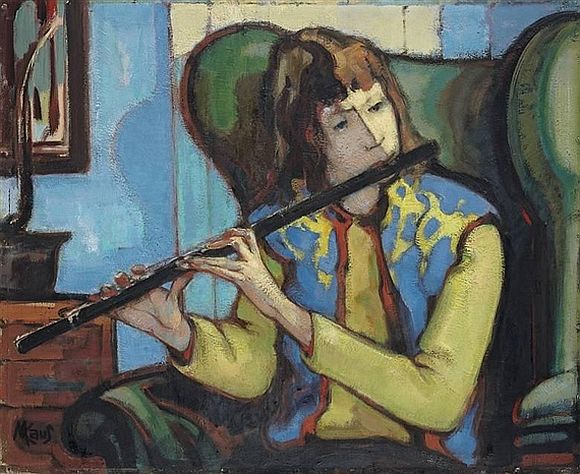
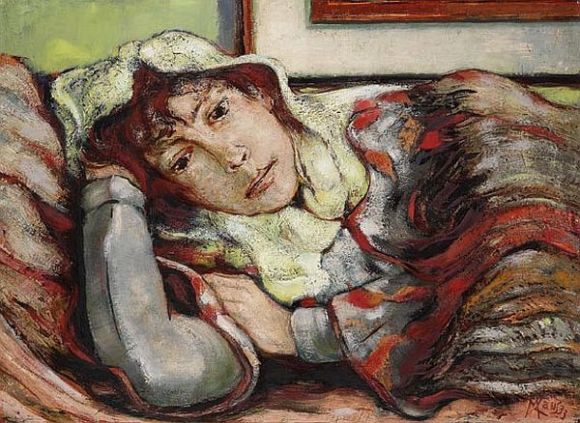
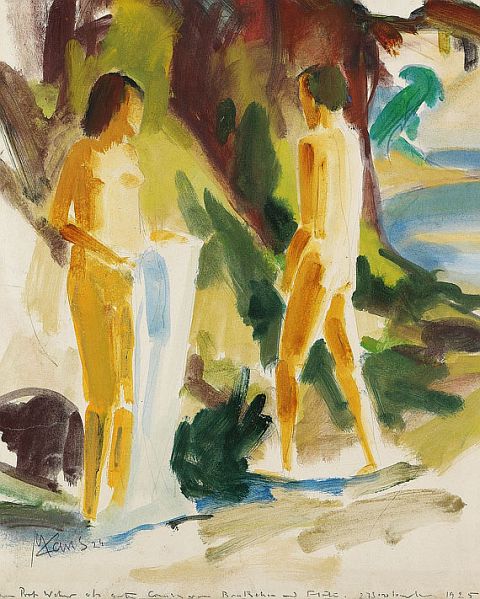
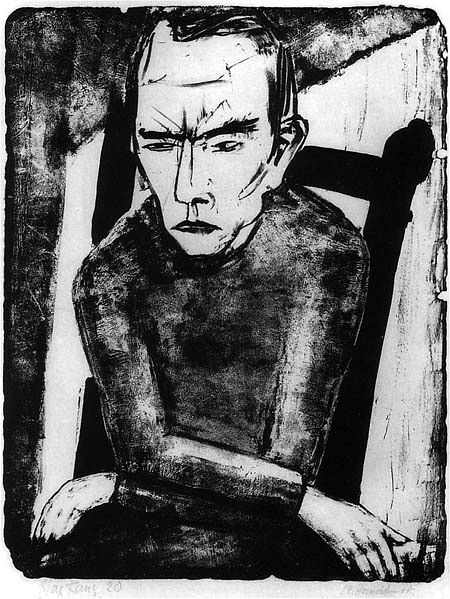
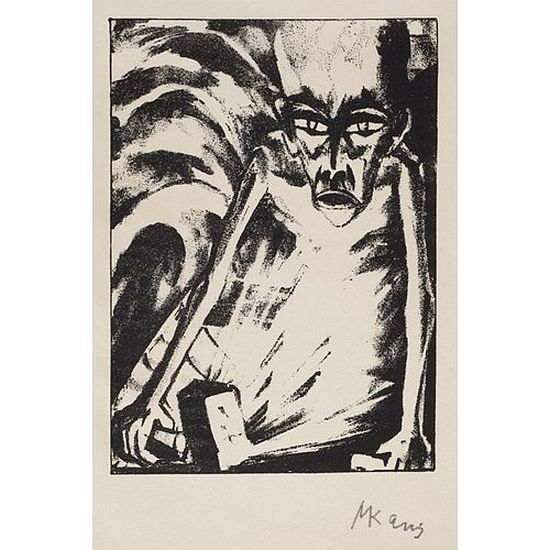
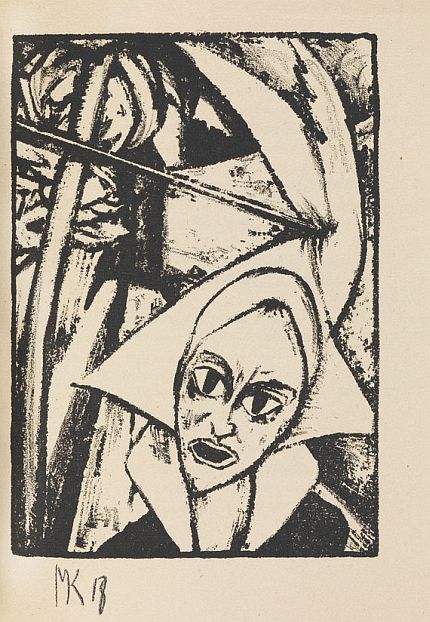
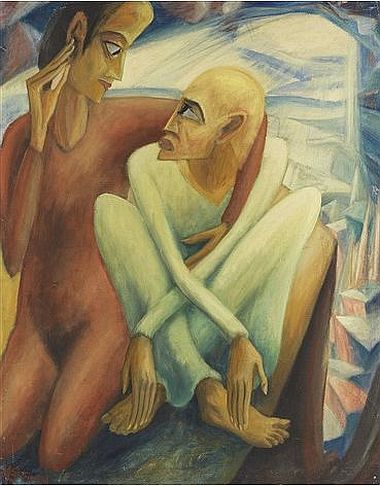
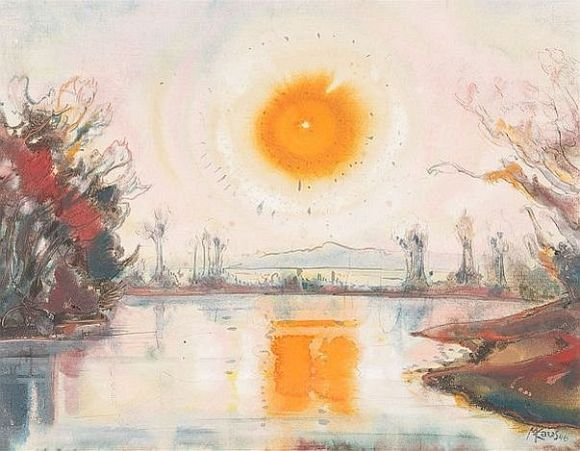
MAX KAUS

I particularly like the lady with head raised on her arm-the fourth one!

beautybellezzabeaute's avatarBeauty Bellezza Beauté

Max Kaus (1891-1977).

kaus 0kaus 1kaus 2kaus 3kaus 4kaus 5kaus 6.jpgkaus 8kaus 92kaus 7kaus91

View original post

Categories
Uncategorized

OTTO FREUNDLICH – EXHIBITION

beautybellezzabeaute's avatarBeauty Bellezza Beauté

freundlich

When: February 18 – Mai 14, 2017.
Where: Museum Ludwig, Cologne, Germany.

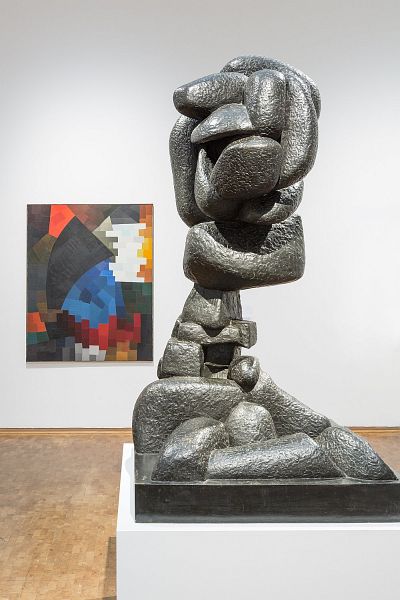
Otto Freundlich (1878-1943) is one of the most original abstract artists of the 20th Century. With around eighty objects, the exhibition traces the work, thought, and life of an artist who produced not only paintings and sculptures but also stained-glass windows and mosaics, and who in a searching reflection on the leading art movements of his time found his own path to abstraction before being marginalized by the Nazis, denounced as “degenerate”, and ultimately murdered as a Jew.

More information HERE.

More about Otto Freundlich HERE.

View original post

Categories
German Matters Literature Poetry Uncategorized

“Was war das?” und “Dich” von Erich Fried

Was war das?

Ohne dich sein
ganz ohne dich

und langsam
zu vergessen beginnen
wie es mit dir war
ganz mit dir

und dann halb
halb mit und halb ohne

und ganz zuletzt
ganz ohne

Erich Fried

Dich
dich sein lassen
ganz dich

Sehen
dass du nur du bist
wenn du alles bist
was du bist
das Zarte
und das Wilde
das was sich losreißen
und das was sich anschmiegen will

Wer nur die Hälfte liebt
der liebt dich nicht halb
sondern gar nicht
der will dich zurechtschneiden
amputieren
verstümmeln

Dich dich sein lassen
ob das schwer oder leicht ist?
Es kommt nicht darauf an mit wieviel
Vorbedacht und Verstand
sondern mit wieviel Liebe und mit wieviel
offener Sehnsucht nach allem –
nach allem
was du ist

Nach der Wärme
und nach der Kälte
nach der Güte
und nach dem Starrsinn
nach deinem Willen
und deinem Unwillen
nach jeder deiner Gebärden
nach deiner Ungebärdigkeit
Unstetigkeit
Stetigkeit

Dann
ist dieses
dich dich sein lassen
vielleicht
gar nicht so schwer.

English notes

sich an jdn./etw. anschmiegento cling to sb./sth.

Vorbedacht=premeditated

Verstand= understood

Starsinn= headiness

to gesticulate
27

gebärden

skittishness Ungebärdigkeit {f}

Stetigkeit=Continuity


Categories
Uncategorized

Kaleidoscope: Colour and Sequence in 1960s British Art

Colourfull and lively exhibition :-

ms6282's avatarDown by the Dougie

P4041067

After looking round the exhibition in the old Chapel, we walked across the Country Park, down rast the lower lake and up the hill to the Longside Gallery where there was yet another new exhibition to see! Kaleidoscope: Colour and Sequence in 1960s British Artis a survey of

painting and sculpture from the Arts Council Collection, and augmented with major loans from important UK collections…. (which) …… examines the art of the 1960s through a fresh and surprising lens, one bringing into direct view the relationship between colour and form, rationality and irrationality, order and waywardness.

There’s a good selection of works by 20 British artists including Anthony Caro, Bridget Riley and William Turnbull. I was familiar with some of them but there were some discoveries (always good!).

P4041075

The works on display included examples of Op Art, Pop Art and Constructivism, and

the sequential placement of brightly-coloured abstract units…

View original post 161 more words

Categories
German Matters Literature Poetry

Erich Fried – “Wollen”

Wollen

Bei dir sein wollen
Mitten aus dem was man tut
weg sein wollen
bei dir verschwunden sein

Nichts als bei dir
näher als Hand an Hand
enger als Mund an Mund
bei dir sein wollen

In dir zärtlich zu dir sein
dich küssen von außen
und dich streicheln von innen
so und so und auch anders

Und dich einatmen wollen
immer nur einatmen wollen
tiefer tiefer
und ohne Ausatmen trinken

Aber zwischendurch Abstand suchen
um dich sehen zu können
aus ein zwei Handbreit Entfernung
und dann dich weiterküssen

Erich Fried
Wanting

Wanting to be with you
in the middle of what I’m doing
wanting to be gone
lost within you

Nothing but with you
closer than hand to hand
more intimate than lips to lips
wanting to be with you

Being tender within you
kissing you from the outside
and caressing you from within
this and that way and also differently

And wanting to inhale you
nothing but inhaling
deeper deeper
and to drink without exhaling

And while doing so searching the distance
to see you
just two hands away
and then kiss you again

Translation by Günter Ehweiner

Erich Fried was born on 6 May 1921 in Vienna. He began writing early until the German Anschluss in March 1938 transformed him “from an Austrian high school pupil into a persecuted Jew.” His father was murdered by the Gestapo, and Fried fled to London, where he helped his mother and 70 other people escape.

After the war Fried became a co-worker for numerous newly founded journals, later a commentator in German-language programs at the BBC. He gave up this position in 1968 because of the Cold War posture adopted by the BBC.

He made a name for himself with various poems and his only novel (“A soldier and a girl” 1960) and also making translations (including, among other things, the translation of almost the entire works of Shakespeare) – but also his work conflicted with public opinion on political issues, which was reflected in many of his poems. It was not until the end of his life that he received the recognition he deserved in the form of awards such as the Bremen Literary Prize, the Austrian State Prize and the Georg Büchner Prize.

Erich Fried died after a long and serious illness on 22 November 1988 and was buried at the Kensal Green Cemetery in London.

Categories
German Matters Literature Poetry

Two poems about drinks!

From the interesting poem from https://saetzeundschaetze.com/2017/04/02/lili-gruen-maedchenhimmel-2014/ by the Viennese poet Lili Grün.

Elegie to a cup Mocha (extract)

“My last boyfriend was a lawyer.
I am since that time against lawyers.
Lawyers are all false, heartless and wicked,
I can not hear this word, it makes me nervous.
Therefore I want for myself another admirer
For example, an elementary school teacher. “

Elegie bei einer Tasse Mokka (Auszug)


“Mein letzter Freund war ein Jurist.
Ich bin seit dieser Zeit gegen Juristen.
Juristen sind alle falsch, herzlos und bös,
Ich kann dieses Wort gar nicht hören, es macht mich nervös.
Darum wünsch` ich mir zum nächsten Verehrer
Beispielsweise einen Volksschullehrer.“

Now for something later in the day from a Latvian Romani Poet from  http://poemsintranslation.blogspot.co.uk/2017/04/leksa-manush-to-wine-from-latvian-romani.html?utm_source=feedburner&utm_medium=email&utm_campaign=Feed:+PoemsFoundInTranslation+(Poems+Found+in+Translation)


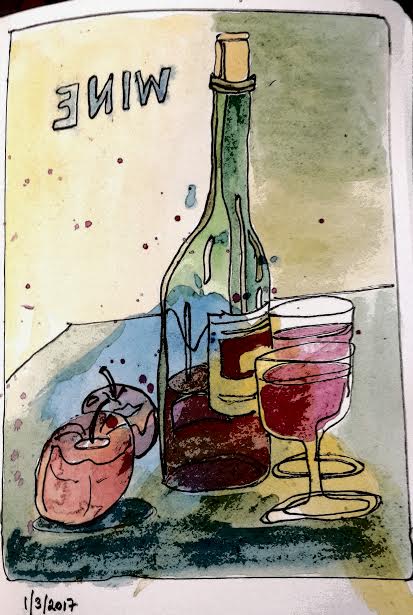
To Wine
Leksa Manush
Translated by A.Z. Foreman

A cup of wine does anything you will: 
It gives a manly courage to shy men,
And to the weakest man a strength of will.
Wine knocks strong men out cold beyond their ken. 

And wine bonds strangers unknown to each other. 
They sit as friends, and each one drinks his fill.  
With song, wine calls them up to dance together. 
A good life, lived with wine, is better still.  

Sons and daughters of the sun and earth!
The grape born of the vine has given birth
To wine, to make us happy and at home. 

May vineyards never empty of the vine
And may the jug forever fill with wine
To the happiness and health of every Rom. 

Or in Latvian-

Моляке
Лекса МанушТахтай моляса, со камэс, кэрэл:
Ладжякунэскэ дэл о муршипэн,
Конэскэ зор нанэ, зоралипэн,
Кон зорало сас — мол лэс пэравэл.

Пхандэл ёй кхэтанэ бипинджярдэн,
Бэштэ, сар амала, тэ сако пьел.
Мол тэ кхэлэн гилэнца лэн кхарэл.
Бахталэдыр моляса джиипэн.

Кхамэски и пхувьяки чяёри,
Дракхэндар бияндёл ёй, молори,
Пэ бахт тэ лош дыны ёй си амэнгэ.

Мэ на чючёл дракхэнги барори!
Моляса тэ пхэрдёл дурулори
Пэ бахт тэ састыпэн сарэ ромэнгэ!

Moljáke
Leksa ManušTaxtaj moljása, so kames, kērel:
Lādžakuneske del o muršipen,
Koneske zor nane, zoralipen,
Kon zoralo sas — mol les pēravel.

Phandel joj khetane bipindžarden,
Bešte, sar amala, te sako pjel.
Mol te khelen gilenca len khārel.
Baxtaledîr moljasa džiipen.

Khameski i phuvjáki čhajōrí,
Drakhendar bijandźol joj, molōri,
Pe baxt te loš dînî joj si amenge.

Me na čučol drakhéngi bārōri!
Moljasa te pherdźol durulōri
Pe baxt te sastîpen sāre romenge!