Categories
German Matters Poetry Uncategorized

Irving Berlin – Spiel mir eine alte Melodie

Spiel mir eine alte Melodie
voll Gefühl und Harmonie
Himmelblau und rosa möcht ich sie
zärtlich und voll Poesie

Spielen auch heut ganz andre Lieder die Leut als in der Postkutschenzeit
nichts auf der Welt war so schön als sich zur Polka zu drehn
Man steckte Veilchen ans Kleid die Röcke waren ganz weit o Gott war das eine Zeit
die alte Bahnmelodie ja die vergesse ich nie

Spiel mir eine alte Melodie
voll Gefühl und Harmonie
Himmelblau und rosa möcht ich sie
zärtlich und voll Poesie

Man steckte Veilchen ans Kleid die Röcke waren ganz weit o Gott war das eine Zeit
die alte Bahnmelodie ja die vergesse ich nie

Spielen auch heut ganz andre Lieder die Leut als in der Postkutschenzeit
nichts auf der Welt war so schön als sich zur Polka zu drehn
Man steckte Veilchen ans Kleid die Röcke waren ganz weit o Gott war das eine Zeit
die alte Bahnmelodie ja die vergesse ich nie

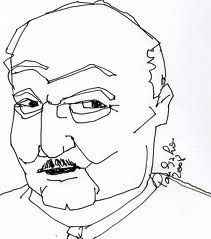
Irving Berlin
Irving Berlin


Categories
Art and Photographic History German Matters Literature

European Cultural History and personal interactions!

Arte produces cultural programmes in English, French and German. The following programme which is in relatively easy German is well illustrated with drawings, original photographs and film clips and centres around Paris in the 1930s.

It is the period leading up to the Second World War and is particularly interesting on the splits between the Surrealists and the Communists leading up to the fight against Fascism particularly in the Spanish Civil War. It is also good on the developments in different forms of photography and the relationships of key figures like Louis Arragon, Max Jacob, the writer Andre Gide, Miro and of course, Picasso. The programme is worth watching for Picasso’s preliminary sketches of Guernica alone.

From the Arte Website we read that:-

Im Juni 1936 reist André Gide nach Moskau, wo er mit großem Pomp empfangen wird. Angesichts der sowjetischen Realität ist ihm der Prunk eher unangenehm. Kurz nachdem er nach Paris zurückgekehrt ist, trifft er sich mit André Malraux, der gerade aus Spanien eingetroffen ist, das sich im Bürgerkrieg befindet. Malraux hat die Fliegerstaffel „España“ aufgebaut und kämpft auf der Seite der Republikaner gegen Franco. Gide möchte den Reisebericht „Retour de l’U.R.S.S.“ veröffentlichen, der hart mit Moskau ins Gericht geht, doch seine Freunde und Malraux halten den Zeitpunkt für ungünstig. Der Aufstieg des Faschismus erfordere es, die UdSSR als einziges Bollwerk gegen den Nationalsozialismus zu unterstützen. Das Buch erscheint dennoch. Die Sowjets sind außer sich, die Deutschen jubeln.

Ab Mod Kunst

This may be found with more detail at http://ankeengelke.de/event/die-abenteurer-der-modernen-kunst-56 and the whole series is available on 2 DVDs at http://www.amazon.de/Die-Abenteurer-Modernen-Kunst-DVDs/dp/3848840464

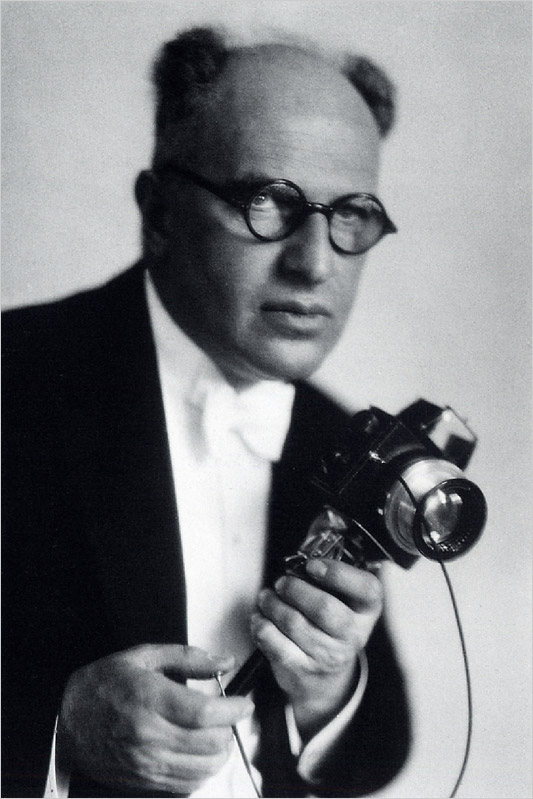
Two interesting figures from this period were Andre Malraux and Louis Aragon. Malraux himself was an Art Historian and significantly helped to build part of the Spanish Republican Air Force- and author of La Condition humaine (Man’s Fate) and himself the subject of biographies by Olivier Todd and also Harold Bloom. He was always close to De Gaulle and became a Minister of Culture from 1958-1969. There is an interesting review of Todd’s book at http://www.nytimes.com/2001/05/31/style/31iht-malraux_ed3_.html (Photograph below)


Here is a poem by Louis Aragon; it is in French and English translation-


Malraux

Categories
Uncategorized

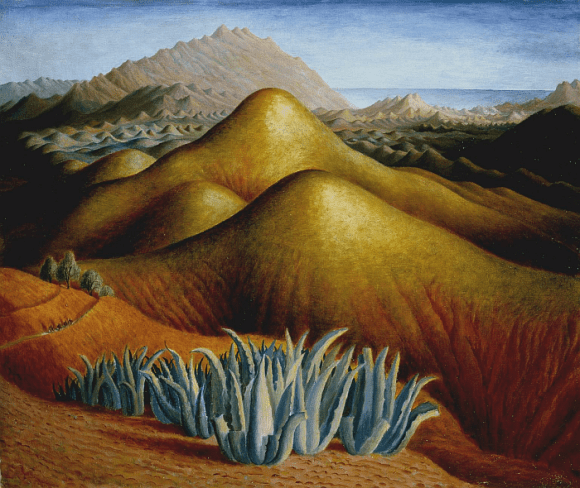
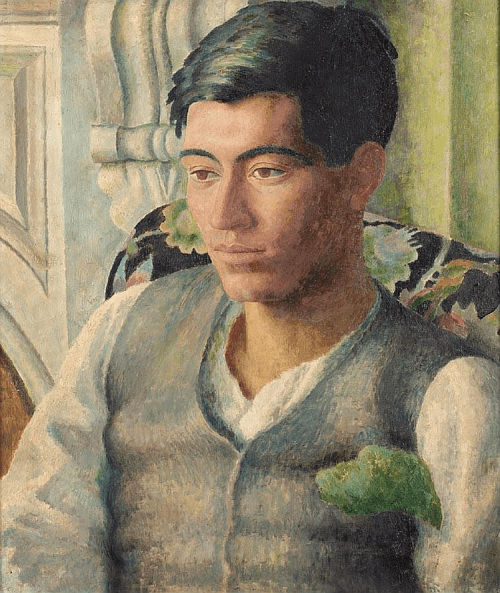
Adrian Stokes-European

He painted with the Danish Impressionists at Skagen, in St Ives, and above all in Hungary – and has been all but forgotten now.

via Into the Light: Adrian Scott Stokes in St Ives and Hungary — The Eclectic Light Company

Categories
Penwith St Ives Uncategorized West Cornwall (and local history)

Spring arrives in Penwith

Porthmeor Beach, St Ives in February

Just a few recent photographs from February to April- the onset of Spring.

Underpass in Heamoor
Abbey Slip- Penzance
Penlee Park in Penzance
Lambeth Walk in St Ives
Crab pots -Downalong, St Ives
Categories
Art and Photographic History Penwith Uncategorized

The pleasures of Pinterest- art education for the digital age

Cig

There is a simple and naive pleasure in collecting things as any fule doth know! When I was knee-high to a grasshopper, so to speak, I can dimly recall swopping cigarette cards with sepia images. Well perhaps not sepia. However, I seem to remember that fantastic summer when Laker and Lock, not to mention Colin Cowdrey and Peter May played wonderful Cricket against the West Indies and recall collecting cigarette cards with their heroic images of those players. Another series of cards carried the proud images of Her Majesty’s ships. Several of these I first saw as the Fleet assembled in Mount’s Bay in 1952. Such cards were sometimes ranked with stars; battleships carrying the full 5 stars and light cruisers maybe 3. Innocent of both imperialism and the devastation of weaponry we carried collections that were stuffed into our school blazer pockets.
Just a few years before, the great collections of European intellectuals such as Walter Benjamin and Stefan Zweig were being impounded by the fascists in Germany, Italy and Austria. Zweig had written a moving story over a collector who became blind as his family were forced to deceive driven by the dire necessity for bread. His valuable etchings in his “Sammlung” (collection- but also interestingly composure) had been replaced by plane paper, which he takes lovingly and unknowingly from his folder, and extols from memory the detailed wonder of each image. Whatever the pleasures of making collections, and John Fowles has reminded us of the darker side of that psychology, it seems on the whole a masculine foible. I am sure that feminists would correctly point out, that indeed it was the men that had the money to pursue their interests. It seems that in their great salons clever women as varied as Rahel Varnhagen and Lady Ottoline Morrell collected persons, rather than things, to cultivate the exchange of ideas. How far such aspirations are from today’s hurried pinning of electronic images onto simulated pin boards!

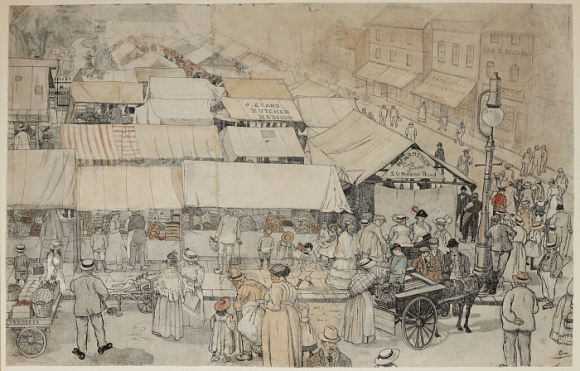
Anton Pieck (1895-1987) was a Dutch painter and graphic artist

However, being now just short of 250 followers myself on Pinterest, have I using the network, acquired any useful knowledge of paintings and photography? Might it serve as a useful vehicle for learning, even though the collections of great museums are now shrunk to images which are just the size of an i-phone screen? There are at least three ways, which I might justify to myself, the huge amount of time building my own portfolio that collection has taken.

Firstly, it has enabled me to discover significant new artists. Looking under my own heading of “Works for further consideration”, I find the delightful sketch of a city street by Anton Pieck. The person who originally pinned this usefully informs me that Pieck was well known for the nostalgic and fairytale quality of his work which included sculpture and graphic art. He was Dutch and lived from 1895 until 1957. The image which I have pinned vaguely reminds me of the street in Truro which runs beside the city’s relatively recent Benson cathedral. Next to this, in the random manner of my collection, I have pinned the wanly evocative sculpture of a young girl with a suitcase by Berit Hildre, a French sculptor who I now go on to discover has a delightful and tender portrayal of her work on You Tube. Then too there are the delightful colours of the work of Hope Gangloff and I notice that I have pinned several of her pictures; their bohemian portraits being thoroughly engaging. The person who first mounted the work on Pinterest has usefully added the comment,”Stumbled into this exhibit in Chelsea the other day. I have never seen her work in person. Quite enjoyed the pattern overload! Hope Gangloff at Susan Inglett Gallery”.

by Berit Hildre
by Berit Hildre

In addition to aiding the discovery of new artists, I also find some of my so-called pins are a stimulus to my own attempts at sketching. For instance, I enjoy the work of the Neue Sachlicheit, particularly Christian Schad. This interest led to my discovery of the print work of the Dresden painter, Conrad Felixmuller. I have done a little printing in the recent past and the lyrical lines of Felixmuller’s 1927 Woodcut portrait of Christian Rohlfs prompted me to making a copy in red biro and red ink. Because the images are so easily available and to some extent a prompt to experiment, Pinterest is a useful encouragement, at least to someone rather lazy like myself, to get sketching. I find that drawing, for someone like myself who spends a fair amount of time with reading and language, is a delightful change.

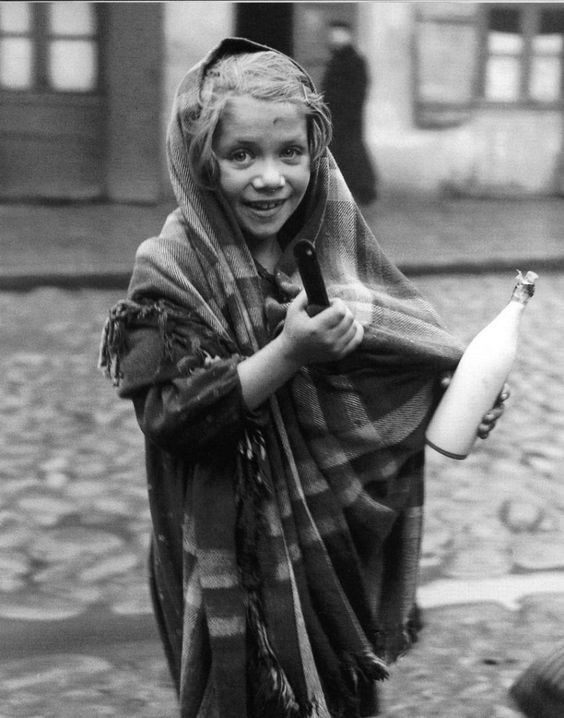
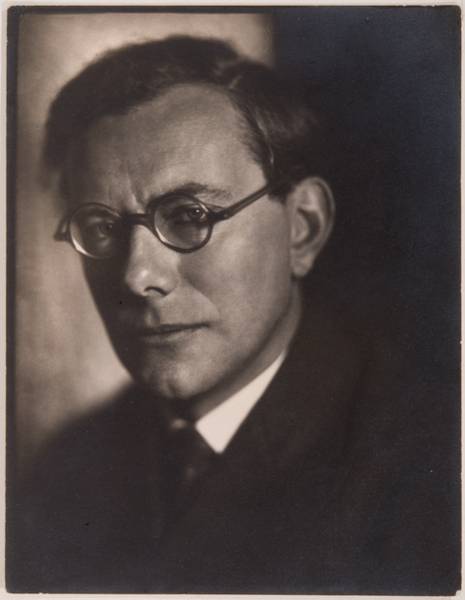
Stimulated by a course of lectures by a friend and cultural historian, Robin Lenman, I have taken a deeper interest in photographic history. Pinterest photographs provide a useful resource for those who are interested in the stage and screen, entertainment and political change throughout the upheavals of the twentieth century. Black and white photographs too have their own appeal. Here, I already knew of the work of Roman Vishniac of the vanished world of the Stehtl but was fascinated to find photographs of many individual artists, composers and indeed scientists. It can be seen that Man Ray and Tzara’s work influenced photography as well as art. Film stars evidently influence how bathing beauties are portrayed. It is curious but perhaps not surprising to notice how similar the photographs of Egon Schiele and Paul Klee themselves actually resemble some of their portrait work.

by Hope Gangloff
by Hope Gangloff

Can Pinterest be of any use in education? I am not entirely sure. The wealth of imagery might well be useful to many designers. It may also form an entry point for younger students who are reluctant or unable to visit galleries, especially if these are expensive or in foreign cities. Certainly, some galleries might make better use of this technology. However, the lack of detail and face-to face discussion of paintings and their techniques provided by “pinning” limit its use. As Pinterest is so very easy to use however, it provides a mechanism which encourages the exchange of images by say Rembrandt, and if it then prompts users to see the original, then certainly it has got to be understood as a very useful tool.

“Hope Gangloff, born in Amityville New York in 1974, is known for creating vibrant and truthful portraits of his friends as a way to share his vision of modern American life. The theme often captures a generation in the process of change, a certain type of youth affected by the crisis economy and the obsession for material goods. His portraits, highly detailed, show the mood of a moment in his characters. Its very different colors go from very pale tones to others almost supersaturated. Sometimes his work reminds Maurice Denis and others, by their way of drawing, their representation sometimes sexual reminiscent of Egon Schiele” (Source Inesvigo on Youtube)

Categories
Literature Poetry

Keats and Meg Merriles

Meg Merrilies


Old Meg she was a gipsy;
And liv’d upon the moors:
Her bed it was the brown heath turf,
And her house was out of doors.Her apples were swart blackberries,
Her currants, pods o’ broom;
Her wine was dew of the wild white rose,
Her book a church-yard tomb.Her brothers were the craggy hills,
Her sisters larchen trees;
Alone with her great family
She liv’d as she did please.No breakfast had she many a morn,
No dinner many a noon,
And ‘stead of supper she would stare
Full hard against the moon.But every morn, of woodbine fresh
She made her garlanding,
And every night the dark glen yew
She wove, and she would sing.And with her fingers old and brown
She plaited mats o’ rushes,
And gave them to the cottagers
She met among the bushes.Old Meg was brave as Margaret Queen,
And tall as Amazon:
An old red blanket cloak she wore,
A chip hat had she on.
God rest her aged bones somewhere–
She died full long agone!
John-Keats-
Categories
Uncategorized

Welche deutschen Serien helfen mir beim Deutsch lernen?

Useful if you are learning the language

Categories
Uncategorized

Book Haul: Berlin 2016

More reasons to read German fluently!

Categories
Book Reviews Classics Literature Poetry

Letters to Poseidon by Cees Nooteboom

A serviette, a glass of champagne taken outside a fish restaurant in the open-air Viktualienmarkt in Munich, all taken to celebrate the first day of spring, prompt Cees Nooteboom into Proustian reverie. Upon the paper napkin is written in blue capitals the word POSEIDON, the Greek god who has preoccupied Nooteboom’s thoughts for several summers. The blue colour reminds him of the sea viewed from Mediterranean garden of his villa in Menorca. Taking this prompting as a moment of benign synchronicity, he later begins a correspondence with this sea-deity. He seeks to inquire how this somewhat unreliable ancient Greek Olympian sees aeons of time and sends him letters and legenda; meditations and stories to be read, both poetic and tragic, from the arts and the contemporary world. He is not expecting a reply.

In the Odyssey, Poseidon is renowned for hating Odysseus who had blinded the Cyclops, Polyphemus who happened to be the god’s son. This is Homer’s view. Ovid would have known the god as Neptune and wrote about him in the ‘’Metamorphoses’’. Kafka wrote an essay in which he imagines Poseidon constantly submerged. So, Nooteboom wonders, in a notably poetic passage, how would he have viewed the first passage of the first boat on the surface above him. How does he feel about the decline of those very Greeks who worshipped him? Is he melancholy about his timeless vigil already an old man beneath the sea with only occasional excursions pulled about by tiny sea-horses, nature’s experiment in trans-gender parturition? Fascinated by the rhythms of animal behaviour and curious plants, Nooteboom’s meditative writing is enlivened by his close observation of the natural world.

Letters to Poseidon juxtaposes thoughts which are essentially theological with ponderings on inexplicable tragedies in the contemporary world from the Challenger disaster to the Arab spring. Uncomfortable topics of puzzling cruelty are subject to persistent interrogation which is addressed to an ancient deity- often depicted in statuary with his face turned away. However, there is also an interesting wrestle between belief and doubt beneath the surface. Here is an attempt to figure the Christian deity in relation to the ancient gods. It is almost that the averted gaze of the sea-god makes him more accessible to questioning. Dante and the early-German Christian mystic, Seuse are invoked and discussed whilst the reader is provided with routes to his own investigations from Nootebbom’s well-stocked mind.

The author is prominent as a novelist, art historian and as a traveller. Successive pieces are situated in, for example, in Seoul Museum of Art, a Zen garden in Kyoto, back in his study in Menorca, an island of the Dutch East Indian company in Nagasaki and back once more to Menorca to watch a blood moon. This continuous movement appears to have given rise to a certain Weltschmerz  and in particular to a fascination with time and memory. This connection between time and space fascinates him as do geological aeons. He uses the Poseidon figure as a means to attempt to grasp the manner in which rocks are metamorphosed and ground to sediment over aeons. This is done in a leisurely discursive style that produces its own poetry. It requires that the reader find the patience to enjoy such digressions.

Here is a small example:-

‘’The curlews begin to call. I know they are close to the sea, but I have not yet seen them. Their Dutch name ‘’griel’’ is a much better match than ‘’curlew’’ for that drawn out, pleading sound they make. The owl I can hear nearby is another member of the secret service; it wears the darkness like a uniform and makes itself invisible.’’

The relaxed and tentative tone of the writing is at times penetrated by an image carrying anxiety which frequently refers to contemporary concerns. This is shown above where even an owl might appear as a Stasi interrogator. Despite its metaphysical tone, the prose mostly remains vivid. The issues addressed are the concerns of a man, possibly an elderly man, in search of a soul.Cees

An unexpected feature of this book is the fifty or so pages at the end which provide photographs and reference material. I was some 30 pages into the book before I discovered these. This brought to mind the work of W.G.Seebald whose elegiac tone, Nooteboom’s travel memoir sometimes resembles. There are touches which reminded me of Lawrence Durrell’s ‘’The Alexandrian Quartet’’ and of the mysterious symmetries of Anne Michael’s ‘’Fugitive Pieces’’. This book will not be to everyone’s taste, as by nature, it is inconclusive but thought provoking. It asks fundamental questions about human behaviour ‘’’sub specie aeternitatis’’’-Baruch Spinoza’s term for the eternal perspective.

Nooteboom’s previous book on the fall of the wall can be found at Roads to Berlin by Cees Nooteboom and Laura Watkinson (Translator) and another discussion of a fruitful Greek myth is discussed at Orpheus, The Song Of Life by Ann Wroe.

Nooteboom’s own website is at http://www.ceesnooteboom.com/?lang=en

Categories
Uncategorized

The flopped Stalinallee (1949-1961). What happens with a birthday gift to the Red Tsar.

Fascinating history

Joep de Visser's avatarHistories from the capital of the 20th century

Renaming the street into the Stalinallee. (Berlin-Mitte/Friedrichshain, December 1949/January 1950. ©Unclear)

Ever since there was traffic between Berlin and Frankfurt a/d Oder, there must have been a -about 100 kilometer long- road between these cities. Since Berlin’s expansion around 1700, it was named the Frankfurter Straße – and since the late 1780s, a part was named the Große Frankfurter Straße. City’s gates came and went, barricades were thrown up and blasted down. The (Große) Frankfurter Straße had a serious history – until a heavy air-raid at the 3rd of February 1945 wiped out most of it. Yet, this all is only a prehistory of the Stalinallee – as the street was called since December 1949.

By renaming the street, the East German politicians didn’t only congratulate Stalin with his seventieth birthday – but they also dedicated their most prestigious urban project to the Soviet dictator. The Stalinallee should be the labor paradise, the incarnated socialist utopia – so it had to be…

View original post 1,478 more words