” Die Sehnsucht nach der dunkelblauen Glocke wie im kunstseidenen Mädchen” -sehr poetisch. Schoen Aufsatz-danke!
Author: penwithlit
Freelance writer and radio presenter
Nearly 125 years from the birth of Egon Schiele whose work I was recently perusing when I came across this evocative and soulful painting of a captured Russian Officer. The expression and demeanour clearly express his sense of resignation and the general apathy induced by the futility of war. In Vienna 1916 there were clearly many Russian prisoners and they appear to have been painted with the same compassion. The drawing of the girl also seems to convey this a similar human quality.


 That summer was very hot and walking through the fields that smelled of early blackberries, I came to
the edge of the caravan park. One more stile and I descended to the enclosure on the edge of the pine trees .
I soon identified Sean’s caravan by its bright tomato red colour. A strange domicile for a
bohemian artist, I thought, or perhaps for a man like him it was absolutely à la mode. Then I caught
sight of Jean, she many not have known it, but to my certain knowledge, she was at least his fourth
mistress that summer. Perhaps she kept him inspired too; he was producing even more large figurative “heads” than ever
before.
“Hello” she said smiling broadly and carrying a large aluminium bucket in each hand. I was perhaps a little
shocked because for back then few women would have so openly flaunted their buxom charms and her loose
rolled up trousers gave her a nonchalant almost wanton appearance ; her brown skin shone magnificently in the sunlight.
“You have timed your visit well – we are just about to have lunch. Hope you like mackerel?
Sean is in there, I just have to feed the chickens” She put down the buckets and wiped her nose with the back of her hand.
“Well, Jean, that would be absolutely lovely.”
“He hasn’t stopped working away all week you know.”
“Is it still those blue heads?” I inquired thinking myself rather brusque. More fake Modiglianis, I thought, but the prospect of lunch in Jean’s jolly
earthy company made putting up with the errant, overbearing genius just about bearable.

Jessica’s own website is at http://www.jessicacooper.co.uk/
 Further information on Jessica and her work may be seen at http://www.edgarmodern.com/Artist-Info.cfm?ArtistsID=188&Collection=&info=CV&ppage=6

Black lake, black boat, two black, cut-paper people.
Where do the black trees go that drink here?
Their shadows must cover Canada.

A little light is filtering from the water flowers.
Their leaves do not wish us to hurry:
They are round and flat and full of dark advice.

Cold worlds shake from the oar.
The spirit of blackness is in us, it is in the fishes.
A snag is lifting a valedictory, pale hand;

Stars open among the lilies.
Are you not blinded by such expressionless sirens?
This is the silence of astounded souls.

Now available in German see http://www.welt.de/print/die_welt/literatur/article123763734/Fuehrt-kein-Weg-aus-dem-Kopf-heraus.html
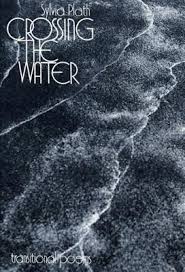

Übers Wasser
Schwarzer See, schwarzes Boot, zwei schwarze
Scherenschnitt-Menschen.
Wohin führen die schwarzen Bäume, die hier trinken?
Ihre Schatten müssen ganz Kanada bedecken.
Ein wenig Licht filtert sich aus den Wasserpflanzen.
Ihre Blätter fordern uns nicht zur Eile auf.
Sie sind rund und flach und voll dunklen Rats.
Kalte Welten zittern vom Ruder.
Der Geist der Schwärze ist in uns, er ist in den Fischen.
Ein Baumstumpf hebt Abschied nehmend die blasse Hand.
Sterne öffnen sich zwischen den Seerosen.
Bist du nicht geblendet von solch tonlosen Sirenen?
Dies ist die Stille erstaunter Seelen.
Les Champignons” [“Mushrooms” (1959) – nouvelle traduction en français]
Don’t understand how that “despicable” comment got by the Speaker either.

(not satire – it’s the Tories!)
I hope I’m wrong, but there seems to be an extremely disturbing undercurrent of antisemitism emerging in the Tories’ campaign of personal attacks against Ed Miliband, supported by their backers in the right-wing press:
Unthinkable? Could Lord Rothermere’s vitriolic attacks on Ed Miliband be because he’s Jewish?
And now we have a clear narrative against the Labour leader that he is a ‘backstabber’ who is even prepared to ‘stab the nation in the back‘.
It is inconceivable that Tory leaders are not aware that ‘backstabbing’ is an historical antisemitic insult used extensively by the Nazis to vilify Jews:

In their desperation, the Tory campaign is taking an extremely nasty turn indeed.
.
Please feel free to comment. And share.
Categories
Flair by Elaine Feinstein
From yesterday’s Guardian Review (11th April) at http://www.theguardian.com/books/2015/apr/11/the-saturday-poem-flair-by-elaine-feinstein

That whole wet summer, I listened to Louis Armstrong.
Imagined him arriving in New York after Funky Butt
dance halls, wearing hick clothes: those
high-top shoes with hooks, and long
underwear down to his socks.
Thought of him shy in a slick, new band, locked
for two weeks reading the part he was set,
until the night when Bailey on clarinet
took over an old song. Then Louis’ horn
rose in harsh, elated notes,
phrases he’d invented on riverboats
and ratty blues tonks, using all the sinews
of his face and muscle of his tongue.
And what delights me now
is when he grinned to thank
the crowd that stood to clap, he saw
slyly from the corner of his eye
all the stingy players in the band
were sitting motionless, their tribute
only an astonished sigh.

• From Portraits (Carcanet, £9.99). To order a copy for £7.99 go tobookshop.theguardian.com or call Guardian book service on 0330 333 6846.
Also see at The Guardian http://www.theguardian.com/books/2010/sep/25/cities-elaine-feinstein-ruth-padel
Categories
Everything stroll on the canal
Donarkanal-schoene!

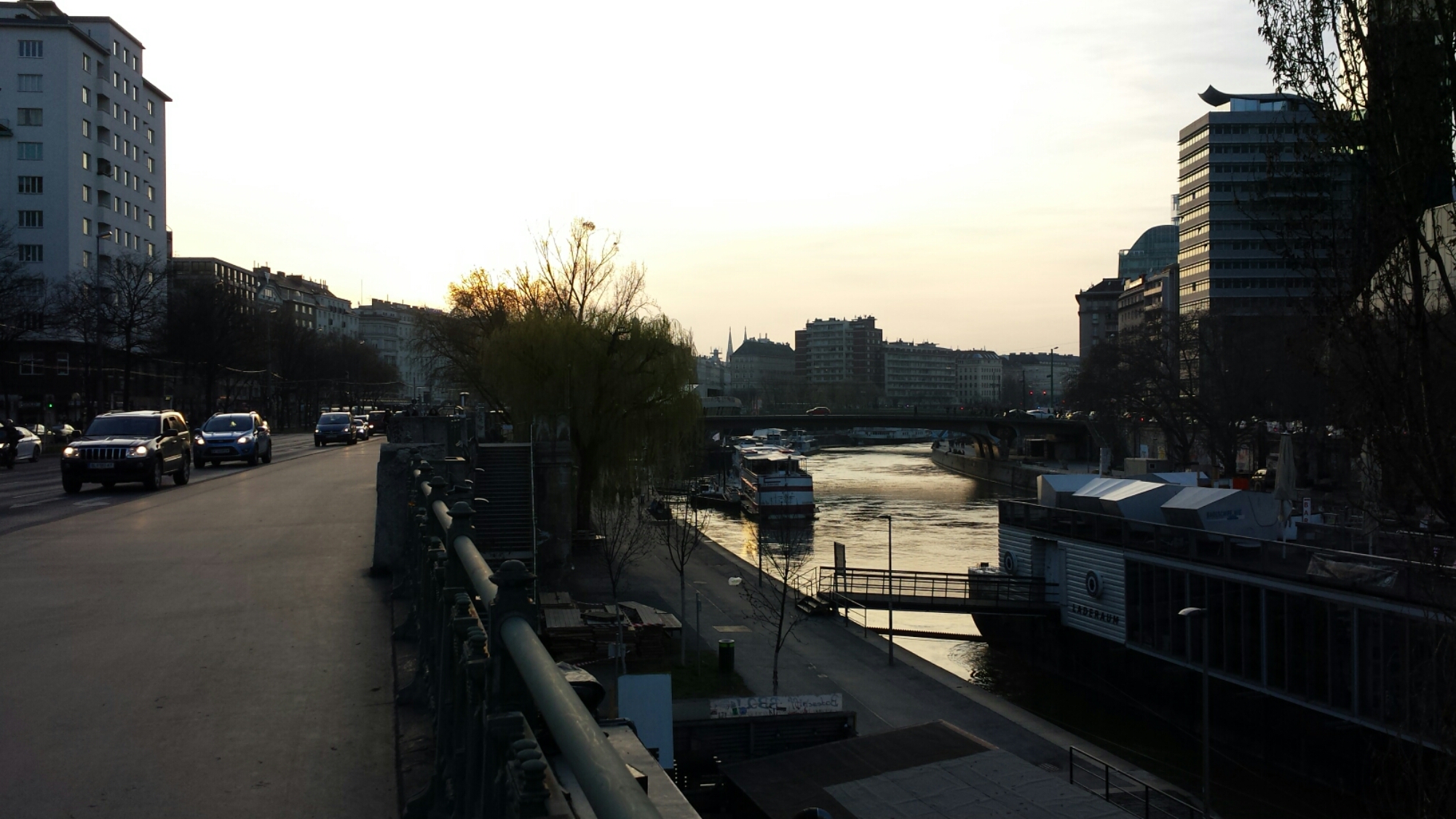
Last night I went for a stroll along the canal with my sweetheart. The weather is turning, so people are coming out of the woodwork, eyes blinking at the bright light. I’m looking forward to warmer temperatures this weekend. 🙂
Wetter
1
Dies ist das Wetter, das der Kuckuck liebt,
und Ich auch;
wenn Schauer herabfallen auf die Kastanienstacheln
und Nestlinge flügge werden:
und die kleine braune Nachtigall schnäbelt aufs beste,
und man sitzt draußen beim Gasthof Wanderers Ruh,
und Mädchen kommen heraus in Zweigmuster-Musselin,
und Bürger träumen von Süden und Westen,
und ich auch.
2
Dies ist das Wetter, das der Schärfer meidet,
und ich auch;
wenn Buchen in braunen und bräunlichen Tönen tröpfeln
und dreschen und arbeiten;
und Fluten, von Bergen verdeckt, heftig klopfen, Wehe auf
Wehe,
und Wiesenbäche überfließen,
und Tropfen auf Torstangen in einer Reihe hängen,
und Saatkrähen in Familien heimwärts gehen,
und ich auch.
From the translation of http://www.amazon.de/Englische-Lyrik-50-Gedichte-Zweisprachig/dp/3150188431/ref=sr_1_1?s=books&ie=UTF8&qid=1427988992&sr=1-1&keywords=englische+lyrik

Weathers
          (I)

 This is the weather the cuckoo likes,
     And so do I;
 When showers betumble the chestnut spikes,
     And nestlings fly;
 And the little brown nightingale bills his best,
 And they sit outside at 'The Traveller's Rest,'
 And maids come forth sprig-muslin drest,
 And citizens dream of the south and west,
     And so do I.

          (II)

 This is the weather the shepherd shuns,
     And so do I;
 When beeches drip in browns and duns,
     And thresh and ply;
 And hill-hid tides throb, throe on throe,
 And meadow rivulets overflow,
 And drops on gate bars hang in a row,
 And rooks in families homeward go,
     And so do I.

There is a commentry at http://englishwithasmile.org/2013/07/20/poetry-time-easy-line-by-line-explanation-of-thomas-hardys-weathers/

Categories
Thomas Mann: Lotte in Weimar
My current read…

![Thomas Mann im April 1937, zu der Zeit, in der "Lotte..." entstand Bildquelle [9]](https://penwithlit.com/wp-content/uploads/2015/03/lotte-mann.jpg) Thomas Mann im April 1937, zu der Zeit, in der “Lotte…” entstand
Thomas Mann im April 1937, zu der Zeit, in der “Lotte…” entstand
Bildquelle [9] “Lotte in Weimar” [1] ist ein Roman Thomas Manns [2], der 1939 erstveröffentlicht wurde und zwar in Schweden. Mann befand sich zu dieser Zeit schon im Exil, nachdem ihm drei Jahre zuvor aufgrund seiner Positionierung gegen das Nazi-Regime die deutsche Staatsbürgerschaft aberkannt worden war.
Ein Roman über Goethe, aufgehangen am historischen Besuch der Charlotte Kestner, geb. Buff, in Weimar, der 1816 stattfand, im September dieses Jahres. Weimar, in dessen unmittelbarer Nähe einmal das Konzentrationslager Buchenwald eingerichtet werden sollte, war zu dieser Zeit der “Weimarer Klassik” [3] ein Fixstern, ein überaus hell strahlender Fixstern am geistigen Himmel Deutschlands, ja Europas. Schiller, der ein paar Jahre zuvor gestorben war und eben Goethe, aber auch viele andere Dichter und Gelehrte waren mit der Stadt verbunden wie z.B. Wieland und Herder.
Die Zeit nach der Jahrhundertwende war aber auch eine…
View original post 2,119 more words
 penwithlit