The famous and redoubtable Annie!!

A random survey of self-portraits created by women through the centuries
American portrait photographer Annie Leibovitz (Born 1949)

Self-portrait, 2011 / Photograph / “September”, 2012 Lavazza Calendar
The famous and redoubtable Annie!!
Self-portrait, 2011 / Photograph / “September”, 2012 Lavazza Calendar
I have been meaning to read this book which has been generally given positive reviews. I agree with “It’s a bizarre, looking-glass world that makes perfect sense when seen only from within, exactly like our own, if you just stop to think about it.” So true in the U.K. with politics like a play by Beckett or Ionesco!
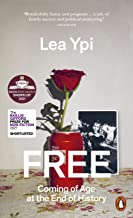 I have a rather strange relationship with Albania, and I have never been there. Some forty or more years ago, during the days of would-be socialist nations, I discovered the nightly English propaganda broadcasts on Radio Tirana, which were preceded by the strident call-sign With Pickaxe and Rifle, and always ended with the words, “Goodbye, dear listeners!” followed by a rousing version of the Internationale. The broadcasts were so over-the-top that they caused much amusement. And there was the Albanian Shop, purveyors of propaganda and the party daily from a basement shop in a Covent Garden back street. Then I discovered the astonishing novels of the only Albanian novelist I’m aware of, Ismail Kadare. You will find reviews of some in these pages, if you care to look.
I think I’ve also read some travel writing about the country. So this book, about growing…
View original post 536 more words
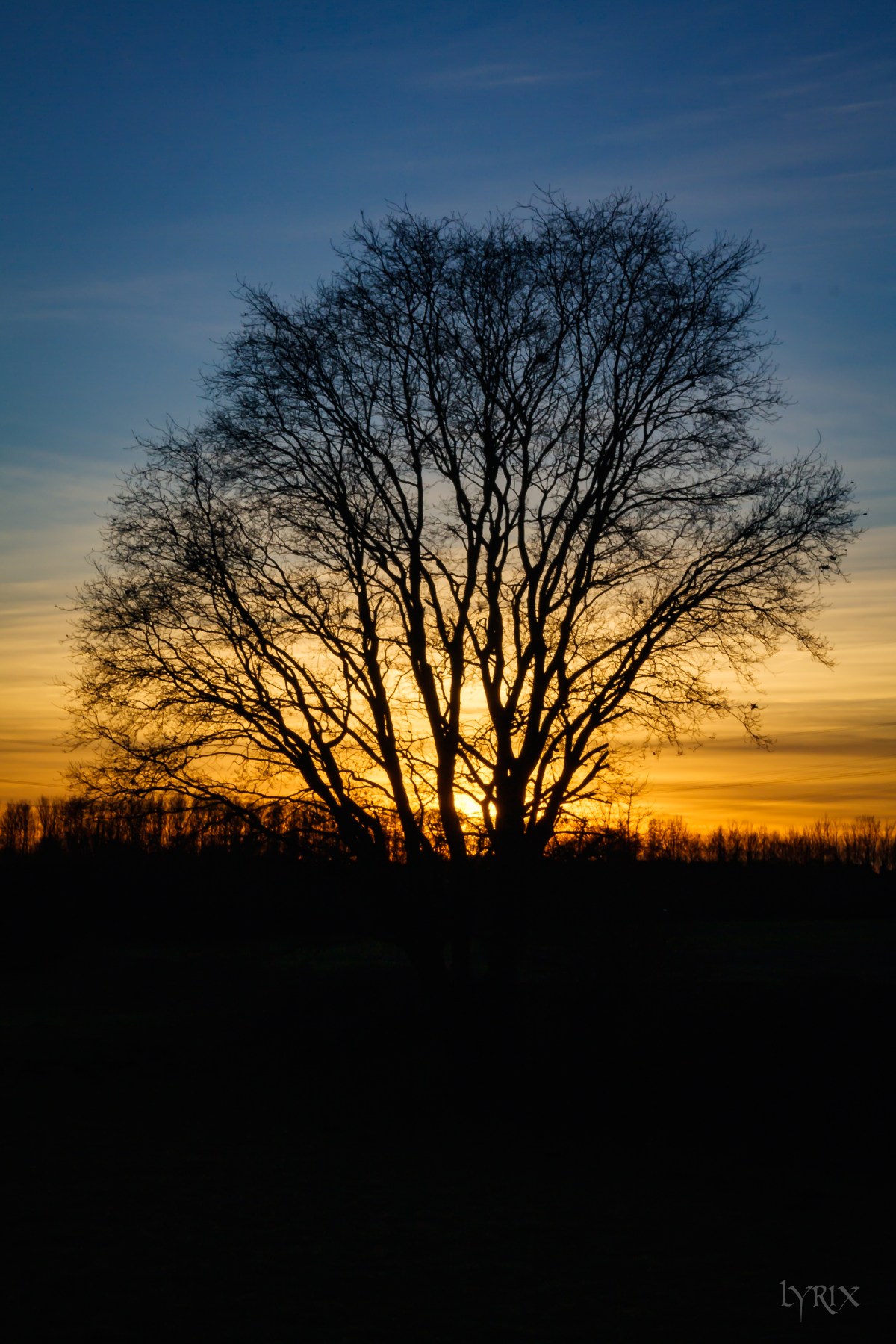
Picture by Lyrix, 2008
An old tree near my former home. I often watched the sun go down in the meadow where this tree stands. One day i threw a stick for my dog Tinka and unfortunately it ended up high in the trees branches. Faster than i was able to react, Tinka jumped on the tree, climbed up the branches and took her stick… in round about 8 or 9 metres height. Then she turned around, on a small branch that wasn’t thicker than my leg and ran down the tree, jumped the last 1-2 metres back on the ground, the stick in her muzzle. I nearly had a heart attack. My dog is totally crazy.
Even now my fingers feel the touch

of sponge; as if my father's body were

mutated into an aquatic invertebrate

before his last breath.


Since then I have been regretting me

for escaping the route my father coming

after smoking a cigarette.


If there were a second coming

of the shadow without his body,

not in a dream but in real time.

I wouldn't repeat that, I promise.


I missed the moments I stood on

his shadow & listened Afghan rubab

in the saffron rays of early spring.

About the Poet:
Palash Mahmud is a bilingual writer, book critic based in Dhaka, Bangladesh. His poetry, literary reviews and criticisms appeared inCordite Poetry Review,Active Muse,League of Poets,Superstition Review,The Punch Magazine,Kitaab,Ephemeral Elegies,The Bosphorus Review of Books,Poetry PotionTrouvaille Review,
View original post 37 more words

Unfortunately much Eastern European painting has been neglected too until relatively recently.
In the first of these two articles, I showed my favourite paintings by Gustav Klimt, the first president of the Vienna Secession, the most influential and enduring of the art revolutions to spread across Europe at the end of the nineteenth century. Today I show some examples from other painters in that movement in Austria.
The Secession’s honorary president was Rudolf von Alt (1812–1905), who had trained in Vienna and was the most respected Austrian landscape painter of the day. He had travelled extensively in Europe, as far as Crimea, and painted some superb views of Italy. He was ennobled in 1889 for his artistic achievements.
 Rudolf von Alt (1812–1905), Altaussee Lake and Face of Mount Trissel (1859), watercolour, 26.5 x 37.1 cm, Leopold Museum (Die Sammlung Leopold), Vienna, Austria. Wikimedia Commons.
His earlier and mature watercolours are rich in detail, as in his Altaussee Lake and Face of Mount…
View original post 1,095 more words

Absolutely love Klimt and his use of gold paint. A magnificent draugtsman and of course his encouraging effect on Egon Schiele.
Between the late nineteenth and early twentieth centuries, a wave of revolutions in art spread across Europe. In these, substantial groups of artists working in a wide range of media rejected the conservative standards maintained by Academies and Salons. These started in Paris and Munich, and spread quickly to Berlin and Vienna. Later movements in Poland and elsewhere, although not termed secessions, followed suit.
The most influential and enduring of them all is that in Vienna, led by the painter Gustav Klimt, which has become synonymous with Art Nouveau, and extended to glasswork, ceramics, furniture and architecture. This weekend I look at a small selection of paintings which show how diverse it was even in the graphic arts.
There is no such thing as a Vienna Secession style, but the members of the movement came together to provide an alternative to the Association of Austrian Artists, in their Vereinigung Bildender…
View original post 1,064 more words

Lovely colours and mythical enchantments.
Painting in pastels is as close as you can come to pure pigment, thus to pure colour. This week’s pastellist is perhaps the greatest exponent of this. Odilon Redon (1840–1916), who is known by his nickname acquired from his mother, Marie-Odile, didn’t turn to pastels until the middle of his career.
He tried to start with a classical training, but couldn’t gain admission to the École des Beaux-Arts in Paris, and didn’t stay long as a pupil in Jean-Léon Gérôme’s studio. He concentrated on etching and lithography during his early career, then turned to painting in oils. It wasn’t until the 1890s, when he was in his fifties, that Redon concentrated on painting. For the next twenty years he produced a series of highly original paintings in oils and pastels.
 Odilon Redon (1840–1916), Mystical Knight (Oedipus and the Sphinx) (1894), pastel, dimensions and location not known. Image by Cactus.man, via…
View original post 1,133 more words
Very interesting from many viewpoints, not least diversity.
Cultural warning to Indigenous readers: This post contains the names of people who have passed away, and uses some terminology which may offend.
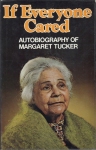 This time last year, for Indigenous Literature Week 2021, I was pleased to host a guest review by Margaret (Meg) Broughton, of Margaret Tucker’s If Everyone Cared (1977). This year, I read it myself, and share Meg’s opinion that it’s a fascinating story of an outstanding woman who was one of Australia’s earliest female Aboriginal activists in the 20th century. It’s not just an important life story—a significant first-hand account of Stolen Generations policy—it’s also interesting to explore how this book published nearly half a century ago, fits into the literary history of First Nations in Australia. This is what I have focussed on, so I recommend reading Meg’s review first, for her insights into Margaret Tucker’s life story.
Please note that I am not a scholar…
View original post 1,741 more words
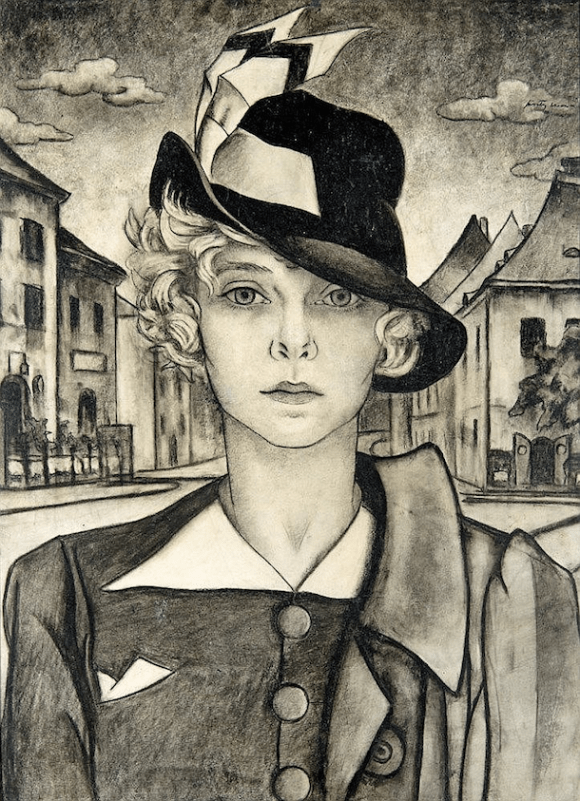
Self-portrait, ND / Charcoal on paper laid on paperboard / Private collection


 penwithlit