Categories
Categories
Medieval Castle, England
Steeped in Romanticism!!

Lovely use of colour and interesting perspectives!

Walter Sickert and the founders of the Camden Town Group restricted its membership to sixteen men, but there were several other men and women artists who were strongly associated with it. One of the more fascinating and productive of the outer circle was Douglas Fox Pitt (1864–1922), son of Augustus Lane Fox who is better known under his later name of Lieutenant-General Fox Pitt Rivers, whose anthropological and archaeological collection formed the basis of the Pitt Rivers Museum in the University of Oxford.
Fox Pitt Rivers, the father, had been born Augustus Lane Fox, and changed his name when he inherited a country estate substantial enough to support him and his family in the style that they desired. Young Douglas Fox Pitt didn’t need to work, and found it hard to choose an occupation. He initially started to train as an architect, then went to Canada and South America to…
View original post 928 more words
I think that Bernhard is an interesting writer but not easy to comprehend in it’s entirety. I found aspects of Wittgenstein’s Nephew intriguing. The book is much about illness and depression so not always easy to read. Nevertheless even in translation there is a musicality to the prose. I remember the section on the Viennese café and the comments on the theatre. There is some ironic and dark humour too so definitely worth reading. On Wittgenstein I would recommend Ray Monk’s engaging biography.

Germans may be considered to be more severe, but the works of the best-known Austrian authors available in English make the Austrians seem even less jolly. Thomas Bernhard (1931-1989) at least does display a wicked sense of humour in much of his fiction, but he, Peter Handke (b.1942) and Nobel Laureate Elfriede Jelinek (b.1946) show a lot of angry intensity, tempered only by some melancholy, especially in Hendke’s later works. (The Complete Review Guide to Contemporary World Fiction, by Michael Orthofer, Columbia University Press, 2016.)
Well, I can vouch for that. Despite his recent Nobel, I am not inclined to read Handke, but my experience with Jelinek is that once was enough. And now that I’ve read two by Thomas Bernhard, that might be enough of that angry intensity too.
(Though Joe from Rough Ghosts enjoyed Wittgenstein’s Nephew so I remain open to trying that one too. …
View original post 1,380 more words
Another fine portrait!!

A random survey of self-portraits created by women through the centuries
Nigerian-American artist Toyin Ojih Odutola (born 1985)
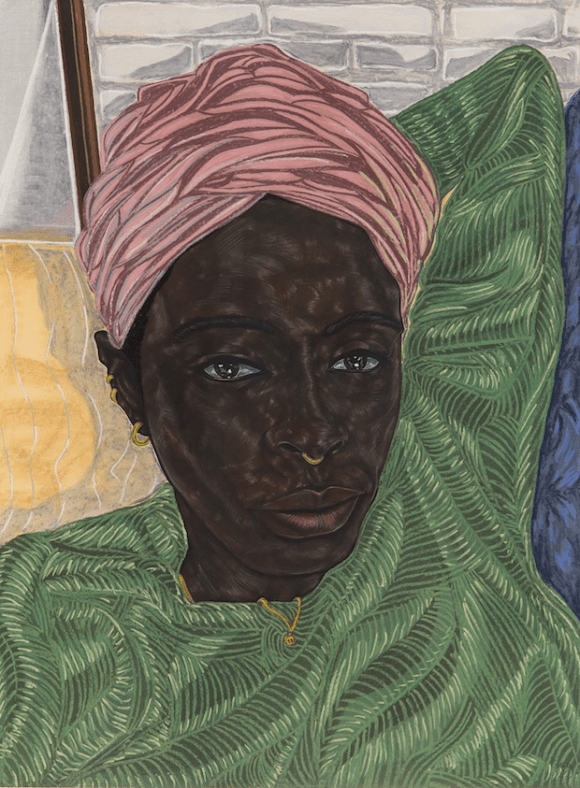
The Many Ways To Work It Out, 2017 / Charcoal, pastel, and pencil on paper / Private collection
[2 embedded links above]
Categories
Blue Door, Tuscany, Italy
Those leaves are absolutely stunning!
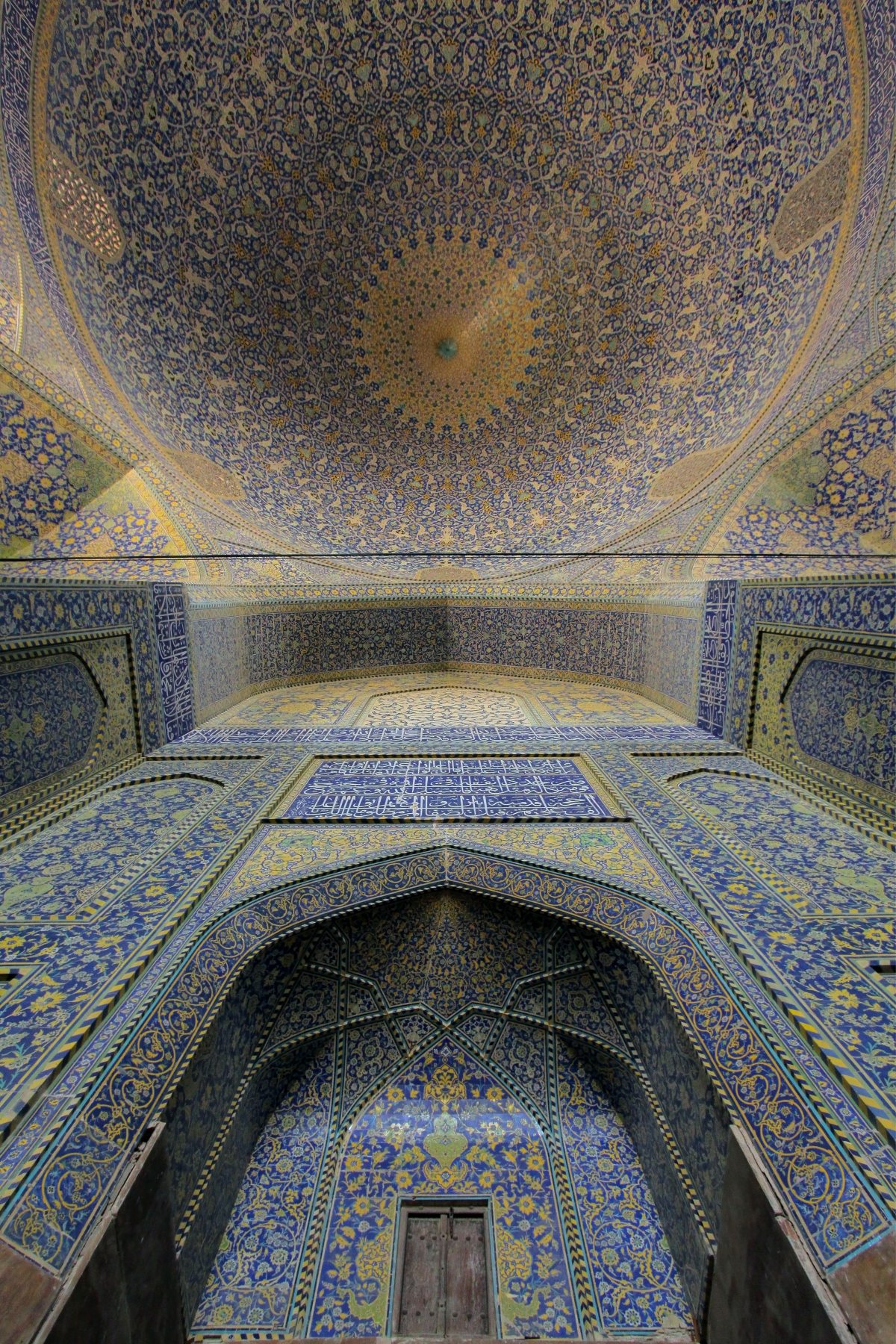

Translated by Zaman Stanizai
Oh dear, my month of Afghan culture is nearly over, and I’ve still got quite a lot to write up and have read less than hoped because of work commitments plus half term with the kidlings.
Dancing in the Mosque is a memoir by Homeira Qaderi that was first published in the UK in 2021 by Fourth Estate. Qaderi is a formidable and fiercely intelligent woman, born in war-torn Afghanistan during the Soviet occupation, and living for a while as a refugee in Iran.
“Afghanistan is the land of invisible bullets and the land of a death foretold, the land of doomed destinies, and the land of dejected and disgruntled youth, waiting forever for dreams that will never come true. This is how Madar, my mother, Ansari, and Nanah-jan, my grandmother, Firozah, described my homeland to me when I was barely four years old.“
Returning…
View original post 263 more words
A random survey of self-portraits created by women through the centuries
Russian painter Larisa Nikolaevna Kirillova (born 1943)

Self Portrait, 1974 / Oil on canvas / State Russian Museum, St. Petersburg, Russia
[2 embedded links above]
A random survey of self-portraits created by women through the centuries
Artist, teacher, and inventor Slawa Horowitz-Duldig (1901-1975)

1. Self-portrait, c.1924 / Terracotta / Duldig Studio, Melbourne, Australia

2. Self-Portrait at 9 years old, 1911 / Pencil / Duldig Studio, Melbourne, Australia
[3 embedded links above]
Categories
Peace
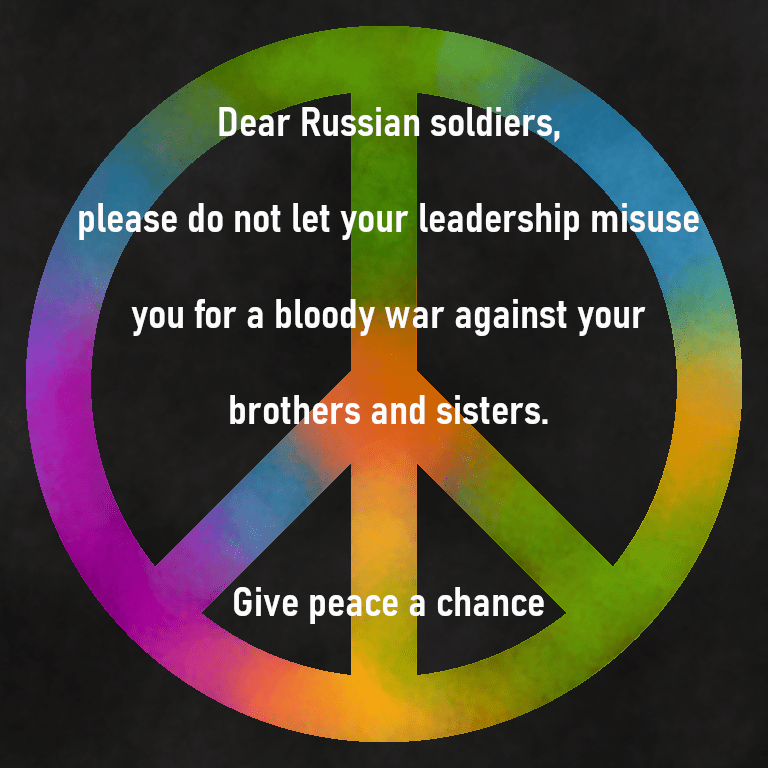

#Ukraine #Russia #RussianInvasion #StoptheWar
there is a door
to exit neverland
you hold the key
in your own hand
even in the
darkest hours
in the face of
forced dispair
heroes aren’t made by
winning wars
they are born by
makin peace
 penwithlit