‘My Paternal Grandparents’, a poem by Kate Blake of ‘aroused’
Nana and Pop met on the ward
when she gently tended
his gruesome war wounds

he a tall handsome older gent
she a tiny gentle English rose

he solemnly declared he had nothing
and lived in the middle of nowhere

but love blinded her to his reality
and after the war she sailed south

with another nurse to join their beau’s
a huge adventure in the Australian bush

completely off grid with snakes and spiders
sixteen miles from any neighbour or station

in his family home with his sisters and brothers
the children from his first marriage had moved on

they birthed my aunt and father
she sailed back to UK every two years

taught us all to knit crochet and embroider
the boys were more accomplished than I
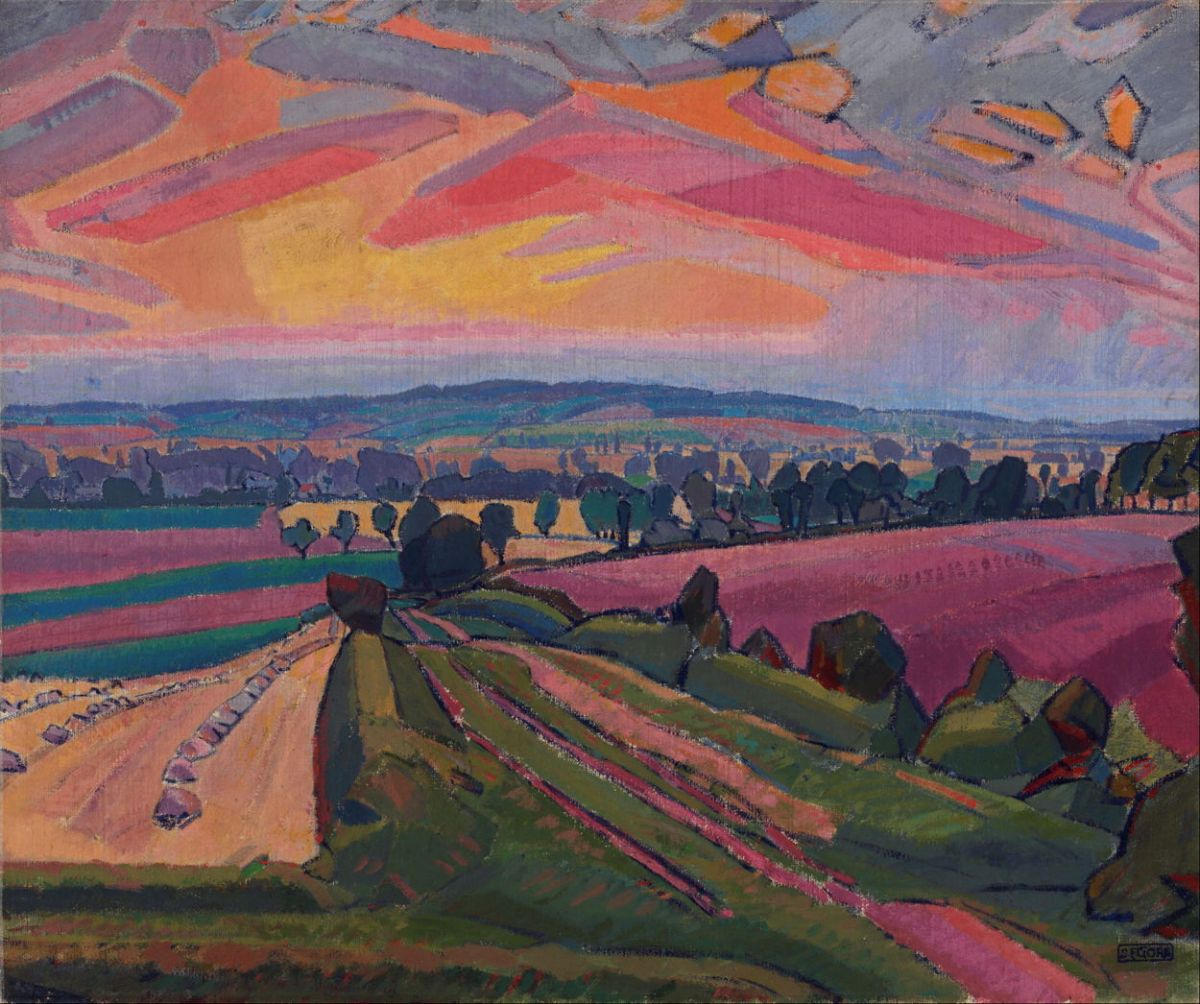
In the first of these two articles looking at the short career and paintings of Spencer Gore (1878–1914), first president of the Camden Town Group, I showed examples from the start of his professional career to his marriage and influence by paintings of Paul Cézanne and Paul Gauguin in 1911.
In the same year, as president of the sixteen elected members of the Camden Town Group, Gore joined their meetings every Saturday afternoon in rooms on the first floor of Sickert’s studio at 19 Fitzroy Street, Camden Town, in north London. Living with his wife in their first floor flat at 2 Houghton Place, just off Mornington Crescent, he had but a short walk to those meetings.
The splendid Penzance Literary Festival has chosen this topic as the inspiration for this year’s event. I have taken out my larger dictionaries and looked a little at its usage and etymology. The latter is not difficult as it derives directly from Latin and basically means something like the capacity to jump back.
The term resilience was introduced into the English language in the early 17th Century from the Latin verb resilire, meaning to rebound or recoil (Concise Oxford Dictionary, Tenth Edition).
resilience (n.) … 1620s, “act of rebounding or springing back,” often of immaterial things, from Latin resiliens, present participle of resilire “to rebound,
From Ovid we read “saepein gelidos resilire lacus, sed nunc quoque turpes” which Loeb gives as meaning in Metamorphoses Book VI as Often they sit upon the sedgy bank and often leap back into the cool lake. This comes from a rather beautifully poetic passage at https://www.loebclassics.com/view/ovid-metamorphoses/1916/pb_LCL042.315.xml
We get the English expressions ‘Salient’ and ‘To sally forth’ from the Latin verb Salio -to jump. In Cassell’s Latin Dictionary we learn of the Salii who were apparently a college of priests who jumped and leapt about worshipping Mars in a procession accompanied by singers and armed dancers. Instituted bt Numa Pompilius apparently.
Returning to the concept of Resilience we can distinguish its meaning from something like Endurance or Durability; it is more springy, elastic and perhaps energetic. Principally, of course, the concern around the concept relates to the inner resources for coping with Covid and the restrictions consequent upon it. It is the psychology of resilience which makes it a concept current in the zeitgeist. Without much prompting Google asks –
What are the 5 skills of resilience?
Five Key Stress Resilience Skills
Self-awareness.
Attention – flexibility & stability of focus.
Letting go (1) – physical.
Letting go (2) – mental.
Accessing & sustaining positive emotion.
Additionally it further questions-
What are the 7 C’s of resilience?
Dr Ginsburg, child paediatrician and human development expert, proposes that there are 7 integral and interrelated components that make up being resilient – competence, confidence, connection, character, contribution, coping and control.
Whilst thinking about this topic, I came across these lines from a poem entitled Women Running, based upon Picasso’s painting entitled Deux femmes courant sur la plage which seem apposite and uplifting-
That arm laid across the horizon,
the racing legs, an unstoppable quartet, pull
me from my skin and I become one of them,
believe I’m agile enough to run a mile,
believe I’m young again, believe age
has been stamped out. No wonder, I worship
at the altar of energy, not the energy
huge with hate which revels in tearing apart,
in crushing to dust but the momentum
which carries blood to the brain, these women
across the plage, lovers as they couple
and tugs at the future till it breaks into bloom. Myra Schneider
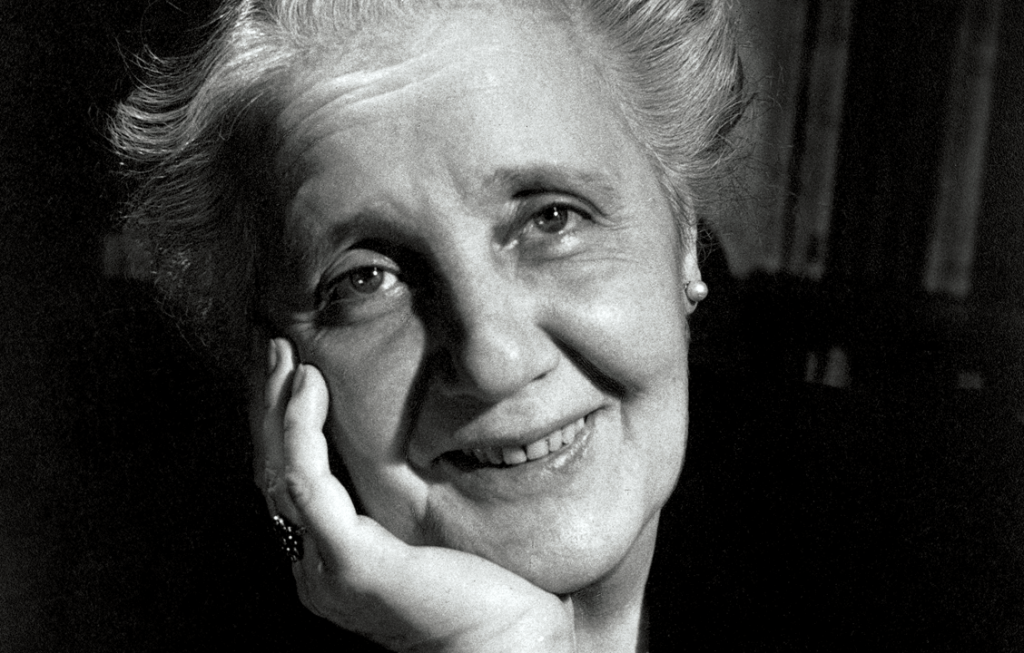
Melanie Klein is my favorite psychoanalyst after the Master. While I consider Freud to be the pioneer and thinker par excellence, Klein made important revisions to his works and anywhere they disagreed, as far as I’m aware, I favor Klein’s interpretations.
The common updates to Freud’s theories are well-known and could probably be decently summarized by a quick google search, but for the purposes of this blog post, I want to focus on the 1928 essay “Early Stages of the Oedipus Conflict” and detail my own thoughts on it.
She correctly dates the Oedipus tendencies to the end of the first year due to weaning. This leads to an unleashing of aggression towards the persecutory object (Mother/Breast) and also anxiety. This anxiety pushes the ego to develop, at similar times of object-permanence, where the Good Breast and Bad Breast are the same breast. Both infant boys and girls find…
I am entering my final day in Sochi. I walked the docks, gazing into the large waves that came crashing onto the land from the Black sea. I spent hours looking for a place to piss. I became friends with the dogs, and sat with them for more time than I should have, until, finally, wandering into a hookah lounge.
I met a group of people, all of whom spoke clear English, and we shared perverted jokes for several hours. The string guitar played in the background. He was wearing a white dress shirt, unbuttoned, with his chest exposed. I think he was going for that Don Juan look. As for me, I’m no Don Juan; I simply search the world for what remains of love. I’m still convinced that it’s not possible anymore to fall in love. Generally speaking, love remains the least of possibilities.
I read this quite recently and agree that there is so much packed into a small space. I seem also to remember horse races and a visit to the mountains. Good that Eurostar is back in operation once again!!
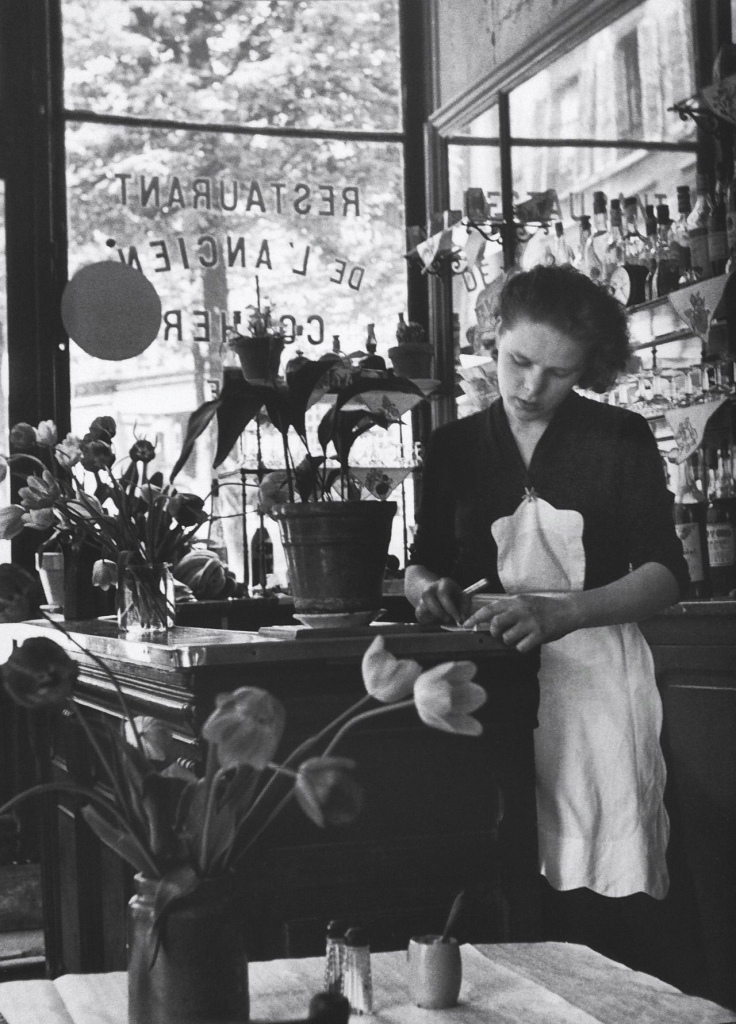
Hemingway’s ‘A Moveable Feast’ is a novel that was published posthumously. The book was born from a journal found in a suitcase in The Ritz for almost thirty years. Hemingway had been having lunch in 1956 with the hotel’s chairman when he was asked if he was aware that he had left trunks there in 1930. Ernest did not remember leaving them there, but he vaguely remembered that Louis Vuitton had gifted him a trunk. He eventually had them brought up to his room, and when he opened them, he found a journal containing notes from his time in Paris. This memoir details Ernest Hemingway’s experiences in 1920s Paris. There has and always will be a romantic smog to the dreams we have of Paris. Hemingway captures that beautifully in this short book.
He details his daily eating and drinking routine in the pretty cafés that lined the streets. Squirrelling…







 penwithlit