Gay’s work is clearly essential to knowing about Freud.s life. Also “Becoming Freud: The Making of a Psychoanalyst (Jewish Lives) (Jewish Lives (Yale))” is worthy of note.
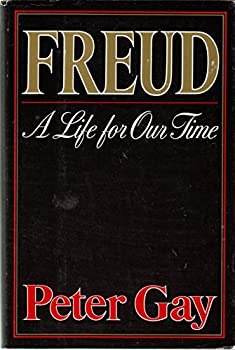
I first read Peter Gays’s 810 page biography, Freud: A Life for Our Time, upon its release in 1988 when I was 23 years old. Many things have changed since then, but having just re-read Gay’s book, I’ve found that Freud’s is still a life for our time.
A detail that stuck with me from my first reading had to do with the fact that Freud lived the last 16 years of his life battling cancer of the palate (while he continued to smoke cigars, which presumably were the cause of his disease). Vividly stamped in my memory was how, toward the end of his life, Freud’s cancer became so ulcerated that it emitted an overwhelming stench, repellent even to his beloved dog. Living his last days in London as a refugee from Nazi-controlled Austria, the smell of death was literally in the air. I recall thinking how Freud’s…
I have just come across a charming poem about Nash’s paintings by a poet called Robert Saxton in a collection called “Flying School”. The poem is called “Aerial Flowers”.
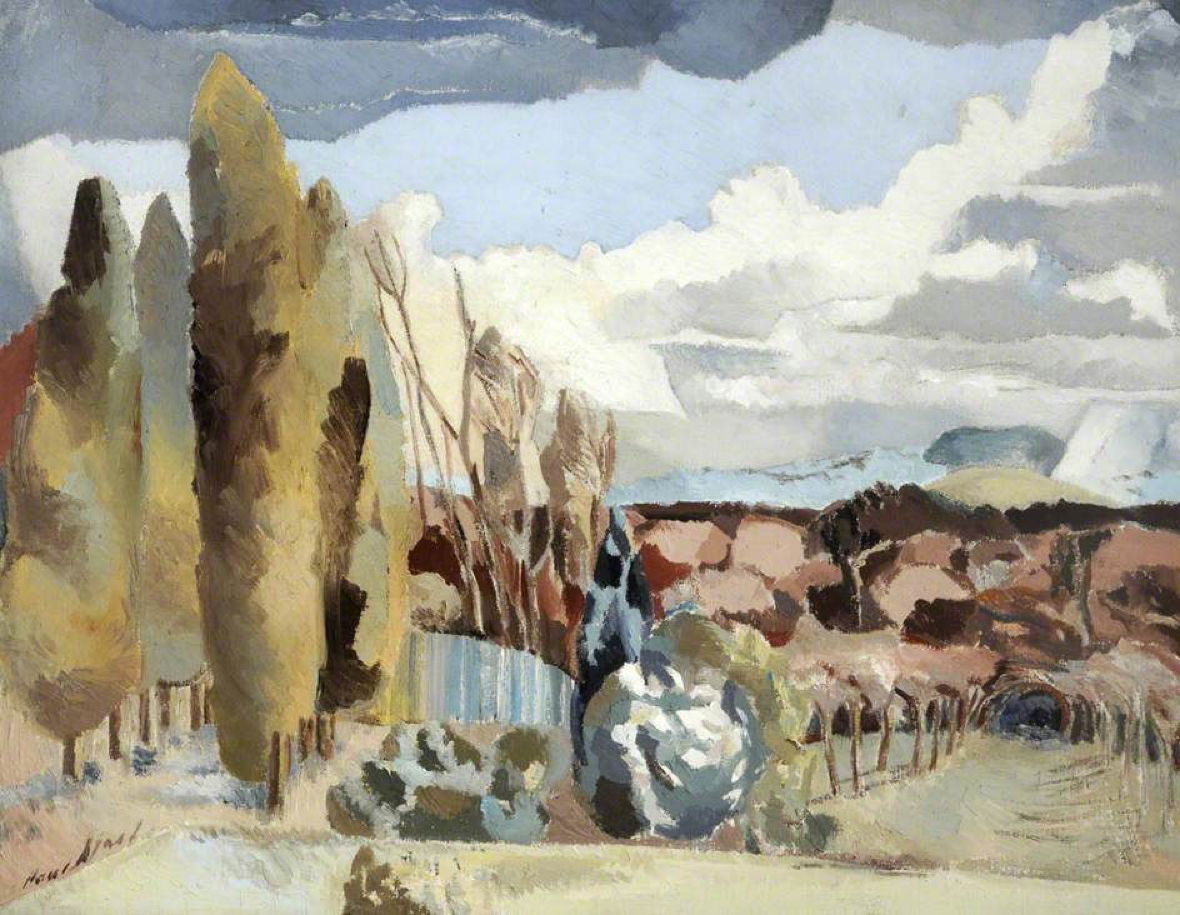
When Paul Nash was staying with Hilda Harrison in her house on Boar’s Hill, near Oxford, he could see a landscape which had come to obsess him from childhood: two hills (technically the Sinodun Hills) with clumps of trees at the top, the Wittenham Clumps. As he completed his final paintings of the Second World War, he turned to the Wittenham Clumps in series of paintings which accompanied his steadily declining health.
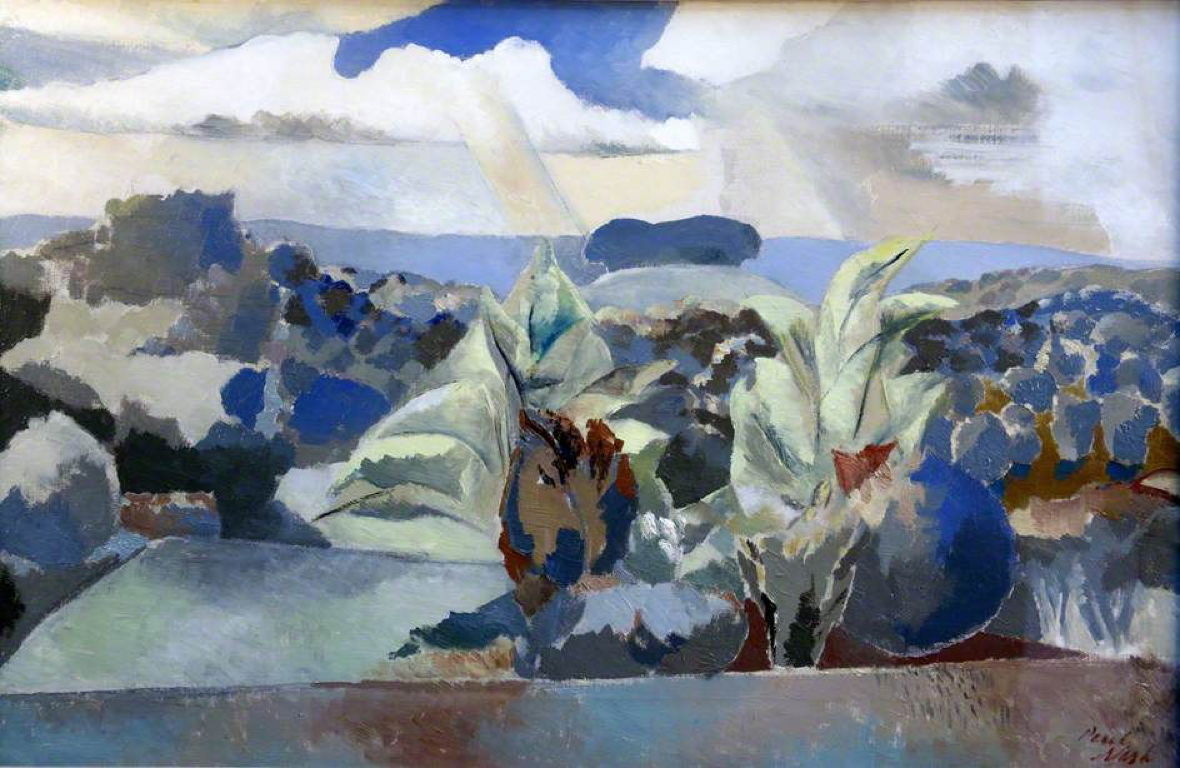
Paul Nash (1892–1946), Landscape of the Bagley Woods (1943), oil on canvas, 56 x 86.3 cm, Private collection. The Athenaeum.
Not far from Boar’s Hill is an ancient wood, owned by St John’s College, Oxford, which Nash depicts in his Landscape of the Bagley Woods (1943). Using his oil paint with the subtlety of watercolour, the rolling fields of the foreground are quickly replaced by dense woodland. At the leading edge of the wood, some trees assume the…
Very interesting- I am currently reading Lire Magazine olume 19 which is on Balzac and hoping to improve my French. I am sure that you would agree that Austen and Balzac were very different writers. The wit exchanged in a Bath drawing room compared to the drama in a Parision atelier. Balzac makes you think hard and was concerned with the realistic dichotomies in levels of French society so I find myself thinking about George Eliot and we know he was an influence on Dickens. I wonder if Proust might not suit us both better. I keep wondering about tackling Lacan!!
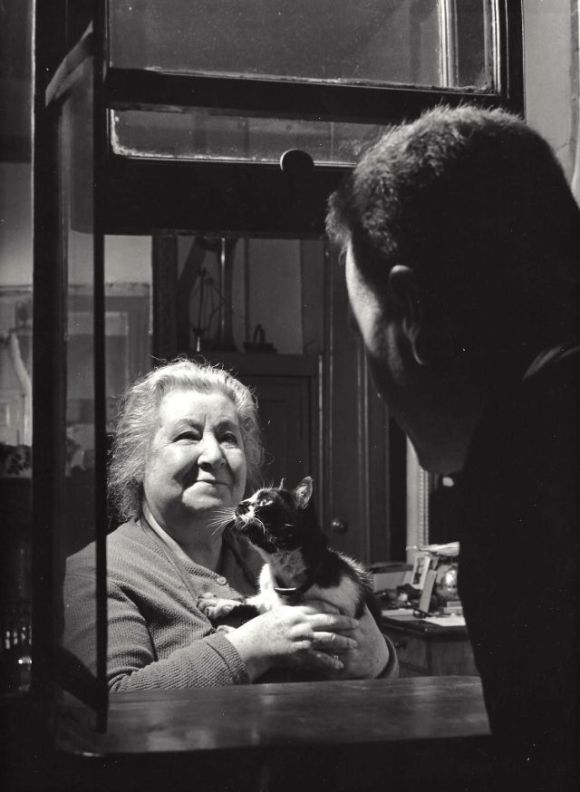
Born 1920 in the Amsterdam working-class district called ‘de Jordaan’, Dutch photographer Kees Scherer began working as a freelance photographer and reached the pinnacle of photojournalism with high-profile reports about the flood disaster in the province of Zeeland (1953) and the Hungarian uprising (1956), shortly after WWII.
Scherer initiated World Press Photo in 1955 with Bram Wisman. In addition to his extensive work in color, Scherer’s early work in black and white has also been receiving increasing attention in recent years. He depicted his favourite cities in exhaustive detail, namely Paris, New York, and especially Amsterdam.
Scherer died in 1993 at the age of 73.
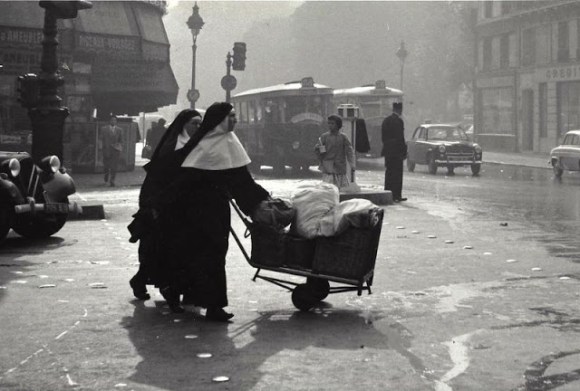
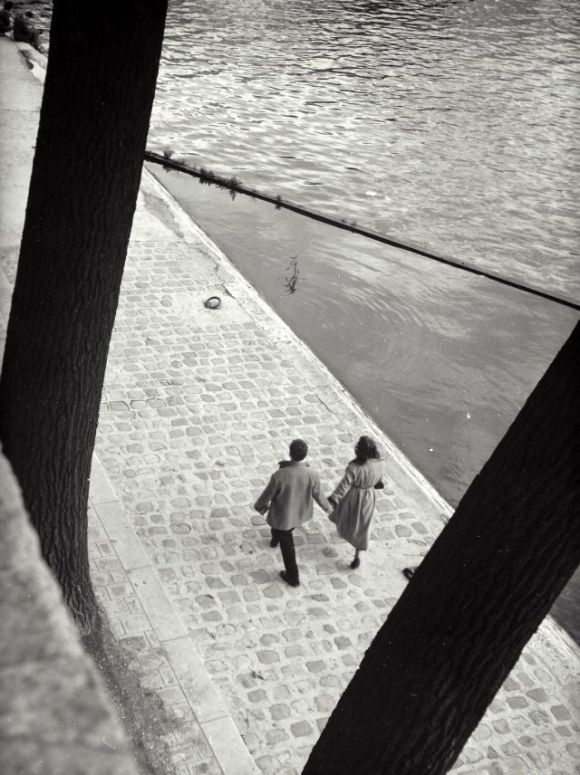
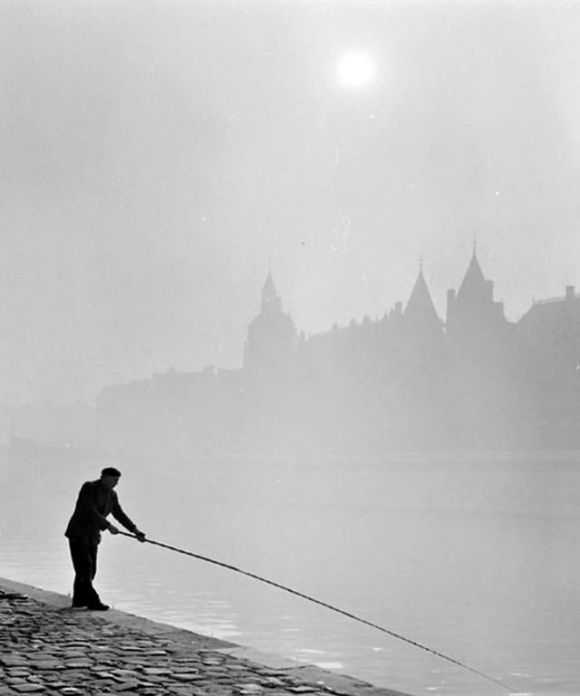
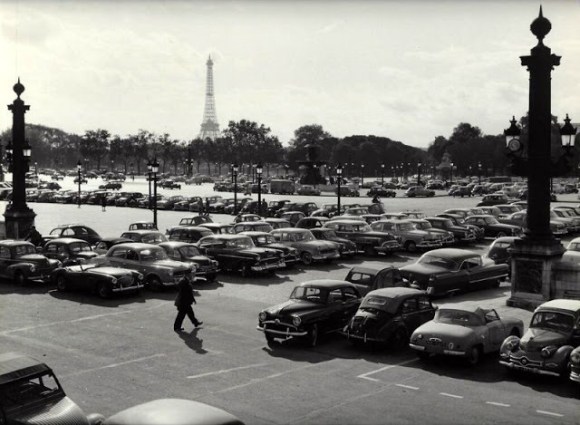
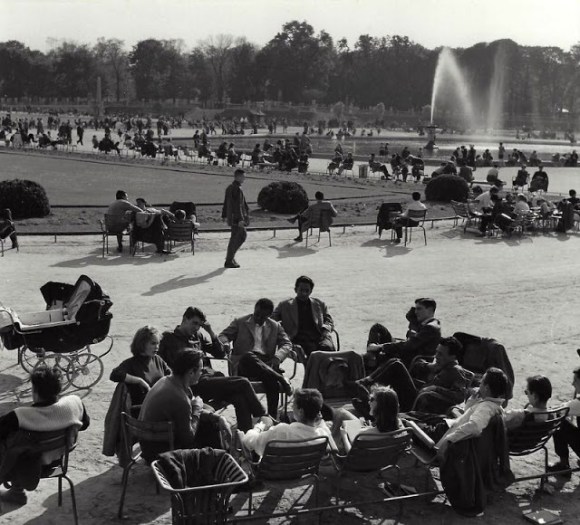
These amazing black and white photos are part of Scherer’s work that documented everyday life of Paris in the 1950s.
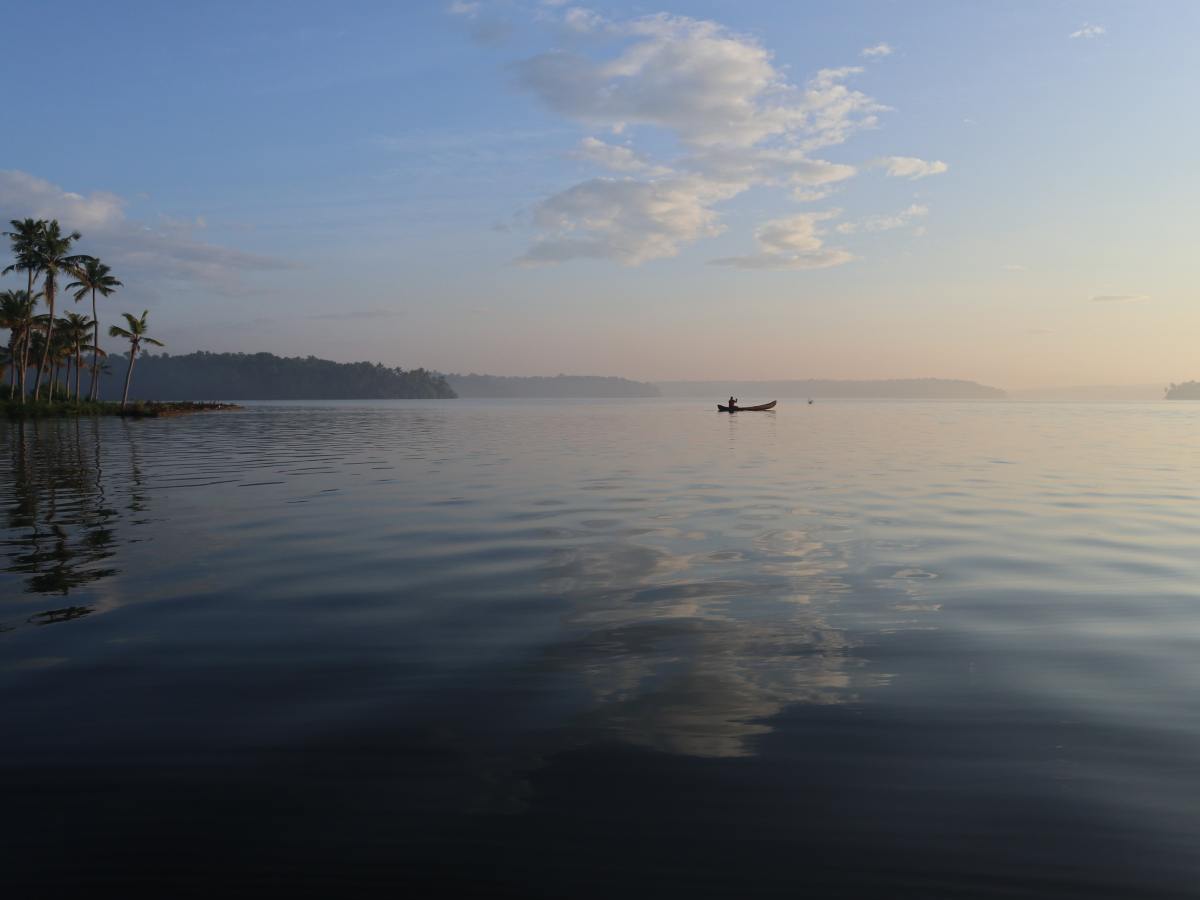
The God of Small Things is one of those books that everyone reading this will have heard of, but I don’t suppose everyone will have read. It won the Booker Prize in 1997 and rapidly became the biggest-selling work of Indian fiction by a non-expat writer. Arundhati Roy steered clear of fiction after writing her prize-winning novel, focusing on her political writing, although a second novel was published in 2017, some 20 years after her first.
The story, set in the southern Indian state of Kerala, is concerned with the Ipe family, focusing in particular on disgraced adult daughter Ammu and her twin children. Ammu has returned to her family home in the small town of Ayemenem after divorcing her alcoholic husband, but lives miserably there, filled with “The infinite tenderness of motherhood and the reckless rage of a suicide bomber
I have been reading a little Schopenhauer recently whose approach I am pretty certain was an influence on Freud. This looks a very interesting if demanding read. Thanks for posting.
This is interesting but I probably need to read it over several times to accept or absorb it. It fits in with what is called relational psychoanalysis and Martin Buber that I have heard about recently. I will publish this and see if itis punished!!
I often find myself thinking about Frankl and thinking about rereading his ideas. It also explains how the confusions around ovid are inhibitin when getting on with the normal purposiveness of everyday living.
Logotherapy was developed by neurologist and psychiatrist Viktor Frankl, on a concept based on the premise that the primary motivational force of an individual is to find a meaning in life.
Frankl describes it as “the Third Viennese School of Psychotherapy” along with Freud’s psychoanalysis and Adler’s individual psychology. Logotherapy is based on an existential analysis focusing on Kierkegaard’s will to meaning as opposed to Alfred Adler’s Nietzschean doctrine of will to power or Freud’s will to pleasure. Rather than power or pleasure, logotherapy is founded upon the belief that striving to find meaning in life is the primary, most powerful motivating and driving force in humans.
A short introduction to this system is given in Frankl’s most famous book, Man’s Search for Meaning, in which he outlines how his theories helped him to survive his Holocaust experience and how that experience further developed and reinforced his theories…
The London Review of Books is a wonderful fortnightly pleasure. I am particularly drawn to articles that have maps and also to any item which elucidates the background to a problem in the world which has escaped my previous attempts to understand it. The problem in this case being the distressing war in Nagorno~Karabbakh. However, in reading this article by Abdul~Ahad, I came across a few lines which I found deeply poetic.
Nagorno~Karabakh Nagorny is Russian for ‘mountainous’;Karabakh Turkish for ‘black garden’~is a region in the South Caucasus with a predominantly Armenian population. It was a province of ancient Armenian kingdoms before coming under the successive suzerainty of Sassanids, Muslim Arabs, Turkmen tribes and the Persian Safavids with pockets controlled by Armenian meliks, prices who used outside powers to bolster their claims to authority. In the mid~18th centuary following the decline of the meliks, a khanate was established with Persian support by the Javanshirs, a Turkic Karabakh clan, who built the city of Shusha. The region was absorbed into the Russian Empire in 1813 after the first Prussian war, and Persia ceded the rest of the Transcaucasus to Russia a decade or so later.
Karabakh maintained a strong Armenian religious and cultural identity through the centuries, but like all frontier regions it was a place where cultures and peoples converged. Armenian, Persian, Arabic and Turkic influences produced a unique cultural heritage, manifest in food, music. art and architecture. Armenian churches and monasteries dotted the hills while Azerbaijani composers and writers flourished in Shusha. Armenians, Azerbaijanis, and Kurds both Yazidi and Muslim, lived side by side in towns and villages set among pine and birch forests, orchards, vineyards and highland pastures, Mulberry groves supported thriving silk industries.
Having just typed it in maybe it is not exactly a poem but it reads very elegantly to my ear. This appeared in an article entitled Each rock has two names in the London Review of Books 17th June 2021. You can read more about this prize winning journalist at https://en.wikipedia.org/wiki/Ghaith_Abdul-Ahad













 penwithlit