Categories
Uncategorized

Torin

Any connection with Thorben/Forbes? Thanks!

apolla13's avatarNames Throughout the Ages

Torin is a male given name with several possible etymologies:

  • it’s an Irish Gaelic name meaning “chief”;
  • it could be related to Irish toirneach meaning “thunder” or Old Irish torann meaning “noise; noise of battle; thunder; tumult);
  • Torin could also be a contracted form of Thorfinn or Torfinn, a Scandinavian male name made up of Thor, the Norse god of thunder whose name means “thunder”; and finn, which comes from Old Norse finnr meaning “Finn, Sami, Lapp”, a given name and byname used to refer to someone who came from Finland or was part of the Sami people (also known as Lapps). Although the origin behind  finnr is uncertain it has also been linked to Old Norse meaning “wanderer”;
  • Torin could also be related to Thorin, a Germanic male name used to represent the god Thor; Thorin is also used by J.R.R. Tolkien used the name…

View original post 117 more words

Categories
Uncategorized

Freya

Any connection with Fay? Interesting.

apolla13's avatarNames Throughout the Ages

Freya is the goddess of love, death, beauty, fertility and war in Norse mythology, and the twin sister of Freyr. The name comes from Old Norse freyja meaning “lady” which comes from Proto-Germanic *frawjǭ (lady, wife of a lord) which derives from a PIE root word. There seems to be some thought that Freya and Frigg were once the same goddess (Frigg being the wife of Odin and goddess of marriage, childbirth, and the earth).

Origin: Proto-Indo-European

65491ce766176c79157f268514e38ec8Pinterest

Variants:

  • Freyja (Old Norse, Icelandic)
  • Freja (Danish, Swedish)
  • Frøya (Norwegian)

Male forms:

  • Freyr (Old Norse, Icelandic)
  • Frey (Old Norse)
  • Frej (Danish, Swedish)
  • Frøy (Norwegian)
  • Froy (English)

View original post

Categories
Uncategorized

R.B. Kitaj: Obsessions Exhibition at the Jewish Museum Berlin

notesfromberlin's avatarAn Englishman in Berlin

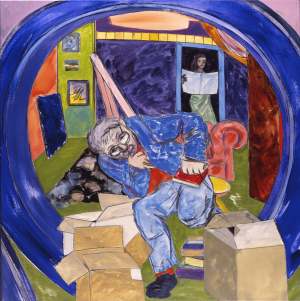
The Unpacking my Library, 1990-1991 first large-scale retrospective of R.B Kitaj‘s work in fourteen years is currently on at the Jewish Museum Berlin.

R.B Kitaj (1932 – 2007), an American Jewish artist, spent almost 30 years in England. Like his friends David Hockney and Lucien Freud, he turned to figurative art in the 1960s.

His work is highly referential and collagic, drawing on a wide range of literary and artistic sources. He frequently uses newspaper cuttings and other texts in his work. Literature played a significant role in his life – he was a “self-professed bibliomaniac” and part of his huge collection of books are on display in the exhibition. The painting above is entitled ‘Unpacking My Library’, alluding to an essay by Walter Benjamin.

Kitaj’s circle of friends included philosophers, writers, poets and other artists. He drew from their work, and also represented them in his paintings. Below, ‘Two London Painters’, shows…

View original post 232 more words

Categories
Uncategorized

Meet The Translator – Ruth Martin

Reading “Dreamers” currently and can see it must have been a real challenge. Think I will eventually get the original to improve my German.An introduction to many interesting characters. My favourite so far is Mann’s Father-in-law, Alfred Pringsheim, the mathematical genius.

LizzySiddal's avatarLizzy's Literary Life (Volume One)

Not much preamble needed for this interview; the book jacket above reveals why I was so keen to “meet” translator Ruth Martin during GLM VIII, and my review of “Dreamers” will be published on the European Literature Network later this month.

Hi, Ruth, welcome to the blog,

Volker Weidermann’s “Dreamers” is one of my most anticipated titles of 2018, as his previous release was my 2016 Book of the Year.  How did you get the commission? Was it a dream to translate or was it full of knotty challenges?

“The Summer Before The Dark” was translated by the late Carol Brown Janeway (who was also my editor at Knopf), so I already knew I had some big shoes to fill when I was approached by Adam Freudenheim, the publisher at Pushkin. It was both a dream and full of knotty challenges! Translating Volker Weidermann is a delight, but I wasn’t…

View original post 1,070 more words

Categories
Uncategorized

Crosswise –

Very interesting- a difficult poem to translate.

catterel's avatarPoems of Nelly Sachs in English

If someone rises from the rocks
wielding the sun disk against the foe
when the rootless trickling riddles of tears
foretell for these eyes only
crosswise –
then are let loose
the lionesses of tormented hearts
to devour the mark of Cain
crosswise –
until the wounds wittingly
flow in the brother’s blood
crosswise –

Steigt einer aus den Steinen
die Sonnenscheibe dem Feind vorhaltend
wenn die wurzellos rinnenden Rätsel der Tränen
unter vier Augen wahrsagen
kreuzweis –
die Löwinnen der Herzensqualen
losgelassen warden
zu verschlingen die Kainszeichen
kreuzweis –
bis die Wunden wissend
im Bruderblut fliessen
kreuzweis –

Comment:

It’s been a long time since I added to these translations, but as I now have some followers, I feel duty bound to reward their fidelity with new contributions. Thank you for your interest.

My original aim was to post 100 poems in translation here. Then a few more came…

View original post 84 more words

Categories
Uncategorized

10 wise Italian proverbs

Interesting and mellifluous!

Francesca Bandini's avatarItalian Courses Southampton

Proverbs are around us in everyday life, so ingrained that we don’t even notice when we say them. Proverbs have been created to teach, educate and inspire and they are a great way to better understand culture.

This is why I have decided to gather 10 very wise Italian proverbs and show you the corresponding English one. Sometimes they are similar, other times very different, for sure reading them will enrich your day.

10 Italian proverbs to learn

Here are some very commonly used Italian proverbs if you incorporate them in your speaking, you will enhance your fluency and express yourself even better.

Chi tardi arriva, male allogia.

In English you can say The early bird gets the worm. Better to arrive early to get the best spot or best choice, this is the literal meaning.

A mali estremi, estremi rimedi.

In English you can say Desperate times call for…

View original post 345 more words

Categories
Uncategorized

Paradise in paintings

Interesting to speculate on this in the last 100 years. The earthly paradise of Otto Mueller and Matisse spring to mind.

hoakley's avatarThe Eclectic Light Company

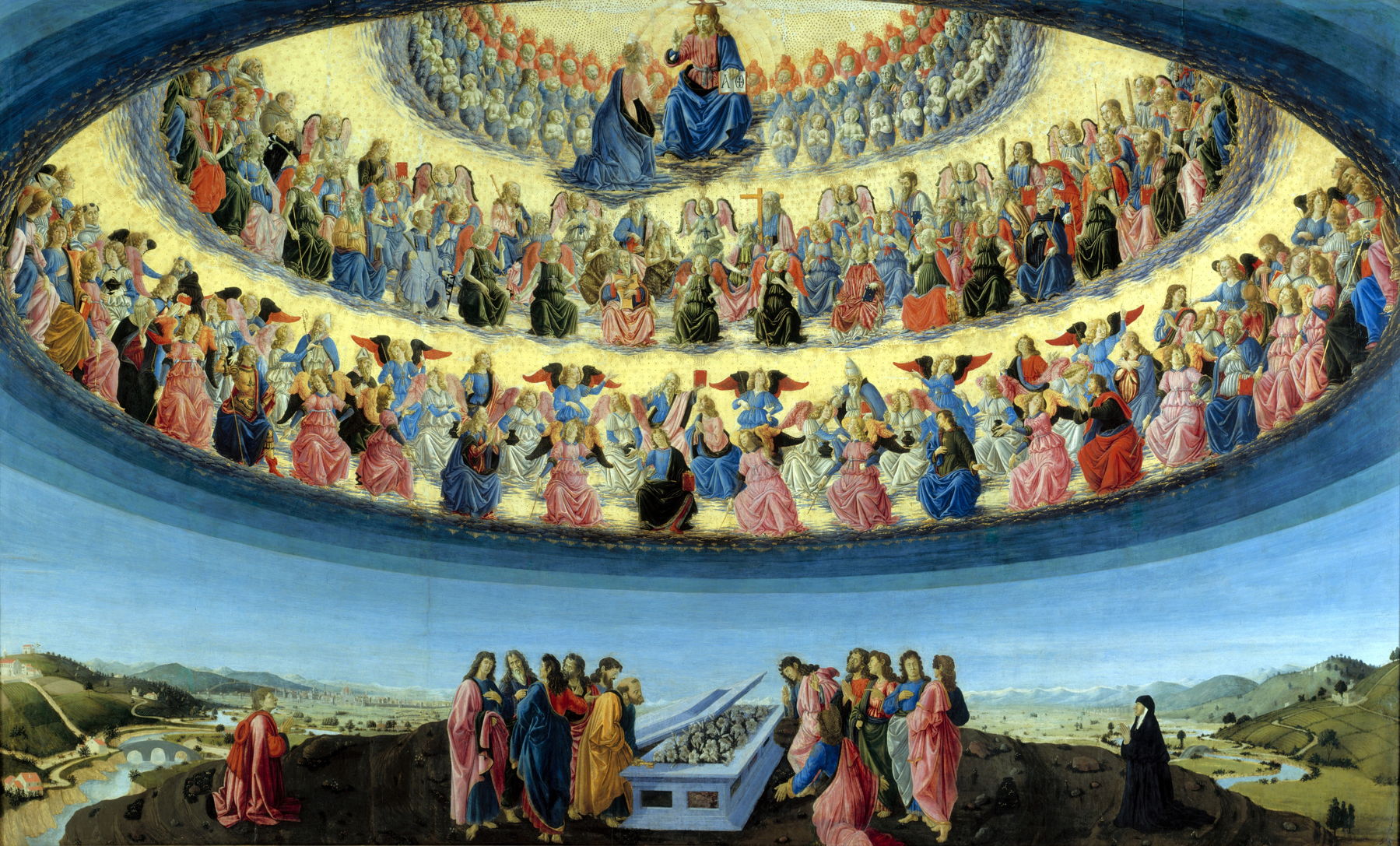
After yesterday’s visit to the underground dungeons of Hell, today’s paintings try to show the reward after life for those who follow the way of the righteous: Paradise.

Paradise is a concept rather more peculiar to Christianity, and although there are pre-Christian equivalents in earlier and different European traditions, such as Arcadia and the Elysian Fields (which gave their name to the Champs-Élysées in Paris), Paradise is quite distinct. From the earliest modern European paintings, there was confusion between the Paradise of the afterlife, and the Garden of Eden from which Adam and Eve were cast out. In this article, I will concentrate on the former, as the direct equivalent of Dante’s Paradise.

botticiniassumptionvirgin Francesco Botticini (1446–1498), Assumption of the Virgin (c 1475-76), tempera on wood, 228.6 x 377.2 cm, The National Gallery, London. Wikimedia Commons.

Paradise commonly occurs in cameo views in paintings of events such as the Assumption of…

View original post 1,271 more words

Categories
Uncategorized

Relighting The City of Light

Interesting times!

thomaspeebles's avatartomsbooks


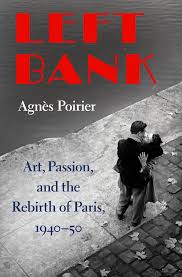
Agnès Poirier, Left Bank:

Art, Passion, and the Rebirth of Paris, 1940-1950 

(Henry Holt & Co., $30)

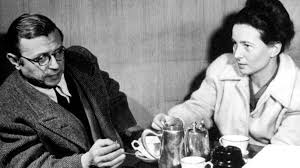
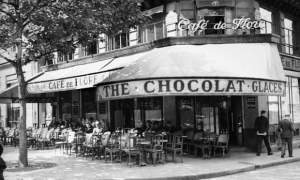
             Agnès Poirier, a Paris-born and London-educated journalist, takes on two weighty subjects in Left Bank: Art, Passion, and the Rebirth of Paris, 1940-1950: Parisian artistic, cultural and intellectual life during what was surely Paris’s darkest 20th century period, the four years of German occupation, 1940-44; and the efforts to restore the City of Light to its former eminence in all things artistic, cultural and intellectual in the remaining years of the turbulent decade.  Her book consists primarily of short anecdotes or vignettes – what she terms a “collage of images” (p.4) — about some of the leading artistic and intellectual personalities in 1940s Paris.  With much emphasis upon the shifting romantic attachments among these personalities, the book has a gossipy flavor.

   …

View original post 2,656 more words

Categories
Uncategorized

Der Frühling naht

Wolfregen & Constanze's avatarDas poetische Zimmer

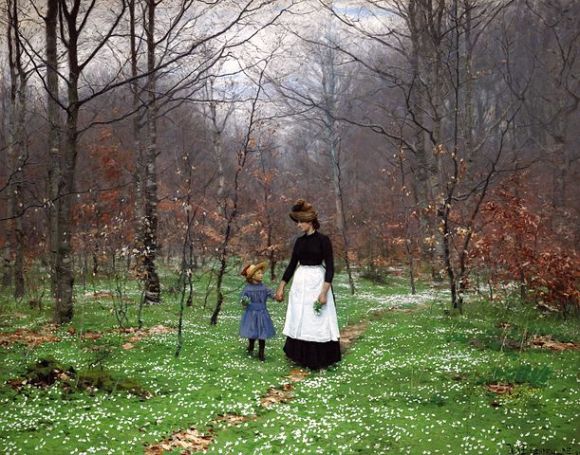
Hans Andersen Brendekilde: Die ersten Anemonen (1889)
April und Mai und März

Es dauert nicht mehr allzu lang,
Bald ist es schon so weit,
Mit Blumen, hellem Vogelsang
Kommt schön die Frühlingszeit.

Die ersten Hecken zart erblühn
Im milden Sonnenlicht,
Den Wald durchzieht ein sanftes Grün,
April den Teppich flicht.

Lässt Knospen brechen, hört dabei
Des Kuckucks Doppelruf,
Und bis er naht, der holde Mai,
Sich eine Welt erschuf.

Erst aber webt der blasse März,
Der ist noch öd und grau,
Doch schlägt in ihm schon Frühjahrs Herz
Wie einer schwangren Frau.

©Wolfregen

View original post

Categories
Uncategorized

Erik Erikson: Self-invention Takes a Lifetime

Erikson’s work-always interesting

Feral Philosophy's avatarFeral Philosophy

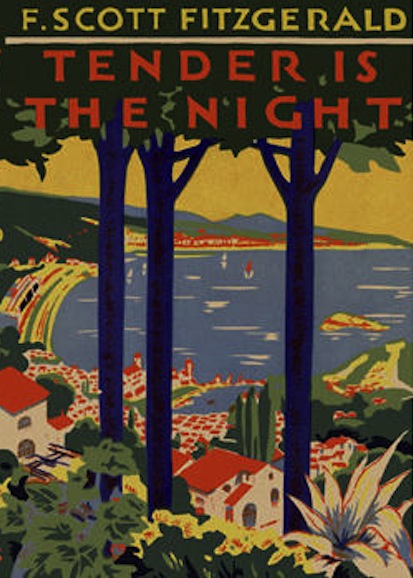
‘Anything that’s in your character at twenty-one,’ says a businessman in F. Scott Fitzgerald’s novel Tender Is the Night (1934), ‘is usually there to stay.’ By the age of 30, most people’s ‘character has set like plaster, and will never soften again’, wrote the psychologist William James in 1890. The exact timing varies, but it’s an old idea: there arrives a moment in life when we become essentially fixed, psychically unmalleable.

Anything that’s in your character at twenty-one is usually there to stay.

The psychologist Erik Homburger Erikson, a Jew born in Germany, would develop a more expansive view of things. In 1927, when he was 25 years old, a spell as a wandering art tutor landed him in Vienna – home and hotbed of psychoanalysis. Erikson made the acquaintance of the Freuds, and the discovery of the talking cure ‘opened a life’s work’ for him. Soon after Erikson completed…

View original post 1,200 more words