Head to Head at Penzance Public Library Nov/Dec 2013
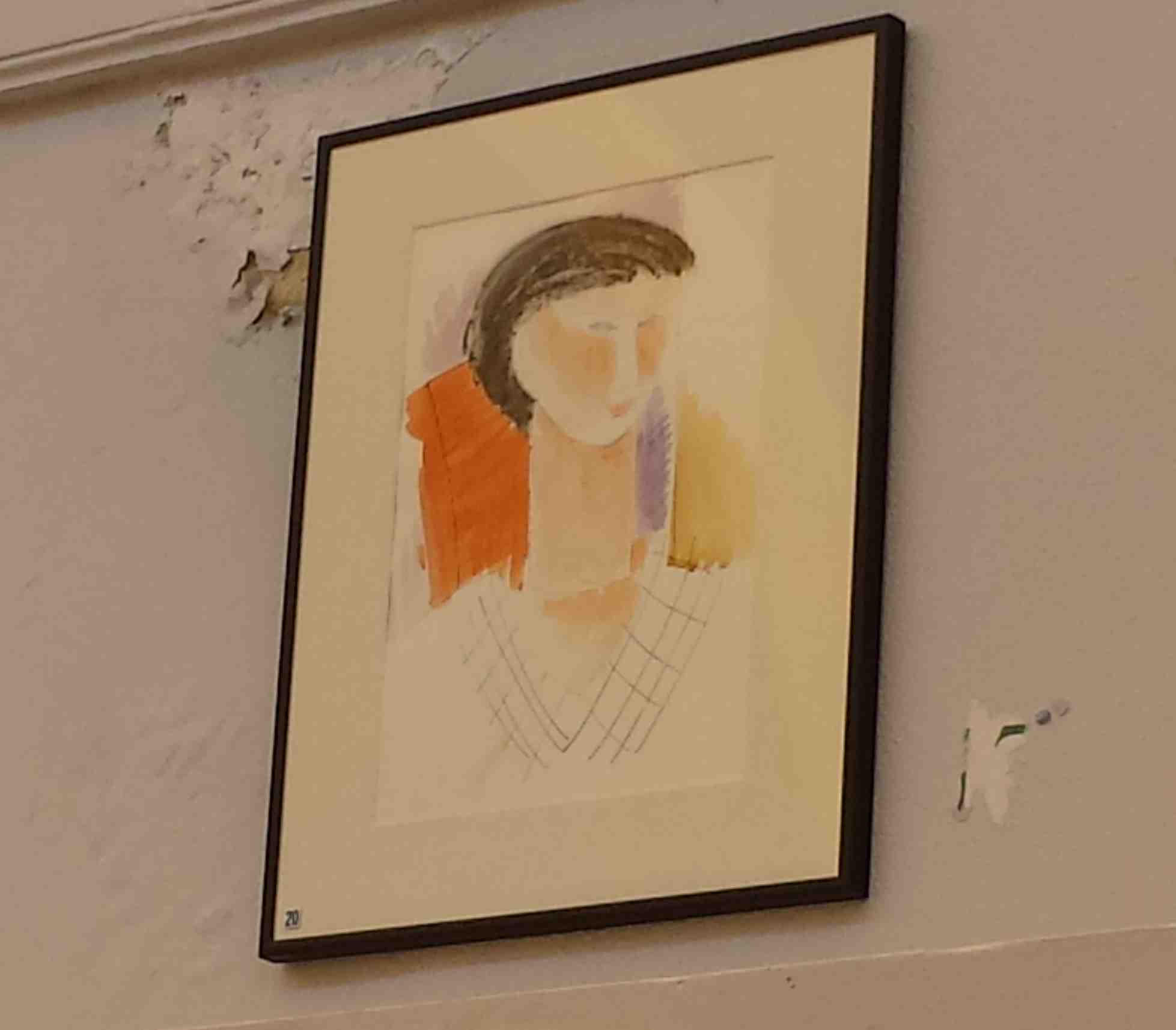
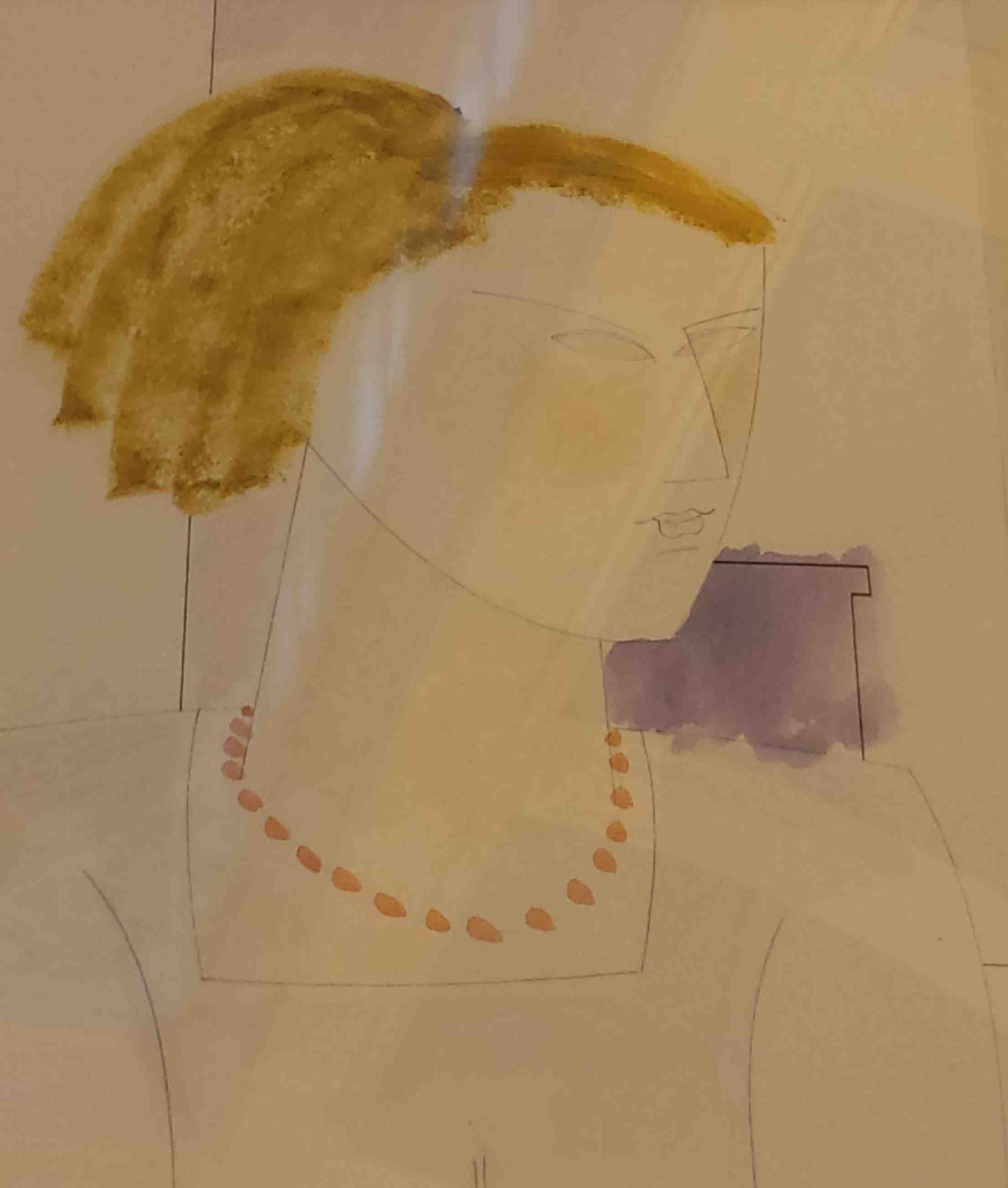
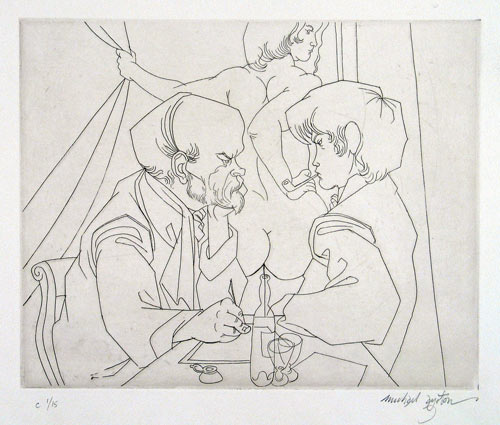
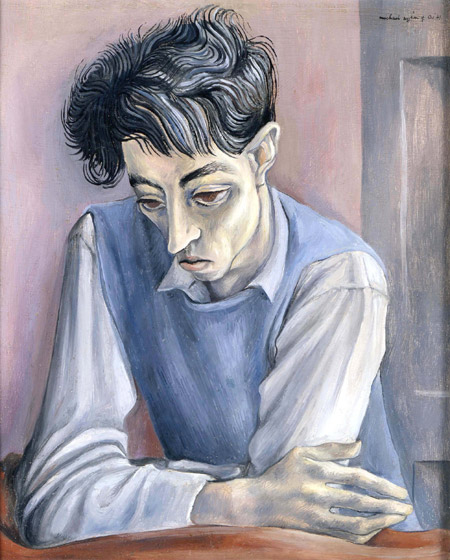
These works were made in the last ten years of John B Anderson’s life. To quote from the notes at the library, “The fine lines adopted from his abstract period remain as precise: less indeed can be more. The work is observational, some of it quite quirky including bad hair days and some serene moments……… John B Anderson pushed his figurative work as far as he could towards abstraction: he then returned to a figurative style with a more restrained and pared back approach resulting in these fine line works.”
At http://www.thisiscornwall.co.uk/Library-pays-tribute-John-B-Anderson/story-13244578-detail/story.html#axzz2leYQH1no there are further details including the remark that, “An artist who was to die in 1997 when in his early 50s, in recent years his paintings have been seen in various local venues, from Trereife Gallery to Penzance Arts Club, and the sequence of his works about to be shown in Penzance Library reveal his admiration for such as Van Gogh, Modigliani and Picasso, and his search for his own style through the figurative and the abstract.”
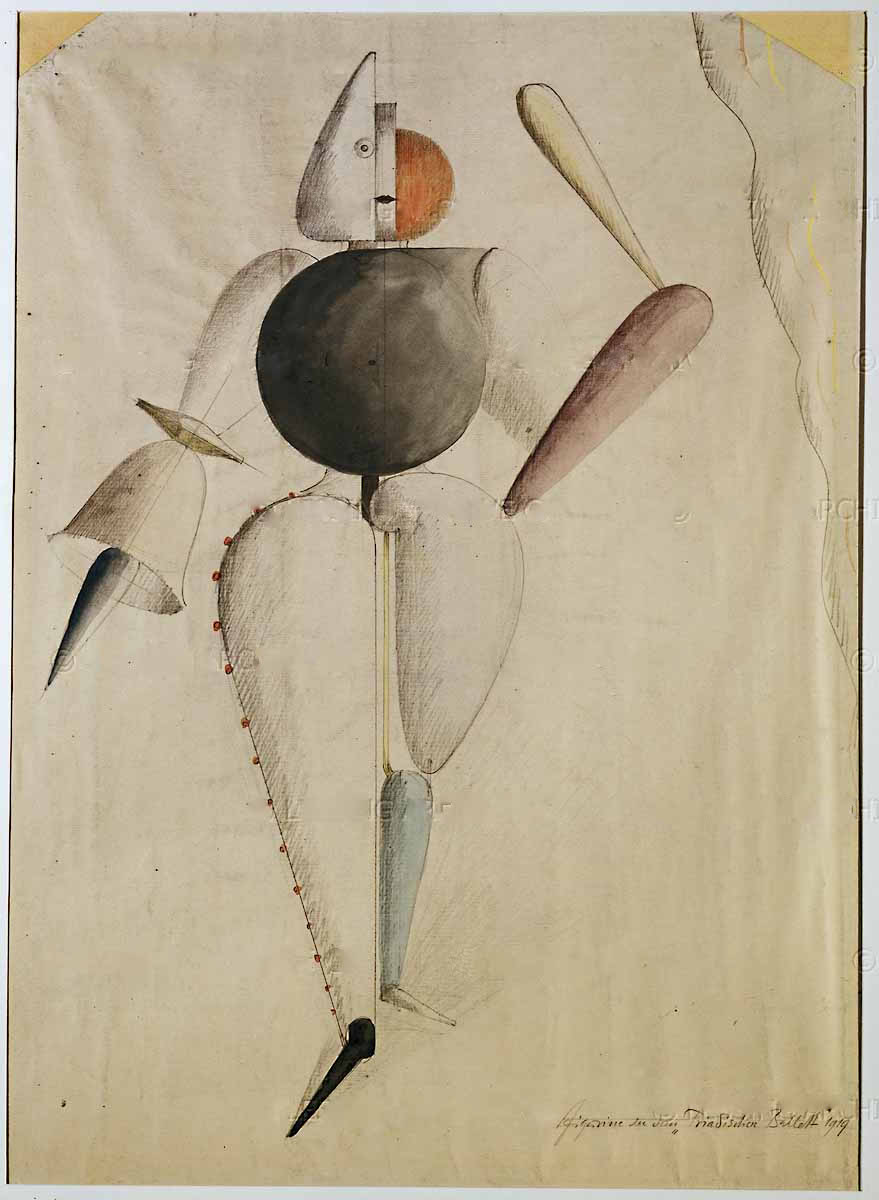
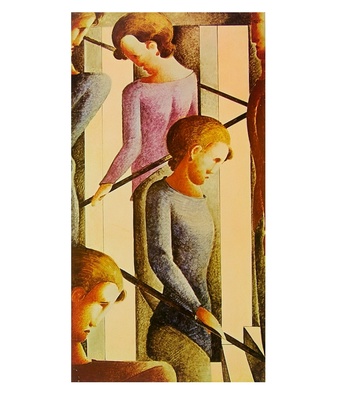
The following images scarcely do these paintings justice taken hurriedly with my mobile. They are hung rather high and difficult to see at their best advantage. However, their geometric style and their delicate colours make them very appealing and remind me in particular of the work of Oskar Schlemmer (4 September 1888 – 13 April 1943) who was a Germanpainter, sculptor, designer and choreographer associated with the Bauhaus school. Some of the images displayed may indicate this similarity as well as with the Bauhaus theatre designer, Lothar Schreyer.
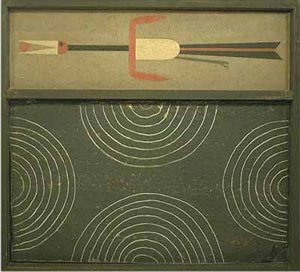
Lothar SchreyerOskar Sclemmer Auf der TreppeOskar Schlemmer Postcard of Young Men
“In 1960 Ida Kar (1908-74) became the first photographer to have a retrospective exhibition at a major London art gallery. Her portraits offer a fascinating insight into post-war cultural life and her subjects included some of the most celebrated figures from the art world of 1950s and 1960s Europe and Russia. A number of the artists Kar photographed also included artists from the St Ives School.” as it says at http://www.royalcornwallmuseum.org.uk/exhibitions/.
I saw this exhibition on Saturday and was truly moved at this small but fascinating exhibition and the sculptures that came with it which included Hepworth and Epstein. Lovely picture of Ida with Victor Musgrave with whom she lived in the 1940s in Cairo. Delightfully bohemian, her work is taken from the studios and ateliers of Paris and London. Even more exciting I found her photographs of St Ives in the 1950s. Her Braque portrait captures the essence of the artist-his eye sockets look as though they were a Picasso portrait brought to life. The portraits of Leach, Denis Mitchell whose reputation is still growing and Hepworth forming an armature from wire for a sculpture are all lively and moving. The original exhibition at the National Portrait Gallery is reviewed at http://www.theguardian.com/artanddesign/2011/mar/13/ida-kar-bohemian-photographer-review. There is a great review of her photographs at http://www.bbc.co.uk/news/entertainment-arts-11998337. Should you get to Truro Museum at the moment there is an intriguing collection, A Century of St Ives Art 1840-1940.
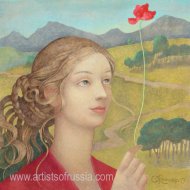
Having just returned from the International Art Fair http://www.20-21intartfair.com/ in Kensington Gore, where I was particularly taken, indeed entranced by the Artists of Russia stand, it was great to see the quality exhibition of Nancy Pickard’s work together with that of Simon Turner at the Cornwall Contemporary here in Penzance. The Art Fair in London was great fun where I not only saw for the first time work of the German Expressionist, Käthe Kollwitz (July 8, 1867 – April 22, 1945) but also discovered the lovely paintings of Olga Oreshnikov. (http://www.artistsofrussia.com/olga-oreshnikov)
Whispered Aside by Olga OreshnikovKathy KollwitzB rother_Love/ VerbrüderungCountry Girl Olga Oreshnikov
As Julian Ravest has written, “In 1990, Olga immigrated to Israel. She works in oil, tempera, watercolour, and gouache in a unique style. Her paintings are humorous, symbolic, and yet serious in content, meticulously executed and with a fresh and dreamlike quality. Her assured drawing, elaborate composition and rich use of colour are in the tradition of European painting. Her images and landscapes seem to be from a different timeless world, telling stories that are tender, dreamy, overpowering and seductive.” I was particularly taken by a work, an acrylic, called “Whispered Aside” which has a theatrical and magical quality about it. The expression on the face of the aging sailor and the slightly astonished young actress transported me to some imaginary dramatic venue in St Petersburg. The quality of execution in this painting too was quite extraordinary and delightful.
In “Garden Light”, Orishnikov has depicted an ingenue, endearingly innocent amongst a cavern of leaves, peering into the distance under her straw bonnet and surrounded by blossoming mauve flowerheads. She clasps her hands in a gesture that reinforces her distance as an observer and suggests her naivety. Tragicomedy, flora and contemplation combine in her work to embody an elegant exuberance. This is repeated in “Country Girl” where the girl cherishes a crimson sweet pea and beholds the blossom on the spindling stem.
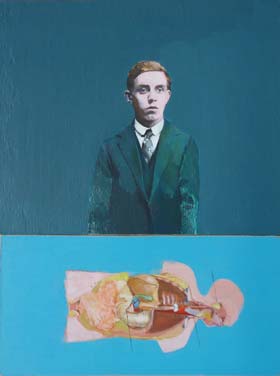
The Anatomist by Simon Turner
Arriving this sunny morning at Sarah Brittain’s delightful gallery in Parade Street Penzance, my attention was drawn to Simon Turner’s bearded “Landlady” painted on found panel. Many of these pictures seem to have a Victorian or Edwardian quality, perhaps a little reminiscent of Monty Python. These reminded me a little of Adam Birtwistle’s portraits which I had recently seen displayed at King’s Place, http://whosjack.wpengine.com/wp-content/uploads/2010/01/adam.png especially in relation to the horizontal structuring of the composition. Simon’s surreal playfulness shown in several zany mosaics are a nostalgic investigation into time, dream and reminiscence. I particularly liked “Man sending an e-mail”.
Nancy Pickard, Black Tulips oil on canvas 50 x 50cm
The exuberant compositions of Nancy Pickard, however, made the visit. Nancy, who has been in Cornwall for over ten years now is clearly influenced by the landscape and the sea. It is the blue luminescence of her inspiring canvases that drew my attention. It is the domestic peace of these compositions which attract the eye, which is echoed in her ceramics. Her delightful work may be viewed at http://www.nancypickard.co.uk/gallery.html
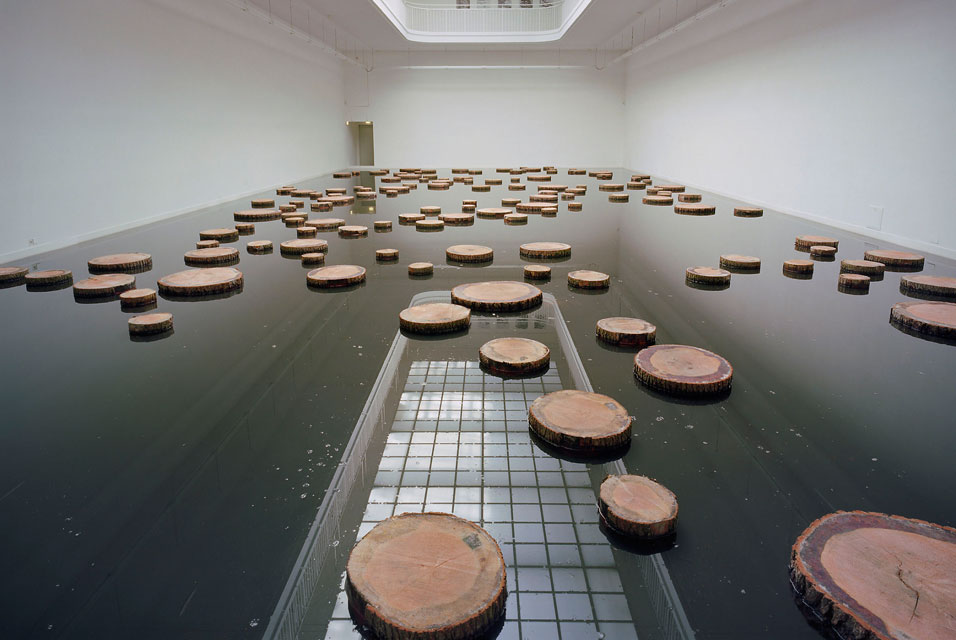
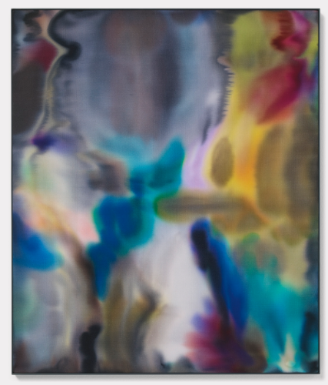
The eye-catching, penetrating splendour of Matti Braun’s lyrical paintings and creations are as unusual asthey are inspiring. Braun was born in 1968, trained at the State Academy of Fine Arts in Berlin and also in Frankfurt, he works in Cologne and has had several major exhibitions in Germany, France and Italy. His work can be seen currently at the Arnolfini Gallery in Bristol until the 6th Jan 2013. Further details may be found here at http://www.madeingermanyzwei.de/Kuenstler/Matti-Braun This current exhibition consists of an installation constructed from sections through a Douglas Fir tree obtained from Westonbirt Arboretum. These are surrounded by a lake of water creating a placid, contemplative effect. Filling the tank in which they are enclosed, gave the Bristol fire brigade a useful opportunity for them to practise and develop their skills. Further information can be read on http://www.arnolfini.org.uk/whatson/exhibitions/details/1409 and photographs of the operation at http://www.bbc.co.uk/news/uk-england-bristol-19862898 and http://www.bbc.co.uk/news/uk-england-bristol-19747232 The work was apparently inspired by a film, later abandoned, by the renowned Bengali filmmaker Satyajit Ray. It was entitled ‘The Alien’.
In some respects Braun’s compositions are a little reminiscent of the rainbow effects in the colour field paintings of Morris Louis- which the critic Clement Greenberg has termed post-painterly abstraction. There is also the possible influence of Mark Rothko. His paintings in acrylic, silk and cold-rolled steel bring to mind the evocative inks of a Rorschach test. Certainly, they invite the viewer’s personal response or interpretation.
Braun is gifted and prolific. His thought provoking and exciting conceptions will repay further attention in forthcoming years. On a personal basis they remind me of a garden hedge clustered in Mesembryanthemums in full sunlight. Set against a dark background they might suggest the delicate fronds of various luminescent underwater sea coral.
Agar, Eileen (1899-1991): Untitled, signed, inscribed 18/75, lithograph, 75.5 x 57 cms. Presented by Tremayne Applied Arts, St Ives.
There has been a renewed interest in works of British Surrealism in recent years. In summing up an exhibition in The Independent on the 26th May 2008 at The Middlesborough Institute of Modern Art- http://www.independent.co.uk/arts-entertainment/art/features/british-surrealists-minor-league-but-major-players-834236.html -Tom Lubbock wrote,” People have said that Britain was Surrealism’s original native land Alice’s Adventures in Wonderland, William Blake, the gothic novel, Gulliver’s Travels etc. Perhaps we didn’t need the whole movement-and-manifesto thing. But it produced, slightly by accident, a group of very interesting pictures that ought to have a wider showing, and which the Sherwin Collection is willing to lend.” Clearly symbolism and surrealism have obvious links in mythology and archetypes and such matters were thrown into the generally creative and tempestuous furore which grasped interest in the period between the wars.This climaxed in in the organisation of the International Surrealist Exhibition in London in 1936. There is some evidence of these issues in the paintings displayed in the current exhibition, mostly on loan in Falmouth from the Southampton Gallery. The artists on show include PAUL NASH,CECIL COLLINS, CERI RICHARDS, ROLAND PENROSE, JOHN TUNNARD, EILEEN AGAR &ITHELL COLQHOUN.
However, the most exuberant and baroque piece was a comparatively recent work by David Kemp – entitled “The Hanging Gardens of Basildon”. On his blog, Kemp comments, “It is one of a series of a dozen large plant forms, all influenced by “THE GARDEN OF EARTHLY DELIGHTS” an enigmatic painting by the great Hieronymus Bosch, which explored many aspects of medieval life, many of which might still be seen as relevant to the human condition, in our modern world?” This comment on the fantastic botanical forms and the connection with Bosch is reminiscent of the work of the VienneseSchool of Fantastic Realism as explified by Arik Brauer whose interest in Bosch he derived from his own tutor, Albert Paris von Gütersloh.
Arik Erich Brauer Die Honigkaeuferin
No visitor can possibly fail to be impressed by the peculiar botanical drawing, named “Prophylactic sea-mouth” by Edith Rimmington. The haunting form appears as some kind of elongated mutation of a dogfish egg-case with a coiling eel like flagellum.
However, for those interested in the development of the work of Paul Nash, his oil painting, “The Archer” will doubtless attract attention both for its muted complementary colours and the charmingly odd bucolic setting. A friend comments in a personal communication, “The Nash is one of his complex compositions worked on for years with bits from all over the place. There is a letter by Nash about it in Tate Archives. The central ‘archer’ feature was a structure he made from an old toy boat, glass tube, twig, seaweed etc. I don’t think it exists anymore other than as a photo. It looks more compelling in the photo with strong echoes of surrealist sculptures by Giacometti, Man Ray etc. He constructed (like Lanyon), collected and photographed sculptural objects from which he derived elements of his paintings.
Paul Nash The Archer
The ‘target’ is from Men-An-Tol of course + mirrors etc; the shadow of the girl bottom right, sampled from De Chirico etc.etc. All very sexual with the ineffective arrow being merely the shadow of the archer….. I’m not convinced that he managed to get it to cohere as an image. I wish he had left the landscape dominant as with ‘Landscape at Iden’ http://www.tate.org.uk/art/artworks/nash-landscape-at-iden-n05047 where the symbolic elements infuse the composition naturally.”
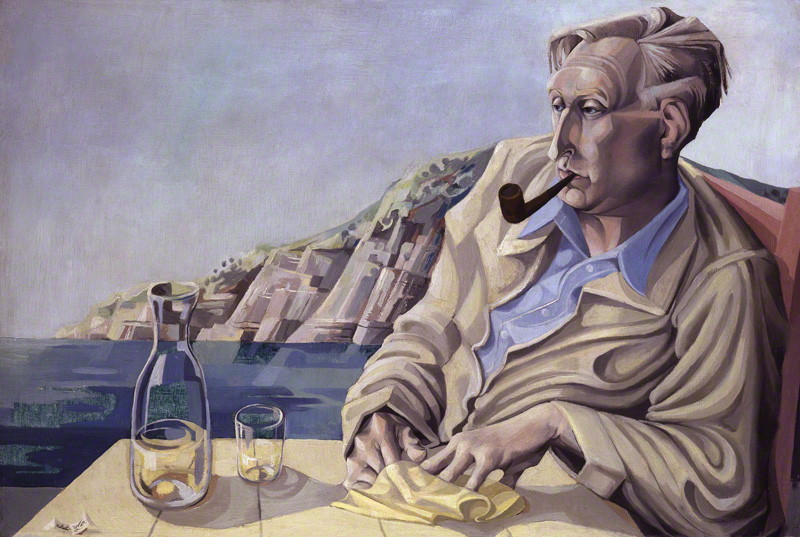
This painting can be found in the National Portrait Gallery in London and shows the celebrated composer, Sir William Walton in 1948 in Capri where he was recovering from jaundice. Its atmosphere suggests recuperation and the date also reminds us that Europe was slowly convalescing from the devastation of war. Walton was to permanently settle the following year on Ischia, a volcanic island in the Tyrrhenian Sea some 30 km from Naples, of which it is a province. The painting with its remarkable diagonal composition and repeated dynamic lines is reminiscent of Wyndham Lewis, who was a significant influence on Ayrton and whose portrait he was to paint, a few years later in 1955; this is discussed at this link- http://www.tate.org.uk/art/artworks/ayrton-portrait-of-wyndham-lewis-t07133. It is perhaps interesting to compare Wyndham Lewis’s well-known portrait of Ezra Pound with Ayrton’s Walton. The subject in the latter case looking a good deal more awake and serenely pondering the pleasures of the view and the prospects of reloading his pipe from the tobacco pouch.
In the portrait, Walton almost seems to be couched against the rocky promontory which cascades down to the sea-where the line of the cliff appears submerged rather than reflected by the water surface. The pale tones in grey, purple, reds and blues convey serenity to the composition. The repeated folds and linear motif however add a contrasting energy to the figure that is captured as though by a camera and achieve a monumental charm at what might otherwise not seem a particularly significant moment. The subject has a contemplative gaze which will be prolonged, indeed deepened by the next twist from the “fragrant weed”. The glass, decanter and bill/slip of paper seem to encourage the viewer to share into his own pensive mood.
Ayrton photographEzra Pound 1939 Wyndham Lewis 1882-1957 Lewis was inspired by Lewis
The Oxford Companion to Western Art, says this about English Neo-Romanticism, the movement which both Ayrton and as we shall see Minton both belonged, “Never more than loosely affiliated, its painters took inspiration from the early 19th-century landscapists: from SAMUEL PALMER and his circle at Shoreham, and from TURNER. They were also influenced by French post-CUBIST developments during the 1930s. The beginnings of the movement were dominated by GRAHAM SUTHERLAND and PAUL NASH, and, to an extent, by JOHN PIPER. Their conception of the anthropomorphic potential of natural landscapes and the objects within them had a powerful influence on the younger generation of artists who became popular in the early 1940s, developing a style of agonized and sinister landscape very different from their early exemplars. MICHAEL AYRTON, JOHN MINTON, and John Craxton (1922– ) were the most expressive and innovative of the painters involved; others who shared the concerns of the movement for a time included Keith Vaughan (1912–77) and the Scottish artists Robert Colquhoun (1914–62) and Robert MacBryde (1913–66).”
Minton by Michael Ayrton
John Minton (1917- 57) was a talented but troubled teacher,painter and stage designer who trained at St John’s Wood School along with Ayrton who strongly influenced him. This period between 1935 and 1938 was a time when neo-romanticism seems to have flourished, again the Oxford Companion to Western Art writes of him, “British painter, graphic artist, and designer, born at Great Shelford (Cambs.). After studying in London at St John’s Wood School of Art, 1936–8, he spent a year in Paris, where he shared a studio with MICHAEL AYRTON (with whom he later collaborated on designs for John Gielgud’s production of Macbeth at the Piccadilly Theatre, London, in 1942). Among the artists whose work he saw in Paris, he was particularly influenced by the brooding sadness of Eugene Berman (1899–1972) (More information also at http://www.sullivangoss.com/eugene-berman/) and Pavel Tchelitchew (1898–1957). (There is a You–tube, in Italian at http://www.encyclopedia.com/video/aQpp6epASaQ-la-danza-delle-ombre-pavel.aspx) In 1941–3 he served in the Pioneer Corps, and after being released on medical grounds he had a studio in London at 77 Bedford Gardens (the house in which RobertColquhoun (1914–62), Robert MacBryde (1913–66), and Jankel Adler (1895–1949) lived), 1943–6. From 1946 to 1952 he lived with Keith Vaughan (1912–77). Minton was a leading exponent of NEO-ROMANTICISM and an influential figure through his teaching at Camberwell School of Art (1943–7), the Central School of Arts and Crafts (1947–8), and the Royal College of Art (1948–56).
John Minton Self-Portrait
He was extremely energetic, travelling widely and producing a large body of work as a painter (of portraits, landscapes, and figure compositions), book illustrator, and designer. After about 1950, however, his work went increasingly out of fashion. He made an effort to keep up with the times with subjects such as The Death of James Dean (1957; London, Tate), but stylistically he changed little. Minton was renowned for his charm and generosity, but he was also melancholic and troubled by self-doubt. He committed suicide with an overdose of drugs.”
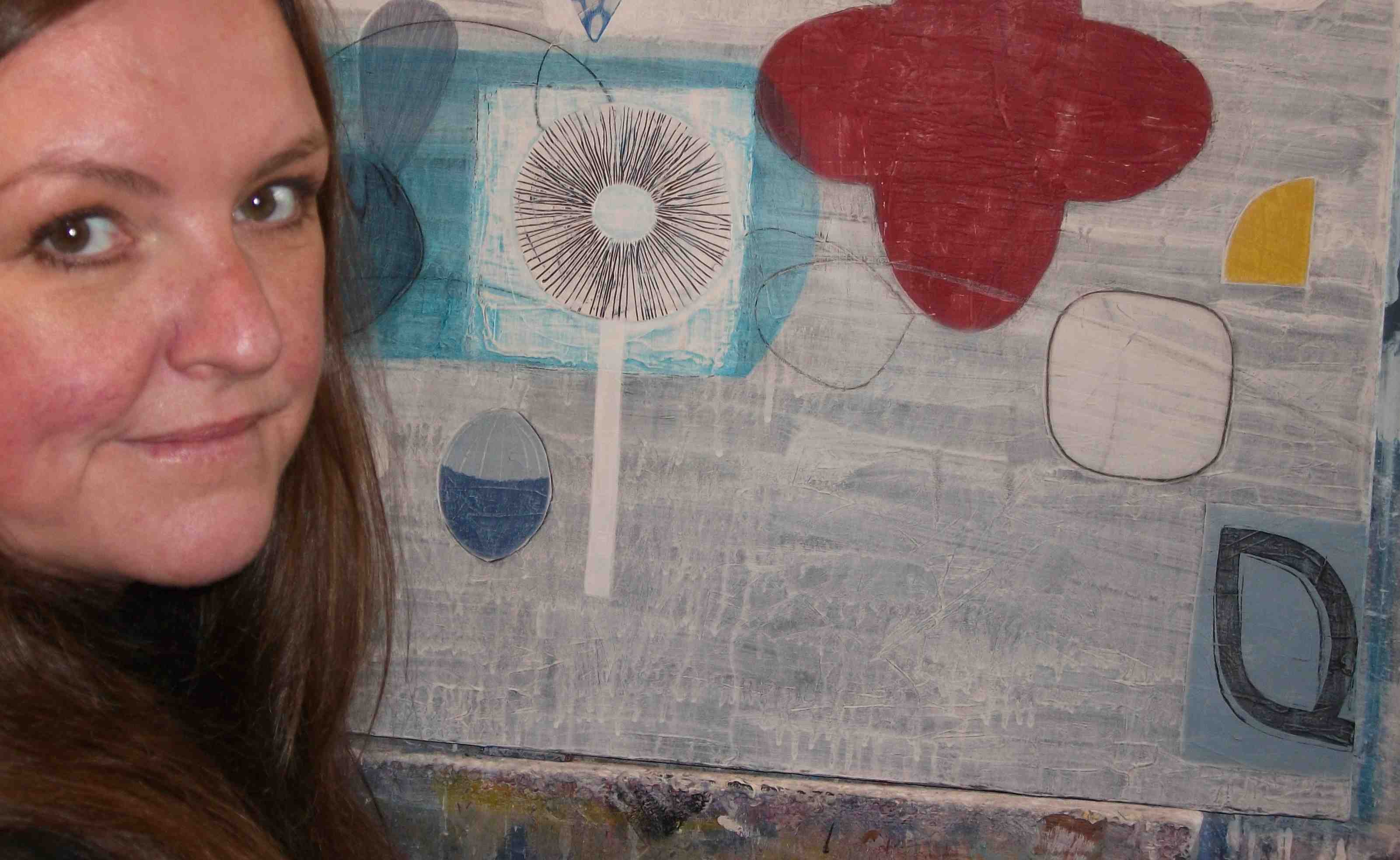
Maggie with a major work for her forthcoming exhibition
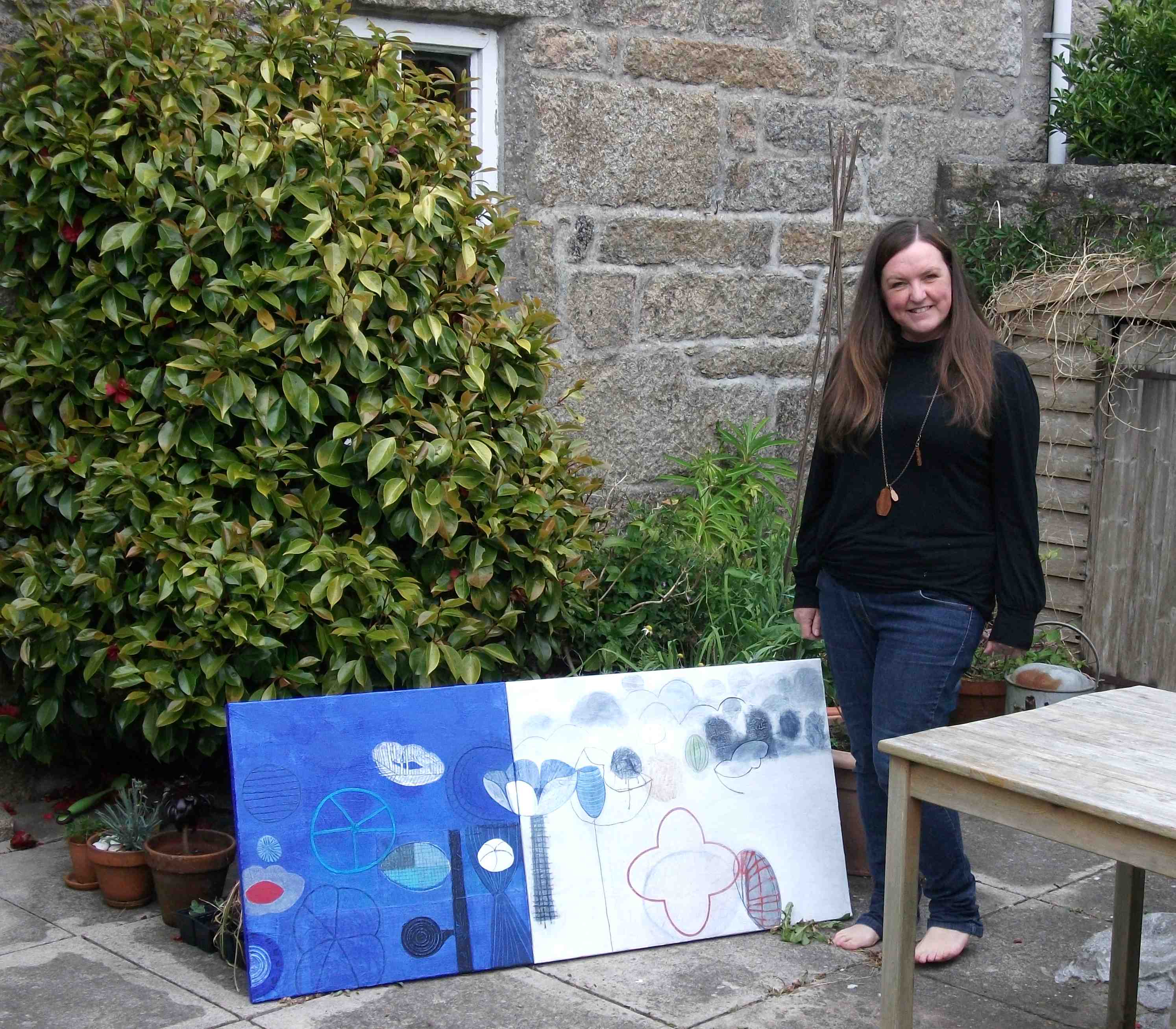
At the end of May I had the opportunity to meet Maggie at her lovely granite cottage just off the coast road from Land’s End to St Just where I interviewed her about her development as a painter and printmaker. She has recently bought herself a new etching press which was on the table where we sat and had coffee around the sturdy wooden table. Her next exhibition will commence at the Cornwall Contemporary (http://www.cornwallcontemporary.com/ ) on the 17th August and runs to the 10th September.
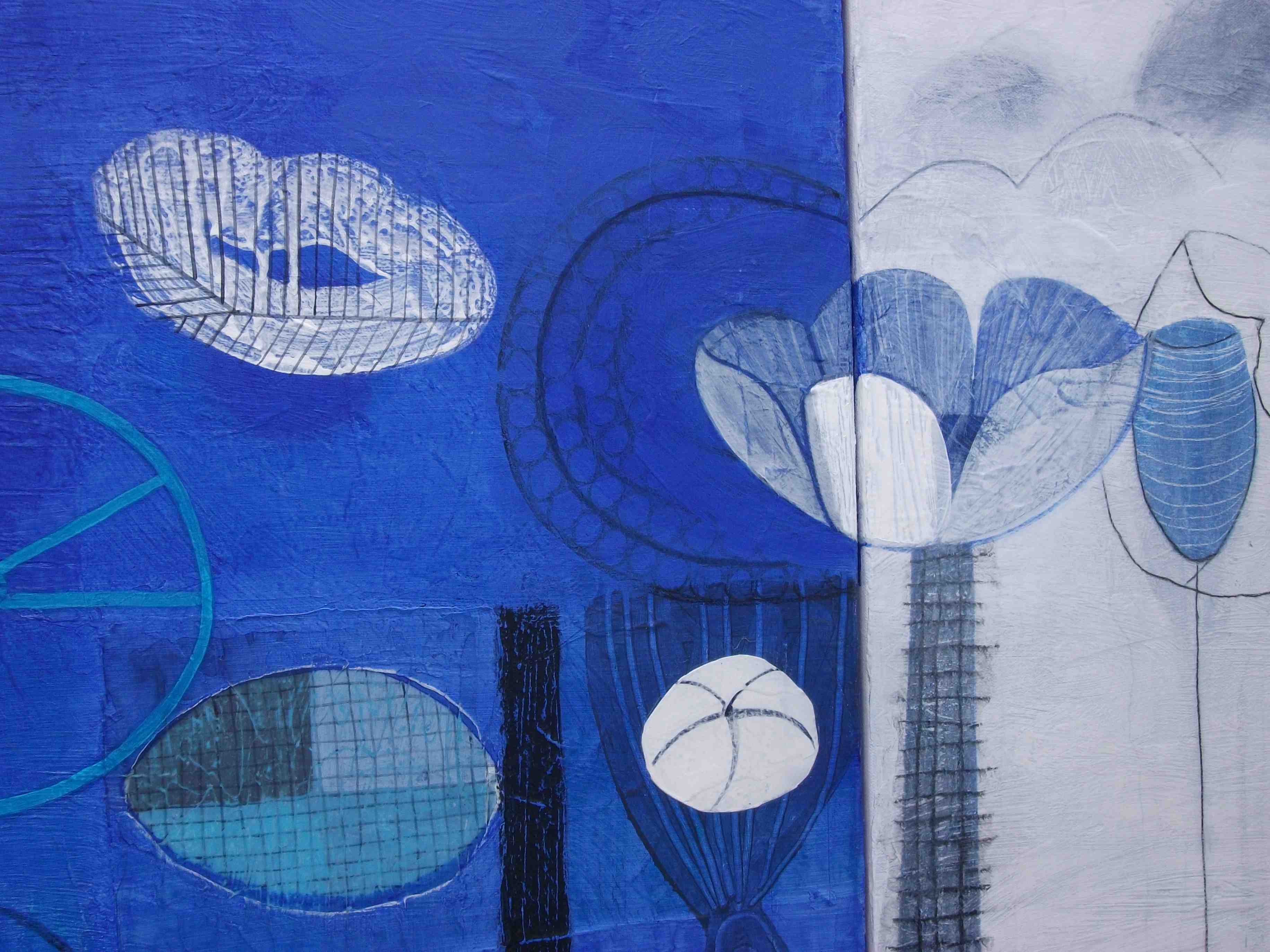
Detail from the work above
Maggie grew up in Brynmawr in Gwent, South Wales and first came to Cornwalljust after leaving Exeter College of Art and Design. (Further details may be found at http://www.maggiematthews.co.uk/). Graham Sutherland was an early interest, particularly his use of colour. Having already been inspired by the landscape of South Wales with its magnificent mountain scenery, she was further impressed by the fabulous light of Penwith. Her family had strong naval connections, her grandfather had in fact been bombed out of Devonport, and the sea itself was an additional attraction for which she felt a strong, familiar affinity. Her palette changed completely and she became deeply interested in the St Ives painters. She was now to paint in bright and vivid colours which she soon came to use and to love.
Porthcawl andBarryIsland, nearCardiff, during the Miners fortnight holiday had already started a love of the beach and its natural history.ComprehensiveSchoolhad encouraged her interest in art, ceramics and sculpture but in addition Maggie enjoyed biology and maths, interests which were to prove an inspiration as her work has developed.
Detail from Maggie’s recent sketches
The facilities at Exeter, near the river inspired her interests in printmaking and ceramics. The geological society had an outward-bound bus and so there at weekends came down to Cornwalland whilst other students examined the rocks in CotValleyand other places, Maggie would be enthusiastically sketching. The sea, the mining and the Celtic connections were an additional attraction. After a period working on the manufacture of air and oil filters in industry in South Wales, Maggie arrived at Penzancejob centre whilst on a two-week holiday. She got a post working on the Jetsetter computer graphics project drawing paired-down sketches of simple objects like wine glasses and pencils.
Maggie continued to sketch the landscape intensively at weekends. She also went on Friday nights in St Just with Mary Stork to draw life studies, which she found a useful exercise and with Mary’s support she exhibited her work for the very first time.
Maggie outside her cottage with a work for the forthcoming exhibition at Cornwall Contemporary
Her first solo show was in Brown’s Restaurant which Maggie then proceeded to show at for another two more years and then had a further displays at Avalon in Marazion. Her very abstract colourist compositions at this point were very much influenced by her attraction to Patrick Heron’s work. In particular Maggie likes his later garden works and the space and depth created in these compositions. Paul Nash, Samuel Palmer, William Blake and Sutherland remain her favourite works for their pastoral, lyrical qualities. She remains interested in printing, ceramics and expresses an interest too in sculpture.
“Hugh Stoneman inspired a renaissance in fine print making in Britain and the artistic scene in Cornwall”, according to Fiona MacCarthy in The Guardian and looking through the splendid 144 pages of this book, you can see just why this is the case. The 99 works illustrated include those of Sandra Blow, John Hoyland, Martin Leman and Sir Terry Frost. Many techniques-from woodcuts to photographs, linocuts to carborundum –silicon carbide grit mixed with acrylic binders- are employed. As well as an introduction, showing photographs at work in the seclusion of his purpose built house in the tree lined valley below Madron, there is a biography and a useful and instructive glossary of print terms.
The works illustrated now belong to the Art Fund Collective and were on display at the Falmouth Art Gallery. The text indicates,”Hugh’s links withCornwall, were always strong . He was first based at Dod Proctor’s previous studio and later he bought Orchard Flower Farm, Madron in the early 1980s with his second wife Linda, which was to become the family home –Hugh commuting toLondonto his studio inLondonevery week”. Hugh was also deeply involved in an endeavour which is about to reach fruition in St Ives, the renovation of the Porthmeor Studios.
Among the attractive variety of prints in this volume there are several which are of striking interest. There is the darkly mauve, purple and black image from Patrick Heron’s Brushworks Series, an etching made in his last year. This is printed alongside the contrasting botanical, Spring 1957 by Dame Barbara Hepworth. Among the prints by Breon O’Casey, the vibrant simplicity of Four Circles 2003 stands out as does, for quite different reasons, the unusual vibrant simplicity of Little Girl on a Lion by Andrew Murray. This is an inspiring collection worthy of extended perusal; the fruit of many years of work by this masterful print maker.
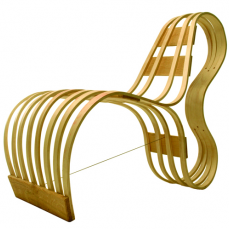
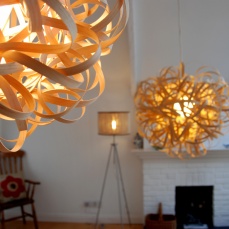
At Krowji creativity is by no means confined to the painters, however splendid these may be. One of the most intriguing workshops is that of woodworker and furniture designer Tom Raffield http://www.tomraffield.com/. His skills in the controlled forming of wood create geometrically interesting objects from elegant chairs, flourishing lampshades to plant pots. His pendants fashioned in ash are particularly decorative and captivating.
Lounge Daddy Chair by Tom RaffieldPendants in ash
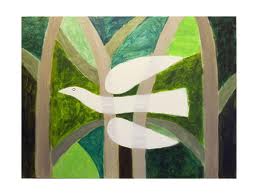
When it comes to prints, petroglyphs and paintings it is worth recalling what Peter Fox says about his inspiration that appears,” to grow from some substratum of myth and rough magic quite outside the currents of his time.” Drawing on Norse mythology such as that concerning the wolf child Fenrir, child of the trickster Loki, Fox has produced a series of captivating gouaches, which can be seen at www.peterfoxartist.co.uk. He has also used slate and wooden frames to produce the petroglyphs and made many woodcuts on a variety of types of paper. Peter has a lyrical approach to composition and colour; it is not surprising to discover that he is a member of the Latin-Cuban dance band, Quijada (Spanish for jawbone apparently),a five piece group playing irresistible salsa rhythms.
Loki by Peter Fox
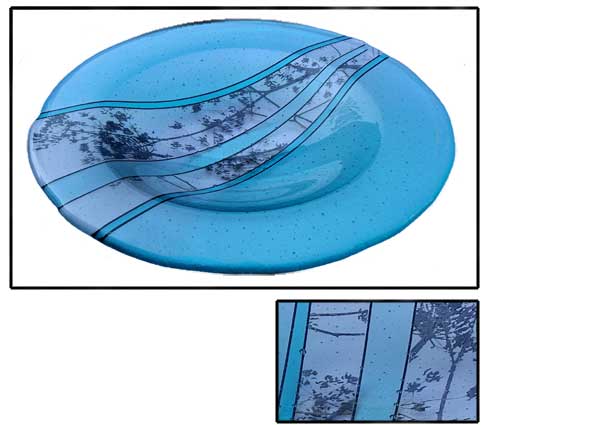
Further down the corridor Naomi Singer’s translucent glass panels and tiles in lustrous olives, blues and aquamarines. She has perfected a technique which combines digital photography and water transfer paper to make stunning plates, bowls and coasters. Unfortunately, Naomi has recently broken her ankle in three places but is still turning out magnificent work which you can read about on her blog at blog.naomisinger.co.uk/. Walking around her studio feels a little like being a fish swimming amongst underwater reeds, although these are mostly the botanic forms created from fennel, allium and ivy. Her satellite and other slumped dishes are particularly captivating as may be seen at www.naomisinger.co.uk/.
Coasters in Naomi Singer's workshop
Sharing display space with Naomi was the resin and silver jewellery of Hannah Mary whose inspiring rings have been displayed in Vogue magazine. These eye-catching pieces may be viewed at http://www.hannahmaryjewellery.co.uk/ Hannah works in the inspiring setting of Gallery 2Wo in an ingenious collective at Jubilee Wharf in Penryn.
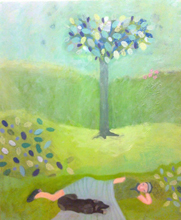
Driving back through the darkening countryside, the hillsides and hedges are deepening shades of willow and viridian. The sky to the west is overcast in varying and subtle shades of violet which clear and allow a penetration of light onto the motorway. Yet I find myself recalling a dream of a thousand roses. A few minutes before I had been looking at the bright and bountiful pictures of Siobhan Purdy, housed in an outbuilding of the complex of buildings at Krowji, which as is well known by locals, Redruth Grammar School. The bright interior contrasts with the dilapidated exterior of this marooned classroom exposed on three sides to the cold December winds just mounting in strength as the light fell.This is room W35 and her delightful pictures including “One Thousand Roses” may be seen at http://www.siobhanpurdy.co.uk/.
Painting by Siobhan Purdy
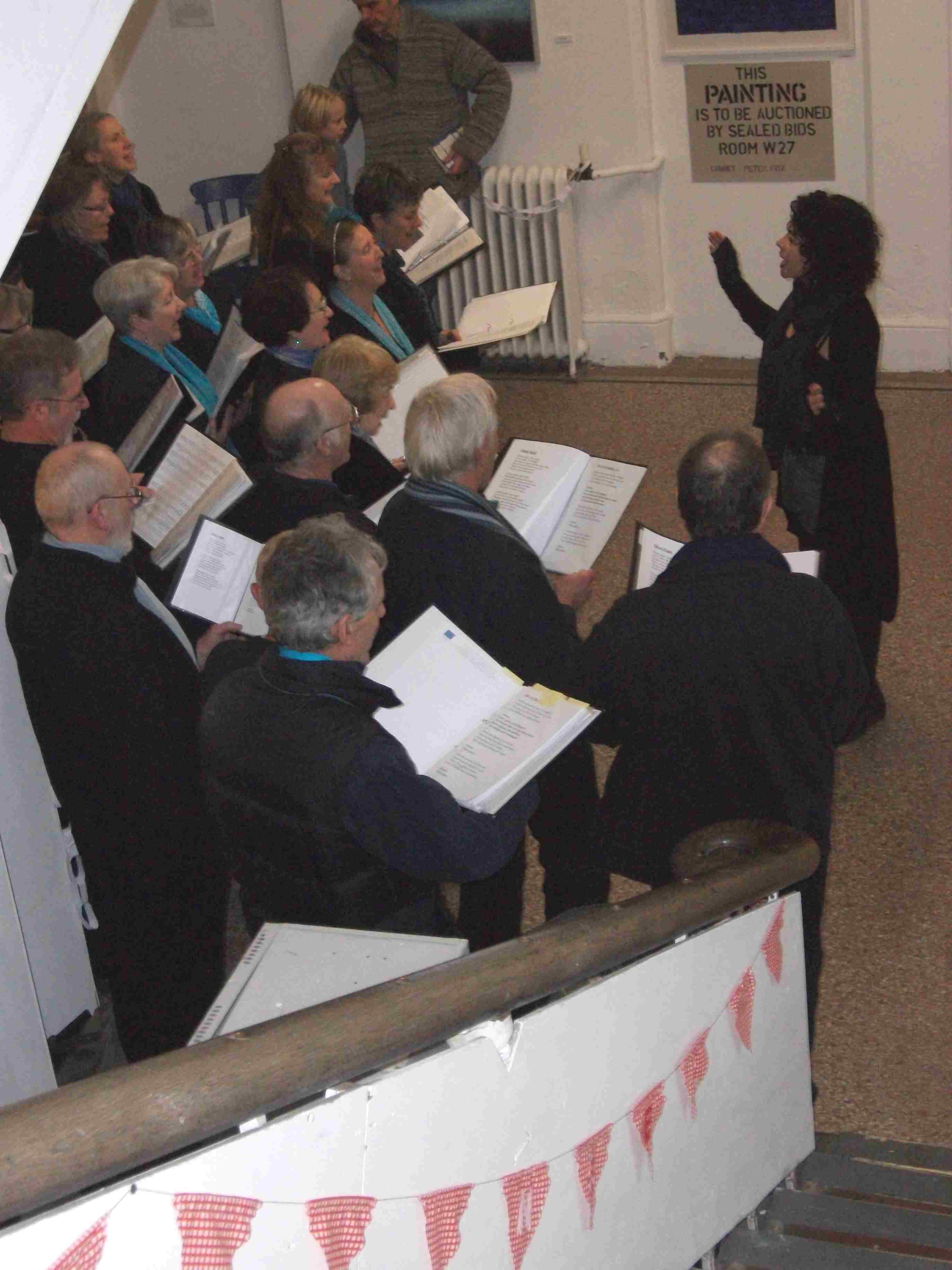
Throughout the early December Sunday afternoon the corridors and stairways resonated with melodies, airs, wassails and the sublime singing of Thomas Merrit’s Cornish carols by the Riverside Singers. This choir called visitors, artists and children from the studios to hear again the inspiring words:-
“He comes the broken heart to bind,
The bleeding soul to cure;
And with the treasures of His grace
To enrich the humble poor.”
The choir energetically led by their Musical Director and composer, Claire Ingleheart, who describes herself as a musical magpie, can be heard at http://www.ingleheartsingers.co.uk/mp3/music.htm
Claire Ingleheart
Part of the pleasure of a visit to an Open Studios event at the OldGrammar Schoolis a visit to the Melting Pot café where the sandwiches are stylish and the soup outstanding. The atmosphere is great, this could be out of a novel by Hermann Hesse and the proscenium arch of the gilded theatre provides a grand background to enjoy the accordion. Father Christmas and his wife in striped scarlet and emerald green make their entrance to the masque.
More of the excitement about visiting Krowji derives from the opportunity of viewing such a wide variety of work. The large and dramatic portraits by Chris Anthem repay close consideration. His colourful paintings are executed with oil graphite on dress pattern demand such attention. These are serious and intriguing and questioning works that derive their psychological depth from Anthem’s experience and concerns in Addis Ababa, and elsewhere, together with his interest, along with Jean Baudrillard, in the relationship between the” carnivalesque and cannibalistic”. This is indicated on his website at http://chrisanthem.co.uk/
focus-baby-one-more-time by Chris Anthem
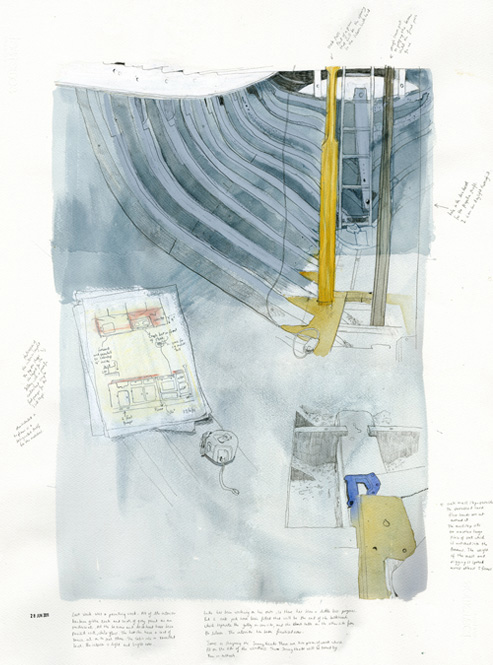
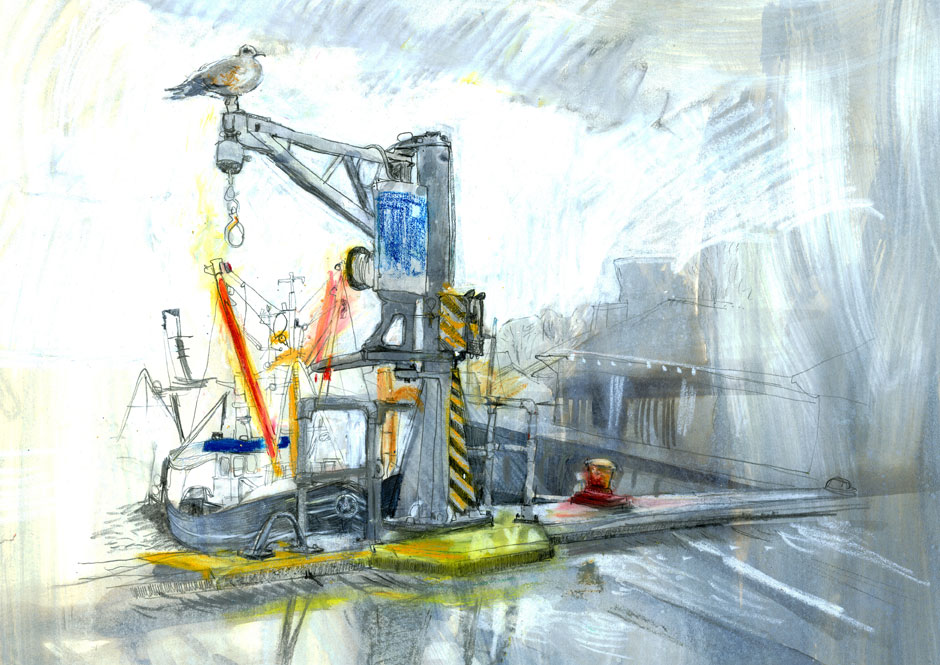
Wandering along the main corridor, I came across a wall of illustrations by Anna Cattermole. These were delicate, attractive sketches mostly of boat construction with annotated information. Her work may be seen at http://www.annacattermole.com where I also discovered her series, Fish Tales based on her work at Newlyn.Of the series on display she writes there,” These drawings are a visual diary documenting the building of Freja, a 42ft wooden pilot cutter, by Luke Powell of Working Sail. “In relation to her own observational drawings she quotes Rodin in support of her style of reportage;” It is the artist who is truthful, while the photograph is mendacious; for, in reality, time never stops cold.”
























 penwithlit
