The most accessible introduction to great philosophers, for me anyway, are the You-Tube programmes made by Bryan Magee maybe some 30 years ago. Particularly interesting was Iris Murdoch talking about Philosophy and Literature. Then there was the lucid conversation with Anthony Quinton on Spinoza and Leibnitz. The clearest philosophy book I managed to grasp however, was Language, Truth and Logic by A.J.Ayer. Freddie Ayer used to appear on the Brains Trust on Sunday afternoons -such excellent stimulating elevating television as we seem to see but rarely nowadays. True conversation seemingly in short supply.
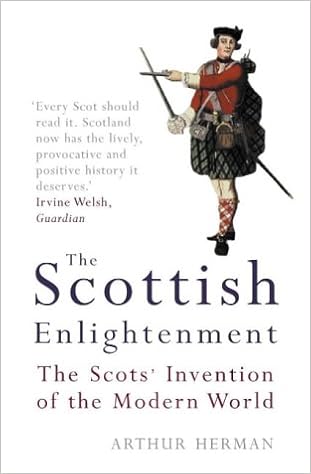
However, skimming through Herman’s delightful book on The Scottish Enlightenment, I came across the intriguing philosopher, Francis Hutcheson (1694-1746). Here is how Herman concludes upon him…”He challenged other forms of oppression, which Locke and even Shaftesbury had ignored…….One was the legal subjection of women. Hutcheson defined rights as universal, and did not recognise any distinction based on gender. The other, even more important was slavery. ‘Nothing’, he said, ‘can change a rational creature into a piece of goods void of all rights.’ In fact Hutcheson’s lectures, published after his death under the title A System of Moral Philosophy, were ‘an attack on all forms of slavery as well as denial of any right to govern solely on superior abilities or riches.’ They would inspire anti-slavery abolitionists, not only in Scotland but from London to Philadelphia.
His thoughts on what he terms variolation are certainly pertinent to our contemporary discussions on vaccination. However, his interest in an early study of the philosophy interface with psychology also makes for a certain claim to fame on behalf of this doctor from Yorkshire. According to the Stanford Encyclopaedia of Philosophy, Hartley wrote a significant treatise. “The Observations gained dedicated advocates in Britain, America, and Continental Europe, who appreciated it both for its science and its spirituality. As science, the work grounds consciousness in neuro-physiology, mind in brain. On this basis, the central concept of “association,” much discussed by other British philosophers and psychologists, receives distinctive treatment: the term first names the physiological process that generates “ideas,” and then the psychological processes by which perceptions, thoughts, and emotions either link and fuse or break apart. In keeping with this physiological approach, Hartley offers a conceptually novel account of how we learn and perform skilled actions, a dimension of human nature often left unexplored in works of philosophy. Such actions include those involved in speech—and, by extension, the conduct of scientific inquiry.”
Although difficult perhaps to penetrate his writings in detail it seems to me that in relation to certain aspects of volition, memory, sensation and associations are a significant forerunner of Freud and psychoanalysis. It is often stated that Nietzsche’s thought have such an influence but Hartley should be recognised for his insights at much earlier period.
Many people will have seen the excellent portrayal of Larry Durrell by Josh O’Connor in the TV Series “Meet the Durrells“. However, my personal encounter with this fellow was at least 50 years ago when I read “The Alexandria Quartet“. I probably was not sufficiently well read at the time to make much sense of these books but much enjoyed their exotic atmosphere. A few years later I saw the film of the first volume, “Justine” (1969 with
Recently searching for a Penguin Poetry book on Cavafy and three other Greek Poets I came across Volume 1 of the Penguin Modern Poets first published in 1962 -price 2/6 (12 and a half New Pence!!) and at an initial glance enjoyed reading a poem by Lawrence Durrell called “Green Coconuts”– then I looked more closely. The first stanza commences:-
At insular café tables under awnings
Bemused benighted half-castes pause
To stretch upon a table jawning
Ten yellow claws and
Order green coconuts to drink with straws.
I gather from perusal of the net that this poem was inspired by his own visit to Rio with his wife, Eve who tasted the coconuts. Here however, it is the “be-mused benighted half-castes” which sounds more than a little racist to me. Peter Porter has written of Durrell’s poetry “Always beautiful as sound and syntax. Its innovation lies in its refusal to be more high-minded than the things it records, together with its handling of the whole lexicon of language.”
Picante and picturesque perhaps but bypassing the infantile fantasy of a “great tree of breasts” we arrive at the third verse-
Lips that are curved to taste this albumen,
To taste with some blue spoon among the curds
Which drying on tongue or moustache are tasteless
As droppings of bats or birds.
Now this general tastelessness suggests in association with beastmilk might suggest all kinds of projections going on here. Does one generally taste with the lips or moustache? Perhaps I am being pedantic but the final verse that returns to yellow mandibles and suggests, it seems to me, that the half-castes have become via reference to Darwin and ends with the lines-
Green coconuts, green
Coconuts, patrimony of the ape.
Well, at least in this poem, Durrell has exceeded Kipling in a sort of distasteful and racist bombast.
I think that it was Gavin Ewart who said that well informed persons “Take their clues from the Weekly Reviews”. In the past few weeks I have been interested in the latest viewpoints on China in the World today. I grew up knowing very well a Methodist Minister who had been part of the Chinese Inland Mission and well remember seeing a journal amongst the sermons and stamp albums on his desk entitled China Reconstructs. Even at that time China was able to grant 4.7 million dollars to Egypt at a time when Britain, France and Israel were attacking during the Suez Crisis.
The TLS has recently been looking at how the climate emergency and it’s relation to superpower rivalry. In an interesting review of two books, China goes Green and The New Map, Kate Brown looks at what might be termed green colonialism. The first book, by Li and Shapiro she finds reminiscent of Cold War reportage. Kate Brown mentions how China’s Belt and Road Initiative (BRI) mimics the Marshall plan and costs some 60 Billion dollars. She also mentions that in the past 40 years some 400 million Chinese people have planted some 70.5 Billion trees. “Many of these trees were planted on grass savannahs. Drinking up scarce water, they have caused erosion, and the majority of the poplars and evergreens have died” she writes. In reviewing the second book by Yergin she concludes….”….the big winners in the first decades of the twenty first century have been the oil and gas interests. In 2020, just as 30 years ago, 80 per cent of the world’s energy derives from these two resources.” This TLS article from No 6152 February 26 th 2021 is well worth study.
The TLS article mentions that the Pripyat Marshes situated in Poland, Ukraine and Belarus appears to be in the BRI plan – sustainainability? Or the search for global markets?
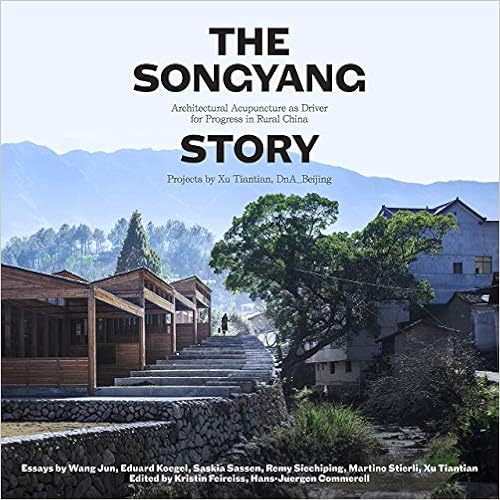
Oliver Wainwright in the Guardian in the Guardian 24th March has written a fascinating article on China’s rural revolution. He quotes the architectural acupuncture strategy of Xu Tiantian of DnA in Songyang in Zhejang province:-
“We have tried to make something to restore the villagers’ pride in their local identity, as well as bringing visitors and creating a local economic network” Wainwright writes that new facilities will include; a brown sugar factory, a camellia oil workshop, a rice wine distillery and a pottery. This well illustrated article goes on to mention community centres and museums all to be discovered in The Songyang Story published by Park Books.
The Spectator has endeavoured to engage in a thoroughgoing and persistent manner with Chineese issues. The tone is often right wing but nevertheless well written and informative. Overall I find it more engaging to read than the New Statesman, which otherwise accords with my sympathises. On 16th Jan Chris Patten writes about “Lessons from Hong Kong” He speaks out strongly and sensibly about the genocidal policies against Uyghur Muslims in Xinjiang and concludes saying “It is also absurd to think China will implement international labour standards, as French and German governments claim. Our European leaders might also notice how many heads of the Jewish community have drawn attention to the similarities between the Holocaust and ethnic genocide against the Uyghurs”.
In the Spectator on the 24th January 2021 Harald Maass raised the question as to who profits from Uyghur labour camps. He quotes one source as mentioning that some half a million Uyghurs are being forced under very harsh conditions to pick cotton in Xinjiang province mostly by hand. He mentions too, the fashion industry:-
“Brands including Hugo Boss, Adidas, Muji, Uniqlo, Costco, Caterpillar, Lacoste, Ralph Lauren and Tommy Hilfiger have been named in reports tying them to Xinjiang factories or materials. One in five cotton products world wide is made with Xinjiang cotton, though Marks &Spencer last week signed a call to action regarding Xinjiang and pledged to stop using any cotton from the region” According to the BBC just today images of clothes and trainers are being deliberately obscured for domestic viewing. https://www.bbc.co.uk/news/world-asia-china-56658455
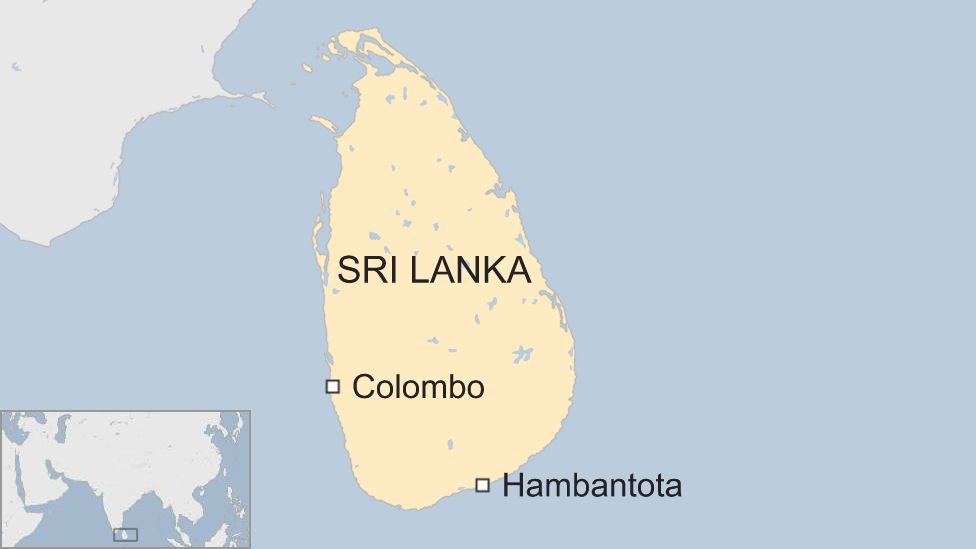
Frnces Pike https://en.wikipedia.org/wiki/Francis_Pike again in The Spectator 20th February raises the question of how the China’s containment of India-it sees it as a long-term geopolitical rival- should be countered by Biden, Blinken and the D10. Besides the Chinese influence in Burma and Bangladesh, Pike mentions the lease of 99 years for the port of Hambantota in Sri Lanka.
So the coverage of by The Spectator of China has been intensive and is perhaps summarised by James Forsyth in last week’s copy (3rd April}. Forsyth is, one assumes, fairly close to Downing Street. He mentions that in the previous week, “..the U.S., the E.U., the U.K. and Canada imposed sanctions on China over human rights abuses in Xinjiang” China’s response which included sanctioning five M.E.Ps may lead to the European Parliament failing to ratify the E.U.-China investment Agreement. Forsyth mentions the need for solidarity and refers to this:-
” When Bejing turned on Australia for suggesting there should be an independent inquiry into the origins of coronavirus, there was a shocking lack of solidarity from New Zealand.”
Forsyth appears to support the proposal being made to the American China Research Group to develop a kind of Nato for trade. He concludes by advocating that such collective economic defence be on the agenda for the G7 in Carbis Bay.
To conclude with two interesting items –
I knew nothing about bitcoins or their importance. This link not only gives an indication of their production but it also explains their considerable contribution in China of producing Carbon Dioxide-
Secondly, a useful book on this topic has been written by Jonathan E Hillman published by Yale The Emperor’s New Road:China and the Project of the Century. There is an excellent review and tour d’horizon by Laleh Khali in The London Review of Books 18th March 2021
Peliaco quondam prognatae uertice pinus dicuntur liquidas Neptuni nasse per undas Phasidos ad fluctus et fines Aeetaeos, cum lecti iuuenes, Argiuae robora pubis, auratam optantes Colchis auertere pellem ausi sunt uada salsa cita decurrere puppi, caerula uerrentes abiegnis aequora palmis. diua quibus retinens in summis urbibus arces, ipsa leui fecit uolitantem flamine currum, pinea coniungens inflexae texta carinae. illa rudem cursu prima imbuit Amphitriten. quae simul ac rostro uentosum proscidit aequor, tortaque remigio spumis incanuit unda, emersere feri candenti e gurgite uultus aequoreae monstrum Nereides admirantes. illa, atque haud alia, uiderunt luce marinas mortales oculi nudato corpore Nymphas
It is said that formerly pines sprung from Pelion’s peak swam the liquid waves of Neptune To the waves of Phasis and the lands of Aeetes, When the chosen youths, the strength of Argive manhood Choosing to run away with the Golden Fleece from the Colchians, They dared to traverse with swift ship through the salty waters, Sweeping the azure sea with fir oars, For whom the goddess herself occupying the citadels in the highest cities Made the flying chariot with a light wind, Fitting the pine timbers to the curved keel. She first stained inexperienced Amphitrite with sailing; But which likewise plowed the fickle wave with curved ship’s beak And the water, twisted by the rowing grew warm with foam, Aquatic Nereids emerged their faces from the white eddies Admiring the apparition On that day, and hardly any other, mortals saw with their own eyes Marine nymphs, with naked body,
In a recent discussion at Jewish Book Week 2021, Hermione Lee mentioned that this was Stoppard’s favourite play. It was first published in 1997 and given it’s themes I wondered if it’s writing had any connection with Stoppard’s feelings about Section 28 of the Local Government Act 1988. This very interesting play can be viewed on You Tube but sadly the quality of the sound is not very good.
I think it is interesting that Stoppard who appears not to have had a University Education appears so interested in the minutaie of recondite and eclectic matters such as logical positivism (Jumpers) or textual analysis as in this play.
Isn’t it interesting how the road not taken, so to speak, may become so interesting one’s later in life. This was seemingly the case about higher education with Tom Stoppard who has become so formidably well read and erudite. I was thinking too of James Callaghan a British politician who served as Prime Minister of the United Kingdom from 1976 to 1979. He became so very interested in Education and seems to have engendered the changes that resulted in the National Curriculum.
The other major figure that springs to mind is George Orwell. However, my most recent encounter with Orwell portrays him rather more as the man of action and not perhaps very interested in University Education as that of describing authoritarian atmosphere of the minor Prep school. I was reading fairly recently an account by Rayner Heppenstall in his engaging account Four Absentees which mentions the time the author spent with Orwell in their Camden flat-https://en.wikipedia.org/wiki/Rayner_Heppenstall
It is difficult to imagine what Orwell might have chosen to read had he gone to University and then again he was young at a time well before the expansion of University Education. Perhaps, he is now studied under the area of Media Studies. There appears to be considerable debate about his writing. Personally I found his diaries which I think appeared in Penguin around 1988 absorbingly interesting.
Orwell and Stoppard are both concerned with language and truth. When looking at this play, there is a debate about the relative merits of poetry and academic scholarship as well as the human relationships. Houseman the classicist obsessed by the scientific and heterosexual Jackson. Obsessed too with such close textual analysis that he seems to missed his first in Greats. How might he be diagnosed or labelled nowadays one wonders.
After recently reading Three Rings by Daniel Mendelsohn (A tale of Exile, Narrative and Fate) I have been tempted to explore diversions and must now return to the text above.
The first two lines above do not appear to make a great deal of sense in English. My Heinemann edition translated by F.W.Cornish (Erstwhile Vice-Provost of Eton) 2nd Edition 1914 gives-
Pine-trees of old, born on top of the Pelion, are said to have swam through the clear waters of Neptune to the waves of Phasis and the realms of Aeetes, when the chosen youths, the flowers of Argive strength, desiring to bear away from the Colchians the golden fleece...
Now the obvious difficulty in getting the poetry here is the number of allusions with which the text is crammed. The sort of associations that in Keats time many were familiar. Looking them up…..
Pelion is simply there as a mountain today and looks gorgeous too.
“The flowers of Argive strength” is rather lovely and associated with gladiolus flowers which suggest not only strength but honour and moral integrity. Gladius being Latin for sword. Argive refers to the ancient city of Argos and obviously not the on-line delivery store! Argos (Ancient Argos, located in the Peloponnese in Greece, was a major Mycenaean settlement in the Late Bronze Age (1700-1100 BCE) and remained important throughout the Greek, Hellenistic, and Roman periods until its destruction by the Visigoths in 395 CE)
Finally, there is a little possible alternative at line 14 where freti might replace feri above and seems to mean narrow-anyway freti candenti sounds rather nice though I cannot quite make sense of it. It seemsto refer to a white narrow watery space I am told. See https://nodictionaries.com/text-word-note/1731849-remigio-spumis-incanuit-unda-emersere-freti-candenti-e-gurgite-uultus-aequoreae and according to Cornish might instead mean “wild visages” of the emerging Neriads in the spume of the churning oars. Houseman and probably Stoppard would doubtless be intrigued by these codd. (Codices) Referring to the different manuscripts. Cornish in my book -1st Edition 1912 refers to 7 different manuscripts- one of which is in the Bodleian and one of which is no longer extant but 6 of the others are derived from it. Codex Veronensis.
Well, perhaps I have had too much time on my hands and a surfeit of Government adverts on Classic F.M. The latter causing my blood pressure to rise despite the compensating soothing by a combination of the symphonies and the smooth and slightly manic A.A. (Alexander Armstrong). Despite the irritations of the lockdown the discovery of the variety of poetry of Christopher Reid. It is the gift that keeps on giving without the unpleasant associations of that phrase. Here is the great man talking about Ted Hughes and Seamus Heaney.
At the University of Huddersfield
Prose
Prose pays a call on poetry.
A seafaring tower block,
palatial, proud pristinely white
as if fresh from the drawing board
of some high minded architect,
has arrived to inspect
the tired old city.

From Reid's latest collection The Late Sun
There is something subtle and gentle about this poet that reminds me of the best headmaster that I taught under. He can be amusing, eloquent and engaging even with quite short poems like the following from his Selected Poems published in 2011.
Well indeed, the weather has picked up and the magnolia is in blossom in the gardens. I have just been reading the new collection of poems by Christopher Reid entitled “The Late Sun“ and finding it simply excellent. My favourite poem in his collection at the moment is a collaborative translation with Renata Senktas from the Polish of Konstanty Ildefons Gałczyński. It is called from A Trip to Świder
The poem ends with a literary allusion and is infused with a gentle melancholy-
Children in prams, woodpeckers, a birch growing at a slant, the river, and the blind man who drank beer at the station;
and this house with its pointed roof hidden among raspberry bushes, and this shadow… as in Three Sisters by Anton Chekhov.
An informative Polish Website at https://przekroj.pl/en/literature/a-playful-nostalgia-for-a-lost-world-renata-senktas-and-christop interestingly comments that, “hermetic as it sometimes appears, A Trip to Świder is carried along by its musical brio, its dream-like marriage of fantasy and truth, and its kaleidoscopic blending of dissimilar tones and images, which, to quote Czesław Miłosz, “chase one another with the speed of a hurtling train”.“
The Late Summer is replete with great poetry and well worth the effort to read over and over. As a result of reading its 79 pages and not having presently been otherwise engaged by a novel- too many new webinars-I have found much to ponder over between cafetieres of coffee- the poems open up vistas of travel and return to the delights of London. Which thought reminds me of my first encounter with Reid via the wonderful poem-play “The Song of Lunch” world-wearily but delightfully intoned by Alan Rickman with Emma Thompson.
As someone has commented on You Tube underneath the above, “Wonderful , soulful, expression of Imperial Russia from many aspects just before the Black Curtain of the war that aesthetically affects us into our era!” There are even colour photographs of that strange era in Russia before the Revolution that show the huge contrasts in wealth and also the peaceful landscape which is evoked like a distant Edwardian Summer. Serov died in 1911 having left behind masterpieces of portraiture including his own famous self-portrait. His style was realistic and is still much beloved by the Russian people.https://en.wikipedia.org/wiki/Valentin_Serov
Russia in Original Photographs, 1860-1920 Paperback – 1 May 1983 by Marvin Lyons
I have just discovered this film which looks good too-
To give this book a dedication The desert sickened, And lions roared, and dawns of tigers Took hold of Kipling.
A dried-up well of dreadful longing Was gaping, yawning. They swayed and shivered, rubbing shoulders, Sleek-skinned and tawny.
Since then continuing forever Their sway in scansion, They stroll in mist through dewy meadows Dreamt up by the Ganges.
Creeping at dawn in pits and hollows Cold sunrays fumble. Funereal, incense-laden dampness Pervades the jungle
.Boris Pasternak
Does this poem convey the feeling of nostalgia to you? Geographically widespread there is certainly a sense of some disorientation. From “cold sunrays”, which suggest a Russian winter, to Kipling’s jungle or the Ganges or even the desert. The heat finds it hard to penetrate into the hollows and even the sunrays seem to fumble on their way to the losses of funereal dampness.
The poem shows Pasternak’s knowledge of Kipling and perhaps the first stanza refers also to Blake’s “Tiger, tiger burning bright”. Both, of course are political poets and the possible symbolism here might be imperial. However, it is the voracious hunger for the irretrievable which pervades the beasts-
A dried-up well of dreadful longing Was gaping, yawning
You know how this is: if I look at the crystal moon, at the red branch of the slow autumn at my window, if I touch near the fire the impalpable ash or the wrinkled body of the log, everything carries me to you, as if everything that exists, aromas, light, metals, were little boats that sail toward those isles of yours that wait for me.
Well, now, if little by little you stop loving me I shall stop loving you little by little.
If suddenly you forget me do not look for me, for I shall already have forgotten you.”
This poem contains some moving imagery which reminds me of ice and fire. Glowing embers and decay which are capable of re-igniting. Images which are intangible and sadly to me at least it conveys ambivalence. He is dependent upon being loved and his memory depends upon this too. There is a deep fragility here which makes the poem more beautiful. There is also the strong possibility of exile under discussion. The ash appears to rise like a prayer towards Heaven like little sailing boats of childhood dreams.








![Nostalgia [DVD]](https://images-na.ssl-images-amazon.com/images/I/71M1Jp562nL._AC_SY445_.jpg)
 penwithlit