          (I)

 This is the weather the cuckoo likes,
     And so do I;
 When showers betumble the chestnut spikes,
     And nestlings fly;
 And the little brown nightingale bills his best,
 And they sit outside at 'The Traveller's Rest,'
 And maids come forth sprig-muslin drest,
 And citizens dream of the south and west,
     And so do I.

          (II)

 This is the weather the shepherd shuns,
     And so do I;
 When beeches drip in browns and duns,
     And thresh and ply;
 And hill-hid tides throb, throe on throe,
 And meadow rivulets overflow,
 And drops on gate bars hang in a row,
 And rooks in families homeward go,
     And so do I.

There is a commentry at http://englishwithasmile.org/2013/07/20/poetry-time-easy-line-by-line-explanation-of-thomas-hardys-weathers/
Ist es nicht reich?
Sind wir ein Paar?
Ich hier endlich auf der Erde,
Und du mitten in der Luft.
Wo sind die Clowne?
Ist es nicht eine Wonne?
Stimmst du mir nicht zu?
Eine, die nicht aufhört, herumzuflitzen,
Eine, die sich nicht bewegen kann…
Schicke die Clowne herein.
Gerade als ich aufgehört habe, Tür zu öffnen,
Endlich wissend dass, der, den ich haben wollte, Dein war.
Ich trete mit meinem gewöhnlichen Flair wieder auf.
Meiner Zeilen sicher…
Niemand ist da.
Magst du nicht Farce?
Meine Schuld, ich fürchte.
Ich dachte, du wolltest wie ich das Gleiche…
Tut mir leid, mein Lieber!
Wo sind nun die Clowne
Schicke die Clowne herein
Mache dir keine Umstände mehr, sie sind hier.
Ist es nicht reich?
Ist es nicht komisch?
So spät verliere ich mein Timing in meiner Karriere.
Wo sind nun die Clowne?
Es sollte Clowne geben…
Wohl vielleicht das nächste Jahr.
Unsre Wiesen grünen wieder,
Blumen duften überall;
Fröhlich tönen Finkenlieder,
Zärtlich schlägt die Nachtigall.
Alle Wipfel dämmern grüner,
Liebe girrt und lockt darin;
Jeder Schäfer wird nun kühner,
Sanfter jede Schäferin.
Blüten, die die Knosp’ entwickeln,
Hüllt der Lenz in zartes Laub;
Färbt den Sammet der Aurikeln,
Pudert sie mit Silberstaub.
Sieh! das holde Maienreischen
Dringt aus breitem Blatt hervor,
Beut sich zum bescheidnen Sträußchen
An der Unschuld Busenflor.
Auf den zarten Stengeln wanken
Tulpenkelche, rot und gelb,
Und das Geißblatt flicht aus Ranken
Liebenden ein Laubgewölb’.
Alle Lüfte säuseln lauer
Mit der Liebe Hauch uns an;
Frühlingslust und Wonneschauer
Fühlet, was noch fühlen kann.
aus: Gedichte von Joh. Gaudenz von Salis-Seewis
Neueste vermehrte Auflage
Zürich bei Orell, Füßli und Compagnie 1829 (S. 5-6)
Als sie einander acht Jahre kannten
(Und man darf sagen: sie kannten sich gut),
Kam ihre Liebe plötzlich abhanden.
Wie andern Leuten ein Stock oder Hut.
Sie waren traurig, betrugen sich heiter,
Versuchten Küsse, als ob nichts sei,
Und sahen sich an und wußten nicht weiter.
Da weinte sie schließlich. Und er stand dabei.
Vom Fenster aus konnte man Schiffen winken.
Er sagte, es wäre schon Viertel nach vier
Und Zeit, irgendwo Kaffee zu trinken.
Nebenan übte ein Mensch Klavier.
Sie gingen ins kleinste Cafe am Ort
Und rührten in ihren Tassen.
Am Abend saßen sie immer noch dort.
Sie saßen allein, und sie sprachen kein Wort
Und konnten es einfach nicht fassen.
Rose Zimmer, a feisty American communist radical, takes on many good and great causes. These include everything from feminism and racism to the changing course of Stalinism in the American C.P. but most of all; her biggest causes are the people around her. The effects upon them are diverse and devastating. She often propels them to success but at the same time they feel battered and must escape in order according to their own needs. Her affections are real but invasive. Rose keeps a shrine to Abraham Lincoln. Rose’s self-assertion within the perimeters of the German-designed 20th Century New York suburb of Queens, a multi-cultural suburb and a planned housing development similar to Hampstead Garden City provide the setting for Jonathan Lethem’s Tour de Force.
Reading Dissident Gardens is rather like taking a plane to New York and perhaps linked into a time-machine to peruse 80 years of political tensions that stress three generations. Lethem, who trained as an artist, is quite superb at visually rendering the city brown brick tenements, elevated railways, grand bridges and squares and together with their uses. Some of the latter, for instance, under the influence of socially concerned denizens like Rose, have been commandeered into communal gardens. Additionally, you even get a taste of the food from iced bear-claws, milkshakes and salt-beef sandwiches. His ear is at least as strong as his eye and the salty, saucy language carries the vigorous impact of Italian, Irish, Hispanic and Yiddish all gemischt. The reader will benefit from access to a good dictionary of urban slang to navigate this environment as much as his or her GPS so as not to lose your way in this city jungle.
As with a city break, the most interesting aspect of any visit is meeting the locals. Here Lethem provides panoply of fabulous characters. His technique is such that you he reveals not just the stream of consciousness but also the fractured and sometimes damaged nature of their sudden preoccupations. There is Cicero Lookins, the brilliant, angry, black, gay and overweight college lecturer. He has the dubious privilege of becoming Ross’s protégé and carries the burden of growing up the son of a nurse who is suffering from chronic lupus and a conventional heroic policeman from the NYPD who has become Rose’s lover. Cicero is a volatile mixture of intelligence, cynicism and compulsive sexuality. His lecturing style challenges the young and indolent yawning student audience that attend his social philosophy lectures. He is reading Robert Musil’s grand scarcely completed novel, The Man Without Qualities. He has become imprisoned by his own psychological defences and just how this developed is lucidly, believably and eloquently explained with a certain ironic sympathy.
Each chapter can almost be taken as a story within itself. This is a satisfying approach as there is little in the way of a page-turning narrative to speed the story forward. Indeed, this is a novel that casts light upon what has happened in previous chapters as well as links with other persons. It jumps around and resonates in time. This backward linking is intriguing in itself and gradually makes the relationships between the characters memorable. Dissident Gardens is not always easy to read but the detail, texture and breadth of the writing weaves a brisk believable magic as the story progresses. Idealism is often exposed in its naivety in this novel. The characters, as in real life, are often deeply wounded by losses but remain authentic in their striving.
This is a novel which spreads itself over the globe whilst embracing wide belief systems. Nicaraguan armed resistance, passive resistance, the Occupy movement, East German authoritarian Marxism are but a few of the topics encompassed. However, this is not in the usual sense a novel of ideas. It is critical of grand narratives in a manner that the renowned American pragmatic philosopher, Richard Rorty might have approved. It is the individual enclosed within the fascinating psycho-geography of New York that keeps the reader interested. For instance, there is Rose’s daughter who cannot possibly meet her mother’s expectations. Miriam Zimmer survives her mother’s physical attack and seeks an alternative belief within Hippie Greenwich Village of the 1960s. She is pursued by her hustler cousin Lenny whose interests also include chess and numismatics. She falls for an Irish protest singer who is attracted by prospects of living in a commune and attending meetings with the Society of Friends. However, in certain ways Miriam cannot easily escape her mother or her authoritarian distant father.
Reading about Lethem’s writing methods- said to be on an exercise machine using a voice operated word processor- accounts for the energy of the writing. The style is sometimes abrasive but also beguiling. This novel can be described as both tragic and comic. Tragic in the sense that the characters often seem isolated and comic because the reader will recognise some of his own impulses and be encouraged to laugh at them. I am left reminded by the words of a song from the musical Hair: – “Do you only care about the bleeding crowd? How about a needing friend? I need a friend” If there is a message from this novel, it is about our need for human closeness and how the grand systems we erect prevent us getting in touch with each other.
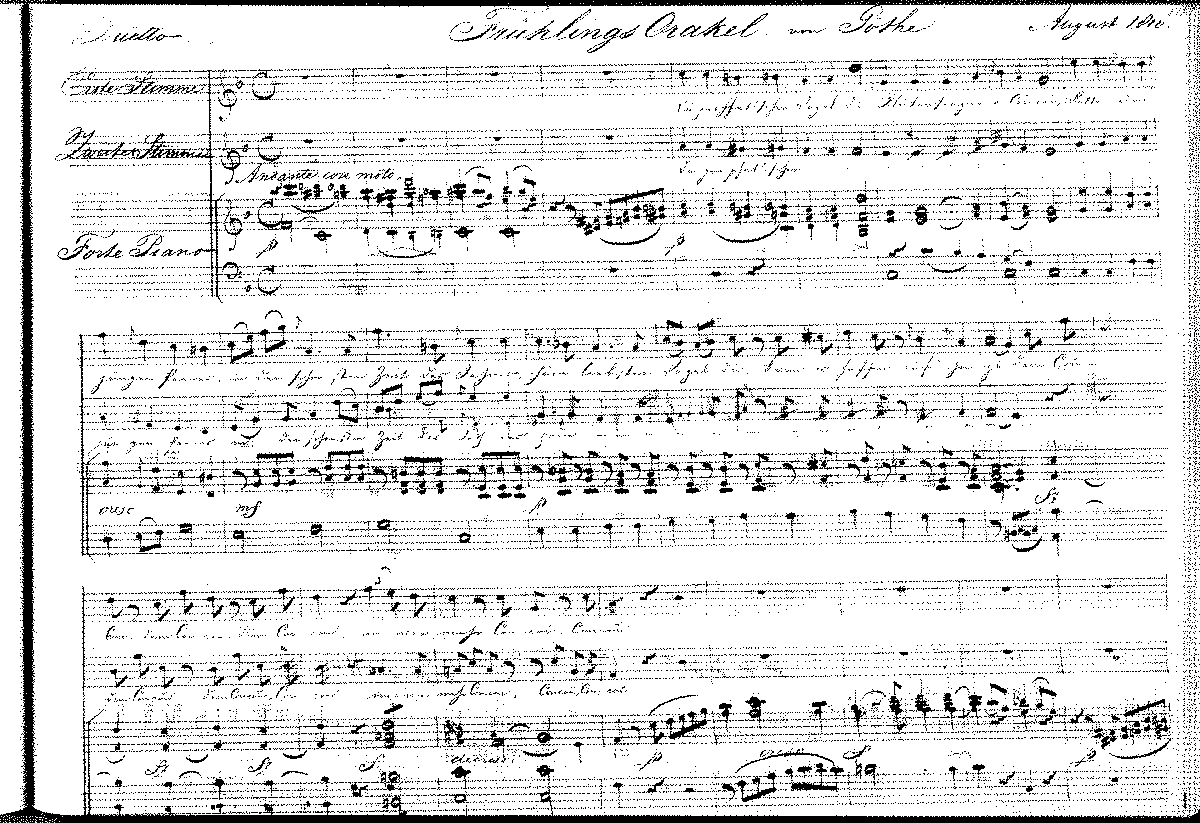
Du prophetscher Vogel du,
Blütensänger, o Coucou!
Bitten eines jungen Paares
In der schönsten Zeit des Jahres
Höre, liebster Vogel du;
Kann es hoffen, ruf ihm zu:
Dein Coucou, dein Coucou,
Immer mehr Coucou, Coucou.
Hörst du! ein verliebtes Paar
Sehnt sich herzlich zum Altar;
Und es ist bei seiner Jugend
Voller Treue, voller Tugend.
Ist die Stunde denn noch nicht voll?
Sag, wie lange es warten soll!
Horch! Coucou! Horch! Coucou!
Immer stille! Nichts hinzu!
Ist es doch nicht unsre Schuld!
Nur zwei Jahre noch Geduld!
Aber, wenn wir uns genommen,
Werden Pa-pa-papas kommen?
Wisse, daß du uns erfreust,
Wenn du viele prophezeist.
Eins! Coucou! Zwei! Coucou!
Immer weiter Coucou, Coucou, Cou.
Haben wir wohl recht gezählt,
Wenig am Halbdutzend fehlt.
Wenn wir gute Worte geben,
Sagst du wohl, wie lang wir leben?
Freilich, wir gestehen dirs,
Gern zum längsten trieben wirs.
Cou Coucou, Cou Coucou,
Cou, Cou, Cou, Cou, Cou, Cou, Cou, Cou, Cou.
Leben ist ein großes Fest,
Wenn sichs nicht berechnen läßt.
Sind wir nun zusammen blieben,
Bleibt denn auch das treue Lieben?
Könnte das zu Ende gehn,
Wär doch alles nicht mehr schön.
Cou Coucou, Cou Coucou :,:
Cou, Cou, Cou, Cou, Cou, Cou, Cou, Cou, Cou(Mit Grazie in infinitum)
Alone on stage, ennervating the audience mostly with the voice and a glance or a gesture has a singularly dramatic effect. This is what the Falmouth theatre-studies graduate, Jak Stringer achieved with her performance of “Walks with Wilkie” at the now well-established literary festival in Penzance in mid-June last year. The venue in the Acorn, once a Victorian chapel added an extra ambience to the subject, Wilkie Collins the eccentric friend of Charles Dickens and author of classics like “The Moonstone” and “The Woman in White”. Less remembered are his plays and less for his travel writings in Cornwall by means of which he initially gained fame. Curmudgeonly in some respects and daring in others, Jak Stringer has fell for him hook, line and sinker.
Jak Stringer, who has also received rave reviews from the NME as a musical impresario, shows herself to be an assured and energetic performer. In the year previous to this performance she retraced the footsteps of Wilkie Collins, bringing the stories from his somewhat forgotten classic, ”Rambles beyond Railways subtitled ‘Notes on Cornwall taken a-foot’, to life on the Acorn stage. This she does with verve and alacrity. Jak displays a range of emotions; at first sounding like a naive and almost, but not-quite, over-enthusiastic primary school teacher and rising to the eeriness of a Macbeth Witch into her recollection of an ancient lynching or parochial haunting. She poses Wilkie’s dilemmas from the 1850s-“Did the people of Looe consume their rats?”and “What made the women of Saltash clean the boots of strangers for sixpennyworth of beer?” and dauntingly examines the evidence for his finding a tavern filled with babies at the Lizard.
Jak Stringer
Creeping around the stage and sometimes not averse to a little appropriate melodrama, this performance was a continuous pleasure to watch-not least because Stringer varied the tempo and maintained a narrative pace throughout. She also used humour. She also showed her initial pleasure at receiving Collin’s bound volumes through the post. These she waived invitingly at the audience. In fact she used few props, none more effective than her woollen shawl sometimes drawn around her to convey poverty or want, at others spread to show joy at the reception which Collin’s work eventually received.
Neben dem Bach
Den roten Weiden nach
Haben in diesen Tagen
Gelbe Blumen viel
Ihre Goldaugen aufgeschlagen.
Und mir, der längst aus der Unschuld fiel,
Rührt sich Erinnerung im Grunde
An meines Lebens goldene Morgenstunde
Und sieht mich hell aus Blumenaugen an.

Ich wollte Blumen brechen gehn;
Nun laß ich sie alle stehn
Und gehe heim, ein alter Mann.(1915)
Into my heart an air that kills From yon far country blows: What are those blue remembered hills, What spires, what farms are those?
That is the land of lost content, I see it shining plain, The happy highways where I went And cannot come again.
The condition of being in Exile, is one common element in the human condition. It is certainly an important factor in Irish culture as is well pointed out in this excerpt from The Guardian on Beckett and Joyce – http://www.theguardian.com/world/2010/feb/28/ireland-exile-culture
Here Sean O’Hagan mentions,”This sense of spiritual as well as cultural displacement was evoked, too, by the poet Patrick Kavanagh, who walked the streets around Ealing Broadway in 1953 willing himself to remember his native Monaghan “until a world comes to life – morning, the silent bog”. In the second half of that same decade, an estimated half a million people left Ireland to begin their lives all over again, abroad.” There is spiritual exile, linguistic exile and the sense of personal exile when someone close dies or moves away, in an emotional or geographical sense.
George Klaar (1920-2009)
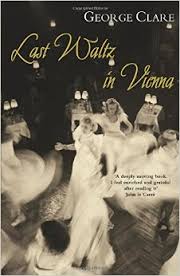
I have just been reading a deeply moving account of lost Austrian-Jewish culture in George Klaar’s Last Waltz in Vienna and was sorry to hear of his passing.http://www.independent.co.uk/news/obituaries/george-clare-memoirist-who-recalled-life-in-nazi-vienna-and-postwar-berlin-1726060.html .This threnody mentions his experiences not only in Vienna but also in Berlin, from where Klaar attempted his escape from the Nazis, initially to Ireland. A different approach and general introduction to exilliteratur (http://en.wikipedia.org/wiki/Exilliteratur) is to be found in Martin Maunthner’s book on German Writers in French Exile 1933-1940. Mauthner was born in Leningrad of Austrian parents. He worked in journalism and with the
Katharina Mann in Munich in 1905-she later converted to Lutheranism
European Commission in Brussels as a senior information officer. He also worked with Randolph Churchill on the biography of the latter’s father. In fact the book centres around a small port near Toulon. It makes much mention too of Aldous Huxley, Somerset Maugham,H.G.Wells, Muggeridge and Mosley. The French writers, Malraux and Gide are included in this account of the émigré community which provides an introduction to the intellectual drama and the tragic zeitgeist of this seven year period. The major figures are naturally Thomas, whose wife Katia came from a wealthy Jewish family of mathematicians, and his francophile brother Heinrich Mann, as well as Thomas’s son Klaus who engaged in a bitter battle of words at one stage with the Berlin based, Gottfried Benn- before the latter was to realise the full implication of Goebbel’s authoritarian drive from 1933 to achieve the synchronisation of the arts (Gleichschaltung) from his Ministry of Propaganda as Weimar collapse. Directed against Bolshevism it engendered militarism and focussed on anti-semitism taking in gypsies and homosexuals on the way and ending in the horrors of the Holocaust. This was all under the title of popular enlightenment. The account by Mauthner lacks the stylistic verve of George Klaar’s biographical account which affords an insight into the historical development of fascism upon Jewish life in Vienna.
Many Jews who were physically harassed and otherwise threatened by the Nazis and travelled to many locations and were exiled to Amsterdam, Stockholm, Zürich, London, Prague, Moscow as well as across the Atlantic to both North and South America. Martin Mauthner’s book seems to have three great strengths. It shows the wide variety of responses of individual refugees and their attempts to organise opposition to Hitler and the hampering difficulties other countries governments and other organisations presented. There is considerable detail about individuals like Feuchtwanger and Schwarzschild, famous at the time and now unfortunately neglected as well as journalists, publishers, cartoonists and illustrators. This book confines itself to writers, poets and playwrights but is particularly intriguing on the splits with the communists and within the United Front. The cruel trials under the auspices of Stalin proving a profound sticking point; also the different approaches in the Spanish Civil War.
Leopold Schwarzschild Editor of Das Neue Tagebuch
Just this morning I recieved an interesting posting concerning classical antiquity from http://poemsintranslation.blogspot.co.uk/ with a version of Ovid’s Tristia and the mortifying effects of having to leave his wife behind in charge of his posessions.
Illa dolōre āmēns tenebrīs nārrātur obortīs sēmjanimis mediā prōcubuisse domō,
utque resurrēxit foedātis pulvere turpī crīnibus et gelidā membra levāvit humō,
sē modo, dēsertōs modo complōrāsse Penātēs, nōmen et ēreptī saepe vocāsse virī,
nec gemuisse minus, quam sī nātaeve meumve vīdisset strūctōs corpus habēre, rogōs,
et voluisse morī, moriendō pōnere sēnsus, respectūque tamen nōn periisse meī.
Vīvat, et absentem, quoniam sīc fāta tulērunt, vīvat et auxiliō sublevet usque suō.
Translated by A.Z.Foreman as:-
I’m told she fainted from grief, mind plunged in dark, And fell half-dead right there in our house. When she came round, with disheveled dust-fouled hair, Staggering up from the cold hard ground, She wept for herself, for a house abandoned, screaming Her stolen man’s name time after time, Wailing as though she’d witnessed our daughter’s body Or mine, upon the high-stacked pyre; And longed for death, to kill the horror and hardship, Yet out of regard for me she lived. Long may she live! And in life give aid to her absent Love, whose exile the Fates have willed.












 penwithlit