This exhibition comprises fierce, expressionistic works- many of single female sitters on couches-apparently his models arrive at twilight and he paints them when he cannot quite see the exact colours clearly on his tubes of oil. As the introduction to the exhibition at King’s Place, London states, “Opening in conjunction with the Baroque Unwrapped music programme, Piano Nobile presents Thomas Newbolt: Drama Painting – A Modern Baroque. Immense paintings by contemporary artist Thomas Newbolt explore the very essence of painting: the paradoxes of light and dark, psyche and body, figure and ground. Such liminal spaces are where Newbolt finds a vital potency: ‘I’m interested in the emotional area the painting opens up, so when I stand back I feel it’s true’. Layering undiluted oil paint in vigorous impasto, the paintings have a physical depth mirroring their expressive complexity.” Indeed it is the case that these paintings in impastos of pure colour have an impressive presence and dignity.
The figures have the sense that they are apprehensively awaiting a tense psychoanalytic session. Their long and elegant dresses have a timeless elegance about them perhaps reminiscent of Christian Schad but painted with an intensity approaching Francis Bacon. The colours are rich and vivid with an accent on vermillion or verdant dark greens against an equally strong background of intense blue or brown. There is an interesting triptych and smaller studies of heads. Dramatic, indeed, so if you are in London to see a play, take the short walk past the Guardian offices in Kings Cross to see these intriguing works.
This poem by Heinrich Heine is simple and clever. It is maybe the kind of poem to which Karl Krauss might have taken exception. It has also been set to music by Robert Schumann in Dichterliebe, op. 48 Nr. 11.
Ein Jüngling liebt ein Mädchen,
Die hat einen Andern erwählt;
Der Andre liebt eine Andre ,
Und hat sich mit dieser vermählt.
Das Mädchen heiratet aus Ärger
Den ersten besten Mann,
Der ihr in den Weg gelaufen;
Der Jüngling ist übel dran.
Es ist eine alte Geschichte,
Doch bleibt sie immer neu;
Und wem sie just passieret,
Dem bricht das Herz entzwei.
Themeterisnotregular and alternatesbetween iambsand anapests.Masculine andfemininecadences are interwoven andthefirstverseofeachstanza always has afeminineending.
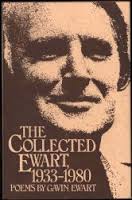
For some reason this reminded me of one of the amusing poems by Gavin Ewart whom I heard one delightful evening during the St Ives Festival at the Penwith Gallery in the early nineties. The poem is called “Office Politics”.
Eve is madly in love with Hugh
And Hugh is keen on Jim.
Charles is in love with very few
And few are in love with him.
Myra sits typing notes of love
With romantic pianist’s fingers.
Dick turns his eyes to the heavens above
Where Fran’s divine perfume lingers.
Nicky is rolling eyes and tits
And flaunting her wiggly walk.
Everybody is thrilled to bits
By Clive’s suggestive talk.
Sex suppressed will go berserk,
But it keeps us all alive.
It’s a wonderful change from wives and work
And it ends at half past five.
“Louise was born in 1984 in London she studied at Falmouth school of art in Cornwall graduating in 2007. She was immediately picked up by SAATCHI/channel 4 collaboration ‘Sensations’. She exhibited internationally living in Cornwall, London and Paris for a while. After a residency in Iceland and living with Nuns in a convent in central London she settled in Berlin in 2013 where she currently lives and works.”
The above is a quotation from the artist’s personal statement. Louise has lived in a number of interesting environments. I couldn’t help smiling, when she described how when homeless in London, she wrote around to numerous agencies and the only supportive assistance she received was from the convent. She is currently based In Berlin and has it happens in the long Sonnenallee – a location in East Berlin made famous by Thomas Brussig in his ironic and witty novel, which has now been made into a film and performed as a play at BTZ.
Am kürzeren Ende der Sonnenallee
Ships that are Wrecks
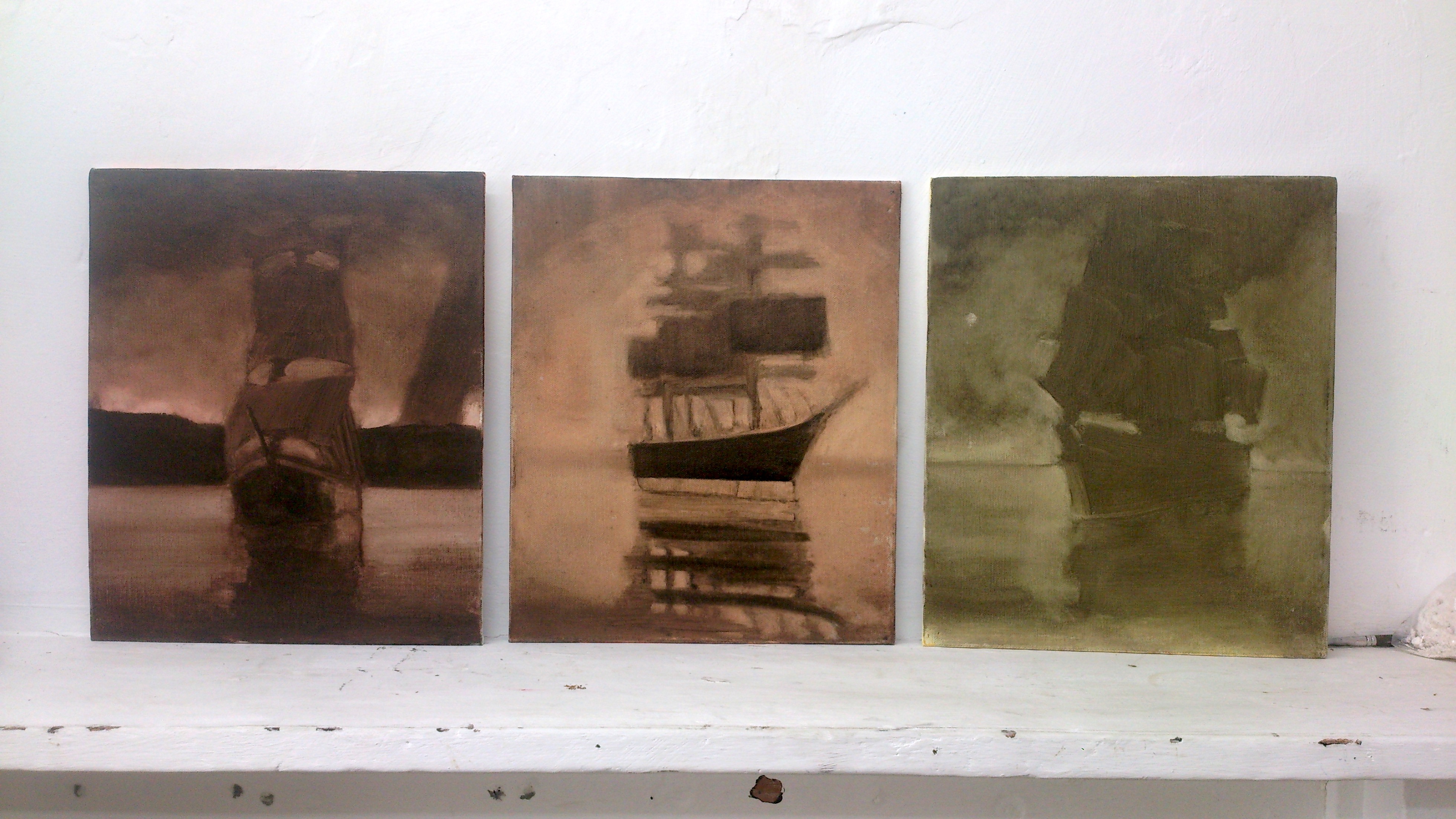
Currently, Louise Thomas has just completed a three month placement at Porthmeor Studios where her work has focussed largely upon an historical approach to the coastal landscape including ships and shipwrecks. About her work, Louise has written,”I construct magical realist narratives through collages, sculpture and painting. The enviroments or events depicted show contrast between real and magical elements. These elements are visible through my different methods of production and placement of resources. I find inspiration from a wide range of source material, from films I have made of abandoned interior spaces, to specific walking routes, to archive material of paintings hanging in museums. I perform extensive research and careful study of the subject matter, building a pool of scenarios to work from.”
“Through construction of models and collages I develop my ideas for painting. From the initial source material I make collages and if necessary bring in images from holiday brochures or photocopies from unique archives. I will research historic events, sourcing restoration records from museums or libraries. I usually end up with stage sets to play out scenarios. The models can be in clay, paper, plaster and other site specific materials. I work my way through various stages, addressing ideas of scale, colour, atmosphere until I find a valid reason to develop a painting. The historic elements run alongside fictional narrative I have developed; for example flooding the space, rebuilding it, imagining it thousand years from now or highlghting natural phenomenon.”
Lifesavers oil and Cornish china clay on two aluminium panels 60x40cm 2015
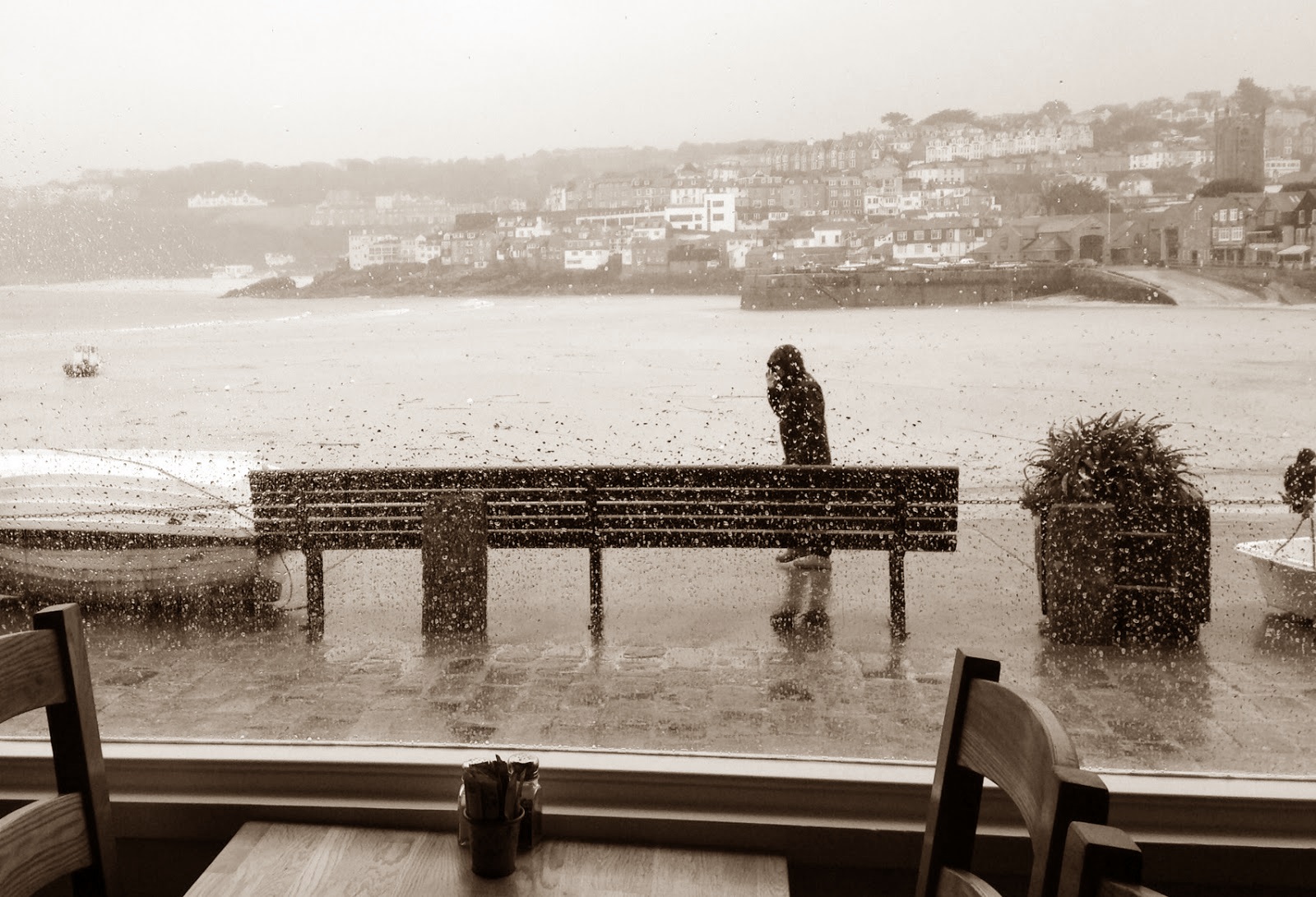
Evelyn: Ich muss jetzt nach Haus‘
Bully: Baby, es regnet doch
Evelyn: Komm, lass mich hinaus
Bully: Aber, Baby, es regnet doch
Evelyn: Der Abend war schön
Bully: Drum sollst du noch lang‘ nicht geh’n
Evelyn: Ganz wunderbar
Bully: Du läufst im Regen nur Gefahr
Evely: Die Mutter wird sich schon sorgen
Bully; Das gibt sich schon bis morgen
Evelyn: Mein Vater regt sich auf, nicht zu knapp
Bully: Später regt er sich wieder ab
Evelyn: Ich war doch schon hier drei Stunden
Bully: Mir scheint nur drei Sekunden
Evelyn: Ich trinke noch ein letztes Glas Wein
Bully: Muss es denn das letzte Glas sein
Evelyn: Die Nachbarn im Haus
Bully: Ach Baby es hagelt bald
Eyelyn: Die schau’n nach mir aus
Bully: Dafür ist es viel zu kalt
Evelyn: Ich fühl’ mich ganz warm
Bully: Bestimmt nur in meinem Arm
Evelyn: Und wenn es schneit
Bully: Doch nicht um diese Jahreszeit
Evelyn: Ich sollte schon längst nicht mehr hier sein
Bully: Immer sollst du bei mir sein
Evelyn: Warum schaust du so zärtlich mich an
Bully: Weil ich einfach nicht anders kann
Evely: Jetzt hab’ ich schon Angst
Beide: Jetz hab‘ ich schon Angst,
was du verlangst von mir.
Evelyn; Jetzt ist es genug
Bully: Baby, noch lange nicht
Evelyn: Schau, sei doch mal klug
Bully: Baby, die Liebe spricht
Evelyn: Die Liebe macht blind
Bully: Das ist mir egal, mein Kind
Evelyn: Sei doch gescheit
Bully: Aber dafür hab’ ich im Alter Zeit
Evelyn: Was meine Schwester wohl denkt von uns beiden
Bully: Die kann uns doch nur beneiden
Evelyn: Mein Bruder nimmt bestimmt von uns an
Bully: Weißt du was Dein Bruder mich kann
Evely: Die Mädchen im Haus die schwätzeln
Bully; Lass doch die Ziegen hetzen
Evelyn: Auf jeden Fall wird das ein Skandal
Bully: Dann ist doch schon alles egal
Evelyn: Ich muss jetzt nach Haus‘
Bully: Baby es stürmt und blitzt
Evelyn: Egal, ich muss raus
Bully: Wie süß deine Bluse sitzt
Evelyn: Du, ich flieg’ zu Haus raus
Bully: Warum gehst du denn erst nach Haus
Evelyn: Für alle Zeit
Bully: Ich liebe dich in diesem Kleid
Evelyn: Das kommt davon, wenn ich trinke
Bully: Lass doch die Lippenschminke
Evelyn: Die Straßenbahn wird schon lang‘ nicht mehr geh’n
Bully: Wer könnte dir wiedersteh‘n
Evelyn: Jetzt ist‘s mir egal
Beide: Jetzt ist‘s mir egal,
küsse mich tausend Mal.
Bully: Aber Baby, es
Evelyn: Jaaa
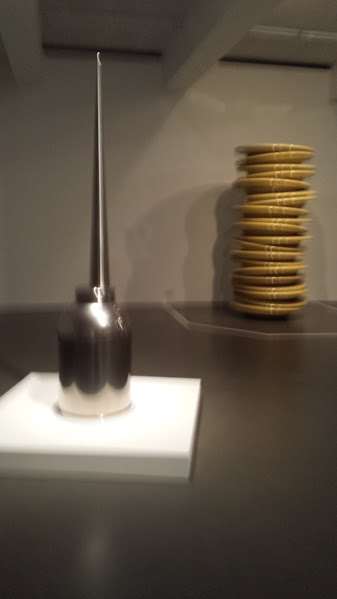
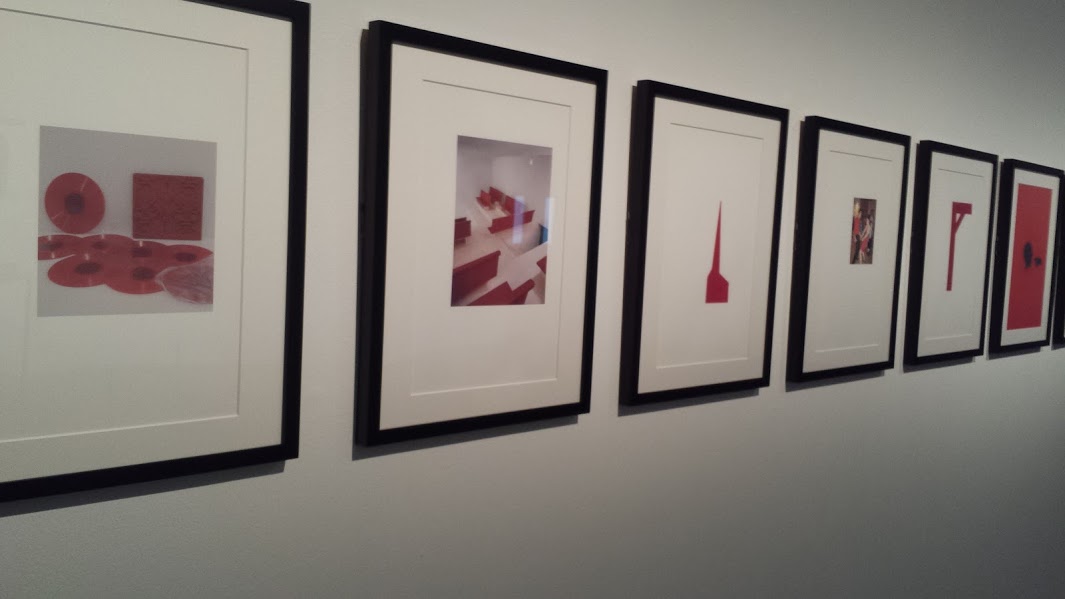
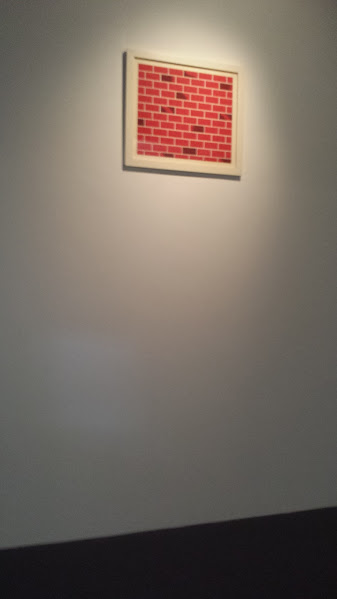
Robert Therrien’s work is being displayed at the Exchange Gallery, Penzance until 26th September 2015. Working in Los Angeles, this 68 year old artist is displaying his work in collaboration with ARTIST ROOMS, an organisation which is a venture of both the Tate and the National Galleries of Scotland of con temporary art, which is international, that is on tour currently.
(No Title) Oil Can 2004 and (No Title) Stacked Plates 2010A selection from Srubbrush Bird Book
Alone on stage, ennervating the audience mostly with the voice and a glance or a gesture has a singularly dramatic effect. This is what the Falmouth theatre-studies graduate, Jak Stringer achieved with her performance of “Walks with Wilkie” at the now well-established literary festival in Penzance in mid-June last year. The venue in the Acorn, once a Victorian chapel added an extra ambience to the subject, Wilkie Collins the eccentric friend of Charles Dickens and author of classics like “The Moonstone” and “The Woman in White”. Less remembered are his plays and less for his travel writings in Cornwall by means of which he initially gained fame. Curmudgeonly in some respects and daring in others, Jak Stringer has fell for him hook, line and sinker.
Jak Stringer, who has also received rave reviews from the NME as a musical impresario, shows herself to be an assured and energetic performer. In the year previous to this performance she retraced the footsteps of Wilkie Collins, bringing the stories from his somewhat forgotten classic, ”Rambles beyond Railways subtitled ‘Notes on Cornwall taken a-foot’, to life on the Acorn stage. This she does with verve and alacrity. Jak displays a range of emotions; at first sounding like a naive and almost, but not-quite, over-enthusiastic primary school teacher and rising to the eeriness of a Macbeth Witch into her recollection of an ancient lynching or parochial haunting. She poses Wilkie’s dilemmas from the 1850s-“Did the people of Looe consume their rats?”and “What made the women of Saltash clean the boots of strangers for sixpennyworth of beer?” and dauntingly examines the evidence for his finding a tavern filled with babies at the Lizard.
Jak Stringer
Creeping around the stage and sometimes not averse to a little appropriate melodrama, this performance was a continuous pleasure to watch-not least because Stringer varied the tempo and maintained a narrative pace throughout. She also used humour. She also showed her initial pleasure at receiving Collin’s bound volumes through the post. These she waived invitingly at the audience. In fact she used few props, none more effective than her woollen shawl sometimes drawn around her to convey poverty or want, at others spread to show joy at the reception which Collin’s work eventually received.
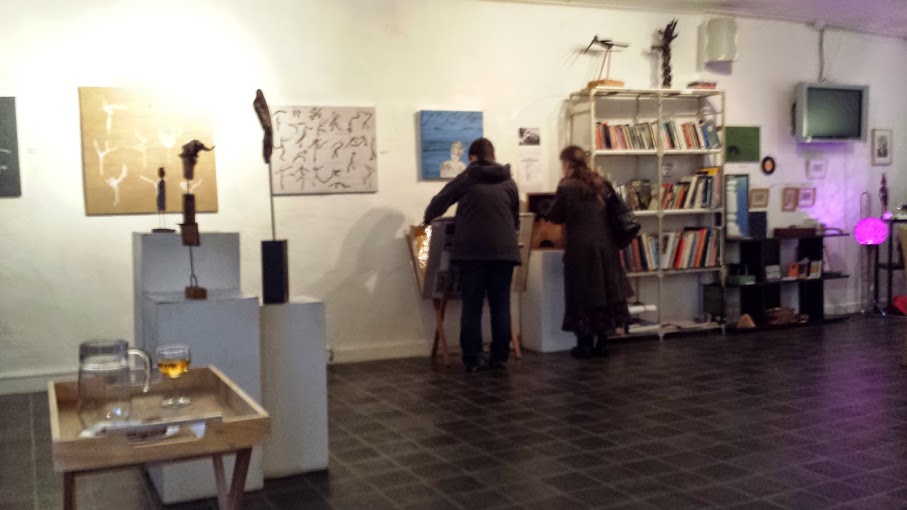
St Ives-based multi media artist Mary Fletcher has co-ordinated an interesting exhibition in The Redwing Gallery, Penzance on behalf of volunteers at the venue. This runs until the end of January and has already received positive reviews such as that by the well-known local poet and commentator, Frank Ruhrmund. Writing in the Cornishman at http://www.westbriton.co.uk/Volunteers-thanked-gallery-assistance/story-25852842-detail/story.html, he states about the exhibition and the co-ordinator herself, “A gallery renowned for its support and promotion of outsider art, it is not all that surprising that Mary Fletcher should feel at home there. It is only two years since, for the first time in her long career, that she has been able to enjoy a working space outside of her house, at White’s Old Workshops in Porthmeor Road, St Ives. Many will recall her solo show held last year in the St Ives Arts Club Arts which celebrated her first year in her new working space.”
Mary Fletcher at The Redwing
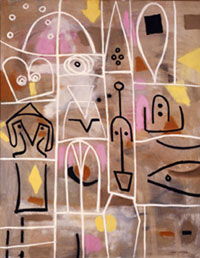
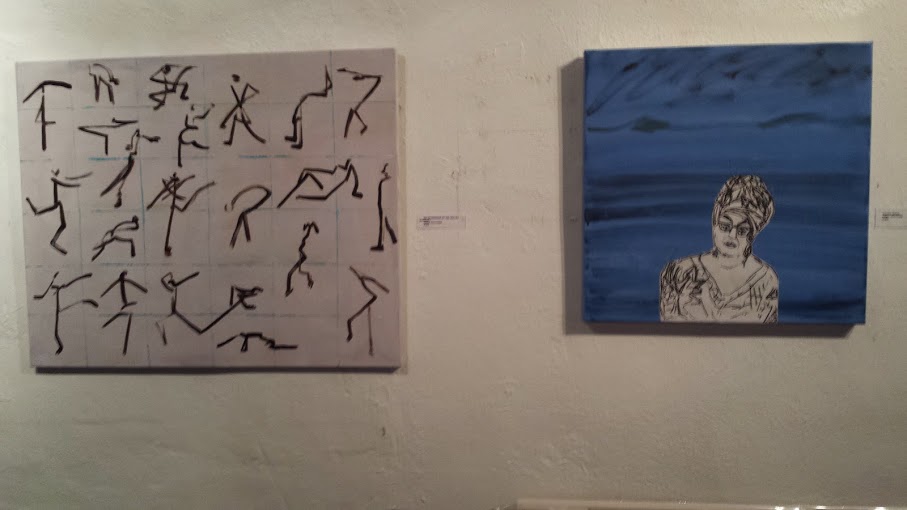
The relaxed atmosphere in The Redwing owes something to its bohemian ambience and partly due to its secluded location. The comfortable seating, bookstands and available refreshments all add to the effect. Here, Peter Fox and Ros Williams, co-directors of the Redwing Gallery, have created a space which is primarily concerned with outsider art. The current exhibition certainly adds to the general comfortable charm of the space. Mary Fletcher’s lyrical canvases remind me of an excellent and memorable exhibition by Litz Pisk who had worked at the Old Vic Theatre School (b.1909 in Vienna) many years ago at Newlyn Art Gallery. Interestingly, a student of Max Reinhardt, Pisk designed for Brecht and Weil’s first
Figures by Litz Pisk (not at The Redwing)
production. http://www.baacorsham.co.uk/mparkin/p65.htm and also her film work for Isodora is at http://www.imdb.com/name/nm0685496/ Mary Fletcher’s paintings too look a little like dancing musical characters against a colourful background grid. There are also a number of interesting sculptures and small figurines in the exhibition which are also worthy of attention.
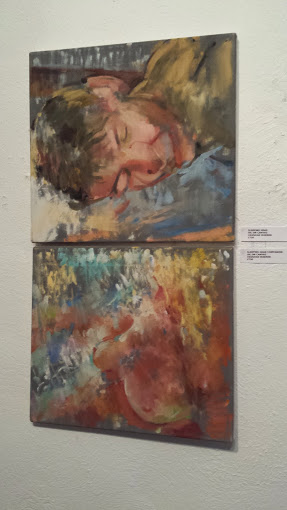
Once again, Vaughan Warren, educated at the Royal Academy Schools (The RA Schools was founded in 1769, and remains independent to this day. This independence enables the Schools to offer the only three-year postgraduate programme in Europe.) has turned in a range of varied and intriguing work. Two of his pictures, I found particularly appealing, although it is worth remarking that all his paintings, like his self-portrait in the manner of Cezanne, benefit from his wide knowledge of art history. The first portrays a sleeping head surmounted delicately above a breast in a transport of lovely colours. This evocative duo puts one in mind of those lovely lines from W.H.Auden:-
“Lay your sleeping head, my love,
Human on my faithless arm;
Time and fevers burn away
Individual beauty from
Thoughtful children, and the grave
Proves the child ephermeral:
But in my arms till break of day
Let the living creature lie,
Mortal, guilty, but to me
The entirely beautiful.”
The second painting,energetic and interesting, executed in black, white and greys shows a view above St Just and looks down literally upon, in the distance, the Great Western Hunt in progress. As Wilde once remarked, ” The Unspeakable in Pursuit of the Uneatable”. The unspeakable in this context means appalling, horrendous, wretched and indeed may remind one of another poem of Auden’s in quite another way:-
From Musée des Beaux Arts (1940)
“Anyhow in a corner, some untidy spot
Where the dogs go on with their doggy
life and the torturer’s horse
Scratches its innocent behind on a tree.”
Mr Vaughan Warrent Admission is free, and this show by the gallery’s volunteers can be seen in the Redwing Gallery, Wood Street, off Market Jew Street, Penzance, 11am to 4pm.
Kerry Harding’s soft and evocative canvases take the natural world around the North
Kerry Harding at work in her studio at Krowji
Coast with it’s trees, hedges and seasonal variations as a starting point. Her website may be found at http://www.kerryharding.co.uk/. Kerry was very interesting on the topic of the famous Dresden artist, Gerhard Richter https://www.gerhard-richter.com/en/ mentioning his process, his photographic work and his continuous experimentation using a wide variety of methods and sometimes controversial subject matter. She also mentioned his ability to work on different projects simultaneously. She worked very hard to create a welcoming atmosphere in her space- as she says on Twitter, “studio almost ready, tinsel and fairy lights then its done.” A lovely range of paintings that I found so interesting that I came back to browse them for a second time. It was also informative to hear how some canvases were composed of many underpaintings-up to ten or more layers.
Kathryn Stevens, http://kathrynstevens.co.uk/, clearly rejoices in the freedom of working on a large scale. The billowing colours of her canvases express the joy of painting in bright colours. Some of them have a feathery and eloquent quality that puts one in mind of Georgia O’Keeffe (or perhaps Otto Gottlieb) but here we have an abstract expressionism with an upbeat and optimistic feel. She told me how she works freely, sometimes with music and chatted with the same exuberance that her work conveys. I was particularly taken by a study in
Kathryn Stevens’s studio
crimson, scarlet and white. She hails from St Ives and her paintings exhibit the wondrous light for which the town has become famous.
In short there was much to add cheer on a cold Sunday. It was good to see the Siobhan Purdy’s work again- which adorns the wall opposite as I write, the Mexican and Maya themed prints in the Apex space and to talk again with Naomi Singer whose glass works continue to thrive. Interesting too were the textile pieces by Zoe Wright.
Esther Connon -Work in progress
Before returning to the Melting Pot once again, I went into see the illustration work of Esther Connon and was much taken by her story of TheWhite Butterfly which can be seen on http://www.estherconnon.co.uk/stories.html?s=5. I wondered if it would be possible to animate some of this according to the methods of http://thepapercinema.com/ and this fascinating method may be seen both on videos on the papercinema site and on the community project in St Ives filmed earlier this year by my friend Alban. Altogether with the new building project at Krowji already under-way, great developments can be expected from this artistic phoenix rising from the ashes of the Grammar School at Redruth.
Getting to Krowji on a Sunday in December by public transport is a time-consuming business. Servicing the railway and circuitous bus routes turn a simple trip into an epic voyage. At least it affords time to see more new supermarkets, innovative centres in Pool and glimpses of neo-classical architecture in the grand manner. The upper stories of the façades remind one of the prosperity of this area in its heyday.
Under reconstruction in Redruth
Upon arrival, the bohemian atmosphere in The Melting Pot Cafe, the warmth and the leek and potato soup help to revive after the lengthy journey. The wall of clocks and masques and surreal paraphernalia suggest that a cabaret is about to begin and indeed there is a pianist in cap and bells already upon the stage. This has a timeless and dreamy ambience quite unique and sui generis.
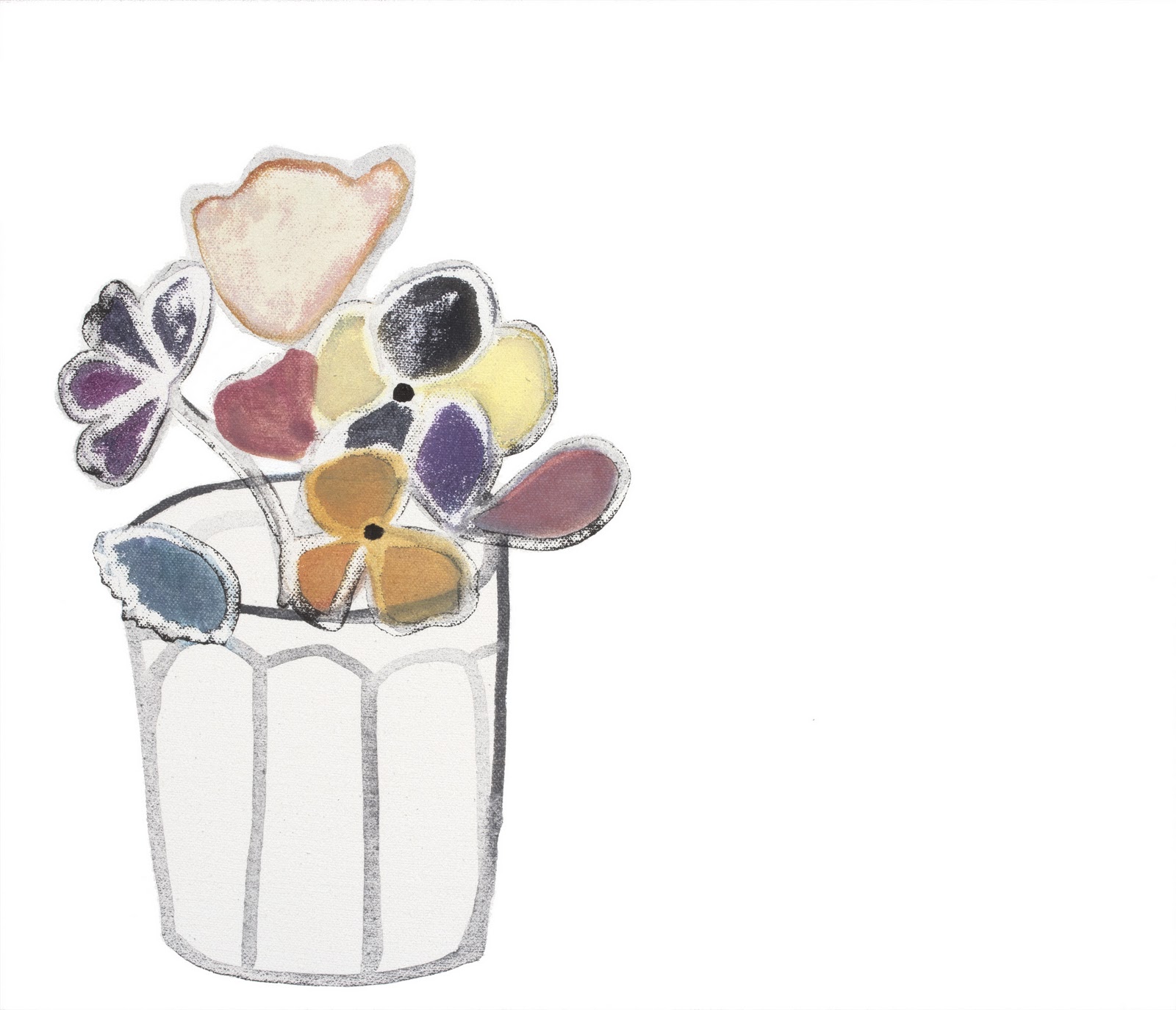
Moving around the crowded studios, there was a buzz which always seems stronger here where the art is being produced than visiting a gallery. I was particularly attracted to the work of Linda Crane -printmaking and painting but also small sculptures -including a small head which I thought reminiscent of Giacometti. The angular and elongated forms, the expressionist use of paint and the dramatic drawings were intriguing and attractive. My impression too was as though I felt a resonance both with Kokoschka and El Greco. Her work may be seen at http://www.sulisfineart.com/search/page/2?q=Linda+Crane and also at http://www.outsidein.org.uk/linda-crane where I was surprised to read of her work being in Penzance at the Redwing Gallery.
Flower Studies by Linda Crane
I think the fact that her atelier was empty increased my fascination with her display and her portfolio.I think my recent travels may also have influenced my susceptibilities. It is also interesting to research the influence of El Greco on Expressionism- as in the recent exhibition El Greco und die Moderne.(Dusseldorf 2012 http://www.smkp.de/en/exhibitions/archive/2012/el-greco.html)