Categories
Book Reviews Literature Penwith Poetry West Cornwall (and local history)

“Bronte Territories” by Melissa Hardie-an Appreciation

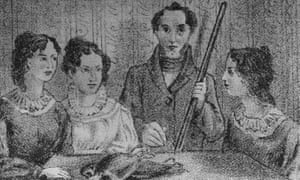
The Brontë sisters with their brother, Branwell, in a painting by him called the Gun Group Portrait.

Wandering down Chapel Street in Penzance, you cannot fail to recognise that you have entered that part of town where history feels close-by. The sea in the distance, the church and the chapel architecture is impressive, the Turk’s Head Tavern and the baroque wonder of the Egyptian House, the Portuguese consulate and almost opposite the house where George Eliot stayed waiting for calm weather for her voyage to the Scillies. Reading Melissa’s book is like taking a similar peregrination through lost corridors of time to recover a sense of the rich liveliness of Penwith’s past. Welcome to the psychogeography of Bronte’s Territories.

The Brontes are still much in the news. The Irish Times, just two weeks ago, were reporting on the O.U.P. computer analysis of Wuthering Heights apparently confirming it to be the work of Emily and not, as had been suggested, that of her brother Branwell. Iconoclasm may be in vogue. However, a square in Brussels – the city where two of the Bronte sisters studied French – is to be named in honour of the literary siblings. Other authors make claim to curious events in Shropshire in the early years of the 19th century drew the parents of genius together. It is to the intellectual and feminine furore of Penzance and its inspiring hinterland that Hardie’s work appropriately returns us.

In a key chapter on the literature and legend of Cornwall from 1760 much mention is made of the intriguing and taciturn figure of Joseph Carne, a geologist of great renown and an energetic banker. His personality was such that he combined a skill with numbers with a strong Methodist belief and mixed in a variety of literary circles. Nearby Falmouth was a key port for the Packet boats recorded in the poetry and memoirs of Byron and Southey. It too was the home of the Quaker family of Foxes who founded the Cornwall Polytechnic Society in 1832. Carne was a friend and shared their Non-Conformist beliefs. Hardie shows how Carne encouraged his daughter in her geological studies and mentions the doctors, engineers, vicars and scientists whose cultural sources were enriched by contacts which included Bretons, Huguenots, Hessians as well as a significant Jewish community. She reminds us that in reading Davy, for example, we encounter not just a socially beneficent scientist, a traveller and a poet. This is the endowment the Branwell sisters took to Haworth.

It is interesting to consider that within this Cornish background at this period there were a number of competing beliefs and attitudes. There were the mythical beliefs fostered from folklore- piskies and stories in the expiring Cornish language. There was the old religion of Rome not far beneath the surface. Yet there were also new discoveries especially in medicine and geology that fostered a scientific empiricism. This can be seen in figures such as Davies Gilbert to whom this book gives due prominence- a polymath, mathematician, engineer and President of the Royal Society and a wonderful diarist to boot. William Temple much later stated, “The Church exists primarily for the sake of those who are still outside it. It is a mistake to suppose that God is only, or even chiefly, concerned with religion.” It was the evangelical zeal of the Wesley brothers and their belief in education, temperance combined with stunningly beautiful hymns. It was also a challenge to superstition. It is often said it averted revolution which France and later Peterloo portended.

Melissa Hardie shows us the other supportive factors that came into this heady mixture and sustained the Branwells and flowered in the Bronte’s work. These are twofold; the societies and the family or kinship links. The Penzance Ladies Reading group who carefully studied together a stunning variety of literature from the classics of the Ancients to the contemporary travel writings. Not forgetting the subversive eloquence of Lord Byron, a gentleman with Cornish links through the Trevanions. The founding of libraries and collection of artefacts had practical even economic benefits. The Royal Cornwall Geological Society studies into metallic intrusions assisted the efficiency of mining. Local banks provided the capital for further developments in the industry as well as the magnificent Wesleyan Chapels that the Carnes, Branwells and Battens founded and fostered.

The author has researched both land and legacy extensively. Her approach is frequently imaginative and sometimes speculative. This is a strength because she is also at pains to inform the reader of the limitations of the evidence. Footnotes and suggested reading in themselves are useful but the illustrations are worthy of pondering- several works of art in themselves. They add significant detail. This patient work by Melissa supported by other members of the resplendent Hypatia Trust must be counted as filling a deep fissure, or as we might say in Cornwall, a zawn in Bronte Studies.

See also from the Guardian –

https://www.theguardian.com/books/2019/jun/29/bronte-grandfather-smuggling-past-financed-books-charlotte-emily-anne


Categories
German Matters Literature Poetry

Mein Herr Marquis- The Laughing Song


Mein Herr Marquis, ein Mann wie Sie
Sollt’ besser das verstehn,
Darum rate ich, ja genauer sich
Die Leute anzusehen!
Die Hand ist doch wohl gar zo fein, hahaha.
Dies Füsschen so zierlich und klein, hahaha.
Die Sprache, die ich führe
Die Taille, die Tournüre,
Dergleichen finden Sie
Bei einer Zofe nie!
Gestehn müssen Sie fürwahr,
Sehr komisch dieser Irrtum war!
Ja, sehr komisch, hahaha,
Ist die Sache, hahaha.
Drum verzeihn Sie, hahaha,
Wenn ich lache, hahaha!
Ja, sehr komisch, hahaha
Ist die Sache, hahaha!

Sehr komisch, Herr Marquis, sind Sie!
Mit dem Profil im griech’schen Stil
Beschenkte mich Natur:
Wenn nicht dies Gesicht schon genügend spricht,
So sehn Sie die Figur!
Schaun durch die Lorgnette Sie dann, ah,
Sich diese Toilette nur an, ah
Mir scheint wohl, die Liebe
Macht Ihre Augen trübe,
Der schönen Zofe Bild
Hat ganz Ihr Herz erfüllt!
Nun sehen Sie sie überall,
Sehr komisch ist fürwahr der Fall!
Ja, sehr komisch, hahaha
Ist die Sache, hahaha
Drum verzeihn Sie, hahaha,
Wenn ich lache, hahaha!
Ja, sehr komisch, hahaha,
Ist die Sache, hahaha  etc.

English Translation


My Lord Marquis, a man like you
should better understand that,
Therefore I advise you to look more
accurately at people!
My hand is surely far too fine, hahaha.
My foot so dainty and small, hahaha.
In a manner of speaking
My waist, my bustle,
The likes of things you’ll never find
on a maid!
You really must admit,
This mistake was very funny!
Yes, very funny, hahaha,
This thing is, hahaha.
You’ll have to forgive me, hahaha,
If I laugh, hahaha!
Yes, very funny, hahaha
This thing is, hahaha!

Very comical, Marquis, you are!
With this profile in Grecian style
being a gift of nature;
If this face doesn’t give it away,
Just look at my figure!
Just look through the eye-glass, then, ah,
At this outfit I am wearing, ah
It seems to me that love
Has clouded your eyes,
The chambermaid image
Has fulfilled all your heart!
Now you see her everywhere,
Very funny indeed, is this situation!
Yes, very funny, hahaha
This thing is, hahaha.
You’ll have to forgive me, hahaha,
If I laugh, hahaha!
Yes, very funny, hahaha
This thing is, hahaha!

Categories
Poetry Uncategorized

Lockdown Litany

dutch east indies architecture | Tempo Doeloe #9 - Bandung, Hotel ...

The usual combination-

a doctor gone to seed and

a rum skipper in the South China Seas,


in accordance with the author’s predilections

a handsome tow haired young man

predictably on the run from some

funny business that sadly

he has done.


A storm arises and shakes

the bored doctor’s equanimity

to the core;

only the crafty wicked sea captain

can negotiate such raging seas.


They arrive to the transparent tranquillity

of a tiny Dutch island.

Finding lodgings and satisfactorily breakfasting

the travellers meet eccentric characters

both esoteric and exotic.


Naturally, a beautiful maiden arrives,

a stunning love scene soon  ensues

involving the tow haired Australian

on the loose from his dirty deed

and the prose flows engagingly enough.


The novelist must tie up his plot.

The women behave in various unladylike ways.

The story clangs, chancy and unreal.

The body count mounts

as fictional fate  mechanically reveals.


You really have to ask yourself

if this is the best use of your time.

Reading this second-rate novel

by this first-rate novelist.


Even then the ending was uncertain,

though

perhaps prefiguring the postmodern.


Categories
Literature Poetry

Gwyneth Lewis-Sea Virus

Sea Virus

I knew I should never have gone below
but I did, and the fug of bilges and wood
caught me aback. The sheets of my heart
snapped taut to breaking, as a gale
stronger than longing filled the sail
inside me. To be shot of land
and its wood smoke! To feel the keel
cold in a current! To see the mast
inscribing water like a restless pen
writing a fading wake! It’s true,
I’m ruined. Not even peace will do
to keep me ashore now. Not even you.

I was first attracted to Gwyneth Lewis’s work by a poem in Ruth Padel’s collection, 60 Poems for the Journey of Life where her attractive poem, The Flaggy Shore may be found. Clearly she is much interested in marine matters.

The poem has a tension and an elegance about it. It will appeal to anyone interested in messing about in boats but has an edge about it too. Much of the imagery is erotic even sexual. The word fug strikes and catches you back as she says in the next line. It is overpowering and yet speeds you along with considerable force like a dangerous attraction. The word “shot” adds to this general sense of menace and yet also implies the freedom experienced as the liberation of inspiration. The image of the pen as a sail-a simile- reminds of the Rubaiyat of Omar Khyyam –

“The Moving Finger writes; and, having writ,
Moves on: nor all thy Piety nor Wit
Shall lure it back to cancel half a Line,
Nor all thy Tears wash out a Word of it.”

It also reminds of the words written on Keat’s Grave-

The best-known use of a similar phrase is on the gravestone of John Keats: Here lies one whose name was writ in water. (‘Writ‘ is a poetic form of ‘written‘.) This means his fame was transient; it passed away quickly. Then there is Catullus-

1 Nulli se dicit mulier mea nubere malle My woman says that she prefers to be married to no one
2 quam mihi, non si se Iuppiter ipse petat. but me, not even if Jupiter himself should seek her.
3 dicit: sed mulier cupido quod dicit amanti, she says: but what a woman says to her passionate lover,
4 in vento et rapida scribere oportet aqua. she ought to write on the wind and swift-flowing water.

The poem then is about the possible effects of being driven along by the poetic imagination. The last line has an awesome direct remark to the reader. For some poets their trade requires passion even to the point of not counting the cost. Shelley in his boat springs to mind!

Categories
Film Literature Poetry

Nanki-Poo in the Rose Garden

Footfalls echo in the memory
Down the passage which we did not take
Towards the door we never opened
Into the rose-garden.

So writes T.S. Eliot in Burnt Norton, the first of the Four Quartets. It makes one wonder what memories can be recalled of this particular Rose Garden. A slightly strange venue to choose surely? Maybe the door ought not to have been opened? Most will recall the unfortunate and strange meeting that heralded the unfortunate Coalition  Indeed, it was another Special Adviser, Julia Goldsworthy who was to finally conclude, “Many Liberal Democrat activists would have found the Rose Garden love-in between David Cameron and Nick Clegg “sick-inducing”. Perhaps it was to give a green tinge to distract from 260 miles or more of carbon emissions.

It is not just the receding hairline of Cummings that brings G and S’s Mikado character of Nanki-Poo to mind. This histrionic and grumpy individual needs a trickster or Jungian alter ego. Remember it is Nanki-Poo who sings-

The flowers that bloom in the spring,
Tra la,
Breathe promise of merry sunshine —
As we merrily dance and we sing,
Tra la,
We welcome the hope that they bring,
Tra la,
Of a summer of roses and wine,
Of a summer of roses and wine.
And that’s what we mean when we say that a thing
Is welcome as flowers that bloom in the spring.
Tra la la la la,
Tra la la la la,
The flowers that bloom in the spring.

This indeed is the Topsy-Turvy World where the Rose Garden becomes the stage for attic antics. Incidentally, Topsy-Turvy is an excellent film directed by the redoubtable Mike Leigh about the making of the Mikado.

The Mikado is relevant here too in more serious ways- it is about a fiercely autocratic society. There is the haughty nobleman, Pooh-Bah.There is making the punishment fit the crime. In Leigh’s film there is drug addiction- there is social distancing and the overwhelming distance brtween performance and the dark and stark reality. In both there is meiosis, a drastic understatement of the situation. Which brings us back to today’s performance attempting to come up smelling of roses.

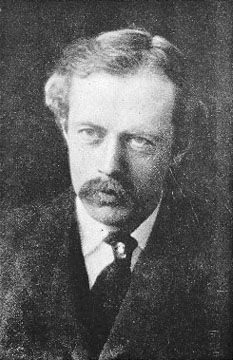
Durward Lely as Nanki-Poo


Categories
Literature Poetry

Eavan Boland -Woman in Kitchen

Breakfast over, islanded by noise,

she watches the machines go fast and slow.

She stands among them as they shake the house.

They move. Their destination is specific.

She has nowhere definite to go:

she might be a pedestrian in traffic.


White surfaces retract. White

sideboards light the white of walls.

Cups wink white in their saucers.

The light of day bleaches as it falls

on cups and sideboards. She could use the room

to tap with if she lost her sight.


Machines jigsaw everything she knows.

And she is everywhere among their furor:

the tropic of the dryer tumbling clothes.

The round lunar window of the washer.

The kettle in the toaster is a kingfisher

swooping for trout above the river’s mirror.


The wash done, the kettle boiled, the sheets

spun and clean, the dryer stops dead.

The silence is a death. It starts to bury

the room in white spaces. She turns to spread

a cloth on the board and irons sheets

in a room white and quiet as a mortuary.

When I started looking at this poem today I soon discovered that the poet sadly passed away just last month and there is an obituary which may be found at https://www.nytimes.com/2020/04/28/books/eavan-boland-dead.html

This seems to me to be a poem which expresses considerable ambivalence to what at first seem comfortable domestic surroundings. In current circumstances it might seem to have some special appeal. The poet feels herself to be marooned and isolated with domestic noises in the background from perhaps a washing machine or spin-drier. Unlike these machines which may perhaps be seen as having some resemblances to male characteristics she lacks a sense of direction. The element of threat appears in the second verse where the interesting verb “tap” introduces the suggestion of blindness. ‘Tapping’ might be seen as a very quiet noise in contrast with the loud machinery. It carries the possibility of tap dancing too. It also carries meanings of connection.

The tranquil security of something like a Dutch interior becomes still more alien in the third stanza. The jigsaw might well imply cutting up or puzzlement. Although the images of a lunar moonlander and the reflection of a swooping kingfisher are at the same time threatening, bizarre but also carry a strange delight. They seem to suggest the distracted nature of the woman and her longing.

In the final lines a sudden stillness suddenly reigns. All is clean and silent but also overcoming. She at last starts to move but the sheet she irons might almost be a shroud. There seem to be elements of boredom and domestic imprisonment but all recorded with a deceptively light touch. This poem comes from a collection called Night Feed  1982. An Irishwoman and feminist her collection is published by Carcanet Press and very well worth attention.

Categories
Poetry West Cornwall (and local history)

Lockdown Lamentations

In the untidy mess of the kitchen,

I find two yellow cards

marked for coffees taken

at the Honeypot; one card

just needs one more stamp.


Coffee shops closed- no pots

of honey for thee or me

when the clock stands at four or three.

Conversations suspended, friendships upended-

and no pots of honey for the bear.


In the distance outside a noisy crow jars

its tuneless note, insistent from its throat.

In search of lost time and Madeline to dip

lost feeling between cup and lip

and just Nescafe to sit and sip.


Suspended- no connection and no connection

just the feeling of trouble

brewing.

With grateful thanks to https://www.facebook.com/thehoneypotpz


Categories
Poetry

Verses upon confusing French vocabulary

Maybe it’s just a word for countryside

around Normandy-between the dykes-

or seaweed left behind by the tide

-but I have the feeling it is something else besides.


Maybe it’s a thatched cottage in Brittany

-a description of wind blown hay

or some kind of Catholic liturgy,

a phantasy of disorder mixed with pride.


Anyway, it sounds green, ancient and lush-

a background to starched peasants in white blouses.

Something painted by Gaugin;

my memory is quite a mush,

having confused it with bricolage.


No, no isn’t it simply, basically bocage?

Though another word that now springs to mind is actually,

Cambriolage –which simply means

Robbery!


Categories
Literature Poetry

The Unquiet Street by John Gould Fletcher (1886-1950)

By day and night this street is not still;
Omnibuses with red tail lamps,
Taxi cabs with shiny eyes,
Rumble, shunning its ugliness.
It is corrugated with wheel ruts,
It is dented and pock-marked with traffic,
It has no time for sleep.
It heaves its old, scarred countenance
Skyward between the buildings
And never says a word
On rainy nights
It dully gleams
Like the cold tarnished scales of a snake:
And over it hang arc-lamps,
Blue-white death-lilies on black stems.

I found this poem in the Penguin Collection of Imagist Poetry. I like the cold, gleaming atmosphere of this poem with its feeling of early 20th Century Modernism.  The word omnibus seems of its time but is maybe just an Americanism. There is a feeling of Eliot’s empty lots and the vertical feeling of narrow streets. Restlessness and battered feelings are emphasised with corrugated and rumble and ruts, add onomatopoeiacally, to the wet and cold ambience of the poem. The visual images shine out in various colours.

There is an interesting essay at http://literarylondon.org/the-literary-london-journal/archive-of-the-literary-london-journal/issue-4-1/john-gould-fletchers-city-aesthetic-london-excursion/

For reasons I only partially understand, this poem brought to mind the area around South Kensington Tube station where I was once caught in very heavy rain. There used to be a cafe on the corner which I thought, wrongly it seems, there once was a Lyons corner house. Last year I sat instead in the pleasant settings of Muriels (which has an Antony Powell ring about it –https://www.murielskitchen.co.uk/

Notice that the old omnibus has now taken a different form and last August the area was filled with tourists consulting their mobile phones.


Categories
Literature Poetry

Ode to the Confederate Dead and Allen Tate

Row after row with strict impunity
The headstones yield their names to the element,
The wind whirs without recollection;
In the riven troughs the splayed leaves
Pile up, of nature the casual sacrament
To the seasonal eternity of death;
Then driven by the fierce scrutiny
Of heaven to their election in the vast breath,
They sough the rumour of mortality.

Autumn is desolation in the plot
Of a thousand acres where these memories grow
From the inexhaustible bodies that are not
Dead, but feed the grass row after rich row.
Think of the autumns that have come and gone!—
Ambitious November with the humors of the year,
With a particular zeal for every slab,
Staining the uncomfortable angels that rot
On the slabs, a wing chipped here, an arm there:
The brute curiosity of an angel’s stare
Turns you, like them, to stone,
Transforms the heaving air
Till plunged to a heavier world below
You shift your sea-space blindly
Heaving, turning like the blind crab.

Dazed by the wind, only the wind
The leaves flying, plunge

You know who have waited by the wall
The twilight certainty of an animal,
Those midnight restitutions of the blood
You know—the immitigable pines, the smoky frieze
Of the sky, the sudden call: you know the rage,
The cold pool left by the mounting flood,
Of muted Zeno and Parmenides.
You who have waited for the angry resolution
Of those desires that should be yours tomorrow,
You know the unimportant shrift of death
And praise the vision
And praise the arrogant circumstance
Of those who fall
Rank upon rank, hurried beyond decision—
Here by the sagging gate, stopped by the wall.

Seeing, seeing only the leaves
Flying, plunge and expire

Turn your eyes to the immoderate past,
Turn to the inscrutable infantry rising
Demons out of the earth—they will not last.
Stonewall, Stonewall, and the sunken fields of hemp.
Shiloh, Antietam, Malvern Hill, Bull Run.
Lost in that orient of the thick-and-fast
You will curse the setting sun.

Cursing only the leaves crying
Like an old man in a storm

You hear the shout, the crazy hemlocks point
With troubled fingers to the silence which
Smothers you, a mummy, in time.

The hound bitch
Toothless and dying, in a musty cellar
Hears the wind only.

Now that the salt of their blood
Stiffens the saltier oblivion of the sea,
Seals the malignant purity of the flood,
What shall we who count our days and bow
Our heads with a commemorial woe
In the ribboned coats of grim felicity,
What shall we say of the bones, unclean,
Whose verdurous anonymity will grow?
The ragged arms, the ragged heads and eyes
Lost in these acres of the insane green?
The gray lean spiders come, they come and go;
In a tangle of willows without light
The singular screech-owl’s tight
Invisible lyric seeds the mind
With the furious murmur of their chivalry.

We shall say only the leaves
Flying, plunge and expire

We shall say only the leaves whispering
In the improbable mist of nightfall
That flies on multiple wing;
Night is the beginning and the end

And in between the ends of distraction
Waits mute speculation, the patient curse
That stones the eyes, or like the jaguar leaps
For his own image in a jungle pool, his victim.

What shall we say who have knowledge
Carried to the heart? Shall we take the act
To the grave? Shall we, more hopeful, set up the grave
In the house? The ravenous grave?

Leave now
The shut gate and the decomposing wall:
The gentle serpent, green in the mulberry bush,
Riots with his tongue through the hush—
Sentinel of the grave who counts us all!

Someone told me once that the English spoken in the Southern States was close to the way in which Shakespeare language was spoken back in the day he wrote his plays. I am unsure of the evidence for that but Tate’s voice adds an extra dimension to the You Tube reading. I first came across reading about him in Eileen Simpson’s fascinating memoir “Poets in their Youth” where he appears as an elegant, imposing and somewhat reactionary figure. There is an interesting account of a recent biography of Tate’s life at https://www.lrb.co.uk/the-paper/v23/n10/ian-hamilton/i-intend-to-support-white-rule.

This poem has been preoccupying me for a day or two. Firstly, because I recall that some long time ago I used to watch a series on television called O Henry’s Playhouse and watching it again recently I came across this clip from 1957, It was not at all bad television and the following episode is tangentially related to the Confederacy.

However, in the present Covid-19 isolation, many of the lines seem to have extra meaning. During constitutional walks, I cannot help noticing that the side gate of the nearby cemetery has been left permanently open. The fact that it is about 250m from the local hospital is a reminder of the crisis and the daily toll which it is exacting. There is also the feeling that we might have done more to protect the NHS politically by a better defence against the reactionary clutches of the current admonistration. Not to mention policies of Brexiteers who have driven nurses and doctors out of the country.

What shall we say who have knowledge
Carried to the heart? Shall we take the act
To the grave? Shall we, more hopeful, set up the grave
In the house? The ravenous grave?