Categories
Uncategorized

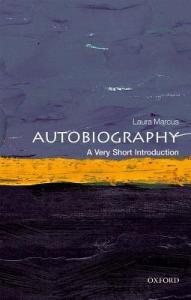
Autobiography, a Very Short Introduction, by Laura Marcus #BookReview

Very interesting and most useful!

Lisa Hill's avatarANZ LitLovers LitBlog

Life Writing is incredibly popular these days, and it came as no surprise to me to learn from This Very Short Introduction to Autobiography that Michel Foucault thinks that we have become ‘confessing animals’. The plethora of memoirs, autobiographies and ‘true confessions’ today seems to be evidence of a compulsion to record the complexities of human life, experience and memory, though it has to be said that some life writing seems of more lasting value than others.  Autobiography, a Very Short Introduction by Laura Marcus, a Professor at Oxford, is a fascinating exploration of this kind of writing, starting with the Confessions of St Augustine in the 4th century, through to its modern manifestations in multimedia, autobiographical novels and autofiction.

After the Introduction, there are eight chapters in this VSI (as well as the usual references, suggestions for further reading, and an index).

  1. Confession, conversion, testimony
  2. The journeying self
  3. Autobiographical…

View original post 1,550 more words
Categories
Uncategorized

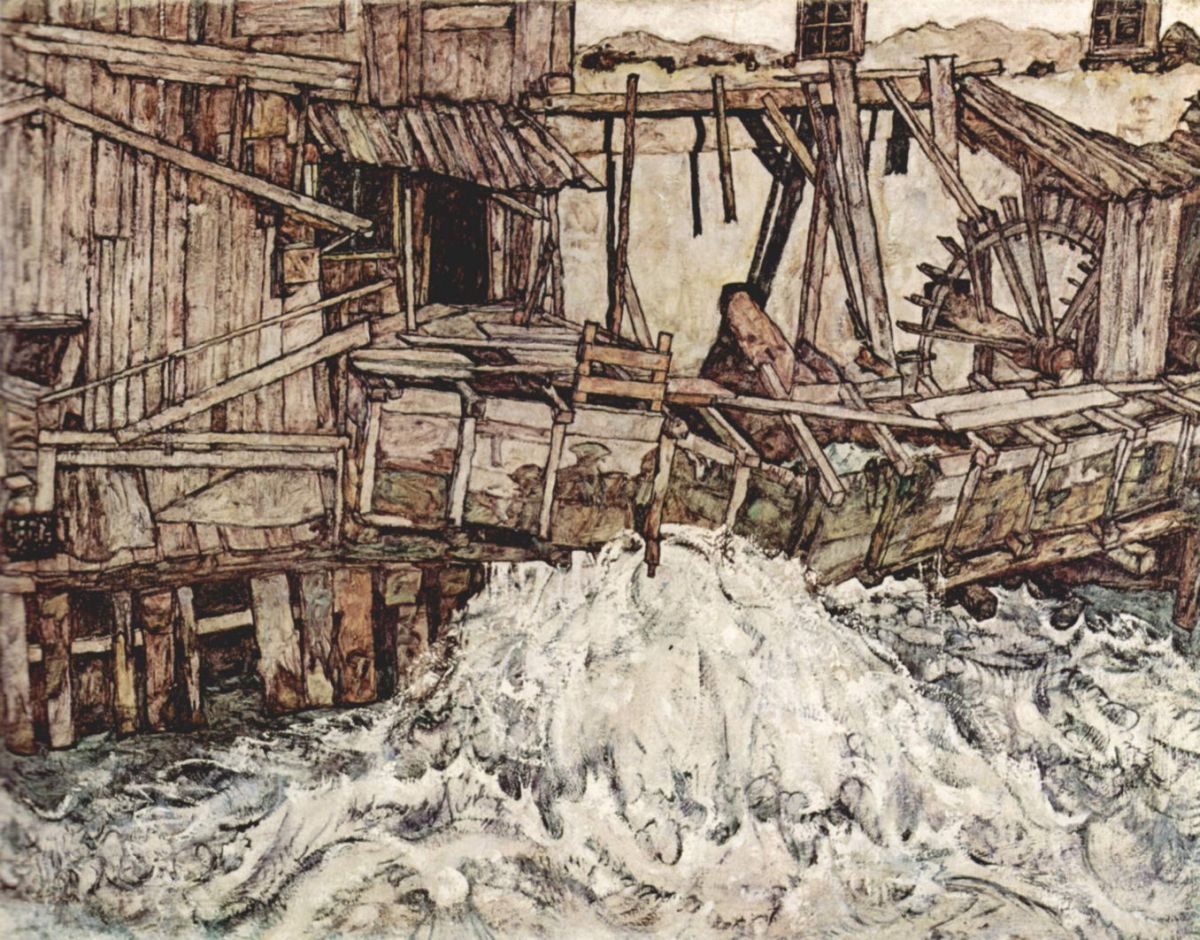
Radical Views: Egon Schiele 4, 1915-16

Fascinated by the colour combinations and also by the different manner in which his work is carried out in different contexts.

hoakley's avatarThe Eclectic Light Company

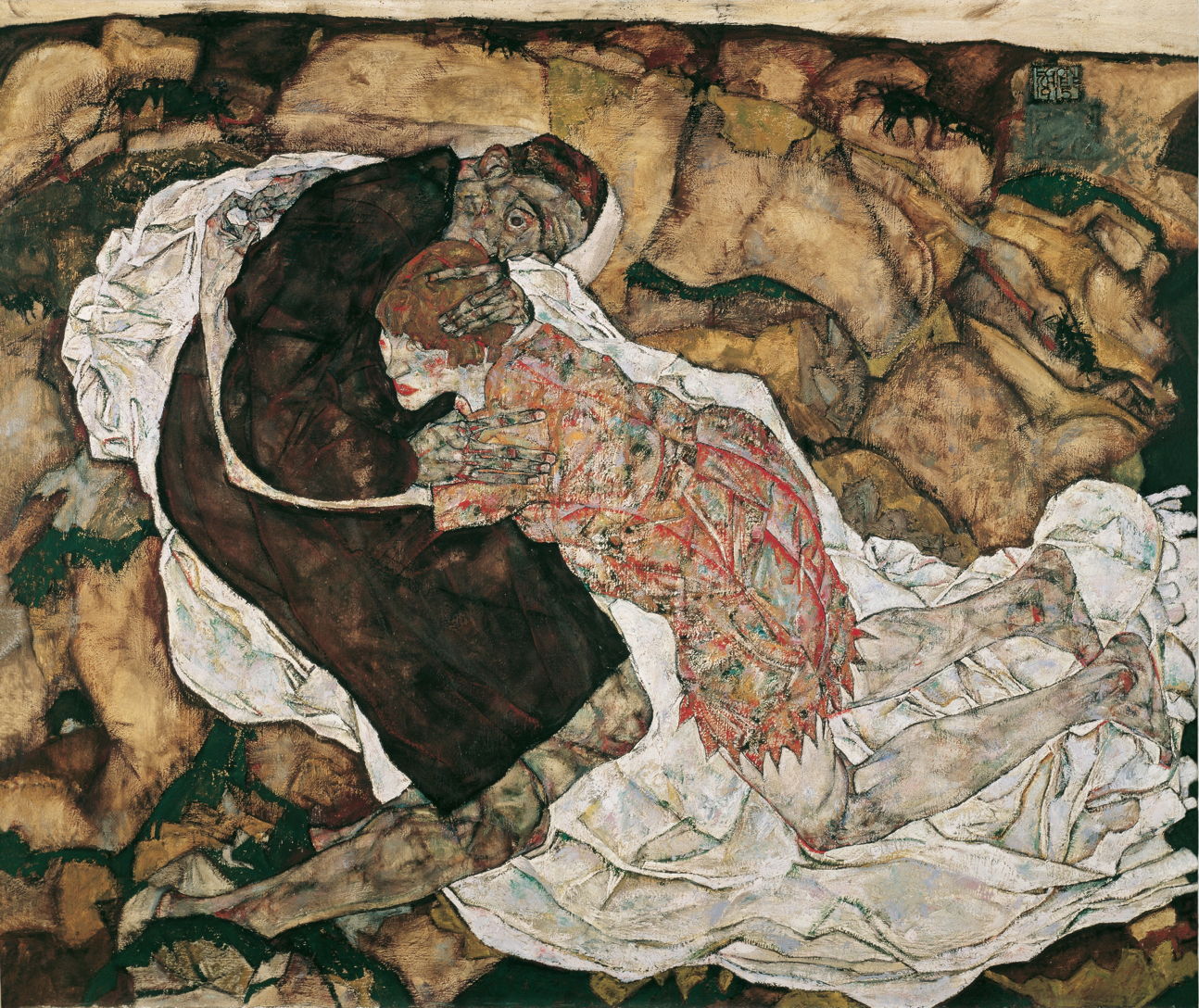
Egon Schiele’s landscape paintings from the early years of the First World War were innovative and exciting; his figurative work, which was even more radical, I find more of a challenge. Many of those works from 1915 centre on his personal relationships.

It appears that, when he married Edith Harms, Schiele had expected to maintain his relationship with Wally (Walburga Neuzil), with whom he had lived for four years. When he tried to explain this to Wally, she – perhaps not unsurprisingly – abandoned him immediately, and they apparently never met again.

schieledeathmaiden Egon Schiele (1890–1918), Death and the Maiden (1915), oil on canvas, 150 x 180 cm, Österreichische Galerie Belvedere, Vienna, Austria. Wikimedia Commons.

Schiele expressed this in his major painting of Death and the Maiden (1915), which was exhibited the following year in Berlin. The young woman is based on his earlier paintings of Wally, and the man is…

View original post 641 more words

Categories
Art and Photographic History Poetry Uncategorized

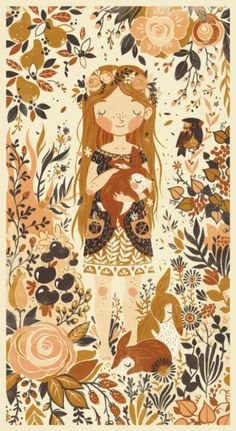
Alphonse Osbert-born in Paris in 1857 and died there in 1939

This French painter studied at the School of Fine Arts and under Henri Lehmann, Fernand Cormorant and Léon Bonnat. His entrance to the salon of 1880, Portrait of MO (“without a trace”), reflected his early attraction the realist tradition of Spanish painting of the 17th century. Impressionism’s impact encouraged him to lighten his palette and paint outdoor landscapes. At the end of the decade of 1880, Habibo cultivated the friendship of several symbolist poets and the well-known painter Puvis de Chavannes, which made him abandon his naturalist approach and adopt the aesthetic idealism of poetic painting. Abandoning topics extracted from daily life, Osbert proposed to transmit personal visions and developed his own set of pictorial symbols. Inspired by Puvis, simplified forms of landscape, which served as backgrounds for static and isolated figures dissolved by a  mysterious light. A pointillist technique, taken from Seurat, a friend of Lehmann’s, tended to dematerialize forms and add luminosity. However, Osbert avoided the full range of nuances of the so called “divisionists” of their choice of blues, violets, yellows and silvery green. The mysticism of Osbert is located in the center of the painting. The Rosacrucian ideal of “art as an evocation of mystery, as a prayer” finds no better expression than the virginal figure of faith, often interpreted as Saint Geneviève or Saint Jeanne, situated in a meadow with a lamb and wrapped in a supernatural radiance. Such works were praised by the Symbolist writers who considered them as visual counterparts of the poetry of Paul Verlaine, Stéphane Mallarmé and Maurice Maeterlinck. Osbert was called “painter of the Nights ” “Alma artist ” and “Poet of Silence” for his evocation of an atmosphere of mystery and reverie.

(With thanks to the incomparable Ines Vigo for this transcription from You Tube)

Image result for osbert alphonse

Categories
Uncategorized

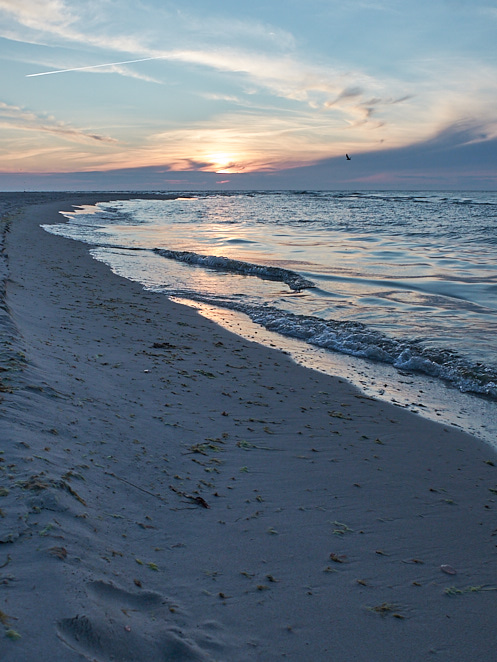
Baltic sunset

Categories
Uncategorized

Aubrey

I am currently reading the marvellous biography of John Aubrey by Ruth Scurr. An interesting and timely posting.

apolla13's avatarNames Throughout the Ages

Aubrey is an English unisex name, the Norman French form of Germanic Alberich meaning “elf power” made up from Germanic elements alf (elf) and ric (power). In Germanic mythology, Alberich is a dwarf and appears in the Nibelungenlied, an epic poem in which he guards the treasure of Nibelung. It’s also an English surname originating from the given name.

Origin: Proto-Indo-European

c87b27634ccb6d7e63a2667fc58ec5dePinterest

Male forms:

  • Aubry (English)
  • Alberich (Ancient Germanic)
  • Alberic (Ancient Germanic)
  • Auberon (English)
  • Alberico (Italian)
  • Ælfric (Anglo-Saxon)
  • Elric (Medieval English)

Female forms:

  • Aubry (English)
  • Aubree (English)
  • Aubrie (English)

View original post

Categories
Uncategorized

‘Guignol’s Band’ by Céline (1944 Club)

Think that I prefer Celan to Celine but most interesting!

Jonathan's avatarIntermittencies of the Mind

Readers, friends, less than friends, enemies, Critics! Here I am at it again with Book I of Guignol! Don’t judge me too soon! Wait awhile for what’s to follow! Book II! Book III! it all clears up! develops, straightens out! As is, 3/4 of it’s missing! Is that a way to do things? It had to be printed fast because with things as they are you don’t know who’s living or dead!

So begins Louis-Ferdinand Céline’s third ‘proper’ novel, published in 1943 if you believe the blurb on the back of the book, but according to Frédéric Vitoux (Céline: A Biography, 1992) (and Wikipedia) was actually published in March 1944. Guignol’s Band is vintage Céline, but it’s fair to say that he’s a problematic writer. I don’t want to go in to too much detail but a few facts about the writer should be known before proceeding. First…

View original post 1,116 more words

Categories
Uncategorized

Between Klimt, Mucha, and Hodler: The art of Kolo Moser 4, 1914-18

I find these works fascinating- the rather thick lines seem to give a mosaic quality as with hinterglasmalerei.

hoakley's avatarThe Eclectic Light Company

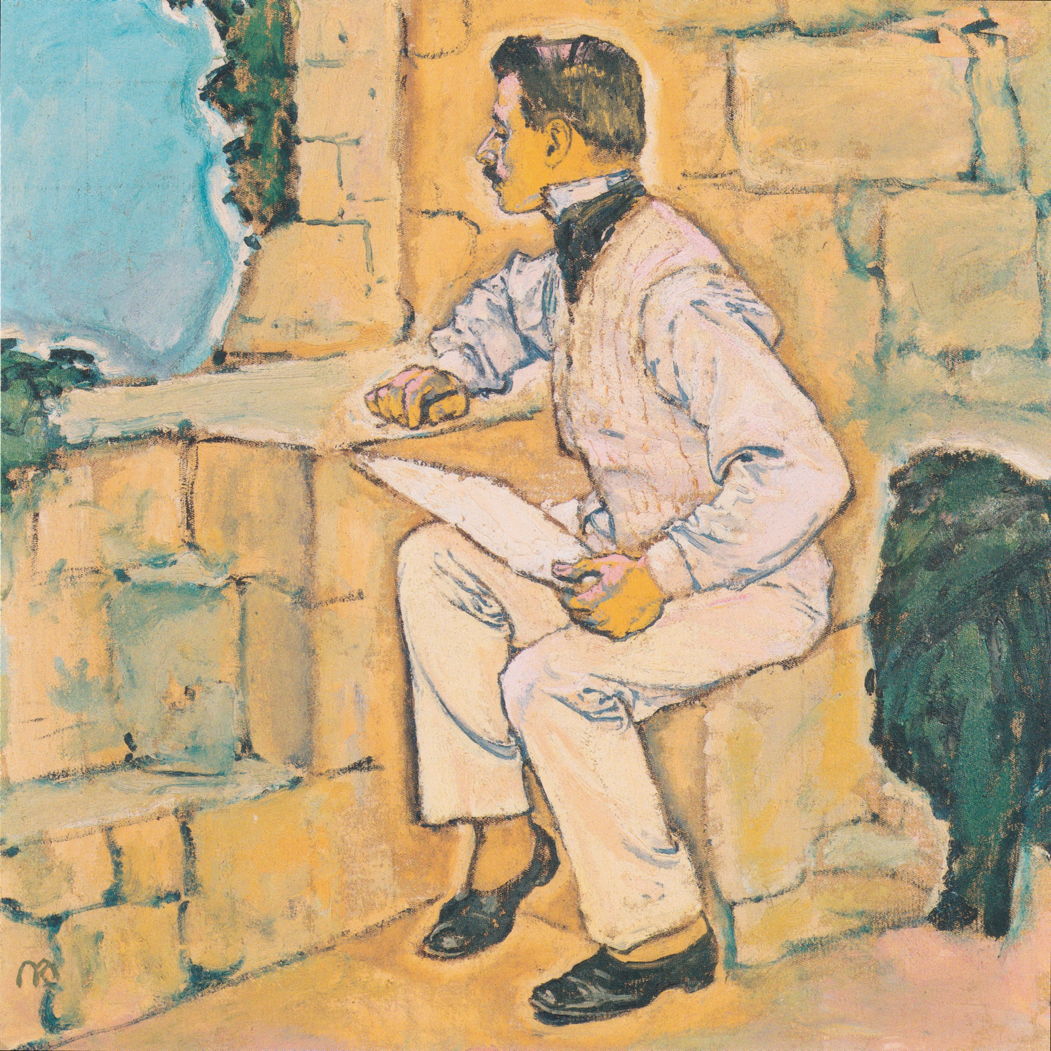
Although Koloman Moser (1868–1918) had withdrawn from the Wiener Werkstätte in 1907, he continued to undertake design work in his later years. This included design for stamps, and particularly of stage sets for productions in Vienna. But his focus remained on painting, in which he turned increasingly to figurative works.

moserselfportrait1914 Koloman Moser (1868–1918), Self-portrait (c 1914), oil on canvas, 75 x 75 cm, Private collection. Wikimedia Commons.

His Self-portrait from about 1914 is unusual, not for depicting him in the act of sketching a landscape, but for setting himself in the remains of a building which almost comes to dominate the image. His skin tones are now a light ochre, matching the stone walls.

mosercrouchingwomanstudy Koloman Moser (1868–1918), Study for ‘Three Crouching Women’ (c 1914), pencil, Indian ink and pen and red pencil on canvas mounted on paper, 21 x 28.5 cm, Die Sammlung Leopold, Vienna, Austria. Wikimedia Commons.

This study…

View original post 925 more words

Categories
Uncategorized

The Agora, Thessaloniki

ms6282's avatarDown by the Dougie

Untitled

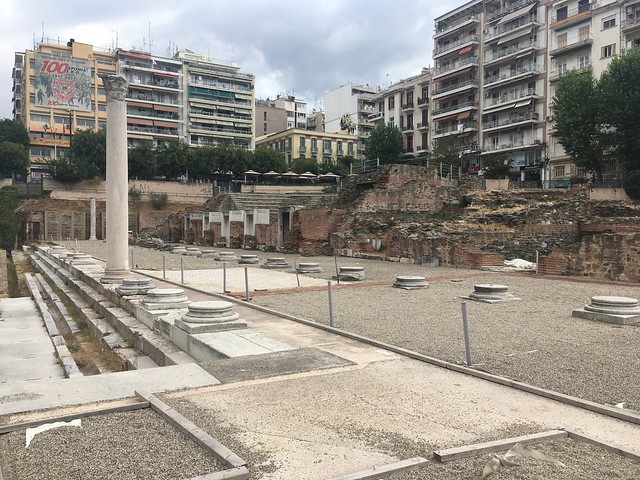
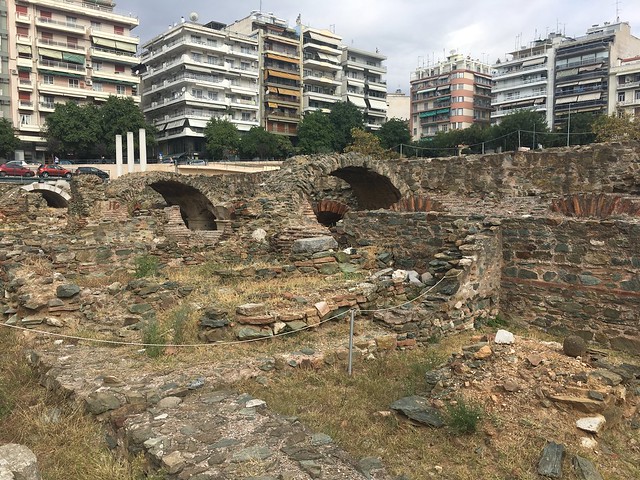
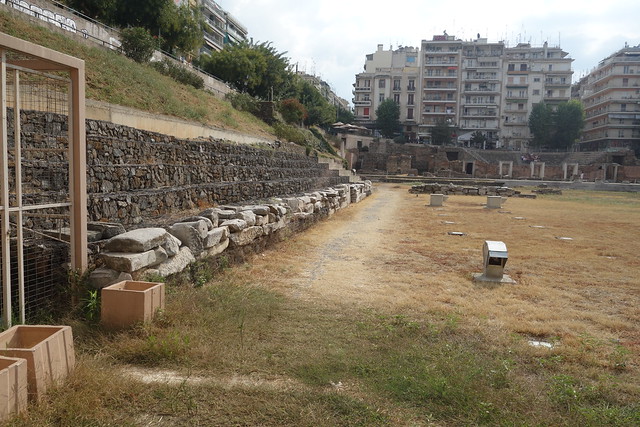
The Agora is the old Roman Forum and is right in the city centre, just to the north of the Aristotelous Square, which is rather like it’s modern equivalent. It was discovered by accident in the 1960’s when the area was being developed. It was constructed during the 2nd century A.D. on the site of an older Forum from the Macedonian period.

It’s possible to see the remains from the street, but we paid the 4 Euro entry fee to get a closer look, and gain entry to the small museum on the site.

Untitled

DSC05000

DSC05002

The Macedonian Heritage website tells us:

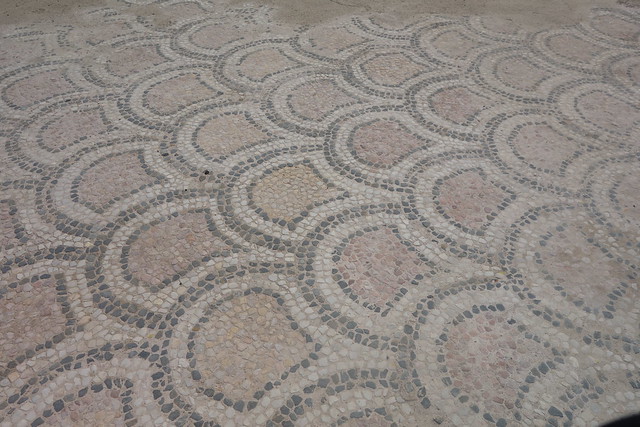
The square Upper Agora was paved and surrounded by stoae (porticoes) with two-tiered columns and decorated floors. On the eastern side there was the library and the odeum. Because of the considerable difference between the two levels, a ‘cryptoporticus’ (double subterranean stoa) was constructed under the south portico of the…

View original post 165 more words

Categories
Uncategorized

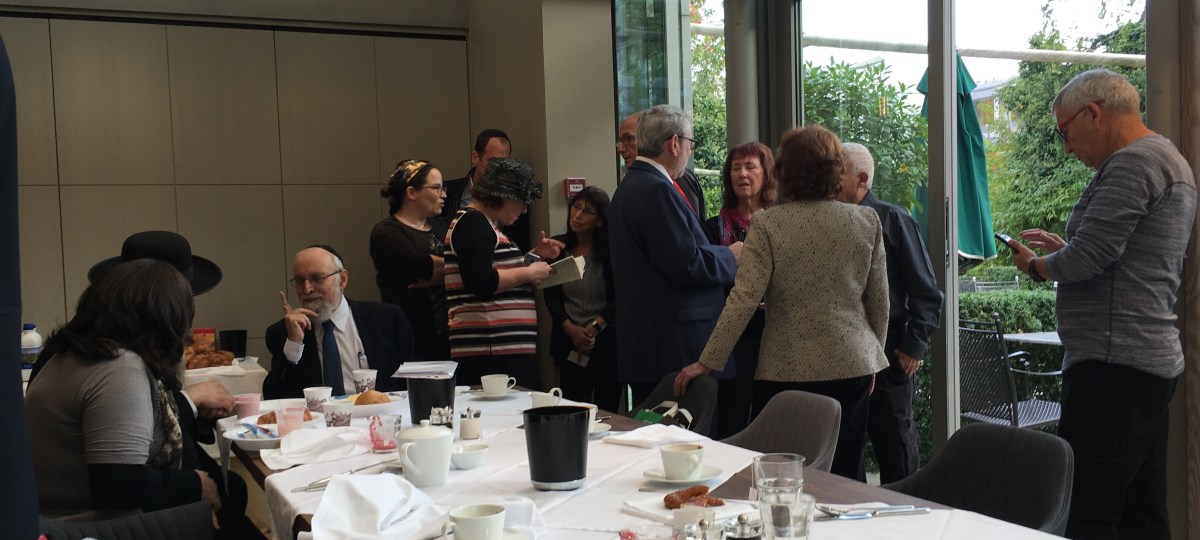
Breakfast with the Ambassador

Categories
Uncategorized

Lara

apolla13's avatarNames Throughout the Ages

Lara is a Russian female name, a shortened form of Larissa, the name of a city in Thessaly, Greece, that dates back to five thousand years ago (it’s also the name of a few other towns in the region). Apparently the city received its name from a nymph named Larissa, the daughter of Pelasgus (or the mother in some versions) and which means “stronghold”, “citadel”, or “fortress”. I’ve also seen other sites list it as being derived from  Ancient Greek larix meaning “larch (tree)”, laros, referring to a cormorant or a gull, or laros “sweet, pleasing to the taste”, but I can’t say how accurate any of them are.

Lara could also be a short form of Larunda, also a nymph in Roman mythology (also associated with Muta and Tacita). She was a great talker and couldn’t keep secrets to herself and revealed to Juno that her…

View original post 86 more words