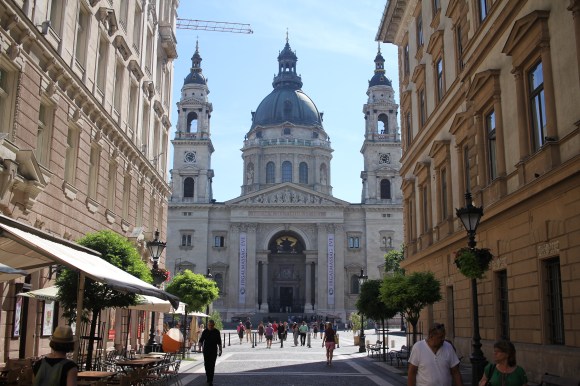
I can’t believe that someone hadn’t made me go to Budapest before — it really is the most amazing city and I urge you to visit at the earliest opportunity if you haven’t already!
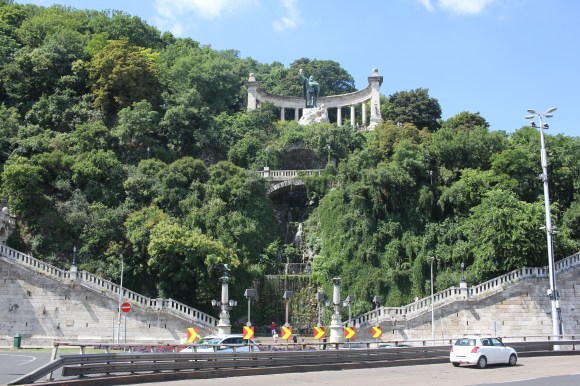
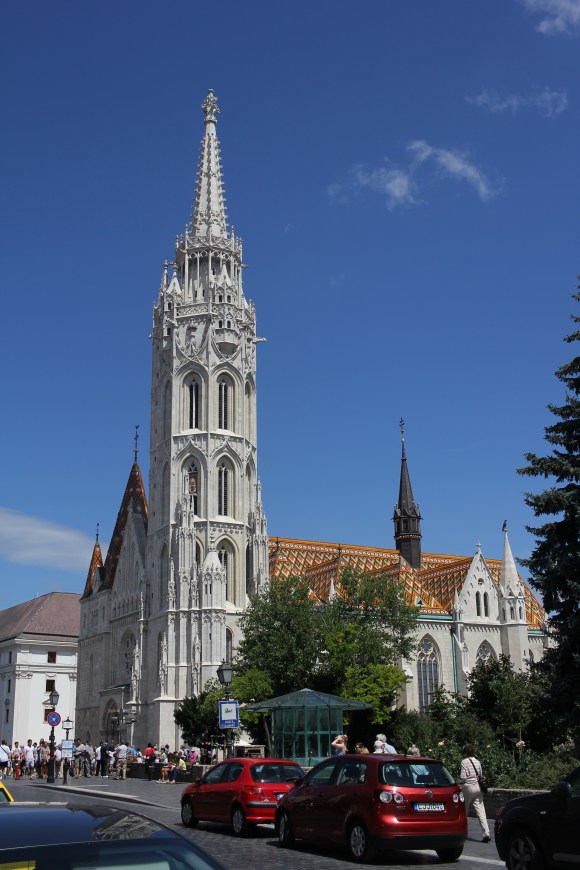
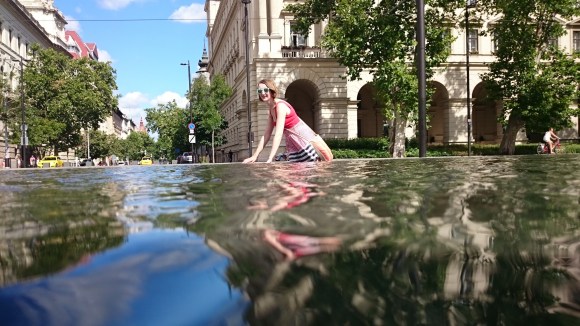
Split into two parts by the Danube, Buda and Pest, it’s full of amazing architecture and green spaces. Budapest is also renowned for its hot springs and there are loads of places where you can take to the water.
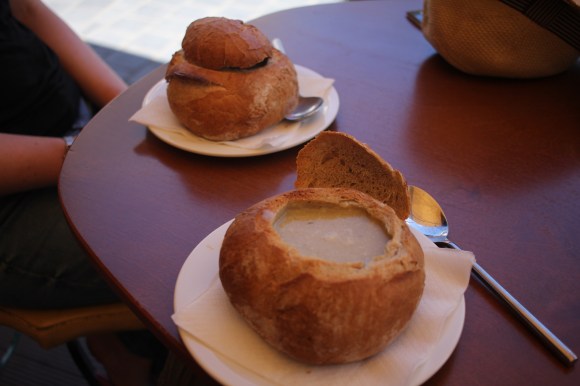
I also got to fulfil a long held dream and eat soup out of a bread bowl!
On the second of our two full days there we bought a 24 hour city card which gave us unlimited travel plus free access to the St Lukacs baths (and some free and discounted museum entries, but the weather was so glorious that we didn’t go to any of these). We started off with our visit to the baths, which…
Today is a difficult day for Poland – September 1st marks the beginning of one of the most tragic chapters in the country´s history as well as in the history of the world: at dawn on September 1,1939 German war planes bombed a sleeping little town in the west of the country, Wieluń.
The Second World War did not begin with the Wehrmacht troops breaking the border barrier on a sandy road between the two countries as the propaganda photos had people believe. It began with the German Luftwaffe dropping bombs on sleeping civilians. What followed was the Weltuntergang – the End of the World as the world had known it.
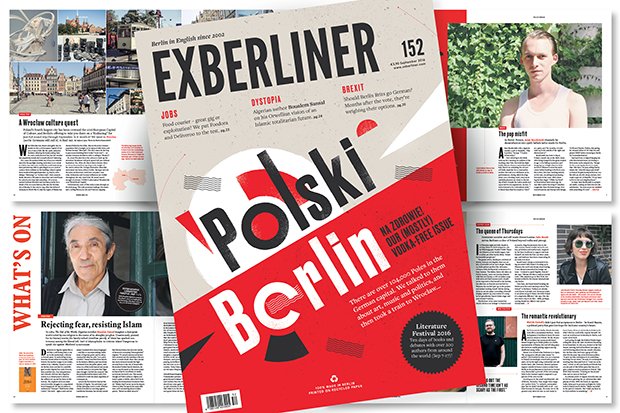
That is why it is particularly touching and inspiring to see that Berlin´s most popular English magazine, the EXBERLINER, devoted its whole September issue to Poles living in Berlin. We are the second biggest nationality group…
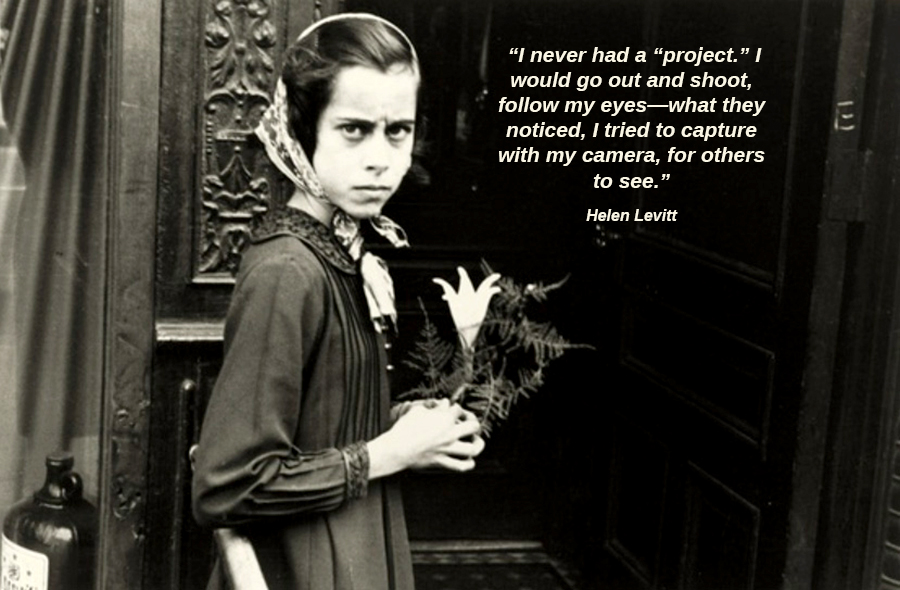
“I never had a “project.” I would go out and shoot, follow my eyes—what they noticed, I tried to capture with my camera, for others to see.” Helen Levitt, an American photographer who was particularly noted for street photography around New York City, and who has been called “the most celebrated and least known photographer of her time”, was born on August 31, 1913.
I have been reading about a Canadian reporter visiting Hungary in 1956 and thinking about visiting the city myself. This is a useful and informative posting-thanks!
Are you planning a trip to Europe? I’m sure, your top destinations would be Paris, Italy and Spain. Hungary wont even cross your mind, that’s because it’s never much talked about. But it is definitely one hidden gem of Europe and you are soon going to know why.
1. It’s very very inexpensive: You can live like a king in Budapest. Since, 1 Euro = 315 Hungarian Forint, so it may feel like you’re spending a wodge of a cash but in reality it’s, as they say “peanuts”. Everything in Budapest from food to hotels are quite inexpensive but that doesn’t mean it’s not good. So that’s No.1 reason why you must visit Budapest. (Taxi’s are still a rip off so beware about spending on that). The shopping is even crazier here.2.Party on a Bridge: Yes you read that right. I’m sure you’ve attended a lot of parties in…
‘Le Cimetiere marin’ is about mortality and immortality, body and soul, life and death, the inexorable passage of time. It was published in 1920, when Paul Valery was nearly 50, although he had started work on it some years before after revisiting the graveyard by the sea at Sete, a town on the Mediterranean coast, where he had been born and brought up and was later to be buried. It begins on a note of supreme tranquillity as Valéry gazes out between the pine trees and the tombs over the calm, roof-like expanse of the sea, stretching away into infinity, with what seem to be doves moving slowly and peacefully across it:
I have a neat little book called ~” Poems of Cornwall” withdrawn from the County Library Service. The preface is by W.Herbert Thomas and is dated, “Penzance July !892”. A couple of months before the last down train from Paddington on Brunel’s broad gauge had run. It is a collection of some 30 poets of whom photographs of 18 appear inside the front cover. There is a poem by Sir Humphry Davy beneath an engraving of his statue.
St Michael’s Mount
Majestic Michael rises – he whose brow
Is crown’d with castles; and whose rocky sides
Are clad with dusky ivy: he whose base,
Beat by the storm of ages, stands unmov’d
Amidst the wreck of things-the change of time.
That base, encircled by the azure waves,
Was once with verdure clad; the towering oaks
Here waved their branches green: the sacred oaks ,
Whose awful shades among the Druids stay’d
To cut the hallowed mistletoe, and hold
High converse with their gods.
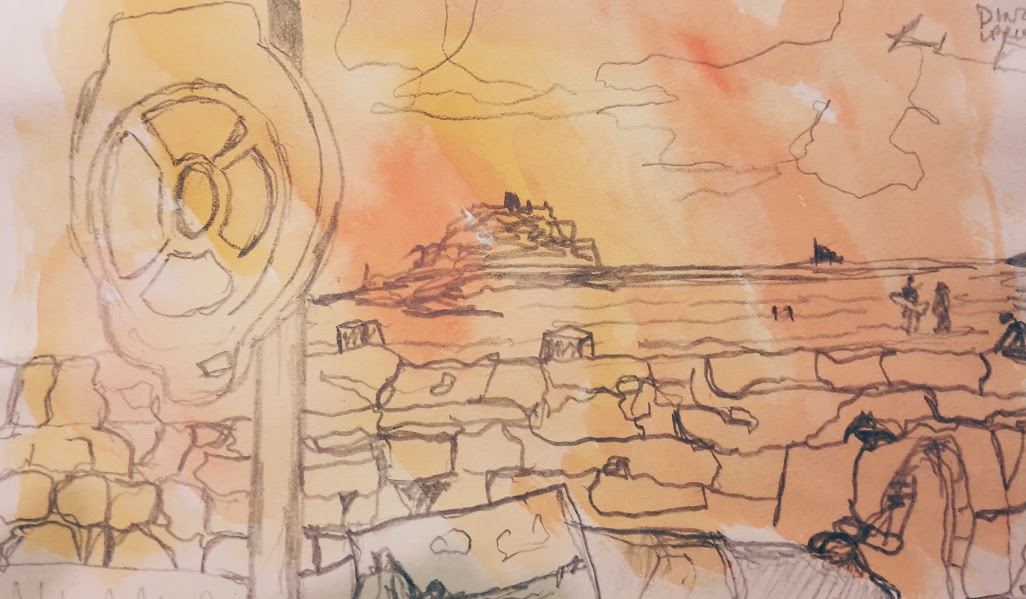
Sketch of the Mount last week and my leg!
Interesting this connection that early scientists felt for poetry and nature. Most obviously found in Goethe perhaps. Davy enjoyed angling and travelled widely across Europe to fish, I believe on the Dalmatian coast-Shakespeare’s Illyria from Twelfth Night. Which information I seem to recall from that fascinating book,”The Age of Wonder” by Richard Holmes. Count Orsino’s castle became the Mount in that great production of Twelfth Night by Trevor Nunn in 1996. Returning to Davy’s poem, I suppose some of the vocabulary now sounds antiquated, although the original “awful” sounds like that recent commonly used word,”awesome”. I rather like the line -“Amidst the wreck of things-the change of time.” which reminds me somehow of that biography of Malcom Muggeridge which he entitled “Chronicles of Wasted Time”. A title which comes from the lovely sonnet 106 of Shakespeare:-
When in the chronicle of wasted time
I see descriptions of the fairest wights,
And beauty making beautiful old rhyme
In praise of ladies dead and lovely knights,
Then, in the blazon of sweet beauty’s best,
Of hand, of foot, of lip, of eye, of brow,
I see their antique pen would have express’d
Even such a beauty as you master now.
So all their praises are but prophecies
Of this our time, all you prefiguring;
And, for they look’d but with divining eyes,
They had not skill enough your worth to sing:
For we, which now behold these present days,
Have eyes to wonder, but lack tongues to praise.
Returning to the main thread -what is otherwise called (aus den „Wahlverwandtschaften“ von Johann Wolfgang von Goethe:) the roter Faden -“Poems in Cornwall”, the editor W.Herbert Thomas was in fact a journalist who is described as “the son of a mine-smith of St Day. For seven years a mining clark, he was afterwards a reporter for two years on the San Francisco “Examiner” and is now on the staff of the” Cornishman” -however I would like to draw attention to a short poem by W,F.Woodfield. It is rather poignant and all that is said of him is that he lived in Penzance, he wrote a collection called “Serpentine Worker” and ,”is now in Australia”.
The Emigrant’s Farewell to Mount’s Bay
Farewell Mount’s Bay! A long farewell
I bid thy rock-bound shore;
My heart nigh breaks with grief to think
I ne’er may see thee more.
From infancy I have watched thy waves,
And roamed thy rocks and sands;
But I must leave thee beauteous bay,
To toil in other lands.
My heart grows faint-tears blind me so,
Words fail my love to tell;
My very soul so yearns for thee
I scarce can say -farewell.
But Manhood bids me dry my tears,
And brace me for the fight;
Adieu, adieu belove’d bay!
Farewell my heart’s delight.
Sincerely felt lines at any rate. It gives us a feeling of the process of uprooting that is involved in emigration and ought, I think, make us consider the plight of refugees with sympathy and support.
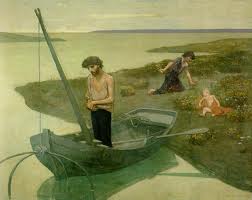
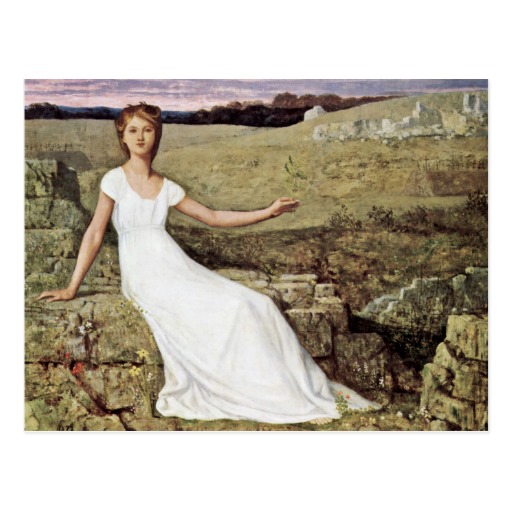
According to the Web Museum in Paris,”He had only modest success early in his career (when a private income enabled him to work for little payment), but he went on to achieve an enormous reputation, and he was universally respected even by artists of very different aims and outlook from his own. Gauguin, Seurat, and Toulouse-Lautrec were among his professed admirers. His reputation has since declined, his idealized depictions of antiquity or allegorical representations of abstract themes now often seeming rather anaemic. He remains important, however, because of his influence on younger artists. He influenced, for instance, the German artist Ludvig von Hoffman https://en.wikipedia.org/wiki/Ludwig_von_Hofmann and perhaps the Cornish based artist Thomas Cooper Gotch.
Ludvig Von Hoffman
His simplified forms, respect for the flatness of the picture surface, rhythmic line, and use of non-naturalistic color to evoke the mood of the painting appealed to both the Post-Impressionists and the Symbolists.”
Hope by Puvis de ChavannesWoodburytype after a negative by Étienne Carjat (1808-1906)


















 penwithlit