Categories
Uncategorized

Watercolour Techniques

Emily Sun's avatarEmily Sun- All Things Creative

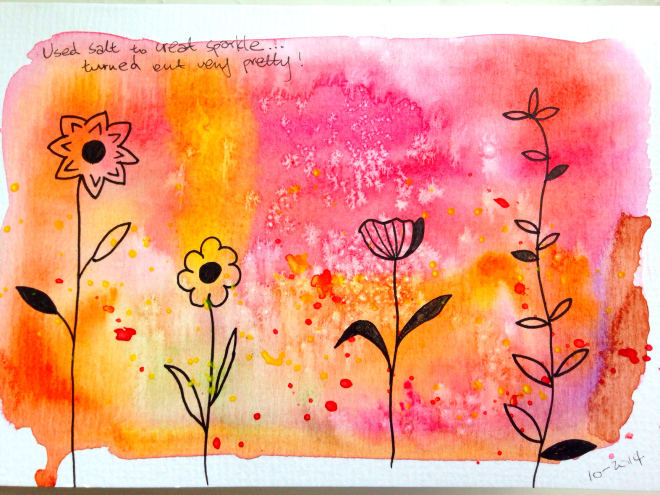
14942983544_cddeab2bc0_o

Wet on wet background with salt sprinkles for the sparkling effect, and ink flower drawings on top once background has dried

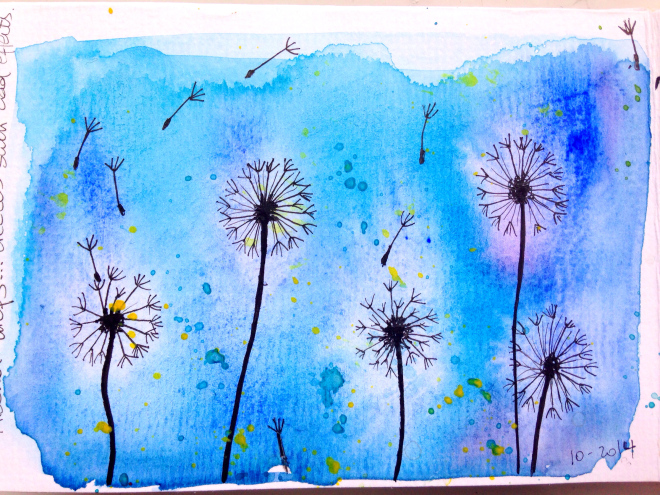
14942987814_fefe5bede1_o

Again wet on wet for background, with some alcohol drops to spread paint pigments, once dried use ink pens to draw dandelions.

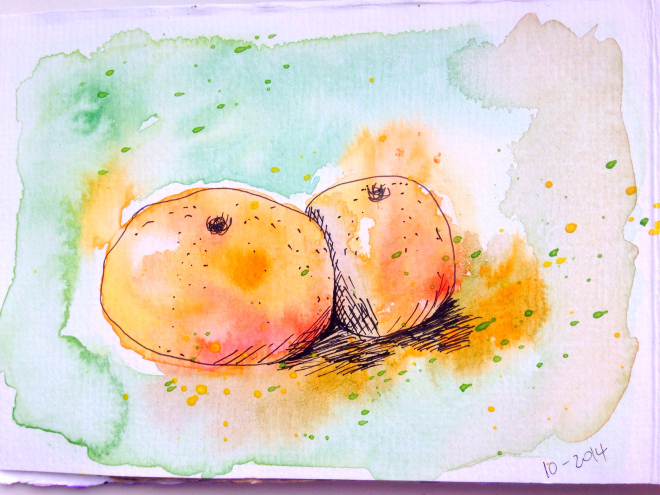
15540026836_07e03caf7f_o

Ink and wash: draw shapes with ink pen first, and apply watercolour over it, then add details like spots and shadows to the subjects.

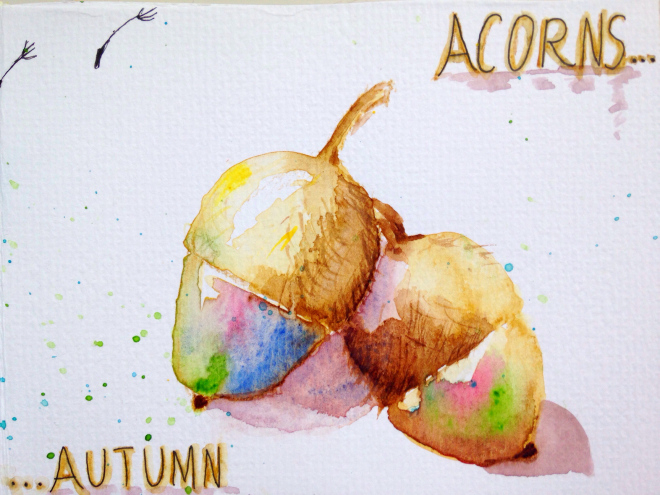
15563735155_5cf8180112_o

Draw acorns with watercolour pencil, then add water and other colours

View original post

Categories
German Matters Literature Poetry Uncategorized

More Klabund! A Love Poem

LIEBESLIED

Klabund

Dein Mund, der schön geschweifte,
Dein Lächeln, das mich streifte,
Dein Blick, der mich umarmte,
Dein Schoß, der mich erwarmte,
Dein Arm, der mich umschlungen,
Dein Wort, das mich umsungen,
Dein Haar, darein ich tauchte,
Dein Atem, der mich hauchte,
Dein Herz, das wilde Fohlen,
Die Seele unverhohlen,
Die Füße, welche liefen,
Als meine Lippen riefen -:
Gehört wohl mir, ist alles meins,
Wüßt nicht, was mir das liebste wär,
Und gäb nicht Höll noch Himmel her:
Eines und alles, all und eins.

Information and a great photograph of Klabund, Alfred Henschke, appears at http://www.salonkultur.de/termine/autoren/Alfred_Henschke/56/#.V3TCc7grLIU

One translation by computer gives this in English as:-

Your mouth, the beautifully curly
Your smile that touched me,
Your look that embraced me,
Your lap, which me attention
Your arm, which wrapped around,.
Your Word that me umsungen
Your hair in there I popped up,
Your breath that breathed me,
Your heart, the wild foals,
The soul openly,
The feet, which were,
When my lips called: –
Mine, probably, everything is mine,.
Not know what about me the dearest,
And instead of hell was here yet Heaven:
One and all, all and one.

Maybe Line 6 means something like “Your speech that rings around in my head”

Categories
Poetry Uncategorized

La Mer by Charles Trenet

La mer

La mer
Qu’on voit danser le long des golfes clairs
A des reflets d’argent
La mer
Des reflets changeants
Sous la pluie

La mer
Au ciel d’été confond
Ses blancs moutons
Avec les anges si purs
La mer bergère d’azur
Infinie

Voyez
Près des étangs
Ces grands roseaux mouillés
Voyez
Ces oiseaux blancs
Et ces maisons rouillées

La mer
Les a bercés
Le long des golfes clairs
Et d’une chanson d’amour
La mer
A bercé mon cœur pour la vie

An English translation may be found at Candybarman86.tumblr.com

and in German “Das Meer” here sung by Liselotte Malkowsky

Categories
German Matters Poetry Uncategorized

Irving Berlin – Spiel mir eine alte Melodie

Spiel mir eine alte Melodie
voll Gefühl und Harmonie
Himmelblau und rosa möcht ich sie
zärtlich und voll Poesie

Spielen auch heut ganz andre Lieder die Leut als in der Postkutschenzeit
nichts auf der Welt war so schön als sich zur Polka zu drehn
Man steckte Veilchen ans Kleid die Röcke waren ganz weit o Gott war das eine Zeit
die alte Bahnmelodie ja die vergesse ich nie

Spiel mir eine alte Melodie
voll Gefühl und Harmonie
Himmelblau und rosa möcht ich sie
zärtlich und voll Poesie

Man steckte Veilchen ans Kleid die Röcke waren ganz weit o Gott war das eine Zeit
die alte Bahnmelodie ja die vergesse ich nie

Spielen auch heut ganz andre Lieder die Leut als in der Postkutschenzeit
nichts auf der Welt war so schön als sich zur Polka zu drehn
Man steckte Veilchen ans Kleid die Röcke waren ganz weit o Gott war das eine Zeit
die alte Bahnmelodie ja die vergesse ich nie

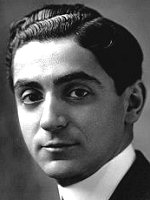
Irving Berlin
Irving Berlin


Categories
Uncategorized

Adrian Stokes-European

He painted with the Danish Impressionists at Skagen, in St Ives, and above all in Hungary – and has been all but forgotten now.

via Into the Light: Adrian Scott Stokes in St Ives and Hungary — The Eclectic Light Company

Categories
Penwith St Ives Uncategorized West Cornwall (and local history)

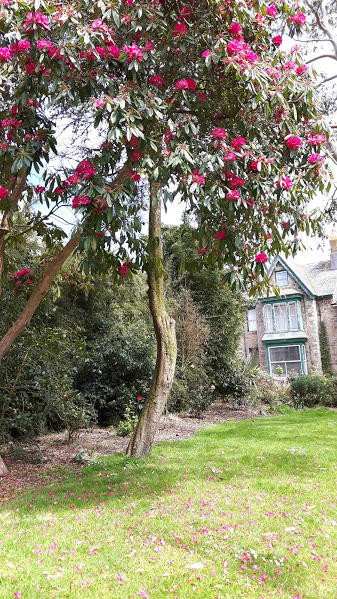
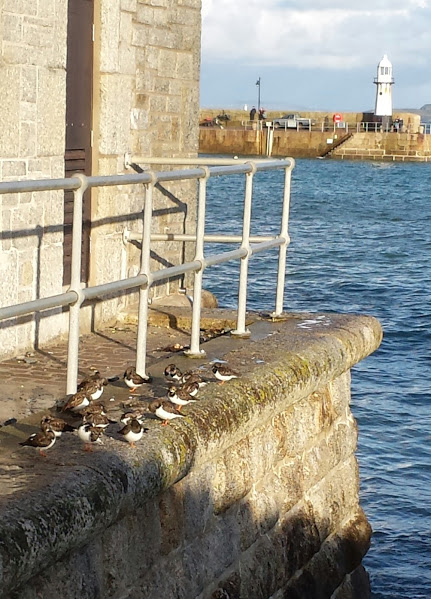
Spring arrives in Penwith

Porthmeor Beach, St Ives in February

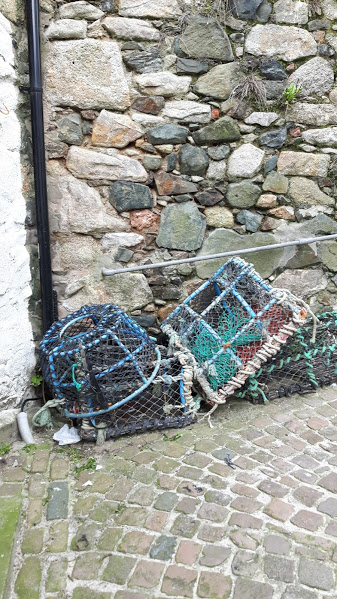
Just a few recent photographs from February to April- the onset of Spring.

Underpass in Heamoor
Abbey Slip- Penzance
Penlee Park in Penzance
Lambeth Walk in St Ives
Crab pots -Downalong, St Ives
Categories
Art and Photographic History Penwith Uncategorized

The pleasures of Pinterest- art education for the digital age

Cig

There is a simple and naive pleasure in collecting things as any fule doth know! When I was knee-high to a grasshopper, so to speak, I can dimly recall swopping cigarette cards with sepia images. Well perhaps not sepia. However, I seem to remember that fantastic summer when Laker and Lock, not to mention Colin Cowdrey and Peter May played wonderful Cricket against the West Indies and recall collecting cigarette cards with their heroic images of those players. Another series of cards carried the proud images of Her Majesty’s ships. Several of these I first saw as the Fleet assembled in Mount’s Bay in 1952. Such cards were sometimes ranked with stars; battleships carrying the full 5 stars and light cruisers maybe 3. Innocent of both imperialism and the devastation of weaponry we carried collections that were stuffed into our school blazer pockets.

Just a few years before, the great collections of European intellectuals such as Walter Benjamin and Stefan Zweig were being impounded by the fascists in Germany, Italy and Austria. Zweig had written a moving story over a collector who became blind as his family were forced to deceive driven by the dire necessity for bread. His valuable etchings in his “Sammlung” (collection- but also interestingly composure) had been replaced by plane paper, which he takes lovingly and unknowingly from his folder, and extols from memory the detailed wonder of each image. Whatever the pleasures of making collections, and John Fowles has reminded us of the darker side of that psychology, it seems on the whole a masculine foible. I am sure that feminists would correctly point out, that indeed it was the men that had the money to pursue their interests. It seems that in their great salons clever women as varied as Rahel Varnhagen and Lady Ottoline Morrell collected persons, rather than things, to cultivate the exchange of ideas. How far such aspirations are from today’s hurried pinning of electronic images onto simulated pin boards!

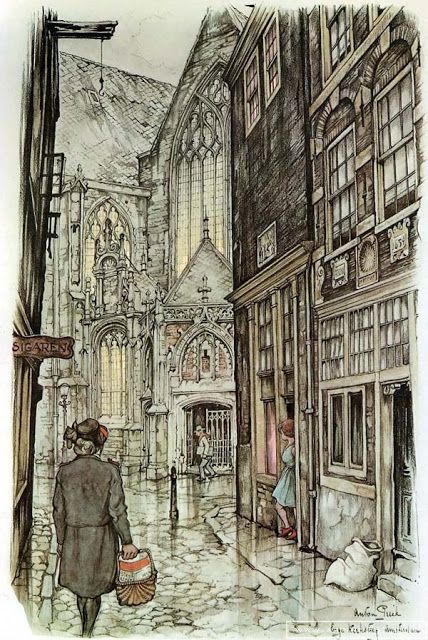
Anton Pieck (1895-1987) was a Dutch painter and graphic artist

However, being now just short of 250 followers myself on Pinterest, have I using the network, acquired any useful knowledge of paintings and photography? Might it serve as a useful vehicle for learning, even though the collections of great museums are now shrunk to images which are just the size of an i-phone screen? There are at least three ways, which I might justify to myself, the huge amount of time building my own portfolio that collection has taken.

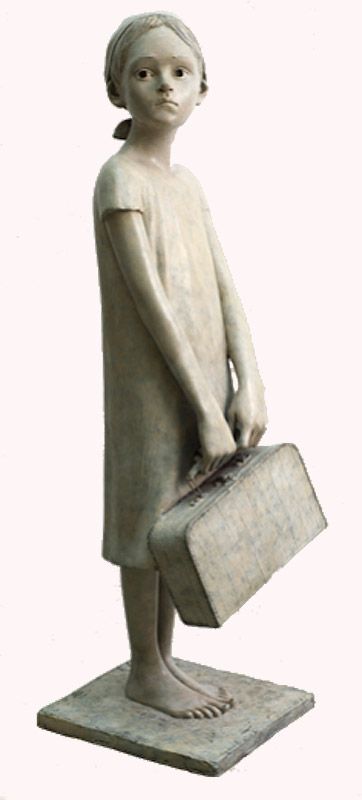
Firstly, it has enabled me to discover significant new artists. Looking under my own heading of “Works for further consideration”, I find the delightful sketch of a city street by Anton Pieck. The person who originally pinned this usefully informs me that Pieck was well known for the nostalgic and fairytale quality of his work which included sculpture and graphic art. He was Dutch and lived from 1895 until 1957. The image which I have pinned vaguely reminds me of the street in Truro which runs beside the city’s relatively recent Benson cathedral. Next to this, in the random manner of my collection, I have pinned the wanly evocative sculpture of a young girl with a suitcase by Berit Hildre, a French sculptor who I now go on to discover has a delightful and tender portrayal of her work on You Tube. Then too there are the delightful colours of the work of Hope Gangloff and I notice that I have pinned several of her pictures; their bohemian portraits being thoroughly engaging. The person who first mounted the work on Pinterest has usefully added the comment,”Stumbled into this exhibit in Chelsea the other day. I have never seen her work in person. Quite enjoyed the pattern overload! Hope Gangloff at Susan Inglett Gallery”.

by Berit Hildre
by Berit Hildre

In addition to aiding the discovery of new artists, I also find some of my so-called pins are a stimulus to my own attempts at sketching. For instance, I enjoy the work of the Neue Sachlicheit, particularly Christian Schad. This interest led to my discovery of the print work of the Dresden painter, Conrad Felixmuller. I have done a little printing in the recent past and the lyrical lines of Felixmuller’s 1927 Woodcut portrait of Christian Rohlfs prompted me to making a copy in red biro and red ink. Because the images are so easily available and to some extent a prompt to experiment, Pinterest is a useful encouragement, at least to someone rather lazy like myself, to get sketching. I find that drawing, for someone like myself who spends a fair amount of time with reading and language, is a delightful change.

Stimulated by a course of lectures by a friend and cultural historian, Robin Lenman, I have taken a deeper interest in photographic history. Pinterest photographs provide a useful resource for those who are interested in the stage and screen, entertainment and political change throughout the upheavals of the twentieth century. Black and white photographs too have their own appeal. Here, I already knew of the work of Roman Vishniac of the vanished world of the Stehtl but was fascinated to find photographs of many individual artists, composers and indeed scientists. It can be seen that Man Ray and Tzara’s work influenced photography as well as art. Film stars evidently influence how bathing beauties are portrayed. It is curious but perhaps not surprising to notice how similar the photographs of Egon Schiele and Paul Klee themselves actually resemble some of their portrait work.

by Hope Gangloff
by Hope Gangloff

Can Pinterest be of any use in education? I am not entirely sure. The wealth of imagery might well be useful to many designers. It may also form an entry point for younger students who are reluctant or unable to visit galleries, especially if these are expensive or in foreign cities. Certainly, some galleries might make better use of this technology. However, the lack of detail and face-to face discussion of paintings and their techniques provided by “pinning” limit its use. As Pinterest is so very easy to use however, it provides a mechanism which encourages the exchange of images by say Rembrandt, and if it then prompts users to see the original, then certainly it has got to be understood as a very useful tool.

“Hope Gangloff, born in Amityville New York in 1974, is known for creating vibrant and truthful portraits of his friends as a way to share his vision of modern American life. The theme often captures a generation in the process of change, a certain type of youth affected by the crisis economy and the obsession for material goods. His portraits, highly detailed, show the mood of a moment in his characters. Its very different colors go from very pale tones to others almost supersaturated. Sometimes his work reminds Maurice Denis and others, by their way of drawing, their representation sometimes sexual reminiscent of Egon Schiele” (Source Inesvigo on Youtube)

Categories
Uncategorized

Welche deutschen Serien helfen mir beim Deutsch lernen?

Useful if you are learning the language

Categories
Uncategorized

Book Haul: Berlin 2016

More reasons to read German fluently!

Categories
Uncategorized

The flopped Stalinallee (1949-1961). What happens with a birthday gift to the Red Tsar.

Fascinating history

Joep de Visser's avatarHistories from the capital of the 20th century

Renaming the street into the Stalinallee. (Berlin-Mitte/Friedrichshain, December 1949/January 1950. ©Unclear)

Ever since there was traffic between Berlin and Frankfurt a/d Oder, there must have been a -about 100 kilometer long- road between these cities. Since Berlin’s expansion around 1700, it was named the Frankfurter Straße – and since the late 1780s, a part was named the Große Frankfurter Straße. City’s gates came and went, barricades were thrown up and blasted down. The (Große) Frankfurter Straße had a serious history – until a heavy air-raid at the 3rd of February 1945 wiped out most of it. Yet, this all is only a prehistory of the Stalinallee – as the street was called since December 1949.

By renaming the street, the East German politicians didn’t only congratulate Stalin with his seventieth birthday – but they also dedicated their most prestigious urban project to the Soviet dictator. The Stalinallee should be the labor paradise, the incarnated socialist utopia – so it had to be…

View original post 1,478 more words