Categories
Uncategorized

Interior with a Reading Lady — Vilhelm Hammershoi

I love Hammershoi-

Biblioklept's avatarBiblioklept

View original post

Categories
Penwith St Ives Uncategorized West Cornwall (and local history)

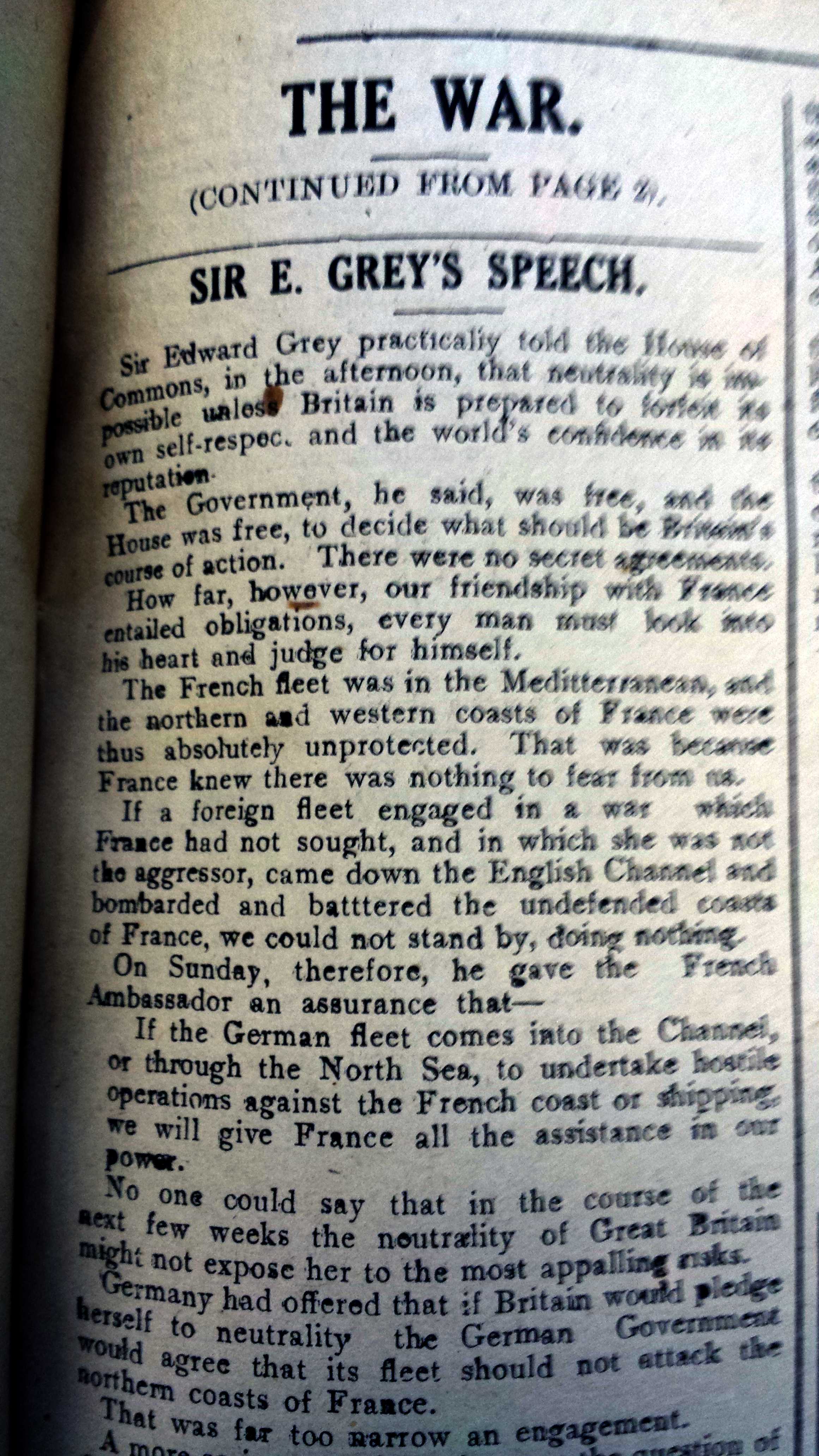
Reports from Cornish Newspapers in 1914-The Outbreak of War

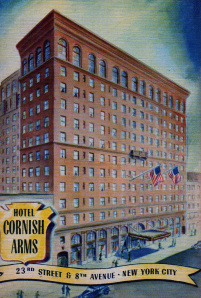
A postcard of The Cornish Arms Hotel in New York-frequently advertised in The Cornishman

20140326_150101

Up until August 1914, The Cornishman and the St Ives Weekly Report contain many detailed reports from abroad. These include the Cornish in America, Canada, South Africa. Many Cornish people travelling to the States will have responded to the large adverts in the Cornishman for the famous hotel in New York https://ephemeralnewyork.wordpress.com/tag/hotel-cornish-arms/

Without doubt, however, the greatest concern appears to be about Nationalist Rebellions in Ireland.http://www.bbc.co.uk/history/british/britain_wwone/ireland_wwone_01.shtml  The only reference to the possibility of  an outbreak of war- reading between the lines- concerns the speeches in support of building more dreadnoughts. Money appeared to be of no real concern  to the advocates of building more battleships.

The effect on the Fishermen and Families

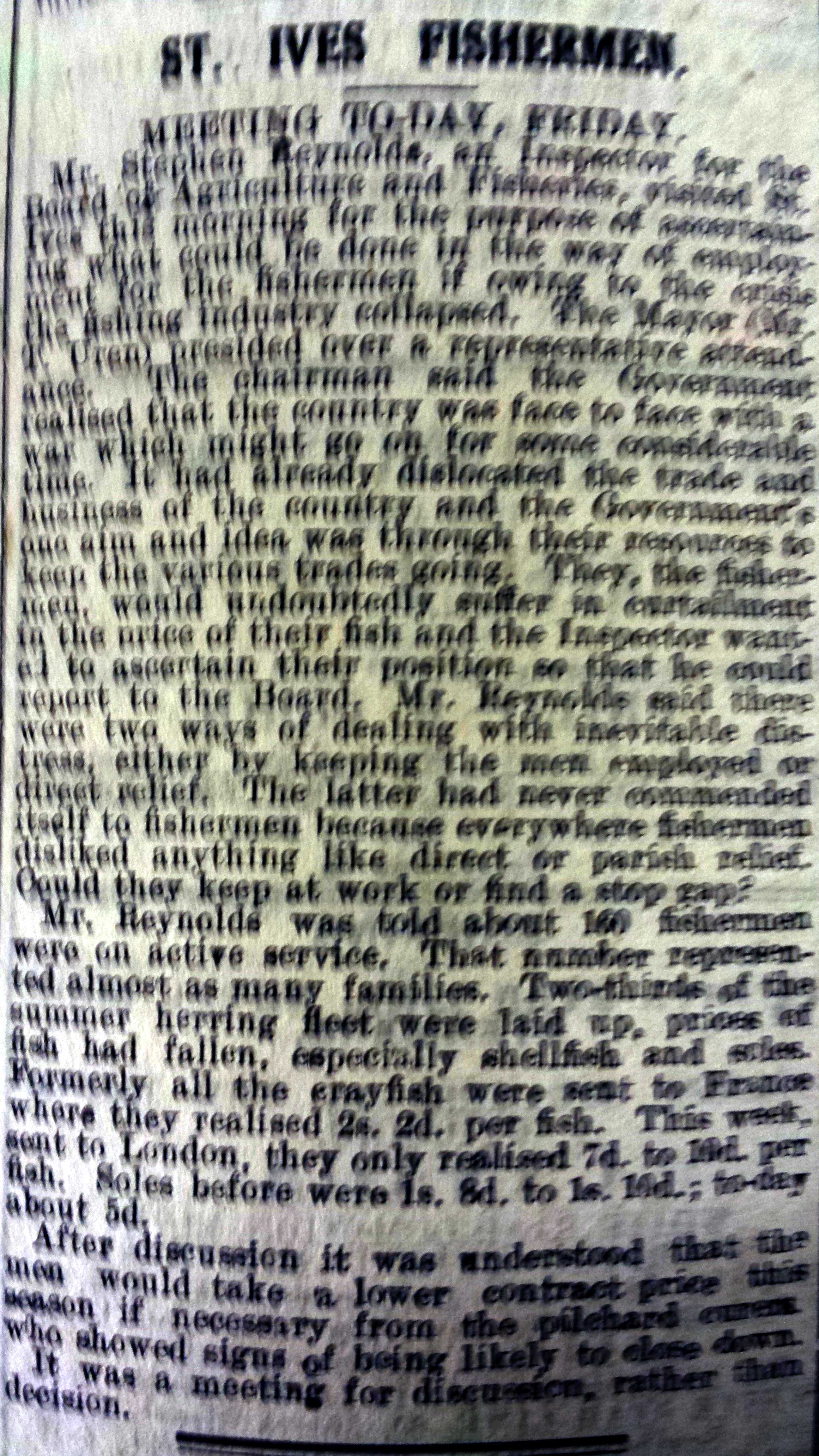
When war broke out many fishermen in St Ives were immediately affected and the effect on many of them, their families and the price of fish was very soon to follow. Many were called up within hours and summoned as members of the Royal Naval Reserve to Davenport and had to leave by train for that destination. A newspaper report states that when addressed by Mr Stephen Reynolds, Inspector for the Board of Agriculture and Fisheries, he was told that some 160 fisherman were on active service with about the same numbers of families affected. Two-thirds of the summer Herring Fleet were laid up and the price of fish and particularly Crayfish that would otherwise have fetched a fine price in Paris were catastrophically affected.


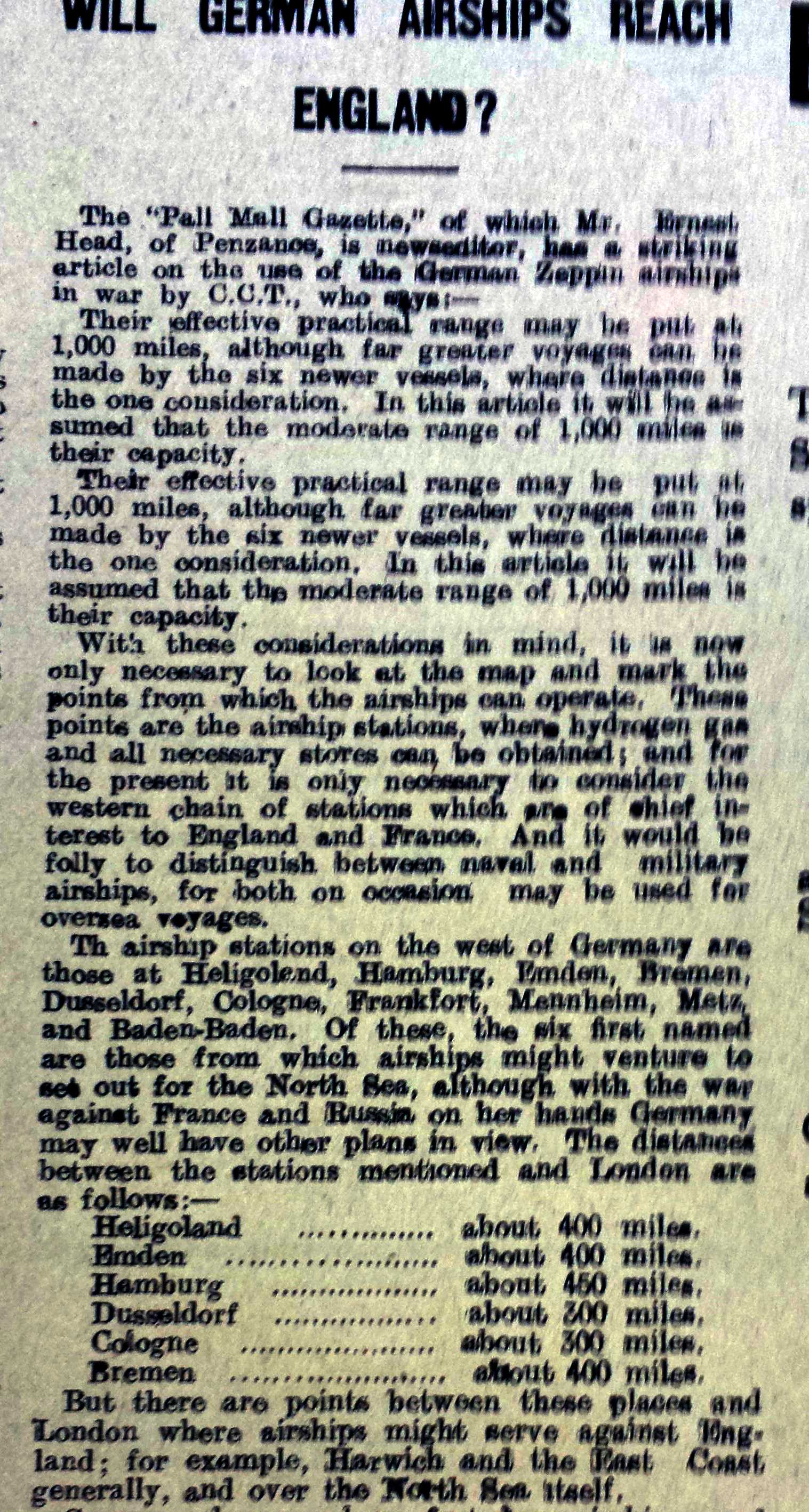
The details of this call=up are very moving since we only have to turn to the next couple of weeks to learn how many will have been aboard ships which sank or been caught in the first defeat later at Mons. The accounts of farewells said above the peaceful beaches and the brass bands playing can still be imagined by anyone walking out of the town. There is a strange mixture of fear and jingoism apparent in the newspapers. There were worries about the supply of wheat which caused fears about  starvation; there were food riots in Camborne. Other articles show a concern about possibilities of aerial attack from Zeppelins and tables showing their limited range were the subject of articles in the press.

Vulnerability to Aerial Bombardment

zeppelin-airship


The Zeppelin Threat
The Zeppelin Threat
Categories
Uncategorized

Horace : Le Printemps (Solvitur acris hiems, in Odes, I,4)

Lionel-Édouard's avatarÉcrire, lire, traduire

Dénoué, l’âpre hiver : printemps, brise, à nouveau,
Bateaux à sec affloués au palan,
Hors l’étable, bétail ! croquant, loin du fourneau !
Les prés ne sont plus niellés de blanc.

Déjà Vénus mène ses chœurs ; lune au zénith,
Unies aux Nymphes, les Grâces jocondes
Alternent leurs brisés ; Vulcain – ce feu ! – visite
Le Cyclope en ses fonderies profondes.

C’est le temps, crâne pur, de te sacrer de feuilles
Ou des fleurs semées parmi le dégel.
C’est le temps d’immoler au Faune dans les breuils –
Suivant ses penchants – chevrette ou agnelle.

La pâle mort d’un même pied détruit manoirs
Et taudis ; bienheureux Sextius, va :
La vie si brève nous dénie tout long espoir.
Déjà la nuit te presse, et l’au-delà ;

Voici où gîte la Faucheuse : à l’arrivée,
Finis banquets, vins bus à l’aveuglette,
Le tendre Lycidan : fini, pour l’heure aimé
Des jouvenceaux – et bientôt des grisettes.

***

Cette traduction…

View original post 158 more words

Categories
Uncategorized

Book look: Martin Schmidt and Kurt Schwarzer

Come on up for the rising's avatarAUSTRIAN CULTURE CHANNEL

“Farbe für die Republik” is the title of an eagerly awaited exhibition set to take place at one of Germany’s most prestigious museums.

The exhibit – which will be presented at the Deutsches Historisches Museum Berlin between March and August 2014 – features hundreds of colour photographs taken during four decades in the German Democratic Republic (GDR). The concept is extraordinary since most images from the country and are black and white photographs of mediocre quality.

Martin Schmidt and Kurt Schwarzer searched the archive of the museum for the best of their 1pictures. The photographers, who worked in the GDR, selected images showing women working in factories, youth football teams on the pitch, elderly hikers during an outing on a sunny day, people at the hairdresser’s and many more subjects and themes. The brilliant quality of their photographs – of which all seem to sparkle in the brightest colours –…

View original post 66 more words

Categories
Uncategorized

W. H. Auden–In Memory of Ernst Toller

matt's avatargolempoem


IN MEMORY OF ERNST TOLLER
(d. May 1939)
The shining neutral summer has no voice
To judge America, or ask how a man dies;
And the friends who are sad and the enemies who rejoice

Are chased by their shadows lightly away from the grave
Of one who was egotistical and brave,
Lest they should learn without suffering how to forgive.

What was it, Ernst, that your shadow unwittingly said?
O did the child see something horrid in the woodshed
Long ago? Or had the Europe which took refuge in your head

Already been too injured to get well?
O for how long,like the swallows in that other cell,
Had the bright little longings been flying in to tell

About the big friendly death outside,
Where people do not occupy or hide;
No towns like Munich; no need to write?

Dear Ernst, lie shadowless at last among
The other…

View original post 81 more words

Categories
Uncategorized

Review – ‘A Concise History of Britain,’ by F. E. Halliday

Been looking at F.E.H. and his friendship with C Day-Lewis:-

hagalenz's avatarハガレンズ

ハガレンズ
コロンビア国立大学
英文献学

‘A Concise History of Britain’ by F. E. Halliday is a useful, summarizing overview of the British Isles history. By using comprehensible and deeply argued explanations, the study of Halliday encompasses interesting topics such as ‘Early Invaders,’‘Three Centuries of Peace –43 to 410–,’ ‘The Rise and Fall of Wessex –410 to 1066–,’ ‘From Despotism to Anarchy –1066 to 1154–,’ and ‘The Making of the Nation –1154 to 1307.’ Additionally, charts, photographs, maps, and paintings make the reader feel he or she is closer to the subject matter. The book is indeed an astonishing touch on British history for civilisation investigators.

The first chapter, ‘Early Invaders,’ describes how England is, how it is gradually peopled by humans, and how the then invasions take place. After general features of the English territory –flat land, lower ground with uplands and valleys–, the story begins with Stone Age hunters arriving…

View original post 992 more words

Categories
Uncategorized

A Word About Federico García Lorca

Just been reading Blood Wedding

theARXXIDUC's avatartheARXXIDUC

lorca_family.jpg

I keep telling you about all these people, like Kahlo and Picasso, Hemingway and Graves, plus my bits about Gandhi, and Elvis, and I do not even know whether you are interested in the slightest.

Oh well, never mind. I wouldn’t tell you, if I wasn’t interested. I suppose that has to be my guideline.

Today I’ll offer you an entry about Federico García Lorca. He was born in Fuente Vaqueros, Granada, Spain, 5th June,1898; he died near Granada, 19th August,1936. Killed. Executed. Murdered. That is 71 years ago, today.

One does not know who killed him, or why. Perhaps it was a political murder, because García Lorca was considered left-leaning. Or it was a Fascist murder, because Lorca stood for the arts and the intellect and for freedom of the mind. Or it was, because Lorca was said to be more interested in men than in the opposite…

View original post 530 more words

Categories
Uncategorized

Cello

The Thomas Eakin’s cellist looks late in his work?

kihm's avatarRead, Seen, Heard

augustus john guilhermina suggia

Guilhermina Suggia by Welsh artist Augustus John (1878-1971)

Cello HA Weiss

Postcard by H.A. Weiss, circa 1900

Thomas Eakins, Woman Playing Cello, c. 1880s

Photograph by Thomas Eakins (1844-1916)

M. Frank

Miss M. Frank of Vienna

DeCamp_Joseph_The_Cellist

By American painter Joseph DeCamp (1858-1923)

Lilla Cabot Perry

By American painter Lilla Cabot Perry (1848-1933)

John White Alexander

By American artist John White Alexander (1856-1915)

View original post

Categories
Uncategorized

The Fortune of the Rougons, by Emile Zola, translated by Brian Nelson

Reading Zola’s fascinating L’Ouevre (The Masterpiece)-

Lisa Hill's avatarThe Books of Émile Zola

The Fortune of the RougonsAfter I read Germinal a couple of years ago (see my review), Émile Zola became one of those authors that I really wanted to read more of, but it was not until I saw the BBC series based on The Ladies’ Paradiseand read the novel (see my review) that I decided to begin a long-term project to read them all. I’ve enjoyed reading this one, The Fortune of the Rougons, which puts the whole sequence into perspective.

With Les Rougon-Macquart, Zola apparently set out to emulate Balzac’s La Comedie Humaine but his 20-volume cycle differs in two significant ways: it consists of novels rather than short stories and novellas, and it focusses on a single family rather than a whole society. Zola believed in the fatalistic effects of heredity and environment, and so the novels trace three branches of the Rougon-Macquart family: the aspirational…

View original post 830 more words

Categories
Uncategorized

Domestic Architecture of Pre-Revolutionary Moscow 1

Looks elegant must read “Natasha’s Dance” properly.

Fëanor's avatarArt of the Russias

This series of posts comprises a few loosely translated extracts from Bolshoi Gorod, a fine Russian magazine of art and culture. In April this year, they did a small series on pre-Revolutionary private dwellings in Moscow, and these seemed of artistic interest in this blog. The tragedy is that it’s impossible for the average man-on-the-street to enter these residences, which are closed to the public even on the two days of the year (April 18, May 18) that are named Days of Culture, and it took nearly half a year of attrition and persuasion for Bolshoi Gorod to obtain access.

Alexandrinsky Palace

In 1754, Matryona Demidova, the wife of Prokofy Demidov, son of the Ural-based factory-man, bought lands from the Countess Repnin. Two years later, the baroque Demidov palace was constructed under the aegis of the Prague-based architect Jecht (I’m not sure I’m spelling this right and can’t find any…

View original post 299 more words