Categories
Category: Uncategorized
Categories
Outdoor Dining, Provence, France
Categories
Dam’d if you do, or: You don’t

Nice

A ‘Septolet’
Russian officials claim
Ukraine's planning
hydroelectric Kakhovka Dam's destructionMoscow intends
to
scapegoat
Kyiv.
Septolet?
The Septolet is a poem consisting of seven lines containing fourteen wordswith a break anywhere in between the two parts. Both parts deal with the same thought and create a picture.
This sounds a really engaging and thought provoking read at a time where authoritarianism is attempting to threaten what were regarded as traditional democracies.

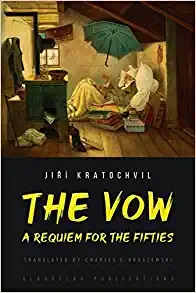 I haven’t read much Czech literature, only the usual Kafkas and Josef Skvorecky’s The Cowards (see my review) so I turned to Michael (The Complete Review) Orthofer’s Guide to Contemporary World Fiction (2016) for some guidance in interpreting Jiří Kratochvil’s The Vow: A Requiem for The Fifties (published in Czech as Slib in 2009). Alas, Jiří Kratochvil (b.1940) doesn’t get a mention and this is probably because The Vow is the first of his books to be translated into English, and it’s taken until 2021 for that to happen…
As you can see from his page at Goodreads, and his Wikipedia page Kratochvil is a prolific Czech writer. In 1991 he was awarded the Tom Stoppard Prize for his book Medvědí román (“A Bear’s Novel”) and in 1999 he was awarded the Jaroslav Seifert Prize.
The Vow is a very interesting book, but it’s challenging. Set…
View original post 995 more words

Lovely colour combination.

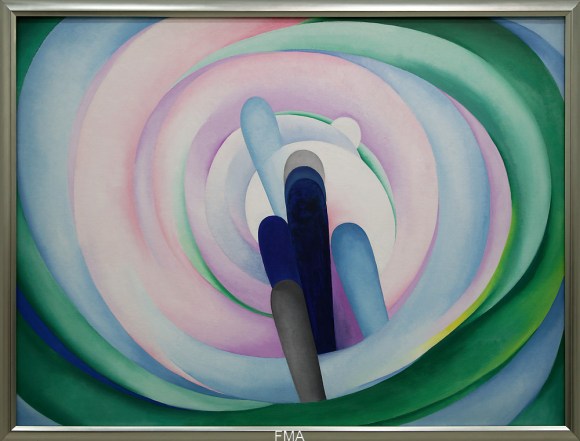
“Georgia O’Keeffe’s early abstractions, although not as well known as her later southwestern paintings, played a pivotal role in the development of American modernism. Grey Blue & Black—Pink Circle is the culmination of O’Keeffe’s Special series, a body of abstract drawings and paintings that she made during the 1920s. She created these works outside the influence of the New York mainstream and before her initial contact with the works of Wassily Kandinsky, whose treatise On the Spiritual in Art had a measurable impact on her later abstract style.
The nodes in the center of the painting recall the headdress of Hopi kachina dancers (and the headdresses of the eponymous kachina dolls); the surrounding whorls of color amplify the suggested motion of the dance and the consonant rhythms of the universe…”
Adapted from
- Eleanor…
View original post 50 more words
Categories
Phyllis Dodd
A thoroughly interesting and informative blog post.Great!!

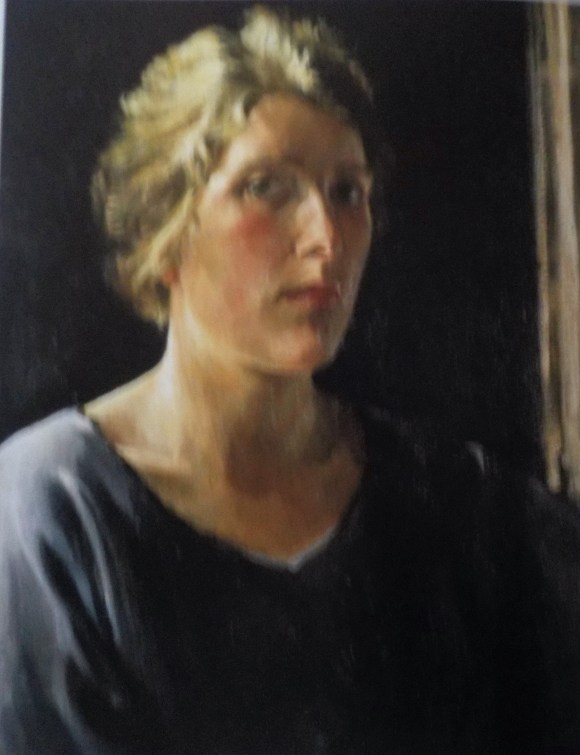
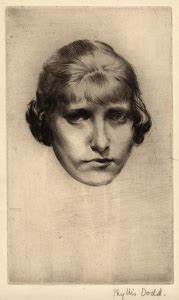
Phyllis Dodd: ‘Self Portraits.’
Phyllis Dodd was born in 1899 in Chester. Her parents encouraged her early interest in art. Attending the Queen’s School, Chester at the age of eight she won a Royal Drawing Society prize in 1909, drawing her friend Freda from memory. Her father Charles Dodd would take her to the Walker Art Gallery in Liverpool, his death when Phyllis was sixteen was a severe blow. Her mother took in paying guests to send her to Liverpool School of Art, 1917–21, where Will Penn taught her the use of a limited palette; by the 1950s she developed an interest in more positive colour.
In 1921 Phyllis won a Royal Exhibition to the Royal College of Art, 1921–25. This prized and coveted award allowed her £90 a year and expenses towards art materials and travel expenses. Her friends and colleagues at the RCA included Henry Moore (1898-1986), Raymond…
View original post 1,340 more words
Categories
2022 Historical Novel Prize winner
The winner of the 2022 HNSA Historical Prize was announced last night…
*drum roll*
Corporal Hitler’s Pistol, by Tom Keneally, see my review
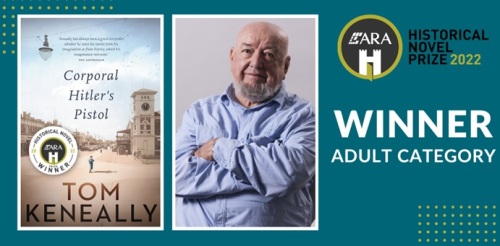
In a generous gesture, Keneally has chosen to share his prize (worth $50,000) He is giving $4000 each to the shortlisted authors Robyn Mundy (Cold Coast, see my review) and Geraldine Brooks. (Horse).You can read about this is in his acceptance speech at the HNSA website.
Update, later the same day, from the Guardian newspaper, with my apologies for my error. The links are to my reviews.
“Receiving the prize, Keneally said he would give $4,000 (£2,200) to the six authors who made the ARA prize longlist: Karen Brooks, Lauren Chater, Steven Carroll, Portland Jones, Kim Kelly and David Whish-Wilson.
Geraldine Brooks and Robyn Mundy, who were also shortlisted with Keneally, already received $5,000 from the prize for their achievement.”
View original post 23 more words
Contemplative-lovely.

A random survey of self-portraits created by women through the centuries
Polish painter Irena Luczynska-Szymanowska (1890–1966)
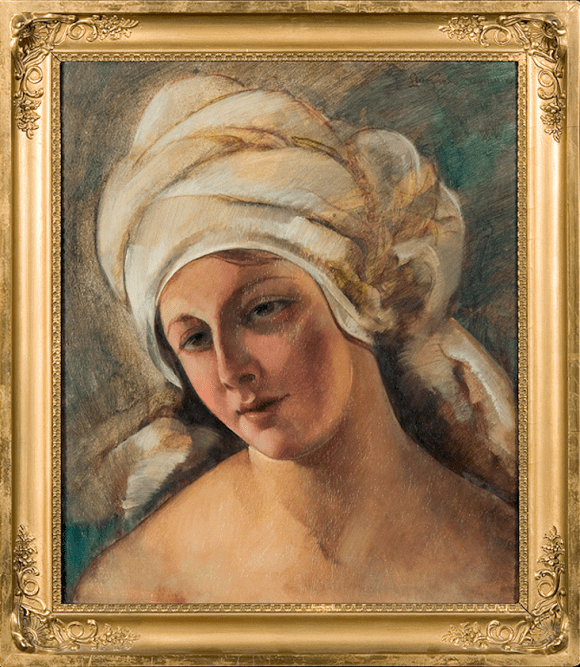
Autoportret, before 1920 / Oil on cardboard / Private collection
[2 embedded links above]
Categories
Autumn in Paintings


“This monumental view of the Hudson River Valley was painted from memory in the artist’s London studio. Cropsey adopted a high vantage point, looking southeast toward the distant Hudson River and the flank of Storm King Mountain. A small stream leads from the foreground, where three hunters and their dogs gaze into the sunlight. All along the meandering tributary there are signs of man’s peaceful coexistence with nature: a small log cabin, grazing sheep, children playing on a bridge, and cows standing placidly in the water. Here, man neither conquers nor is subservient to nature; both coexist harmoniously…”
Learn More
Jasper Francis Cropsey at wikiwand
See More
Jasper Francis Cropsey at The National Gallery of Art
Jasper Francis Cropsey at wikimedia
Thanks for Visiting 🙂
~Sunnyside
Categories
Deux Barbaras-Autumn Leaves
Miri it is while sumer i-last
With foulës song;
Oc now neghëth windës blast
And weder strong.
Ei, ei, what this night is long,
And Ich with wel michel wrong
Sorwe and murne and fast.
Dis, quand reviendras-tu ?
Voilà combien de jours, voilà combien de nuits,
Voilà combien de temps que tu es reparti,
Tu m’as dit cette fois, c’est le dernier voyage,
Pour nos coeurs déchirés, c’est le dernier naufrage,
Au printemps, tu verras, je serai de retour,
Le printemps, c’est joli pour se parler d’amour,
Nous irons voir ensemble les jardins refleuris,
Et déambulerons dans les rues de Paris,
Dis, quand reviendras-tu,
Dis, au moins le sais-tu,
Que tout le temps qui passe,
Ne se rattrape guère,
Que tout le temps perdu,
Ne se rattrape plus,
Le printemps s’est enfui depuis longtemps déjà,
Craquent les feuilles mortes, brûlent les feux de bois,
A voir Paris si beau dans cette fin d’automne,
Soudain je m’alanguis, je rêve, je frissonne,
Je tangue, je chavire, et comme la rengaine,
Je vais, je viens, je vire, je me tourne, je me traîne,
Ton image me hante, je te parle tout bas,
Et j’ai le mal d’amour, et j’ai le mal de toi,
Dis, quand reviendras-tu,
Dis, au moins le sais-tu,
Que tout le temps qui passe,
Ne se rattrape guère,
Que tout le temps perdu,
Ne se rattrape plus,
J’ai beau t’aimer encore, j’ai beau t’aimer toujours,
J’ai beau n’aimer que toi, j’ai beau t’aimer d’amour,
Si tu ne comprends pas qu’il te faut revenir,
Je ferai de nous deux mes plus beaux souvenirs,
Je reprendrai la route, le monde m’émerveille,
J’irai me réchauffer à un autre soleil,
Je ne suis pas de celles qui meurent de chagrin,
Je n’ai pas la vertu des femmes de marins,
Dis, quand reviendras-tu,
Dis, au moins le sais-tu,
Que tout le temps qui passe,
Ne se rattrape guère,
Que tout le temps perdu,
Ne se rattrape plus
That’s how many days, that’s how many nights,
How long have you been gone,
You told me this time, it’s the last trip,
For our hearts torn, this is the last shipwreck,
In the spring, you’ll see, I’ll be back,
Spring is pretty to talk about love,
We will go together to see the flowering gardens,
And stroll through the streets of Paris,
Quoting Paroles at https://www.youtube.com/watch?v=ZlgVIC_7dvI
“Dis, quand reviendras-tu ?” est une chanson sortie en 1962, écrite, composée et interprétée par Barbara. Dans cette chanson, l’auteure-narratrice écrit une lettre à un amant dont elle attend inlassablement le retour pour l’inciter à revenir à ses côtés. La qualité exceptionnelle d’écriture de cette chanson ainsi que la sensibilité de l’interprétation de Barbara en font un monument de la chanson française.
 penwithlit
