Categories
Uncategorized

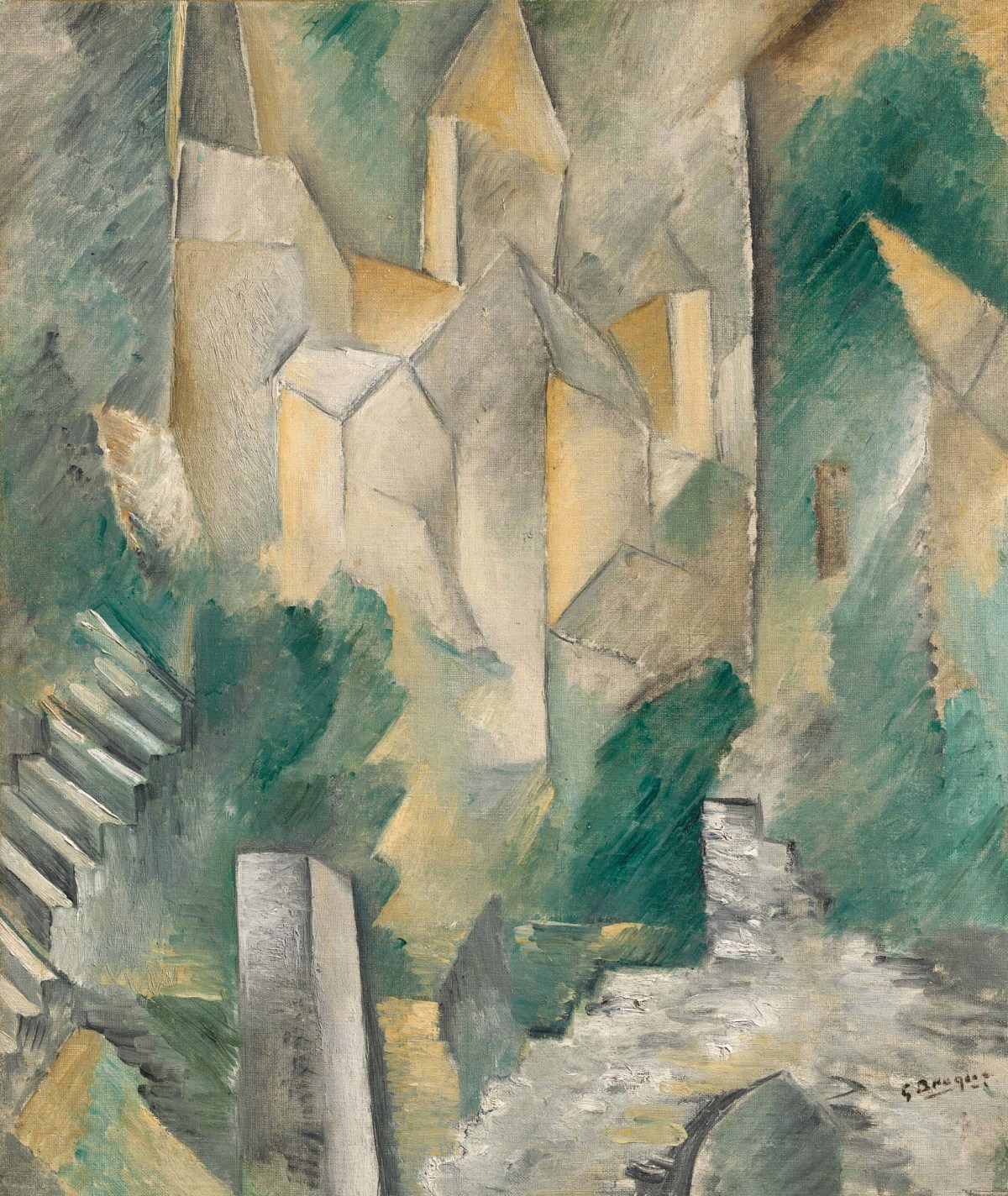
Georges Braque: L’église de Carrières-Saint-Denis (1909)

At Sunnyside - Where Truth and Beauty Meet's avatarAt Sunnyside - Where Truth and Beauty Meet

georges_braque_leglise_de_carrieres-saint-denis) jpg (JPEG Image, 2698 × 320[...]
Georges Braque (1882-1963), L’église de Carrières-Saint-Denis (1909), signed ‘G Braque’ (lower right); signed again ‘G Braque’ (on the reverse), oil on canvas, 21 ½ x 18 ¼ in. (54.6 x 46.3 cm.), Source: Christie’s

The Birth of Cubism

Painted in 1909, L’église de Carrières-Saint-Denis dates from the early moments of Cubism. It is in the late landscapes of Braque’s transitional period that the bare bones of the movement truly consolidated. Now, he had advanced on Cézanne in rendering form in two dimensions, and he needed only his return to his studio in Paris and his collaboration with Picasso for full-blown Cubism to be born. Pepe Karmel has related about the period from 1909-1910, “the dialogue between Picasso and Braque seems to have been most intense.” (E. Braun and R. Rabinow, Cubism: The Leonard Lauder Collection, exh. cat., The Metropolitan Museum of Art, New York, 2014, p. 43).Braque’s most important artistic…

View original post 78 more words

Categories
Uncategorized

Ivy Windows, Princeton, New Jersey

Ivy League!

Categories
Uncategorized

The Fairy Glen Gorge, Conwy River, Wales

Beautiful!

Categories
Uncategorized

Autoportrait Day 215~ Mollie Tripe

Categories
Uncategorized

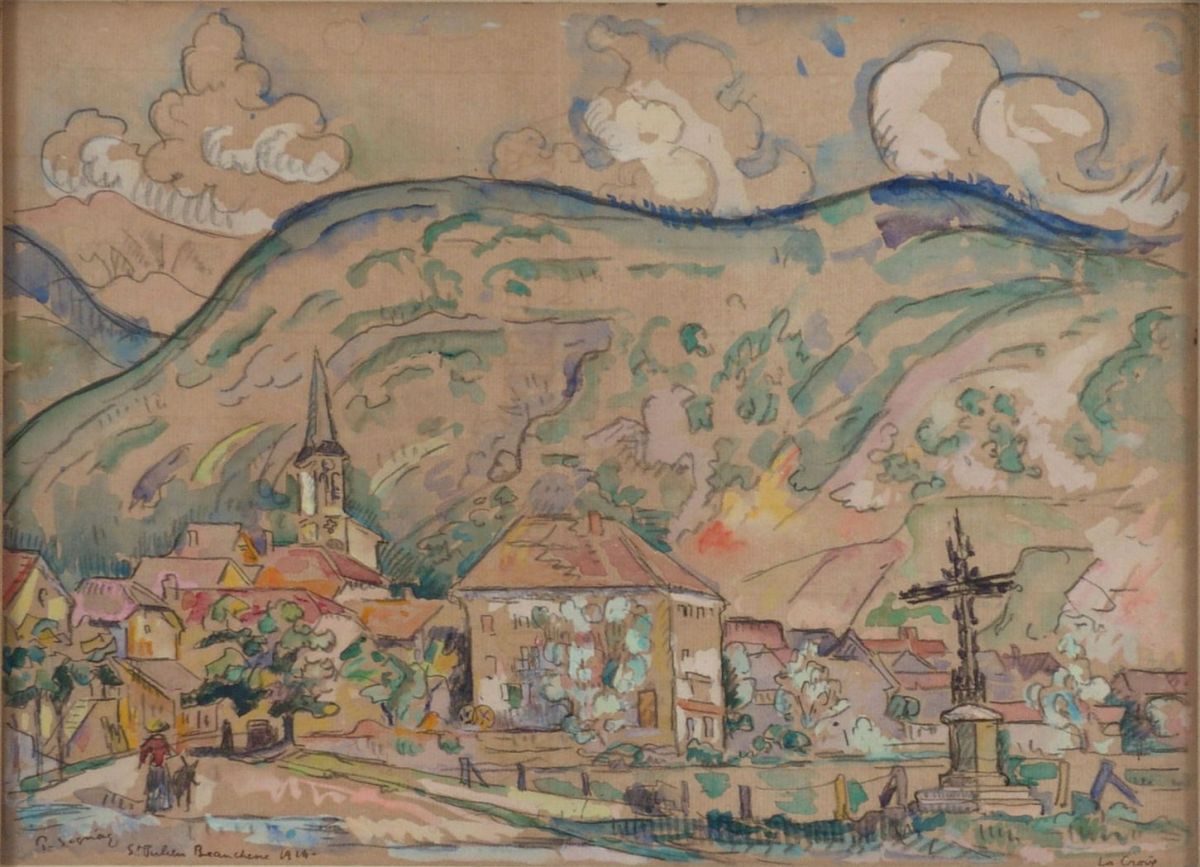
Paintings of Paul Signac 16: Cézanne’s influence

These are quite lovely!!

hoakley's avatarThe Eclectic Light Company

Over the last three weeks I have shown a few of the watercolour sketches made by Paul Signac (1863-1935), which may have come as a surprise if you’ve previously only known his pointillist oil paintings. In this article I look at how those watercolour sketches changed in response to Signac’s exposure to the late watercolours of Paul Cézanne.

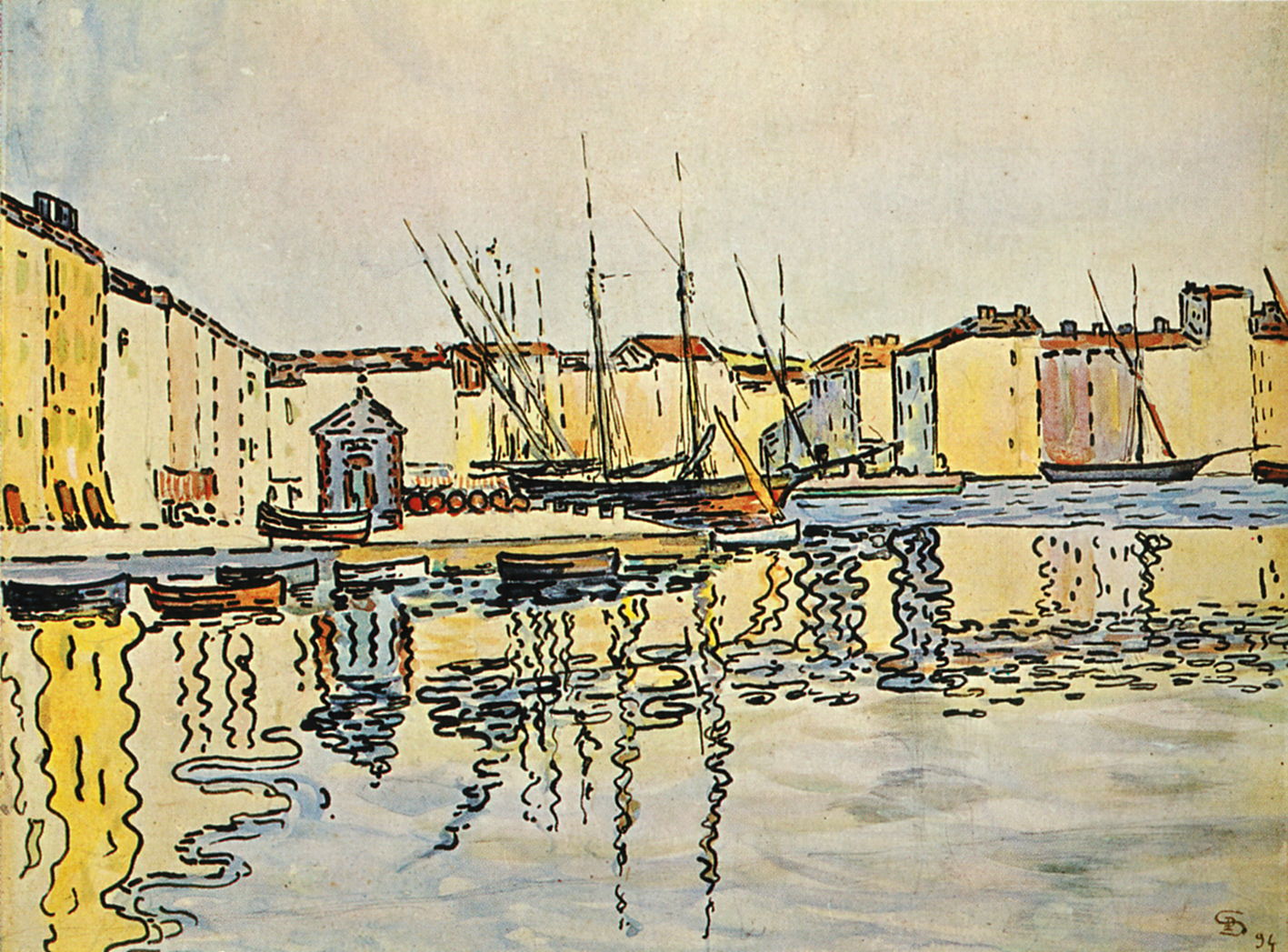
Although I’ve been unable to find many good images of Signac’s early watercolour sketches, the following seems to be fairly representative of those he painted in the nineteenth century.

signacharbour Paul Signac (1863-1935), Harbour (1894), further details not known. Wikimedia Commons.

Harbour (1894) is one of the many sketches he made of the harbour of Saint-Tropez while he lived there, which appear to have been primarily intended to lead to finished oil paintings in pointillist style.

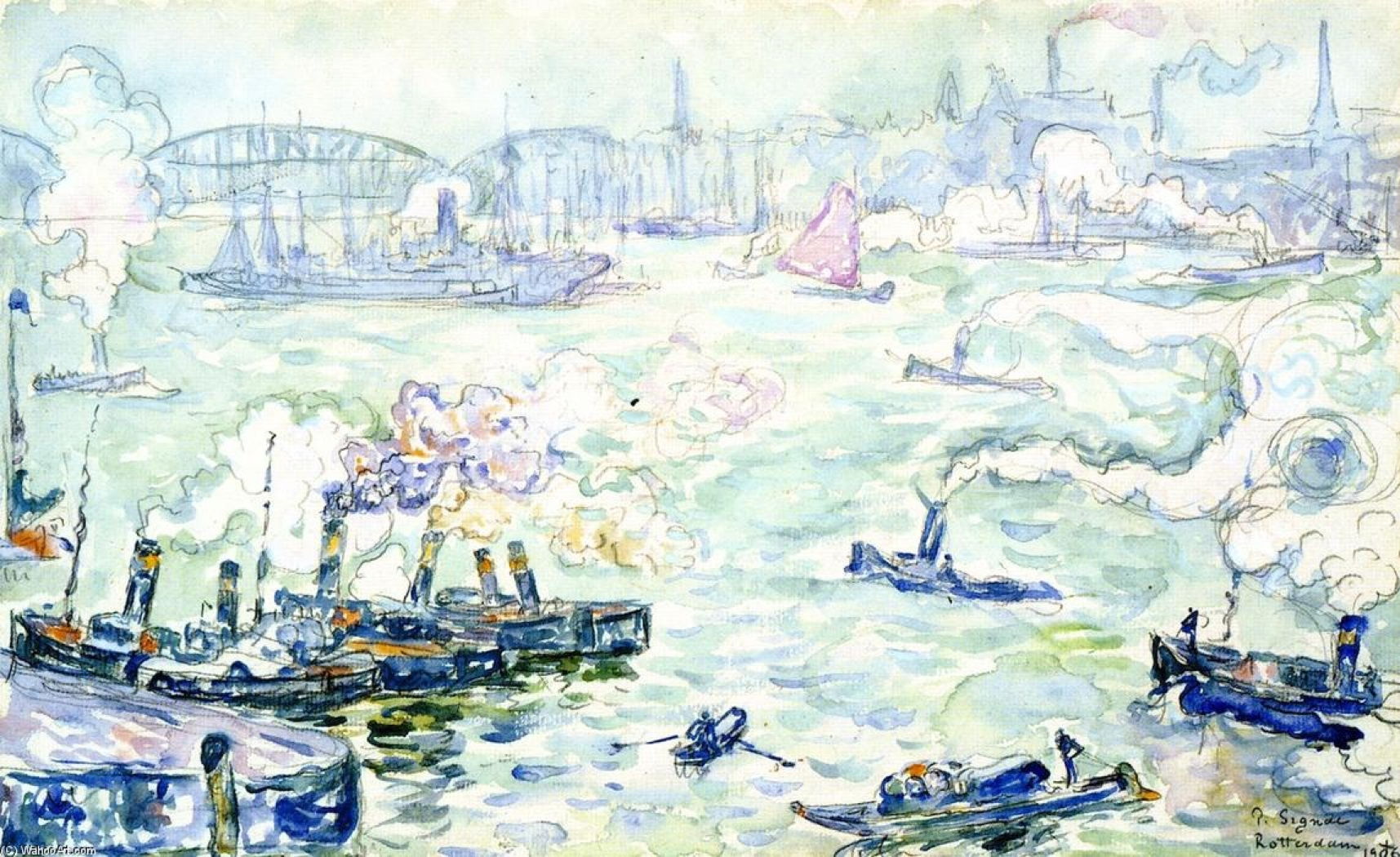
signacrotterdam Paul Signac (1863-1935), Rotterdam (1906), watercolour and graphite, 25.4 x 40.6 cm, The Metropolitan Museum of Art…

View original post 542 more words

Categories
Uncategorized

Siegfried Sassoon: Reconciliation

litgaz's avatarLIT.GAZ.

When you are standing at your hero’s grave,
Or near some homeless village wherehe died,
Remember, throughyour heart’s rekindlingpride,
The Germansoldiers who were loyaland brave.

Men foughtlike brutes; and hideousthings were done;
And you have nourishedhatred, harshand blind.
But in that Golgothaperhaps you’ll find
The mothersof the men who killedyour son.

I only came across this poem recently: what a powerful one it is, in the light of some of his others, and its theme. After the war, there is peace, and a coming to terms with what happened before, however difficult that may be.

Sassoon creates a situation that would have been familiar to his readers; British relatives would have to travel to France or Belgium to visit either the grave of a loved one, if a grave existed, or to see the dead soldier commemorated somewhere…

View original post 579 more words

Categories
Uncategorized

Dolce Far Niente: Paintings of blissful laziness 1

hoakley's avatarThe Eclectic Light Company

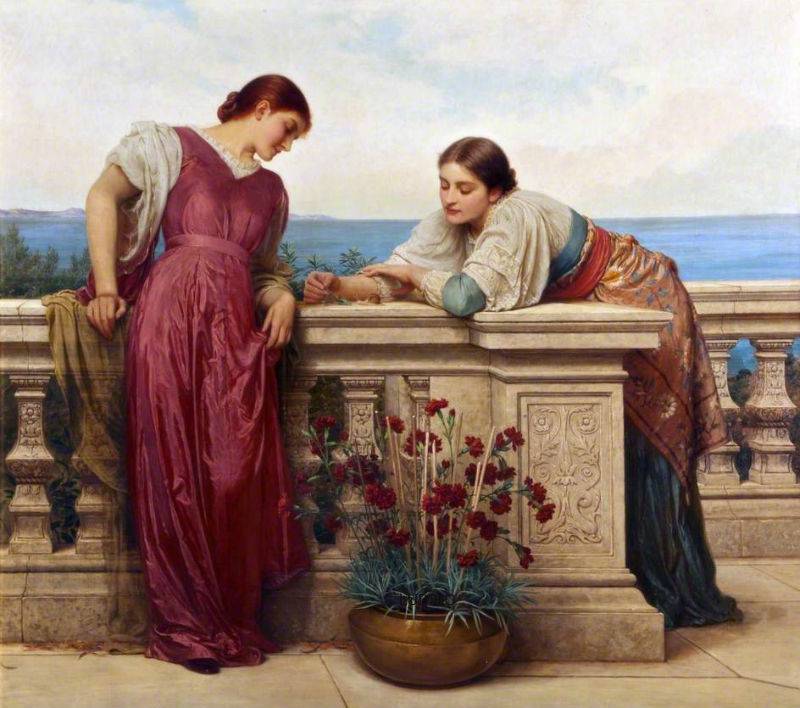
It’s almost August, time for those of us in the northern hemisphere to abandon the sweltering cities and go to indulge in a bit dolce far niente where it’s more comfortable. While we’re doing that, let’s put aside all those busy paintings of active people. Our art needs to chill out too.

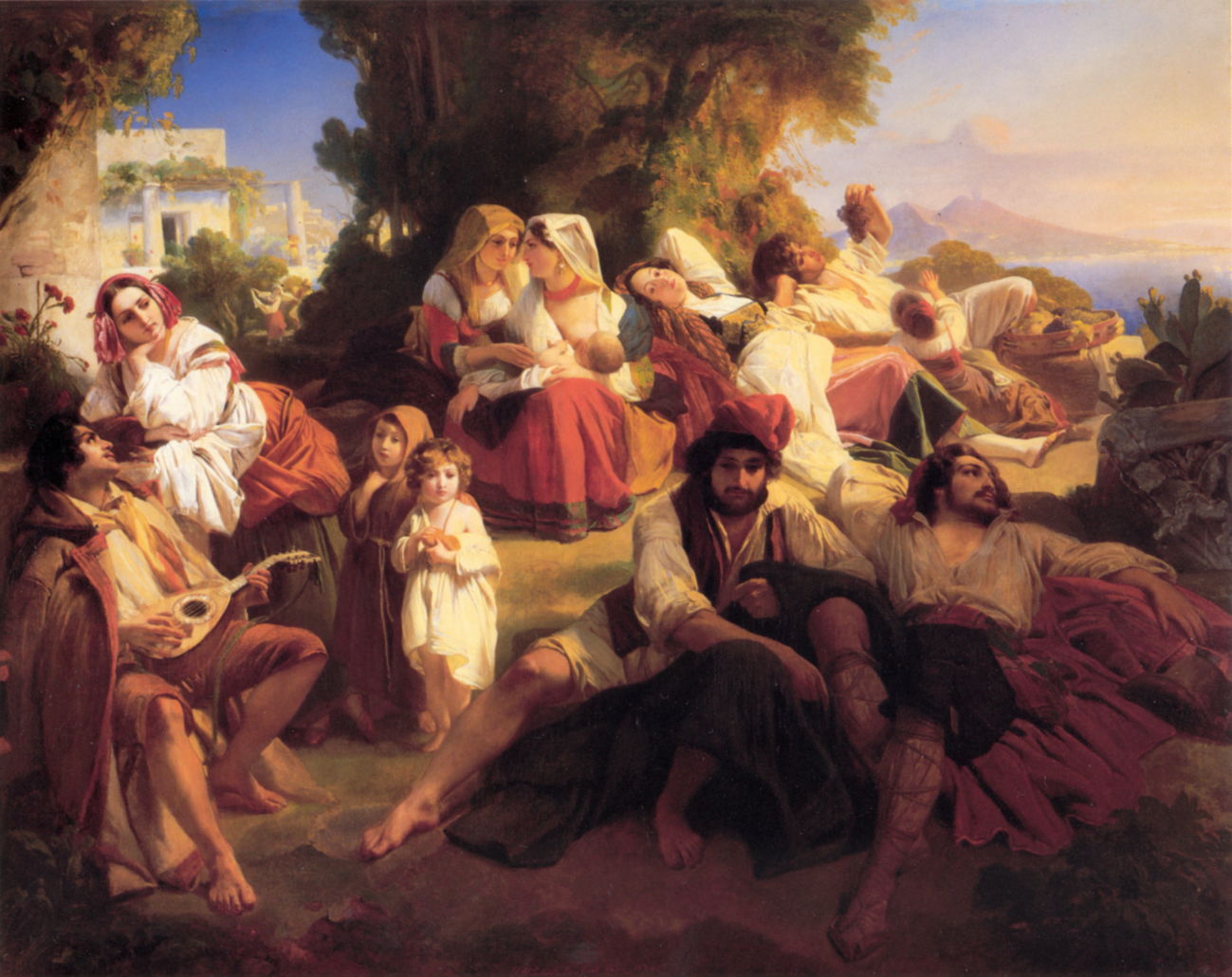
The Italian phrase dolce far niente means (literally) sweet doing nothing: it’s the very enjoyment of being idle, the indulgence of relaxation, blissful laziness. If ever there was a hallmark of a painting from the Aesthetic movement, surely it’s a canvas titled dolce far niente. This weekend, I look at paintings with that title, and a small selection of others that stand out for their blissful laziness.

Prior to 1800, there don’t appear to have been any significant (surviving) paintings with the title Dolce Far Niente, and relatively few other contenders.

winterhalterdolcefarniente Franz Xaver Winterhalter (1805–1873) Dolce Far Niente…

View original post 1,031 more words

Categories
Uncategorized

Gratitude to Old Teachers – Robert Bly – Comments

richinaword's avatarmy word in your ear

Gratitude to Old Teachers

When we stride or stroll across the frozen lake,
We place our feet where they have never been.
We walk upon the unwalked. But we are uneasy.
Who is down there but our old teachers?

Water that once could take no human weight—
We were students then— holds up our feet,
And goes on ahead of us for a mile.
Beneath us the teachers, and around us the stillness.

Robert Bly (1926 – 2021)

I did like this simple poem as Robert Bly is not always easy to fathom (excuse the pun).

The journey of life is like a walk across a frozen lake. And I remember as an eight-year-old testing a frozen pond with parts too thin to walk on. Our walk or life journey is unique, and we walk on the unwalked.

We have underneath support from others all our life. Sometimes completely…

View original post 178 more words

Categories
Uncategorized

Debussy: La Fille aux Cheveux de Lin

At Sunnyside - Where Truth and Beauty Meet's avatarAt Sunnyside - Where Truth and Beauty Meet

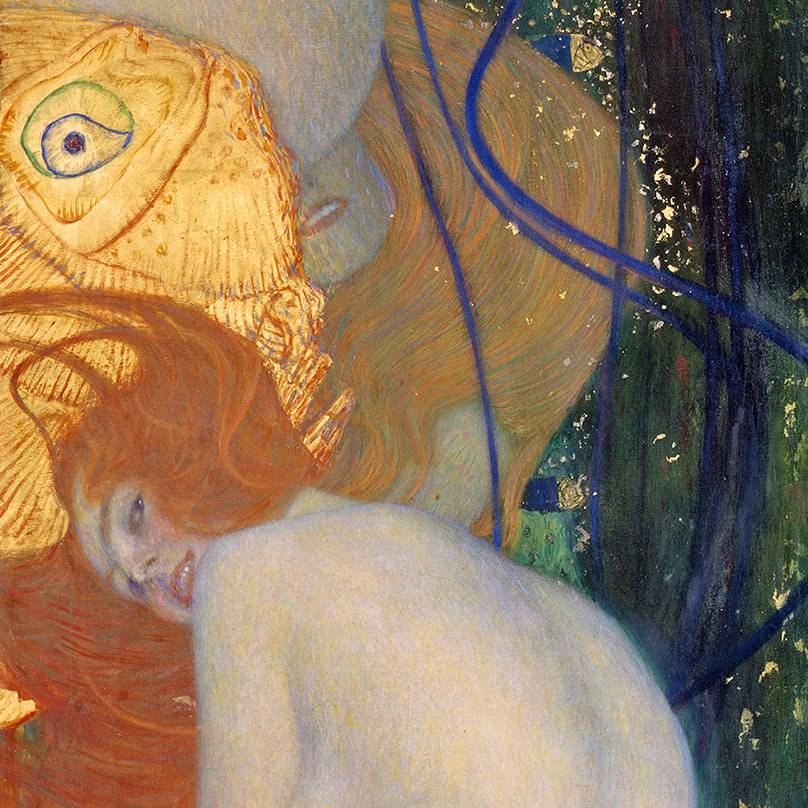
Gustav Klimt, Goldfish, (detail)

Claude Debussy Préludes, Premier Livre, L. 117: No. 8, La fille aux cheveux de lin Transcr. for Violin and Piano by A. Hartmann, Alessandro Clerici, violin , Elena Brunello, piano

Thanks for Visiting 🙂

~Sunnyside

View original post

Categories
Uncategorized

Paintings of William Shakespeare’s Plays 8: A Midsummer Night’s Dream 2

hoakley's avatarThe Eclectic Light Company

In the first of these two articles showing paintings of the first act of this play, the fairies attending Titania had just sung her to sleep, allowing Oberon to drop the herbal juice onto her eyelids, which would make her fall in love with the first creature she saw when she woke up.

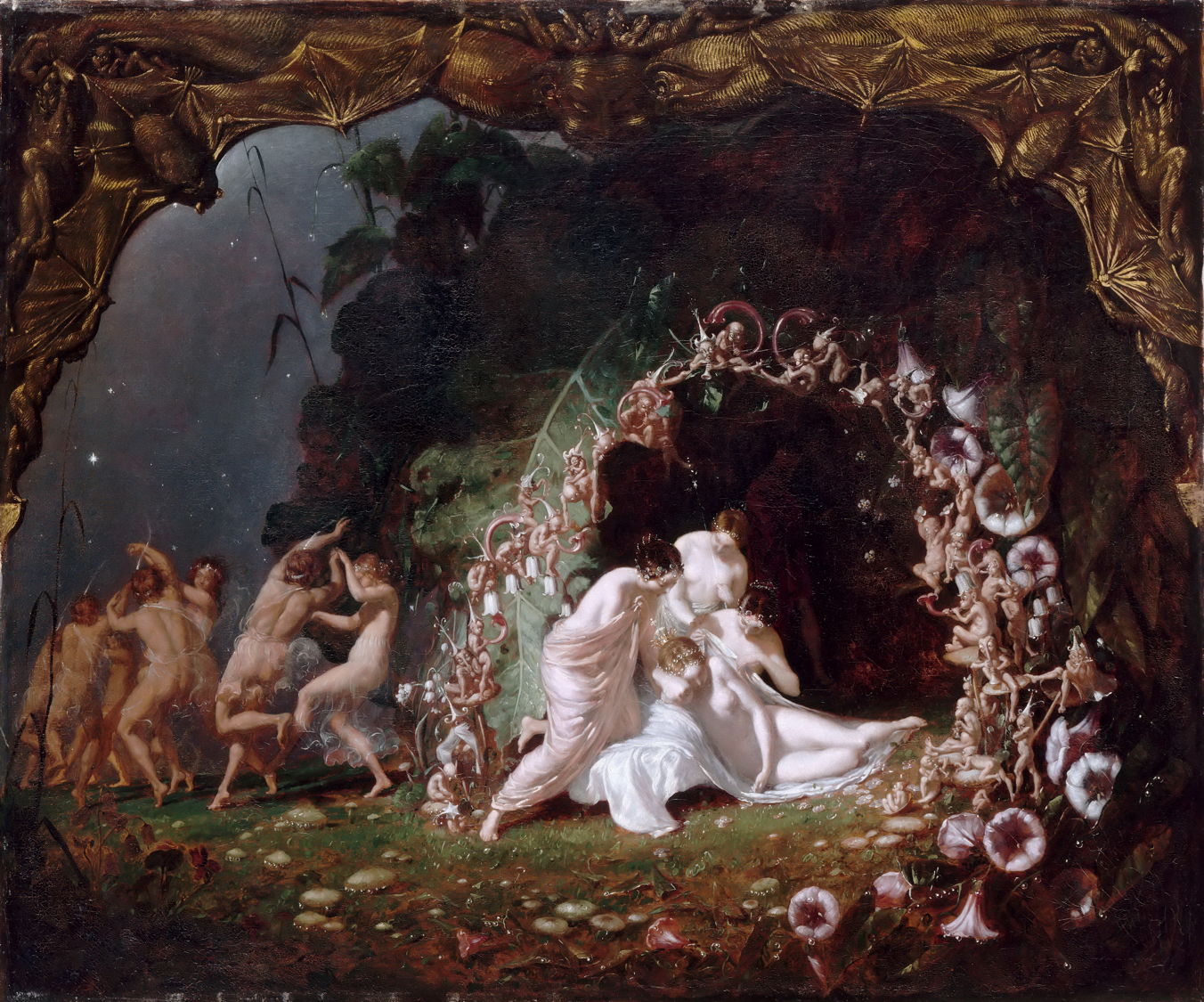
daddtitaniasleeping Richard Dadd (1817–1886), Titania Sleeping (c 1841), oil on canvas, 59.7 x 77.5 cm, Private collection. Wikimedia Commons.

Richard Dadd’s Titania Sleeping from about 1841 is another elaborate example of faery painting with its intricately detailed human-like creatures. The naked queen has just fallen asleep at the mouth of a grotto. Framing that scene are toadstools, morning glory flowers, and an arch of bats.

huskissonmidsummernight Robert Huskisson (1820-1861), The Midsummer Night’s Fairies (1847), oil on mahogany, 28.9 x 34.3 cm, The Tate Gallery (Purchased 1974), London. © The Tate Gallery and Photographic Rights © Tate (2017), CC-BY-NC-ND 3.0…

View original post 1,415 more words