Categories
Literature Penwith Poetry West Cornwall (and local history)

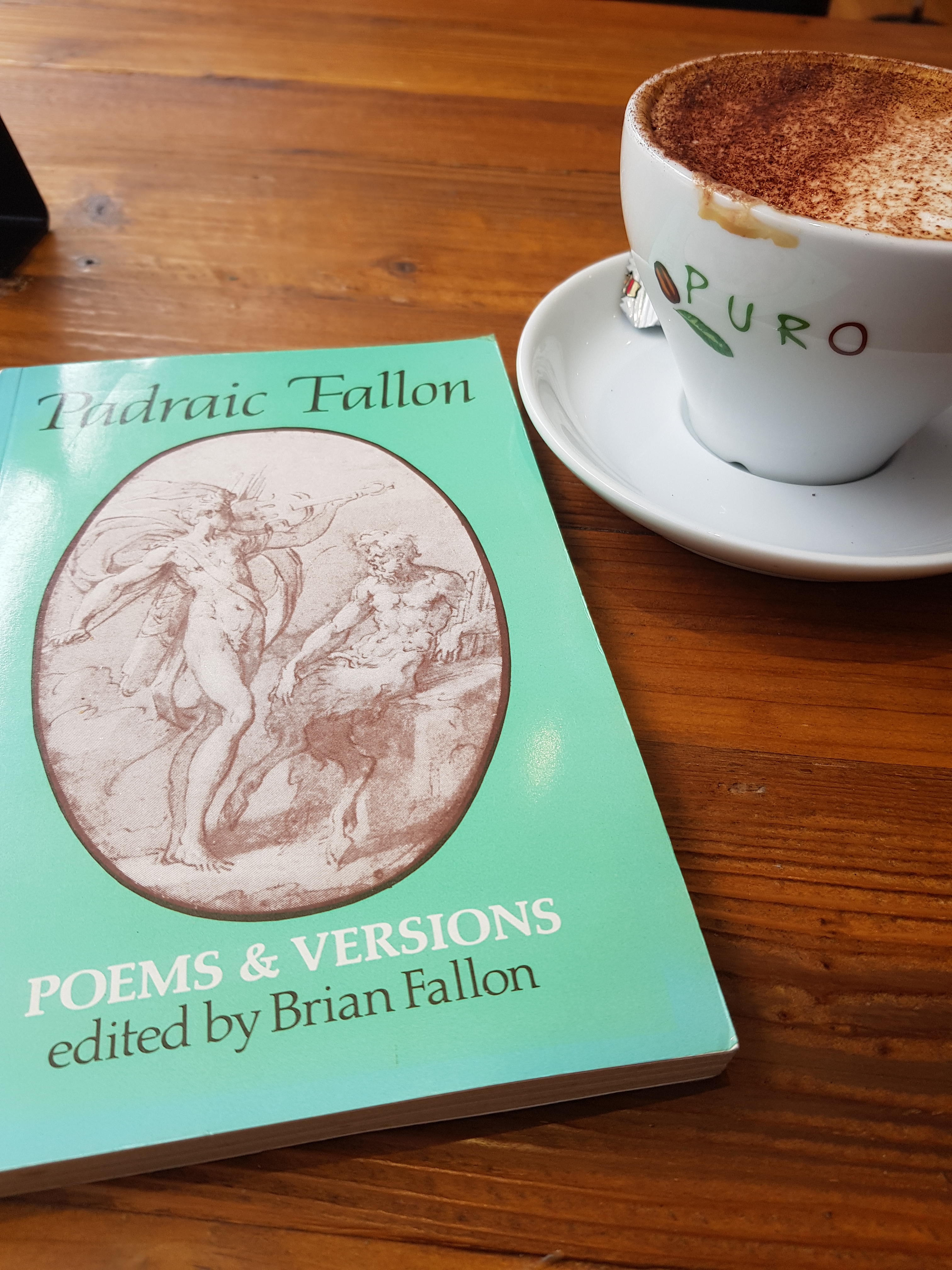
Reading Padraic Fallon

  1. Fallon (1905-1974) came from lovely County Galway and was drawn to Dublin by George Russell (AE) to take part in the Irish Literary Revival. Heaney wrote of him “His sensibility has weathered in Galway the rainy light that was familiar to both Rafferty and Yeats; it has been tutored by a landscape at once elemental and historical; a landscape that holds the walled demesne and the tower as well as the bog-face and the stone wall…”

I came across this poem entitled YESTERDAY’S MAN which contained the following lovely and intriguing stanzas:-

Lines of verse too left littering

After poems that never got away,

A pen drawing, very odd, the storm God Zu

Trusses in his fowl form to a carrying pole;

(From him the wren-walk on St Stephen’s Day)


Copied I suppose, to prove a point,

(Akkadian seal, Babylonian cylinder?) How

Much at home I am in this mad world

Suddenly and again! And here somewhere

You the girl enter


Anonymously, in two wooden stanzas, into which

You have entirely disappeared. Words, words,

That’s all you are, girl who never

Was a lover. And I likened you,

Body I could see through, to a catapult

The poem concerns itself with writing poetry and the poet looking through his notebooks and considering lost loves, regret and all in a stormy atmosphere. I like the variation between detail , here about the paraphernalia of writing and the vagueness…”here somewhere”. The latter representing ageing disorientation.

More on Fallon may be found at preview.co.uk where Seamus Heaney has written an appreciation and quotes some lines about Lands End.


Categories
Book Reviews Literature Poetry West Cornwall (and local history)

Arthur Symons- Cornish Connections

Arthur Symons biography > My poetic side

Cornish Wind

There is a wind in Cornwall that I know
From any other wind, because it smells
Of the warm honey breath of heather-bells
And of the sea’s salt; and these meet and flow
With such sweet savour in such sharpness met
That the astonished sense in ecstasy
Tastes the ripe earth and the unvintaged sea.
Wind out of Cornwall, wind, if I forget :
Not in the tunnelled Streets where scarce men breathe
The air they live by, but wherever seas
Blossom in foam, wherever merchant bees
Volubly traffic upon any heath:
If I forget, shame me! or if I find
A wind in England like my Cornish wind.
This poem by Symons is perhaps a reminder that his parents were Cornish Methodists, his father, a preacher who once was a Minister at St Ives as well as at other parishes in the Duchy. I particularly like the line about “the ripe earth and the unvintaged sea” which by contrast brings evokes Homer’s Wine Dark Sea https://en.wikipedia.org/wiki/Wine-dark_sea_(Homer). Then there is the a reference to merchant bees, perhaps because they transport pollen but then there are robust Cornish nlack bees (https://www.merchantsmanor.com/cornish-black-bees/).

There is an interesting review in the TLS of his Selected Early Poems and also his Spiritual Adventures by Kate Hext (January 12 2018) which begins with a poem which describes  the poet in sad old age at dinner. It was published by John Betjeman in 1940.


ON SEEING AN OLD POET IN THE CAFE ROYAL, by JOHN BETJEMAN


I saw him in the Café Royal,
Very old and very grand.
Modernistic shone the lamplight
There in London’s fairyland.
‘Devilled chicken. Devilled whitebait.
Devil if I understand.

‘Where is Oscar? Where is Bosie?
Have I seen that man before?
And the old one in the corner,
Is it really Wratislaw?’
Scent of Tutti-Frutti-Sen-Sen
And cheroots upon the floor.

There is a delightful exposition of Tutti Frutti Sen Sen and other commercial items in poetry by the late Clive James at https://www.poetryfoundation.org/poetrymagazine/articles/69678/product-placement-in-modern-poetry

Categories
Book Reviews Literature Penwith Poetry West Cornwall (and local history)

“Bronte Territories” by Melissa Hardie-an Appreciation

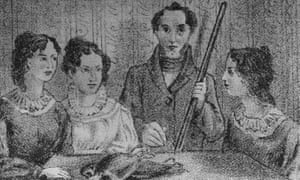
The Brontë sisters with their brother, Branwell, in a painting by him called the Gun Group Portrait.

Wandering down Chapel Street in Penzance, you cannot fail to recognise that you have entered that part of town where history feels close-by. The sea in the distance, the church and the chapel architecture is impressive, the Turk’s Head Tavern and the baroque wonder of the Egyptian House, the Portuguese consulate and almost opposite the house where George Eliot stayed waiting for calm weather for her voyage to the Scillies. Reading Melissa’s book is like taking a similar peregrination through lost corridors of time to recover a sense of the rich liveliness of Penwith’s past. Welcome to the psychogeography of Bronte’s Territories.

The Brontes are still much in the news. The Irish Times, just two weeks ago, were reporting on the O.U.P. computer analysis of Wuthering Heights apparently confirming it to be the work of Emily and not, as had been suggested, that of her brother Branwell. Iconoclasm may be in vogue. However, a square in Brussels – the city where two of the Bronte sisters studied French – is to be named in honour of the literary siblings. Other authors make claim to curious events in Shropshire in the early years of the 19th century drew the parents of genius together. It is to the intellectual and feminine furore of Penzance and its inspiring hinterland that Hardie’s work appropriately returns us.

In a key chapter on the literature and legend of Cornwall from 1760 much mention is made of the intriguing and taciturn figure of Joseph Carne, a geologist of great renown and an energetic banker. His personality was such that he combined a skill with numbers with a strong Methodist belief and mixed in a variety of literary circles. Nearby Falmouth was a key port for the Packet boats recorded in the poetry and memoirs of Byron and Southey. It too was the home of the Quaker family of Foxes who founded the Cornwall Polytechnic Society in 1832. Carne was a friend and shared their Non-Conformist beliefs. Hardie shows how Carne encouraged his daughter in her geological studies and mentions the doctors, engineers, vicars and scientists whose cultural sources were enriched by contacts which included Bretons, Huguenots, Hessians as well as a significant Jewish community. She reminds us that in reading Davy, for example, we encounter not just a socially beneficent scientist, a traveller and a poet. This is the endowment the Branwell sisters took to Haworth.

It is interesting to consider that within this Cornish background at this period there were a number of competing beliefs and attitudes. There were the mythical beliefs fostered from folklore- piskies and stories in the expiring Cornish language. There was the old religion of Rome not far beneath the surface. Yet there were also new discoveries especially in medicine and geology that fostered a scientific empiricism. This can be seen in figures such as Davies Gilbert to whom this book gives due prominence- a polymath, mathematician, engineer and President of the Royal Society and a wonderful diarist to boot. William Temple much later stated, “The Church exists primarily for the sake of those who are still outside it. It is a mistake to suppose that God is only, or even chiefly, concerned with religion.” It was the evangelical zeal of the Wesley brothers and their belief in education, temperance combined with stunningly beautiful hymns. It was also a challenge to superstition. It is often said it averted revolution which France and later Peterloo portended.

Melissa Hardie shows us the other supportive factors that came into this heady mixture and sustained the Branwells and flowered in the Bronte’s work. These are twofold; the societies and the family or kinship links. The Penzance Ladies Reading group who carefully studied together a stunning variety of literature from the classics of the Ancients to the contemporary travel writings. Not forgetting the subversive eloquence of Lord Byron, a gentleman with Cornish links through the Trevanions. The founding of libraries and collection of artefacts had practical even economic benefits. The Royal Cornwall Geological Society studies into metallic intrusions assisted the efficiency of mining. Local banks provided the capital for further developments in the industry as well as the magnificent Wesleyan Chapels that the Carnes, Branwells and Battens founded and fostered.

The author has researched both land and legacy extensively. Her approach is frequently imaginative and sometimes speculative. This is a strength because she is also at pains to inform the reader of the limitations of the evidence. Footnotes and suggested reading in themselves are useful but the illustrations are worthy of pondering- several works of art in themselves. They add significant detail. This patient work by Melissa supported by other members of the resplendent Hypatia Trust must be counted as filling a deep fissure, or as we might say in Cornwall, a zawn in Bronte Studies.

See also from the Guardian –

https://www.theguardian.com/books/2019/jun/29/bronte-grandfather-smuggling-past-financed-books-charlotte-emily-anne


Categories
Penwith St Ives West Cornwall (and local history)

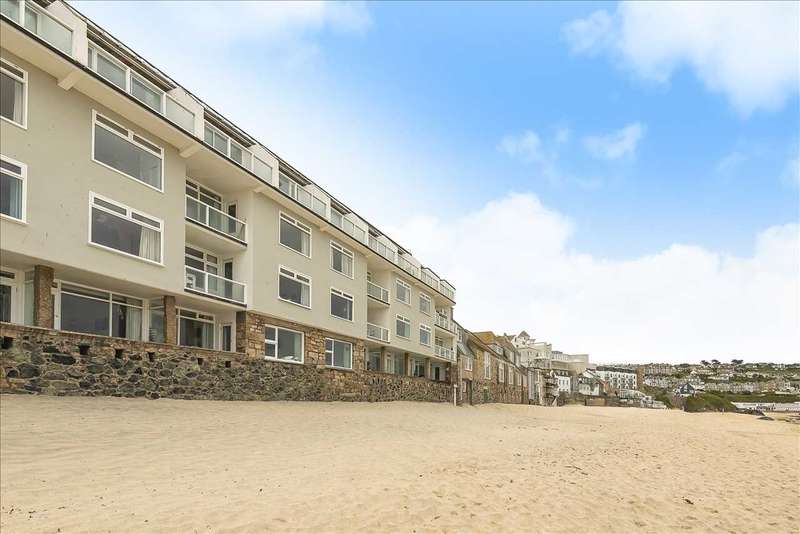
A house in Downalong in St Ives

Bethesda Hill toward Porthminster, St. Ives

Bethesda Hill

(The Pool of Bethesda was a pool in Jerusalem known from the New Testament story of Jesus miraculously healing a paralysed man, from the fifth chapter of the Gospel of John, where it is described as being near the Sheep Gate, surrounded by five covered colonnades or porticoes.)

This cobbled hill leads down to the harbour and affords a view of the pier and the more recent lighthouse at the end. These are fisherman’s cottages essentially, and there was a sail loft- now Bradbury’s architects with a small raised forecourt from which artists would frequently paint the attractive view. Fore-sand is just at the bottom of the Hill and very popular with tourists. Just to the right of the exit at the bottom was an area often occupied by a horse and cart selling vegetables. Yet another horse and cart was used for unloading the catch of fish directly from the punts- very useful in this tidal harbour. The horse had no problem in a depth of water of the order of a metre. The catch was weighed at the platform in front of the Sloop- an area now completely occupied by the customers. The small weigh-house is still there; now entirely unknown except to a small number of locals.

The house itself backed onto a concrete lined fish cellar, into part of which, coal was delivered by Bennetts merchants and sold by the hundred weight. Its price, a constant source of worry for my parents. As far as I can recall, the house was purchased from my Uncle around about 1953 though I had slept there before whilst my Mother had to go suddenly into West Cornwall for an appendix operation. I think she was in hospital for some two weeks or so and probably operated upon by Mr White, the esteemed surgeon who perfected his skills in the Western Desert.

The coal cellar under the house occupied much of my time in childhood. It had my father’s tool kit – he had worked as a plumber and an aircraft fitter during the war. The was a steel ARP helmet and a washday mangle which became my “spaceship”, but I had been well drilled in health and safety. The lighting and ventilation were poor. I should perhaps explain that when my parents moved in, there was no bath and no hot water. Mr Brian Stevens, now a distinguished St Ives historian assisted in the building of a kitchen and bathroom at the rear of the property. My father installed a boiler system behind one of the coal fires and this was supplemented by a cylinder with an immersion heater. This rapidly used up 2-shilling pieces in the coin slot meter. Every time this ran out, my Mother would ask, “Where was Moses when the lights went out?”

It is perhaps worth mentioning that the walls between houses were very thin. We could easily hear, each Sunday evening our neighbour’s son playing Elvis whilst his parents were at Chapel. The small house was overfilled with visitors for many years and sometimes we all had to sleep downstairs. This was the era of Bed and Breakfast when everywhere was packed during for instance, Swindon week when railway workers had free transport to St Ives.

The Hill had two or three interesting features. There was a small meeting house tucked away in a small courtyard which was said to be used by a small Jewish community. There was at the top of the Hill on the way to the Island several larger guest houses and a shop where I was frequently sent where saffron cake was cooked each week and sold, there was often a long ash on the cigarette of the gentleman stirring the mixture and I often wondered if it fell in with the other ingredients. Cheese was sliced through by a wire and quarter a pound of sweets served into small paper bags from large tin boxes which had glass lids. On the doorstep milk was delivered in glass bottles and potato skins collected from a bin regularly by the “pig-man” in return at Christmas we sometimes received a pork joint. Ray (Skate) wings were often hung up for a day or two -said to improve its taste but also attractive to flies.

Monday was wash-day and sheets would sometimes be taken to the Island to dry. At this time there were some difficulties as fisherman used much the same space for drying freshly tarred nets!! The fisherman’s loft above Porthgwidden Beach -close to where Sven Berlin once worked was where the netting was stored. During the war, camouflage nets were made here and in the early 60s there grew a cottage industry in making up Brussel sprout bags with thick cord drawstrings. I remember helping my Mum a little by carrying rolls of 100 nets for which she was paid just a penny, I think. I would also load up bone needles- cut by my Father’s fret-working skills from ribs-with string. I could do a number of these quite quickly. The string was bound the thick cord around the net which was suspended from a cup-hook at a convenient height in the wooden door frame.

We left left the house which then still had round pin 15 Amp plugs in 2002. It is now, I think, an Air B’n’b cottage and house prices are currently above a third of a million.


Categories
Poetry West Cornwall (and local history)

Lockdown Lamentations

In the untidy mess of the kitchen,

I find two yellow cards

marked for coffees taken

at the Honeypot; one card

just needs one more stamp.


Coffee shops closed- no pots

of honey for thee or me

when the clock stands at four or three.

Conversations suspended, friendships upended-

and no pots of honey for the bear.


In the distance outside a noisy crow jars

its tuneless note, insistent from its throat.

In search of lost time and Madeline to dip

lost feeling between cup and lip

and just Nescafe to sit and sip.


Suspended- no connection and no connection

just the feeling of trouble

brewing.

With grateful thanks to https://www.facebook.com/thehoneypotpz


Categories
Literature Penwith Poetry St Ives West Cornwall (and local history)

West Penwith by Adrian Stokes

This poem interests me and looks fairly simple – let us  consider one or two lines and see if we can explore some more deeply. Indeed, this is a poem about surfaces and depth with a number of words that suggest rest- abolish pace, slow, apart and torpor. There is too a general feeling for sculpture as is expressed in his remarks about stone and it’s weathering or erosion by water. Details about Stokes may be found at his Wikipedia entry where it states about his early writing;” In The Quattro Cento he characterized the intense Early Renaissance feeling for material and space as ‘mass-effect’ and ‘stone-blossom’. The stone—deeply respected as a medium – is, he said, ‘carved to flower’ thereby bringing to the surface the fantasies the artist reads in its depths.” Let us continue to dig beneath the surface of these lines.

There seems to be a general feeling of relief perhaps reflecting Stokes returning to Cornwall. The lines about outhouses and stone retrace unmeagre time seems somewhat demanding. Does this mean that such structures seem and suggest aeons of time? Meagre is a synonym for sparse. So this may mean that the scene implies the extensive nature of time. As Stokes studied philosophy, then it is quite possible that some sort of Bergsonian concept of time.{See https://www.bbc.co.uk/programmes/m0004s9w }

In the next line herd is somewhat unusual- maybe the light from the shining mica in the granite is being collected by the eye. It also is a homophone for heard which brings a whimsical feeling of  synaesthesia together with the metal clang of time colliding with rhyme. In the next stanza there is hoard and heart which may be associated with the unusual word hurd, the coarse parts of flax or hemp that adhere to the fiber after it is separated. — called also hards. This sounds very much like the Golden Fleece and adds to the reference to the early Cornish tinners. A milksop is a person who is indecisive and lacks courage. Milksop can be a piece of bread dipped in milk. The flower might mean a milkwort  or just a general term for any flower in a field which may have cows in it!

Cow Dairy Happy Stock Photos - Download 2,051 Royalty Free Photos

The word also brings to mind that Stokes was deeply interested in psychoanalysis and was in fact an analysand of Melanie Klein whose work focused around infantile phantasy at the breast. He was also a friend of Barbara Hepworth whom he brought to St Ives where he lived near The Cornish Arms pub with his wife Margaret Mellis, The feelings of support, skin texture and associated tactile imagery come out in the second section where closeness is increased by the use of our. This underlying emotion of support and nursing passivity brings to an end this interesting poem.

The background about Adrian Stokes and his leading contribution to modernism in St Ives may be found at https://www.stivesart.info/lyrical-light/

A useful discussion on Margaret Mellis is at http://www.artcornwall.org/interviews/Margaret_mellis.htm

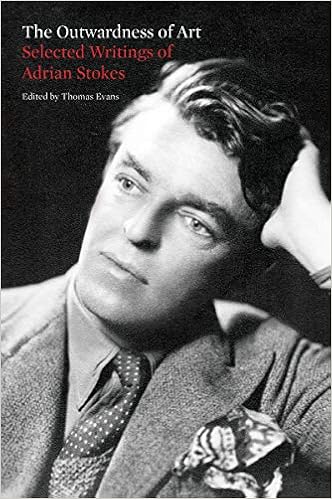
The Outwardness of Art: Selected Writings of Adrian Stokes: Amazon ...


Categories
Poetry West Cornwall (and local history)

Heading Home Loaded

“Small Boy”, the Headmaster shouts and points

as the sixth-formers snigger on the balcony above.

The lad in question trembles a little in the assembly beneath.


Another small boy before me into the green space.

“Sorry” he says as he cuts swiftly before me through the entrance.


He is heavily laden with a quart milk

bottle grasped under his desperate arm.

His earnest apology surprises and charms me.


He is in a hurry and speedily treads across

the muddy field.

A little lad with a worried hurried pace

or so it appears to me.


He seems keen to assuage some overbearing

parent figure.

I imagine some awful row between his mum and dad-

all he can do perhaps is help fetch the distant provisions.


As I watch his rapid progress in the cold and wet morning,

I sense his small act of restitution will be insufficient.

The parents will not be speaking hours into the afternoon

and my eyes tearfully respond at this thought.


Categories
Poetry West Cornwall (and local history)

Advent in Causewayhead, Penzance

Bacon sandwich by special arrangement delivered!

A woman sits in the open boot of her car

across the way smoking.

In this cafe gunstig the garlanded kugeln are enormous in

subdued shades of green, transparent red with

broad, unsubtle white-stripes.


During the day, the unlit Christmas street decorations

make a telegraph exchange of wires.

People come and go moving swiftly in the busy street;

it is cold.

Everyone has survived the stormy, windy night,

looking somewhat self-congratulatory.


The board outside reads:-

“Two slices of toast with jam

and filtered coffee, two pounds fifty.”

Good Cornish value. Over opposite

on the dark green facade and neon-lit Subway

window daubed with large white snowflakes.

Further up in the carpet shop blue lights flicker reassuringly.

Pigeons gobble contentedly from windowsills above.

Categories
Art and Photographic History Art Exhibition Reviews Penwith St Ives West Cornwall (and local history)

Harry Ousey-Neglected Colourist amongst the St Ives Artists


Very recently I attended an intriguing talk by Sue Astles, Ousey’s neice about this little known Northern  Artist. I found myself wondering just how such a brilliant colourist could seemingly be rather overlooked. Further information and background can be found at

https://www.lancashirelife.co.uk/out-about/harry-ousey-exhibition-at-the-salford-museum-and-art-gallery-1-4082392

and at https://en.wikipedia.org/wiki/Harry_Ousey

There are two possible factors which one might surmise for this aberration. Firstly, it seems that his interest in experimenting in so many various styles may have mitigated his being recognised for any definite style. His restless interest in both conventional and abstract work is not difficult to recognise. There is a certain interest in certain themes such as stone wall construction and the sea horizon. Certain influences seem to be lurking in the background from Miro, Dufy and perhaps Rothko. However, the multiplicity of his painting styles, doubtless including original work, could have inhibited proper recognition.

Such recognition might have been easier if he had access to gallery display. My second point is that I surmise that the influence of more recognised and prominent figures in the St Ives nexus made this difficult. Artists like Denis Mitchell and Terry Frost would have understood this. There was a social class barrier to surmount and I am fairly sure this is a pressure that a less wealthy northern painter would have encountered this even in the more enlightened postwar period. A glass ceiling even amongst progressives and bohemians!

Image result for harry ousey artist

Image result for harry ousey artist

Ousey’s later interest in environmental compositions reminded me also of the not dissimilar work of Margaret Mellis. (Not to be confused on grounds of alliteration with the abstract Penwith artist Marlow Moss!)


Categories
Art and Photographic History Penwith St Ives West Cornwall (and local history)

St Ives in the 1950s as portrayed by Hyman Segal

This uniquely illustrated pamphlet of around 20 pages offers a brilliant summary of life in St Ives just after the War. The town’s Silver Age it might be termed. This fascinating time period is manifest in the vivid sketches by the well-known St Ives artist, Hyman Segal. https://cornwallartists.org/cornwall-artists/hyman-segal   

Segal is probably best remembered for his African paintings as well as for his skill in portraying cats with sweeping economical lines. A Daily Mirror photographic  frontispiece shows him, an Art Therapist at West Cornwall Hospital, helping the recovery of a young lad at Tehidy Sanatorium in Camborne. This classic photograph by Bela Zola indicates the pride in the newly created NHS.{Zola was a leading photographer who recorded later the Aberfan Disaster and the profumo Affair among other renowned assignments.) https://www.worldpressphoto.org/collection/photo/1956/28663/1/1956-Bela-Zola-GN1-(1)

The first sketch in the pamphlet is of our celebrated Town Crier, Abraham Curnow -here just 54 years old. This is accompanied by a sketch of his Father-in-Law, Ernest James Stevens, popularly known as “Jimmy Limpets”. This drawing with others by Segal now hangs in the Sloop Inn.

On the following page is an image of Thomas Tonkin Prynne who had been the manager of Lanham’s picture framing business which in previous years  supplied the Royal Academy and other galleries with canvases by inter alia , Julius Olsen, Louis Grier and Moffat Linder. In addition to running an efficient business, he worked for 16 years as a member of the volunteer fire brigade, had a blue Persian cat and loved fishing.


There is also a magnificent sketch of Alistair St Clair Harrison, like Churchill, an old Harovian who had been a fighter pilot during the Second World War. It was Harrison who broadcst for the BBC about the rescue of HMS Wave in September 1952 and also about his interest in Antartic whaling. It was with his Norwegian wife that he established “The Gay Viking”;almost as famous for its colourful clientele as its innovative continental cuisine. ( Gay Viking was incidentally one of eight vessels that were ordered by the Turkish Navy, but were requisitioned by the Royal Navy to serve with Coastal Forces during the Second World War)

Alistair St Clair Harrison by Hyman Segal

Frank Edward Endell Mitchell, appropriately portrayed with bow-tie, fashionable in the 1950s, was known as “Micheal” and was the tenant of the Castle Inn. His friendship with Dylan Thomas must have been firmly established in the bohemian atmosphere of the bar there, then opposite Lanham’s and the Scala Cinema (presently Boots). Mitchell who was the brother, I believe of the eminent sculptor, Denis Mitchell, offered the Castle lounge for the display of art works and in his spare time, he himself did pastels and was occupied in breeding Boxer dogs.

The donation of this little pamphlet to the Morrab Archive offers members the opportunity to recreate for themselves the ambience of the Fifties through “The Familiar Faces of  St Ives”.