I love it when a book that’s on my wishlist waves at me from the new books shelves at the library! There it was, News from Berlin which Grant at 1st Reading had so enticingly reviewed, so of course I brought it home. And read it straight away because it’s only just over 200 pages long and I couldn’t put it down.
Otto de Kat is the pen name of Dutch author, publisher, critic and poet Jan Geurt Gaarlandt. The book jacket tells me that his award-winning novels have been widely published throughout Europe and Man on the Move (2009) was the winner of Holland’s Halewijn Literature Prize. News from Berlin is translated by Ina Rilke who also translated two books by noted Dutch author Hella Haase that I have read, so I knew the translation would be good.
And it is. The translation is excellent. News from Berlin is…
Loss is waiting everywhere,
Because I’ve felt the shape it makes
I try to lose it in the crowd,
Taking shortcuts down alleyways,
Wearing black and changing my hair.
I relish the rain because it covers everything,
Only stopping to linger in a stranger’s stare,
I try to keep all my pages blank, then perhaps
Loss will not know that I’m still there.
Leave –a sonnet
Another coast, some late hour, my feet bare.
Someone loved this place,
there are colours everywhere.
I am drifting in a shipwrecked bed,
an exposed room, a worn wooden floor.
The light fell in, still and unbroken, a silent day,
except for the footsteps, that stopped at the door,
now turning, now walking quietly away.
Once my body knew a rough song,
the sound of our staggered breaths.
Since I sighed a hundred little deaths,
rootless, I went the way of the birds.
Empty places I have known, what could’ve been,
once wound tight, an unravelling dream.
The first flight over Penzance was a short affair lasting just 3 minutes at a height of 200 feet. This was achieved in a rather fragile biplane called a Farman with a propeller in the rear. This was around 6.00 p.m. on Saturday July 23rd, 1910. The pilot was the renowned Claude Grahame-White whose purpose was to fly over the three fleets assembled in the bay where they were expected to be informally reviewed by the recently crowned King George V. Poor weather had delayed the flight and high winds curtailed this first effort.
Grahame-White’s second flight from Marazion at 9.00p.m. that same evening was more impressive. It lasted some 15 minutes over the now illuminated fleet. Among the 200 ships present he was able to identify the flagship of the Home fleet, The Dreadnought, and the Admiralty yacht, The Enchantress. It had been his intention to show the vulnerability of the Navy to aerial attack. He had been supported in this endeavour by the photographer of The Daily Mirror, Vaughan T Paul. Grahame-White had learnt to fly at Reims under Bleriot who was the first to cross the Channel, the previous year in 1909. The next month Grahame-White flew his Farnham biplane over Washington landing close to the White House.
Despite the attention which it attracted this was not the first heavier than air flight to take place in the Duchy. Jack Humphries, a Dental Surgeon from Fowey had observed bird flight and made at least two flights with gliders from nearby cliffs. In 1912, the French aviator Henri Salmet, with the financial support of Lord Northcliffe arrived with his Bleriot machine on the 14th of June in Falmouth. He had intended to fly over Lands End, however the headwinds proved too strong for the monoplane.
On 24th September 1913, the Hamburg born Gustav Hamel, just 24 years old, arrived at Trengwainton from whence he flew his Bleriot monoplane over Penzance where he could be seen clearly from the Market Place, Market Jew Street and then to Newlyn Coombe and on to St Ives and was greeted by a large crowd upon his return. After meeting Lord and Lady St Leven and the local M.P., Mr T. Bedford Bolitho who examined his aircraft. The energetic Hamel flew off once more at 5.30 and returned having fulfilled his ambition of being the first aviator to have flown over Lands End.
Hamel and Grahame-White collaborated in the development of Hendon airfield which became a flying school, a site for aircraft manufacture and later taken over by the R.A.F. and is now its museum. Ballooning at Hendon had taken place as early as 1862. Airship bases were built in Cornwall during 1915 and 1916. For example, the Royal Naval Air Station Mullion was developed on a 320-acre site near the village of Cury and the first airship transported here by train. This Lizard Airship Station was later to contain a hydrogen producing plant and a small Marconi transmitter. Its situation was ideal for attacking U-boats in accordance with the intentions of the First Sea Lord, Lord Fisher.
Way back around 1960 I went to a course at Oxford at Ruskin College- a conference where I learnt about the flexibility of the labour force; that many people would have to take many jobs in a lifetime. I went on to teach Physics for some 37 years. I went on for a further week in Cambridge where in Heffers I discovered a fascinating book about the life and work of Albert Einstein. (I had previously read snippets from his own “The World as I see it” borrowed from the library of the local Methodist minister.) I recall the book as being full of photographs and diagrams which gave me some insight into aspects of General Relativity.A short seach has revealed this to be Albert Einstein, The Man and his theories by Hilaire Cluny This
ground has been covered on the brilliant DVD, Einstein and Eddington published by the BBC with Andy Serkis and David Tennant taking the leading parts.
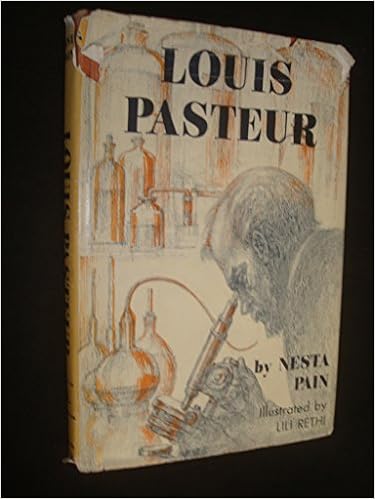
Reflecting on this I think that my biographical interest in Science was much influenced by the television series on Louis Pasteur by the brilliant writer/director Nesta Pain. The importance of consistent and painstaking research in the laboratory seemed to be one theme I would have been wise to have retained from this brilliant series which I must have seen around 1958.
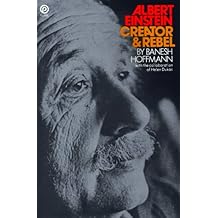
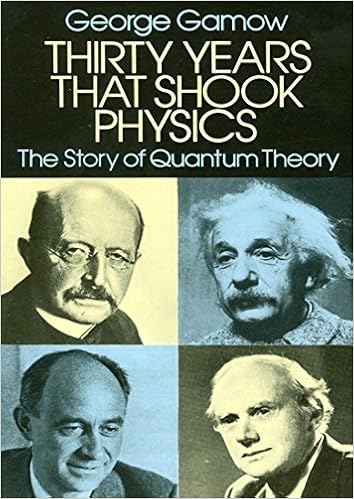
Two excellent biographers are George Gamow and Banesh Hoffmann. The latter’s biography of Albert Einstein-Creator and Rebel was written with the assistance of Helen Dukas who was Einstein’s secretary from 1928 and one of his literary trustees.
George Gamow was born in Odessa in 1904 and worked with Neils Bohr in Copenhagen and with Ernest Rutherford at the Cavendish Laboratory. His expositions are very clear and Thirty Years that Shook Physics covers the development of the Quantum Theory with chapters on the following:- Planck, Bohr, Pauli, De Broglie, Heisenburg, Dirac and Fermi. It closes with an exposition on Yukawa and Mesons.
These books may now be considered somewhat dated but they remain clear on the state of Physics up to around 1950. One physicist who always stands out as particularly exciting for both his work and unconventional personality is Richard Feynman. I can still recall his safe cracking amusements which are so well described in Brighter than a Thousand Suns on the Manhatten Project.
There are many books on Feynman including an engaging comic book but the classic biography is Genius, Richard Feynman and modern physics by James Gleick.
Finally, I would like to commend this recent historical account-
Faust In Copenhagen: A Struggle for the Soul of Physics and the Birth of the Nuclearby Gino Segrè
I haven’t posted much in the last month what with being busy at work, the World Cup occupying much of my time and the warm summer weather not being favourable for sitting at a computer screen. So blogging has taken a bit of a back-seat, but I have been reading quite a bit. One of the books I read recently was Frederick Brown’s book on the belle epoque era in French history, For the Soul of France, which has the subtitle Culture Wars in the Age of Dreyfus. That book covers significant events such as the rise and fall of General Boulanger, the crash of the Union Générale, the Panama Scandal and of course the Dreyfus Affair as well as others. The Dreyfus Affair becomes more fascinating the more I read of it and Brown’s book was especially useful as it helped put the events into context. I…
Perusing the London Illustrated News from early 1933, is to immerse oneself in a world which seems remote from our own yet the events shape our modern attitudes. The Empire appears secure with photographs of Imperial India, the Viceroy and his family surrounded by flunkies. Trouble is afoot in Moscow where staff from the British Embassy have been arrested and there are sketches of the process of interrogation where the accused stands and the commissar slouches at his desk. There are photographs of new pontoons in Venice, new aircraft -flying boats with generous accommodation and strange giro-copters whose instability proves as unsurprising as their appearance. Compared with the same publication twenty years before there are regular pages on the “kinema” and engravings are no longer to be seen. Platinum blondes are much in vogue as the photographs of beauty queens clearly portray and the permanent wave has arrived everywhere. The photographs of the rise of the Nazis and their integration with members of the German ruling class made more and more obvious. Marches stream through Potsdam and already in New York 20 000 people assemble and crowd in a square to protest at the persecution of Jews. Street signs are being changed near the Tiergarten in Berlin to celebrate the German “victory” at Jutland.
The desperate state of the unemployed and the slum conditions in South London are a constant theme. A conference on the world depression is held with representatives from 66 countries is held in London at the Geology museum then in Jermyn Street- https://en.wikipedia.org/wiki/London_Economic_Conference. It will be torpedoed by the American President-the dispute relates to the exchange rates between the dollar and other currencies. This all bespeaks a world portrayed by the artist George Grosz whose sketchbooks can be seen at the V and A just across from the Natural History Museum, where the Geological museum now resides. However, the Illustrated News had its own artists and illustrators who like Grosz captured the atmosphere of the times.
Prominent on these pages is the work of Steven Spurrier RA (13 July 1878 – 11 March 1961) whose work may be glimpsed at the Tate. He was educated at Heatherley’s, an independent Art School off Baker Street which specialised in portraiture. https://en.wikipedia.org/wiki/Heatherley_School_of_Fine_Art
The next artist whose work proliferates on the pages in 1933 was a brilliant caricaturist and lithographer whoc came from the Channel Isles. He has been called the English Daumier and at the age of 19 was employed by the Daily Chronicle – this was Edmund Blampied (30 March 1886 – 26 August 1966). Blampied was particularly fine at depicting the social conditions at this period of poverty and dire exigence. https://en.wikipedia.org/wiki/Edmund_Blampied Ink and sepia wash being particularly suited to this subject. There is an interesting interview with Blampied at https://www.theislandwiki.org/index.php/Edmund_Blampied_-_an_interview
The third artist who worked for the London Illustrated News and made sketches at the London Economic Conference was Werner Knoth(1895-1981) who was a trained businessman and a draftsman, at first self-taught, then studied from 1934 to 1938 in Paris. He was an art dealer in Spain, later a press artist in Hamburg and exhibition organizer. During the Second World War he was taken prisoner of war; his works were destroyed in the bombing. Returning to Hamburg, he drew portraits, theatre and opera sketches. A German citizen employed by the Illustrated News in 1933 and educated at https://de.wikipedia.org/wiki/Hochschule_f%C3%BCr_bildende_K%C3%BCnste_Hamburg
The portrait on the right is of Ulrich Erfurth (1910–1986) who was a German film director.
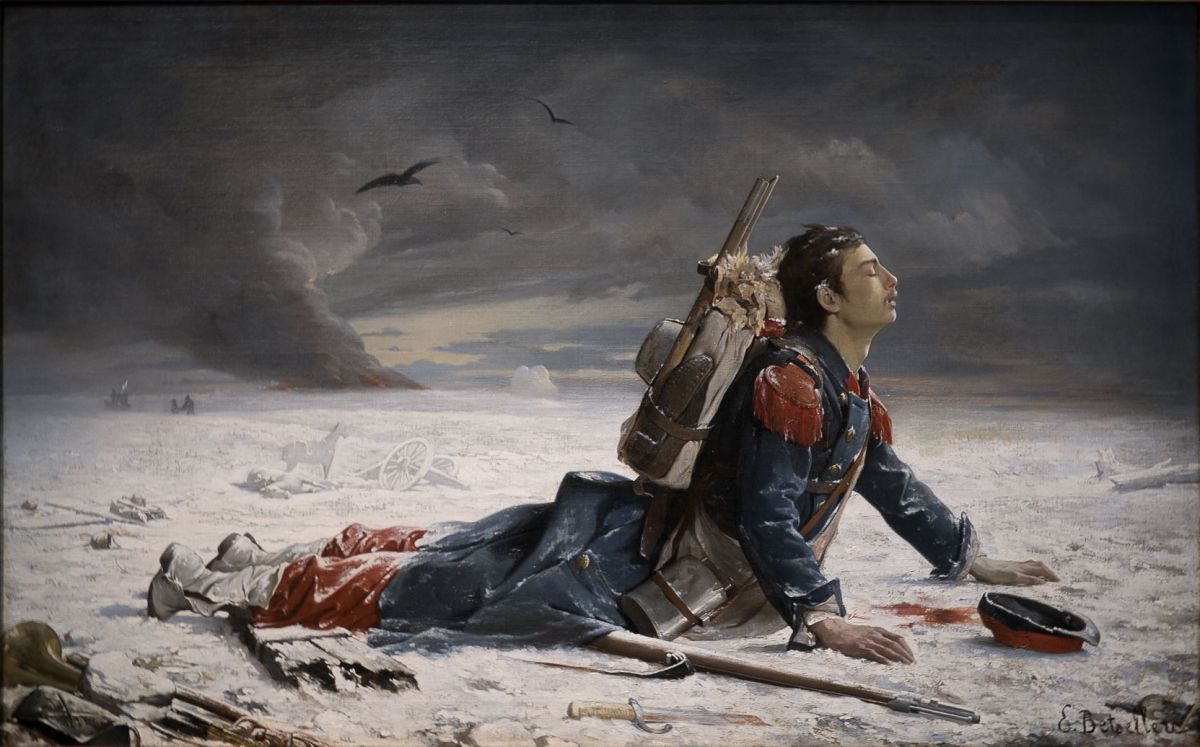
Painting in Europe during the latter half of the nineteenth century was centred on Paris. A lot happened in other countries too – the Pre-Raphaelites for one – but the major movements of the time all came together in the capital city of France. Yet in the middle of this, from 1870-71, there was a major war in northern France between two of the great empires of the day, France and Prussia. Paris was put under siege, fell to Prussian occupation, and was then torn apart by the Commune.
These events had great impact on art and artists at the time. Some fled for safe places: several went to London, which exposed them to important influences such as the paintings of Turner and Constable, who were formative to the Impressionists. Some died during that war, and promising and very influential careers were terminated abruptly. Many stayed, and witnessed the horrors…
Amtsrat Igler kommt nach Haus,
So wie er’s immer tut:
Mit unbändiger Wut,
Sein Chef, man sollt ihm eine langen,
Ist wieder vor 12 Uhr gegangen!
Sein dicker Kopf, der ist ganz rot,
Die kleinen Augen voller Schrot
Und Frau und Kinder, Katz und Maus,
Die baden nun den Ärger aus,
Er kann kaum reden, kann kaum schnaufen,
Das Wochenende ist gelaufen.
Jeden Freitag ist das so,
Kein Chef mehr im Büro,
Er fühlt sich ausgenutzt –
Ein Glück, dass abends Western kommen,
Im Sessel hat er Platz genommen,
Denn wie James Stewart und John Wayne
Für Sauberkeit und Ordnung stehn,
Gehört der Schlendrian gestutzt,
Dafür er auch die Brille putzt,
Ihn darf, wenn’s losgeht, niemand stören,
Er will die Helden sehen, hören.
Cowboystiefel hat er schon,
Jetzt fehlt nur noch der Hut,
Ein Sheriffstern wär gut,
Dann könnt er die Banditen stellen
In bleigeschwängerten Duellen! Im…
Looking out of my bedroom window at the Bryn Tyrch hotel I had a good view of Moel Siabob, the highest peak in the Moelwynion mountain range. It’s a shapely mountain that stands on it’s own, 2860 feet high, to the south of the A5. It was my destination on the second day of my break in Snowdonia.
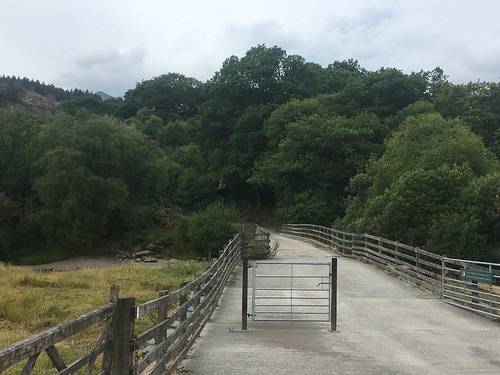
I set out from the hotel with a packed lunch in my rucsack fairly early as I wanted to be back in good time to get ready to eat and then watch England play Croatia in the World Cup Semi Final that evening. After a walk down a short stretch of the A5 I crossed the road near the Moel Siabod café and followed the path along the river through the forest.
At Pont Cyfyng I joined a very steep tarmacked road signposted for Moel Siabob. It was hard work for a…

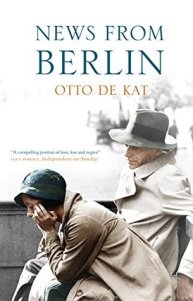 I love it when a book that’s on my wishlist waves at me from the new books shelves at the library! There it was, News from Berlin which Grant at 1st Reading had so enticingly reviewed, so of course I brought it home. And read it straight away because it’s only just over 200 pages long and I couldn’t put it down.



![Einstein And Eddington [DVD] [2008]](https://images-na.ssl-images-amazon.com/images/I/51NETdwGTgL._SY445_.jpg)





 penwithlit