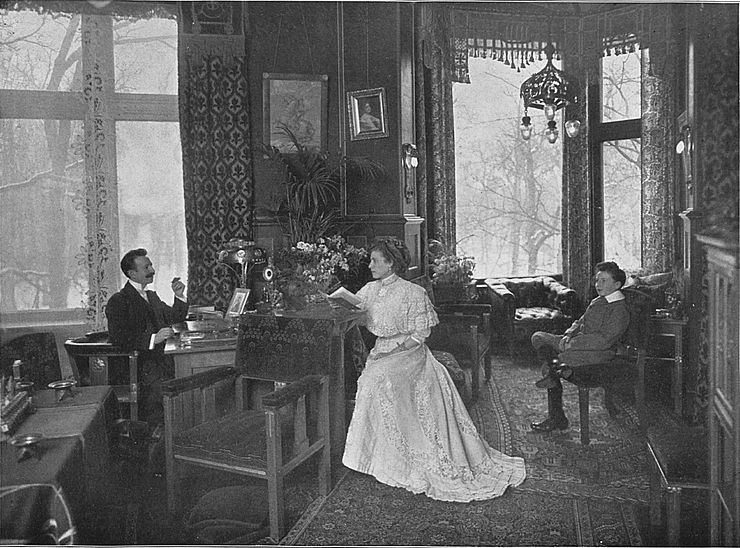
Cast: Keira Knightley, Viggo Mortensen, Michael Fassbender, Vincent Cassel, Sarah Gadon
A movie examining the intellectual and professional battle between Carl Jung (Fassbender) and Sigmund Freud (Mortensen) may not be the most obvious choice for David Cronenberg to direct, but there’s long been a psycho-sexual element to his movies that fits in quite easily with Jung and Freud’s combative attitudes about notions of sexual repression (though even they may have balked at some of the ideas Cronenberg came up with during his Seventies output). What emerges though is a movie that concentrates as much on the machinations of the mind as it does on the pleasures of the flesh.
The movie opens in 1902, with the arrival of Sabina Spielrein (Knightley) at the Burghölzli, a psychiatric hospital in Zurich. Sabina displays extreme manic behaviour and contorts her body into uncomfortable positions as an expression of…
Two weeks ago we spent a rainy weekend exploring some of the passages in the Grands Boulevards area of the city. I find that Grands Boulevards can be a bit overwhelming with loads of touristy shops and restaurants, but once you enter into the passages the crowds fall away and you’re in a different world. I think that they’re a great bit of ‘hidden Paris’ and I love the antique storefronts and intricate designs.
Il y a deux semaines, nous avons passé un week-end pluvieux par explorer cdes passages dans la quartier de Grand Boulevards. Je trouve que Grands Boulevards est parfois un peu “trop” avec toutes ses magasins et restaurants touristiques, mais quandvous entrez dans les passages, c’est comme vous êtes dans un monde différent. Je pense qu’ils sont un peu insolite et j’adore les magasins anciens et les designs complexes.
Russian painter and art theoretician Kazimir Severinovich Malevich (1878–1935) is probably most famous for his enigmatic “Black Square” of 1913, now displayed at the State Tretyakov Gallery in Moscow. It was just that – a black square. What was the big deal? Malevich believed that art was for spiritual awakening, and this fact has led to a range of interpretations of his work.
Taking Malevich’s style as a starting point, Russian artist Paul Solovyev has come up with his “Pope Art” series that uses colour and geometry to reveal greater truths. Paul asks: “What is Malevich’s “Black Square” — the Absolute or the Void, God or the opposite, the image or the absence of image, is it impossibly bright light or darkness, the living Word or the black square of censorship, the icon or the anti-icon?” Carefully composed, each painting of Paul’s raises similar questions.
“I get my inspiration literally everywhere,” the artist…
I found this poem which in a collection from a local charity shop in a battered old hardback for just £6. I rather like Browning for his lyrical accessibility. I know that he was greatly loved by the blind Cornish poet, Jack Clemo, for his love of Italy. I remember from school days being very moved by “How they brought the Good News from Ghent to Aix”. Indeed it is now said that it his dramatic monologues which are his greatest contribution. Oscar Wilde writes;”Yes, Browning was great. And as what will he be remembered? As a poet? Ah, not as a poet! He will be remembered as a writer of fiction, as the most supreme writer of fiction, it may be, that we have ever had. His sense of dramatic situation was unrivalled, and, if he could not answer his own problems, he could at least put problems forth, and what more should an artist do? Considered from the point of view of a creator of character he ranks next to him who made Hamlet.”
Returning to the poem above there are certain lines that are both moving and puzzling. “The leaf buds on the vine are wooly” to me suggests that they are both ready to open but some how covered with a kind of moss which is suggestive of some plant that is about to flower and at the same time about to decline. Thus suggestive of the situation the poet finds himself in relation to his would-be mistress. The vine is, of course biblical (John 15.1 and also John 15.4) and brings in another note about time and decay. The colour red turning to gray might I suppose refer to the colour of the grape and the bloom or mould upon it-but clearly signifies passion, like Paradise lost. The seasonal confusions within the poem I find suggestive of the inner turmoil related to the loss of the beloved.
Buried in woods we lay, you recollect;
Swift ran the searching tempest overhead;
And ever and anon some bright white shaft
Burnt through the pine-tree roof,—here burnt and there,
As if God’s messenger through the close wood screen
Plunged and replunged his weapon at a venture,
Feeling for guilty thee and me.
I find that reading verses in German somehow memorable:-
Today I am back to work. I did have an 80 minute massage before work today which left me very relaxed and mellow as I went into work. He also worked out the hamstring tie-in on my right side that was tweaked from the long flights. It was the perfect ending to my vacation.
The last couple of days were a nice slow return to life after vacation. We still had company for a couple of days. Although I didn’t sleep much on the plane and fell right to sleep when we got home I was still awake super early. We made it a full day, visiting with Vivian, going out to breakfast and then went out to get groceries and wash that were covered in pitch from being parked under the tree for two weeks.
Friday I was still waking up around 4:00 am. We went to Seal beach on Friday and had breakfast before walking on along the beach and…
Tregony Gallery presents ‘Sea of Colour’ a mixed exhibition by the gallery artists starting 11th July and running through summer.
The Cornish summertime is particularly special with its vibrancy of colours and beautiful light. This abundance is reflected in the selection of work on display in the gallery adding newly represented artists who include myself, Jessica Allen, Sarah Spackman and ceramist Leonie Stanton and sculptor David Burrows.
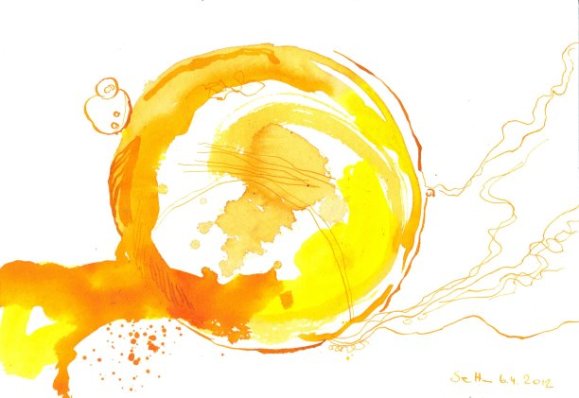
My works that have been chosen by the gallery will include recent acrylic ink paintings inspired by local flora and fauna. Also on display will be some works in oil paint and mixed media which i made when i first came to Cornwall, influenced by the landscapes and seascapes that surround me in Penryn.
You are warmly invited to the Private View on Sunday 16 July 2017 2 pm – 5 pm at Tregony Gallery, 58 Fore Street, Tregony, Cornwall TR2 5RW. I look…
This exhibition is currently showing at Le Musée d’Art moderne de la Ville in Paris until the 29th of October and comprises some 350 works which depict the friendship between these three artists. Their friendship which began in 1933 shows their joint fascination for classical Italian masters, formal clarity and experimentation with both still life and open air painting.
Derain, in particular, emerges as the significant and productive painter in this innovative and energetic period and naturally, a truly brilliant colourist. Here we see his later work and not his fauvist period. This exhibition shows their cross fertilisation between the three and their enthusiasms which clearly ricocheted off each other. In addition they shared models, friendships, collectors and in particular their interests in all aspects of contemporary drama. They were, until after the war, energetic in their correspondence, although without clear transcripts, their letters are not always easy to read even if the visitor is a fluent in French. An impressive self-portrait by Giacometti dominates the entrance, which calls to mind a certain likeness to Duncan Grant. Grant and Derain were post-impressionists deeply influenced by Matisse and Cezanne and indeed both were acquaintances of Gertrude Stein.
When comparing these three artists, each of whom are creative masters, it is worth considering their dates:- Derain (1880-1954), Giacometti(1901-1966) and Balthus(1908-2001). Derain was then their guiding light and already very well-known. He was in recovery from his years of military service but ready to move beyond fauvism towards a new classicism. He found time however to design for Diaghilev and the Ballets Russe. He studied the masters of the early Renaissance and then Pompeian art. It was one particular still life that attracted the penetrating attention of Giacometti with one work- a sombre work from 1936 Nature morte aux poires.
Giacometti is currently on show at the Tate Modern until the 10th September and a few weeks later a new film appears with the Australian actor, Geoffrey Rush playing Giacometti. However, this Paris exhibition shows the cultural hinterland of this key modernist and his interest in working with Beckett, for example in the minimalist staging of Waiting for Godot.
The range of Balthus’s work is illustrated including the disquieting suspense filled eroticism of his depiction of reading, languorous adolescents. Balthus’s East-European ancestry has been the subject of much controversy but it seems that his mother was Jewish and romantically involved with the poet, Rilke. His work shows a deep knowledge and interest in literature. He had moved to Paris in 1933 from Morocco and formed a circle of friends which included the foremost poets and playwrights of the period. The range of his work is shown here and it is unsurprising to learn that the controversial psychoanalyst, Jacques Lacan was a major collector of his oeuvre.
The work on show includes some thought provoking portraits, sculptures, stage sets and photographs. It is not difficult to discern the disquieting political atmosphere of the times. As is well known, Derain stood accused on account of his visit to Berlin during the German Occupation. Nevertheless, Derain appears to have offered protection to members of Balthus’s family. These works which include the magnificent etiolated sketches, almost carved into the background, by Giacometti, evidence the frenzied artistic activity situated between Saint-Germain and Montparnasse.
Their friendships included writers and poets like Artiste Arnaud, Max Jacob, Jean Cocteau together with Breton, Camus and Malraux. Surrealism was penetrating the dramatic experiments of the evolving “theatre of cruelty” with projects by Sartre and Jean-Louis Barrault. The world of fashion with Doucet and Dior, too was an occasional involvement. This is an exciting exhibition and prospective visitors require a minimum of two hours to get their money’s worth.