Categories
German Matters Literature Poetry

Heinrich Heine -Du bist wie eine Blume

Heine


Du bist wie eine Blume
So hold und schön und rein;
Ich schau’ dich an,
Und Wehmut schleicht mir ins Herz hinein.
Mir ist, als ob ich die Hände
Aufs Haupt dir legen sollt’,
Betend, daß Gott dich erhalte
So rein und schön und hold,
Betend, daß Gott dich erhalte
So rein und schön und hold.

Heine2

Categories
German Matters Literature Poetry Uncategorized

Die Stunde zwischen Wirklichkeit und Möglichkeit;Blaue Stunde -Gottfried Benn

Blaue Stunde

I
Ich trete in die dunkelblaue Stunde –
da ist der Flur, die Kette schließt sich zu
und nun im Raum ein Rot auf einem Munde
und eine Schale später Rosen – Du!

Wir wissen beide, jene Worte,
die jeder oft zu anderen sprach und trug,
sind zwischen uns wie nichts und fehl am Orte:
dies ist das Ganze und der letzte Zug.

Das Schweigende ist so weit fortgeschritten
und füllt den Raum und denkt sich selber zu
die Stunde – nichts gehofft und nichts gelitten –
mit ihrer Schale später Rosen – Du.

II
Dein Haupt verfließt, ist weiß und will sich hüten,
indessen sammelt sich auf deinem Mund;
die ganze Lust, der Purpur und die Blüten
aus deinem angestammten Ahnengrund.

Du bist so weiß, man denkt, du wirst zerfallen
vor lauter Schnee, vor lauter Blütenlos,
totweiße Rosen, Glied für Glied – Korallen
nur auf den Lippen, schwer und wundengroß.

Du bist so weich, du gibst von etwas Kunde,
von einem Glück aus Sinken und Gefahr
in einer blauen, dunkelblauen Stunde
und wenn sie ging, weiß keiner, ob sie war.

III
Ich frage dich, du bist doch eines andern,
was trägst du mir die späten Rosen zu?
Du sagst, die Träume gehn, die Stunden wandern,
was ist das alles: er und ich und du?

«Was sich erhebt, das will auch wieder enden,
was sich erlebt – wer weiß denn das genau,
die Kette schließt, man schweigt in diesen Wänden
und dort die Weite, hoch und dunkelblau.»

blaue


This very lovely poem appears in the useful collection “The Faber Book of 20th Century German Poems” where it has been translated by Michael Hofmann:-


Blue Hour

I

I enter the deep blue hour-

here is the landing, the chain shuts behind

and now in the room only carmine on a mouth

and a bowl of late roses-you!


We both know, those words

we both spoke and often offered others

are of no account and out of place between us:

this is everything and endgame.


Silence has advanced so far

it fills the room and seals it shut

the hour-nothing hoped and nothing suffered-

with its bowl of late roses-you.

II

Your face blurs, is white and fragile,

meanwhile there collects on your mouth

all of desire, the purple and the blossoms

from some ancestral flotsam stock.


You are so pale, I think you might disintegrate

in a snowdrift, in unblooming

deathly white roses, one by one-coral

only your lips, heavy and like a wound.


You are so soft, you portend something

of happiness, of submersion and danger

in a blue, a deep blue hour

and when it is gone, no one knows if it was.

III

I remind you, you are another’s,

what are you doing bearing me these late roses?

You say dreams bleach, hours wander.

what is all this: he and I and you?


‘What arises and arouses, it all comes to an end,

what happens- who exactly knows,

the chain falls shut, we are silent in these walls,

and outside is all of space, lofty and dark blue.’

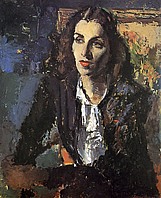
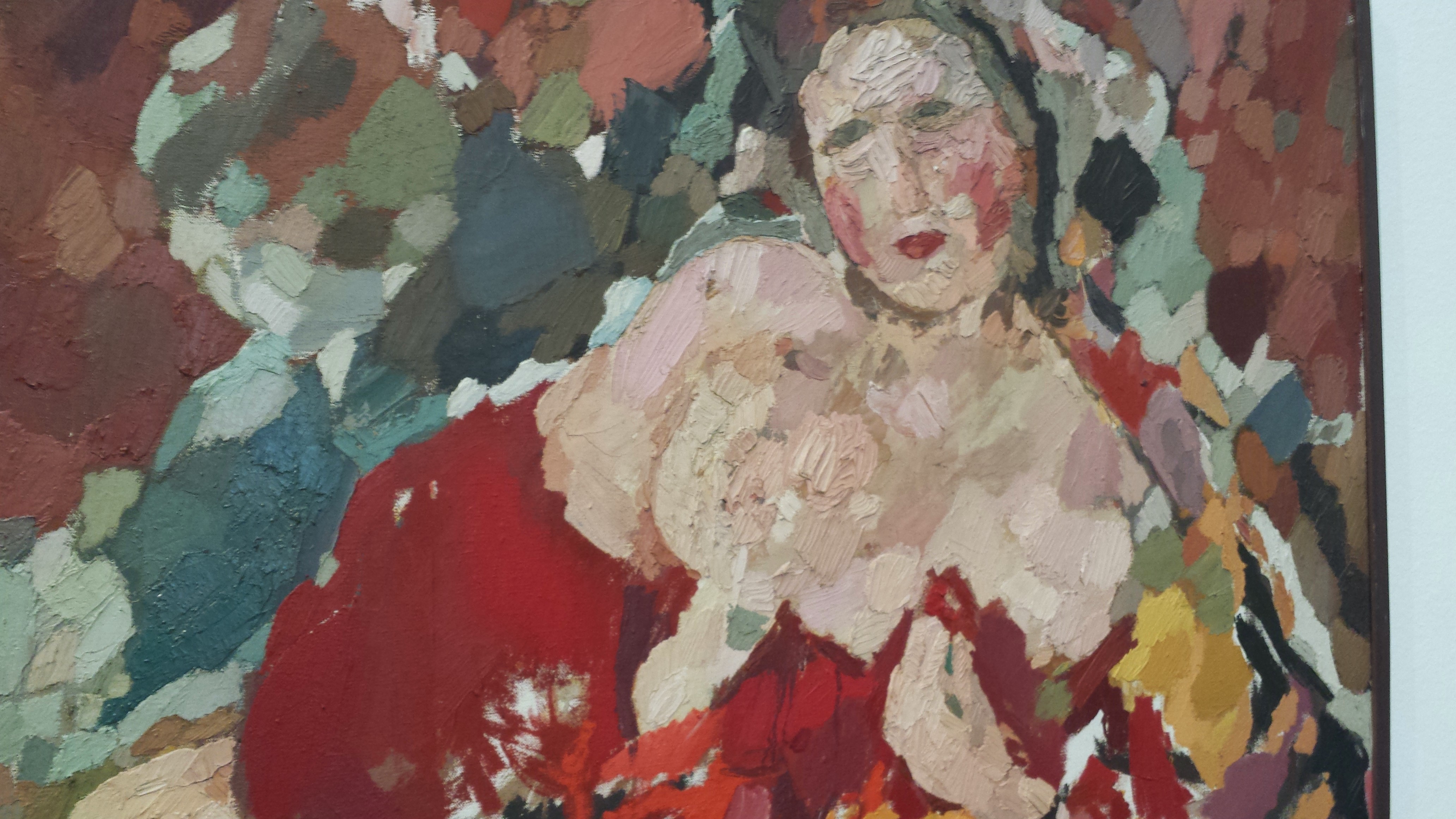
Die blaue Stunde (L’heure bleue), 1890; Öl auf Leinwand. Leihgeber: Museum der bildenden Künste Leipzig.


There is an interesting analysis of this poem by the Italian translator and scholar, Stefanie Golisch at http://www.fixpoetry.com/feuilleton/lesarten/gottfried-benn/blaue-stunde/ingeborg-bachmann/die-blaue-stunde

A new translation of Benn’s poems by Michael Hofmann called “Impromtus” is reviewed at http://www.theguardian.com/books/2014/jan/31/impromptu-selected-poems-gottfried-benn-review


There is also a You Tube reading at https://www.youtube.com/watch?v=RAs1t3evQW4


Categories
German Matters Penwith St Ives West Cornwall (and local history)

25 nützliche Internetseiten für deutsche Besucher nach Cornwall

West Penwith (Cornwall)

1)      http://www.cornishman.co.uk/entertainment

2)      http://www.whatsoncornwall.co.uk/

3)      http://www.artcornwall.org/

4)      http://www.krowji.org.uk/

5)      http://feastcornwall.org/projects/new-projects/

6)      http://www.royalcornwallmuseum.org.uk/

7)      http://west-penwith.org.uk/

8)      http://www.godolphinhill.com/

9)      http://morrablibrary.org.uk/

10)  http://www.penleehouse.org.uk/

11)  http://www.tate.org.uk/whats-on/tate-st-ives/exhibition/international-exchanges-modern-art-and-st-ives-1915-1965

12)  http://stivestv.co.uk/

13)  http://www.stivesarchive.co.uk/

14)  http://www.museumsincornwall.org.uk/St-Ives-Museum/Cornwall-Museums/

15)  http://www.leachpottery.com/

Smeaton's Pier, St Ives
Smeaton’s Pier, St Ives

16)  http://www.museumsincornwall.org.uk/Helston-Folk-Museum/Cornwall-Museums/

17)  http://www.cornwall.gov.uk/environment-and-planning/conservation/world-heritage-site/

18)  http://www.cornwall.gov.uk/community-and-living/records-archives-and-cornish-studies/research-topics-and-links/timeline-of-cornish-history/

19)  http://www.historic-cornwall.org.uk/a2m/maps.htm

20)  https://www.facebook.com/steineracademytruro

21)  http://www.cornwallmusic.co.uk/

22)  http://www.penwithfilmsociety.co.uk/

23)  http://www.cornwallcommunitynews.co.uk/

24)  http://www.cornwallwildlifetrust.org.uk/

25)  http://www.cornwall24.co.uk/discussion/

Ich habe gerade eine neue App entdecktwas sehr nützlich ist – www.appforcornwall.com

Ausserdem auf Deutsch http://www.intocornwall.com/ und auch http://www.visitcornwall.com/

Zu lesen Julia Kaufhold: St Ives und Trips in die Umgebung. goldfinch verlag, Hamburg 2007, ISBN 978-3-940258-00-7

Gwavas Lake,Newlyn
Gwavas Lake,Newlyn
Categories
Book Reviews Literature Poetry

Naming The Tree-Simon Richey-A Review by Roland Gurney

simon-richey-150x150

Before

Somewhere
the meaning of a word,

before it becomes a word,
waits in the silence. It is as if

it has come as far as it can go
without being uttered. In a moment

it will change from one thing
into another, or its meaning

will tremble into a word,
into something barely familiar,

finding itself spoken,
finding itself understood.

Simon Richey

naming-the-tree

Here is a review of Richley’s collection by my friend and poet Roland Gurney:-

Naming The Tree-Simon Richey-Overstep Books-48pp paperback £8


This first collection from a London-based writer(published in reputable magazines such as Magma,Acumen  & Poetry Review) has mostly rural or

existential themes and curiously little sense of city life. Prose poem sequences

such as the title piece, a thirteen section on Fire and a ten section meditation on the nocturnal activities of the author’s cats  loom large. This is ‘free verse’, devoid of much imagery, music, structure or rhythm- example ‘And because there was no word anymore, no sound in which/its meaning could be carried/the meaning had nowhere to go,’ rather thoughts on themes such as The Word(opening) and the Book(closing). This is poetic minimalism, much in vogue and going back to stateside influences such as WC Williams(the 6 liner The Red Wheelbarrow), Wallace Stevens  and the Beats via TS Eliot’s The Wasteland and a host of contemporary imitators.


As such it will hopefully give pleasure to some but cannot be rated good value for money as some pages only have 6-9 lines on them. For not much more one can buy a 500 page Bloodaxe anthology of exceptional quality and offering a whole range of poetic experiences!


Roland Gurney.

The reviewer is an award-winning and much-published poet based at

Mulfra, Newmill just outside Penzance.

Oversteps Books are to be found at http://www.overstepsbooks.com/events/2653/


Categories
German Matters Literature Poetry

The Distant Flutes by Li Tai Pe

Die ferne FlöteFl4

Abend atmete aus Blumenblüten,
Als im fernen Winde wer die Flöte blies.
Laßt mich eine Gerte von den Zweigen brechen,
Flöte schnitzen und wie jene Flöte tun.

Wenn die Nächte nun
Ihren Schlaf behüten,
Hören Vögel, wie zwei Flöten süß
Ihre Sprache sprechen.

(Li-tai-pe)

(Alfred Henschke) Klabund
Aus der Sammlung Chinesische Gedichte

Fl3


The Distant Flutes by Li Tai Pe -a free translation


The evening is seeped in the heavy scent of rose blossom

As the distant winds catch the notes of flutes.

Let me carve a such a  flute myself

from this overhanging branch


May the night guard you

as you sleep,

Lulled listening to the birds, as two sweet melancholy

flutes whisper to you in your own secret language.

Fl


Categories
German Matters Literature Poetry

The Porcelain Pavilion by Li-Tai-Pe

Der Pavillon von Porzellan

(Nachtdichtungen von Klabund)

Pav2


In dem künstlich angelegten Teiche
Auf der Insel steht der Pavillon von grün und weißem Porzellan.
Man gelangt in seine gläsernen Bereiche
Über eines weißen Tigers Rücken, der sich hier als Brücke aufgetan.

Dort sitzen Freunde froh beim Weine. Licht
Ist der Gewänder Farbe, die sich nicht im Staub der Wochentage placken.
Die Freunde plaudern oder schweigen heiter. Einer schreibt ein Gedicht,
Streift die Ärmel zurück und wirft das Haupt in den Nacken.

Sieh: in dem Teich, in dem die Jadebrücke, in den Wellen leise wehend,
Sich wie ein Halbmond wölbt, der Freunde trunknen Wahn!
Die Kleider zitternd! Auf dem Kopfe stehend
In einem Pavillon von Porzellan!

Li-tai-pe

Pav3


A free translation of this, is as follows:-

The Porcelain Pavilion

A white and green pavilion made out of porcelain

depicts beautifully elaborate pools.

See how these glassy dominions spring from

the white back of a tiger

that here, serves as a bridge.


On one side the company enjoy their wine. The colour

of their garments radiates as white.

These are not grimy from their daily labours.

The friends chat or just sink into a cheerful silence.

One writes a poem

as another stretches up his arm and scratches

the back of his neck.


See just how above the pools and the jade bridge

and the gently plashing waves,

how the curving crescent of the moon arches

over the drunken folly of these friends.

Their very clothes seem to shiver as one man stands on his head

in this pavilion made from porcelain.


Categories
Book Reviews German Matters

Angela Merkel-The Official Biography by Stefan Kornelius

Merkel in the DDR
Merkel in the DDR

You have to admire the lady. This rather awkward and shy daughter of a staunch Lutheran pastor who himself had been born as a Polish Catholic. His daughter, Angela Merkel, studied with such intelligence and application that soon brought her academic success particularly in Russian and finally in Quantum Chemistry. At the age of 26, she obtained her doctorate and in passing, it rather seems her first husband, the physicist Ulrike Merkel. Her rise to power was rapid and took place through the period in which the DDR collapsed as Russian policy under Gorbachev changed. Along with a wry and dry sense of humour Angela Merkel’s personality is the embodiment of the characteristic known in German as “fleissig”. This means hardworking, sedulous, diligent and assiduous.

Notably, the international journalist, Stefan Kornelius from the “Süddeutsche Zeitung”, describes how by 1998  her party, the CDU suffered defeat, she had reached the point where she was relishing the nitty-gritty of political strife and delivering sharp exchanges with her political opponent from the SPD, the extrovert German Chancellor, Gerhard Fritz Kurt Schröder. These sharpened acutely when, Merkel became her party’s General Secretary. She now began to invest her formidable skills into the arena of Foreign Policy and especially in European politics.

By 2004, the EU Commission was reformed after the elections, which yielded a majority for the conservative faction, and the question of who would be President, crucial. The European Socialists including Schröder were effectively sidelined and Merkel disliked the strong advocacy by Chirac of the Belgian, Verhofstadt. She manoeuvred with the British conservative, Michael Howard to put forward Chris Patten, to whom the then British PM, Tony Blair had to give support. In the end a compromise emerged which delivered a severe blow to Schröder and gave Merkel most of what she wanted. Compromise for Merkel is a strength she possesses and that Margaret Thatcher so obviously lacked. In the current selection of Jean-Claude Juncker presently in 2014, Merkel has had to compromise under attack from the German press. However, she has left the situation having once again achieved the best attainable solution from her viewpoint, seeking to reassure the isolated David Cameron.

Stefan Kornelius
Stefan Kornelius

It must be remembered, however, that this is an authorised biography which is written by a political ally from East Berlin, when both were involved in the Democratic Awakening movement in the DDR. Despite this, for a book which might have been just dry European politics, it contains both useful insights and a lively light touch. It clearly shows the degree of repression in the DDR where even a school play was harshly censored by Stasi agents, travel abroad for a woman was  possible only when she reached sixty and remaining “stumm” in a cabin fever society was necessary for survival. As Kornelius points out, retaining a deeper sense of strategy and also of irony would serve Merkel well as she rose to the highest echelon of power.

In this fluent translation, topics examined include the compromises of handling the coalitions that are thrown up by Germany’s federal system and the relation between the Chancellor’s role and Foreign policy objectives. These also cover the direction of American strategy, led by a leader whom Merkel finds inscrutable. Both she and her partner, the eminent quantum chemist, Joachim Sauer, on a personal level love the Pacific coast; such affection contrasts on the politically with, for instance, what she sees as Osama’s dysfunctional domestic policy. Another area of concern lies in her dealings with Israel. She has espoused a policy of “never again” towards the Nazi past attempting to tackle concerns over racism and in Israel attacking speaking against anti-Semitism. Merkel probably has as good a historical understanding of the complexity of issues in this area as any world leader. Trust between extremists is clearly very difficult to establish. Germany tacitly supported the Palestinian access to the United Nations with observer, non-member status. Other chapters relate the developing relations with China, Russia and Chancellor Merkel’s continuing concern with ensuring peace within Europe. Since Kornelius’s book was written last year, the emergencies in Ukraine have strained these concerns to the utmost limit.AM5

Kornelius’s account touches upon hagiography. Certainly it has patches of humour as in the account of Merkel’s famous trouser suited pose about which she has publicly joked with Hilary Clinton. It is also interesting to hear of the appeal that Wagner has for Merkel and the importance signified in “Der Ring des Nibelungen” of getting the first step just right. Unquestionably, the concept of freedom plays a dominant role in her thinking and associated with it, those of responsibility and tolerance. No wonder then that she must be concerned as Germany’s chief prosecutor currently investigates suspected U.S. monitoring of Chancellor Angela Merkel’s cellular phone, an intrusion which has dominated headlines in Berlin for months and stretched trans-Atlantic ties.

Interview in German at https://www.youtube.com/watch?v=eMvhcUAl7SE

and from The Guardian http://www.theguardian.com/profile/stefan-kornelius


Categories
Uncategorized

An Armenian Sketchbook, by Vasily Grossman, translated by John and Elizabeth Chapman

Keep meaning to read Grossman

Lisa Hill's avatarANZ LitLovers LitBlog

An Armenian SketchbookJust a day or so ago I was chatting with Aussie author Debbie Robson about the joys of research and the type of research that I do for this blog…

An Armenian Sketchbook, a travel memoir of sorts by the great Russian writer Vasily Grossman, is an example of a book that demands a bit of research before I write anything about it here.  Before my research, I knew next to nothing about Armenia, not even its exact location.  All I knew before reading the book had to do with the Armenian Genocide: i.e. from my reading of Louis de Bernières Birds without Wings I learned that early in the 20th century the Ottomans in Turkey had killed more than a million Armenians.  I also knew that the Nobel Prize winning author Orhan Pamuk was recently prosecuted by authorities when he publicly acknowledged that this genocide had taken place because it is a criminal offence to do that in Turkey.

View original post 1,165 more words

Categories
German Matters Literature Poetry

Schicksale der Expressionisten- Fates of the Expressionists by Michael Hoffmann

20131015_160458The Kaiser was the first Cousin of George V,

descended, as he was from German George,

and unhappy Albert, the hard-working Saxon Elector.

-The relaxed, navy-cut beard of the one,

hysterical, bristling moustaches of the other…….

The Expressionists were Rupert Brooke’s generation.

Their hold on life was weaker than a baby’s.

Their deaths, at whatever age, were infant mortality-

a bad joke in this century. Suddenly become sleepy,

they dropped like flies, whimsical, sizzling,

ecstatic, from a hot light-bulb. Even before the War,

George Heym and a friend died from a skating accident.

From 1914, they died in battle and of disease-

or suicide like Trakl. Drugs Alcohol Little Sister.

One was a student at Oxford and died, weeks later,

on the other side……..Later they ran from the Nazis.

Benjamin was turned back at the Spanish border-

his history of the streets of Paris unfinished-

deflected into an autistic suicide. In 1938,

Ödön von Horváth, author of naturalistic comidies,

was struck by a falling tree. In Paris.

At the time

my anthology was compiled, there were still a few left:

unexplained survivors,

psychoanalysts in the New World.

20131018_123113


From the collection of Michael Hoffmann’s selected poems at  http://www.amazon.co.uk/Selected-Poems-Michael-Hofmann/dp/0374532230/ref=sr_1_fkmr2_2?ie=UTF8&qid=1403993437&sr=8-2-fkmr2&keywords=michael+hoffman+Selected++poems- This web-address also contains two useful reviews.


Categories
Book Reviews German Matters Literature

Mascha Kaléko -“Vor Heimweh nach den Temps perdus …”

Mascha Kaléko (1907 – 1975) wurde als Tochter jüdischer Eltern in Galizien geboren und wuchs in Berlin auf. Sie wurde als Dichterin bekannt und verkehrte im berühmten »Romanischen Café«. Doch 1935 erhielt Mascha Kaléko Publikationsverbot und musste mit Mann und Sohn nach New York emigrieren. Nach dem Krieg fand sie mit ihren so spielerisch eleganten wie spöttisch scharfsinnigen Texten wieder ein großes Publikum.

MK2

Mein schönstes Gedicht

Mascha Kaléko

Mein schönstes Gedicht ?
Ich schrieb es nicht.
Aus tiefsten Tiefen stieg es.
Ich schwieg es.

Das Ende vom Lied

Ich säh dich gern noch einmal, wie vor Jahren
Zum erstenmal. – Jetzt kann ich es nicht mehr.
Ich säh dich gern noch einmal wie vorher,
Als wir uns herrlich fremd und sonst nichts waren.

Ich hört dich gern noch einmal wieder fragen,
Wie jung ich sei … was ich des Abends tu –
Und später dann im kaumgebornen «Du»
Mir jene tausend Worte Liebe sagen.

Ich würde mich so gerne wieder sehnen,
Dich lange ansehn stumm und so verliebt –
Und wieder weinen, wenn du mich betrübt,
Die vielzuoft geweinten dummen Tränen.

– Das alles ist vorbei … Es ist zum Lachen!
Bist du ein andrer oder liegts an mir?
Vielleicht kann keiner von uns zwein dafür.
Man glaubt oft nicht, was ein paar Jahre machen.

Ich möchte wieder deine Briefe lesen,
Die Worte, die man liebend nur versteht.
Jedoch mir scheint, heut ist es schon zu spät.
Wie unbarmherzig ist das Wort: «Gewesen!»

 “Diese eigentümliche Mischung aus Melancholie und Witz, steter Aktualität und politischer Schärfe ist es, die Mascha Kalékos Lyrik so unwiderstehlich und zeitlos macht.”

Wiedersehen mit Berlin

mascha-kaleko

Seit man von tausend Jahren mich verbannt.Ich seh die Stadt auf eine neue Weise,So mit dem Fremdenführer in der Hand.Der Himmel blaut. Die Föhren lauschen leise.In Steglitz sprach mich gestern eine MeiseIm Schloßpark an. Die hatte mich erkannt. 

Und wieder wecken mich Berliner Spatzen!

Ich liebe diesen märkisch-kessen Ton.

Hör ich sie morgens an mein Fenster kratzen,

Am Ku-Damm in der Gartenhauspension,

Komm ich beglückt, nach alter Tradition,

Ganz so wie damals mit besagten Spatzen

Mein Tagespensum durchzuschwatzen.


Es ostert schon. Grün treibt die Zimmerlinde.

Wies heut im Grunewald nach Frühjahr roch!

Ein erster Specht beklopft die Birkenrinde.

Nun pfeift der Ostwind aus dem letzten Loch.

Und alles fragt, wie ich Berlin denn finde?

— Wie ich es finde? Ach, ich such es noch!


Ich such es heftig unter den Ruinen

Der Menschheit und der Stuckarchitektur.

Berlinert einer: »Ick bejrüße Ihnen!«,

Glaub ich mich fast dem Damals auf der Spur.

Doch diese neue Härte in den Mienen …

Berlin, wo bliebst du? Ja, wo bliebst du nur?


Auf meinem Herzen geh ich durch die Straßen,

Wo oft nichts steht als nur ein Straßenschild.

In mir, dem Fremdling, lebt das alte Bild

Der Stadt, die so viel Tausende vergaßen.

Ich wandle wie durch einen Traum

Durch dieser Landschaft Zeit und Raum.

Und mir wird so ich-weiß-nicht-wie

Vor Heimweh nach den Temps perdus …


Berlin im Frühling. Und Berlin im Schnee.

Mein erster Versband in den Bücherläden.

Die Freunde vom Romanischen Café.

Wie vieles seh ich, das ich nicht mehr seh!

Wie laut »Pompejis« Steine zu mir reden!


Wir schluckten beide unsre Medizin,

Pompeji ohne Pomp. Bonjour, Berlin!

 Drei gute Webseiten sind:-

 http://www.kaleko.ch/index.php?option=com_frontpage&Itemid=1

http://www.deutschelyrik.de/index.php/kaleko.html

http://www.dtv.de/autoren/mascha_kaleko_181.html

mascha_kaleko-9783423346719