Categories
Uncategorized

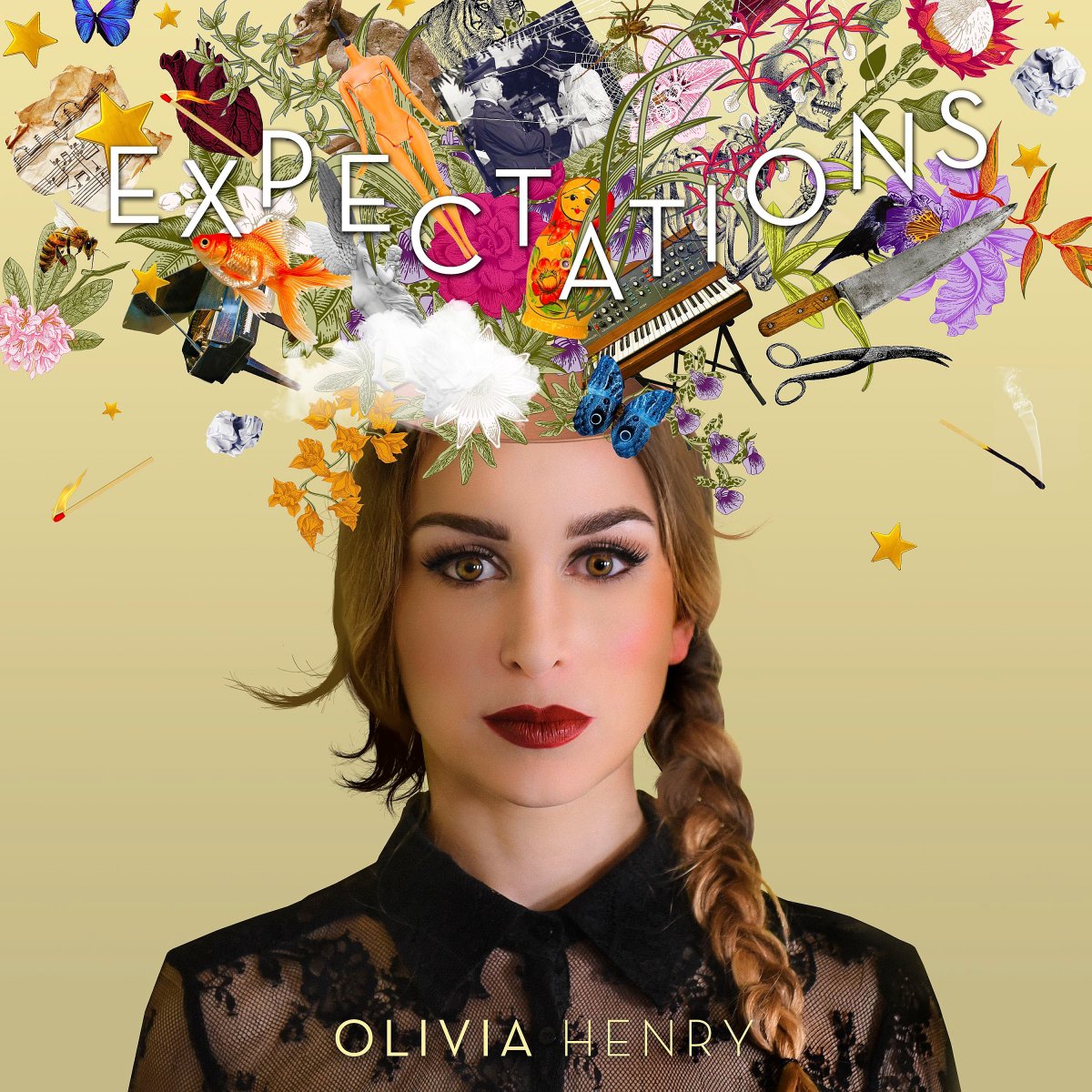
Olivia Henry, 2 extraits à découvrir

Sounds sweet!!

Julien-James Vachon's avatarDirect-Actu.fr le blogzine de la culture pop et alternative

«Dans les moments où j’ai eu du mal à trouver l’acceptation en moi-même, je me suis appuyé dans le passé sur l’amour et la validation d’une autre personne pour combler ce vide. Ce genre de besoin est insoutenable, mais humain. Sa douleur, sa tristesse, son désir – un besoin de validation de la valeur. C’est de ce sentiment que dérive cette chanson.»

View original post 214 more words

Categories
Uncategorized

Again on business 😙

Lovely and superb sketches!!

Categories
Uncategorized

Les Yeux Noirs- Élisabeth Anaïs

Avec Pomplamoose https://fr.wikipedia.org/wiki/Pomplamoose

Dans tes grands yeux noirs
Je me suis perdu
J’attends un regard
Le coeur suspendu
Je t’aime tellement fort
Toi qui me fais si peur
Est ce un mauvais sort
Ou la mauvaise heure
Et autour de nous
Chantent les tziganes
Tout le monde s’en fout
S’enivre au champagne
Dans tes beaux yeux noirs
Je sombre, mon amour
Et mon désespoir
A leur chant est sourd
Je perds la raison
A chercher tes bras
Brûlant de passion
Viens, embrasse moi
De tes grands yeux noirs,
L’étrange lumière
A nimbé le soir
De tous les mystères
C’est toi que je veux
Je sais que j’ai tort
Je suis malheureux
De t’aimer si fort…

tziganes=Hungarian Gypsy (cf Zigeuner auf Deutsch)

A nimbé le soir= shrouded the evening

Categories
Uncategorized

Buried for Pleasure, by Edmund Crispin

Edmund Crispin is of course, a nom de plume. Philip Larkin has written an early poem to the fellow. His books are excellent, relaxing reads but occasionally spoilt by a touch of xenophobia.

Itsonlychemo's avatarIt's only chemo

Buried for Pleasure is a pastoral murder mystery, with elements of literary criticism, political satire and a good old-fashioned love story to boot. This book must have been part of the inspiration for the TV genre of murders in the village. The ending ties up neatly and predictably for a pastoral story, and if you are not overly worried about the characterisation of consciousness it is wonderful.

The solution is obvious about a third of the way in, but you cannot be sure exactly and there is the vexing question of how it was done. And the murder is committed (and hence the real mystery only kicks in) after it’s obvious who the murderer is.

Crispin gives us the best of both: a plotting ability that squares up to the Golden Age of mystery novels and a prose style derived from Waugh, Wodehouse, Forster. He is most similar to Michael…

View original post 78 more words

Categories
Uncategorized

Brussels-Vienna night train returns as Europe eyes flying alternatives

A useful link!

Julian Worker's avatarJulian Worker - Journeys

Revival of Austrian overnight network comes as Sweden considers service from Malmö to other continental cities

View original post

Categories
Literature Poetry

Rimbaud on “Ophelia”

Jean-Nicolas-Arthur Rimbaud was born in Charleville in northeastern France on October 20, 1854, the second son of an army captain, Frédéric Rimbaud, and Marie-Cathérine-Vitalie Rimbaud, née Cuif. He had an older brother, Frédéric, born in 1853, and two younger sisters: Vitalie, born in 1858, and Isabelle, born in 1860.

Here is a translation of the first and second section of his poem, Ophelia. It rather reminds me of some parts of Alice Oswald’s poetry:-

I

On the calm black water where the stars are sleeping
White Ophelia floats like a great lily ;
Floats very slowly, lying in her long veils…
– In the far-off woods you can hear them sound the mort.

For more than a thousand years sad Ophelia
Has passed, a white phantom, down the long black river.
For more than a thousand years her sweet madness
Has murmured its ballad to the evening breeze.

The wind kisses her breasts and unfolds in a wreath
Her great veils rising and falling with the waters ;
The shivering willows weep on her shoulder,
The rushes lean over her wide, dreaming brow.

The ruffled water-lilies are sighing around her ;
At times she rouses, in a slumbering alder,
Some nest from which escapes a small rustle of wings ;
– A mysterious anthem falls from the golden stars.

II

O pale Ophelia ! beautiful as snow !
Yes child, you died, carried off by a river !
– It was the winds descending from the great mountains of Norway
That spoke to you in low voices of better freedom.

It was a breath of wind, that, twisting your great hair,
Brought strange rumors to your dreaming mind ;
It was your heart listening to the song of Nature
In the groans of the tree and the sighs of the nights ;

It was the voice of mad seas, the great roar,
That shattered your child’s heart, too human and too soft ;
It was a handsome pale knight, a poor madman
Who one April morning sate mute at your knees !

Heaven ! Love ! Freedom ! What a dream, oh poor crazed Girl !
You melted to him as snow does to a fire ;
Your great visions strangled your words
– And fearful Infinity terrified your blue eye !
 

Categories
Literature Uncategorized

Political GDB

I think the stupidity of Brexit and it’s aftermath has left me with a sort of “gueule de bois”. Yesterday’s bêtise was nasty Dulwich boyo, Farage on television and radio- vindictive and seemingly energised.

La gueule de bois ou GDB est une sensation inconfortable qui se manifeste à la suite d’une consommation excessive de boisson alcoolisée. Elle apparaît 6 à 8 heures après la consommation d’alcool, lorsque l’alcoolémie diminue, et elle atteint un maximum lorsque l’alcoolémie redevient nulle.

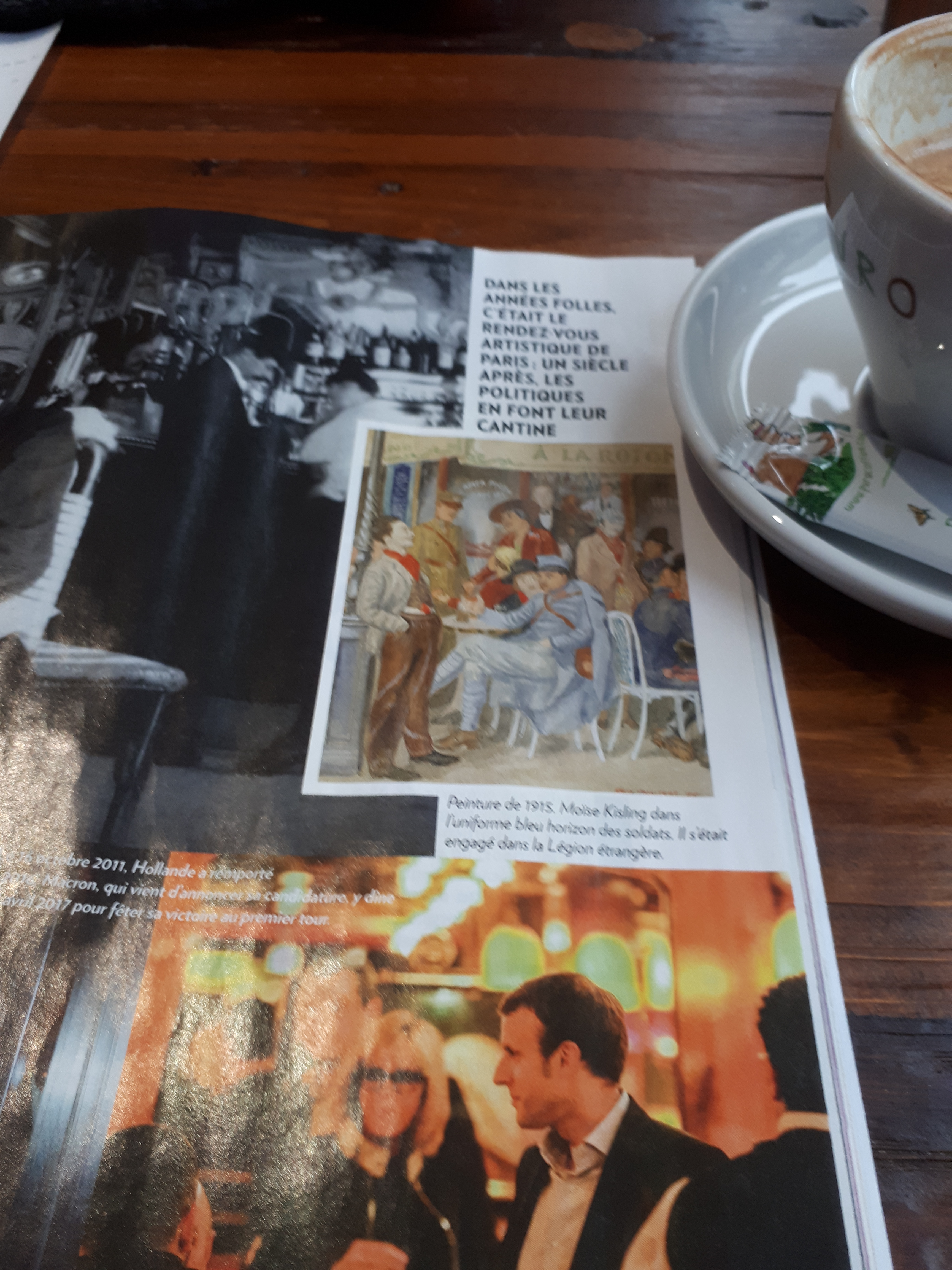
Now this phrase came out of the currently available Paris Match. There in relation to the worker’s cafe, la Rotande, which seems to be closing in historic Montraparnasse . The magazine now seems more expensive as the pound sinks.It is now three quid!

There is in Paris Match some interesting material on the rise of the extreme right in Italy. So, rather ironically, it would seem that despite first appearances, this creeping authoritarian populism is a widespread European phenomenon. The international element of traditional and democratic socialism somewhat muted.


Categories
Uncategorized

The Résistante and the Collaborationist: an odd connection in the Liberation Collection

An interesting collection indeed.

europeancollections's avatarLanguages across Borders

Riffaud and Liquois, two destinies with seemingly nothing in common, apart from the War and a little booklet from Jeunesse Héroïque (Portrait of Riffaud by Picasso from “Le poing fermé”, Liquois image from https://histo28.miraheze.org under Creative Commons)

As discussed in an earlier blogpost, showcasing the beautiful and entertaining Belgian children’s collection Les Alliés, a surprisingly large proportion of the Liberation Collection is made up of thin pamphlets aimed at young people. They were published in the immediate aftermath of the Second World War in France and Belgium.

View original post 1,010 more words

Categories
Uncategorized

Painting in the Rain 2: 1890-2006

Some great images here.

hoakley's avatarThe Eclectic Light Company

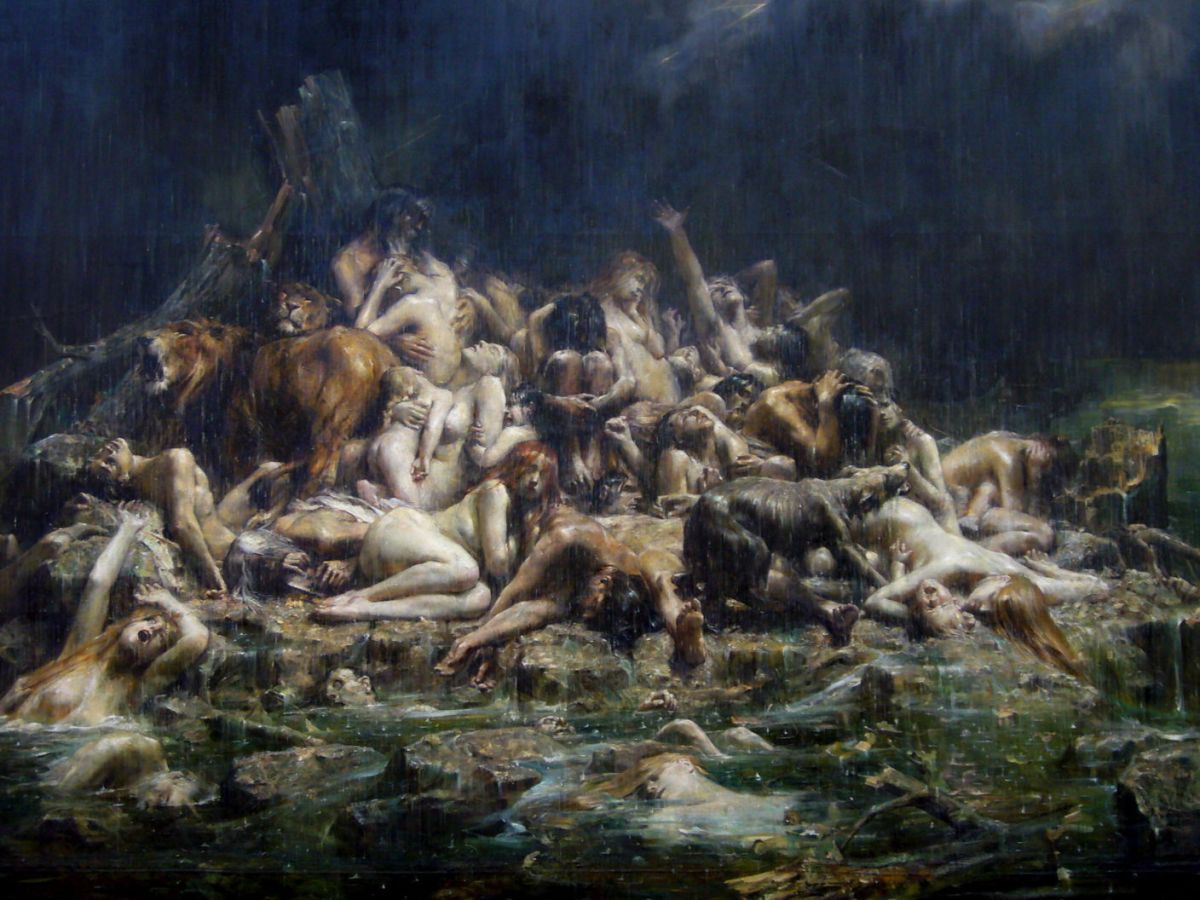
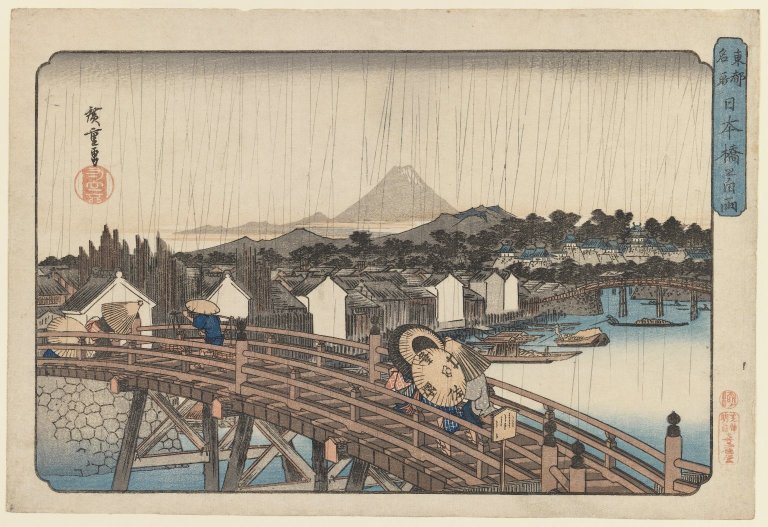
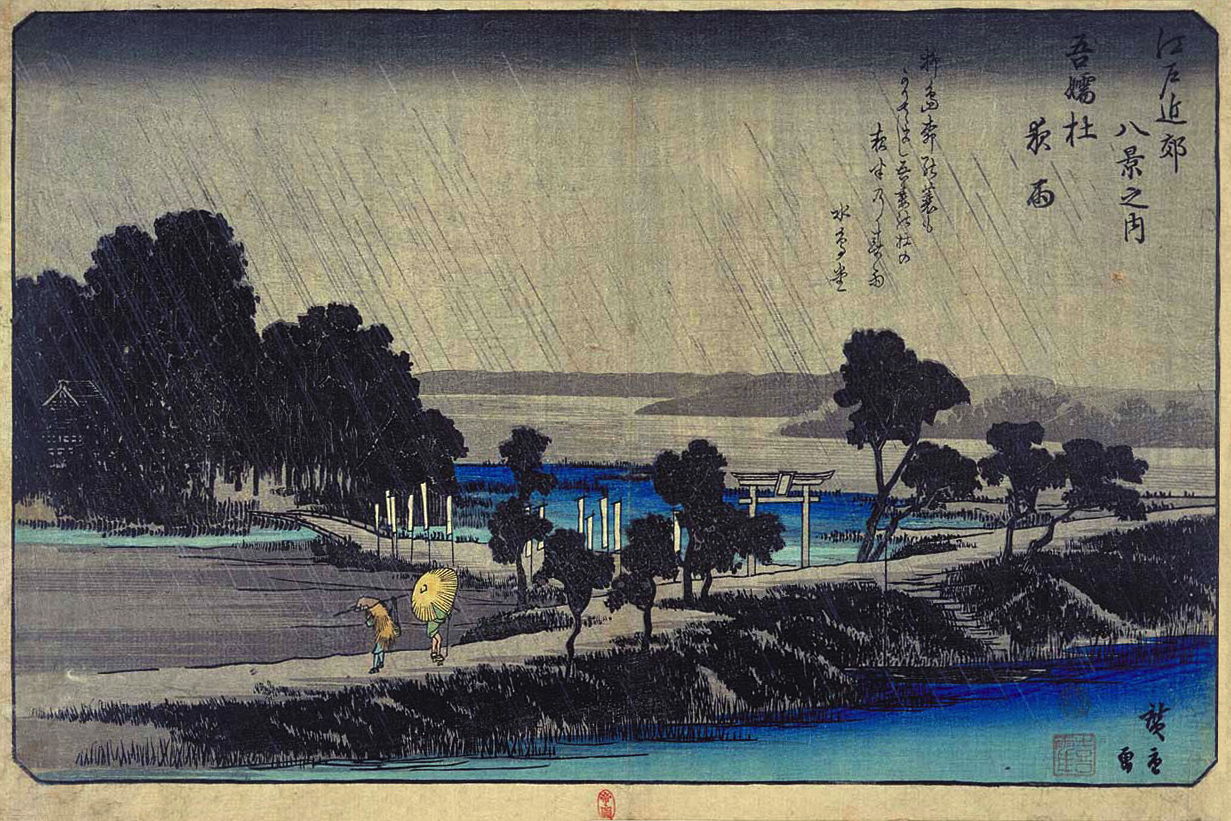
In the first article of this series, I showed how reluctant European and American painters were to depict rainfall as oblique streaks down an image. There was no such reluctance among Japanese print makers like Utagawa Hiroshige, though.

Utagawa Hiroshige (歌川広重) (1797–1858), Evening Shower at Nihonbashi Bridge (Edo, 1830-4), woodblock print, 26.2 × 38.7 cm, Brooklyn Museum, New York, NY. Wikimedia Commons. Utagawa Hiroshige (歌川広重) (1797–1858), Evening Shower at Nihonbashi Bridge (Edo, 1830-4), woodblock print, 26.2 × 38.7 cm, Brooklyn Museum, New York, NY. Wikimedia Commons.

These two woodblock prints by Hiroshige show how effective liberal use of rain streaks can be.

Utagawa Hiroshige (歌川広重) (1797–1858), Evening Rain at Azumi-no Mori (吾嬬杜夜雨) (Edo, 1837-8), woodblock print. Wikimedia Commons. Utagawa Hiroshige (歌川広重) (1797–1858), Evening Rain at Azumi-no Mori (吾嬬杜夜雨) (Edo, 1837-8), woodblock print. Wikimedia Commons.

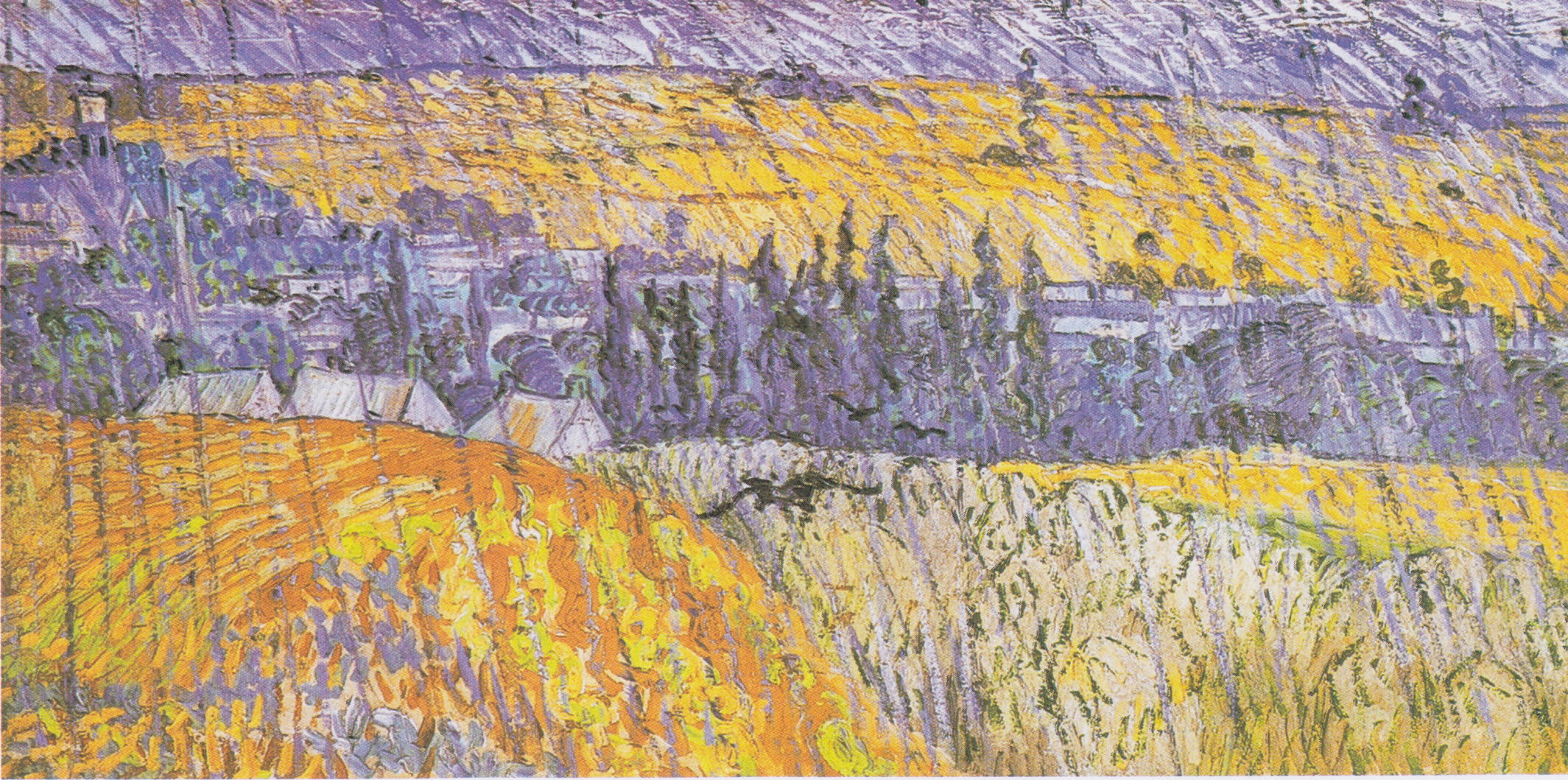
Among the European painters who saw and were inspired by Hiroshige’s Evening Rain at Azumi-no Mori was Vincent van Gogh.

vangoghrainauvers Vincent van Gogh (1853-1890), Rain – Auvers (1890), oil on canvas, 50.3 x 100.2 cm, National Museum of Wales, Cardiff, Wales. Wikimedia Commons.

Painted just a few days before his death, van Gogh’s Rain – Auvers

View original post 910 more words

Categories
Uncategorized

Florem effleure un genre, une époque

Jolie Mome est absolument merveilleuse. Merci!

Julien-James Vachon's avatarDirect-Actu.fr le blogzine de la culture pop et alternative

Un article particulier, pour une chanson particulière.

View original post 211 more words