
Without the poetic element in our own being, and without our poets and their great poetry, we would be brutes, or what is worse and what we are most like today: vicious automata of self will.
Without the poetic element in our own being, and without our poets and their great poetry, we would be brutes, or what is worse and what we are most like today: vicious automata of self will.
Not easy to keep up here with this area so this looks appealing. Sad that we have lost Clive James. Been catching up on Lee Murray as his new collected poems make a further impact.
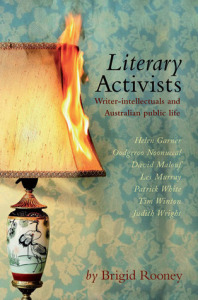 I wish I had time to finish this book, but it’s due back at the library. (As usual, *shrug* I have borrowed too many books at once).
However, it’s the ideas in the Introduction that interest me most. Brigid Rooney surveys the literary landscape from the 1940s to the present (i.e. the early 2000s at her time of writing) and so her primary interest is in the activism of Judith Wright, Patrick White, Oodgeroo Noonuccal, Les Murray, David Malouf , Helen Garner and Tim Winton. Of these only the last three are still living: Malouf is in his 80s, and Garner is not far behind; only Winton is younger than I am. However, I am more interested in the writer-activists that spring to mind from my recent reading: Indigenous writers exposing Australia’s Black history such as Alexis Wright, Marie Munkara, and Anita Heiss; authors tackling the issue of climate change…
View original post 828 more words
I totally agree with placing a high value on Fitzgerald. Her biographies of Charlotte Mew and her own curious intellectual uncles are fascinating too.
Penelope Fitzgerald ought to be to the novel of the next two hundred years what Jane Austen was to the last two hundred. Her irony is better, her observations sharper and she writes with the wisdom of age and misery not youth and precocity. Having initially squandered her gifts and then suffered hard luck she was able to choose more ambiguous moral stories then she might have done if she’d flourished earlier on.
Her moral vision was enhanced because she was an underdog. Her husband was an alcoholic who lost his career. They lived on a houseboat on the Thames which sank. She had to move into a small council estate flat and teach undergraduate entry to Oxbridge. She was, briefly, homeless. Her old-world snobbery and upper middle class upbringing were less than useless to her in these conditions.
Her unworldliness was extensive. Her children said she didn’t know what…
View original post 748 more words
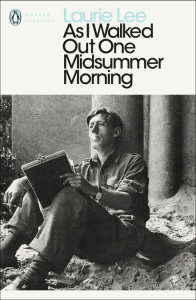
I first read this book about twenty-five years ago when I was little older than Laurie Lee was in this memoir. It begins in 1934 with Laurie embarking on a journey from his home in the Cotswolds where he heads eastwards along the south coast of England and then towards London. He is young, clueless and naive, but therein lies the appeal of the book. The young Laurie is looking for adventure but doesn’t quite know where or how to find it. Coming to the end of a labouring job in London Laurie decides to travel abroad and when he notes that he knows the Spanish phrase for ‘Will you please give me a glass of water?’ he decides to get a one-way ticket to Spain. Arriving in the north-west city of Vigo he walks slowly southwards, with his fiddle-playing being his only source of income. By the end of…
View original post 219 more words
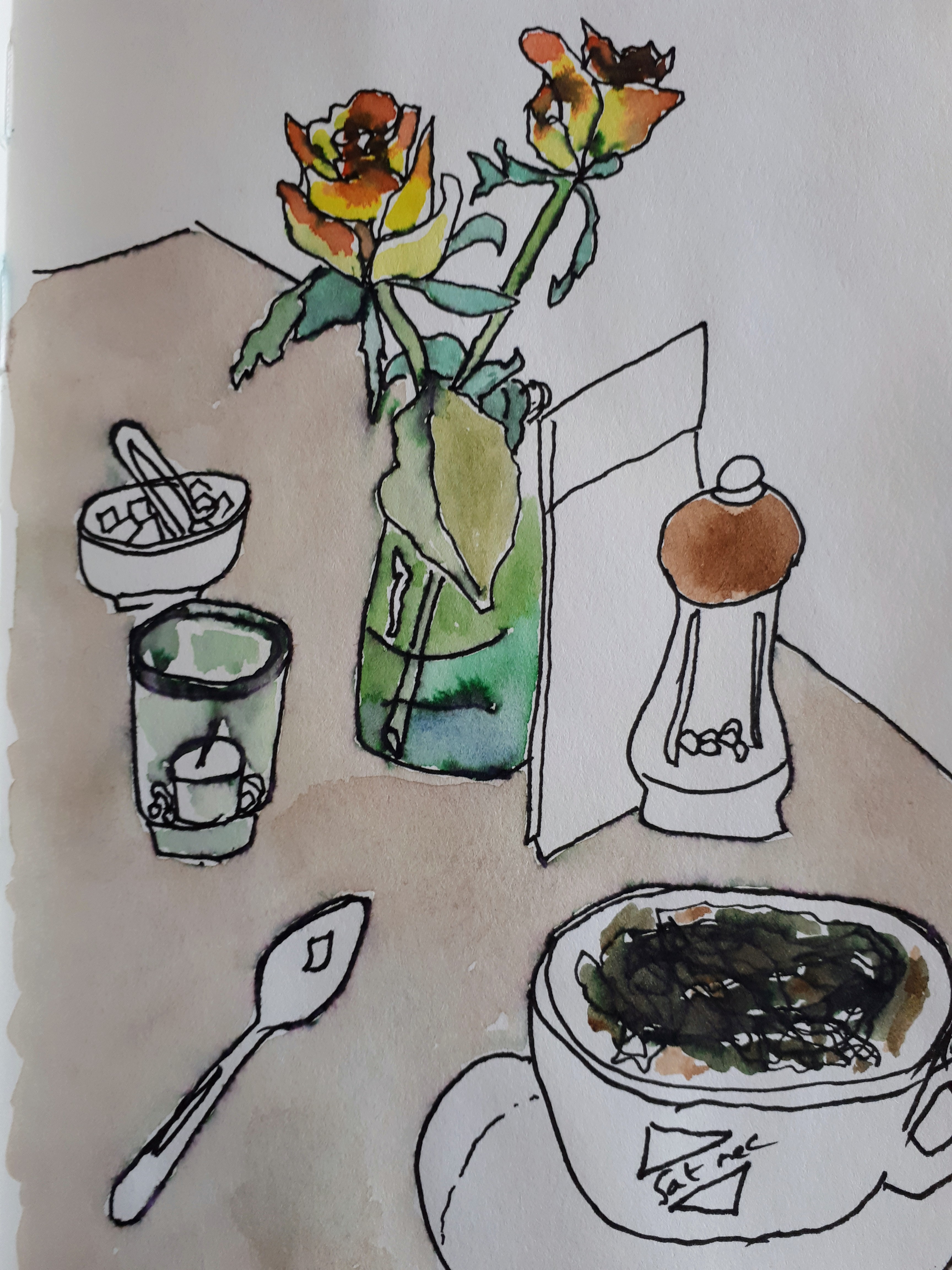
Bacon sandwich by special arrangement delivered!
A woman sits in the open boot of her car
across the way smoking.
In this cafe gunstig the garlanded kugeln are enormous in
subdued shades of green, transparent red with
broad, unsubtle white-stripes.
During the day, the unlit Christmas street decorations
make a telegraph exchange of wires.
People come and go moving swiftly in the busy street;
it is cold.
Everyone has survived the stormy, windy night,
looking somewhat self-congratulatory.
The board outside reads:-
“Two slices of toast with jam
and filtered coffee, two pounds fifty.”
Good Cornish value. Over opposite
on the dark green facade and neon-lit Subway
window daubed with large white snowflakes.
Further up in the carpet shop blue lights flicker reassuringly.
Pigeons gobble contentedly from windowsills above.
Penelope Fitzgerald is a wonderful writer and this is not actually her best novel. Her biography by Hermione Lee is also a wonderful read.
This has everything I want in a novel. It’s a good old-fashioned love story, there’s a trial with a shocking revelation, and it’s set in Cambridge in 1912 in a fictional college run by a blind master that’s never had anything female in apart from Starlings. There’s also an asylum run by an eccentric, although we never visit it. The London scenes are as vibrant as the Cambridge ones. The depictions of rain, cycle accidents, high table, London bridges, newspaper offices, rectories and hospital wards are all excellent. Penelope Fitzgerald has a genius for detail. She believed in ghosts (there’s a poltergeist in The Bookshop), but this novel is not definitive either way. It is a book about mystery and certainty; anyone who reads it as being in favour of science of the occult is not reading it closely enough. The discussion of physics reminds me of what someone…
View original post 57 more words

Après Tree of Life, auréolé de la Palme d’or en 2011, Terrence Malick revient en compétition au Festival de Cannes 2019 avec Une vie cachée.
View original post 64 more words


Colm Tóibín, Mad, Bad and Dangerous to Know:
The Fathers of Wilde, Yeats and Joyce (Scribner)
In the second half of the 19th century, Dublin was considered a cultural backwater. Although less industrial and less populous than Belfast to the north, the city was known for its widespread poverty. But some of the leading lights in modern literature were raised and spent youthful years in Dublin during the half century, among them playwright and critic Oscar Wilde (1854-1900); poet William Butler Yeats (1865-1939); and novelist James Joyce (1882-1941). Yet, the literary careers of each blossomed more in places like London and Paris than in Dublin. Was there something in the 19th century Dublin air that encouraged youthful literary aspirations? Were these aspirations which could only be realized away from Dublin?
These questions lurk in the background of Mad, Bad and Dangerous to Know: The…
View original post 3,309 more words
Jean Eve was born into a working-class family. Entering the Colonial School of Le Havre in 1918, he became involved in the colonial troop called Spahis and drew watercolours during his travels. Returning to Douai, he enlisted in the railways and then worked in a foundry workshop. Leaving painting , it was then that he had the revelation at the Petit Palais during the Gustave Courbet exhibition. But having a dependent family, he is only allowed to paint on Sundays.
In 1929, Jean Eve met Moses Kisling, who brought him closer to the editor of L’Art Vivant, who decided to organize a support committee for him to devote himself only to painting, which allowed him to quickly exhibit at the Salon des Indépendants. At the invitation of Henri Bing and Maximilien Gauthier, he participated in the exhibition “The Popular Masters of Reality” in 1936. This was the beginning of the fame for Jean Eve.
He then exhibited in New York and Switzerland and received the rank of Knight of the Legion of Honour and Commander of the Order of Arts and Letters.
Jean Eve’s painting is characterized by its sincerity and simplicity. As Maximilian Gauthier said, “he painted what he saw, simply, with all his heart.”
“My real workshop is nature” Jean Eve
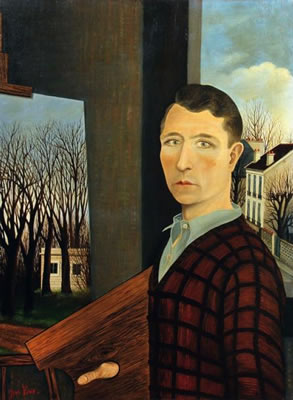
This self portrait is somewhat reminiscent of Lucien Freud’s earlier work currently on display at the Royal Academy. Eve’s work is on display in the Musee Maliol in Paris.
Sweet and full of gratitude!

Thank you for letting me be
The person I was born to be
Thank you for understanding
And helping to set free
All of the trapped feelings that live inside of me
And for reminding me that everything I feel makes sense
Even when other’s say it is nonsense
Thank you for seeing deep into the heart of me
For bearing witness to scars and pain
Others may rather I gloss over or remain
Hidden
Thank you for the happiness you remind me
Is my natural birthright
For always supporting and understanding the little one in me
Who was often so desperately alone, angry, sad
Or deeply lonely
Thank you for letting this part of me live and express
So another part of me can learn to show it
Validation and tenderness
For all of this I say to you
From the very bottom of my heart
Thank you!


 penwithlit