Categories
Art and Photographic History Art Exhibition Reviews Penwith St Ives West Cornwall (and local history)

Summer in West Penwith in Black and White

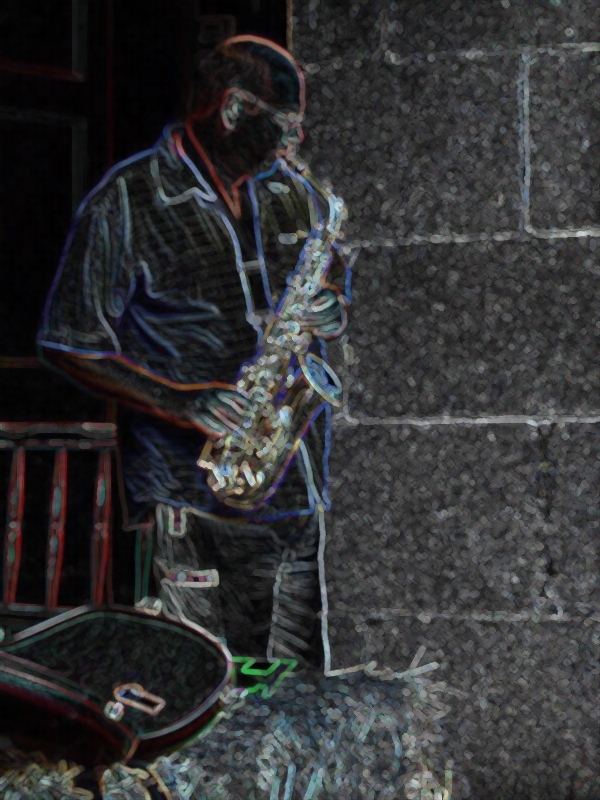
Inspired by this Youtube clip of Berlin taken in 2015 in black and white, I decided to take a look at some, mostly “street” photographs I have taken  out and about in Penzance, Newlyn and St Ives this Summer.

pe

pe1

pe3

pe5pe2

pe6

pe7

pe8

pe9

There are two analogue photography websites i would like to recommend:-

www.ishootfilm.de

and for the forthcoming Newlyn Arts Festival

http://www.homemadeproject.net

the latter will be at the Newlyn Art Gallery

Categories
Art and Photographic History Book Reviews German Matters

Heidegger Reframed by Barbara Bolt

Martin Heidegger (September 26, 1889 – May 26, 1976 is renowned for the complexity and subtlety with which his thoughts on the philosophy of being (ontology) is expressed. His ideas are inspired by numerous sources from the pre-Socratics, Plato, Aristotle and much of his thought dependent upon his early training as a Jesuit. He read and imbibed St Augustine and Duns Scotus. He trained under the phenomenologist, Edmund Husserl at Freiburg and his approach is deeply engaged with German philosophers like Kant, Schopenhauer and Nietzsche. He also read Kierkegaard with close attention.

h


His ideas about the nature of being are in stark contrast with those of Descartes which involve a split between consciousness and the external world. This Cartesian framework or dualism is embedded in modern science and Western thought generally. One result of Descartes philosophy is that Nature is subject by the mind to measurement and calculation and also to manipulation. This borders on what is termed instrumentalism and indeed the consequent exploitation of the environment. This, Heidegger with his alternative view of the direction of philosophy, he deeply and radically opposed. The implication of Heidegger’s thought for the creative artist and the making and meaning of art forms the thrust of Barbara Bolt’s text. His project is illustrated with specific reference to international artists like Sophie Calle, Anish Kapoor and Anselm Kiefer.


Generally considered as a great classic of Twentieth Century philosophy Sein und Zeit, 1927 is not an easy book to read even if you are thoroughly fluent in German. Concerned with existence and the nature of being, it is equally interested in associated questions about time. This central text focuses on the nature of reality and the being-right-there of existence for which Heidegger uses the term Dasein. Part of the difficulty of understanding this central work is that language almost seems to break down under the pressure of difficulty in communicating the awesome nature of human existence, which many would see as essentially spiritual. Barbara Bolt provides a thoroughly useful glossary to such terms in support of her guide.


This glossary contains some eighty terms; it is relatively clear but illustrates some of the difficulties in expounding Heidegger’s collected work,Gesamtausgabe, which itself runs to more than eighty volumes. Barbara Bolt explains in her early chapters concepts associated with Dasein which involvecare for the self and other beings, Sorge, and in the face of personal and certain knowledge of death, the termination of existence on Earth, anxiety or Angst. For Heidegger there are two possibilities, it seems either falling into immersion in the day to day, which he terms ontic existence or striving with resoluteness for authenticity. This bears upon artistic endeavour in several ways; the acceptance of strife when faced with unsettling artworks, the necessity of praxis in art education and research which hopefully produces a practical and respectful understanding of materials by a heuristic approach. Bolt is interesting and thought-provoking in her exposition on this.


A perhaps greater difficulty in appreciating Heidegger, which Bolt mentions, perhaps too briefly, continues in current debate. This was his active involvement with Nazism and his eulogy of Hitler involving praise for his moral regeneration of the Fatherland. This has been, not surprisingly, a sticking point in the appreciation of the Heidegger canon. A discussion of this may be found inInauthenticity: Theory and Practice, contained in JP Stern’s essays on literature and ideology, The Heart of Europe. There is particular concern over his treatment of his German-Jewish teacher, a Christian convert and former colleague, the proponent of phenomenology Husserl, to whom Sein und Zeithad initially been dedicated. He also took a renowned student, Hannah Arendt as his mistress and she it was who later to testified on his behalf at a denazification hearing in opposition to Karl Jaspers.


In a key chapter, Barbara Bolt uses two central concepts of Heidegger to evaluate particular art works. These are ‘enframing’ (Gestellung) and ‘poiesis’-a Greek term for making from which the word poetry is derived. Enframing, according to Heidegger, has negative connotations and is applied to methods like those of modern technology which treats nature solely as a means to an end and shows Heidegger to be an early proponent of environmentalism and certainly a critic of agribusiness. This seems to be echoed by concerns about the manner in which the business of art has been cheapened and debased by commercialisation and celebrity culture. There is, she explains an unholy alliance developing between advertising in late capitalism as evidenced, for instance, by Tracey Emin selling Bombay Sapphire Gin. Enframement also appears to include a criticism of managerialism; disapproval of the manner in which humans are treated often with statistical techniques as mere available resources. Before examining the concept of ‘poesis’, it is worth noting that this book is actually entitled ‘Heidegger Reframed’ and is one in a general series. This tends to give framing a different, presumably positive connotation that sits uneasily with the particular use of the term by Heidegger. Unfortunately, there appears to be no general series editor that could add guidance and cohesion to this demanding project of applying the thought of modern philosophers to art.h1


Bolt sometimes writes convoluted sentences in a somewhat orotund style which may be an understandable effect of propounding the concepts of this demanding, intriguing philosopher. Nevertheless, the style invites the reader to question some of the propositions expounded. There is no doubt that Heidegger had a particular view about the dominance of the scientific method as he conceives it. Also mathematics seems deemed uncongenial, whereas language, and also history with its different conception of time and certainly etymology are viewed by Heidegger as more relevant to his project. It is interesting to speculate how much he might have responded to philosophers of science like Thomas Kuhn whose views on paradigm shift, and those too of Paul Karl Feyerabend, might have influenced him had he been fully aware of them. Heisenburg, a contemporary and also a controversial figure, might have influenced Heidegger on his notion of how preconceived theories operate in science.


Heidegger as Bolt explains was inspired by poetry and must have been sensitive to its lyricism. This makes the reader question his apparent failure to respond to the beauty of mathematics which is in a sense a universal language. In general he was at pains to oppose certain notions of aesthetics associated particularly with the Enlightenment and Romanticism and the artist as an inflated, self-dramatising subject. In his conception of poesis, Heidegger approaches another mode of artistic appreciation and indeed gratitude which is guided by sympathy. The term, as Bolt makes clear is Greek in origin and involves openness to the bringing-forth or unconcealment of being. It is, for example, the sense of wonder when a butterfly emerges from a chrysalis or in the transformation when a flower blossoms from a bud. Heidegger spent a year in 1942 lecturing on Hölderlin’s Hymn “The Ister” which relates to the Danube and examined the limitations of a metaphysical interpretation of art and appears to argue the case for spiritual values in art together with a feeling for place attained by intimate journeying. George Steiner emphasises elsewhere how Heidegger’s titles are those of peregrination and comments, “He has been an indefatigable walker in unlit places”.


Barbara Bolt has written an interesting book on a difficult topic. The publishers might have supported her with somewhat better illustrations than the few disappointing images provided. However, she has shown how Heidegger can illuminate the work of prominent international artists. She has provided an introduction to a highly influential and controversial thinker supported with a sound biography. This work encourages the reader to bravely question art and promote radically innovative ways of observing and researching related issues.


Categories
Art and Photographic History Art Exhibition Reviews German Matters Uncategorized

Some German Photographers of the 1930s


More than twenty years ago there was an excellent bookshop at the bottom of Station Hill in Truro. It was manned by a man who looked like a taller version of Alan Bennet who wore a white pullover and so the shop became known in our family as the “White Man’s”. He may well have read English at University because there was an excellent stock of poetry, criticism and literary collections. It was in the front part of the shop that art and photography books were stocked. It was here that I discovered a magnificent book of photographs by Roman Vishniac. (https://en.wikipedia.org/wiki/Roman_VishniacI }that was called “Children of a Vanished World” and was more than I could then afford. It was, however, quite stunning to peruse and an astonishing invocation of the past. As one reviewer on Amazon writes:-

“In this book we can see the faces of the children who disappeared a few years later in the Shoah. Just look at them, they are children like all the others in the world; beautiful, funny, playing, studying, and so on. Lives which were brutally cut in the most monstrous way in human history. If they had lived, they would have been merchants, rabbis, doctors, lawyers; some of them would have been known as novelists, scientists, and so on. Why had the world to live without their talents they wanted to show us?”

Roman Vishniac
Roman Vishniac

Vishniac photographed many subjects including microscopic biological specimens but it is this collection about the Shtetel which made him famous. In a way it provides a complement to the magical paintings of Chagall. Also I started to read “Shtetel” by Eva Hoffmann which is also interesting on this topic.p2

20131023_130837

However, more recently,it is the Berlinische Galerie which opened my eyes to two further interesting photographers in their collection-http://www.berlinischegalerie.de/en/museum-berlin/forschung/grant/ These are Steffi Brandl and Erich Salomon. Brandl’s work is remarkable for it’s portrait and figure photography. Her compositions are unfailingly interesting and captivating. So captivating that I made sketches whist viewing them.p4p5 These are sophisticated photographs that work to capture the essence of the subjects in the lens. She was born in Vienna in 1899 as Stephanie Olsen and trained there under Trude Fleischmann and then married an architect, Ernst Brandl   moving to Berlin in 1926. She had a studio at 211 on the Kurfurstendamm and was forced to emigrate to England in 1933-she moved to New York where she died in 1966.

Erich Salomon’s work is similarly of great interest. In talking of his technique, wikipedia.de says the following:-

Übliche Arbeitsgeräte der Pressefotografen waren seinerzeit unhandliche Plattenkameras für Glasnegative bis 13 × 18 cm. Salomon erwarb wenige Monate nach seinen ersten fotografischen Erfahrungen eine Ermanox-Kamera. Diese war ein neu entwickelter, relativ kleiner Fotoapparat mit dem seinerzeit lichtstärksten serienmäßig hergestellten Objektiv (1:2) und einem Schlitzverschluss, der Belichtungszeiten von 1/20–1/1000 sec erlaubte. Mit der Ermanox waren Momentaufnahmen auch bei schwachem Licht, Fotos in Innenräumen ohne Stativ und Blitzlichtmöglich. Als fotografisches Bildmaterial dienten Glasplatten von 4,5 × 6 cm in Einzelkassetten, von denen man problemlos eine größere Anzahl bei sich tragen konnte. 1930 kam eine Leicahinzu – noch leichter und unauffälliger als die Ermanox.

Esentially this says that press photographers used to have to use large glass plates 13x18cm in size, However, Salomon developed the technique by using a newly developed Ermanox camera which was small with a mass produced lens that allowed exposure times of 1/20 to 1/1000 sec and could therefore be used in low light conditions i.e. indoor photography using flash so that the size of the plates were considerably reduced.and a number of plates could be stored in the box which the photographer manhandled. Hence a series of shots might be made.By the 1930s the even smaller and less conspicuous Leica was developed.

erich_salomon

Much more can be said about the dramatic life of this photographer who would indeed make a good subject for a film. Among the images which interested me that Salomon made was a photograph in 1938 taken in the Austrian Embassy in London. It shows, of course King George and the young Queen but also the Austrian Chancellor Kurt Alois Josef Johann Schuschnigg whose attempts to keep Austria independent were just about to fail before the Anschluss. After the invasion by Nazi Germany he was arrested, kept in solitary confinement and eventually interned in various concentration camps. Salomon’s fate was worse- as a Jew attempting to escape he was caught in 1940 in the Low Countries and died in Auschwitz in 1944. erich

Categories
Art and Photographic History Penwith Uncategorized

French painter Pierre Puvis de Chavannes (1824-1898) -The Poor Fisherman – Oil on canvas

The Poor Fisherman - Oil on canvas, 155 x 192.5 cm (5' 1

According to the Web Museum in Paris,”He had only modest success early in his career (when a private income enabled him to work for little payment), but he went on to achieve an enormous reputation, and he was universally respected even by artists of very different aims and outlook from his own. Gauguin, Seurat, and Toulouse-Lautrec were among his professed admirers. His reputation has since declined, his idealized depictions of antiquity or allegorical representations of abstract themes now often seeming rather anaemic. He remains important, however, because of his influence on younger artists. He influenced, for instance, the German artist Ludvig von Hoffman https://en.wikipedia.org/wiki/Ludwig_von_Hofmann and perhaps the Cornish based artist Thomas Cooper Gotch.

Ludvig Von Hoffman
Ludvig Von Hoffman

Gotch


His simplified forms, respect for the flatness of the picture surface, rhythmic line, and use of non-naturalistic color to evoke the mood of the painting appealed to both the Post-Impressionists and the Symbolists.” Puvis

Hope by Puvis de Chavannes
Woodburytype after a negative by Étienne Carjat (1808-1906)
Categories
Art and Photographic History German Matters Penwith West Cornwall (and local history)

The Penzance Arcades Project; Prinzessinnengarten Sonntag Flohmarkt in Kreuzberg

I like rooting around in secondhand shops, in fleamarkets and car boot sales-see my posting on Rosudgeon market. The Arcade building at the top of Chapel Street is often missed by visitors in search of other delights such as the Exchange Gallery. img42A long time ago-I will need to consult the Penwith Local History Group to discover when-certainly before the Srcond World War this building was W>H.Smith as the photograph shows.Chapel Street. Chapel Street Further details of the intriguing history of this street may be found at http://www.chapelstreet.co.uk/accommodation.html In any event the upstairs and downstairs regions are well worth a visit-these photographs show some sketches that I was able to purchase for a very modest price.F

F2

F3


On the hunt for books rather than pictures, much fun is to be had in the Fleamarket in Prinzessinnengarten-close to Moritzplatz on the U-bahn. It always seems to be very hot weather when I have visited and a good reason to have a cool Weissebier at the trestle tables under the trees and to read the Sunday newspapers. There is always an interesting range of literature in at least three languages. There are a good range of other items including records, CDs, dresses and jeans. There is often a music group on hand and the atmosphere reminds me of St Ives in the Sixties or the summer exhibition at Falmouth Art School. There is a big emphasis on green issues, multiculturalism and the folk all seem jolly and entspannend. Further details may be found at http://prinzessinnengarten.net/de/was-passiert-im-garten/projekte/regelmaessige-veranstaltungen-in-der-gartensaison/F7F6

F5


Categories
Art and Photographic History German Matters

Berlin in the frame

http://www.bruecke-museum.de/

These are photographs of Berlin which I took in October 2013 and using a program from https://www.tuxpi.com/photo-effects/shape-tool, I tried some of the effects. I am not sure what exactly I think of the results.

An interesting piece on photographing people in Berlin is at:-http://www.iheartberlin.de/2016/06/01/what-we-learned-from-berlin/

Off Unter den Linden
Kurfürstendamm
Kurfürstendamm
Joseph Roth Diele
Joseph Roth Diele

Photo Shape Editor: https://www.tuxpi.com/photo-effects/shape-tool

Categories
Art and Photographic History German Matters Literature

European Cultural History and personal interactions!

Arte produces cultural programmes in English, French and German. The following programme which is in relatively easy German is well illustrated with drawings, original photographs and film clips and centres around Paris in the 1930s.

It is the period leading up to the Second World War and is particularly interesting on the splits between the Surrealists and the Communists leading up to the fight against Fascism particularly in the Spanish Civil War. It is also good on the developments in different forms of photography and the relationships of key figures like Louis Arragon, Max Jacob, the writer Andre Gide, Miro and of course, Picasso. The programme is worth watching for Picasso’s preliminary sketches of Guernica alone.

From the Arte Website we read that:-

Im Juni 1936 reist André Gide nach Moskau, wo er mit großem Pomp empfangen wird. Angesichts der sowjetischen Realität ist ihm der Prunk eher unangenehm. Kurz nachdem er nach Paris zurückgekehrt ist, trifft er sich mit André Malraux, der gerade aus Spanien eingetroffen ist, das sich im Bürgerkrieg befindet. Malraux hat die Fliegerstaffel „España“ aufgebaut und kämpft auf der Seite der Republikaner gegen Franco. Gide möchte den Reisebericht „Retour de l’U.R.S.S.“ veröffentlichen, der hart mit Moskau ins Gericht geht, doch seine Freunde und Malraux halten den Zeitpunkt für ungünstig. Der Aufstieg des Faschismus erfordere es, die UdSSR als einziges Bollwerk gegen den Nationalsozialismus zu unterstützen. Das Buch erscheint dennoch. Die Sowjets sind außer sich, die Deutschen jubeln.

Ab Mod Kunst

This may be found with more detail at http://ankeengelke.de/event/die-abenteurer-der-modernen-kunst-56 and the whole series is available on 2 DVDs at http://www.amazon.de/Die-Abenteurer-Modernen-Kunst-DVDs/dp/3848840464

Two interesting figures from this period were Andre Malraux and Louis Aragon. Malraux himself was an Art Historian and significantly helped to build part of the Spanish Republican Air Force- and author of La Condition humaine (Man’s Fate) and himself the subject of biographies by Olivier Todd and also Harold Bloom. He was always close to De Gaulle and became a Minister of Culture from 1958-1969. There is an interesting review of Todd’s book at http://www.nytimes.com/2001/05/31/style/31iht-malraux_ed3_.html (Photograph below)


Here is a poem by Louis Aragon; it is in French and English translation-


Malraux

Categories
Art and Photographic History Penwith Uncategorized

The pleasures of Pinterest- art education for the digital age

Cig

There is a simple and naive pleasure in collecting things as any fule doth know! When I was knee-high to a grasshopper, so to speak, I can dimly recall swopping cigarette cards with sepia images. Well perhaps not sepia. However, I seem to remember that fantastic summer when Laker and Lock, not to mention Colin Cowdrey and Peter May played wonderful Cricket against the West Indies and recall collecting cigarette cards with their heroic images of those players. Another series of cards carried the proud images of Her Majesty’s ships. Several of these I first saw as the Fleet assembled in Mount’s Bay in 1952. Such cards were sometimes ranked with stars; battleships carrying the full 5 stars and light cruisers maybe 3. Innocent of both imperialism and the devastation of weaponry we carried collections that were stuffed into our school blazer pockets.

Just a few years before, the great collections of European intellectuals such as Walter Benjamin and Stefan Zweig were being impounded by the fascists in Germany, Italy and Austria. Zweig had written a moving story over a collector who became blind as his family were forced to deceive driven by the dire necessity for bread. His valuable etchings in his “Sammlung” (collection- but also interestingly composure) had been replaced by plane paper, which he takes lovingly and unknowingly from his folder, and extols from memory the detailed wonder of each image. Whatever the pleasures of making collections, and John Fowles has reminded us of the darker side of that psychology, it seems on the whole a masculine foible. I am sure that feminists would correctly point out, that indeed it was the men that had the money to pursue their interests. It seems that in their great salons clever women as varied as Rahel Varnhagen and Lady Ottoline Morrell collected persons, rather than things, to cultivate the exchange of ideas. How far such aspirations are from today’s hurried pinning of electronic images onto simulated pin boards!

Anton Pieck (1895-1987) was a Dutch painter and graphic artist

However, being now just short of 250 followers myself on Pinterest, have I using the network, acquired any useful knowledge of paintings and photography? Might it serve as a useful vehicle for learning, even though the collections of great museums are now shrunk to images which are just the size of an i-phone screen? There are at least three ways, which I might justify to myself, the huge amount of time building my own portfolio that collection has taken.

Firstly, it has enabled me to discover significant new artists. Looking under my own heading of “Works for further consideration”, I find the delightful sketch of a city street by Anton Pieck. The person who originally pinned this usefully informs me that Pieck was well known for the nostalgic and fairytale quality of his work which included sculpture and graphic art. He was Dutch and lived from 1895 until 1957. The image which I have pinned vaguely reminds me of the street in Truro which runs beside the city’s relatively recent Benson cathedral. Next to this, in the random manner of my collection, I have pinned the wanly evocative sculpture of a young girl with a suitcase by Berit Hildre, a French sculptor who I now go on to discover has a delightful and tender portrayal of her work on You Tube. Then too there are the delightful colours of the work of Hope Gangloff and I notice that I have pinned several of her pictures; their bohemian portraits being thoroughly engaging. The person who first mounted the work on Pinterest has usefully added the comment,”Stumbled into this exhibit in Chelsea the other day. I have never seen her work in person. Quite enjoyed the pattern overload! Hope Gangloff at Susan Inglett Gallery”.

by Berit Hildre
by Berit Hildre

In addition to aiding the discovery of new artists, I also find some of my so-called pins are a stimulus to my own attempts at sketching. For instance, I enjoy the work of the Neue Sachlicheit, particularly Christian Schad. This interest led to my discovery of the print work of the Dresden painter, Conrad Felixmuller. I have done a little printing in the recent past and the lyrical lines of Felixmuller’s 1927 Woodcut portrait of Christian Rohlfs prompted me to making a copy in red biro and red ink. Because the images are so easily available and to some extent a prompt to experiment, Pinterest is a useful encouragement, at least to someone rather lazy like myself, to get sketching. I find that drawing, for someone like myself who spends a fair amount of time with reading and language, is a delightful change.

Stimulated by a course of lectures by a friend and cultural historian, Robin Lenman, I have taken a deeper interest in photographic history. Pinterest photographs provide a useful resource for those who are interested in the stage and screen, entertainment and political change throughout the upheavals of the twentieth century. Black and white photographs too have their own appeal. Here, I already knew of the work of Roman Vishniac of the vanished world of the Stehtl but was fascinated to find photographs of many individual artists, composers and indeed scientists. It can be seen that Man Ray and Tzara’s work influenced photography as well as art. Film stars evidently influence how bathing beauties are portrayed. It is curious but perhaps not surprising to notice how similar the photographs of Egon Schiele and Paul Klee themselves actually resemble some of their portrait work.

by Hope Gangloff
by Hope Gangloff

Can Pinterest be of any use in education? I am not entirely sure. The wealth of imagery might well be useful to many designers. It may also form an entry point for younger students who are reluctant or unable to visit galleries, especially if these are expensive or in foreign cities. Certainly, some galleries might make better use of this technology. However, the lack of detail and face-to face discussion of paintings and their techniques provided by “pinning” limit its use. As Pinterest is so very easy to use however, it provides a mechanism which encourages the exchange of images by say Rembrandt, and if it then prompts users to see the original, then certainly it has got to be understood as a very useful tool.

“Hope Gangloff, born in Amityville New York in 1974, is known for creating vibrant and truthful portraits of his friends as a way to share his vision of modern American life. The theme often captures a generation in the process of change, a certain type of youth affected by the crisis economy and the obsession for material goods. His portraits, highly detailed, show the mood of a moment in his characters. Its very different colors go from very pale tones to others almost supersaturated. Sometimes his work reminds Maurice Denis and others, by their way of drawing, their representation sometimes sexual reminiscent of Egon Schiele” (Source Inesvigo on Youtube)

Categories
Art and Photographic History

Marie Bronislava Vorobieff-Stebelska and Dimensionalism

Marie Bronislava Vorobieff-Stebelska1I have only just discovered the work of this interesting Russian woman artist by means of an on-line video. Her work is discussed on another blog at http://lyghtmylife.tumblr.com/post/21243308522/catonhottinroof-marie-vorobieff-marewna-marie. Several of her works have the classical vivacity of the pointillist technique and the influence upon her painting of Diego Garcia, her lover in Paris, and just as possibly her upon him is recognisable too. Her pictures also remind me of that of Tamara de Lempicka as well as those of Zinadia Serebriakova-mentioned in an earlier posting on this blog. Possibly her most well known work is the portrait of Chagall completed in 1956. She was herself painted by Amedeo Modigliani in 1919.Marie Bronislava Vorobieff-Stebelska2

A brief biography is available at http://www.marevna.co.uk/Biography.html

Categories
Art and Photographic History German Matters Literature West Cornwall (and local history)

The Woman in Gold

I watched and thoroughly enjoyed but was also saddened by this brilliant film viewed as a DVD last night. I visited Vienna in October last year including the Belvedere. The first posters I saw going down into the U-bahn in Munich. Although the places and the actors too were sort of familiar as was the historical context, for instance from reading Eva Menase http://www.goethe.de/ins/au/lp/prj/bkm/rev/aut/men/enindex.htm and George Klaar http://www.independent.co.uk/news/obituaries/george-clare-memoirist-who-recalled-life-in-nazi-vienna-and-postwar-berlin-1726060.html

20141009_104321

The Jewish life in Vienna was so evocatively and poignantly rendered that it brought tears to my eyes. The music was interesting too for obvious reasons and the director’s commentary equally moving. Hence it was particularly interesting to discover in the Penwith Gallery to discover the work of Albert Reuss, who not only was in Vienna at this time but ended his life in Truro having lived in Mousehole nearby. Further info at http://www.artistsandart.org/2010/01/albert-reuss-1889-1976-austrian-artist.html

http://www.bbc.co.uk/arts/yourpaintings/artists/albert-reuss

Wig3

The film is also useful for people learning German as the Untertitel in English are so klein!!!

(This article also provides an opportunity to refer to my friend, Susan Soyinka on her family and researches at https://susansoyinka.wordpress.com/)

(c) Newlyn Art Gallery; Supplied by The Public Catalogue Foundation