In the parched path
I have seen the good lizard
(one drop of crocodile)
meditating.
With his green frock-coat
of an abbot of the devil,
his correct bearing
and his stiff collar,
he has the sad air
of an old professor.
Those faded eyes
of a broken artist,
how they watch the afternoon
in dismay!

Is this, my friend,
your twilight constitutional?
Please use your cane,
you are very old, Mr. Lizard,
and the children of the village
may startle you.
What are you seeking in the path,
my near-sighted philosopher,
if the wavering phantasm
of the parched afternoon
has broken the horizon?

Are you seeking the blue alms
of the moribund heaven?
A penny of a star?
Or perhaps
you’ve been reading a volume
of Lamartine, and you relish
the plateresque trills
of the birds?

(You watch the setting sun,
and your eyes shine,
oh, dragon of the frogs,
with a human radiance.
Ideas, gondolas without oars,
cross the shadowy
waters of your
burnt-out eyes.)

Have you come looking
for that lovely lady lizard,
green as the wheatfields
of May,
as the long locks
of sleeping pools,
who scorned you, and then
left you in your field?
Oh, sweet idyll, broken
among the sweet sedges!
But, live! What the devil!
I like you.
The motto “I oppose
the serpent” triumphs
in that grand double chin
of a Christian archbishop.

Now the sun has dissolved
in the cup of the mountains,
and the flocks
cloud the roadway.
It is the hour to depart:
leave the dry path
and your meditations.
You will have time
to look at the stars
when the worms are eating you
at their leisure.


Go home to your house
by the village, of the crickets!
Good night, my friend
Mr. Lizard!

Now the field is empty,
the mountains dim,
the roadway deserted.
Only, now and again,
a cuckoo sings in the darkness
of the poplar trees.


From the website www.poets.org/poetsorg/poem/old-lizard
Die Blätter fallen, fallen wie von weit,
als welkten in den Himmeln ferne Gärten;
sie fallen mit verneinender Gebärde.
Und in den Nächten fällt die schwere Erde
aus allen Sternen in die Einsamkeit.
Wir alle fallen. Diese Hand da fällt.
Und sieh dir andre an: es ist in allen.
Und doch ist Einer, welcher dieses Fallen
unendlich sanft in seinen Händen hält.
There are several translations of this interesting poem which appear to be copyrighted. In particular mit verneinender Gebärde seems not easy to render into English. Something like with a gesture of decline doesn’t quite measure up. Anyway the poem seems to make a parallel between the seasonal fall and the religious sense of falling into the arms of divine Grace. It put me in mind of the lines from a familiar hymn:-
To all life thou givest — to both great and small;
In all life thou livest, the true life of all;
We blossom and flourish as leaves on the tree,
And wither and perish—but nought changeth thee.
This is from a famous hymn by Walter Chalmers Smith, “Immortal, Invisible, God only Wise”.
Immortal, invisible, God only wise,
In light inaccessible hid from our eyes,
Most blessèd, most glorious, the Ancient of Days,
Almighty, victorious, thy great Name we praise.
Unresting, unhasting, and silent as light,
Nor wanting, nor wasting, thou rulest in might;
Thy justice like mountains high soaring above
Thy clouds which are fountains of goodness and love.
To all life thou givest — to both great and small;
In all life thou livest, the true life of all;
We blossom and flourish as leaves on the tree,
And wither and perish—but nought changeth thee.
Great Father of glory, pure Father of light,
Thine angels adore thee, all veiling their sight;
All laud we would render: O help us to see
’Tis only the splendour of light hideth thee.
or
Und doch ist Einer, welcher dieses Fallen
unendlich sanft in seinen Händen hält.
Its less noisy than the underground and gives you some idea of the layout of North London. Especially from South Tottenham to Hampstead. It also seems quite quick and one could easily imagine Betjeman getting lyrical and informative about it. Only the bookshops might prove expensive -I found a nice anthology by Grigson -“The Cherry Tree” and a biography of Byron by Frederick Raphael-quite a combination. Excellent Oxfam bookshop and Louis coffeehouse-now Polish instead of Hungarian.
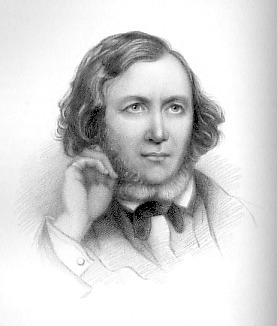
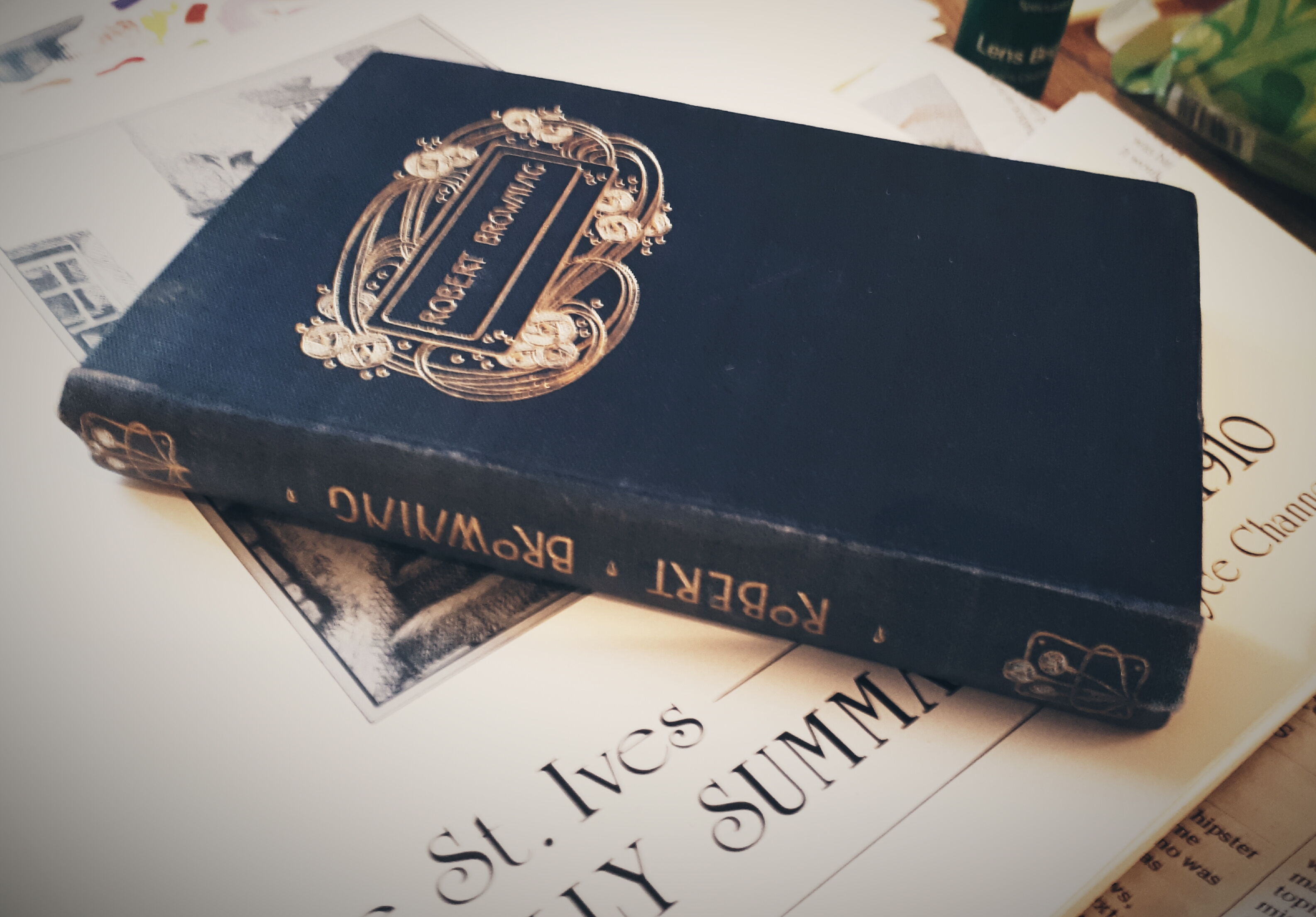
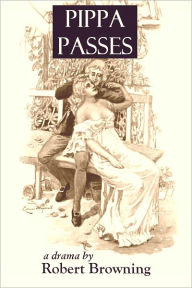
I found this poem which in a collection from a local charity shop in a battered old hardback for just £6. I rather like Browning for his lyrical accessibility. I know that he was greatly loved by the blind Cornish poet, Jack Clemo, for his love of Italy. I remember from school days being very moved by “How they brought the Good News from Ghent to Aix”. Indeed it is now said that it his dramatic monologues which are his greatest contribution. Oscar Wilde writes;”Yes, Browning was great. And as what will he be remembered? As a poet? Ah, not as a poet! He will be remembered as a writer of fiction, as the most supreme writer of fiction, it may be, that we have ever had. His sense of dramatic situation was unrivalled, and, if he could not answer his own problems, he could at least put problems forth, and what more should an artist do? Considered from the point of view of a creator of character he ranks next to him who made Hamlet.”
Returning to the poem above there are certain lines that are both moving and puzzling. “The leaf buds on the vine are wooly” to me suggests that they are both ready to open but some how covered with a kind of moss which is suggestive of some plant that is about to flower and at the same time about to decline. Thus suggestive of the situation the poet finds himself in relation to his would-be mistress. The vine is, of course biblical (John 15.1 and also John 15.4) and brings in another note about time and decay. The colour red turning to gray might I suppose refer to the colour of the grape and the bloom or mould upon it-but clearly signifies passion, like Paradise lost. The seasonal confusions within the poem I find suggestive of the inner turmoil related to the loss of the beloved.
Buried in woods we lay, you recollect;
Swift ran the searching tempest overhead;
And ever and anon some bright white shaft
Burnt through the pine-tree roof,—here burnt and there,
As if God’s messenger through the close wood screen
Plunged and replunged his weapon at a venture,
Feeling for guilty thee and me.
I find that reading verses in German somehow memorable:-
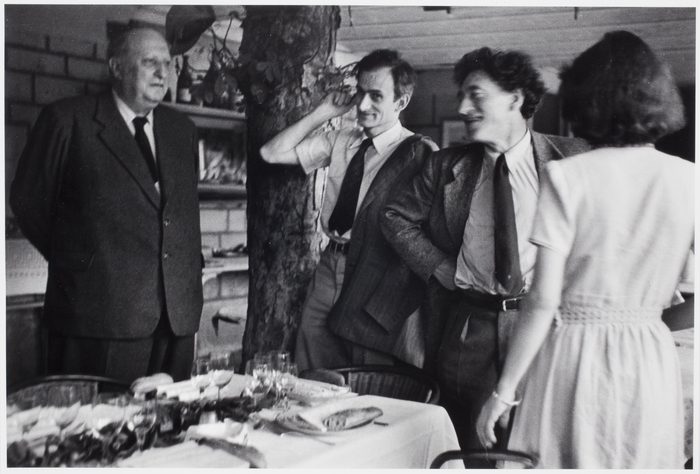
This exhibition is currently showing at Le Musée d’Art moderne de la Ville in Paris until the 29th of October and comprises some 350 works which depict the friendship between these three artists. Their friendship which began in 1933 shows their joint fascination for classical Italian masters, formal clarity and experimentation with both still life and open air painting.
Derain, in particular, emerges as the significant and productive painter in this innovative and energetic period and naturally, a truly brilliant colourist. Here we see his later work and not his fauvist period. This exhibition shows their cross fertilisation between the three and their enthusiasms which clearly ricocheted off each other. In addition they shared models, friendships, collectors and in particular their interests in all aspects of contemporary drama. They were, until after the war, energetic in their correspondence, although without clear transcripts, their letters are not always easy to read even if the visitor is a fluent in French. An impressive self-portrait by Giacometti dominates the entrance, which calls to mind a certain likeness to Duncan Grant. Grant and Derain were post-impressionists deeply influenced by Matisse and Cezanne and indeed both were acquaintances of Gertrude Stein.
When comparing these three artists, each of whom are creative masters, it is worth considering their dates:- Derain (1880-1954), Giacometti(1901-1966) and Balthus(1908-2001). Derain was then their guiding light and already very well-known. He was in recovery from his years of military service but ready to move beyond fauvism towards a new classicism. He found time however to design for Diaghilev and the Ballets Russe. He studied the masters of the early Renaissance and then Pompeian art. It was one particular still life that attracted the penetrating attention of Giacometti with one work- a sombre work from 1936 Nature morte aux poires.
Giacometti is currently on show at the Tate Modern until the 10th September and a few weeks later a new film appears with the Australian actor, Geoffrey Rush playing Giacometti. However, this Paris exhibition shows the cultural hinterland of this key modernist and his interest in working with Beckett, for example in the minimalist staging of Waiting for Godot.
The range of Balthus’s work is illustrated including the disquieting suspense filled eroticism of his depiction of reading, languorous adolescents. Balthus’s East-European ancestry has been the subject of much controversy but it seems that his mother was Jewish and romantically involved with the poet, Rilke. His work shows a deep knowledge and interest in literature. He had moved to Paris in 1933 from Morocco and formed a circle of friends which included the foremost poets and playwrights of the period. The range of his work is shown here and it is unsurprising to learn that the controversial psychoanalyst, Jacques Lacan was a major collector of his oeuvre.
The work on show includes some thought provoking portraits, sculptures, stage sets and photographs. It is not difficult to discern the disquieting political atmosphere of the times. As is well known, Derain stood accused on account of his visit to Berlin during the German Occupation. Nevertheless, Derain appears to have offered protection to members of Balthus’s family. These works which include the magnificent etiolated sketches, almost carved into the background, by Giacometti, evidence the frenzied artistic activity situated between Saint-Germain and Montparnasse.
Their friendships included writers and poets like Artiste Arnaud, Max Jacob, Jean Cocteau together with Breton, Camus and Malraux. Surrealism was penetrating the dramatic experiments of the evolving “theatre of cruelty” with projects by Sartre and Jean-Louis Barrault. The world of fashion with Doucet and Dior, too was an occasional involvement. This is an exciting exhibition and prospective visitors require a minimum of two hours to get their money’s worth.
Kennst du das Land, wo die Zitronen blühn,
Im dunkeln Laub die Gold-Orangen glühn,
Ein sanfter Wind vom blauen Himmel weht,
Die Myrte still und hoch der Lorbeer steht?
Kennst du es wohl?
Dahin! dahin
Möcht ich mit dir, o mein Geliebter, ziehn.
Kennst du das Haus? Auf Säulen ruht sein Dach.
Es glänzt der Saal, es schimmert das Gemach,
Und Marmorbilder stehn und sehn mich an:
Was hat man dir, du armes Kind, getan?
Kennst du es wohl?
Dahin! dahin
Möcht ich mit dir, o mein Beschützer, ziehn.
Kennst du den Berg und seinen Wolkensteg?
Das Maultier sucht im Nebel seinen Weg;
In Höhlen wohnt der Drachen alte Brut;
Es stürzt der Fels und über ihn die Flut!
Kennst du ihn wohl?
Dahin! dahin
Geht unser Weg! O Vater, laß uns ziehn!
und langsam
zu vergessen beginnen
wie es mit dir war
ganz mit dir
und dann halb
halb mit und halb ohne
und ganz zuletzt
ganz ohne
Erich Fried
Dich
dich sein lassen
ganz dich
Sehen
dass du nur du bist
wenn du alles bist
was du bist
das Zarte
und das Wilde
das was sich losreißen
und das was sich anschmiegen will
Wer nur die Hälfte liebt
der liebt dich nicht halb
sondern gar nicht
der will dich zurechtschneiden
amputieren
verstümmeln
Dich dich sein lassen
ob das schwer oder leicht ist?
Es kommt nicht darauf an mit wieviel
Vorbedacht und Verstand
sondern mit wieviel Liebe und mit wieviel
offener Sehnsucht nach allem –
nach allem
was du ist
Nach der Wärme
und nach der Kälte
nach der Güte
und nach dem Starrsinn
nach deinem Willen
und deinem Unwillen
nach jeder deiner Gebärden
nach deiner Ungebärdigkeit
Unstetigkeit
Stetigkeit
Dann
ist dieses
dich dich sein lassen
vielleicht
gar nicht so schwer.
Bei dir sein wollen
Mitten aus dem was man tut
weg sein wollen
bei dir verschwunden sein
Nichts als bei dir
näher als Hand an Hand
enger als Mund an Mund
bei dir sein wollen
In dir zärtlich zu dir sein
dich küssen von außen
und dich streicheln von innen
so und so und auch anders
Und dich einatmen wollen
immer nur einatmen wollen
tiefer tiefer
und ohne Ausatmen trinken
Aber zwischendurch Abstand suchen
um dich sehen zu können
aus ein zwei Handbreit Entfernung
und dann dich weiterküssen
Erich Fried
Wanting
Wanting to be with you
in the middle of what I’m doing
wanting to be gone
lost within you
Nothing but with you
closer than hand to hand
more intimate than lips to lips
wanting to be with you
Being tender within you
kissing you from the outside
and caressing you from within
this and that way and also differently
And wanting to inhale you
nothing but inhaling
deeper deeper
and to drink without exhaling
And while doing so searching the distance
to see you
just two hands away
and then kiss you again
Translation by Günter Ehweiner
Erich Fried was born on 6 May 1921 in Vienna. He began writing early until the German Anschluss in March 1938 transformed him “from an Austrian high school pupil into a persecuted Jew.” His father was murdered by the Gestapo, and Fried fled to London, where he helped his mother and 70 other people escape.
After the war Fried became a co-worker for numerous newly founded journals, later a commentator in German-language programs at the BBC. He gave up this position in 1968 because of the Cold War posture adopted by the BBC.
He made a name for himself with various poems and his only novel (“A soldier and a girl” 1960) and also making translations (including, among other things, the translation of almost the entire works of Shakespeare) – but also his work conflicted with public opinion on political issues, which was reflected in many of his poems. It was not until the end of his life that he received the recognition he deserved in the form of awards such as the Bremen Literary Prize, the Austrian State Prize and the Georg Büchner Prize.
Erich Fried died after a long and serious illness on 22 November 1988 and was buried at the Kensal Green Cemetery in London.


 From the website www.poets.org/poetsorg/poem/old-lizard




 penwithlit