Categories
German Matters Literature Poetry

Two poems about drinks!

From the interesting poem from https://saetzeundschaetze.com/2017/04/02/lili-gruen-maedchenhimmel-2014/ by the Viennese poet Lili Grün.

Elegie to a cup Mocha (extract)

“My last boyfriend was a lawyer.
I am since that time against lawyers.
Lawyers are all false, heartless and wicked,
I can not hear this word, it makes me nervous.
Therefore I want for myself another admirer
For example, an elementary school teacher. “

Elegie bei einer Tasse Mokka (Auszug)


“Mein letzter Freund war ein Jurist.
Ich bin seit dieser Zeit gegen Juristen.
Juristen sind alle falsch, herzlos und bös,
Ich kann dieses Wort gar nicht hören, es macht mich nervös.
Darum wünsch` ich mir zum nächsten Verehrer
Beispielsweise einen Volksschullehrer.“

Now for something later in the day from a Latvian Romani Poet from  http://poemsintranslation.blogspot.co.uk/2017/04/leksa-manush-to-wine-from-latvian-romani.html?utm_source=feedburner&utm_medium=email&utm_campaign=Feed:+PoemsFoundInTranslation+(Poems+Found+in+Translation)
 

To Wine
Leksa Manush
Translated by A.Z. Foreman

A cup of wine does anything you will: 
It gives a manly courage to shy men,
And to the weakest man a strength of will.
Wine knocks strong men out cold beyond their ken. 

And wine bonds strangers unknown to each other. 
They sit as friends, and each one drinks his fill.  
With song, wine calls them up to dance together. 
A good life, lived with wine, is better still.  

Sons and daughters of the sun and earth!
The grape born of the vine has given birth
To wine, to make us happy and at home. 

May vineyards never empty of the vine
And may the jug forever fill with wine
To the happiness and health of every Rom. 

Or in Latvian-

Моляке
Лекса МанушТахтай моляса, со камэс, кэрэл:
Ладжякунэскэ дэл о муршипэн,
Конэскэ зор нанэ, зоралипэн,
Кон зорало сас — мол лэс пэравэл.

Пхандэл ёй кхэтанэ бипинджярдэн,
Бэштэ, сар амала, тэ сако пьел.
Мол тэ кхэлэн гилэнца лэн кхарэл.
Бахталэдыр моляса джиипэн.

Кхамэски и пхувьяки чяёри,
Дракхэндар бияндёл ёй, молори,
Пэ бахт тэ лош дыны ёй си амэнгэ.

Мэ на чючёл дракхэнги барори!
Моляса тэ пхэрдёл дурулори
Пэ бахт тэ састыпэн сарэ ромэнгэ!

Moljáke
Leksa ManušTaxtaj moljása, so kames, kērel:
Lādžakuneske del o muršipen,
Koneske zor nane, zoralipen,
Kon zoralo sas — mol les pēravel.

Phandel joj khetane bipindžarden,
Bešte, sar amala, te sako pjel.
Mol te khelen gilenca len khārel.
Baxtaledîr moljasa džiipen.

Khameski i phuvjáki čhajōrí,
Drakhendar bijandźol joj, molōri,
Pe baxt te loš dînî joj si amenge.

Me na čučol drakhéngi bārōri!
Moljasa te pherdźol durulōri
Pe baxt te sastîpen sāre romenge!


Categories
Literature Poetry Uncategorized

Nichita Stanescu- Romanian Poet

A friend has just handed me a copy of this poet’s collection which is entitled “The Still Unborn About the Dead” published by Anvil Press Poetry. Here is a short example:-
Afternoon of a Song

I was propping the striped air
between your eyes and mine
I was propping the stripped air
of that yellow-green afternoon.

Between the sweet tympana
I was propping a long sound.
Diaphanous fingers
touching it and seem to snatch,
from the second’s
heard being of then,
our bodies so long.

How beautiful and how gentle,
lightening struck in the heights
with their long mantles of cloud,
and stars under their arms!


There is more information at https://en.wikipedia.org/wiki/Nichita_St%C4%83nescu and a poem in English at https://www.poemhunter.com/poem/unwords/


ns

Categories
German Matters Literature

Schmetterlingstraum- Chuang Tse

Chuang-tzu träumte einmal, er sei ein Schmetterling.

In glücklicher Selbstzufriedenheit gaukelte

und flatterte er umher und tat einfach das,

was ihm gefiel.

Und er wusste nicht, dass er Chuang-tzu war.

Plötzlich erwachte er aus seinem Traum und schau – da war er wieder er selbst: echt und unverkennbar Chuang-tzu.

Aber dann wurde er sehr nachdenklich. Er wusste mit einem Male nicht mehr, ob er nun Chuang-tzu war, der eben träumte ein Schmetterling zu sein oder ob er vielleicht ein Schmetterling war, der träumte, Chuang-tzu zu sein.

bu

Categories
Art and Photographic History German Matters Literature Penwith West Cornwall (and local history)

Philby, Zoltan Kodaly and István Szegedi Szüts

First let us get ourselves into the right mood with some Hungarian Music –from :-Szegedi Szűcs Judit: Három sós perec

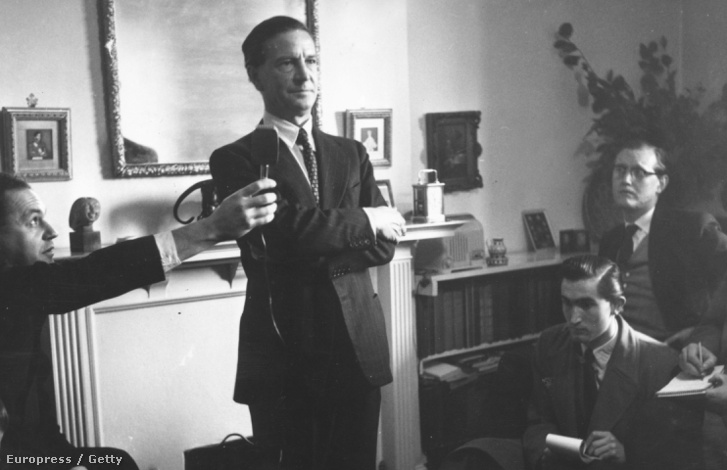
Now translated from the Hungarian version of Index against Censorship by means of the partially garbled Google translate we read of a certain man -István Szegedi Szüts being bound up somehow with the Fourth Man, Kim Philby:-

“Probably never know how mixed up next to each other Szűts Szeged and Philby because Philby one word did not remember the incident, as a later joint útjaikról not, in fact never down either by Szegedi Szűts name, just “Hungarian” referred to as hinted. Nevertheless Szűts Szegedi could play a significant and important role in his life, has recently come of age since the 1930 Easter led Philby’s first trip to Hungary. Motorcycle arrived, but that where you’ve been, shrouded, but much seems certain that Szűts Szegedi’s company reached the Low Countries and Subotica surroundings, where the Black Country is very similar conditions met, but are not industrial workers, but the manual peasants life seen with your own eyes.

kp

Philby same year appeared again in Budapest, this time in the company of Tim Milne, who first hired King Street apartment and a car repair shop encamped, which was for the owner than George Szűts Szeged. Philby and Milne very well felt in the capital: fried meat ate, swam the Danube, which have been removed and used at the time, watched the Blue Angels (was Marlene Dietrich’s first major success in 1930, the German sound film made Heinrich Mann’s novel, first pool by way of ), they walked along the Margaret Island and Milne’s memoir, according to Philby never once gave signs of increasing political beliefs. Szegedi Szűts not name popped up ever again; if there was a secret painter mid-thirties established in England in 1959 when the death took to the grave with him. Philby’s commitment towards the working class and communism found it a few years later confirmed in Vienna, where two Hungarian also participated actively in the consciousness of Philby spy and of becoming.”

Which is very interesting and suggests the possibility that to an unknown extent, Philby was involved with a Hungarian painter who knew the Russian spy and was possibly a contact in his activities. This was not just any painter but an artist who has been compared with Paul Nash, was an excellent woodcut printer and also a talented writer, István Szegedi Szüts. He was born in Budapest and lived for a large portion of his life in the small south Cornwall fishing village of Mullion. István Szegedi Szüts was a member of an Olympic fencing team in 1912 and a brave officer fighting the Russians in the Carpathians during the First World War. It was at this time that he was ordered to shoot any straggelers among his own men to prevent a more horrid death from persuing wolves. His fascinating prints recording his experiences in the K and K forces can be seen at http://www.bhandl.co.uk/articles/2013/03/19/viewer.aspx.

ss2

István Szegedi Szüts, a self-portrait at the age of about 32

Images from the First World War may be seen at Barnes, Hampton and Littlewood where they say:”Szuts first visited England in 1929 and held a solo exhibition at the Gieves Gallery, London in the same year. In 1936 he moved to Cornwall with his partner Gwynedd Jones-Parry, whom he married in 1937. The couple lived at Caunce Head near Mullin on The Lizard and remained there for the rest of their lives. Szuts exhibited with The Newlyn Society of Artists and The Penwith Society of Arts.” The link is at http://www.bhandl.co.uk/articles/2013/03/19/viewer.aspx

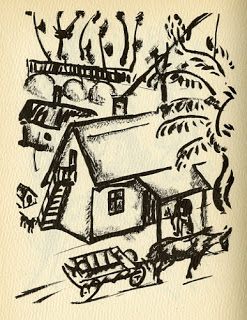
Wordless Book,"My War" showing a village during WW1
Wordless Book,”My War” showing a village during WW1


A teacher and educational philosopher he was also a friend of a friend of the composers Béla Bartók, Zoltán Kodály and György Ránki.


ss1

Categories
Literature Poetry Uncategorized

George Orwell’s Poem from The Adelphi (December 1936)

gf


A happy vicar I might have been
Two hundred years ago
To preach upon eternal doom
And watch my walnuts grow;

But born, alas, in an evil time,
I missed that pleasant haven,
For the hair has grown on my upper lip
And the clergy are all clean-shaven.

And later still the times were good,
We were so easy to please,
We rocked our troubled thoughts to sleep
On the bosoms of the trees.

All ignorant we dared to own
The joys we now dissemble;
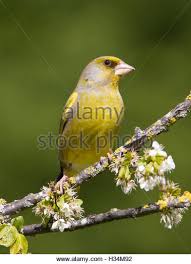
The greenfinch on the apple bough
Could make my enemies tremble.

But girl’s bellies and apricots,
Roach in a shaded stream,
Horses, ducks in flight at dawn,
All these are a dream.

It is forbidden to dream again;
We maim our joys or hide them:
Horses are made of chromium steel
And little fat men shall ride them.

I am the worm who never turned,
The eunuch without a harem;
Between the priest and the commissar
I walk like Eugene Aram;

And the commissar is telling my fortune
While the radio plays,
But the priest has promised an Austin Seven,
For Duggie always pays.

I dreamt I dwelt in marble halls,
And woke to find it true;
I wasn’t born for an age like this;
Was Smith? Was Jones? Were you?

Commentary

This appears in a new collection and their is a witty comment at https://www.theguardian.com/books/shortcuts/2015/nov/04/love-george-orwell-never-read-poems-poetry

It somehow reminds me of a favourite poem by Louis Mac Neice in its energetic and upbeat tempo- Bagpipe Music. Perhaps it is not surprising that Mac Neice sounds so much like Auden-but it certainly surprised me!

Categories
Classics Literature Poetry

Winter in the mountains of Thrace -Georgics Virgil BookIII

And where the wild Danube throws up its yellow sand,

and where vast Thracian Mount Rhodope touches the sky.

There they keep the herds penned in, and no grass

is visible on the plains, or leaves on the trees:

but the land far and wide lies formless under mounds of snow

and heaps of ice rising seven metres high.

It’s always winter, always North winds breathing cold.

There the Sun never disperses the pale mists,

neither when he finds high heaven, carried by his team,

nor when he drenches his chariot headlong in Ocean’s red waters.

Ice-floes form suddenly on the running rivers,

and the water soon carries metalled wheels on its back,

once greeting boats and now broad wagons:

Everywhere bronze cracks, clothes freeze as they’re worn,

and they cut out the liquid wine with axes,

whole lakes turn to solid ice, and bristling icicles

harden on their straggling beards.

Image result for Mount Rhodope


OR IN THE ORIGINAL LATIN

At non qua Scythiae gentes Maeotiaque unda,
turbidus et torquens flauentis Hister harenas,               350
quaque redit medium Rhodope porrecta sub axem.
illic clausa tenent stabulis armenta, neque ullae
aut herbae campo apparent aut arbore frondes;
sed iacet aggeribus niueis informis et alto
terra gelu late septemque adsurgit in ulnas.               355
semper hiems, semper spirantes frigora Cauri;
tum Sol pallentis haud umquam discutit umbras,
nec cum inuectus equis altum petit aethera, nec cum
praecipitem Oceani rubro lauit aequore currum.
concrescunt subitae currenti in flumine crustae,               360
undaque iam tergo ferratos sustinet orbis,
puppibus illa prius, patulis nunc hospita plaustris;
aeraque dissiliunt uulgo, uestesque rigescunt
indutae, caeduntque securibus umida uina,
et totae solidam in glaciem uertere lacunae,                365
stiriaque impexis induruit horrida barbis.

Categories
German Matters Literature Poetry

In der Flucht -Nelly Sachs

In der Flucht

welch großer Empfang

unterwegs-


Eingehüllt

in der Winde Tuch

Füße im Gebet des Sandes

der niemals Amen sagen kann

denn er muß

von der Flosse in den Flügel

und weiter-


der kranke Schmetterling

weiß bald wieder vom Meer

Dieser Stein

mit der Inschrift der Fliege

hat sich mir in die Hand gegeben-


An Stelle von Heimat

halte ich die Verwandlungen der Welt-


Empfehlung  http://literatur-schweden.blogspot.co.uk/2013/05/nelly-sachs-und-die-gedichte-zur-flucht.html

Categories
German Matters Literature Poetry

Georg Trakl -“Abendland”

Mond, als träte ein Totes

Aus blauer Höhle,

Und es fallen der Bluten

Viele über den Felsenpfad.

Silbern weint ein Krankes

Am Abendweiher,

Auf schwarzem Kahn

Hinüberstarben Liebende.
Oder es läuten die Schritte

Elis’ durch den Hain

Den hyazinthenen

Wieder verhallend unter Eichen.

O des Knaben Gestalt

Geformt aus kristallenen Tränen,

Nächtigen Schatten.

Zackige Blitze erhellen die Schläfe

Die immerkühle,

Wenn am grünenden Hügel

Frühlingsgewitter ertönt.
So leise sind die grünen Wälder

Unsrer Heimat,

Die kristallene Woge

Hinsterbend an verfallner Mauer

Und wir haben im Schlaf geweint;

Wandern mit zögernden Schritten

An der dornigen Hecke hin Singende

im Abendsommer, In heiliger Ruh

Des fern verstrahlenden Weinbergs;

Schatten nun im kühlen Schoß

Der Nacht, trauernde Adler.

So leise schließt ein mondener Strahl

Die purpurnen Male der Schwermut.
Ihr großen Städte

gt


Steinern aufgebaut

In der Ebene! So sprachlos folgt

Der Heimatlose

Mit dunbler Stirne dem Wind,

Kahlen Bäumen am Hügel.

Ihr weithin dämmernden Ströme!

Gewaltig ängstet

Schaurige Abendröte

Im Sturmgewölk.

Ihr sterbenden Völker!

Bleiche Woge

Zerschellend am Strande der Nacht,

Fallende Sterne.


There is an analysis at http://wikifarm.phil-fak.uni-duesseldorf.de/Moderne/index.php/Trakl,_Georg:_Abendland

Categories
Literature Poetry West Cornwall (and local history)

Chant d’automne -Charles Baudelaire

Chant d’automne

ca

Bientôt nous plongerons dans les froides ténèbres ;
Adieu, vive clarté de nos étés trop courts !
J’entends déjà tomber avec des chocs funèbres
Le bois retentissant sur le pavé des cours.Tout l’hiver va rentrer dans mon être : colère,
Haine, frissons, horreur, labeur dur et forcé,
Et, comme le soleil dans son enfer polaire,
Mon cœur ne sera plus qu’un bloc rouge et glacé.

J’écoute en frémissant chaque bûche qui tombe
L’échafaud qu’on bâtit n’a pas d’écho plus sourd.
Mon esprit est pareil à la tour qui succombe
Sous les coups du bélier infatigable et lourd.

II me semble, bercé par ce choc monotone,
Qu’on cloue en grande hâte un cercueil quelque part.
Pour qui ? – C’était hier l’été ; voici l’automne !
Ce bruit mystérieux sonne comme un départ.

II

J’aime de vos longs yeux la lumière verdâtre,
Douce beauté, mais tout aujourd’hui m’est amer,
Et rien, ni votre amour, ni le boudoir, ni l’âtre,
Ne me vaut le soleil rayonnant sur la mer.

Et pourtant aimez-moi, tendre cœur ! soyez mère,
Même pour un ingrat, même pour un méchant ;
Amante ou sœur, soyez la douceur éphémère
D’un glorieux automne ou d’un soleil couchant.

Courte tâche ! La tombe attend – elle est avide !
Ah ! laissez-moi, mon front posé sur vos genoux,
Goûter, en regrettant l’été blanc et torride,
De l’arrière-saison le rayon jaune et doux !

An analysis of the poem is given in French at http://www.bacdefrancais.net/chant-d-automne-baudelaire.php

ca1

Categories
German Matters Literature Poetry

Mascha Kaléko: Kinder reicher Leute

Introduction

I have just been skim reading the Wikipedia.de entry about Mascha Kaleko and how she visited the famous literary Romamian Cafe which was in what is now Breitscheidplatz near the even more famous  Kaiser-Wilhelm-Gedächtniskirche, Also that she had attended a Volksschule in Frankfurt and then attended in Berlin the Humboldt University.BV In the fateful year 1933, her book, Lyrische Stenogrammheft or “Lyrical Shorthand Notebook”-was published and the philosopher Heidegger  wrote to her to say that he thought it showed that she understood everything that being mortal meant. Remarkably her work escaped the Nazi book burnings in May because they had not realised she was Jewish.MK

After the war, Kaléko in Germany again aquired a reading public.  Lyrische Stenogrammheft  was published by Rowohlt (1956). By 1960 it was hoped to give her the Fontane prize of the Akademie der Künste in West Berlin.  Since a former SS member was in the jury, Hans Egon Holthusen, she rejected this offer. The Managing Director of the Academy, Herbert von Buttlar somewhat excused Holthusens  SS membership  and it seems undiplomatically recommended such “emigrants” to stay away. That same year she left America for the sake of her husband and went with him to Jerusalem.There, she suffered much under the linguistic and cultural isolation and lived disappointed and lonely


Mascha Kaléko: Kinder reicher Leute

Sie wissen nichts von Schmutz und Wohnungsnot,
Von Stempelngehn und Armeleuteküchen.
Sie ahnen nichts von Hinterhausgerüchen,
Von Hungerlöhnen und von Trockenbrot.

Sie wohnen meist im herrschaftlichen Haus,
Zuweilen auch in eleganten Villen.
Sie kommen nie in Kneipen und Destillen
Und gehen stets nur mit dem Fräulein aus.

Sie rechnen sich schon jetzt zur Hautevolée
Und zählen Armut zu den größten Sünden
– Nicht mal ein Auto…? Nein, wie sie das finden!
Ihr Hochmut wächst mit Pappis Portemonnaie.

Sie kommen meist mit Abitur zur Welt
– Zumindest aber schon mit Referenzen –
Und ziehn daraus die letzten Konsequenzen:
Wir sind die Herren, denn unser ist das Geld.

Mit vierzehn finden sie, der Armen Los
Sei zwar nicht gut. Doch werde übertrieben–.
Mit vierzehn schon! – Wenn sie nur vierzehn blieben.
Jedoch die Kinder werden einmal groß…