Du lernst ihn in einer Gesellschaft kennen.
Er plaudert. Er ist zu dir nett.
Er kann dir alle Tenniscracks nennen.
Er sieht gut aus. Ohne Fett.
Er tanzt ausgezeichnet. Du siehst ihn dir an…
Dann tritt zu euch beiden dein Mann.
Und du vergleichst sie in deinem Gemüte.
Dein Mann kommt nicht gut dabei weg.
Wie er schon dasteht – du liebe Güte!
Und hinten am Hals der Speck!
Und du denks bei dir so: “eigentlich …
Der da wäre ein Mann für mich ! ”
My provisional and tentative translation for which is:-
You get to know him around and about.
He chats and seems friendly.
He knows who are the latest tennis stars.
He looks great-no fat anywhere.
He dances beautifully.
Then both of you remember your husband!
…and when you compare them in your thoughts
Your husband doesn’t come out of it very well!
Goodness, how he has become already!
The back of his neck like a lump of bacon.
You think to yourself, ”Well actually,
There goes the chap for me…”
These, however, are only the first two verses and then the implication neatly reverses again, delightfully….
Komm in den totgesagten park und schau:
Der schimmer ferner lächelnder gestade,
Der reinen wolken unverhofftes blau
Erhellt die weiher und die bunten pfade.
Dort nimm das tiefe gelb, das weiche grau
Von birken und von buchs, der wind ist lau,
Die späten rosen welkten noch nicht ganz,
Erlese küsse sie und flicht den kranz,
Vergiss auch diese lezten astern nicht,
Den purpur um die ranken wilder reben
Und auch was übrig blieb von grünem leben
Verwinde leicht im herbstlichen gesicht.
REFERENCES IN LITERATURE:
– Aunt Nancy, who might be a fallback matron for Hope should something happen to Mrs. Bell, in “What Hope Bell Found in Her Stocking”, from The Youngest Miss Lorton, and Other Stories by Nora Perry (1889).
– Nancy (Annie) Ridd (sometimes called “Nanny“), John’s favorite sister, a sweet little homemaker, in Lorna Doone, by R.D. Blackmore (written in 1869, set in the final decades of the 17th century).
– Nancy (Anne) Steele, Lucy’s well-intentioned but empty-headed ninny of an older sister, a woman of “vulgar freedom and folly”, in Jane Austen’s Sense and Sensibility(set between 1792-1797, published in…
Der Jahreszeit Pein, des Wirbelwinds Krachen, Eis sind vorübergehen und haben die ausgetretenen Pfade gereignet, die die schweigsamen Gärtner mit Asche bestreuten.
Die eisernen Ringe des Himmels sind vom Sturm abgeschliffen; jedoch in diesem Garten gibt es keinen Hader mehr: Des Winters Messer liegt vergraben in der Erde. Reine Musik ist der Schrei, der zerrt an den vogelverlassenen Zweigen im Wind. Keine Blüte kommt wieder.Blind ist des Teiches blau starrender Blick.
Und niemand sieht
einen ruhelosen Fremden durch der Morgen irren
über den wasserdurchtränken Rasen, dessen Augen
des Weinens müde sind, in dessen Brust
eine barbarische Sonne ihren verborgenen Tag aufzehrt.
This is the heading of an article in Die Welt 05.07.08 by Uwe Wittstock and the opinion expressed,” somewhat gruff charm”, is how the reviewer sees Wondrat’s poetry. This is from the collection, Lied von der Liebe, published in that year. This poem is about his young son, Raoulito, and his attempts to fly.
CD of the collection
“Ich kann fliegen, behauptet er,
breitet die Arme aus, holt Luft,
hüpft hoch, ein paar Zentimeter,
steht wieder und sagt, siehst du?
Um was sonst, denke ich, geht es
unter Sterblichen, wenn nicht hin
und wieder um den Zauber einer
kurzen Sekunde, am besten einer
zwischen Himmel und Erde?”
In rough translation-
“Icanfly,he boasts
Armsspreadout intoair,
and leapsafewinches high,
andsays once again, do yousee?
What more,I wonder
for mankind, but the
repeated magic of a
shortsecond,atbest,
between HeavenandEarth?
between the sky and the ground.
“Ein paar der Gedichte Wondratscheks vermitteln sekundenlang einen zugegeben: etwas ruppigen Zauber – und um was sonst geht es? ” Uwe Wittstock
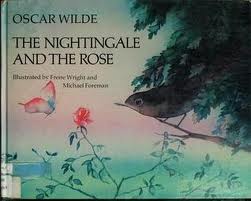
She said that she would dance with me if I brought her red roses,’ cried the young Student; ‘but in all my garden there is no red rose.’
From her nest in the holm-oak tree the Nightingale heard him, and she looked out through the leaves, and wondered.
‘No red rose in all my garden!’ he cried, and his beautiful eyes filled with tears. ‘Ah, on what little things does happiness depend! I have read all that the wise men have written, and all the secrets of philosophy are mine, yet for want of a red rose is my life made wretched.’
‘Here at last is a true lover,’ said the Nightingale. ‘Night after night have I sung of him, though I knew him not: night after night have I told his story to the stars, and now I see him. His hair is dark as the hyacinth-blossom, and his lips are red as the rose of his desire; but passion has made his lace like pale Ivory, and sorrow has set her seal upon his brow.’
‘The Prince gives a ball to-morrow night,’ murmured the young Student, ‘and my love will be of the company. If I bring her a red rose she will dance with me till dawn. If I bring her a red rose, I shall hold her in my arms, and she will lean her head upon my shoulder, and her hand will be clasped in mine. But there is no red rose in my garden, so I shall sit lonely, and she will pass me by. She will have no heed of me, and my heart will break.’
‘Here indeed is the true lover,’ said the Nightingale. ‘What I sing of he suffers: what is joy to me, to him is pain. Surely Love is a wonderful thing. It is more precious than emeralds, and dearer than fine opals. Pearls and pomegranates cannot buy it, nor is it set forth in the market-place. it may not be purchased of the merchants, ‘or can it be weighed out in the balance for gold.’
—————————————
‘The musicians will sit in their gallery,’ said the young Student, ‘and play upon their stringed instruments, and my love will dance to the sound of the harp and the violin. She will dance so lightly that her feet will not touch the floor, and the courtiers in their gay dresses will throng round her. But with me she will not dance, for I have no red rose to give her;’ and he flung himself down on the grass, and buried his face in his hands, and wept.
‘Why is he weeping?’ asked a little Green Lizard, as he ran past him with his tail in the air.
‘Why, indeed?’ said a Butterfly, who was fluttering about after a sunbeam.
‘Why, indeed?’ whispered a Daisy to his neighbour, in a soft, low voice.
‘He is weeping for a red rose,’ said the Nightingale.
‘For a red rose!’ they cried; ‘how very ridiculous!’ and the little Lizard, who was something of a cynic, laughed outright.
But the Nightingale understood the secret of the Student’s sorrow, and she sat silent in the oak-tree, and thought about the mystery of Love.
Suddenly she spread her brown wings for flight, and soared into the air. She passed through the grove like a shadow, and like a shadow she sailed across the garden.
In the centre of the grass-plot was standing a beautiful Rose-tree, and when she saw it, she flew over to it, and lit upon a spray.
‘Give me a red rose,’ she cried, ‘and I will sing you my sweetest song.’
But the Tree shook its head.
‘My roses are white,’ it answered; ‘as white as the foam of the sea, and whiter than the snow upon the mountain. But go to my brother who grows round the old sun-dial, and perhaps he will give you what you want.’
———————————–
So the Nightingale flew over to the Rose-tree that was growing round the old sun-dial.
‘Give me a red rose,’ she cried, ‘and I will sing you my sweetest song.’
But the Tree shook its head.
‘My roses are yellow,’ it answered; ‘as yellow as the hair of the mermaiden who sits upon an amber throne, and yellower than the daffodil that blooms in the meadow before the mower comes with his scythe. But go to my brother who grows beneath the Student’s window, and perhaps he will give you what you want.’
So the Nightingale flew over to the Rose-tree that was growing beneath the Student’s window.
‘Give me a red rose,’ she cried, ‘and I will sing you my sweetest song.’
But the Tree shook its head.
‘My roses are red,’ it answered, ‘as red as the feet of the dove, and redder than the great fans of coral that wave and wave in the ocean-cavern. But the winter has chilled my veins, and the frost has nipped my buds, and the storm has broken my branches, and I shall have no roses at all this year.’
‘One red rose is all I want,’ cried the Nightingale, ‘only one red rose! Is there no way by which I can get it?’
‘There is a way,’ answered the Tree; ‘but it is so terrible that I dare not tell it to you.’
‘Tell it to me,’ said the Nightingale, ‘I am not afraid.’
‘If you want a red rose,’ said the Tree, ‘you must build it out of music by moonlight, and stain it with your own heart’s-blood. You must sing to me with your breast against a thorn. All night long you must sing to me, and the thorn must pierce your heart, and your life-blood must flow into my veins, and become mine.’
——————————–
‘Death is a great price to pay for a red rose,’ cried the Nightingale, ‘and Life is very dear to all. It is pleasant to sit in the green wood, and to watch the Sun in his chariot of gold, and the Moon in her chariot of pearl. Sweet is the scent of the hawthorn, and sweet are the bluebells that hide in the valley, and the heather that blows on the hill. Yet Love is better than Life, and what is the heart of a bird compared to the heart of a man?’
So she spread her brown wings for flight, and soared into the air. She swept over the garden like a shadow, and like a shadow she sailed through the grove.
The young Student was still lying on the grass, where she had left him, and the tears were not yet dry in his beautiful eyes.
‘Be happy,’ cried the Nightingale, ‘be happy; you shall have your red rose. I will build it out of music by moonlight, and stain it with my own heart’s-blood. All that I ask of you in return is that you will be a true lover, for Love is wiser than Philosophy, though she is wise, and mightier than Power, though he is mighty. Flame-coloured are his wings, and coloured like flame is his body. His lips are sweet as honey, and his breath is like frankincense.’
The Student looked up from the grass, and listened, but he could not understand what the Nightingale was saying to him, for he only knew the things that are written down in books.
But the Oak-tree understood, and felt sad, for he was very fond of the little Nightingale who had built her nest in his branches.
‘Sing me one last song,’ he whispered; ‘I shall feel very lonely when you are gone.’
So the Nightingale sang to the Oak-tree, and her voice was like water bubbling from a silver jar.
———————————–
When she had finished her song the Student got lip, and pulled a note-book and a lead-pencil out of his pocket.
‘She has form,’ he said to himself, as he walked away through the grove – ‘that cannot be denied to her; but has she got feeling? I am afraid not. In fact, she is like most artists; she is all style, without any sincerity. She would not sacrifice herself for others. She thinks merely of music, and everybody knows that the arts are selfish. Still, it must be admitted that she has some beautiful notes in her voice. What a pity it is that they do not mean anything, or do any practical good.’ And he went into his room, and lay down on his little pallet-bed, and began to think of his love; and, after a time, he fell asleep.
And when the Moon shone in the heavens the Nightingale flew to the Rose-tree, and set her breast against the thorn. All night long she sang with her breast against the thorn, and the cold crystal Moon leaned down and listened. All night long she sang, and the thorn went deeper and deeper into her breast, and her life-blood ebbed away from her.
She sang first of the birth of love in the heart of a boy and a girl. And on the topmost spray of the Rose-tree there blossomed a marvellous rose, petal following petal, as song followed song. Yale was it, at first, as the mist that hangs over the river – pale as the feet of the morning, and silver as the wings of the dawn. As the shadow of a rose in a mirror of silver, as the shadow of a rose in a water-pool, so was the rose that blossomed on the topmost spray of the Tree.
But the Tree cried to the Nightingale to press closer against the thorn. ‘Press closer, little Nightingale,’ cried the Tree, ‘or the Day will come before the rose is finished.’
So the Nightingale pressed closer against the thorn, and louder and louder grew her song, for she sang of the birth of passion in the soul of a man and a maid.
——————————
And a delicate flush of pink came into the leaves of the rose, like the flush in the face of the bridegroom when he kisses the lips of the bride. But the thorn had not yet reached her heart, so the rose’s heart remained white, for only a Nightingale’s heart’s-blood can crimson the heart of a rose.
And the Tree cried to the Nightingale to press closer against the thorn. ‘Press closer, little Nightingale,’ cried the Tree, ‘or the Day will come before the rose is finished.’
So the Nightingale pressed closer against the thorn, and the thorn touched her heart, and a fierce pang of pain shot through her. Bitter, bitter was the pain, and wilder and wilder grew her song, for she sang of the Love that is perfected by Death, of the Love that dies not in the tomb.
And the marvellous rose became crimson, like the rose of the eastern sky. Crimson was the girdle of petals, and crimson as a ruby was the heart.
But the Nightingale’s voice grew fainter, and her little wings began to beat, and a film came over her eyes. Fainter and fainter grew her song, and she felt something choking her in her throat.
Then she gave one last burst of music. The white Moon heard it, and she forgot the dawn, and lingered on in the sky. The red rose heard it, and it trembled all over with ecstasy, and opened its petals to the cold morning air. Echo bore it to her purple cavern in the hills, and woke the sleeping shepherds from their dreams. It floated through the reeds of the river, and they carried its message to the sea.
‘Look, look!’ cried the Tree, ‘the rose is finished now;’ but the Nightingale made no answer, for she was lying dead in the long grass, with the thorn in her heart.
And at noon the Student opened his window and looked out.
————————————
‘Why, what a wonderful piece of luck! he cried; ‘here is a red rose! I have never seen any rose like it in all my life. It is so beautiful that I am sure it has a long Latin name;’ and he leaned down and plucked it.
Then he put on his hat, and ran up to the Professor’s house with the rose in his hand.
The daughter of the Professor was sitting in the doorway winding blue silk on a reel, and her little dog was lying at her feet.
‘You said that you would dance with me if I brought you a red rose,’ cried the Student. Here is the reddest rose in all the world. You will wear it to-night next your heart, and as we dance together it will tell you how I love you.’
But the girl frowned.
‘I am afraid it will not go with my dress,’ she answered; ‘and, besides, the Chamberlain’s nephew has sent me some real jewels, and everybody knows that jewels cost far more than flowers.’
‘Well, upon my word, you are very ungrateful,’ said the Student angrily; and he threw the rose into the street, where it fell into the gutter, and a cart-wheel went over it.
‘Ungrateful!’ said the girl. ‘I tell you what, you are very rude; and, after all, who are you? Only a Student. Why, I don’t believe you have even got silver buckles to your shoes as the Chamberlain’s nephew has;’ and she got up from her chair and went into the house.
‘What a silly thing Love is,’ said the Student as he walked away. ‘It is not half as useful as Logic, for it does not prove anything, and it is always telling one of things that are not going to happen, and making one believe things that are not true. In fact, it is quite unpractical, and, as in this age to be practical is everything, I shall go back to Philosophy and study Metaphysics.’
————————————-
So he returned to his room and pulled out a great dusty book, and began to read.
An jenem Tag im blauen Mond September
Still unter einem jungen Pflaumenbaum
Da hielt ich sie, die stille bleiche Liebe
In meinem Arm wie einen holden Traum.
Und über uns im schönen Sommerhimmel
War eine Wolke, die ich lange sah
Sie war sehr weiß und ungeheuer oben
Und als ich aufsah, war sie nimmer da.
Seit jenem Tag sind viele, viele Monde
Geschwommen still hinunter und vorbei.
Die Plaumenbäume sind wohl abgehauen
Und fragst du mich, was mit der Liebe sei?
So sag ich dir: Ich kann mich nicht erinnern
Und doch, gewiß, ich weiß schon, was du meinst.
Doch ihr Gesicht, das weiß ich wirklich nimmer
Ich weiß nur mehr: ich küßte sie dereinst.
Und auch den Kuß, ich hätt ihn längst vergessen
Wenn nicht die Wolke da gewesen wär
Die weiß ich noch und werd ich immer wissen
Sie war sehr weiß und kam von oben her.
Die Pflaumenbäume blühn vielleicht noch immer
Und jene Frau hat jetzt vielleicht das siebte Kind
Doch jene Wolke blühte nur Minuten
Und als ich aufsah, schwand sie schon im Wind.
This poem has been translated by the well-known poet, by Derek Mahon, where at http://en.wikipedia.org/wiki/Derek_Mahon it is mentioned that he is interested in established verse forms and ekphrasis:(the poetic interpretation of visual art). Here is his version of Brecht which can be found in that excellent collection, The Faber Book of 20th Century German Poems edited by Michael Hoffmann.
A Cloud
One evening in the blue month of September
We lay at peace beneath an apple bough:
I took her in my arms, my gentle lover,
And held her closely like a dream come true-
While far up in the tranquil summer heaven
There was a cloud, I saw it high and clear.
It was so white and so immense above us
And, as I watched, it was no longer there.
Since then so very many different evenings
Have drifted past in the general flow.
Perhaps the apple orchard has been flattened;
And if you ask me where the girl is now
I have to admit I really don’t remember.
I can imagine what you’re going to say
But even her face I truly can’t recapture
I only know I kissed it there that day.
Even the kiss I would have long forgotten
If that cloud had not been there too-
I see it and will always see it plainly,
So white and unexpected in the blue.
Perhaps the apple-boughs are back in blossom,
Maybe she holds a fourth child on her knees;
The cloud, though, hung there for a moment only
And, as I watched, it broke up in the breeze.
Another Brecht Love PoemIch will mit dem gehen, den ich liebeIch will mit dem gehen, den ich liebe.
Ich will nicht ausrechnen, was es kostet.
Ich will nicht nachdenken, ob es gut ist.
Ich will nicht wissen, ob er mich liebt.
Ich will mit ihm gehen, den ich liebe.
I want to go with the one I loveI want to go with the one I love.
I do not want to calculate the cost.
I do not want to think about whether it’s good.
I do not want to know whether he loves me.
I want to go with whom I love.
Someone said that education when is what is left over when you have forgotten most of what you were actually taught.
A Grammar School was supposed to have versed its pupils in the diligent study and understanding of basic linguistic structures. Much of this revolved around the central importance of Latin. I can well remember my English teacher, affectionately known as Ernie T-there must have been another Ernie on the staff- spending hours of lessons explaining parsing. This was essentially taking an extended sentence with clauses, phrases and sub-clauses and analysing it into its component parts. Indeed he might extract an ugly sentence from a boy’s homework and subject it, on the board to such treatment. Excruciating as this could be for the person concerned, we did perhaps learn something from the process! I recall how he once took the sentence and translated it into Latin, which he also taught, in order to simplify the meaning before breaking it down into the constituent parts of speech. Now, years later, this all begins to make some sort of sense.
Alma Mater Studorium
There are three examples where Latin has been quite useful to my understanding of grammar; both in English and when learning German. (1) Adverbial clauses in English should be ordered in manner and then place then time. Adverbial phrases etc are explained at http://www.grammar-monster.com/glossary/adverbial_phrases.htm. Hence:-
I will sit quietly.
(normal adverb)
I will sitin silence.
(adverbial phrase)
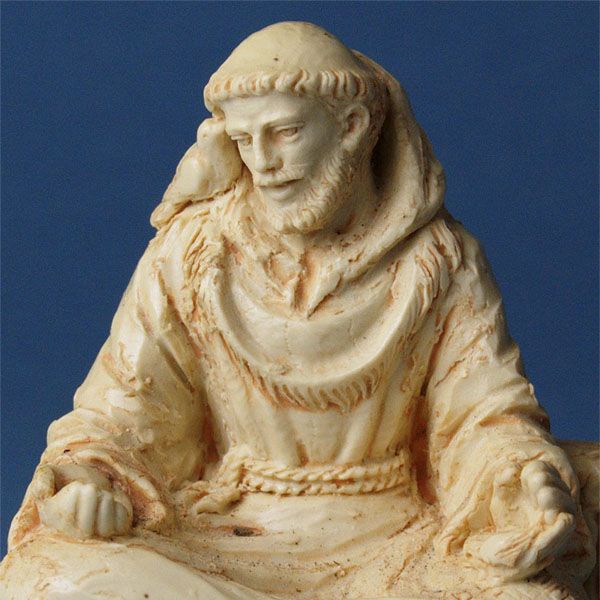
St Francis Meditating
I will sit like a monk meditates.
(adverbial clause)
(When the multi-word adverb contains a subject and a verb (like in this example), it is an adverbial clause as opposed to an adverbial phrase.)
Not only this but also if there are several adverbial clauses, then in English, the order ought to become:-
I waited impatiently (MANNER) at the bus stop PLACE) for an hour (TIME).
Or in other words, How? Then Where? And finally When?
Now I am unsure of how important this is,although I once was taught it, as the order may be altered for the purpose of emphasis and it seems just to be common practice. (You can, however, read more about it all at http://www.lingua.org.uk/posadv.html and adverbial clauses in general at http://en.wikipedia.org/wiki/Adverbial_clause)
Where it does really matter is in GERMAN e.g or rather-
Zum Beispiel: “Heute kommt Erik mit der Bahnnach Hause.”
IT IS IMPORTANT NOW TO REALISE:-
Time comes first HEUTE
Manner second MIT DER BAHN
Place last NACH HAUSE
This is really well explained at http://german.about.com/library/weekly/aa032700a.htm
(2)Impersonal verbs in Latin and the use of the third person singular ” Mann muss…..” So consider tking a look at an interesting, and to me engaging, Latin sentence-
mihi placet libros legere vinumque bibere
mihi is the dative “To me” and placet is “it pleases” and is one of the commonest Latin impersonal verbs and there is more on http://classics.jburroughs.org/curriculum/olc3/49_tutorial.html, libros are books and legere= to read, vinumque means “and wine” and pretty obviously,” bibere” means to drink, so a rough translation is-
“To me it is pleasing to read books and drink wine” or much better, “I like reading books and drinking wine!” and this is rather similar to Deutschsprache-
ManmussBücherlesenundtrinkenWein. -or more probably Wein trinken!
The combination of impersonal verbs with the dative in German is well explained at http://joycep.myweb.port.ac.uk/abinitio/chap7-11.html:-
“Impersonal verbs
Another type of construction, in which what would be the subject of an English sentence, is in the dative case in a German sentence includes the so-called impersonal verbs. These are verbs in which the grammatical subject of the sentence is “es”, a non-specific “it”. We have met two of the most common impersonal verbs already:
Es tut mir Leid. (“I‘m sorry.”)
Wie geht es Ihnen? (“How are you?”)
Mir geht es gut. (“I‘m very well.”)”
So I have not got as far as participles nor yet discussing gerunds. Both are subjects worthy of another posting. I am sure Ernie T would have agreed! I recall now that there was an Ernie G and that he taught Maths amongst other subjects. Among other sayings Mr T would say, “A gentleman is a man who knows how to treat both his books and his mistresses.” This was delivered to a somewhat confused 14 year old, whose poetry book had not been very well looked after having been issued many, many times and considered the responsibility of it’s owner. We worked together on “The Pardoner’s Tale” by Chaucer, “Julius Caesar” and we touched on another Shakespeare play for comparison. The other text was Rudyard Kipling’s Kim-probably more interesting than “My Early Life” by Churchill, which was studied by the top set. Ernie T was a great teacher of literature but not generous with essay marks. In the third year, I foolishly wrote a 30 page screed the first two pages of which was covered in red corrections and I was given 2/10! His pupils still exchange stories of his enthusiasm. “If you make such a grammatical error, boy, it displays your cretinous understanding of the language! If Shakespeare does it, it is a stroke of genius!”
I have just received from Reclam “Englische Lyrik-50 Gedichte” English/Deutsch to add to the pile of interesting books I have collected recently. Briefly perusing them yesterday, brought to my attention several poems I had forgotten but interested me greatly. These included Sonnet 116 and also Charles Causley’s,”I Am the Great Sun”. The latter moving me to tears.
(Lassmich nicht fuer den Bund treuer Seeen
Hindernisse zu lassen:Die Liebe ist nicht Liebe,
die sich ändert, wenn sie Änderung vorfindet) Shakespeare Sonett 116
Charles Causley
Ich bin dein Rat, aber du hörst mich nicht,
ich bin der Liebhaber, den du verraten willst.
Ich bin der Sieger, aber du jubelst mir nicht zu,
ich bin die heilige Taube, die du erschlagen willst.
(Von «Ich bin die große Sonne» Von einem Kruzifix in der Normandie aus dem Jahre 1632 Charles Causley-Heimatstadt, Launceston Cornwall)
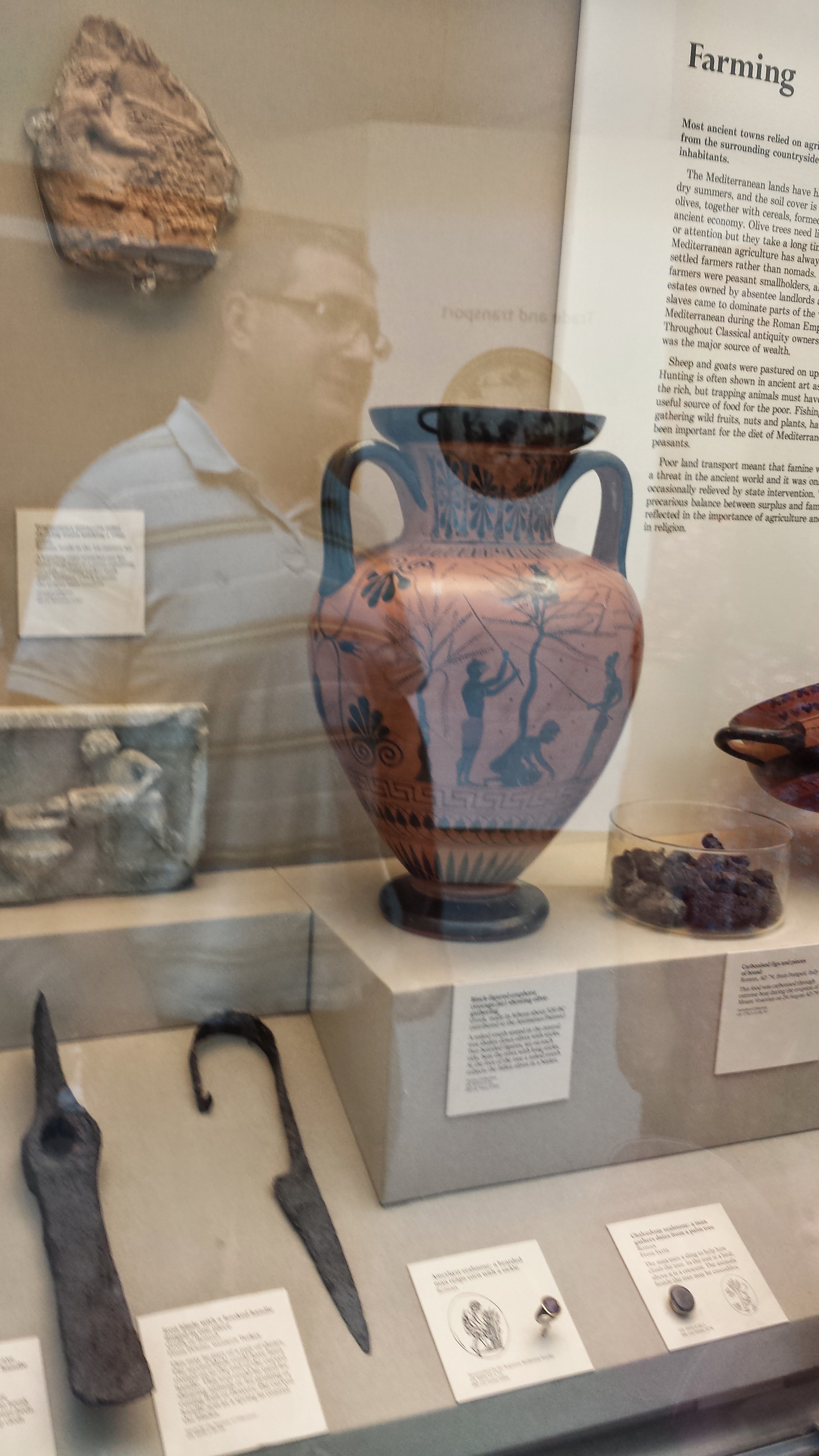
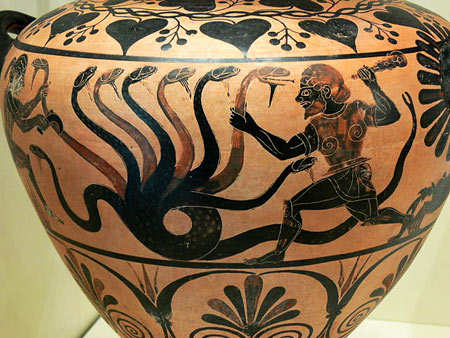
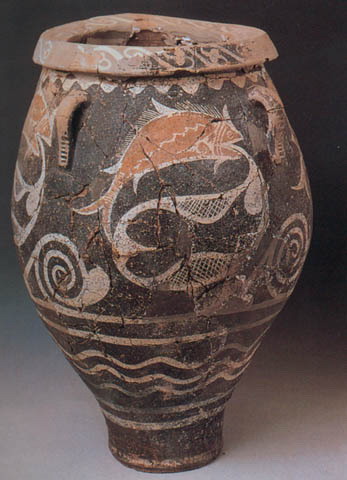
However, since my previous posting on Gottfried Benn’s Cretan Vase, I have been thinking about Keat’s Ode to a Grecian Urn in something of a comparison.It contains many moving lines like:-
Heard melodies are sweet
but those that are unheard
Are sweeter;therefore ye sweet pipes play on
Not to the sensual ear, but more endeared,
Pipe to the spirit dities of no tone:
John Keats
ODE TO A GRECIAN URN (ENGLISH)
Thou still unravish’d bride of quietness, Thou foster-child of Silence and slow Time, Sylvan historian, who canst thus express A flowery tale more sweetly than our rhyme: What leaf-fringed legend haunts about thy shape Of deities or mortals, or of both, In Tempe or the dales of Arcady? What men or gods are these? What maidens loth? What mad pursuit? What struggle to escape? What pipes and timbrels? What wild ecstasy?
Heard melodies are sweet, but those unheard Are sweeter; therefore, ye soft pipes, play on; Not to the sensual ear, but, more endear’d, Pipe to the spirit ditties of no tone: Fair youth, beneath the trees, thou canst not leave Thy song, nor ever can those trees be bare; Bold Lover, never, never canst thou kiss, Though winning near the goal – yet, do not grieve; She cannot fade, though thou hast not thy bliss, For ever wilt thou love, and she be fair!
Ah, happy, happy boughs! that cannot shed Your leaves, nor ever bid the Spring adieu; And, happy melodist, unwearièd, For ever piping songs for ever new; More happy love! more happy, happy love! For ever warm and still to be enjoy’d, For ever panting and for ever young; All breathing human passion far above, That leaves a heart high sorrowful and cloy’d, A burning forehead, and a parching tongue.
Who are these coming to the sacrifice? To what green altar, O mysterious priest, Lead’st thou that heifer lowing at the skies, And all her silken flanks with garlands drest? What little town by river or sea-shore, Or mountain-built with peaceful citadel, Is emptied of its folk, this pious morn? And, little town, thy streets for evermore Will silent be; and not a soul to tell Why thou art desolate, can e’er return.
O Attic shape! Fair attitude! with brede Of marble men and maidens overwrought, With forest branches and the trodden weed; Thou, silent form! dost tease us out of thought As doth eternity: Cold Pastoral! When old age shall this generation waste, Thou shalt remain, in midst of other woe Than ours, a friend to man, to whom thou say’st, „Beauty is truth, truth beauty, – that is all Ye know on earth, and all ye need to know”
Ode auf eine griechische Urne (German)
Liebkeusche Braut der steten Stille du,
Du Pflegekind von Tag und Tag und Schweigen!
Welch blumiges Waldgeschichtchen schilderst du –
Und sagst es süßer als ein Reimereigen?
Welch blattumrankte Mär umstreicht dein Rund
Von Göttern oder Menschen oder beiden
In Tempe oder in Arkadiens Hängen?
Wer sind sie, die an Mädchenangst sich weiden?
Was jagt so toll? Was ringt und flieht so bunt?
Welch Flötenlied? Welch lustberauschtes Drängen?
Gehörtes Lied ist süß, doch süßer ist
Ein ungehörtes: sanfte Flöte, weiter!
O wie du, klanglos, mehr als köstlich bist,
Du geisterhaft-lautlosen Lieds Begleiter!
Nie kannst du, Jugend, lassen von dem Sang,
Wie nie die Bäume hier ihr Laub verlieren;
Du keck Verliebter, nie, nie kannst du küssen,
So nah du auch dem Ziel – doch sei nicht bang:
Nie welkt sie! Wirst du auch entbehren müssen,
Wird Liebe dich und Schönheit sie stets zieren.
Glücklicher Baum in ewiger Frühlingszeit,
Nie sinken deiner Zweige Blätter nieder.
Glücklicher Sänger, ohne Müdigkeit
Für immer flötend immer neue Lieder!
Und Liebe, Liebe, voll von größerem Glück:
Für immer heiß und der Erfüllung harrend,
Du immer jagende, du immer junge!
Wie steht vor dir lebendige Gier zurück,
Die Herzen satt macht, im Genuß erstarrend,
Die Hirn erhitzt und dürr versengt die Zunge!
Und wer sind diese mit dem Priester hier
Und jener Färse? Welcher Gottheit danken
Im Grünen sie mit schönstem Opfertier,
Dem Kränze blühen um die seidnen Flanken?
Welch kleine Stadt an Fluß, in Bergeshain,
An Seestrand, Stadt mit Burg zu Wehr und Frieden.
Steht diesen frommen Tag mit leeren Gassen?
Du kleine Stadt wirst ewig stumm nun sein,
Denn keinem wird die Heimkehr je beschieden,
Dir kundzutun, warum du so verlassen.
O attische Form, so schön wie nie erschaut,
Um die sich marmorn Mann und Mädchen ranken,
Mit vollen Zweigen und zertretnem Kraut,
Schweigende Form! du rufst in uns Gedanken,
Wie Ewigkeit es tut: kalt Schäferspiel!
Sind wir mit unserm Leid dahin, so findest
Du andres Leid und wirst in Kümmernissen
Den Menschen trösten, dem du dies verkündest:
»Schönheit ist Wahrheit, Wahr ist Schön!« – Nicht viel,
Nur dies weißt du – und brauchst nicht mehr zu wissen.
I am very much endebted to the following website where I hope readers will find much of interest:-
Wir sind ja so gefordert in Thailand.
Was ist denn wirklich schlimm?
Die Immigration,
die Bargirls,
die Potenzpillen,
das Brautgeld,
die Korruption,
die Roten,
die Gelben,
die Geschichten aus Hinterindien?








 penwithlit