Categories
Art and Photographic History Poetry

I Hear an Army by James Joyce


I hear an army charging upon the land,
And the thunder of horses plunging, foam about their knees;
Arrogant, in black armour, behind them stand,
Disdaining the reins, with fluttering whips, the charioteers.

They cry unto the night their battle-name:
I moan in sleep when I hear afar their whirling laughter.
They cleave the gloom of dreams, a blinding flame,
Clanging, clanging upon the heart as upon an anvil.

They come shaking in triumph their long, green hair:
They come out of the sea and run shouting by the shore
My heart, have you no wisdom thus to despair?
My love, my love, my love, why have you left me alone?

There is a discussion of this poem at-

https://poemanalysis.com/james-joyce/i-hear-an-army/

The painting above is Marine soir par LéonSpilliaert
Categories
Poetry Uncategorized

Rentrée des Classes-U3a

Bent and bearded, distantly gathered

in plush deep armchairs we blinked.

Outside the hazy morning sunlight obscured the horizon.

Inside, we calculated the cost of the room

and for the fragile biscuits passed around.

Cafeterias at elbows we made a stab at

the Natural Rights of Man-the declared topic,

“But what about animals?” one lady wondered.


5 heads with 250 years of work experience,

pondered Nietzsche and eternal recurrence.

Social skills recollected at a forlorn separation.

“Sorry, I didn’t hear a word of that,

what shall we discuss next time?”

I wanted to add a line about antimacassars too – on the armchairs. I found from the Urban Dictionary, perhaps an unusual source for this that,”The name is derived from an Indian unguent for hair commonly used in the early 19th Century , macassar oil- the poet Byron called it, thine incomparable oil, Maccassar


Categories
Book Reviews Literature Penwith Poetry St Ives

Museums, memories and myth making.

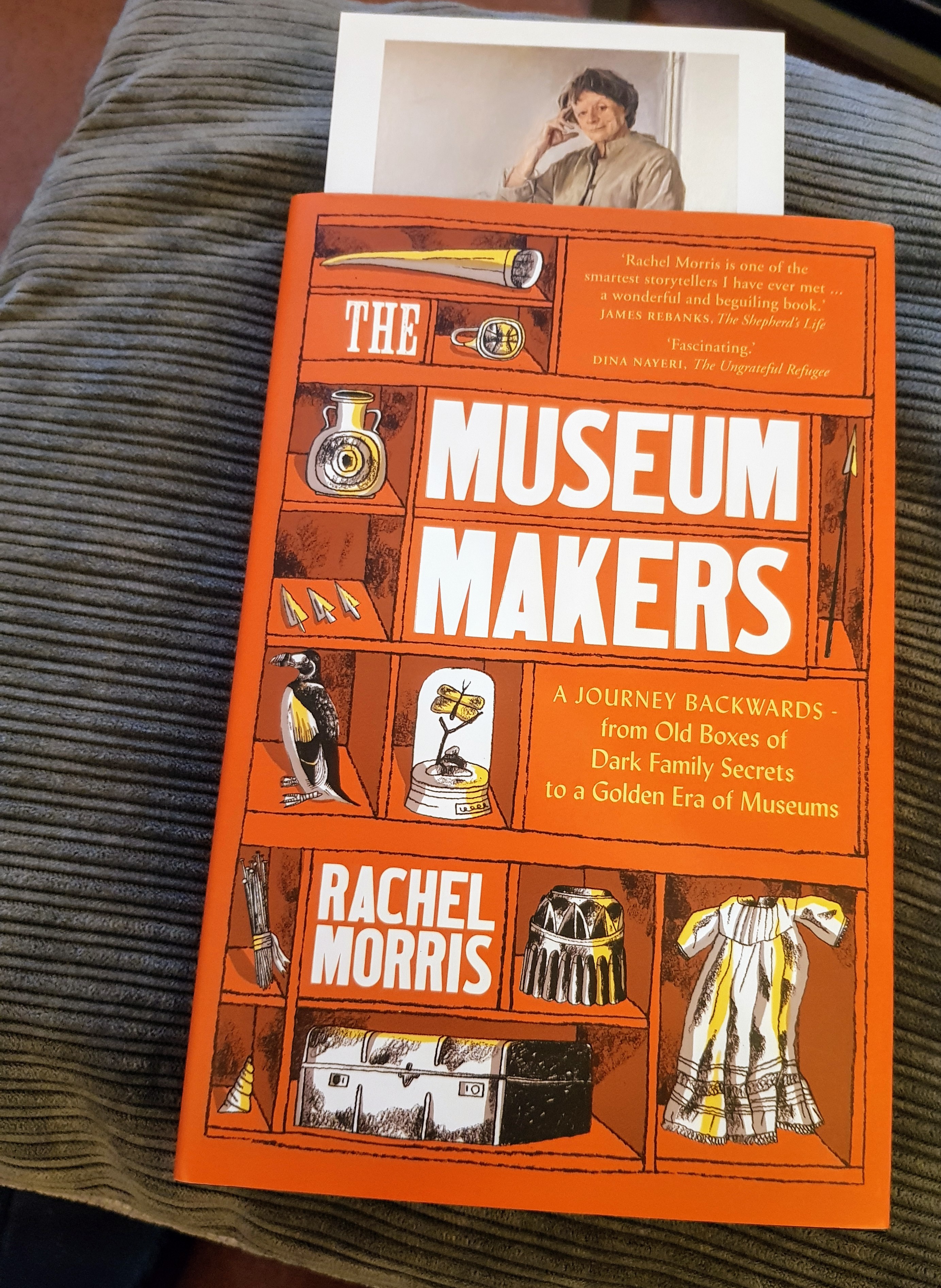
Written by the daughter of Guido Morris, the famous St Ives printer and illustrator. A fascinating mélange of her family and personal archive with the changing history of museums. It emphasises the importance of touch as a means of recollecting the past.

In reading about museums I discovered that Derrida had written about archives. He develops a post modern approach to how the perspectives on the past are subject to change. Witness the recent debates about racism and colonialism in relation to this.

From My Archives: Derrida’s Archive Fever

There are two moving poems by Louis MacNeice that moved me when I read them this morning. The first was an early poem called just “Museums” with a pronounced rhyme scheme. The second is more interesting and called “In the Reading Room at the British Museum”. The final line is perhaps more poignant than ever.

Museums by MacNeice

Museums offer us, running from among the buses,
A centrally heated refuge, parquet floors and sarcophaguses,
Into whose tall fake porches we hurry without a sound
Like a beetle under a brick that lies, useless, on the ground.
Warmed and cajoled by the silence the cowed cypher revives,
Mirrors himself in the cases of pots, paces himself by marble lives,
Makes believe it was he that was the glory that was Rome,
Soft on his cheek the nimbus of other people’s martyrdom,
And then returns to the street, his mind an arena where sprawls
Any number of consumptive Keatses and dying Gauls.

On Derrida this link may be of interest

https://youtu.be/uHtXeUH4gnY


Categories
Literature Poetry Uncategorized

Prévert-Les prodiges de la liberté

Les prodiges de la liberté

Entre les dents d’un piège
La patte d’un renard blanc
Et du sang sur la neige
Le sang du renard blanc
Et des traces du renard blanc
Qui s’enfuit sur trois pattes
Dans le soleil couchant
Avec entre les dents
Un lièvre encore vivant.

Jacques Prévert

Jacques Prévert (Author of Paroles)

Between the teeth of a trap
The paw of a white fox
And blood on the snow
The blood of the white fox
And traces of the white fox
Who runs away on three legs
In the setting sun
With between the teeth
A hare still alive.

Jacques Prévert

Categories
Art and Photographic History Poetry

Qui est ce jeune plongeur ?

Is that really Maupassant readying

himself to dive  among the ladies?

These, modestly dressed like himself

beneath the white high cliffs of Étretat.

Behind him on the perilous board

a gentleman stands with arms

folded, wearing a woolen hat, about

to inspect the quality of the dive

into this so called “mer d’huile”.

Notchalantly, a modern-looking

girl in her black bathing costume floats

seemingly unaware of the garrulous.

society society on the nearby anchored punt.

So this jeune homme is conceivably

the fellow who will meet

Flaubert and Swinburne and

pen Bel Ami?


[With thanks to Paris Match]

The painter’s details are below:-

https://en.wikipedia.org/wiki/Eug%C3%A8ne_Lepoittevin

Eugène] Le Poittevin, peintre (Getty Museum)

Categories
Literature Penwith Poetry West Cornwall (and local history)

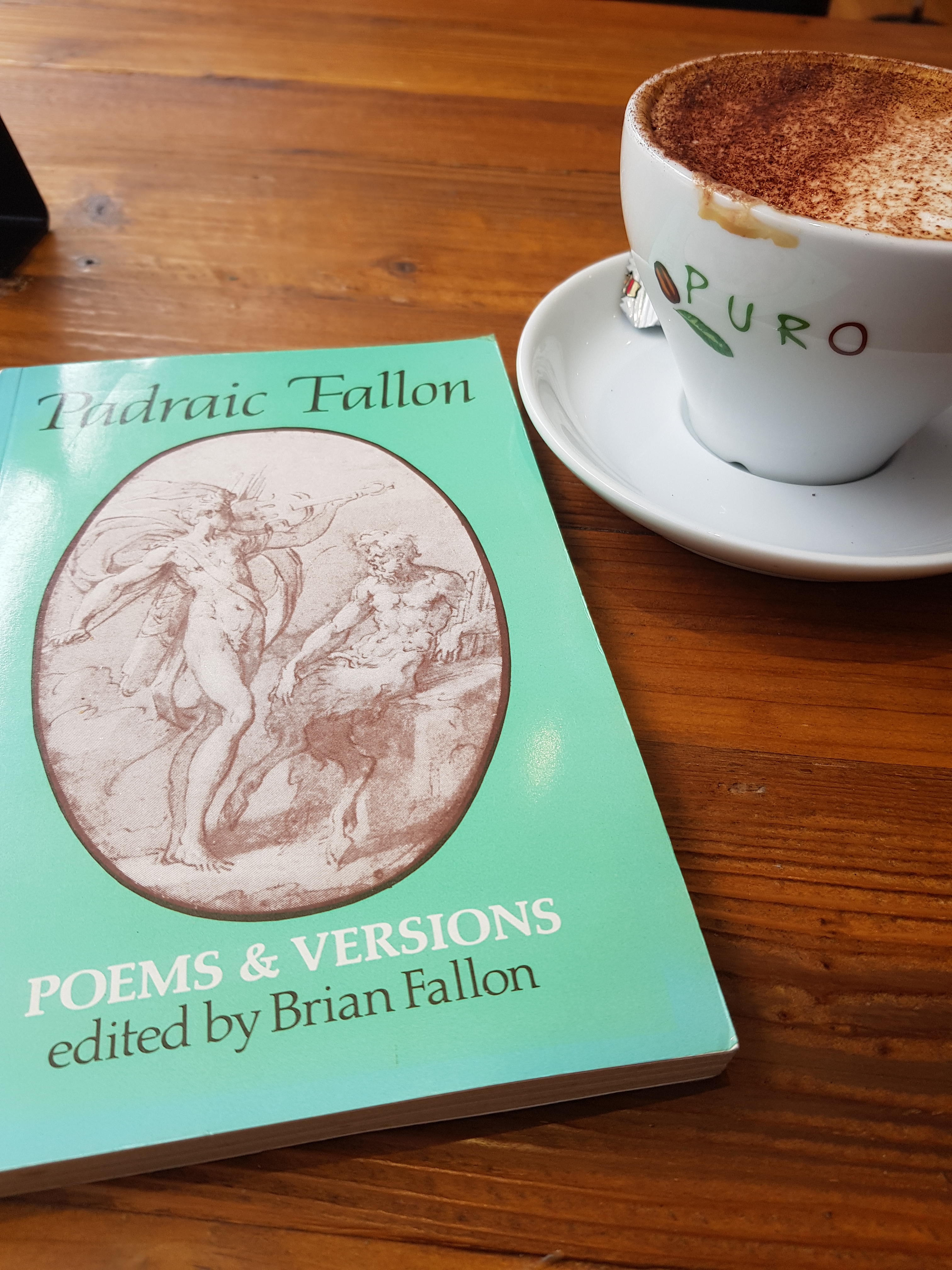
Reading Padraic Fallon

  1. Fallon (1905-1974) came from lovely County Galway and was drawn to Dublin by George Russell (AE) to take part in the Irish Literary Revival. Heaney wrote of him “His sensibility has weathered in Galway the rainy light that was familiar to both Rafferty and Yeats; it has been tutored by a landscape at once elemental and historical; a landscape that holds the walled demesne and the tower as well as the bog-face and the stone wall…”

I came across this poem entitled YESTERDAY’S MAN which contained the following lovely and intriguing stanzas:-

Lines of verse too left littering

After poems that never got away,

A pen drawing, very odd, the storm God Zu

Trusses in his fowl form to a carrying pole;

(From him the wren-walk on St Stephen’s Day)


Copied I suppose, to prove a point,

(Akkadian seal, Babylonian cylinder?) How

Much at home I am in this mad world

Suddenly and again! And here somewhere

You the girl enter


Anonymously, in two wooden stanzas, into which

You have entirely disappeared. Words, words,

That’s all you are, girl who never

Was a lover. And I likened you,

Body I could see through, to a catapult

The poem concerns itself with writing poetry and the poet looking through his notebooks and considering lost loves, regret and all in a stormy atmosphere. I like the variation between detail , here about the paraphernalia of writing and the vagueness…”here somewhere”. The latter representing ageing disorientation.

More on Fallon may be found at preview.co.uk where Seamus Heaney has written an appreciation and quotes some lines about Lands End.


Categories
Book Reviews Literature Poetry West Cornwall (and local history)

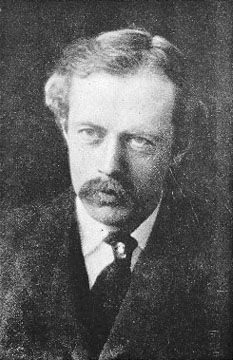
Arthur Symons- Cornish Connections

Arthur Symons biography > My poetic side

Cornish Wind

There is a wind in Cornwall that I know
From any other wind, because it smells
Of the warm honey breath of heather-bells
And of the sea’s salt; and these meet and flow
With such sweet savour in such sharpness met
That the astonished sense in ecstasy
Tastes the ripe earth and the unvintaged sea.
Wind out of Cornwall, wind, if I forget :
Not in the tunnelled Streets where scarce men breathe
The air they live by, but wherever seas
Blossom in foam, wherever merchant bees
Volubly traffic upon any heath:
If I forget, shame me! or if I find
A wind in England like my Cornish wind.
This poem by Symons is perhaps a reminder that his parents were Cornish Methodists, his father, a preacher who once was a Minister at St Ives as well as at other parishes in the Duchy. I particularly like the line about “the ripe earth and the unvintaged sea” which by contrast brings evokes Homer’s Wine Dark Sea https://en.wikipedia.org/wiki/Wine-dark_sea_(Homer). Then there is the a reference to merchant bees, perhaps because they transport pollen but then there are robust Cornish nlack bees (https://www.merchantsmanor.com/cornish-black-bees/).

There is an interesting review in the TLS of his Selected Early Poems and also his Spiritual Adventures by Kate Hext (January 12 2018) which begins with a poem which describes  the poet in sad old age at dinner. It was published by John Betjeman in 1940.


ON SEEING AN OLD POET IN THE CAFE ROYAL, by JOHN BETJEMAN


I saw him in the Café Royal,
Very old and very grand.
Modernistic shone the lamplight
There in London’s fairyland.
‘Devilled chicken. Devilled whitebait.
Devil if I understand.

‘Where is Oscar? Where is Bosie?
Have I seen that man before?
And the old one in the corner,
Is it really Wratislaw?’
Scent of Tutti-Frutti-Sen-Sen
And cheroots upon the floor.

There is a delightful exposition of Tutti Frutti Sen Sen and other commercial items in poetry by the late Clive James at https://www.poetryfoundation.org/poetrymagazine/articles/69678/product-placement-in-modern-poetry

Categories
German Matters Literature Poetry

Waking with Rosa

Wenn du erwachst

Wenn du erwachsts
Baum der in dir Wächst
traumgrün
Hinter deinen Liden
schlummern Zinnsoldaten
singt der Friedenvogel
Wenn du erwachst
breent die Stadt
die Toten sind wach
und erwarten dich

When you awake

When you awake
Trees grown within you
green as dreams
Under your eyelids
tin soldiers slumber
the bird of peace sings
when you awake
the city is burning
the dead are awake
and waiting for you

Zinnsoldaten by Michael Gogol on Amazon Music - Amazon.com

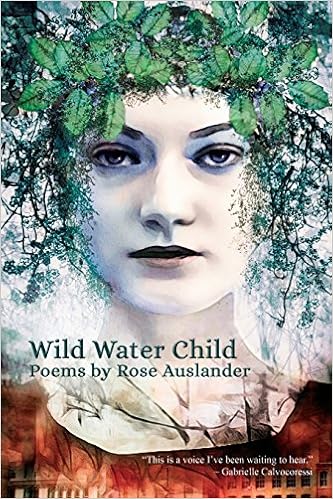
More poems by Rosa Ausländer may be found at https://allpoetry.com/Rose-Auslander


Categories
Literature Poetry

Discovering a new poet- Ciaran Carson

The town where I live has many barber shops, betting shops (gambling dens) and fortunately many charity shops. Since the end of lock-down, as part of the recovery process I have been raiding the latter and especially one which has a rich supply of poetry books. Taking advantage of my reduced price filter coffee at 50p per cup, I thumbed through, “Poems of the Decade”  in which I happened upon two remarkable poems about historic battles by Ciaran Carson.

Here is the start of a poem about Gallipoli from a collection called The War Correspondant.

Take sheds and stalls from Billingsgate,
glittering with scaling-knives and fish,
the tumbledown outhouses of English farmers’ yards
that reek of dung and straw, and horses
cantering the mewsy lanes of Dublin;

take an Irish landlord’s ruinous estate,
elaborate pagodas from a Chinese Delftware dish
where fishes fly through shrouds and sails and yards
of leaking ballast-laden junks bound for Benares
in search of bucket-loads of tea as black as tin;

The full poem may be found at https://genius.com/Ciaran-carson-the-war-correspondent-annotated

My knowledge of Gallipoli comes from a visit during a minitrek in the early seventies and in addition the outstanding film with Mel Gibson https://en.wikipedia.org/wiki/Gallipoli_(1981_film) 

However, this poem is remarkable with the tumbledown and dilapidated nautical images. There is a clear underlying structure but the surreal images build throughout this poem. I particularly liked the word “mewsy” and there are clear political references in the poem. The situation along with the following poem “Balaklava” show the desperation of war and both battles show the limits of British Imperialism. There is a strange surrealism to the lines-

elaborate pagodas from a Chinese Delftware dish
where fishes fly through shrouds and sails and yards

These somehow reflect the weirdness and disorientation of the context. The Delft reference reminds me too of another favourite poet, Derek Mahon. Yet there is also an association as the poem progresses of Kipling. Then there is a reference to horses which were present in the cramped situation. They were there to move the heavy guns of the Anzac forces. 6100 horses were ready to disembark but only a few were actually put ashore. A search reveals-

After Gallipoli many moderate nationalists began to lose faith in the idea that supporting Britain in the war would assure Home Rule. … But it was in August that Irishmen arrived at Gallipoli in large numbers as part of Allied commander Sir Ian Hamilton’s plan to break the stalemate and go on the offensive.

Sadly in discovering this new poet, I also found how recent was his passing in October of last year https://en.wikipedia.org/wiki/Ciaran_Carson


Categories
Poetry Uncategorized

A politician finds in difficult to retire

Sometimes it is the state of the world that preoccupies him,

campaigning for peace and pensioners.

Although public opinion has moved his way,

Meetings, groups and such occasions eat up his time.


He is powered with a zeal for international security.


The state of his roof preoccupies him and in a rash rush of

domestic disasters, he almost gassed himself.

He put his pipe alight into his pocket and burned his coat.

The car breaks down and is broken into.


Now the roof caves in when the builder walks across it,

and accidentally puts his foot right through the ceiling.


His old adversaries would need hard hearts not to sympathise

with his bouts of depression. He becomes deaf and has trouble

with his heart and legs.

Only his friends sustain him and the pride he feels

at his children’s success is uncontainable.


His jokes are demonstrably unribtickling.

He marches out into the world with a thermos flask

and a Mars bar.

He remains unashamedly sentimental.


The case for working people is coming back and

though there are times for despair, there are still days of hope

as he enjoys life’s afternoon sunshine

with his grandchildren.

(Found Poem -With thanks to the Guardian Review  20.10,07 by  David McKie

reviewing More Time for Politics; Diaries 2001-07 by Tony Benn)