A happy vicar I might have been
Two hundred years ago
To preach upon eternal doom
And watch my walnuts grow;
But born, alas, in an evil time,
I missed that pleasant haven,
For the hair has grown on my upper lip
And the clergy are all clean-shaven.
And later still the times were good,
We were so easy to please,
We rocked our troubled thoughts to sleep
On the bosoms of the trees.
All ignorant we dared to own
The joys we now dissemble;
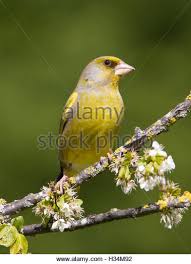
The greenfinch on the apple bough
Could make my enemies tremble.
But girl’s bellies and apricots,
Roach in a shaded stream,
Horses, ducks in flight at dawn,
All these are a dream.
It is forbidden to dream again;
We maim our joys or hide them:
Horses are made of chromium steel
And little fat men shall ride them.
I am the worm who never turned,
The eunuch without a harem;
Between the priest and the commissar
I walk like Eugene Aram;
And the commissar is telling my fortune
While the radio plays,
But the priest has promised an Austin Seven,
For Duggie always pays.
I dreamt I dwelt in marble halls,
And woke to find it true;
I wasn’t born for an age like this;
Was Smith? Was Jones? Were you?
Commentary
This appears in a new collection and their is a witty comment at https://www.theguardian.com/books/shortcuts/2015/nov/04/love-george-orwell-never-read-poems-poetry
It somehow reminds me of a favourite poem by Louis Mac Neice in its energetic and upbeat tempo- Bagpipe Music. Perhaps it is not surprising that Mac Neice sounds so much like Auden-but it certainly surprised me!
And where the wild Danube throws up its yellow sand,
and where vast Thracian Mount Rhodope touches the sky.
There they keep the herds penned in, and no grass
is visible on the plains, or leaves on the trees:
but the land far and wide lies formless under mounds of snow
and heaps of ice rising seven metres high.
It’s always winter, always North winds breathing cold.
There the Sun never disperses the pale mists,
neither when he finds high heaven, carried by his team,
nor when he drenches his chariot headlong in Ocean’s red waters.
Ice-floes form suddenly on the running rivers,
and the water soon carries metalled wheels on its back,
once greeting boats and now broad wagons:
Everywhere bronze cracks, clothes freeze as they’re worn,
and they cut out the liquid wine with axes,
whole lakes turn to solid ice, and bristling icicles
harden on their straggling beards.
OR IN THE ORIGINAL LATIN
At non qua Scythiae gentes Maeotiaque unda,
turbidus et torquens flauentis Hister harenas, 350
quaque redit medium Rhodope porrecta sub axem.
illic clausa tenent stabulis armenta, neque ullae
aut herbae campo apparent aut arbore frondes;
sed iacet aggeribus niueis informis et alto
terra gelu late septemque adsurgit in ulnas. 355
semper hiems, semper spirantes frigora Cauri;
tum Sol pallentis haud umquam discutit umbras,
nec cum inuectus equis altum petit aethera, nec cum
praecipitem Oceani rubro lauit aequore currum.
concrescunt subitae currenti in flumine crustae, 360
undaque iam tergo ferratos sustinet orbis,
puppibus illa prius, patulis nunc hospita plaustris;
aeraque dissiliunt uulgo, uestesque rigescunt
indutae, caeduntque securibus umida uina,
et totae solidam in glaciem uertere lacunae, 365
stiriaque impexis induruit horrida barbis.
Ich tiger einsam durch das Haus,
Fernseher an, Fernseher aus.
Dann setz ich mich vor den PC,
steh wieder auf und mach mir Tee.
Ganz egal, was ich tu, ich komm einfach nicht zur Ruh. –
Ich starre Löcher in die Wand,
ich zähl die Flaschen und das Pfand.
Du lässt mich viel zu lang allein,
und auch mein Kaktus geht schon ein.
Es ist schon wieder so spät,
und ich bin viel zu aufgedreht. ~
Bientôt nous plongerons dans les froides ténèbres ;
Adieu, vive clarté de nos étés trop courts !
J’entends déjà tomber avec des chocs funèbres
Le bois retentissant sur le pavé des cours.Tout l’hiver va rentrer dans mon être : colère,
Haine, frissons, horreur, labeur dur et forcé,
Et, comme le soleil dans son enfer polaire,
Mon cœur ne sera plus qu’un bloc rouge et glacé.
J’écoute en frémissant chaque bûche qui tombe
L’échafaud qu’on bâtit n’a pas d’écho plus sourd.
Mon esprit est pareil à la tour qui succombe
Sous les coups du bélier infatigable et lourd.
II me semble, bercé par ce choc monotone,
Qu’on cloue en grande hâte un cercueil quelque part.
Pour qui ? – C’était hier l’été ; voici l’automne !
Ce bruit mystérieux sonne comme un départ.
II
J’aime de vos longs yeux la lumière verdâtre,
Douce beauté, mais tout aujourd’hui m’est amer,
Et rien, ni votre amour, ni le boudoir, ni l’âtre,
Ne me vaut le soleil rayonnant sur la mer.
Et pourtant aimez-moi, tendre cœur ! soyez mère,
Même pour un ingrat, même pour un méchant ;
Amante ou sœur, soyez la douceur éphémère
D’un glorieux automne ou d’un soleil couchant.
Courte tâche ! La tombe attend – elle est avide !
Ah ! laissez-moi, mon front posé sur vos genoux,
Goûter, en regrettant l’été blanc et torride,
De l’arrière-saison le rayon jaune et doux !
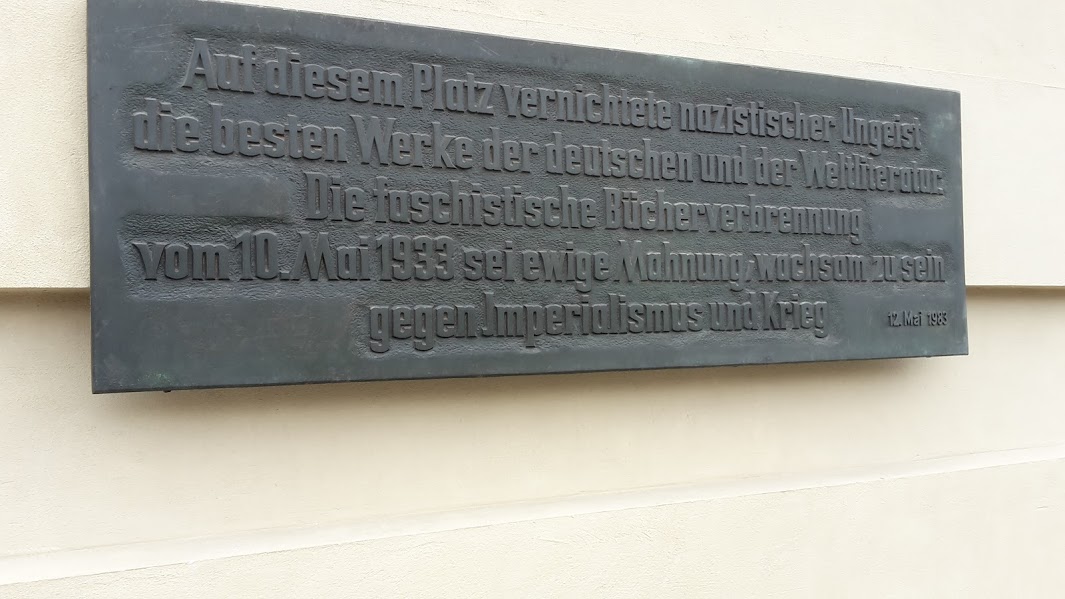
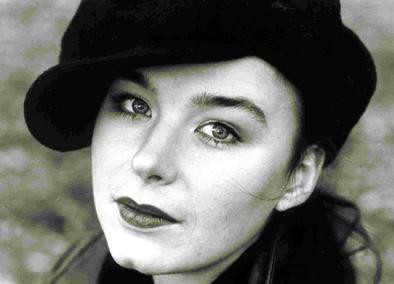
I have just been skim reading the Wikipedia.de entry about Mascha Kaleko and how she visited the famous literary Romamian Cafe which was in what is now Breitscheidplatz near the even more famous Kaiser-Wilhelm-Gedächtniskirche, Also that she had attended a Volksschule in Frankfurt and then attended in Berlin the Humboldt University. In the fateful year 1933, her book, Lyrische Stenogrammheft or “Lyrical Shorthand Notebook”-was published and the philosopher Heidegger wrote to her to say that he thought it showed that she understood everything that being mortal meant. Remarkably her work escaped the Nazi book burnings in May because they had not realised she was Jewish.
Afterthewar, KalékoinGermanyagain aquiredareading public.Lyrische Stenogrammheft was published byRowohlt(1956). By 1960 it was hoped togivehertheFontane prizeof theAkademiederKünstein WestBerlin. Since aformerSS member wasinthejury,HansEgonHolthusen,sherejectedthis offer.TheManaging Directorof theAcademy,HerbertvonButtlar somewhat excusedHolthusens SS membership and it seems undiplomatically recommended such “emigrants”tostay away. That sameyearshe left America for the sake ofherhusband and went withhimtoJerusalem.There, shesufferedmuchunderthelinguisticandculturalisolationandliveddisappointedandlonely.
Mascha Kaléko: Kinder reicher Leute
Sie wissen nichts von Schmutz und Wohnungsnot,
Von Stempelngehn und Armeleuteküchen.
Sie ahnen nichts von Hinterhausgerüchen,
Von Hungerlöhnen und von Trockenbrot.
Sie wohnen meist im herrschaftlichen Haus,
Zuweilen auch in eleganten Villen.
Sie kommen nie in Kneipen und Destillen
Und gehen stets nur mit dem Fräulein aus.
Sie rechnen sich schon jetzt zur Hautevolée
Und zählen Armut zu den größten Sünden
– Nicht mal ein Auto…? Nein, wie sie das finden!
Ihr Hochmut wächst mit Pappis Portemonnaie.
Sie kommen meist mit Abitur zur Welt
– Zumindest aber schon mit Referenzen –
Und ziehn daraus die letzten Konsequenzen:
Wir sind die Herren, denn unser ist das Geld.
Mit vierzehn finden sie, der Armen Los
Sei zwar nicht gut. Doch werde übertrieben–.
Mit vierzehn schon! – Wenn sie nur vierzehn blieben.
Jedoch die Kinder werden einmal groß…
I have a neat little book called ~” Poems of Cornwall” withdrawn from the County Library Service. The preface is by W.Herbert Thomas and is dated, “Penzance July !892”. A couple of months before the last down train from Paddington on Brunel’s broad gauge had run. It is a collection of some 30 poets of whom photographs of 18 appear inside the front cover. There is a poem by Sir Humphry Davy beneath an engraving of his statue.
St Michael’s Mount
Majestic Michael rises – he whose brow
Is crown’d with castles; and whose rocky sides
Are clad with dusky ivy: he whose base,
Beat by the storm of ages, stands unmov’d
Amidst the wreck of things-the change of time.
That base, encircled by the azure waves,
Was once with verdure clad; the towering oaks
Here waved their branches green: the sacred oaks ,
Whose awful shades among the Druids stay’d
To cut the hallowed mistletoe, and hold
High converse with their gods.
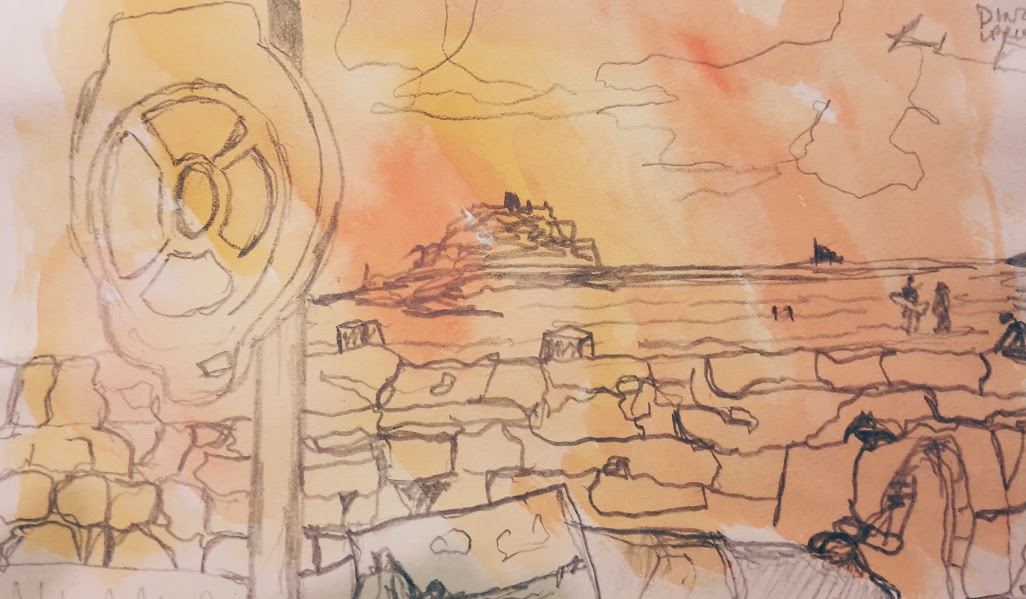
Sketch of the Mount last week and my leg!
Interesting this connection that early scientists felt for poetry and nature. Most obviously found in Goethe perhaps. Davy enjoyed angling and travelled widely across Europe to fish, I believe on the Dalmatian coast-Shakespeare’s Illyria from Twelfth Night. Which information I seem to recall from that fascinating book,”The Age of Wonder” by Richard Holmes. Count Orsino’s castle became the Mount in that great production of Twelfth Night by Trevor Nunn in 1996. Returning to Davy’s poem, I suppose some of the vocabulary now sounds antiquated, although the original “awful” sounds like that recent commonly used word,”awesome”. I rather like the line -“Amidst the wreck of things-the change of time.” which reminds me somehow of that biography of Malcom Muggeridge which he entitled “Chronicles of Wasted Time”. A title which comes from the lovely sonnet 106 of Shakespeare:-
When in the chronicle of wasted time
I see descriptions of the fairest wights,
And beauty making beautiful old rhyme
In praise of ladies dead and lovely knights,
Then, in the blazon of sweet beauty’s best,
Of hand, of foot, of lip, of eye, of brow,
I see their antique pen would have express’d
Even such a beauty as you master now.
So all their praises are but prophecies
Of this our time, all you prefiguring;
And, for they look’d but with divining eyes,
They had not skill enough your worth to sing:
For we, which now behold these present days,
Have eyes to wonder, but lack tongues to praise.
Returning to the main thread -what is otherwise called (aus den „Wahlverwandtschaften“ von Johann Wolfgang von Goethe:) the roter Faden -“Poems in Cornwall”, the editor W.Herbert Thomas was in fact a journalist who is described as “the son of a mine-smith of St Day. For seven years a mining clark, he was afterwards a reporter for two years on the San Francisco “Examiner” and is now on the staff of the” Cornishman” -however I would like to draw attention to a short poem by W,F.Woodfield. It is rather poignant and all that is said of him is that he lived in Penzance, he wrote a collection called “Serpentine Worker” and ,”is now in Australia”.
The Emigrant’s Farewell to Mount’s Bay
Farewell Mount’s Bay! A long farewell
I bid thy rock-bound shore;
My heart nigh breaks with grief to think
I ne’er may see thee more.
From infancy I have watched thy waves,
And roamed thy rocks and sands;
But I must leave thee beauteous bay,
To toil in other lands.
My heart grows faint-tears blind me so,
Words fail my love to tell;
My very soul so yearns for thee
I scarce can say -farewell.
But Manhood bids me dry my tears,
And brace me for the fight;
Adieu, adieu belove’d bay!
Farewell my heart’s delight.
Sincerely felt lines at any rate. It gives us a feeling of the process of uprooting that is involved in emigration and ought, I think, make us consider the plight of refugees with sympathy and support.
Jesus kehrte dann in der Kraft des Geistes nach Galiläa zurück, und die Kunde von ihm verbreitete sich in der ganzen Umgegend.
15Er lehrte in ihren (= den dortigen) Synagogen und wurde (wegen seiner Lehre) von allen gepriesen.
16So kam er denn auch nach Nazareth, wo er aufgewachsen war, ging dort nach seiner Gewohnheit am nächsten Sabbattage in die Synagoge und stand auf, um vorzulesen.
17Da reichte man ihm das Buch des Propheten Jesaja; und als er das Buch aufrollte, traf er auf die Stelle, wo geschrieben steht (Jes 61,1-2; 58,6):
18»Der Geist des Herrn ist über mir (oder: ruht auf mir), weil er mich gesalbt (= ausgerüstet) hat, damit ich den Armen die frohe Botschaft bringe; er hat mich gesandt, um den Gefangenen die Freilassung und den Blinden die Verleihung des Augenlichts zu verkünden, die Unterdrückten in Freiheit zu entlassen,
19ein Gnadenjahr des Herrn auszurufen.«
20Nachdem er dann das Buch wieder zusammengerollt und es dem Diener zurückgegeben hatte, setzte er sich, und aller Augen in der Synagoge waren gespannt auf ihn gerichtet.
21Da begann er seine Ansprache an sie mit den Worten: »Heute ist dieses Schriftwort, das ihr soeben vernommen habt, zur Erfüllung gekommen!«
22Und alle stimmten ihm zu und staunten über die Worte der Gnade (oder: über die holdseligen Worte), die aus seinem Munde kamen, und sagten: »Ist dieser nicht der Sohn Josephs?«
23Da antwortete er ihnen: »Jedenfalls werdet ihr mir das Sprichwort vorhalten: ›Arzt, mache dich selber gesund!‹ Alle die großen Taten, die (von dir), wie wir gehört haben, in Kapernaum vollbracht worden sind, die vollführe auch hier in deiner Vaterstadt!«
24Er fuhr dann aber fort: »Wahrlich ich sage euch: Kein Prophet ist in seiner Vaterstadt willkommen.
25In Wahrheit aber sage ich euch: Viele Witwen gab es in Israel in den Tagen Elias, als der Himmel drei Jahre und sechs Monate lang verschlossen blieb, so daß eine große Hungersnot über die ganze Erde kam;
26und doch wurde Elia zu keiner einzigen von ihnen gesandt, sondern nur nach Sarepta im Gebiet von Sidon zu einer Witwe (1.Kön 17,1.9).
27Und viele Aussätzige gab es in Israel zur Zeit des Propheten Elisa, und doch wurde kein einziger von ihnen gereinigt, sondern nur der Syrer Naeman(2.Kön 5,14).«
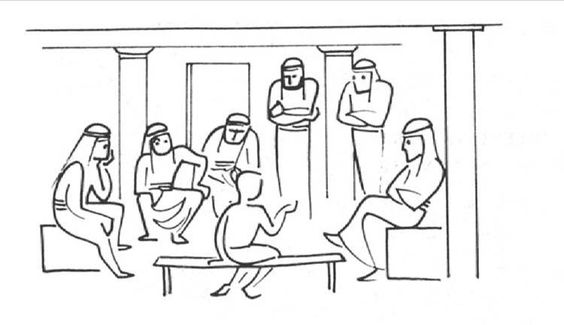
Max Liebermann -[Der zwölfjährige Jesus im Tempel] (1879)28Als sie das hörten, gerieten alle, die in der Synagoge anwesend waren, in heftigen Zorn:
29sie standen auf, stießen ihn aus der Stadt hinaus und führten ihn an den Rand (oder: auf einen Vorsprung) des Berges, auf dem ihre Stadt erbaut war, um ihn dort hinabzustürzen.
30Er ging aber mitten durch sie hindurch und wanderte weiter.
This is a fascinating passage to read in a different language and to pause to consider the meanings of what is being preached, considered or taught. For instance what exactly is meant here by 4.19 “ein Gnadenjahr des Herrn auszurufen”-proclaiming the year of the Lord” which may mean a period of time as well as an actual year. Pope Francis has proclaimed, for instance a Year of Mercy-“The Year runs from 8 December 2015 to 20 November 2016 and offers us the opportunity to reflect on how we might better radiate and reflect the tender love of God in our world and to seek to draw others into experiencing that love and mercy.” However, possibly with the ruined city of Aleppo in my mind and having seen 360 degree views of the destruction of such a city wrought by modern weaponry, my attention is drawn to verse 4.26 which concerns the Phonecian city of Sarepta between Tyre and Sidon and 4.27 which concerns Naaman in Syria. Now Naaman and the widow were both gentiles and the significance clearly concerns the divine blessing outside Nazereth and the preaching of the Gospel that is starting at this unique moment to incude the Gentiles.
However it seems to me to have a meaning for our own times:- Why are we bombing Syria? Where are the efforts for the peace process???The people, including helpless children are part of the human community. To neglect their needs and to continue to feel we have a right to immunity-especially after the significance of the Holocaust-is totally unacceptable. We live, as I fear Brexit has shown, in a right little, tight little island. However, come Theresa or even come Trump, the teaching remains clear-” um den Gefangenen die Freilassung und den Blinden die Verleihung des Augenlichts zu verkünden, die Unterdrückten in Freiheit zu entlassen,” -we are assured by Jesus through Isiah “The Spirit of the Lord is upon me, because he hath anointed me to preach the gospel to the poor; he hath sent me to heal the brokenhearted, to preach deliverance to the captives, and recovering of sight to the blind, to set at liberty them that are bruised.”
Jews Praying in the Synagogue on Yom Kippur by Maurycy Gottlieb
Although perhaps reminiscent of Caliban in The Tempest, the quote comes from Gregor Samsa in Kafka’s “Die Verwandandlung”-or Metamorphosis as it is known in English translation. However I found the quote on an interesting and intriguing video about Nietzsche’s categories of the Apollonian and the Dionysian by Claudia Simone Dorchain.
My interest in Nietzsche has been re-awakened by seeing the new film about “Lou Andreas Salome” in Berlin-actually at Eva Lichtspiele at Blissestraße 18-which is a great old-fashioned cinema. It reminds me of another old filmhouse in Vienna-(The Bellaria Kino) which is situated behind the Volkstheatre and in turn years ago to “The Scala” in the High Street in St Ives -which is where Boots Chemist is situated today. Anyway, for those who are interested this is what it says on the Eva Lichtspiele website:-
Die ‘Eva Lichtspiele’ gelten mit der Eröffnung 1913 unter dem Namen ‘Roland Lichtspiele’ als ältestes Filmtheater im Bezirk Wilmersdorf. In den 20er Jahren, nach einem Umbau und der gleichzeitigen Umbenennung des Kinos in den heutigen Namen, wurden hier die Filme auf Vorschlag des Betreibers mit Musikbegleitung präsentiert – zuerst durch eine Violinistin und später durch ein ganzes Orchester, das durch den Einbau eines zweiten Vorführapparates pausenlos im Einsatz war. Glücklicherweise blieb das Kino während des Zweiten Weltkrieges nahezu unbeschadet, so dass der Kinobetrieb durchgehend aufrechterhalten werden konnte und noch heute viele Einzelheiten des Gebäudes (wie z.B. der schöne elegante Neonschriftzug an der Fassade) auf die lange Kinogeschichte der ‘Eva Lichtspiele’ hinweisen.
Nietzsche I find difficult to come to grips with. Probably, I have read about him rather than reading him directly. Steeped in German classical studies and Schopenhauer, he has had a huge influence on his time but like Heidegger no friend of rationalism or socialist thinking. Although both not only raised interesting questions but demonstrate the continuity of philosophical history. Neo-Thomism and Catholicism in the case of the latter, Plato and Schopenhauer-and both of course were influenced by the Jena poet, Hölderlin.
As to Salome’s influence on Rilke; here is one view relating to her Russian origin:-
“In 1899 Rilke made the first of two pivotal trips to Russia with Salome, discovering what he termed his “spiritual fatherland” in both the people and the landscape. There Rilke met Leo Tolstoy, L. O. Pasternak (father of Boris Pasternak), and the peasant poet Spiridon Droschin, whose works Rilke translated into German. These trips provided Rilke with the poetic material and inspiration essential to his developing philosophy of existential materialism and art as religion. Inspired by the lives of the Russian people, whom the poet considered more devoutly spiritual than other Europeans, Rilke’s work during this period often featured traditional Christian imagery and concepts, but presented art as the sole redeemer of humanity.” This comes from https://www.poetryfoundation.org/poems-and-poets/poets/detail/rainer-maria-rilke
In any event this film-not the first on her -see the link below to Calvini’s version- is visually appealling making fascinating use of old picture postcards and raises questions over the many radical ideas, poetry music and of course, psychoanalysis. There is a very revealing chapter on her in Lisa Appignanesi and John Forrester’s “Freud’s Women”. I do hope this becomes available soon on DVD with English subtitles just like the Stefan Zweig film currently also playing in Berlin. Zweig too has written interestingly on Nietzsche-the book below is available in English translation. Reading about her and her circle, their poetry and music certainly has a calming effect on me.

 Ich tiger einsam durch das Haus,




![Max Liebermann -[Der zwölfjährige Jesus im Tempel] (1879)](https://penwithlit.com/wp-content/uploads/2016/08/6e0006245e664e1cc5d25b624c3e3493.jpg)


 penwithlit