Categories
German Matters Poetry Uncategorized

Franz Lehár – Gern hab’ ich die Frau’n geküsst (Paganini)

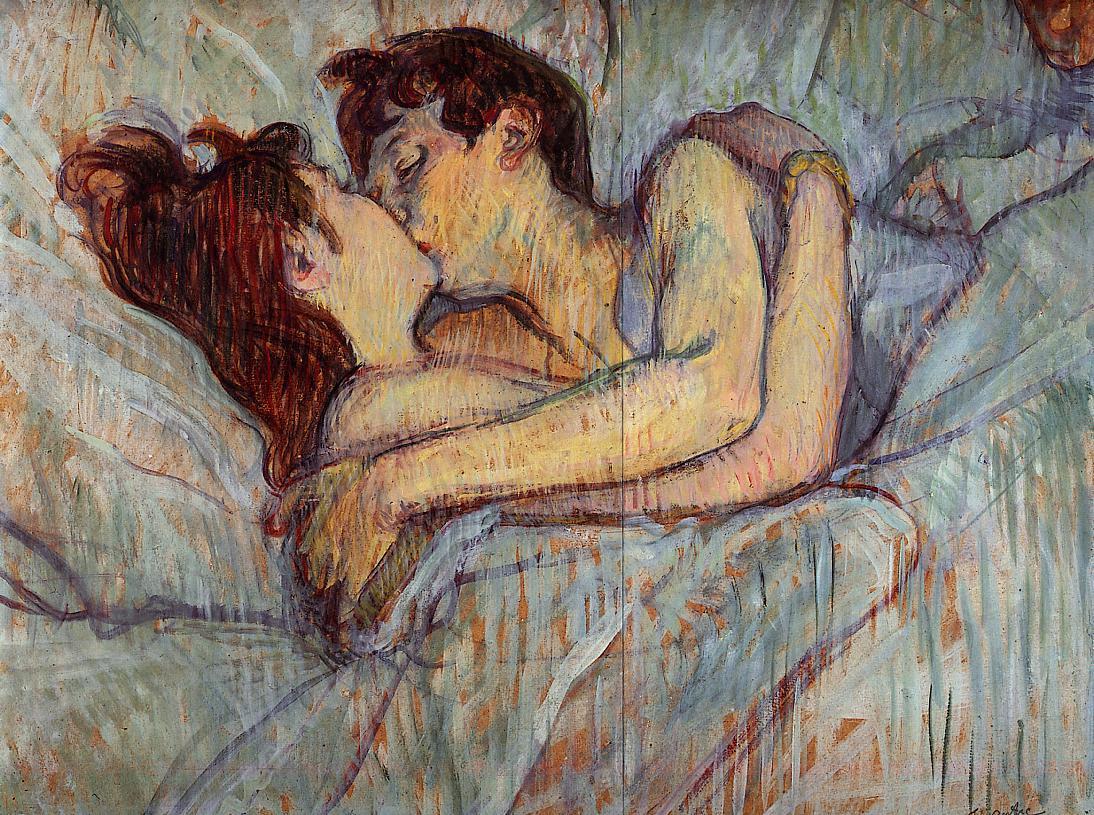
Image result for Kiss girl painting

Gern hab’ ich die Frau’n geküsst,
hab’ nie gefragt, ob es gestattet ist;
dachte mir: nimm sie dir,
küss sie nur, dazu sind sie ja hier!
Ja, glaubt mir: Nie nahm ich Liebe schwer.
Ich liebe heiss, doch treu bin ich nicht sehr,
bin ein Mann, nicht viel dran,
Liebchen fein: ich schau’ auch andre an!

Ich kenn’ der wahrhaften Liebe Glut,
ich weiss, wie weh oft die Falschheit tut,
ich kenn’ die Wonnen,
begonnen mit Freud,
ich sah ihr wenden und enden mit Leid!
Ich kenn’ die Liebe in Dur und Moll,
ich kenn’ sie selig, verrückt und toll,
ich schau’ erwachend und lachend zurück
und such’ im Rausche, im Tausche mein
Glück!

Categories
Uncategorized

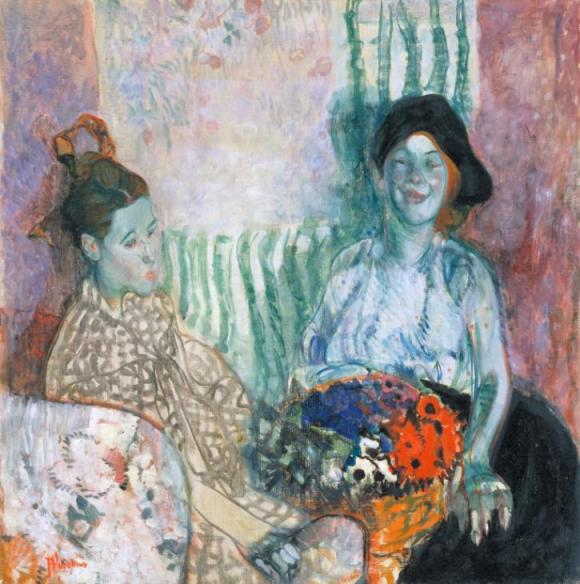
Loveday and Ann: Two Women with a Basket of Flowers — Frances Hodgkins

Saw this painting yesterday in the St Ives Tate and followed up by reading about her time in Zennor with Cedric Morris. The painting actually looks more green than in the above -almost Veridian, I think. The perspective is slightly distorted but makes for an energetic composition, The left hand of the figure on the right looks talon-like and frankly ominous. It is clear that the fabric and design interests of this painter are central to her work. In front of the painting the bottom left hand corner seemed obscure. Looking at a smaller scale it is fairly clear this is the floral design of the end of the couch or sofa. It adds to the cosy connection between the women as does the flower basket. Sometimes the right-hand figure looks jolly at others somewhat manic! An interesting painting!

Biblioklept's avatarBiblioklept

Loveday and Ann: Two Women with a Basket of Flowers 1915 by Frances Hodgkins 1869-1947Loveday and Ann: Two Women with a Basket of Flowers, 1915 by Frances Hodgkins (1869–1947)

View original post

Categories
Uncategorized

Englische Choräle im Konzerthaus – Zeichnungen von Susanne Haun

Come to Cornwall as well as Cambridge!

Susanne Haun's avatarSusanne Haun

Wir haben uns im Konzerthaus in der Vorweihnachtszeit englische Choräle vom Chor des Kings College aus Cambridge angehört. Am meisten haben mich die Soli des Orgelspielers Thomas Trotter beeindruckt.

Meine Güte!

Er beherrscht sein Instrument virtuos. Das einzige was mitunter beim Konzert fehlte, war die Kirche drumherum 😉 Das Konzerthaus selber ist zwar ein gelungener Bau im Stil des Historismus jedoch eben keine Kirche.

Beim Konzert abschliessenden Jingle Bells kam der für mich so typische Humor der Briten durch, den ich so sehr schätze und der neben der Schönheit des Landes meine Sehnsucht nach einen nächsten Urlaub auf den Inseln schürt.

View original post

Categories
Uncategorized

Changing Stories: Ovid’s Metamorphoses on canvas, 70 – Galatea’s lover crushed by jealousy

hoakley's avatarThe Eclectic Light Company

As Ovid nears the end of Book 13 of his Metamorphoses, Aeneas and his companions are in transit across the Mediterranean towards Italy and destiny. The poet rushes them through a rapid succession of adventures, told in detail in Virgil’s earlier Aeneid, before bringing them to Sicily for the closing stories in this book.

The Story

Ovid summarises much of the Aeneid in just a few lines, which take Aeneas from Crete through Ithaca, Samos, Dodona, and Phaeacia, to land on Sicily, where Scylla and Charybdis threaten the safety of mariners. Scylla is combing the hair of Galatea, as the latter laments her tragic love-life. Wiping tears from her eyes, Galatea then tells us her story.

When he was only sixteen, Galatea had fallen in love with Acis, the son of the river nymph Symaethis, but the Cyclops Polyphemus fell in love with her. The latter did his best to…

View original post 1,143 more words

Categories
Uncategorized

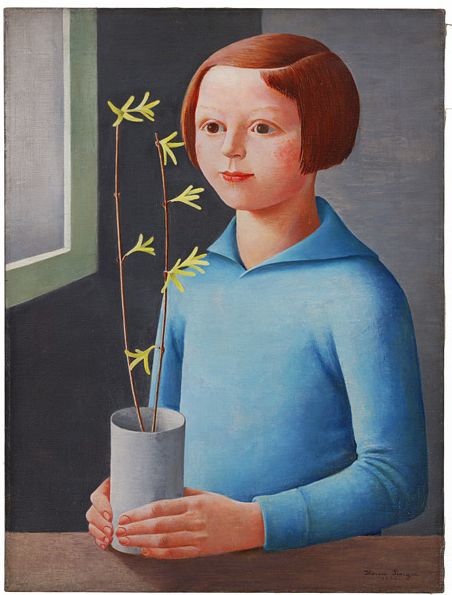
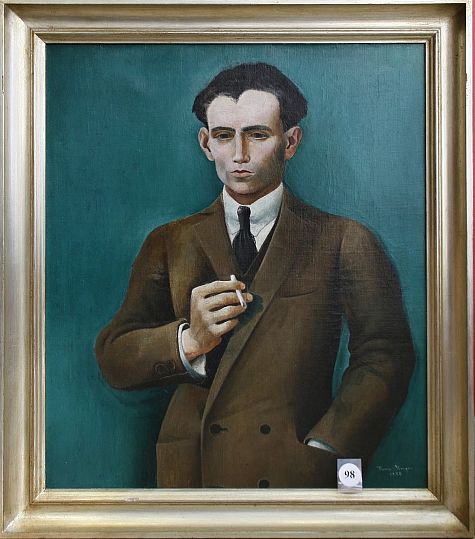
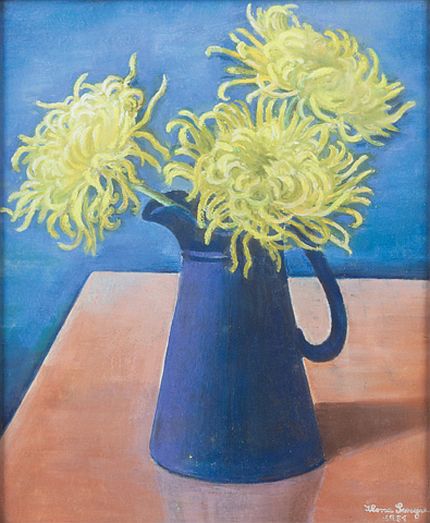
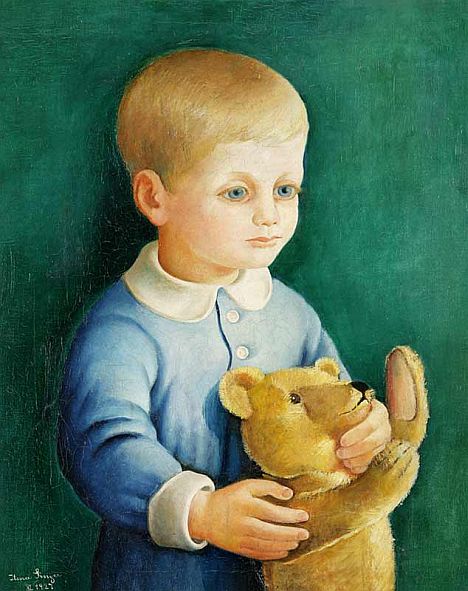
ILONA SINGER-WEINBERGER

Touches of Neue Sachlichkeit

beautybellezzabeaute's avatarBeauty Bellezza Beauté

Ilona Singer-Weinberger (1905-1944).

Ilona Singer-WeinbergerIlona Singer-Weinberger2Ilona Singer-Weinberger4Ilona Singer-Weinberger3

View original post

Categories
Uncategorized

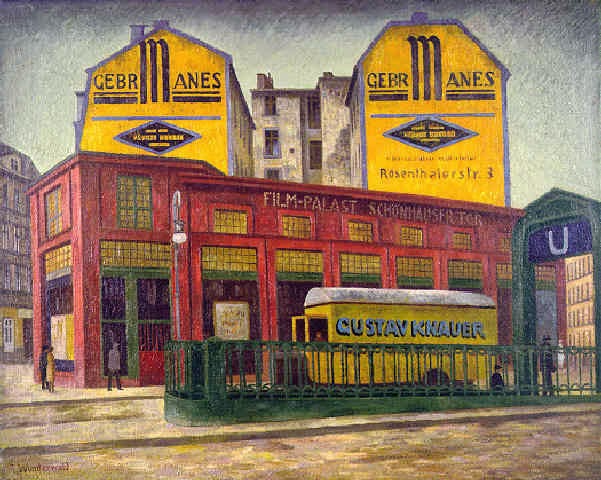
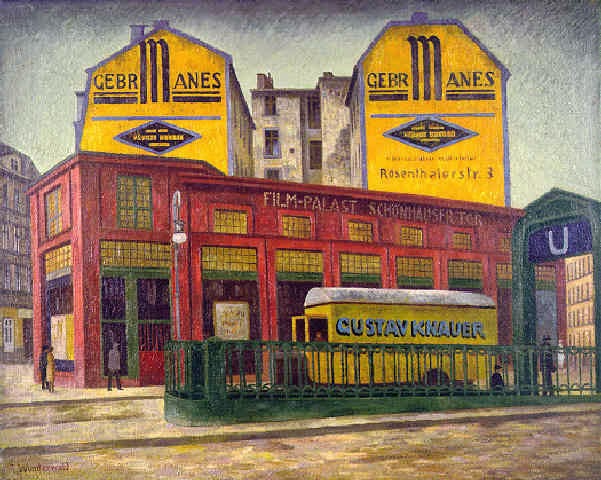
BERLIN BRUSHES: GUSTAV WUNDERWALD

Berlin Companion's avatarKREUZBERGED - BERLIN COMPANION

Gustav Wunderwald, 1927, U-Bhf “Schönhauser Tor”

On this grey and gloomy day, a splash of colour straight from 1927: Gustav Wunderwald’s painting of the entrance to U-Bahnhof “Schönhauser Tor”.

The station, part of the old Linie A (now U2), was later re-named by the Nazis “Horst-Wessel-Platz” but after the Second World War was known as “Luxemburgplatz”.

To avoid it being confused with the state of Luxemburg, the station as well as the plaza, whose name in fact honoured the great Communist leader murdered in January 1919, was once again re-named: today it features on Berlin maps as U-Bahnhof “Rosa-Luxemburg-Platz”.

View original post

Categories
Uncategorized

Cornwall’s Oldest Road

Very interesting!

esdale77's avatarThe Cornish Bird

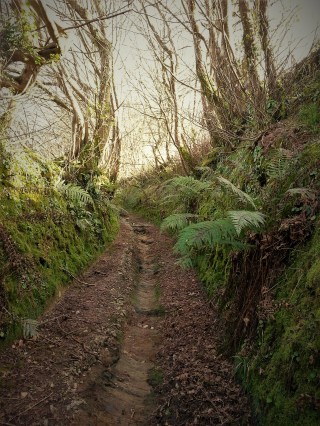
The hedge towers above me, the moss is thick and bright green, lush ferns give the scene an ancient and almost topical feel. I am standing on Cornwall’s oldest ‘road’.

20160228_143413 (2)

This route once ran for 10 miles between Lerryn and Looe and was in use around 4000 years old.

The road cuts so deep down into the earth that I am standing on bedrock and that bedrock has a channel worn into it from hundreds of years of rainwater wearing its own path.  The level of the field I have just crossed to get here is high above me, perhaps as much as 9 or ten feet, it is no wonder that these banks that mark the route’s way have become known as the Giant’s Hedge.

In 2013 the newspapers reported that Britain’s oldest pavement had been found in Cornwall.   A cobbled track leading to the Hurler’s stone circle had been uncovered on Bodmin moor during…

View original post 389 more words

Categories
Uncategorized

The best of this year’s paintings and articles

A very interesting and detailed blog post. Thanks!

hoakley's avatarThe Eclectic Light Company

As today is New Year’s Eve, it is time to look back on some of my favourite paintings which I have featured in articles here over the past year.

This is one of my favourite articles to write, because it gives me an excuse to go back and enjoy the many paintings which I have shown, but it is also one of the most difficult, given the choice. I hope that you will enjoy these few.

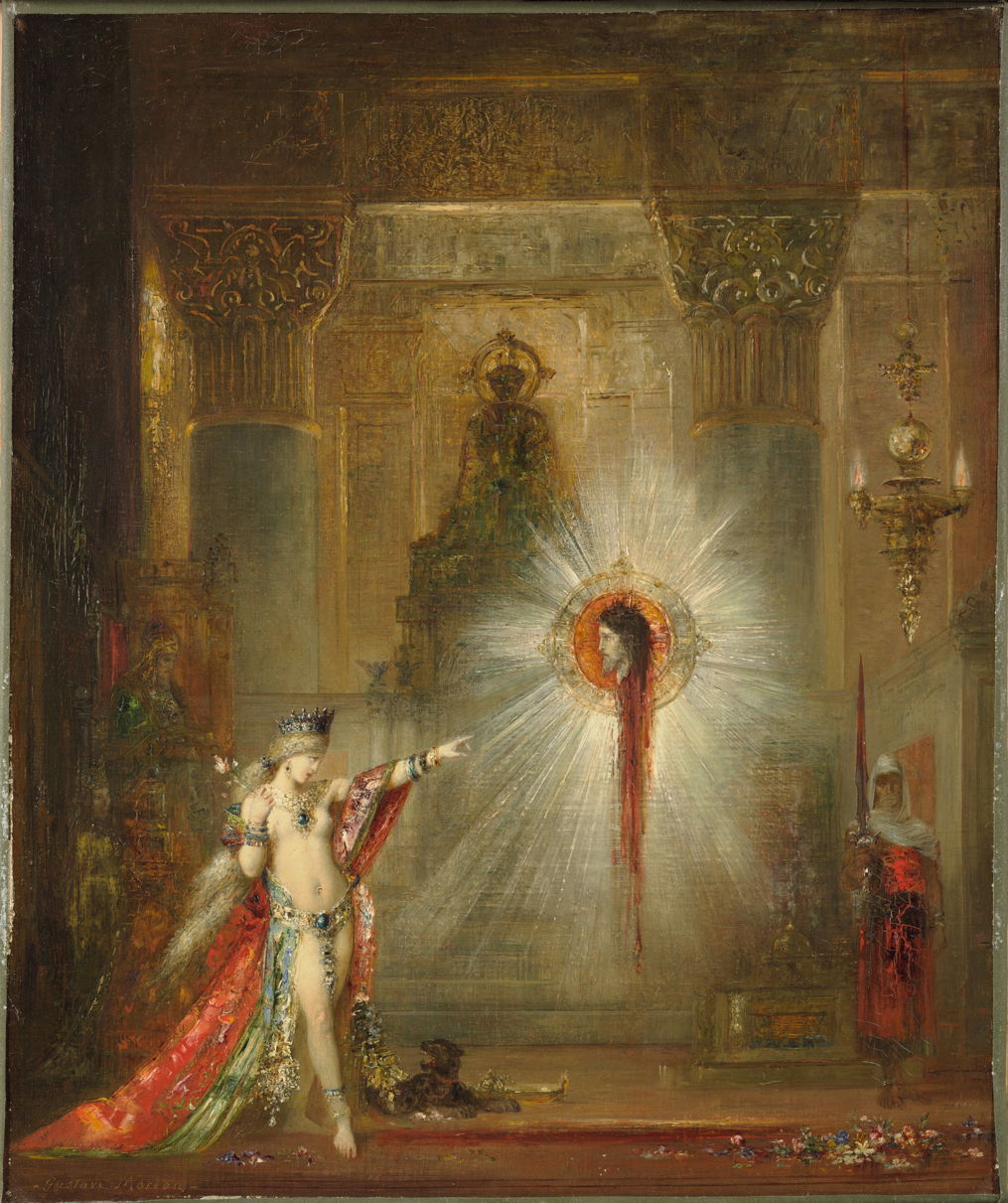
moreauapparitionfogg Gustave Moreau (1826–1898), The Apparition (1876-77), oil on canvas, 55.9 x 46.7 cm, Harvard Art Museums/Fogg Museum (Bequest of Grenville L. Winthrop), Cambridge, MA. Courtesy of Harvard Art Museums.

Gustave Moreau’s The Apparition (1876-77) was featured in my series looking at who killed John the Baptist?

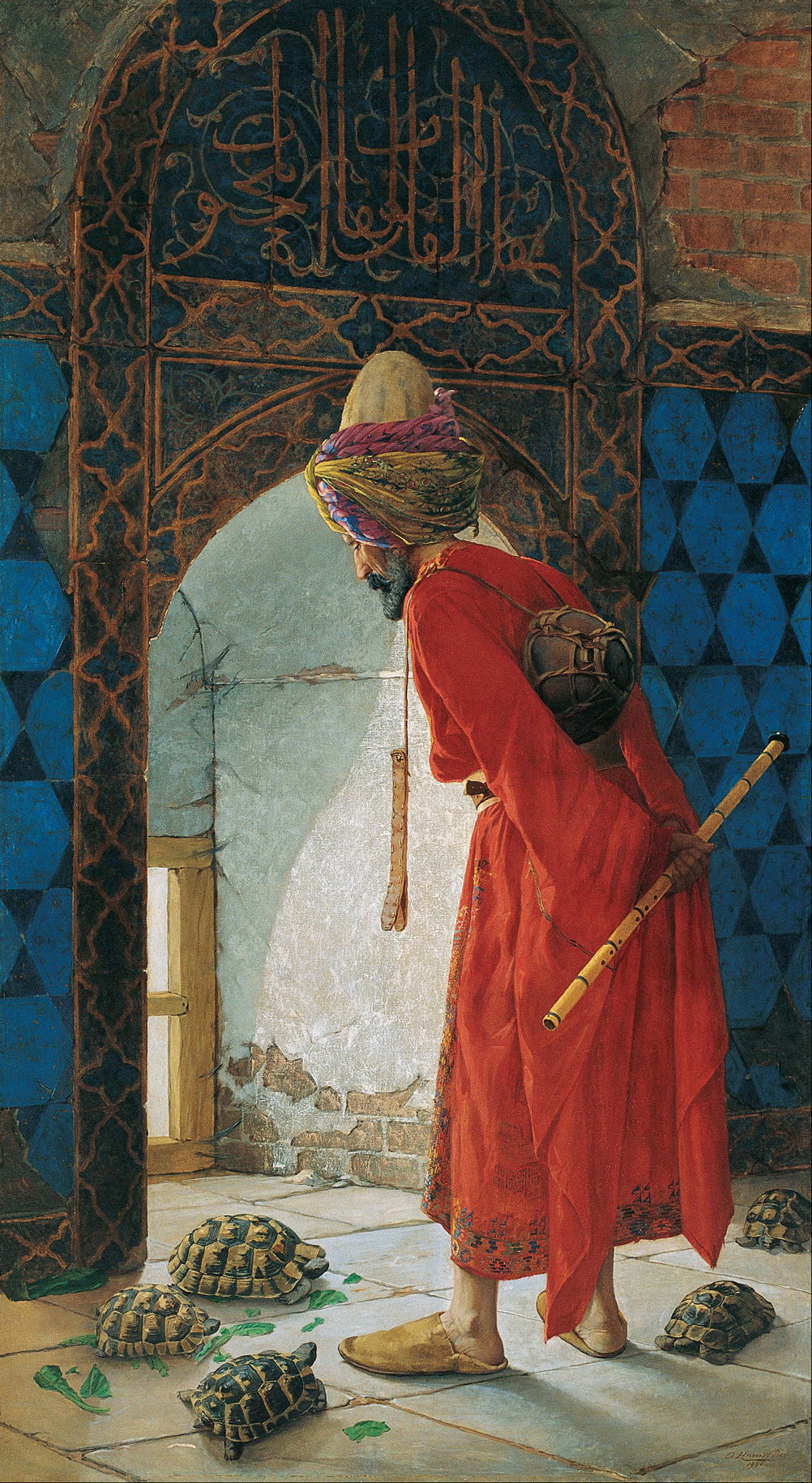
osmanhamdibeytortoisetrainer Osman Hamdi Bey (1842–1910), The Tortoise Trainer (1906), oil on canvas, 221.5 x 120 cm, Pera Müzesi, Istanbul. Wikimedia Commons.

I had not come across the paintings of…

View original post 1,198 more words

Categories
Uncategorized

Eislaufen

An evocative piece about ice skating!

wolframette2013's avatarTexte von Wolfram Ette

Es ist die Zeit des Eislaufens, vom Dreijährigen, der in seinem leuchtend roten Schneeanzug aussieht wie eine Wattewurst und der bei jedem Schritt auf dem Eis liegt, bis zum überkrassen 17-Jährigen, der in rasender Geschwindigkeit, die Beine in einer unablässigen fließenden Bewegung spindelnd in raschen Slaloms zwischen den anderen hindurchschießt, sind alle hier in einem großen Rundtanz vereint. Die Musik ist furchtbar, der kleinste gemeinsame Nenner, Helene Fischer und Co., Deutschpop aus den Achtzigern plus ein paar extra beats per minute, aber sie dringt doch in die Körper, teilt sich den Bewegungen mit, bestimmt den Schwung, mit dem man vom einen aufs andre Bein wechselt. Wir sind seit Stunden unterwegs, immer wieder hingefallen aufs nasse Eis, dann halbwegs getrocknet, Schweiß und Wasser haben sich zu einer zweiten Haut, einer merkwürdigen stinkenden Masse, verbunden. Ich bin schon müde und es fällt mir nicht mehr ganz leicht, meinen Schwerpunkt exakt über den…

View original post 473 more words

Categories
Uncategorized

READING

Great book and available as a DVD too.

beautybellezzabeaute's avatarBeauty Bellezza Beauté

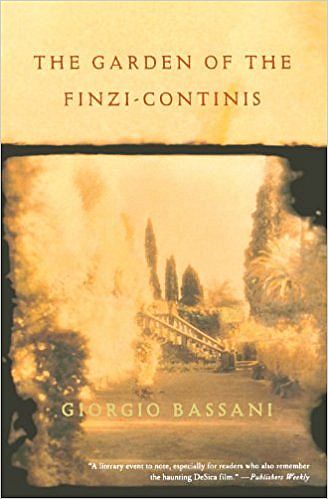
garden

The Garden of the Finzi-Continis is considered the best of the series of novels that Bassani produced about the lives of Italian Jews in the northern Italian city of Ferrara. Although the novel focuses on the relationships between the major characters, the shadow of creeping fascism, especially the racial laws that restricted Jews’ participation in Italian society, looms over all the novel’s events. According to Bassani, one hundred and eighty-three Jews living in Ferrara were deported to German concentration camps in 1943.

View original post