A very useful summary of a major text.
Category: Uncategorized
Categories
Born April 21~ Dod Procter

Dod Procter (April 21, 1890-July 31, 1972) was an English painter. Procter and her husband, also an artist, met while attending art school.
Biography on Wikipedia:https://en.wikipedia.org/wiki/Dod_Procter

Girl with a Parrot by Dod Procter
c.1925 / Oil on canvas / 52-3/4″x34-1/4″ / Private collection
Dod Procter on Artnet: http://www.artnet.com/artists/dod-procter/
Further reading:
https://chronicle250.com/1927
https://artuk.org/discover/artists/procter-dod-18921972
https://philipmould.com/news/142-a-house-fit-for-an-artist-dod-essay-by-lydia-miller/
I heard Rosen talk about this at Jewish Book Week- very much want to read. Thanks for this reminder!

How to tell the story of Anti-Semitism and Intellectuals who Challenge it: Reflecting on reading Michael Rosen’s (2017) The Disappearance of Émile Zola: Love, Literature and the Dreyfus Case London, Faber & Faber.
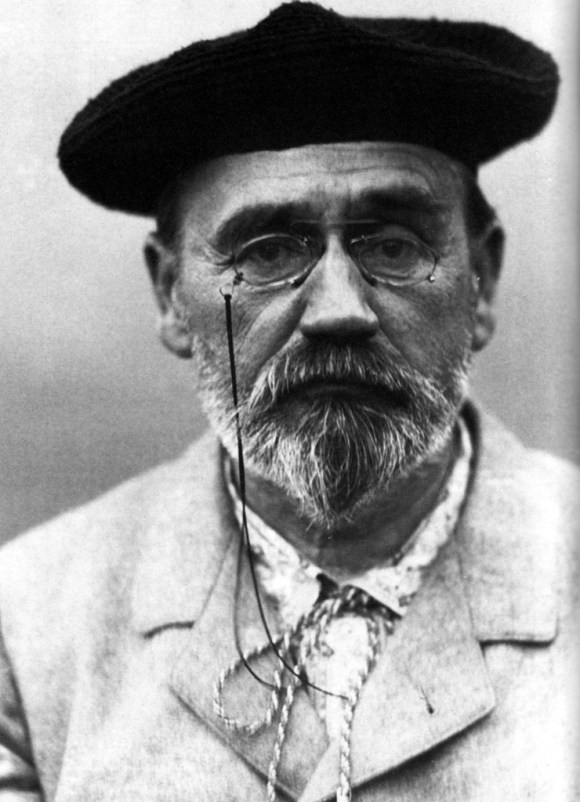
This is a book with far larger themes than can be imagined before we not only read it but reflect on it. I have always admired Michael Rosen as before him I admired his father Harold Rosen. This is a family embedded in the cultural and intellectual life not only of Great Britain but of socialism conceived as a European tradition.
During the 2019 election, Michael Rosen was highly prominent on social media, challenging anti-Semitism but also challenging large unspecified claims against some on the left who were being called anti-Semitic with very little evidence. He challenged in particular the Anti-semitism Tsar, Lord John Mann, who had appeared, to many of us on the left…
View original post 1,032 more words
Categories
Mossy Creek, Desert Island, Maine
Categories
Flowered Balcony, Paris, France
Great photography!! Wish I were in Paris!

Schrader is brilliant and helped to direct Vor der Morgenrot abou the last months of the fascinating Stefan Zweig. It will help to refresh your German too- very useful!!

EUROPE
Stylish Cold War spy drama Deutschland ’83, a co-production between Germany and the USA, aired in the UK in 2016, and became a runaway hit. We’ve recently been watching the follow-up series, set in 1986, and imaginatively called Deutschland ’86. Deutschland ’89, set in the year of the fall of the Berlin Wall, has just come out, and I dare say we’ll get to it at some point.
In the five years since we watched Deutschland ’83 I’d unfortunately forgotten everything about the plot, as well as all the names, motivations and back stories of every single character. This happens a lot. I can reread a book from a few years ago, and it might as well be new to me. I can watch films and only towards the end remember that, yes, I’ve seen it already. Indeed, one of the reasons for writing this blog…
View original post 311 more words
I think that it was Gavin Ewart who said that well informed persons “Take their clues from the Weekly Reviews”. In the past few weeks I have been interested in the latest viewpoints on China in the World today. I grew up knowing very well a Methodist Minister who had been part of the Chinese Inland Mission and well remember seeing a journal amongst the sermons and stamp albums on his desk entitled China Reconstructs. Even at that time China was able to grant 4.7 million dollars to Egypt at a time when Britain, France and Israel were attacking during the Suez Crisis.
The TLS has recently been looking at how the climate emergency and it’s relation to superpower rivalry. In an interesting review of two books, China goes Green and The New Map, Kate Brown looks at what might be termed green colonialism. The first book, by Li and Shapiro she finds reminiscent of Cold War reportage. Kate Brown mentions how China’s Belt and Road Initiative (BRI) mimics the Marshall plan and costs some 60 Billion dollars. She also mentions that in the past 40 years some 400 million Chinese people have planted some 70.5 Billion trees. “Many of these trees were planted on grass savannahs. Drinking up scarce water, they have caused erosion, and the majority of the poplars and evergreens have died” she writes. In reviewing the second book by Yergin she concludes….”….the big winners in the first decades of the twenty first century have been the oil and gas interests. In 2020, just as 30 years ago, 80 per cent of the world’s energy derives from these two resources.” This TLS article from No 6152 February 26 th 2021 is well worth study.

The TLS article mentions that the Pripyat Marshes situated in Poland, Ukraine and Belarus appears to be in the BRI plan – sustainainability? Or the search for global markets?
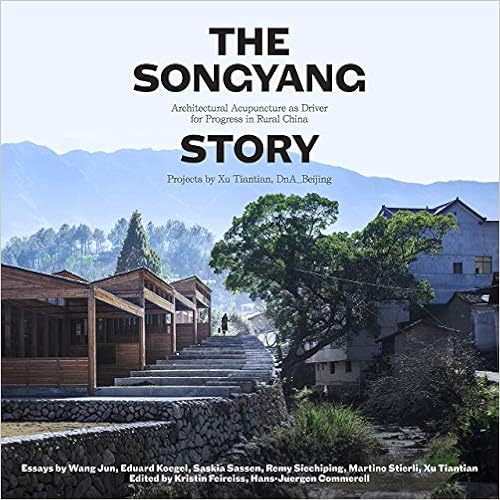
Oliver Wainwright in the Guardian in the Guardian 24th March has written a fascinating article on China’s rural revolution. He quotes the architectural acupuncture strategy of Xu Tiantian of DnA in Songyang in Zhejang province:-
“We have tried to make something to restore the villagers’ pride in their local identity, as well as bringing visitors and creating a local economic network” Wainwright writes that new facilities will include; a brown sugar factory, a camellia oil workshop, a rice wine distillery and a pottery. This well illustrated article goes on to mention community centres and museums all to be discovered in The Songyang Story published by Park Books.
The Spectator has endeavoured to engage in a thoroughgoing and persistent manner with Chineese issues. The tone is often right wing but nevertheless well written and informative. Overall I find it more engaging to read than the New Statesman, which otherwise accords with my sympathises. On 16th Jan Chris Patten writes about “Lessons from Hong Kong” He speaks out strongly and sensibly about the genocidal policies against Uyghur Muslims in Xinjiang and concludes saying “It is also absurd to think China will implement international labour standards, as French and German governments claim. Our European leaders might also notice how many heads of the Jewish community have drawn attention to the similarities between the Holocaust and ethnic genocide against the Uyghurs”.
In the Spectator on the 24th January 2021 Harald Maass raised the question as to who profits from Uyghur labour camps. He quotes one source as mentioning that some half a million Uyghurs are being forced under very harsh conditions to pick cotton in Xinjiang province mostly by hand. He mentions too, the fashion industry:-
“Brands including Hugo Boss, Adidas, Muji, Uniqlo, Costco, Caterpillar, Lacoste, Ralph Lauren and Tommy Hilfiger have been named in reports tying them to Xinjiang factories or materials. One in five cotton products world wide is made with Xinjiang cotton, though Marks &Spencer last week signed a call to action regarding Xinjiang and pledged to stop using any cotton from the region” According to the BBC just today images of clothes and trainers are being deliberately obscured for domestic viewing. https://www.bbc.co.uk/news/world-asia-china-56658455
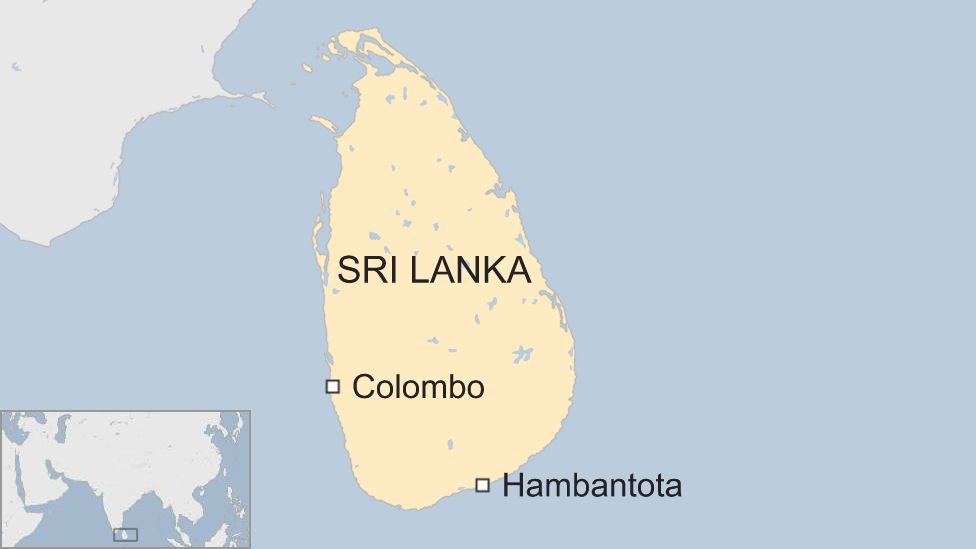
Frnces Pike https://en.wikipedia.org/wiki/Francis_Pike again in The Spectator 20th February raises the question of how the China’s containment of India-it sees it as a long-term geopolitical rival- should be countered by Biden, Blinken and the D10. Besides the Chinese influence in Burma and Bangladesh, Pike mentions the lease of 99 years for the port of Hambantota in Sri Lanka.
https://en.wikipedia.org/wiki/D10_club_of_countries
So the coverage of by The Spectator of China has been intensive and is perhaps summarised by James Forsyth in last week’s copy (3rd April}. Forsyth is, one assumes, fairly close to Downing Street. He mentions that in the previous week, “..the U.S., the E.U., the U.K. and Canada imposed sanctions on China over human rights abuses in Xinjiang” China’s response which included sanctioning five M.E.Ps may lead to the European Parliament failing to ratify the E.U.-China investment Agreement. Forsyth mentions the need for solidarity and refers to this:-
” When Bejing turned on Australia for suggesting there should be an independent inquiry into the origins of coronavirus, there was a shocking lack of solidarity from New Zealand.”
Forsyth appears to support the proposal being made to the American China Research Group to develop a kind of Nato for trade. He concludes by advocating that such collective economic defence be on the agenda for the G7 in Carbis Bay.
To conclude with two interesting items –
I knew nothing about bitcoins or their importance. This link not only gives an indication of their production but it also explains their considerable contribution in China of producing Carbon Dioxide-
Secondly, a useful book on this topic has been written by Jonathan E Hillman published by Yale The Emperor’s New Road:China and the Project of the Century. There is an excellent review and tour d’horizon by Laleh Khali in The London Review of Books 18th March 2021
https://www.qmul.ac.uk/politics/staff/profiles/khalililaleh.html
Categories
#PoetryMonth Surge
Must look up the original French!!
Categories
Born March 29~ Dora Carrington
Really like Carrington’s work and was deeply moved reading her relationship with Lytton Strachey in Holroyd’s magnificent biography.
Dora de Houghton Carrington (March 29, 1893-March 11, 1932), known generally as Carrington, was an English painter and decorative artist.
Biography on Wikipedia: https://en.wikipedia.org/wiki/Dora_Carrington

Spanish Boy, the Accordion Player by Dora Carrington
c.1924 / Oil on canvas / 25″x20″ / The Higgins Bedford, Bedford, UK
Dora Carrington on Artnet: http://www.artnet.com/artists/dora-carrington/
Further reading:
https://www.nationalgalleries.org/art-and-artists/artists/dora-carrington
https://www.artuk.org/discover/artists/carrington-dora-18931932
https://www.tate.org.uk/art/art-terms/b/bloomsbury/lifestyle-lives-and-legacy-bloomsbury-group
 penwithlit