Lovely posting:-
Categories
Freelance writer and radio presenter
Lovely posting:-
Es stampft mein Pferd. Der Blütenregen rauscht;
Und Blütenzweige streifen wolkig meine Wange.
Es kriecht der Fluß wie eine braune Schlange,
Auf der ein Segel sich wie eine Wespe bauscht.
Ein Mädchen lächelt. Bambusvorhang hebt
Sich unter ihrer Finger Mondenschimmer.
Und aus der Tiefe stürzt und lockt und schwebt
Ein dunkelrotes, ein ersehntes Zimmer –
Winkt mir, errötend, meines Mädchens Zimmer.

Der August
Erich Kästner
Nun hebt das Jahr die Sense hoch
und mäht die Sommertage wie ein Bauer.
Wer sät, muss mähen.
Und wer mäht, muss säen.
Nichts bleibt, mein Herz. Und alles ist von Dauer.
Stockrosen stehen hinterm Zaun
in ihren alten, brüchigseidnen Trachten.
Die Sonnenblumen, üppig, blond und braun,
mit Schleiern vorm Gesicht, schaun aus wie Frau’n,
die eine Reise in die Hauptstadt machten.
Wann reisten sie? Bei Tage kaum.
Stets leuchteten sie golden am Stakete.
Wann reisten sie? Vielleicht im Traum?
Nachts, als der Duft vom Lindenbaum
an ihnen abschiedssüß vorüberwehte?
In Büchern liest man groß und breit,
selbst das Unendliche sei nicht unendlich.
Man dreht und wendet Raum und Zeit.
Man ist gescheiter als gescheit, –
das Unverständliche bleibt unverständlich.
Ein Erntewagen schwankt durchs Feld.
Im Garten riecht’s nach Minze und Kamille.
Man sieht die Hitze. Und man hört die Stille.
Wie klein ist heut die ganze Welt!
Wie groß und grenzenlos ist die Idylle …

When did they travel? In a few days
They always shone golden in the stockades.
When did they travel? Maybe in a dream?
At night, as the scent of linden tree
blew sweet farewells over them?
In books it is clearly stated,
even the infinite is not infinite.
It twists and turns space and time.
It is cleverer than clever -and
the incomprehensible is incomprehensible.
A harvest wagon rumbles across the field.
And the garden smells of mint and chamomile.
One even sees the heat. And you can hear the silence.
How small the world appears today!
How great and boundless and idyllic …
Nothing remains, dear heart. Soon the day good night says.
meteors fall then, silver and gently,
into somewhere, like tears without sadness.
Then wish your wish, but pay close attention!
Nothing remains, my heart. And everything is permanent.

Just 100 years after the birth of Louise Bourgeois in 1911, her work is due to be re-considered and this display at the Haus Der Kunst in Munich affords an opportunity to evaluate a small but interesting section of it.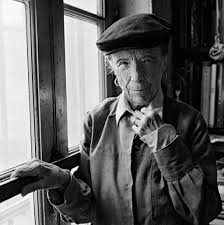
Her concerns flourished in a troubled personal and collective past. Here is revealed a land of mirrors, shadows and memory. The exhibition is dominated by large structures, perhaps up to 6m in height as cells, enclosures and gigantic spider like constructions. Their colours are sparse but significant. These units were created by Bourgeois from 1996 after the year 2000. It is impossible not to be aware from their imposing presence of surrealism, of Kafka and of both feminism and psychoanalysis. Having undergone analytical treatment, Louise Bourgeois’ work struggles with the emotions of early childhood; jealousy, fear, security, sexuality, voyeurism and mothering are prominent themes in this exhibition. The supporting frames and nesting shapes are reminiscent of her work inspired by Giacometti as well perhaps of Francis Bacon.
The cells are enclosures which suggest relationships which may sometimes become claustrophobic. The insides are not entirely open to the viewer who may feel something of an intruder into a private and personal world. “Cell VI” for instance, consists of a metal stool placed inside a screen of four doors with a gap for the spectator all painted in a light blue suggests an interrogation or perhaps, self-accusation or possibly both. Seeing a number of such structures standing separately, cells or selves in isolation, portraying pre-occupation with past trauma, is reminiscent of Hesse’s evocative poem, “Der Nebel” and its daunting conclusion, “Jeder ist allein”.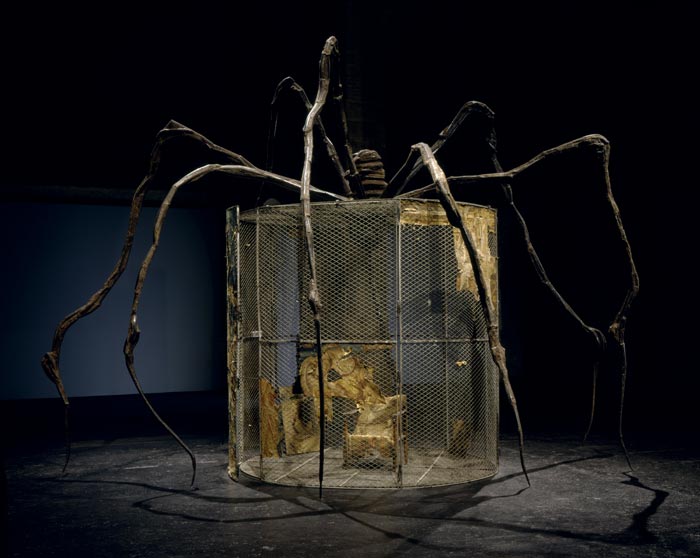
Yet despite the creepy insect structures, the wire netting, the discarded bottles, there is an underlying energy about Bourgeois’s work which involves the courage to confront the past. There is an implication of the possibility for communication. Bourgeois was deeply influenced by Leger who believed that together men could transform social relationships and build a better future. As D.H.Lawrence suggested, “One must learn to love, and go through a good deal of suffering to get to it, and the journey is always towards the other soul.”
More details at http://www.hausderkunst.de/ausstellungen/detail/louise-bourgeois-cells/
and about the artist at https://en.wikipedia.org/wiki/Louise_Bourgeois

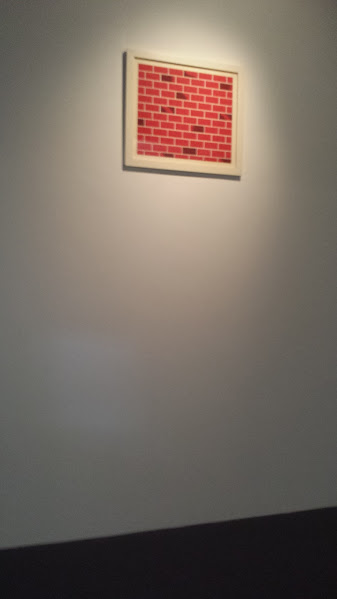
Robert Therrien’s work is being displayed at the Exchange Gallery, Penzance until 26th September 2015. Working in Los Angeles, this 68 year old artist is displaying his work in collaboration with ARTIST ROOMS, an organisation which is a venture of both the Tate and the National Galleries of Scotland of con temporary art, which is international, that is on tour currently.
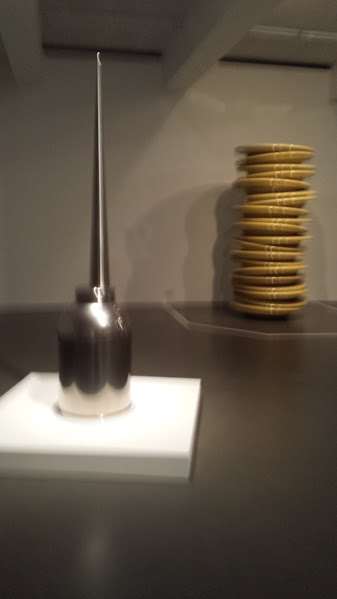
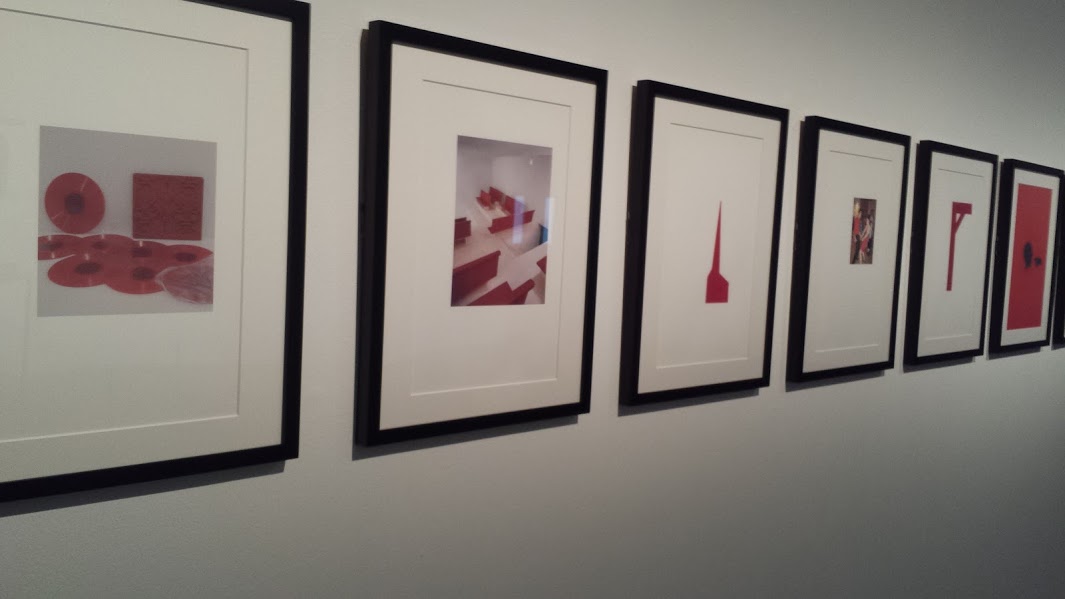
ARTIST ROOMS is travelling with this exhibition and showing at 17 museums and galleries across the U.K. An artist’s biography can be found at http://www.tate.org.uk/art/artists/robert-therrien-2312 and details about ARTIST ROOMS and this artist is at http://www.artistrooms.org/roberttherrien with a short explanatory video clip.
Further images may be seen at http://artnet.com/artists/robert-therrien/
« Wenn der Zigarettenrauch in der Spitze und die Tinte im Füllhalter gleich leichten Zug hätten, dann wäre ich im Arkadien meiner Schriftstellerei. »
In ihrem dritten Roman “Der Tag, an dem ich fliegen lernte” webt die in Brasilien aufgewachsene deutsche Autorin Stefanie Kremser (*1967) die Geschichten des mutterlosen Mädchens Luisa und des von einem Ozean getrennten Dorfes Hinterdingen zu einem fesselnden Erzählteppich, der interessante Perspektiven auf die Themen Migration, Familie und Identität wirft.
 Titel:Der Tag, an dem ich fliegen lernte
Autorin:Stefanie Kremser
Verlag: Kiepenheuer & Witsch
ISBN: 978-3-462-04705-9
Umfang: 304 Seiten, gebunden m. Schutzumschlag
Luisa, die Ich-Erzählerin, die retrospektiv Ereignisse ihrer Kindheit nacherzählt und -empfindet, wird am 7.9.1994 in München geboren. Nur Minuten nach der Geburt lässt ihre Mutter, die brasilianische Doktorandin Aza, sie vom Balkon des Krankenhauses fallen und verschwindet spurlos. Der Brite Fergus, der die Szene zufällig beobachtet, fängt das Neugeborene und wird zum Lebensretter. Luisas Vater Paul, fünf Jahre jünger als Aza und selbst noch Student, nimmt sowohl seine Tochter wie auch deren Schutzengel mit in seine Wohngemeinschaft…
View original post 549 more words
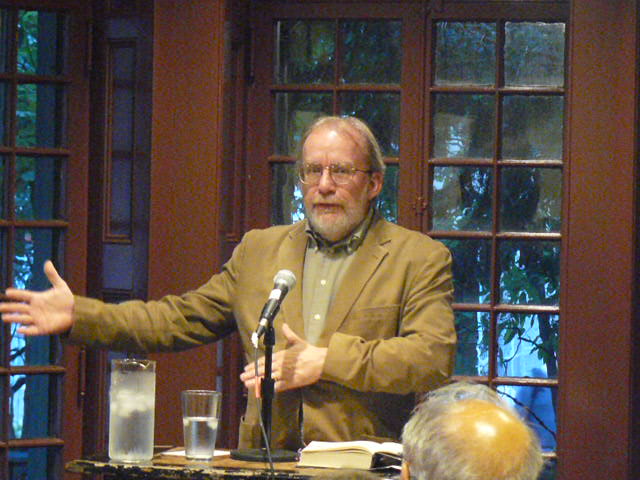
I’m delighted to announce that my article ‘HOLOCAUST TRANSLATION, COMMUNICATION AND WITNESS IN THE WORK OF H. G. ADLER‘ has just been published in German Life and Letters. This is the first piece that I started working on when I commenced my H. G. Adler project in collaboration with Prof. Frank Finlay. It’s the product of much absorbed reading but as importantly, many long conversations with people who have been really helpful as my thoughts on Adler develop: Prof. Frank Finlay, who first introduced me to H. G. Adler; Prof. Peter Filkins, Adler’s translator (featured above); Prof. Peter Davies, co-director of the research network ‘Holocaust Writing and Translation’, and also Prof. Jeremy Adler, H. G. Adler’s son and tireless advocate for his father’s work. I am so very grateful to all of these colleagues and so many more for accompanying me on my journey with Adler’s…
View original post 402 more words
Liebes-Lied

Wie soll ich meine Seele halten, daß
sie nicht an deine rührt? Wie soll ich sie
hinheben über dich zu andern Dingen?
Ach gerne möcht ich sie bei irgendwas
Verlorenem im Dunkel unterbringen
an einer fremden stillen Stelle, die
nicht weiterschwingt, wenn deine Tiefen schwingen.
Doch alles, was uns anrührt, dich und mich,
nimmt uns zusammen wie ein Bogenstrich,
der aus zwei Saiten eine Stimme zieht.
Auf welches Instrument sind wir gespannt?
Und welcher Geiger hat uns in der Hand?
O süßes Lied.
Aus: Neue Gedichte (1907)
Immer fand ich den Namen falsch, den man uns gab:
Emigranten.
Das heißt doch Auswandrer. Aber wir
Wanderten doch nicht aus, nach freiem Entschluss
Wählend ein andres Land. Wanderten wir doch auch nicht
Ein in ein Land, dort zu bleiben, womöglich für immer
Sondern wir flohen. Vertriebene sind wir, Verbannte.
Und kein Heim, ein Exil soll das Land sein, das uns da
aufnahm
Unruhig sitzen wir so, möglichst nahe den Grenzen
Wartend des Tags der Rückkehr, jede kleinste Veränderung
Jenseits der Grenze beobachtend, jeden Ankömmling
Eifrig befragend, nichts vergessend und nichts aufgebend
Und auch verzeihend nichts, was geschah, nichts verzeihend.
Ach, die Stille der Sunde täuscht uns nicht! Wir hören die
Schreie
Aus ihren Lagern bis hierher. Sind wir doch selber
Fast wie Gerüchte von Untaten, die da entkamen
Über die Grenzen. Jeder von uns
Der mit zerrissenen Schuhn durch die Menge geht
Zeugt von der Schande, die jetzt unser Land befleckt.
Aber keiner von uns
Wird hier bleiben. Das letzte Wort
Ist noch nicht gesprochen.
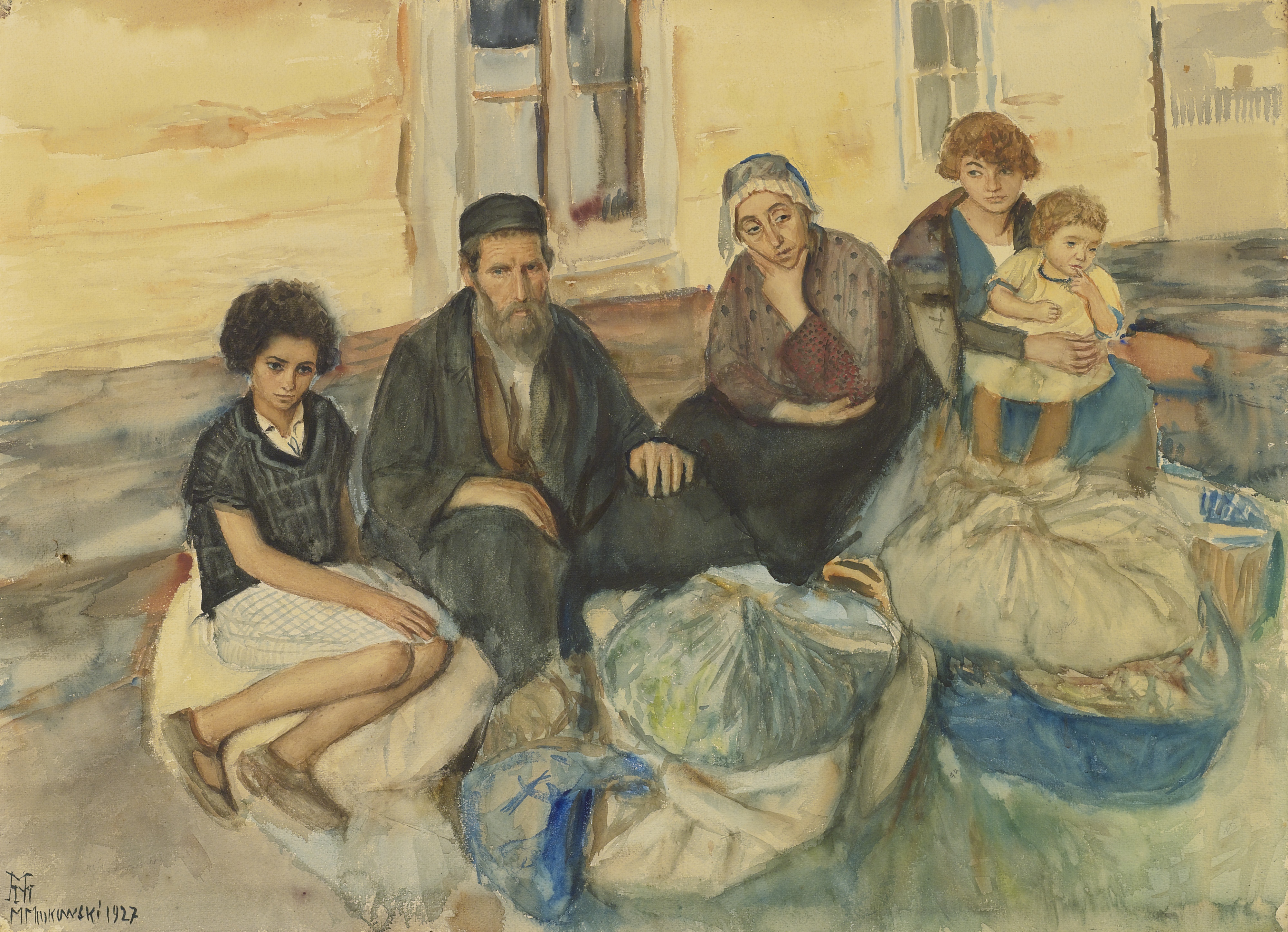
At present there is much discussion over emigration/immigration and this rather beautiful poem was written by Brecht upon his partial escape from the Nazis in 1937 into Denmark. He states that, he always finds the name emigrant a false term as it is not through free will that he is forced to escape but for survival. This might remind us too that many journeys are made out of necessity; choice does not come into the matter. “Vertriebene sind wir”- we are in fact expelled! In such a state, people are innocent and eager to ask each new arrival across the border and question each new arrival coming across the border. The overbearing silence of an authoritarian regime does not hide, “Wir hören die Schreie” the cries of pain from the lost homeland. As we pass dressed in rags and tatters through the crowds, testifies to the disgrace that stains our land right now. However, it appears that the poem ends with hope- “Das letzte Wort
Ist noch nicht gesprochen.” -the last word is yet to be spoken. Tyranny will be defeated.
The poem is thoroughly and clearly analysed in German –
Weitere Informationen, Links und Buchtipps findet Ihr auf unserem Blog:
http://deutschstundeonline.blogspot.com/


 penwithlit