Please note that the words below are the same only in writing but
not in pronunciation
. Still interesting and fun to know it, though. 🙂
View original post 531 more words
Freelance writer and radio presenter
Please note that the words below are the same only in writing but
not in pronunciation
. Still interesting and fun to know it, though. 🙂
View original post 531 more words
For anyone wanting to read Hesse-
Le coup d’œil craintif à tous azimuts
Se heurte Ă des murs gris,
Et « soleil » n’est encore qu’un mot vide.
Détrempés et nus, les arbres ont froid,
Les femmes vont, paquetées de manteaux,
Et la pluie sans fin crépite et crépite.
Lorsque j’étais encore enfant, jadis,
Le ciel sans relâche était clair et bleu
Et tout nuage frangé d’or.
Maintenant que j’avance en âge,
Toute brillance est accomplie,
La pluie crépite, le monde a changé.
______________________________________________
Cette traduction originale, due à Lionel-Édouard Martin, relève du droit de la propriété intellectuelle.  Il est permis de la diffuser, à la condition expresse que le nom du traducteur soit clairement indiqué.
Der scheue Blick an allen Enden
Stößt sich an grauen Wänden,
Und « Sonne » ist nur noch ein leeres Wort.
Die Bäume stehn und frieren naß und nackt,
Die Frauen gehn in Mäntel eingepackt,
Und Regen rauscht unendlich fort und fort.Einst als ich…
View original post 34 more words

Während ich mich über meine Stickerei am Fenster bückte,
Stach mich meine Nadel in den Daumen. WeiĂźe Rose,
Die ich stickte,
Wurde rote Rose.
In der kriegerischen Weite bei des Vaterlandes Söhnen
Weilt mein Freund, vergieĂźt vielleicht sein Blut.
Rossehufe hör ich dröhnen.
Ists sein Pferd? Es ist mein Herz, das wie ein Fohlen tut.
Tränen fallen mir aus meinen Blicken
Ăśbern Rahmen in die Stickerein.
Und ich will die Tränen in die Seide sticken,
Und sie sollen weiĂźe Perlen sein.
Bending down over my embroidery at the window,
I stick the needle into my thumb.
The white rose that I was stitching,
became red.
Through the vast martial expanses, the sons of our native land,
Steady my friend, perhaps they are shedding their blood.
Pounding steeds I hear thundering,
Is that his horse? No it is my heart
That beats like a foal.
Tears drop from my eyes
Over the embroidery frame.
And I shall stitch these tears in with the silk
And they shall become white pearls.
Unsettling trends – worth being aware-
By Marco Santopadre
The parliamentary elections in Hungary Sunday confirmed a trend already evident in recent years – a right wing government that maintains its position of dominance and a growing neo-Nazi opposition. The election also saw an increase in voter turnout, by four percentage points, reaching 61% participation.
The former Liberal party Fidesz, led by outgoing Prime Minister Viktor Orban and positioning itself as openly reactionary, populist, xenophobic, won 44.5% of the vote, a percentage that gave it an ample majority in the parliament in Budapest.
It led the Social Democrats by as many as 20 points; they garnered only 25.9% against the Nazi Jobbik which soared to 20.7% of the vote (it was 16.7 in 2010 ). The ecologist LMP gained 5.2%, however, this is enough to allow him entry into parliament, as the minimum threshold is set at 5%. Based on these almost definitive results Fidesz would…
View original post 710 more words
Ah yes, I remember it well…
The slideshow below features a selection of gallery views of the newly-installed Sven Berlin exhibition, which opened with a Private View on Saturday 12 February. Images from the Private View van be also seen. The exhibition of paintings, drawings and sculpture celebrates the centenary of Sven’s birth in 1911. Many of the works in the show have only recently been released from The Artist’s Studio. To view the exhibition in full, please visit the gallery website.
Very useful information and reference-
Browse works by Mark Twain, Joseph Conrad and other famous authors here.
View original post 1,733 more words
Civilised days…….
I love Hammershoi-

Up until August 1914, The Cornishman and the St Ives Weekly Report contain many detailed reports from abroad. These include the Cornish in America, Canada, South Africa. Many Cornish people travelling to the States will have responded to the large adverts in the Cornishman for the famous hotel in New York https://ephemeralnewyork.wordpress.com/tag/hotel-cornish-arms/
Without doubt, however, the greatest concern appears to be about Nationalist Rebellions in Ireland.http://www.bbc.co.uk/history/british/britain_wwone/ireland_wwone_01.shtml  The only reference to the possibility of  an outbreak of war- reading between the lines- concerns the speeches in support of building more dreadnoughts. Money appeared to be of no real concern  to the advocates of building more battleships.

When war broke out many fishermen in St Ives were immediately affected and the effect on many of them, their families and the price of fish was very soon to follow. Many were called up within hours and summoned as members of the Royal Naval Reserve to Davenport and had to leave by train for that destination. A newspaper report states that when addressed by Mr Stephen Reynolds, Inspector for the Board of Agriculture and Fisheries, he was told that some 160 fisherman were on active service with about the same numbers of families affected. Two-thirds of the summer Herring Fleet were laid up and the price of fish and particularly Crayfish that would otherwise have fetched a fine price in Paris were catastrophically affected.
The details of this call=up are very moving since we only have to turn to the next couple of weeks to learn how many will have been aboard ships which sank or been caught in the first defeat later at Mons. The accounts of farewells said above the peaceful beaches and the brass bands playing can still be imagined by anyone walking out of the town. There is a strange mixture of fear and jingoism apparent in the newspapers. There were worries about the supply of wheat which caused fears about  starvation; there were food riots in Camborne. Other articles show a concern about possibilities of aerial attack from Zeppelins and tables showing their limited range were the subject of articles in the press.


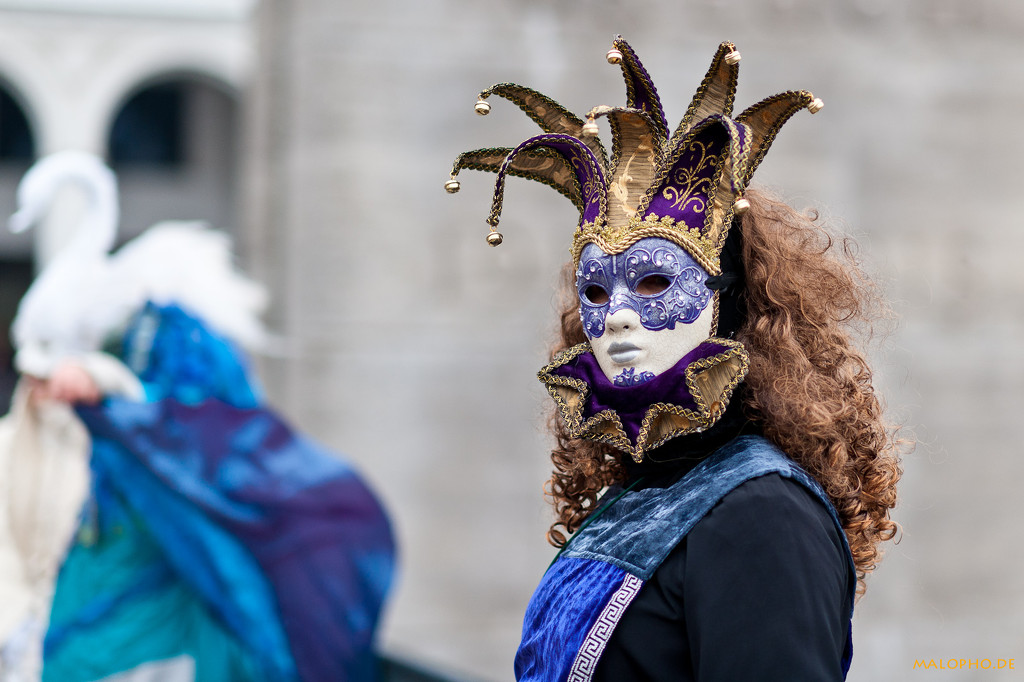
At the opening of the exhibition Hats: An Anthology by Stephen Jones at the Victoria and Albert Museum, he is said to have commented;”Hats are a great antidote to what’s going on. It’s really their purpose to put a happy face on a sad world.”

Â
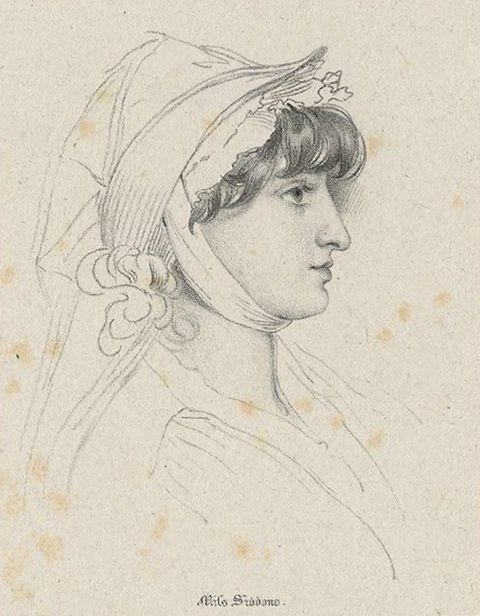
The image or drawing which is shown below has some of the intensity of a realist drawing by, say Kathe Kollwitz. Her naturalism shares the integrity which we associate with Van Gogh. Indeed her second cycle of works concerned the German Peasant War which began in 1525. However, this is not by Kollwtz, who seems to have rarely depicted persons with headdress, but by Tamara de Lempicka.
The pellucid definition and monumental stocky quality might also have suggested this in her sketch of a Russian peasant. Headgear was a recurring interest for Lempicka.

In Pippa Young’s paintings, http://www.pippayoung.co.uk/Art/Welcome.html which she specifically states are not to be considered as portraits, the headwear seems to confer meaning. It renders significance and gives import. Blank spaces and highly modelled backgrounds add to this general effect. She states, “Often the figures are posed to echo art-historical characters: Mantegna’s Saint Sebastian, or one of Vermeer’s subjects. When context is removed the figures become something else, oddly familiar; occupying an empty pictorial space, free from imposed narrative; timeless and unadorned.”
One theme which appears in the headdress then is a kind of 15th Century Flemish cap which is detailed at http://research.fibergeek.com/category/garbclothing/page/15/

However, many of the male figures appear with antlers or horns and give the impression of dreams and mythology. There is a wide variety of different meanings which can be attached to such headdress or headgear. They may be symbols of earthy virility or alternatively give a suggestion of darker activities. These matters are discussed at http://spellsandmagic.com/Horns.html and further unusual images of horned masks are at http://www.pinterest.com/susantooker/antler-crowns-and-headdresses/ In some of Pippa Young’s paintings the texture of the headwear or clothing looks rather like thin polythene sheeting and seem, possibly, to suggest environmental concerns.

The ornate quality also resembles the exuberance of Chinese ethnic dress as at http://traditions.cultural-china.com/en/15Traditions5963.html.


Returning to thoughts about horns must remind some of Falstaff in Act 5 of The Merry Wives of Windsor where he is dressed as Herne the Hunter and taunted and humiliated for his bad behaviour. As Shakespeare makes him say earlier in the play,” The Windsor Bell has struck twelve; the minute draws on. Now the hot-blooded gods assist me! Remember, Jove, thou wast a bull for thy Europa, Love set on thy horns- O powerful love that in some respects makes a beast a man, in some others a man a beast!
Pippa Young’s figurative work is finely drawn and the palette which she uses adds to the mysterious and evocative quality in her work. Her present collection can be viewed at the Cornwall Contemporary  Gallery at http://cornwallcontemporary.com/HumanNature.html
Her work is in some respects interesting to contrast with that of Cristina Iotti whose work can be seen at  http://www.cristinaiotti.it/2013-2012/