Which is the Stefan Zweig? A great writer imho! Hope you had a great Birthday and you prompted my memories for Vermouth which I seem to remember was a favourite tipple of W.H.Auden!
I had a birthday this week, so my TBR pile, officially already out of control, has become even more so.
Four books arrived from my parents, I unwrapped a book each from my son and my youngest daughter, and a pal dropped off a book, so my new pile looks like this (including the two books at the front that I was already reading):
I’m expecting to review the French TV series Call My Agent for the blog this month, plus Tahmima Anam’s first novel ‘A Golden Age’, set in Bangladesh, and Jacob Ross’s Caribbean crime novel ‘The Bone Readers’. I’ll also be looking at the work of Malian photographer Seydou Keita and reviewing a heart-warming romantic movie from Niger.
Meanwhile, in a little extra birthday news, my eldest daughter made me a fab frog cake, and I have some daffodils blooming in my little kitchen. Enjoying some simple…
Image from a Dutch magazine “Het Leven” (via Spaarnestadt Archive).
Here is a typical Berlin Balkonia, little man’s and woman’s green paradise, in its rooftop edition: as a small garden and a chicken-pen.
This model example of self-sufficiency was necessary to survive dire food-shortages of the First World War – shortages which were particularly acute in the capital and led to long periods of starvation not only among the poorest. Many Berlin children did not survive those and if they did, they often suffered their consequences – mentally and health-wise – for the rest of their lives.
This idyllic image is a witness to a very bitter truth: that unless you were able to provide your own food yourself, your family was in danger. And that in 99% of the cases this responsibility had to be shouldered by women – whose children were at great risk.
When I read Cyril Connolly’s collection “The Evening Colonnade” some considerable time ago, I was as impressed by the writings but also the cover, the title having been derived from a poem of Pope on Lady Mary Wortley Montagu:-
“What are the gay parterre, the chequer’d shade
The morning bower, the ev’ning colonnade
But soft recesses of uneasy minds
To sigh unheard in, to the passing winds?”
I imagine that many a his moment feel a sense of isolation and confinement that make an impact on our uneasy minds. So in a sense of splendid and slightly superior sense of looking down on events I came across a very interesting poem by Derek Mahon in his New Selected Poems (page 108) called Balcony of Europe. It is dedicated to Aidan and Alannah Higgins. So this is a poem about a novel with the title written to the author and his wife. There is a new imprint of the original book which is about Spain as discussed in the Irish Times, some two years ago. https://www.irishtimes.com/culture/books/life-as-story-told-1.633867
However, when I first read the poem the view I conjured up was of some Eastern European Country after the fall of some dictator. The first stanza reads:-
The dictator’s portrait dominated the airport
in those days, the first thing you noticed
after the cold police; his arms, a vivid
fistful of forked lightning, blazed
on the bus station and the road north-east
to the olive hills where the novelist lived.
The kitchen tap gave only a dry cough;
it was pitch black up there with the light off.
This short poem has underlying classical themes and moves from the darkness under the dictator to light and liberation. it is a metamorphosis in which not only does time move on but also seeing a youngster on the beach the poet from a bar filled with music invokes a somewhat scary but idyllic antiquity.
when she wasn’t just a girl but a creature
of myth, a Phoenician king’s abducted daughter
with a white bull between her knees,
borne out to a sun-white sea shaking with fear
and exhilaration, far from her shocked sisters,
gripping the horns, clutching the curly hair,
et tremulae sinuantur flamine vestes
(‘her floaty garments fluttering in the breeze’)
Aidan Higgins from The Irish Times
Tto mere is a very useful Open University site on classical links to modern poetry, and for the above poem see
As someone has commented on You Tube underneath the above, “Wonderful , soulful, expression of Imperial Russia from many aspects just before the Black Curtain of the war that aesthetically affects us into our era!” There are even colour photographs of that strange era in Russia before the Revolution that show the huge contrasts in wealth and also the peaceful landscape which is evoked like a distant Edwardian Summer. Serov died in 1911 having left behind masterpieces of portraiture including his own famous self-portrait. His style was realistic and is still much beloved by the Russian people.https://en.wikipedia.org/wiki/Valentin_Serov
Russia in Original Photographs, 1860-1920 Paperback – 1 May 1983 by Marvin Lyons
I have just discovered this film which looks good too-
Interesting and detailed posting here. Thank goodness for Channel 4 and The Guardian; huge split between BBC announcements and dire situation on the front line hospitals etc.
Not for the first time, I’m reminded of the Lenin quote which this blog began with in April: ‘There are decades where nothing happens; and there are weeks where decades happen’. So much has occurred this week that recent events such as the 18th government U-turn (the third national lockdown announcement), and Trump’s shocking attack on American democracy dwarf other important development earlier in the week, such as the 17th U-turn, changing policy to not reopen schools after all. This, when some schools had already been made to admit pupils for one day, leading to anger and confusion for teachers, parents and children, not to mention a likely rise in cases.
Education Minister Gavin Williamson came in for much opprobrium, most eloquently and succinctly expressed by Rafael Behr in the Guardian. ‘Not much is constant about Britain’s handling of the pandemic, but one rule applies throughout: there is…
An important book I think raising issues which were of interest at the time. The question of attaining authenticity without hurting others is surely, however, still with us. Certain themes about boredom, ennui in French certainly occupied others at the time from Flaubert, Baudelaire and on to Camus. Thanks for posting!
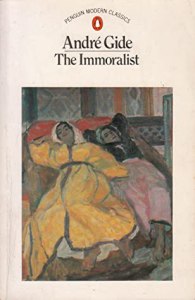
1001 Books begins its summary of The Immoralist like this:
A thought-provoking book that still has the power to challenge complacent attitudes and unfounded cultural assumptions, The Immoralist recounts a young Parisian man’s attempt to overcome social and sexual conformity. (1001 Books You Must Read Before You Die, ABC Books 2006, p.241)
The novella is prefaced by an attempt to explain that the ‘problem’ of the book existed before it was written. It is then book-ended at the beginning by a pseudo-letter to the Prime Minister that asks what role in society a young man like the hero might have… and completed by that same friend’s awkward conclusion after the hero’s story has been told. That story is narrated by Michel, who starts out as an austere young scholar and ends up as a defiant hedonist.
The translation, by Dorothy Bussy, uses the term ‘hero’ in the preface. But it…
To give this book a dedication The desert sickened, And lions roared, and dawns of tigers Took hold of Kipling.
A dried-up well of dreadful longing Was gaping, yawning. They swayed and shivered, rubbing shoulders, Sleek-skinned and tawny.
Since then continuing forever Their sway in scansion, They stroll in mist through dewy meadows Dreamt up by the Ganges.
Creeping at dawn in pits and hollows Cold sunrays fumble. Funereal, incense-laden dampness Pervades the jungle
.Boris Pasternak
Does this poem convey the feeling of nostalgia to you? Geographically widespread there is certainly a sense of some disorientation. From “cold sunrays”, which suggest a Russian winter, to Kipling’s jungle or the Ganges or even the desert. The heat finds it hard to penetrate into the hollows and even the sunrays seem to fumble on their way to the losses of funereal dampness.
The poem shows Pasternak’s knowledge of Kipling and perhaps the first stanza refers also to Blake’s “Tiger, tiger burning bright”. Both, of course are political poets and the possible symbolism here might be imperial. However, it is the voracious hunger for the irretrievable which pervades the beasts-
A dried-up well of dreadful longing Was gaping, yawning
Clearly, that which we personally find nostalgic, pertains to ourselves alone but are there paintings which evoke in general this kind of mood state in the viewer? One painting which possibly does is this Matisse. It is discussed in detail on Wikipedia at https://en.wikipedia.org/wiki/Luxe,_Calme_et_Volupt%C3%A9
The fact that the title comes from Baudelaire is partly evidence to this state of mind-
Là, tout n’est qu’ordre et beauté, Luxe, calme et volupté.
This lines are from a poem called L’Invitation au voyage and certainly the second stanza has a definite cosy feel to it even when google translated into English-
Shiny furniture, Polished by the years, Would decorate our room; The rarest flowers Mixing their smells With the vague scents of amber, The rich ceilings, Deep mirrors, Eastern splendor, Everything would speak there To the soul in secret His sweet native language.
Returning to the painting itself, the colours invoke a sense of delicious and delicate luxury, as does the seaside setting and the recumbent nude figures. The sailing boat with its gaff rig beneath the boughs of the tree, which itself offers a protective quality, suggests that the shore may be quitted should ennui prove too troublesome.
On a personal level, my interest in this technique was stimulated by a term we did in the third year with our art teacher, Charlie Mac, when he suggested we paint using pointillist technique to give our work a more lively quality. We did some nice work from the end of the harbour pier in Penzance. However in the above m, Matisse was following the suggestions of Signac and creating a seminal work of Fauvism. The wild beasts are here in a somewhat pussycat or kittenish era even Louis Vauxcelles, who used the term, the following year in 1905 might grudgingly admit.
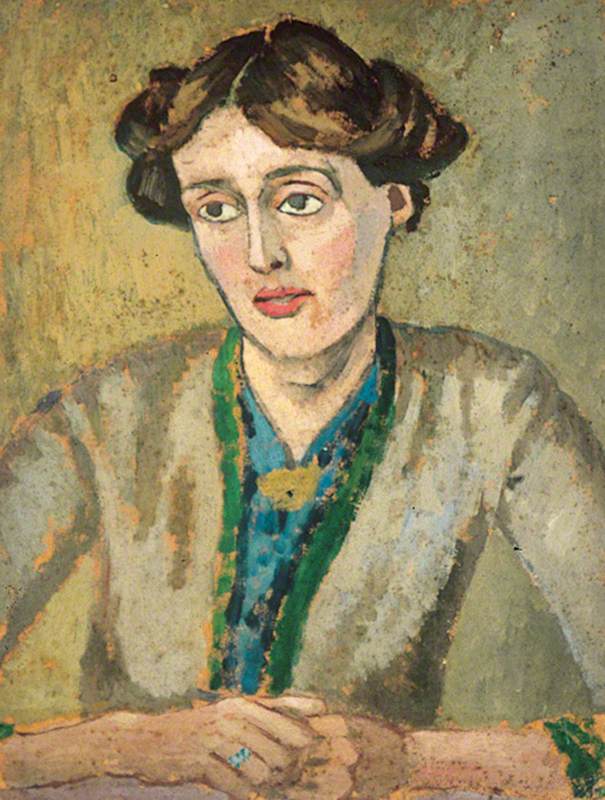
This portrait by Roger Fry of Virginia Woolf has I think a somewhat similar pointillist character. However, it evokes nostalgia because I can remember from childhood people dressing in warm woollen jumpers and staring pensively into the distance. This painting is on loan to Leeds Gallery from its owner.


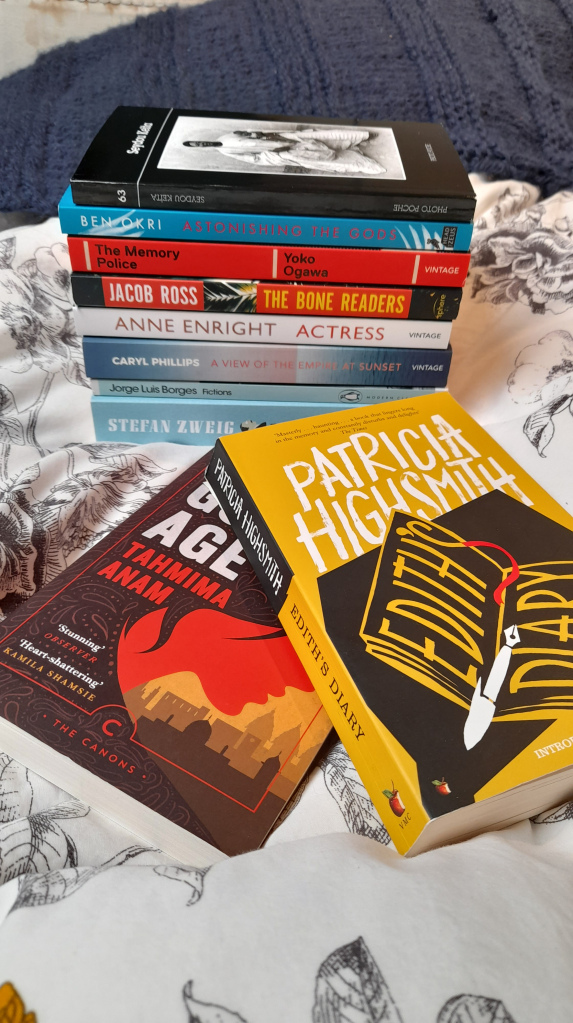


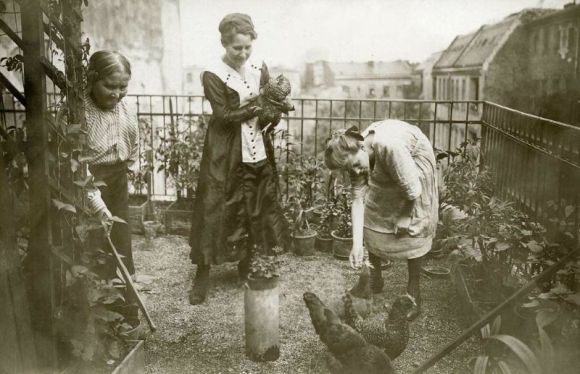 Image from a Dutch magazine “Het Leven” (via Spaarnestadt Archive).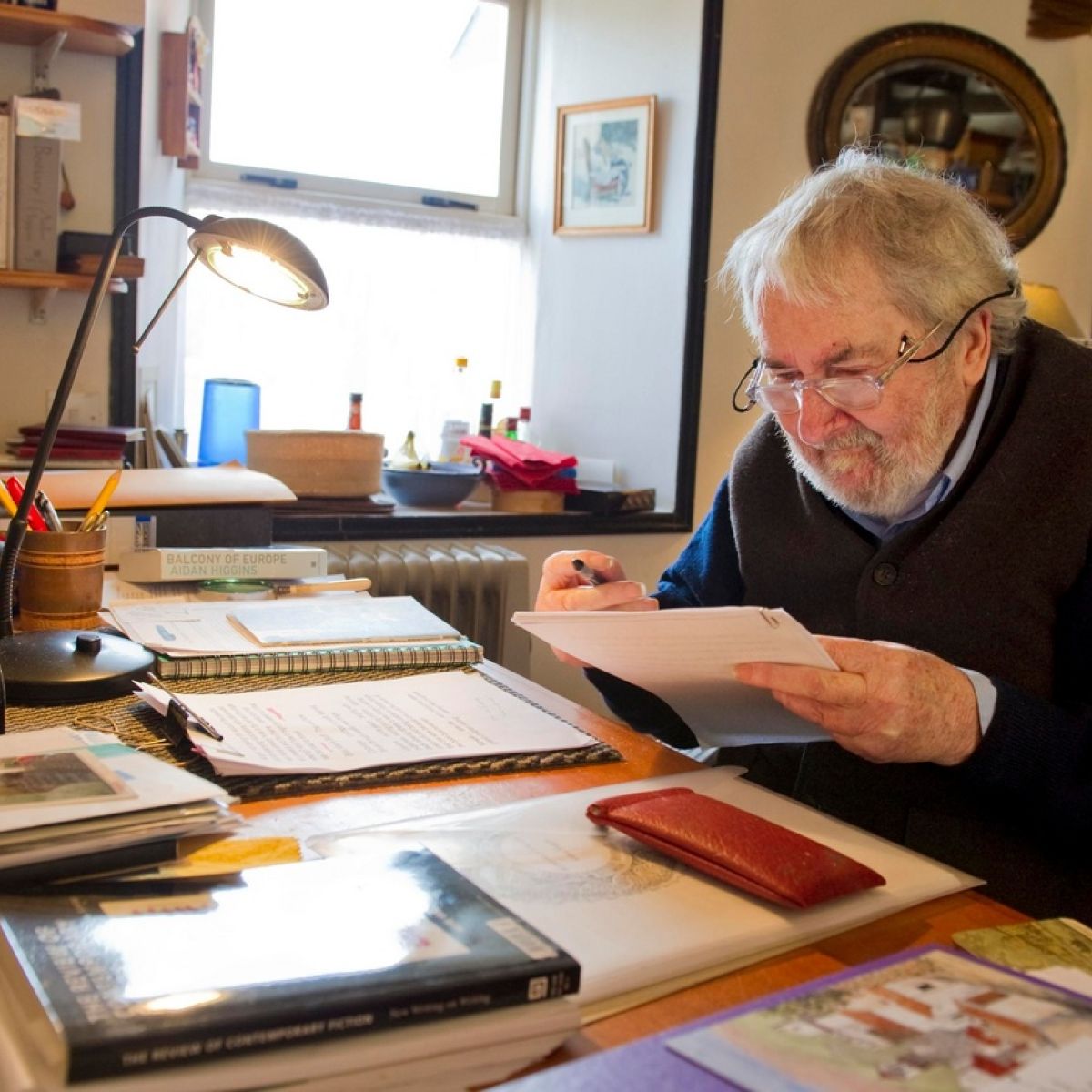

![Nostalgia [DVD]](https://images-na.ssl-images-amazon.com/images/I/71M1Jp562nL._AC_SY445_.jpg)


 1001 Books begins its summary of The Immoralist like this:
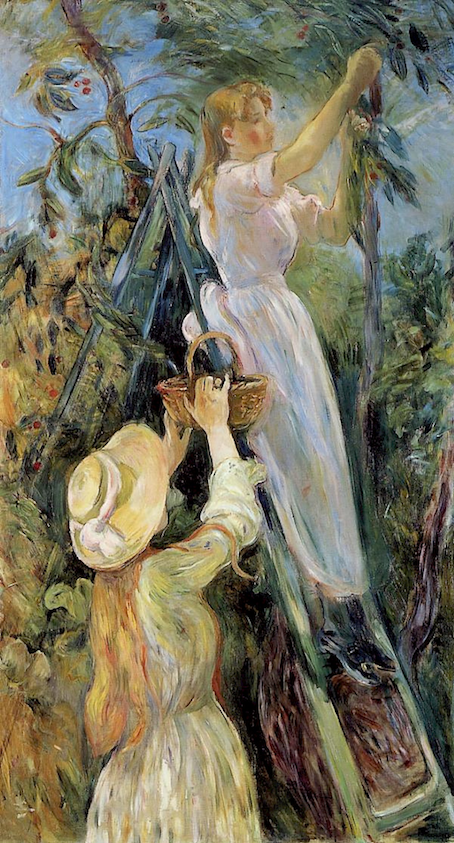 Le Cerisier by Berthe Morisot

 penwithlit